Artwork
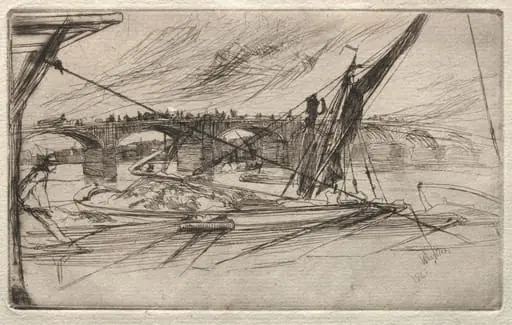
Old Westminster Bridge
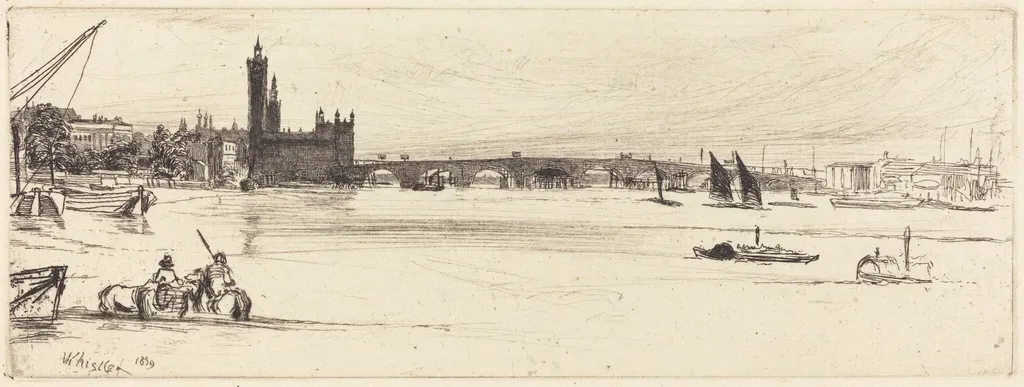
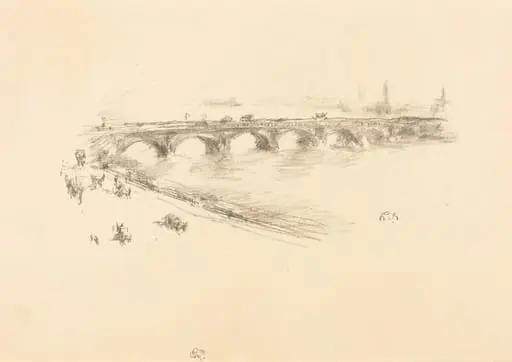
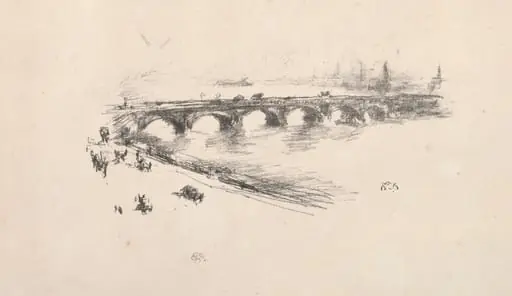
Old Westminster Bridge is an ink print by the Impressionist artist James McNeill Whistler. It dates from 1859 and is held in the collection of the National Gallery of Art.
About this work
Overview
Created in 1859, *Old Westminster Bridge* is an impressionistic print by James Abbott McNeill Whistler. Executed on laid paper, the work combines etching with drypoint, allowing the artist to render a bustling Thames scene with a sense of immediacy. The composition presents a river populated by modest boats, a pointed tower, and the eponymous bridge receding into the distance.
Technique & Style
Whistler employed both acid‑etched lines and hand‑drawn drypoint marks, a method that yields fine, velvety shadows alongside crisp, spontaneous strokes.
Whistler employed both acid‑etched lines and hand‑drawn drypoint marks, a method that yields fine, velvety shadows alongside crisp, spontaneous strokes. The paper’s laid texture accentuates the sketch‑like quality of the image, suggesting a preparatory study rather than a polished final piece. This approach reflects the artist’s interest in capturing fleeting atmospheric effects rather than detailed narrative.
Subject & Meaning
The print depicts a lively stretch of the River Thames, where small rowing vessels and sailboats share the waterway beneath Westminster Bridge. A tall, pointed tower—likely the spire of a nearby church—anchors the composition. The scene conveys the ordinary rhythm of urban river traffic, emphasizing observation over moralizing or allegorical content.
History & Provenance
Whistler, an American expatriate active during the mid‑nineteenth‑century Gilded Age, produced the work while based in London. It forms part of a series of studies of the Thames that informed later, larger compositions. The print bears Whistler’s characteristic butterfly signature, a personal emblem he adopted to assert his artistic identity.
Context
During the 1850s, Whistler aligned himself with the “art for art’s sake” philosophy, rejecting the sentimental and didactic expectations of Victorian art. His use of etching and drypoint placed him among contemporaries exploring printmaking as a medium for rapid, expressive observation, a practice that contributed to the broader shift toward modernist aesthetics.
Artist & collection
Artist
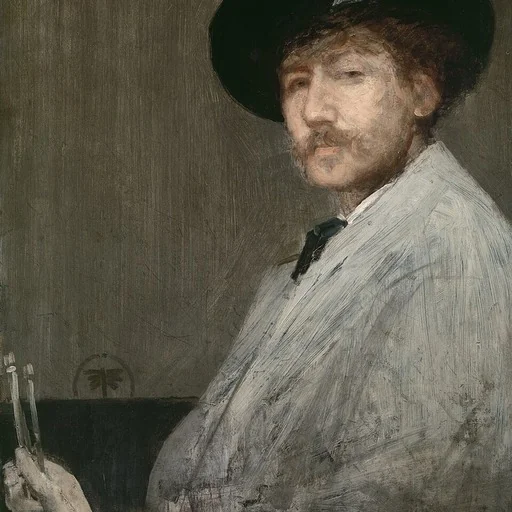
James Abbott McNeill Whistler was an American painter in oils and watercolor, and printmaker, active during the American Gilded Age and based primarily in the United Kingdom.

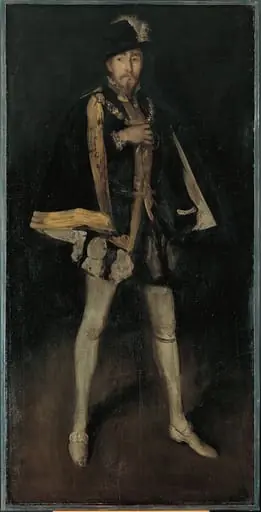 Arrangement in Black, No. 3: Sir Henry Irving as Philip II of Spain
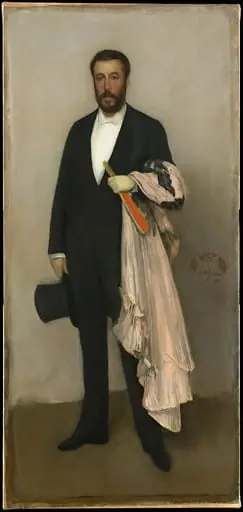 Arrangement in Flesh Colour and Black: Portrait of Theodore Duret
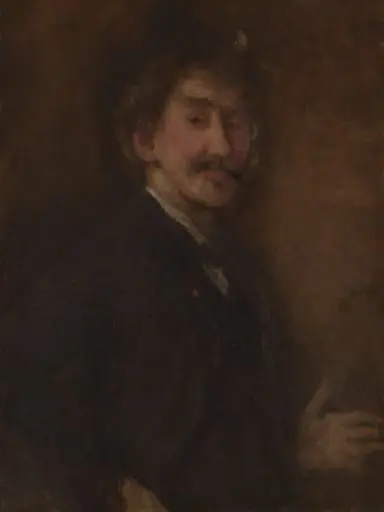 Gold and Brown: Self-Portrait
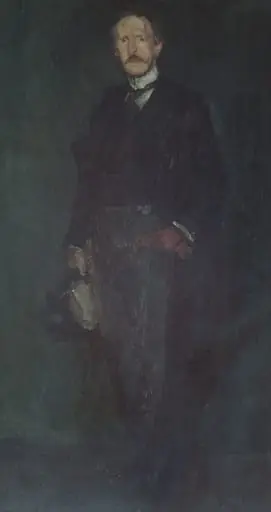 Edward Guthrie Kennedy
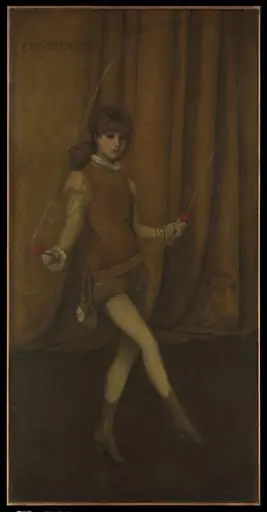 Harmony in Yellow and Gold: The Gold Girl—Connie Gilchrist
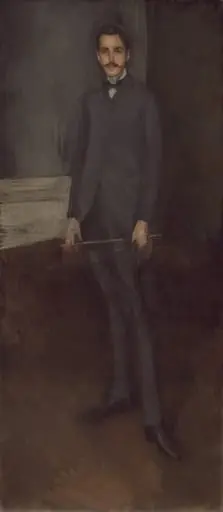 George W. Vanderbilt
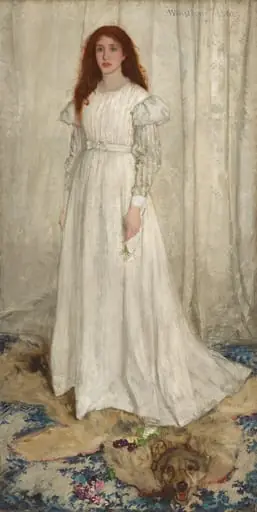 Symphony in White, No. 1: The White Girl
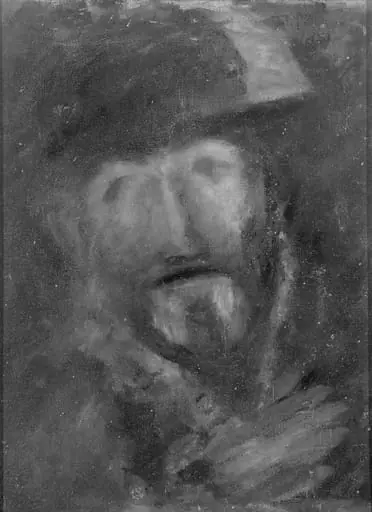 Henry Irving as Philip II of Spain