Artwork
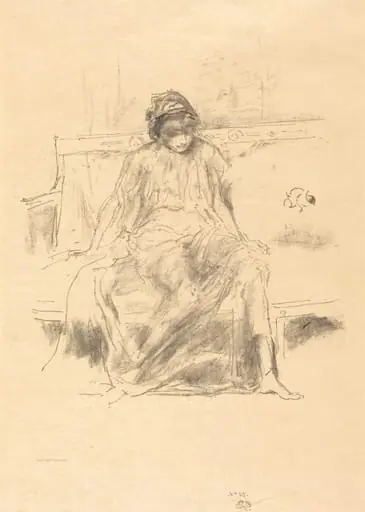
Study: Maude Seated
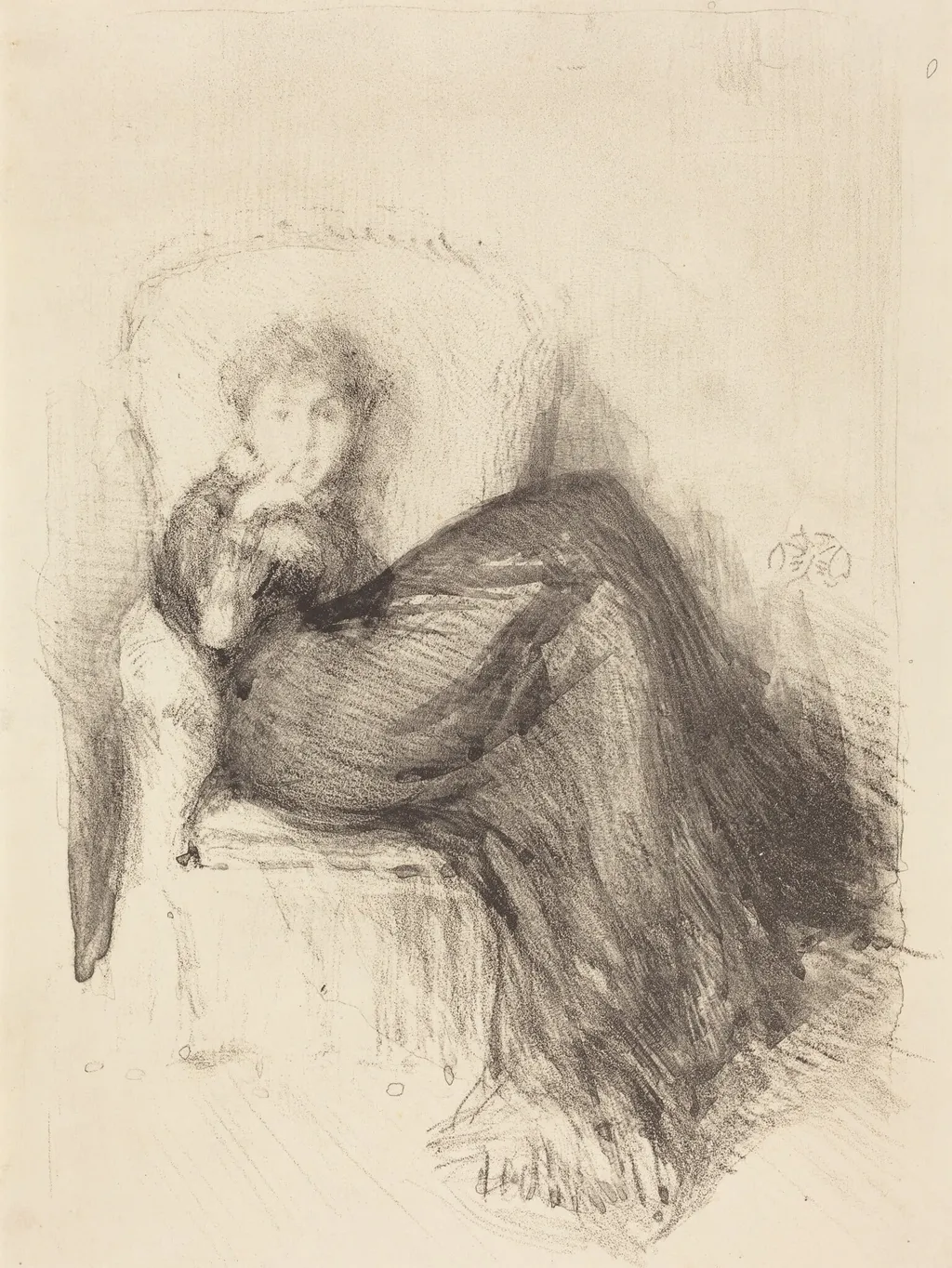
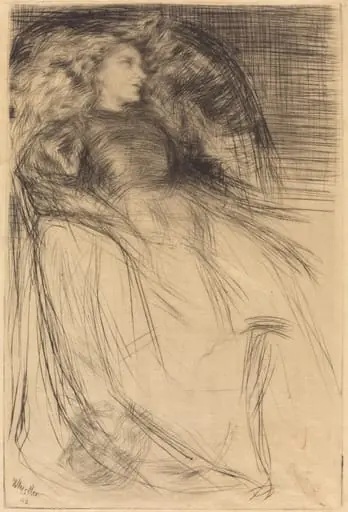
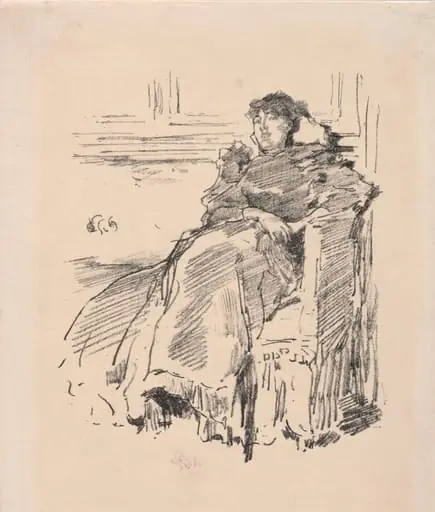
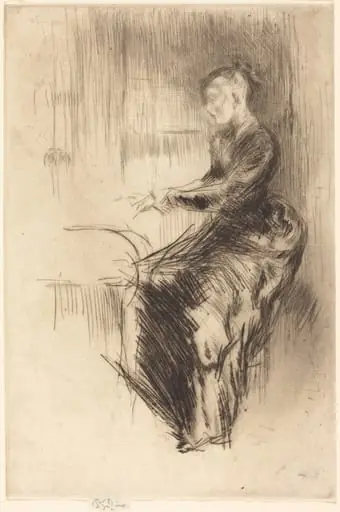
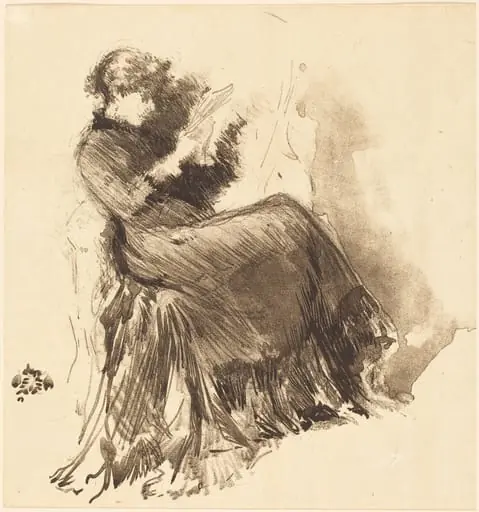
Study: Maude Seated is a print by the Impressionist artist James McNeill Whistler. It dates from 1878 and is held in the collection of the National Gallery of Art.
About this work
Overview
Created in 1878, *Study: Maude Seated* is a lithotint on wove paper by James McNeill Whistler.
Created in 1878, *Study: Maude Seated* is a lithotint on wove paper by James McNeill Whistler. The work belongs to a series of intimate figure studies produced during his time in London, where he explored portraiture through tonal subtlety rather than narrative detail. Lithotint, a printmaking method using a stone surface, enabled Whistler to achieve soft gradations of black, aligning with his interest in atmospheric harmony over dramatic expression.
Subject & Meaning
The subject is Maude, likely a family member or close associate, depicted seated in a quiet, frontal pose. Dressed plainly and gazing directly ahead, she conveys stillness rather than personality or story. Whistler’s focus on posture and presence, devoid of ornament or context, reflects his belief in art as an arrangement of form and tone—valuing visual equilibrium over psychological or moral interpretation.
Technique & Style
Whistler employed lithotint, a technique that transfers tonal washes onto a stone plate for printing, allowing nuanced transitions between light and dark. The sparse background and minimal detail emphasize the figure’s form through subtle shading. His restrained palette and deliberate lack of line work create a meditative quietude, characteristic of his mature aesthetic, where suggestion replaces description.
History & Provenance
The print was made during Whistler’s London years, a period when he increasingly turned to printmaking as a means of artistic experimentation. Though not widely exhibited at the time, *Study: Maude Seated* was part of a private body of work intended for collectors who appreciated his refined, non-narrative approach. Its survival reflects its status as a personal, rather than commercial, endeavor.
Context
In the late 1870s, Whistler distanced himself from academic traditions and the moralizing tendencies of Victorian art. His focus on tonal harmony and compositional balance aligned with broader aesthetic movements in Europe, particularly those influenced by Japanese prints. This study exemplifies his pursuit of art as an autonomous experience, independent of literary or social content.
Legacy
Whistler’s lithotint studies, including this one, influenced later printmakers who valued tonal subtlety over linear precision. They helped redefine printmaking as a medium for introspective portraiture rather than reproduction. While not as famous as his paintings, these works remain key to understanding his evolution toward abstraction and his role in shifting 19th-century art toward formalism.
Artist & collection
Artist
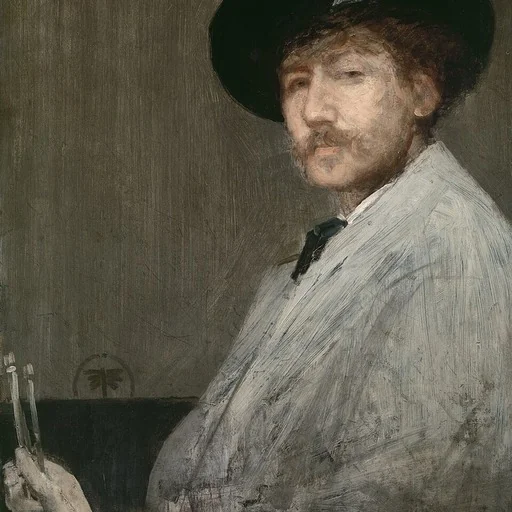
James Abbott McNeill Whistler was an American painter in oils and watercolor, and printmaker, active during the American Gilded Age and based primarily in the United Kingdom.

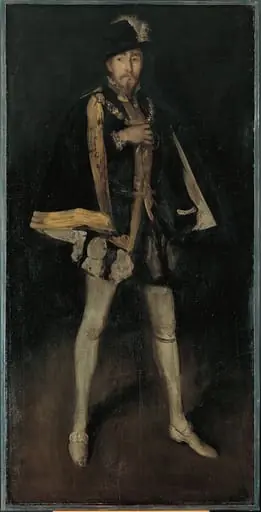 Arrangement in Black, No. 3: Sir Henry Irving as Philip II of Spain
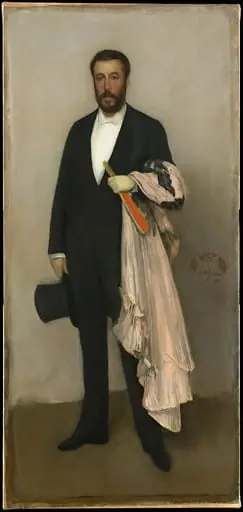 Arrangement in Flesh Colour and Black: Portrait of Theodore Duret
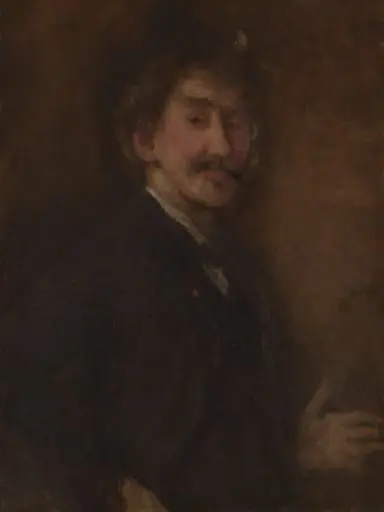 Gold and Brown: Self-Portrait
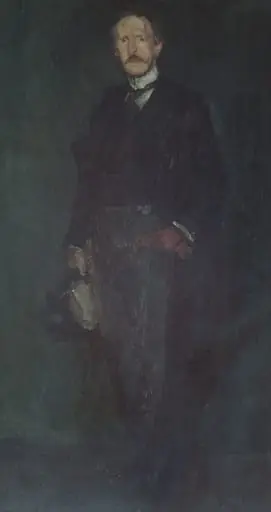 Edward Guthrie Kennedy
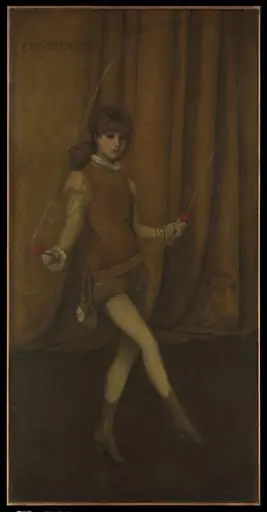 Harmony in Yellow and Gold: The Gold Girl—Connie Gilchrist
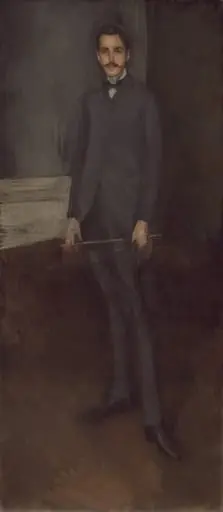 George W. Vanderbilt
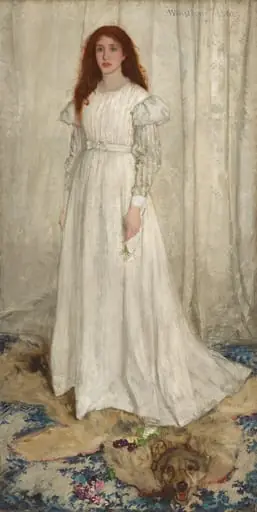 Symphony in White, No. 1: The White Girl
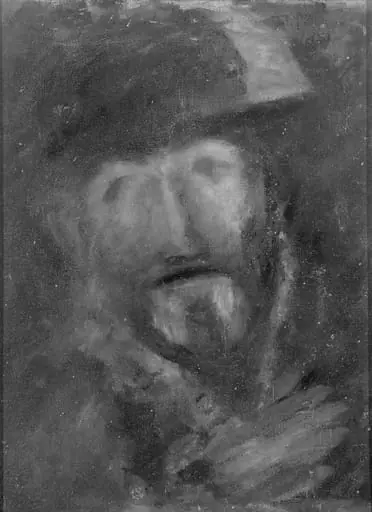 Henry Irving as Philip II of Spain