Artwork
Untitled
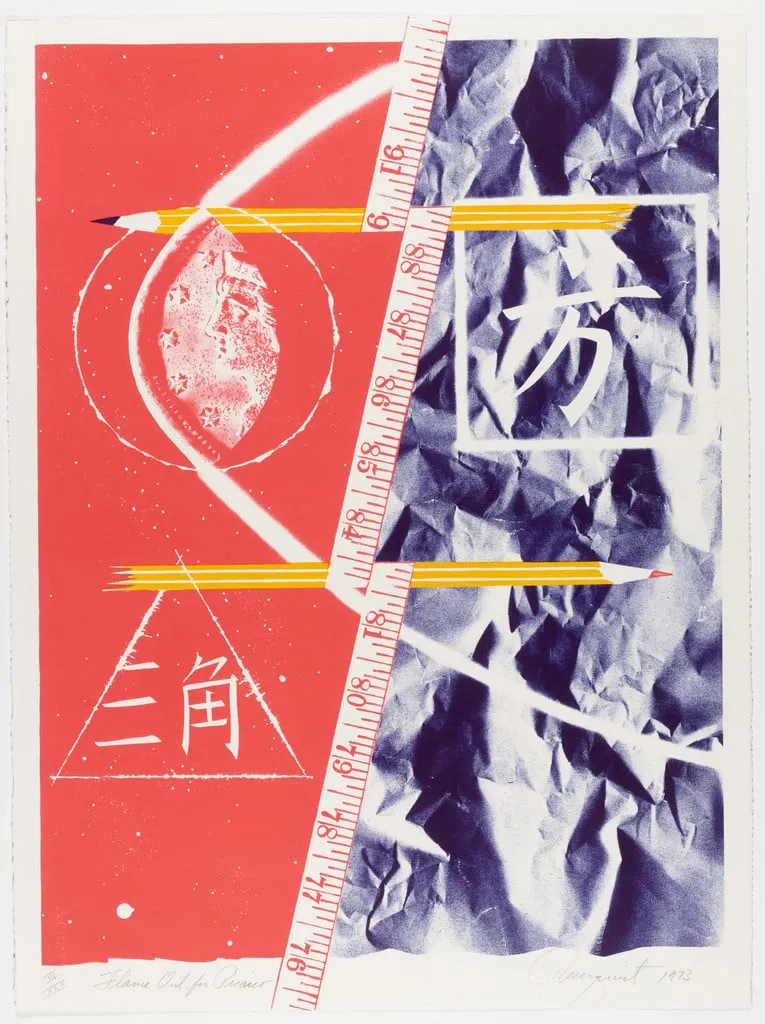
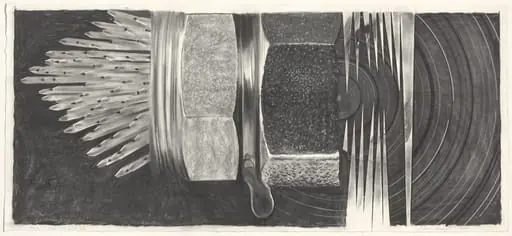
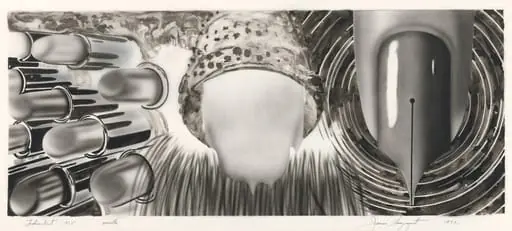
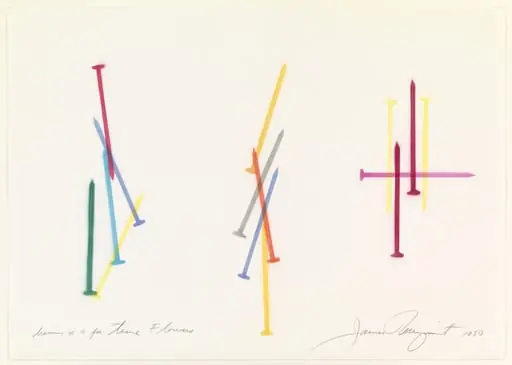
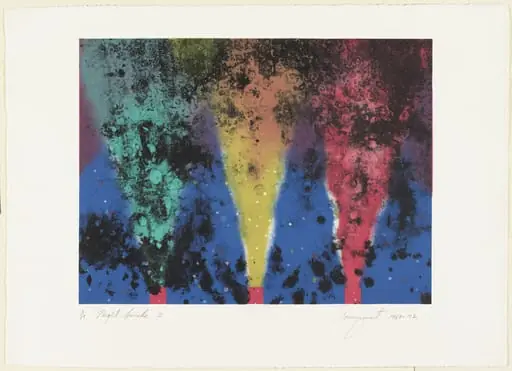
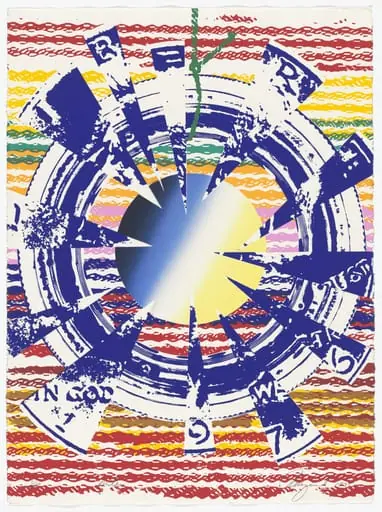
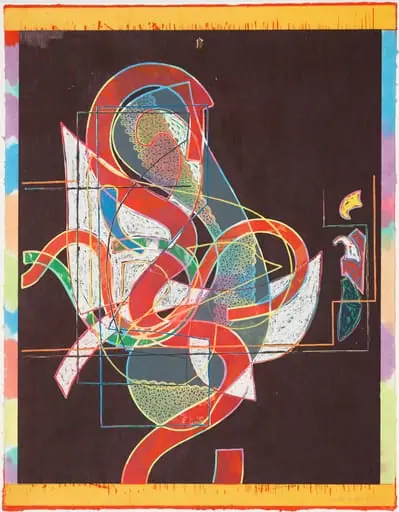
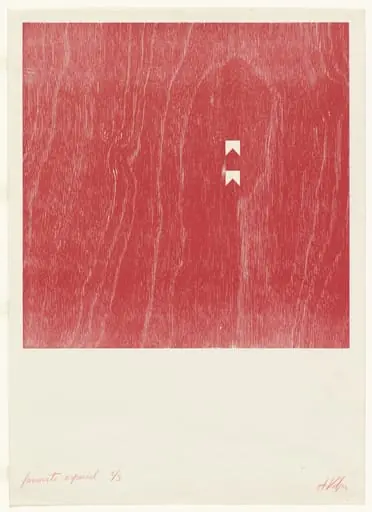
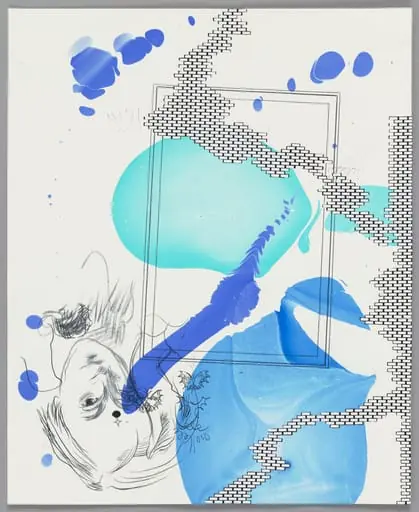
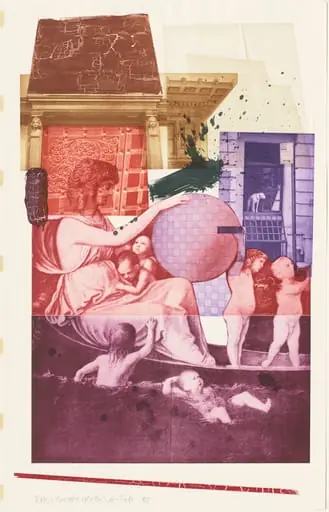
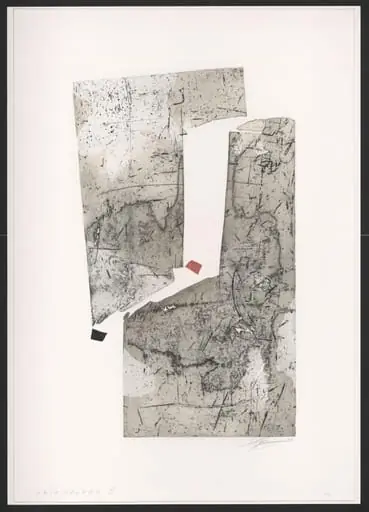
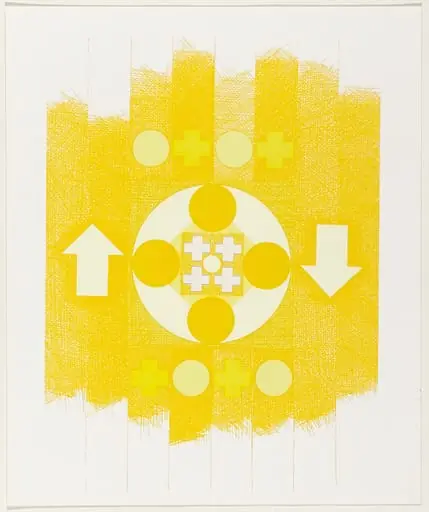
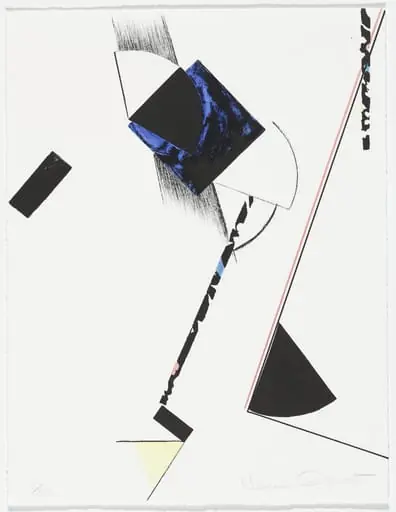
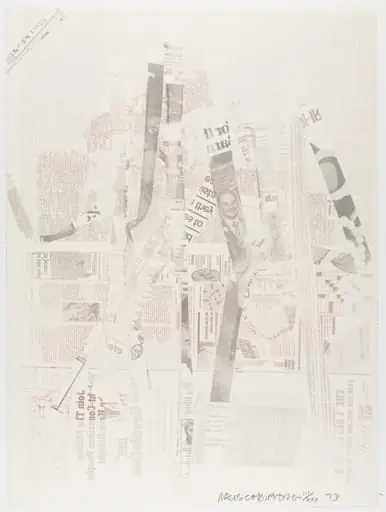
Untitled is an ink print by James Rosenquist. It dates from 1973 and is held in the collection of the Museum of Modern Art.
About this work
Overview
The work reflects Rosenquist’s background in commercial sign painting and his interest in the visual language of advertising.
Created in 1973, this print is one of many in a diverse portfolio by James Rosenquist, combining lithography, screenprinting, etching, aquatint, and woodcut techniques. The work reflects Rosenquist’s background in commercial sign painting and his interest in the visual language of advertising. Its fragmented composition and layered media distinguish it as part of a broader exploration of image fragmentation and cultural symbolism in postwar American art.
Subject & Meaning
The image is divided by a vivid red band, separating two distinct visual fields. On the left, a blurred face within a circle, a hovering pencil, and Chinese characters suggest themes of identity and communication. On the right, tangled branches and a faint '50' evoke decay and numerical abstraction. Yellow arrows link the pencil to both sides, implying an act of drawing or annotation, yet the meaning remains deliberately ambiguous, resisting singular interpretation.
Technique & Style
Rosenquist employed multiple printmaking methods to create contrasting textures and visual rhythms. The left side features crisp, flat areas with fine line work, while the right side uses dense, layered marks to suggest chaos. The red stripe acts as both a formal divider and a visual interruption. The use of embossing, flocking, and stencil adds tactile variation, reinforcing the work’s engagement with the materiality of mass-produced imagery.
History & Provenance
The work is part of a larger 1973 portfolio that showcases Rosenquist’s experimental approach to printmaking. It entered the collection of The Museum of Modern Art shortly after its creation, reflecting institutional recognition of his contributions to expanding the boundaries of print as a medium. The portfolio’s mixed-media nature was unusual for its time, aligning with broader 1970s interests in hybrid forms and process-driven art.
Context
Emerging from the Pop Art movement, Rosenquist’s work responded to the saturation of imagery in American media and consumer culture. Unlike his earlier billboard-scale paintings, this print operates on a smaller, more intimate scale, allowing for denser visual puzzles. The inclusion of non-Western characters and arbitrary numbers reflects a broader postmodern interest in dislocated signs, questioning how meaning is constructed and lost in visual overload.
Legacy
This print exemplifies Rosenquist’s influence on later generations of artists who embraced fragmentation and mixed media to critique visual culture. Its technical complexity and open-ended symbolism helped legitimize printmaking as a serious vehicle for conceptual inquiry. The work remains a key reference in discussions about the intersection of commercial aesthetics and fine art practice in late 20th-century America.
Artist & collection
Artist
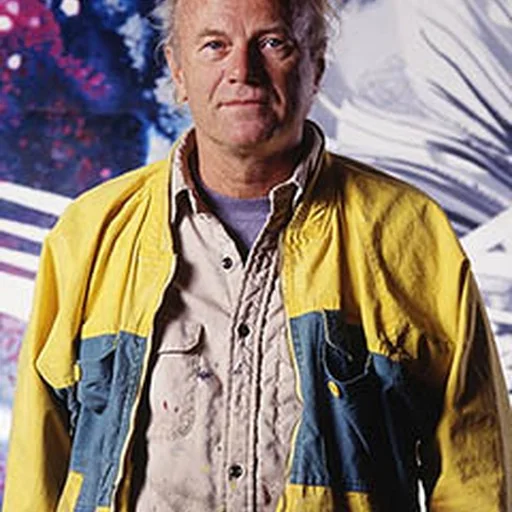
James Albert Rosenquist (November 29, 1933 – March 31, 2017) was an American artist and one of the proponents of the pop art movement.