Artwork
Portrait of Eugène Coppens de Fontenay
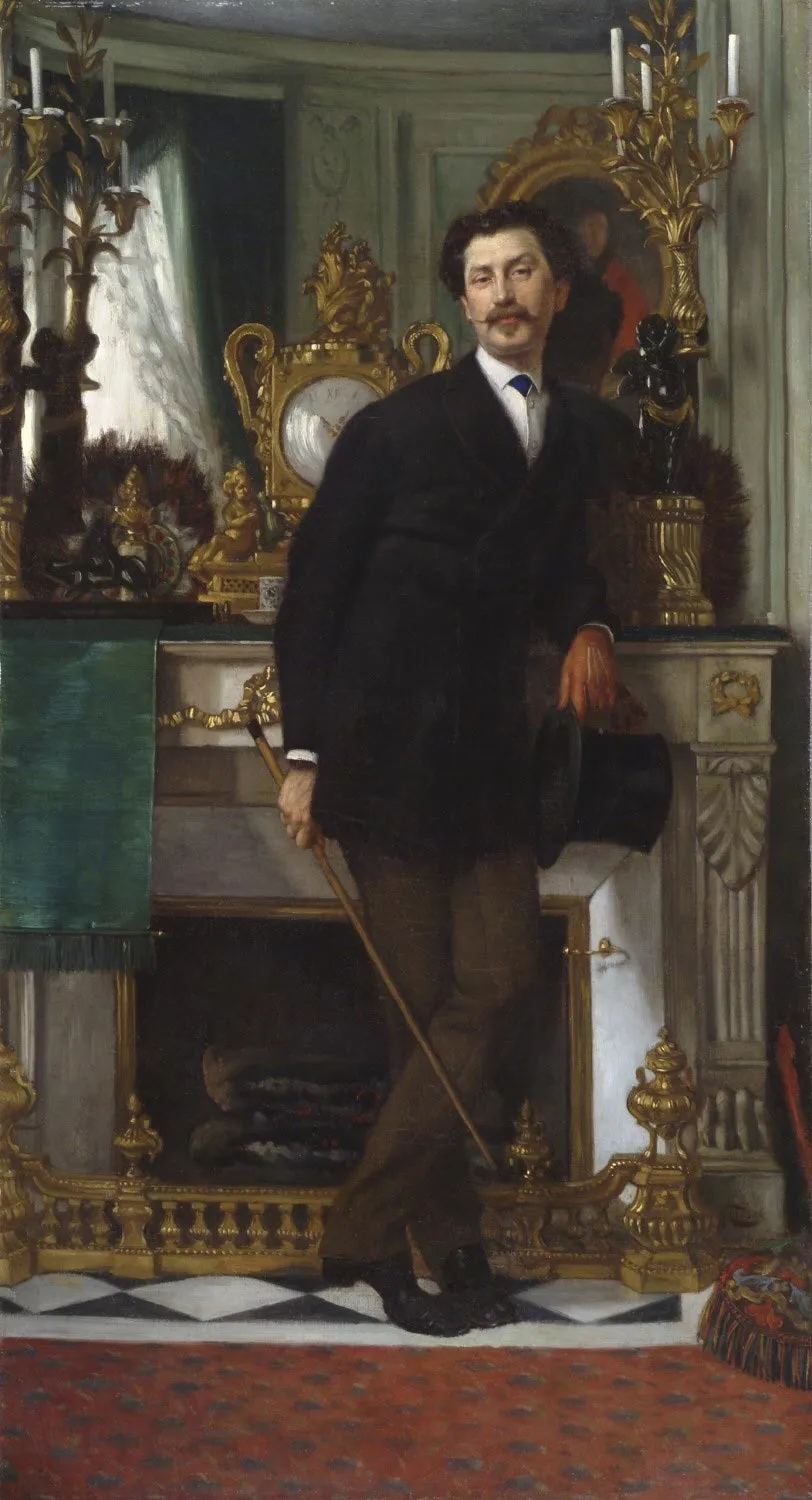
Portrait of Eugène Coppens de Fontenay is an oil painting by the Realist artist James Tissot. It dates from 1867 and is held in the collection of the Philadelphia Museum of Art.
About this work
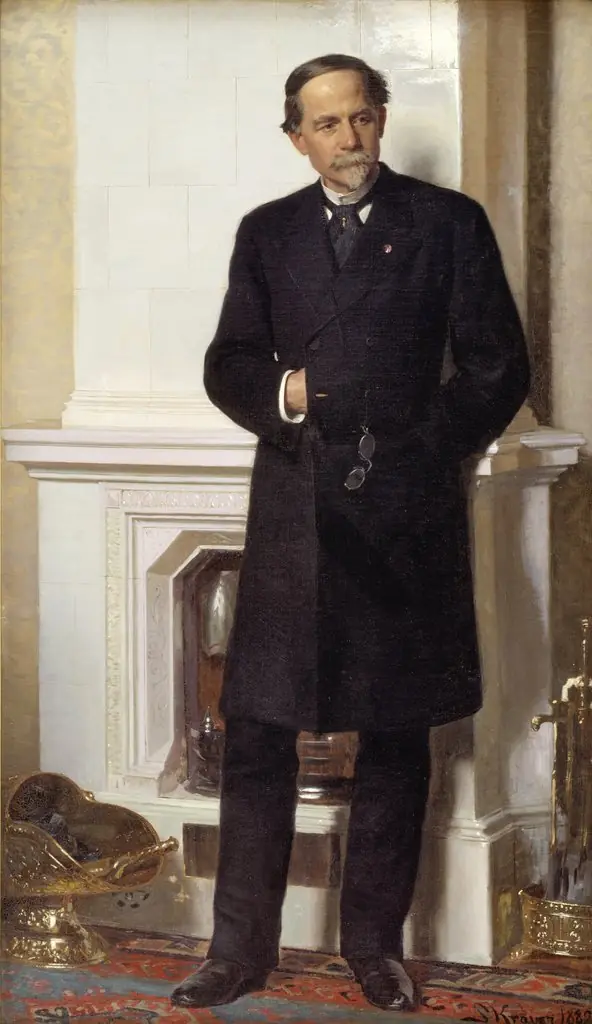
This painting depicts a man standing in front of a fireplace, dressed in a black coat and holding a cane in his right hand.
This painting depicts a man standing in front of a fireplace, dressed in a black coat and holding a cane in his right hand. He wears a white shirt, a dark blue tie, and dark brown pants. The fireplace is white with gold accents, featuring a clock and a mirror above it. The room is decorated with various objects, including candelabras and a red rug.
The man's attire and the room's decor suggest a formal setting, possibly from the 19th century. The painting's attention to detail and use of color create a sense of depth and realism.
To learn more about the artist's use of chiaroscuro, explore James Tissot's works.
Overview
Painted in 1867, this oil portrait by James Tissot captures Eugène Coppens de Fontenay in a domestic interior. The work reflects Tissot’s engagement with Realism, emphasizing observed detail over idealization. Though associated with high-society genre scenes, this portrait reveals his precision in rendering texture, light, and spatial depth through careful observation of everyday environments.
Subject & Meaning
Eugène Coppens de Fontenay, a Belgian diplomat and art patron, is depicted standing calmly before a fireplace, dressed in formal 19th-century attire. His posture and the refined setting suggest social standing and composure. The inclusion of personal objects—cane, clock, mirror—hints at identity and domestic order rather than narrative drama, aligning with Realist ideals of quiet authenticity over theatricality.
Technique & Style
Tissot employs fine brushwork to distinguish materials: the sheen of silk, the grain of wood, the gleam of gold trim. Light falls naturally from an unseen source, casting subtle shadows that model the figure and furnishings. The palette is restrained—dark tones balanced by white and muted red—enhancing spatial clarity. Chiaroscuro is used sparingly, supporting realism without romantic exaggeration.
History & Provenance
The portrait was completed in 1867 during Tissot’s early career in Paris, before his later fame for Victorian-era scenes. It remained in private hands until entering the Philadelphia Museum of Art’s collection, where it is now held as part of their 19th-century European paintings. Its provenance reflects Tissot’s connections with European intellectual circles during the 1860s.
Context
In the 1860s, French painting was shifting between academic tradition and emerging naturalism. Tissot, trained at the École des Beaux-Arts, absorbed both. This portrait aligns with contemporaries like Courbet in its rejection of idealized form, yet retains the polished finish expected by patrons. It bridges academic discipline with the Realist focus on contemporary life.
Legacy
Though less known than Tissot’s later social scenes, this portrait exemplifies his early technical command and sensitivity to character. It contributes to understanding his evolution from Realist portraiture to the more narrative, impressionistic works of the 1870s. The painting remains a quiet testament to the dignity of private life in mid-century Europe.
Artist & collection
Artist
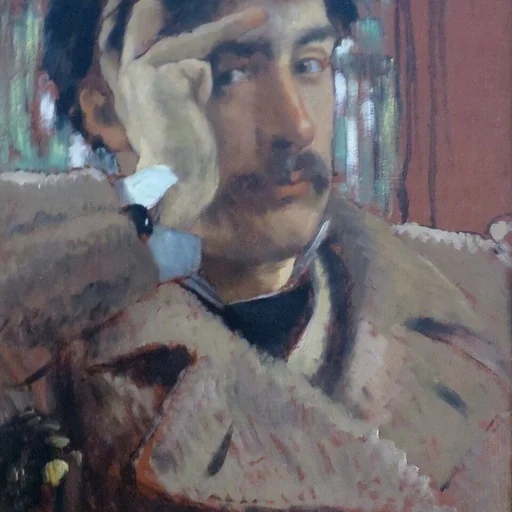
Jacques Joseph Tissot (French: ; 15 October 1836 – 8 August 1902), better known as James Tissot (UK: TISS-oh, US: tee-SOH), was a French painter, illustrator, and caricaturist.

 Portrait of the architect Ferdinand Meldahl
 Aureliano de Beruete y Moret, Jr.
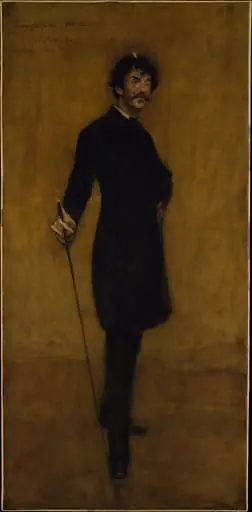 James Abbott McNeill Whistler
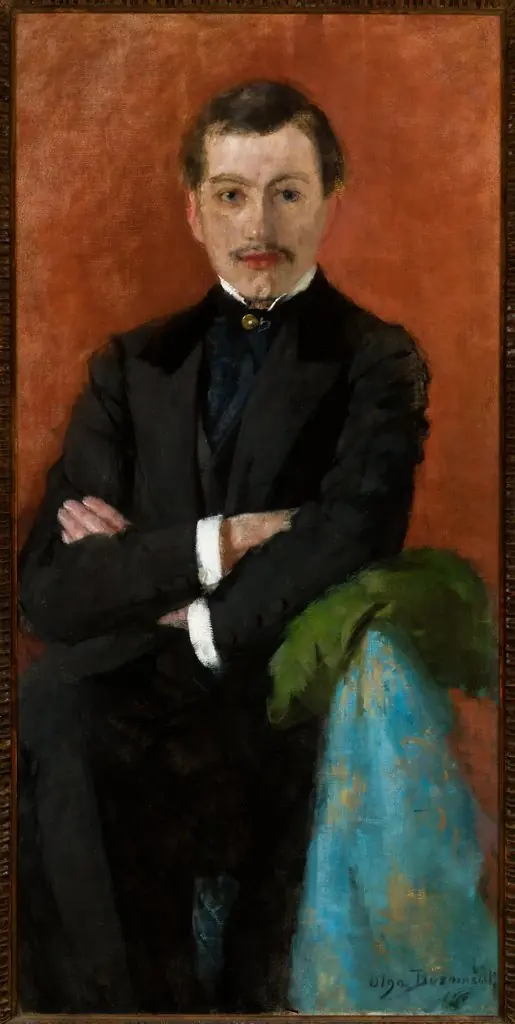 Portrait of Józef Czajkowski
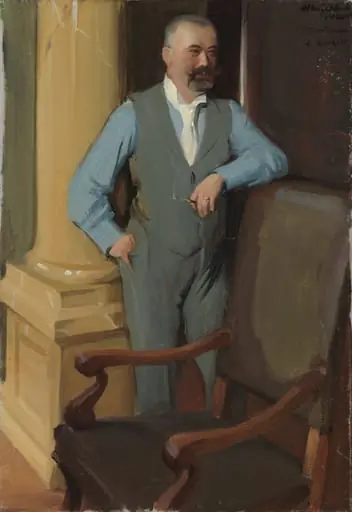 Ruukinpatruuna A.N:son Keirkner, muotokuvaharjoitelma
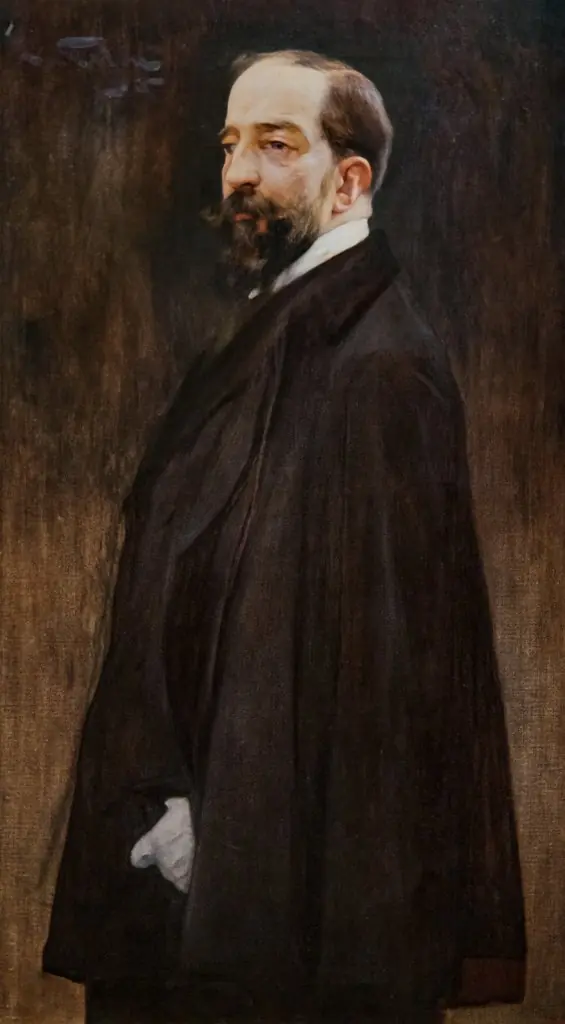 Retrat de Joan Baptista Parés (1847-1926) (Museu Nacional d'Art de Catalunya, inv 010150-000)
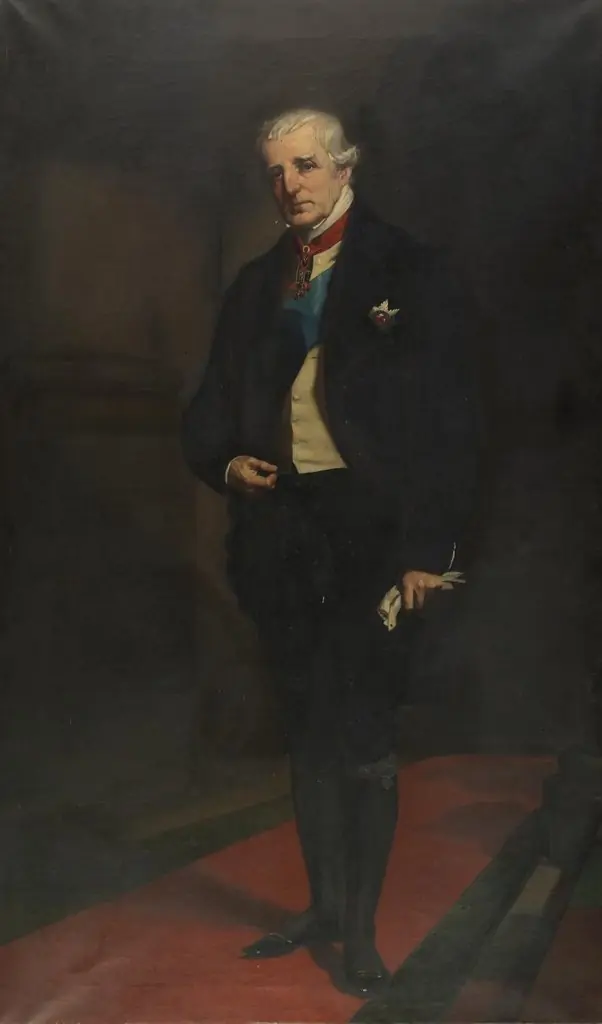 Arthur Wellesley (1769–1852), 1st Duke of Wellington
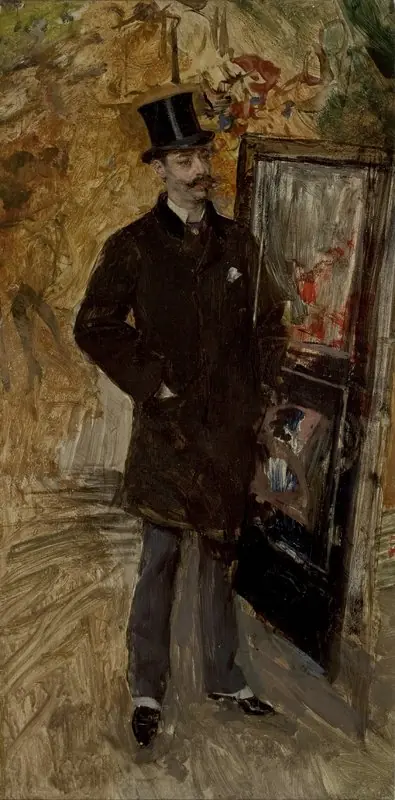 Retrato de homem com cartola: o poeta Hanvin, o homem do fígaro
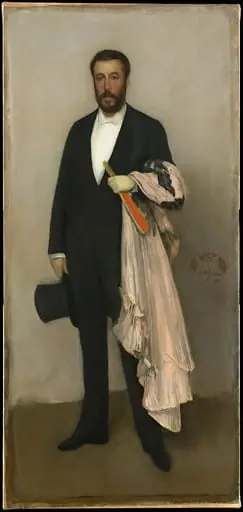 Arrangement in Flesh Colour and Black: Portrait of Theodore Duret
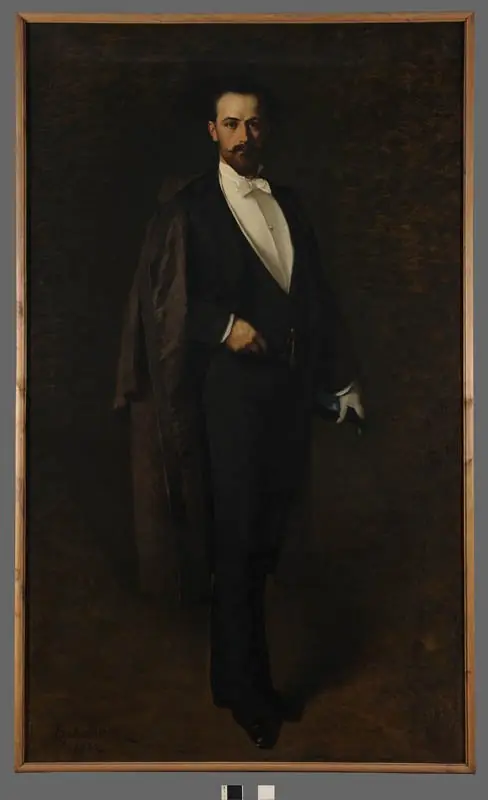 Portrait of Bronisław Amszyński
 James MacAlister (Sketch)
 Doctorul Adolf Grünau