Artwork
Spring Flowers
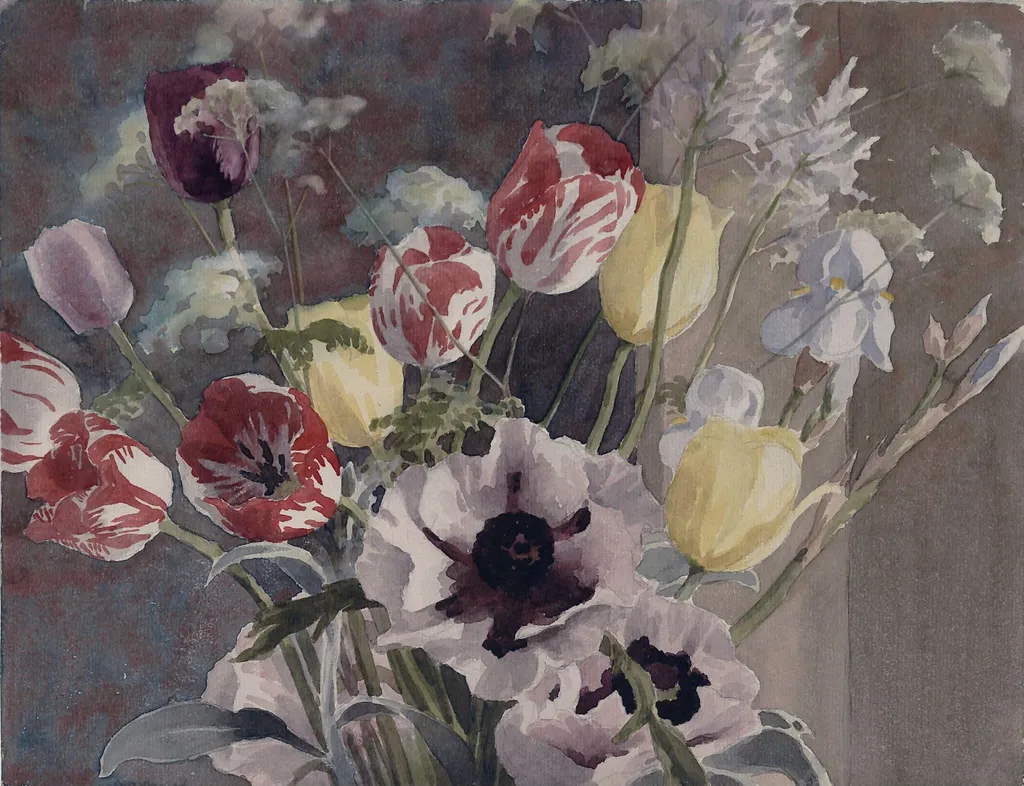
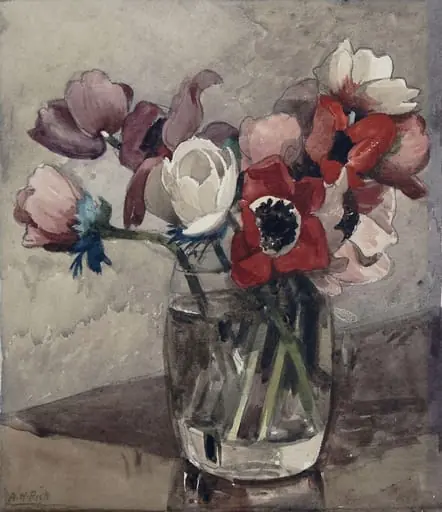
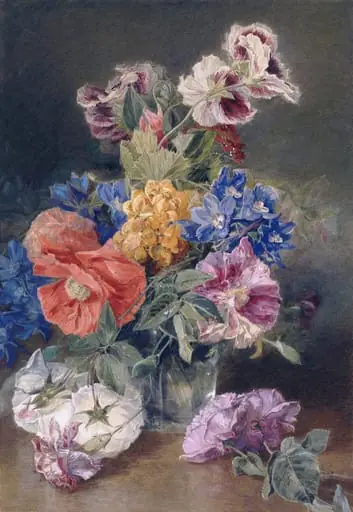
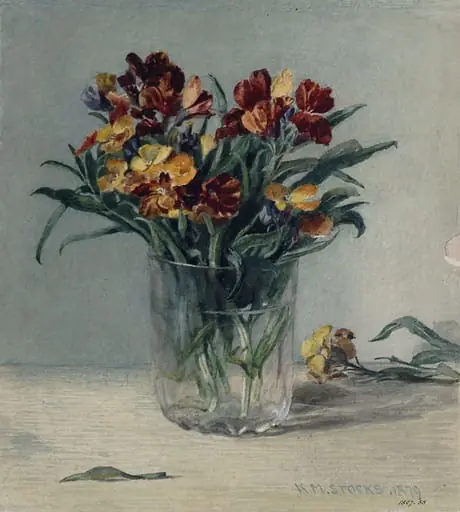
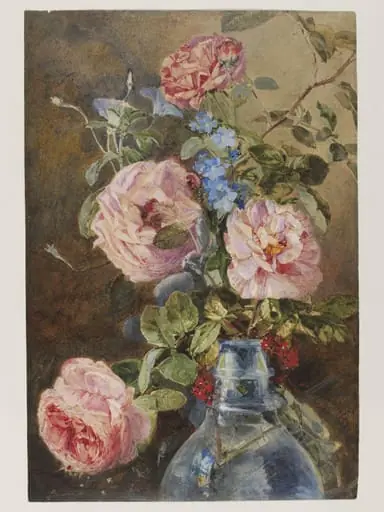
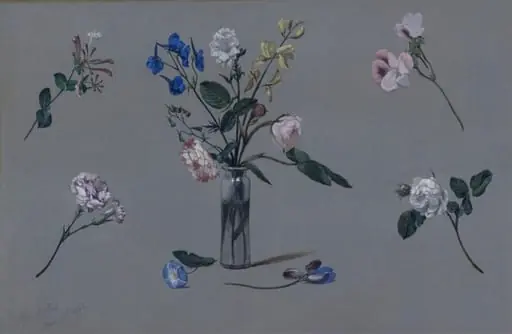
Spring Flowers is a watercolor work on paper by Walter John James. It dates from 1850 and is held in the collection of the Victoria and Albert Museum.
About this work
Overview
The piece is part of the Victoria and Albert Museum’s collection, where it is preserved as an example of domestic floral painting from the period.
Painted around 1850, Spring Flowers is a watercolor work by Walter John James, a British artist of the mid-nineteenth century. The piece is part of the Victoria and Albert Museum’s collection, where it is preserved as an example of domestic floral painting from the period. Executed in transparent watercolor, it captures a simple arrangement of blooms with an emphasis on naturalism and immediate observation.
Subject & Meaning
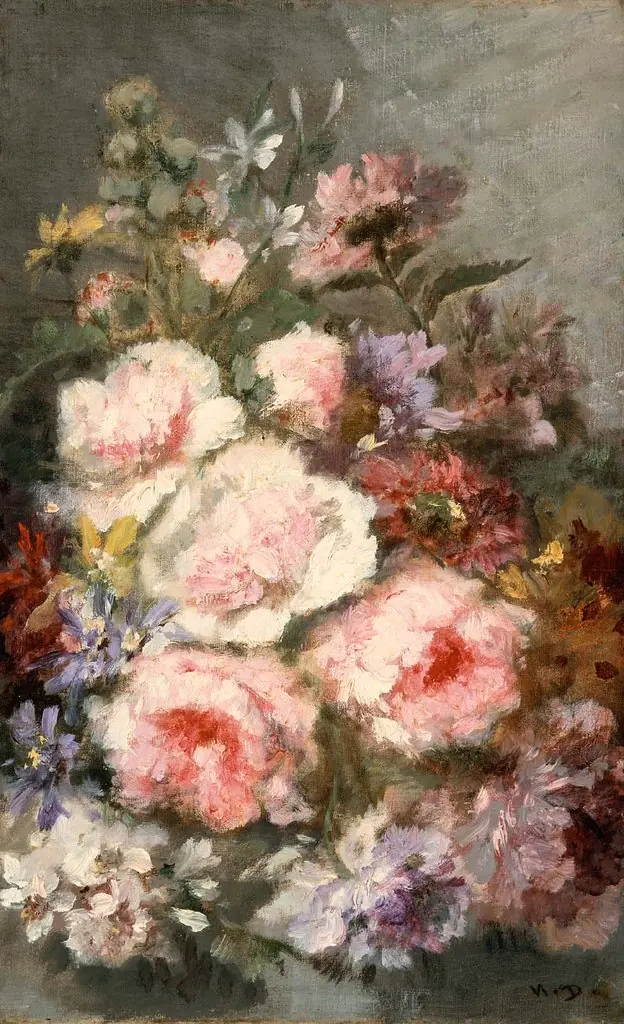
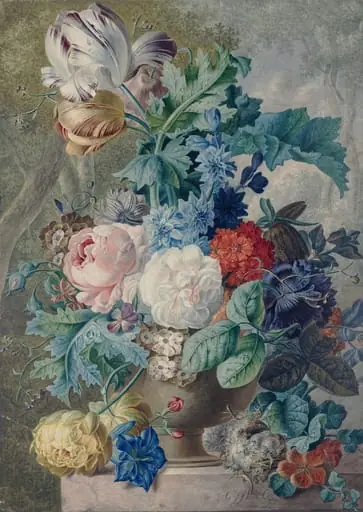
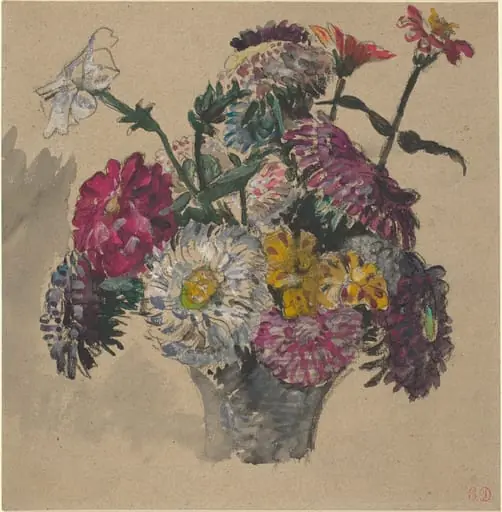
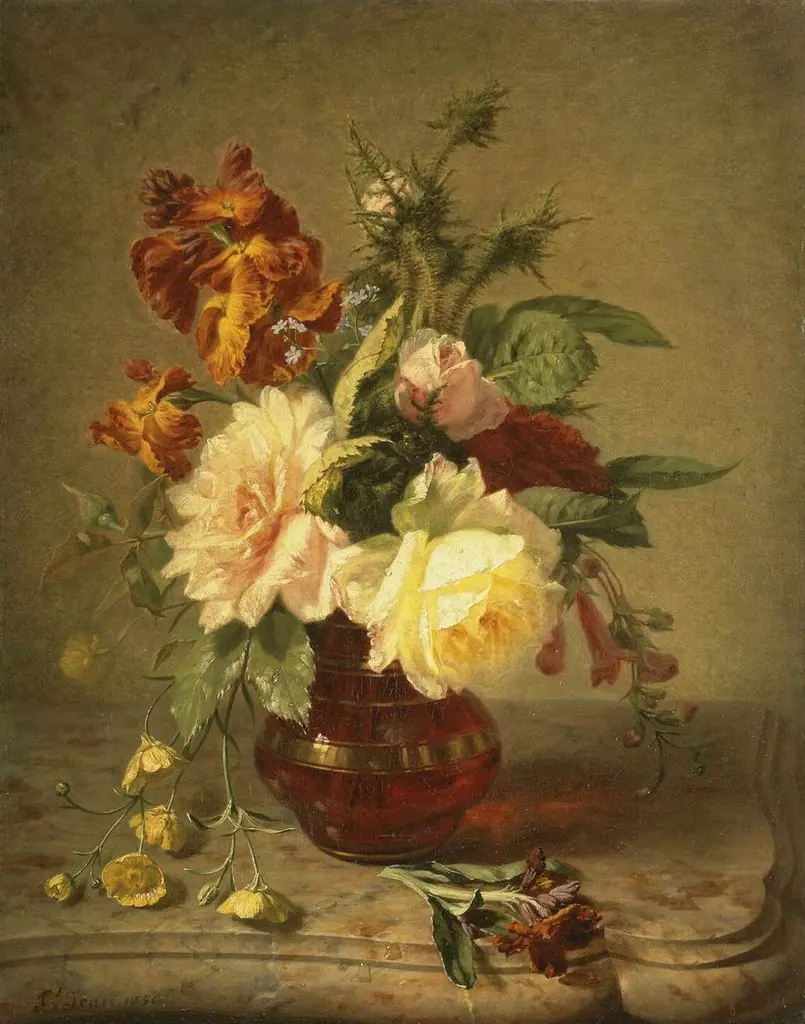
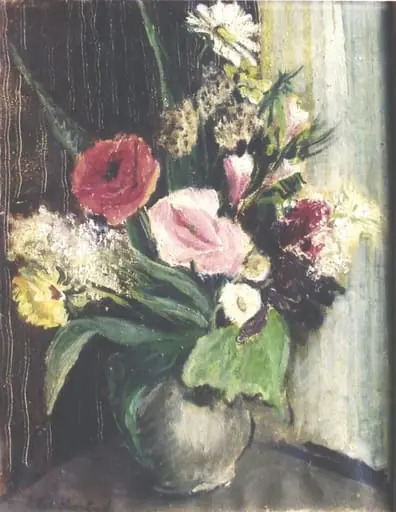
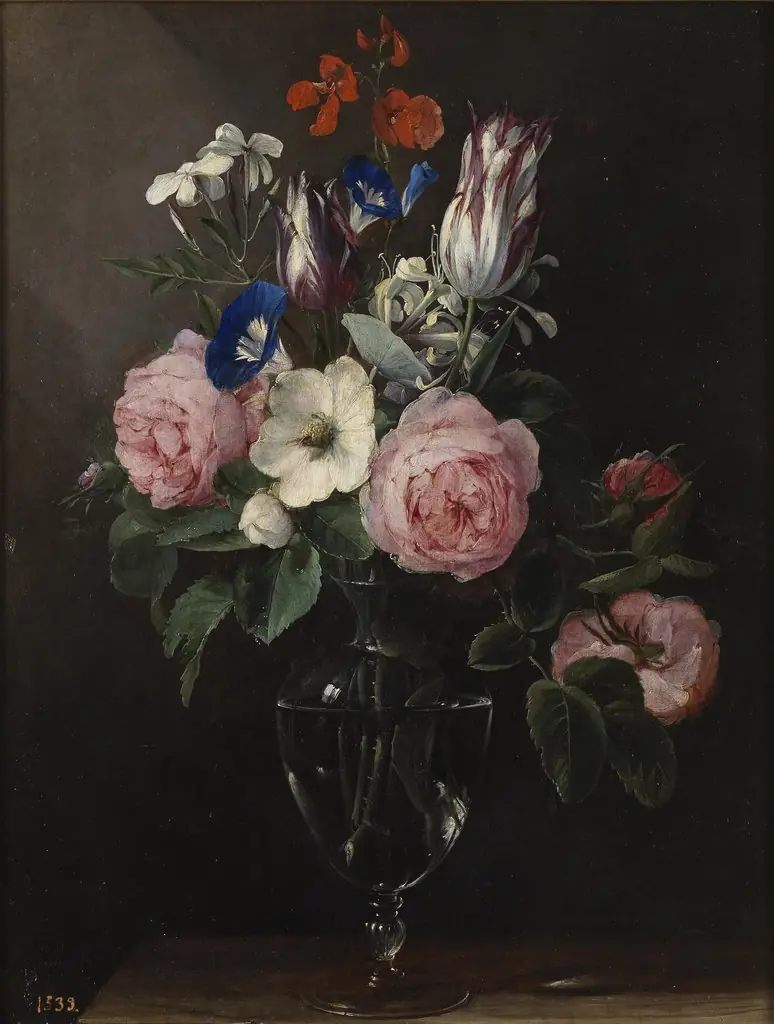
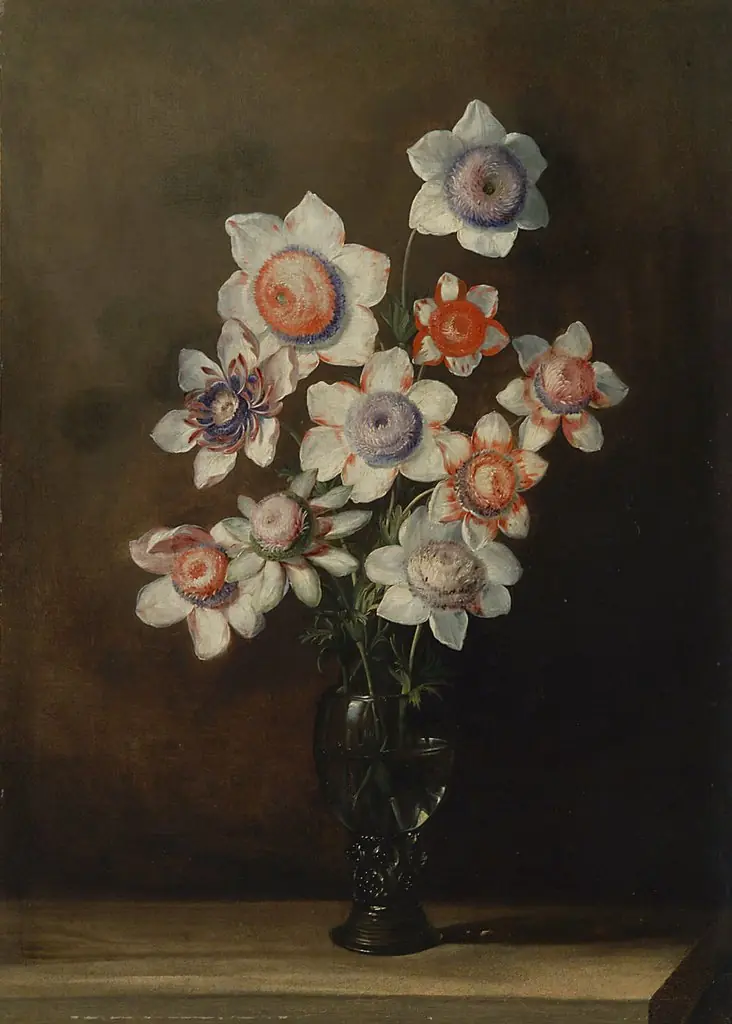
The painting depicts a loosely arranged bouquet of red, yellow, and white flowers in a vase, their stems overlapping in an informal, almost casual manner. There is no symbolic narrative—instead, the focus lies in the quiet celebration of seasonal beauty. The composition suggests a moment captured after picking, evoking the transient freshness of garden blooms without idealization or ornamentation.
Technique & Style
James employed a loose, fluid watercolor technique with visible brushwork and soft, blended edges. Colors are applied with minimal correction, allowing the paper’s white to suggest highlights and the pigment to bloom naturally. The restrained background enhances the vibrancy of the flowers, while the dynamic placement of stems conveys a sense of unposed movement, reflecting the spontaneity of direct observation.
History & Provenance
The painting entered the Victoria and Albert Museum’s collection in the nineteenth century, likely through donation or acquisition during the museum’s early expansion of decorative arts. Its attribution to Walter John James, also known as The Hon. Walter John James, is consistent with records of his known watercolor output. No earlier provenance beyond the museum’s holdings is documented.
Context
In mid-Victorian Britain, watercolor flower studies were popular among amateur and professional artists alike, valued for their accessibility and connection to domestic life. James’s work aligns with this trend, reflecting a broader cultural interest in botany and the aesthetics of the natural world, though his approach remains personal rather than scientific or ornamental.
Legacy
Though not widely exhibited outside institutional collections, Spring Flowers exemplifies the quiet precision of British watercolor traditions in the mid-1800s. It contributes to the understanding of how everyday natural subjects were rendered with sensitivity, bridging the gap between scientific illustration and personal expression in Victorian art.
Own this work as a print
Artist & collection
Artist
A quiet hand behind the watercolor craze, Walter John James painted delicate English gardens and domestic still lifes in the late 1800s and early 1900s.