Artwork
Statue of Mary in a Garland
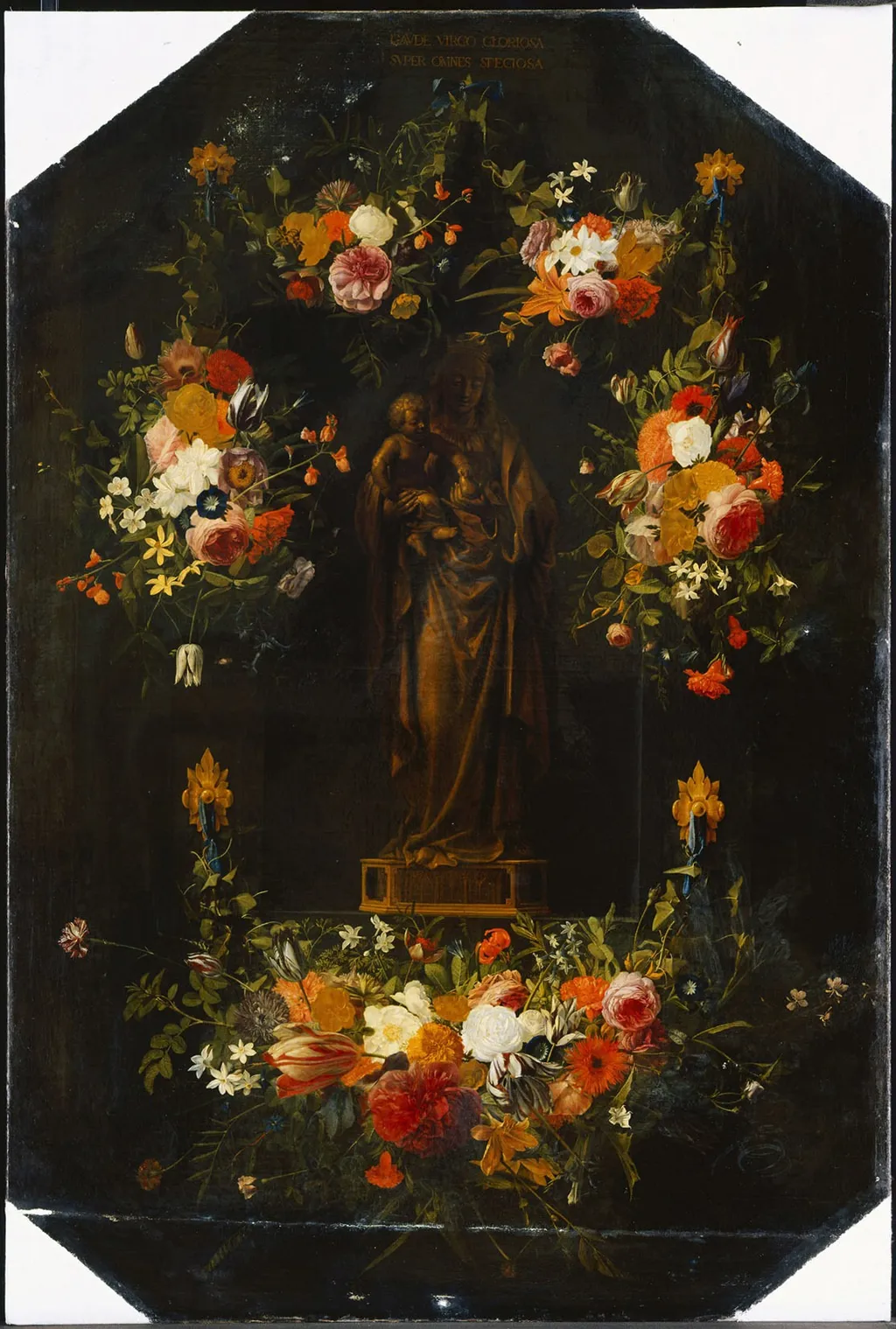
Statue of Mary in a Garland is an unspecified painting by the Flemish Baroque painting artist Jan Anton van der Baren. It dates from 1659 and is held in the collection of the Kunsthistorisches Museum.
About this work
Overview
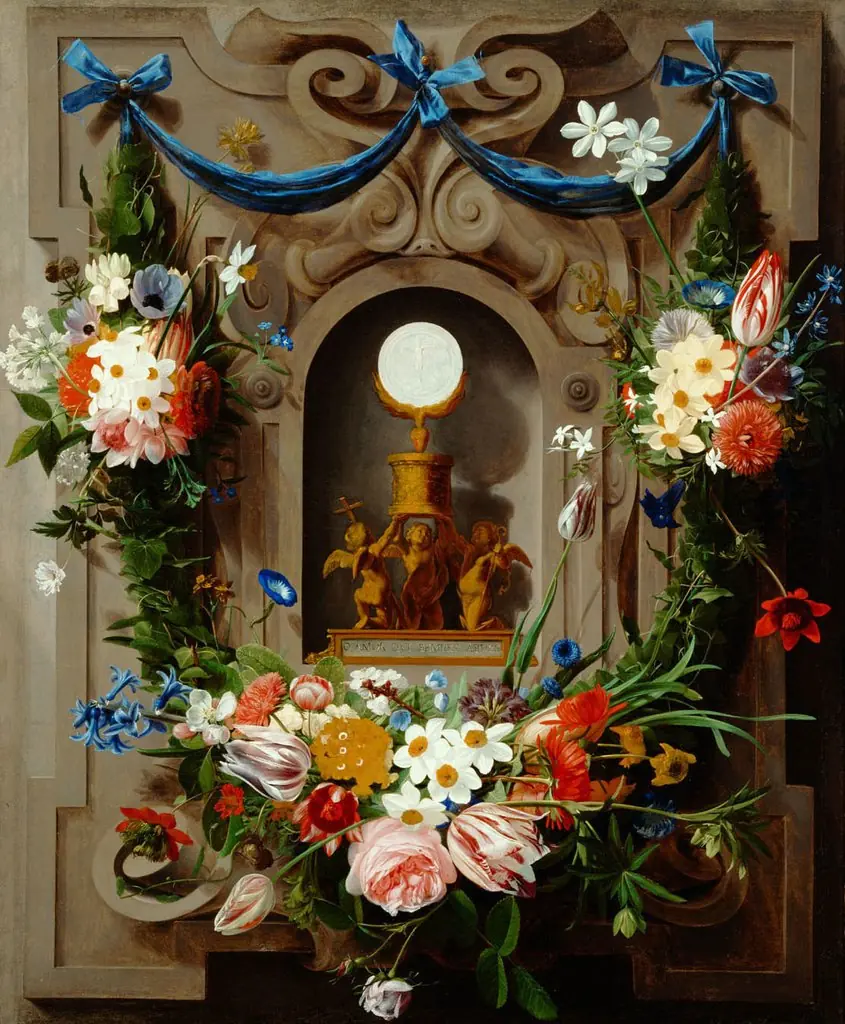
Statue of Mary in a Garland is a 1659 Flemish Baroque painting on canvas by Jan Anton van der Baren, a priest and painter who managed Archduke Leopold Wilhelm’s art collection. The work combines a religious subject with a lush floral arrangement.
Subject & Meaning
The painting depicts a statue of the Virgin Mary holding a child, set amidst a vibrant, colorful garland of flowers. This blend of sacred figure and natural elements reflects the period’s aesthetic of intertwining religious and earthly motifs.
Technique & Style
Van der Baren employed deep shadows and chiaroscuro to enhance the vivid, lifelike quality of the flowers, which wrap around the statue, creating a natural frame against a dark background. The style is characteristic of Flemish Baroque, with meticulous attention to detail in the floral still life.
History & Provenance
Created in 1659, the painting is now part of the Kunsthistorisches Museum’s collection, a testament to its significance within the Flemish Baroque tradition and Van der Baren’s dual role as artist and curator to the Archduke.
Context
The work embodies the 17th-century Flemish interest in combining architectural, natural, and religious themes, reflecting the artistic tastes of the time, particularly among the aristocracy and clergy.
Legacy
While specific lasting influences of *Statue of Mary in a Garland* are not prominently documented, it remains a notable example of Flemish Baroque painting, illustrating the era’s artistic values and Van der Baren’s contribution to this style.
Artist & collection
Artist
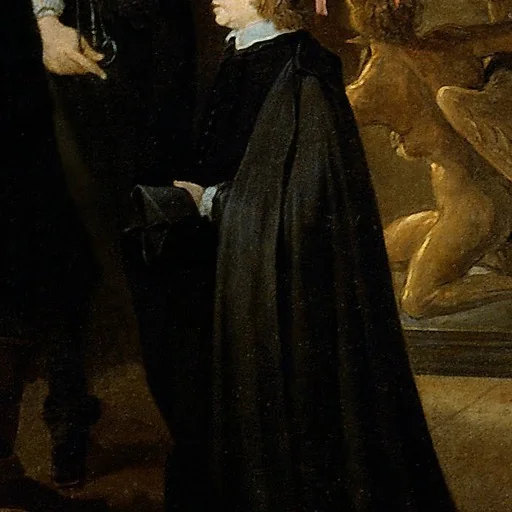
Jan Anton van der Baren (1615 – 30 or 31 December 1686) was a Flemish painter, draughtsman, priest and museum curator active in Brussels and Vienna.

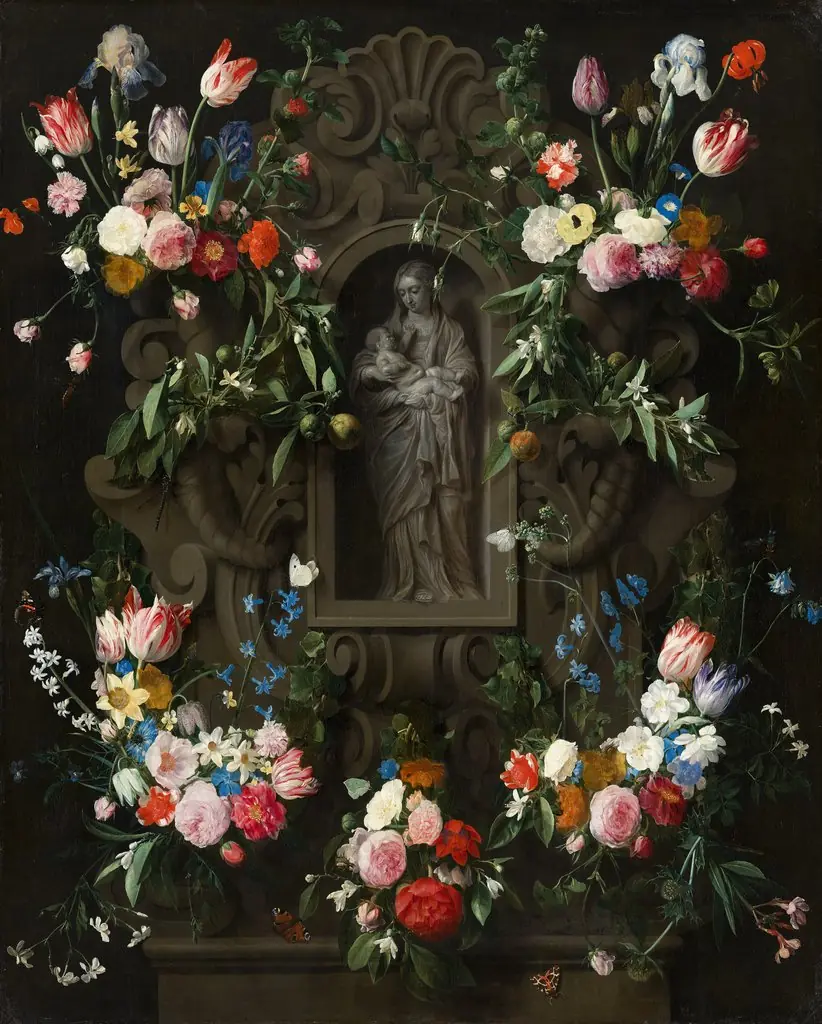 Garland of Flowers surrounding a Sculpture of the Virgin Mary
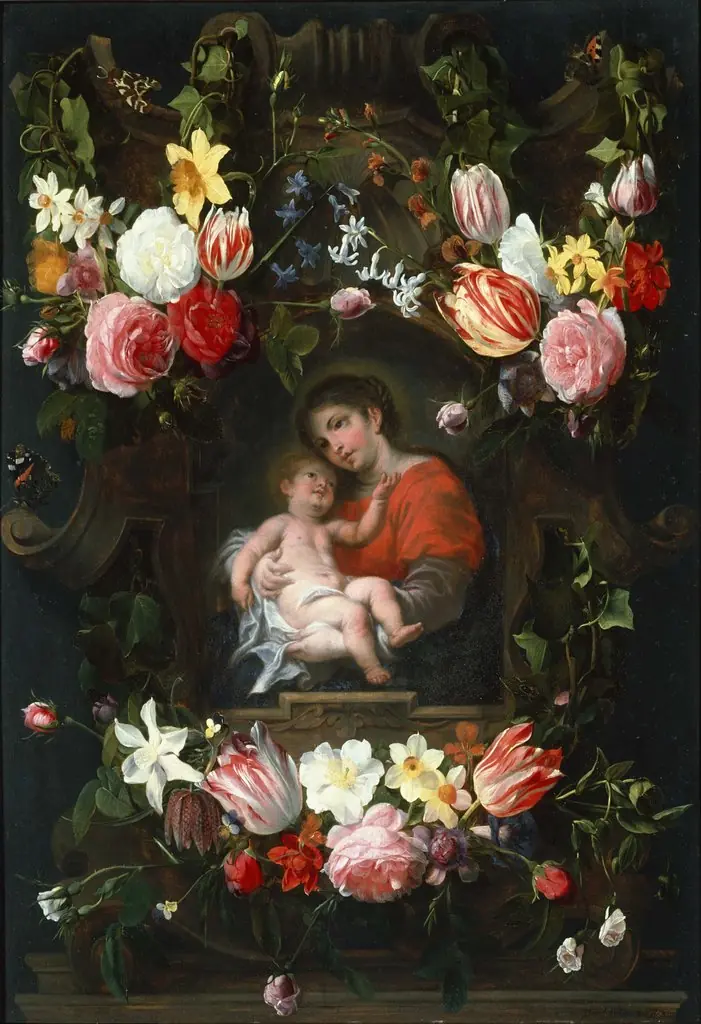 Garland of Flowers with Madonna and Child
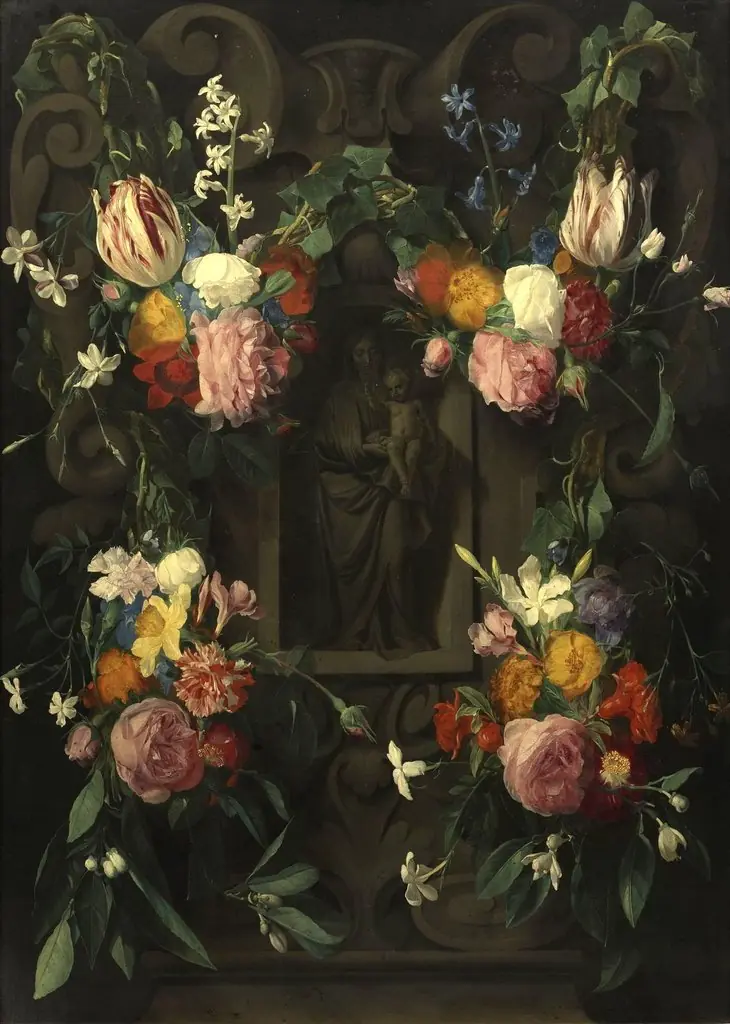 Flower Garland with the Virgin and Child
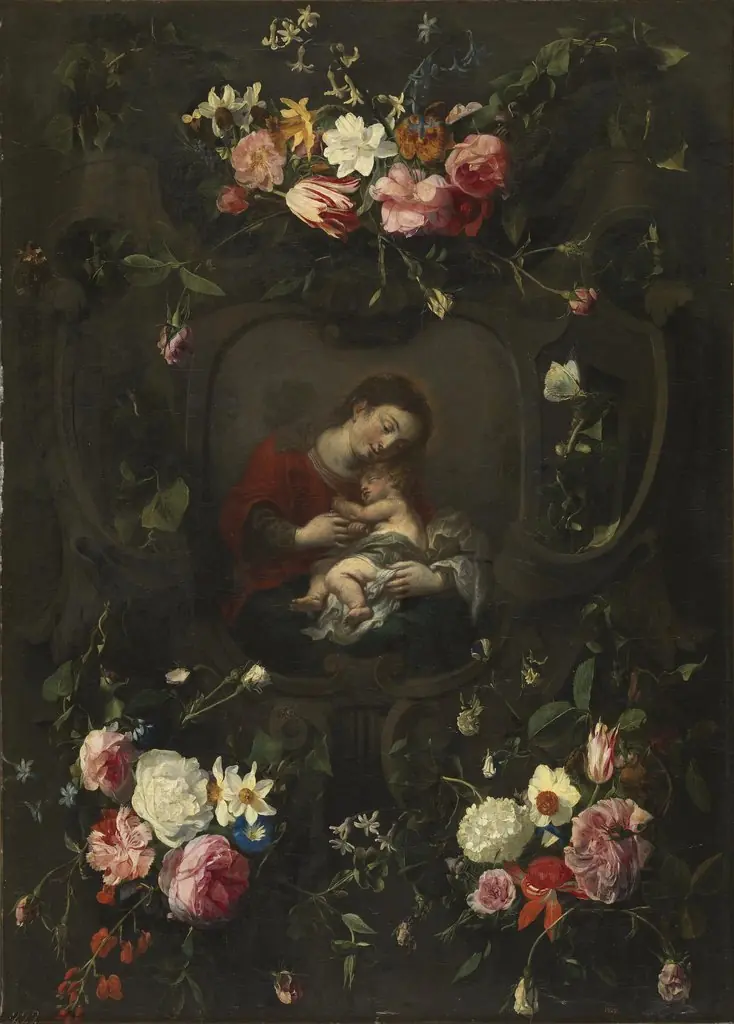 Flower garland around a Madonna and Child
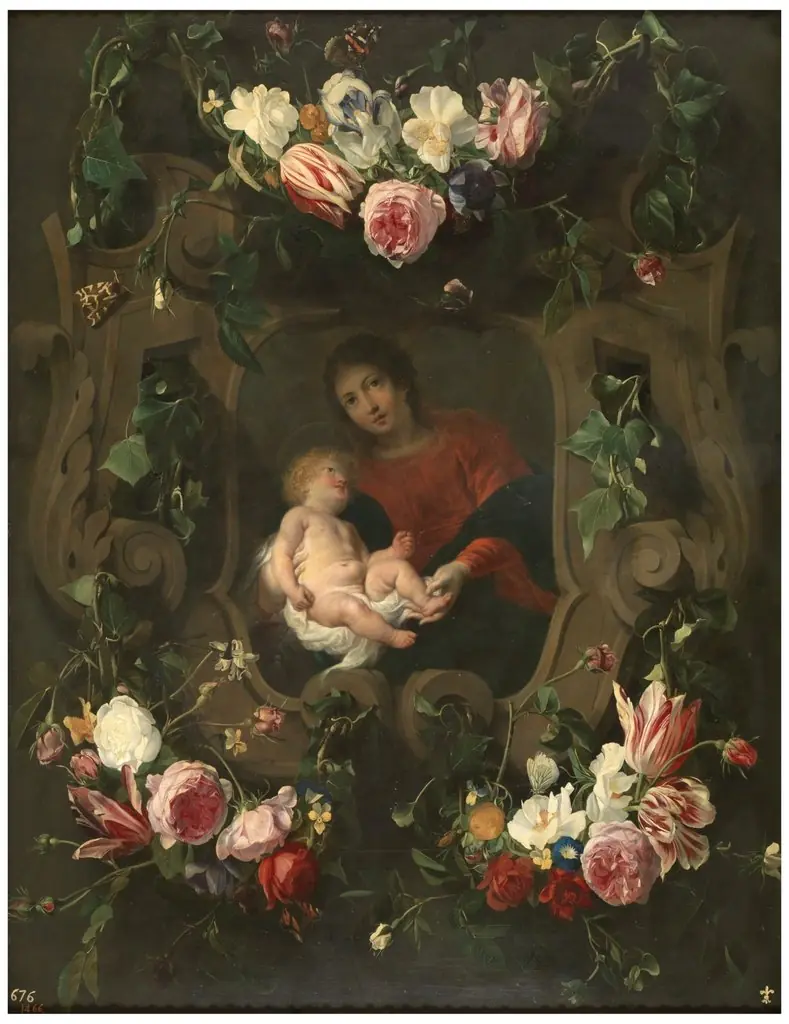 Flower garland around the Virgin and Child
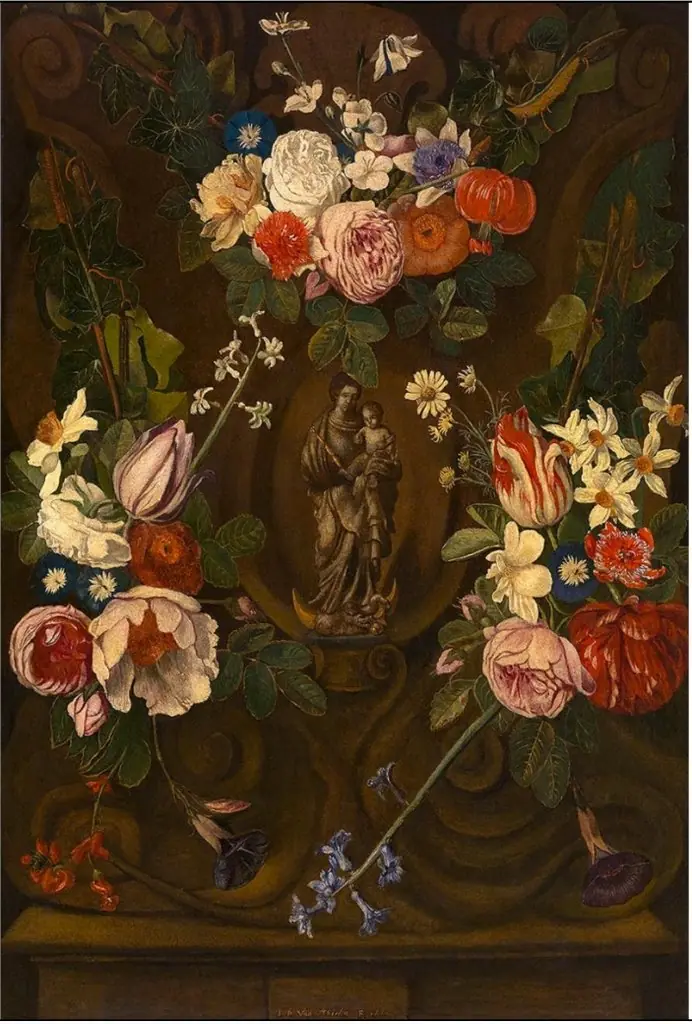 Madonna in a flower garland
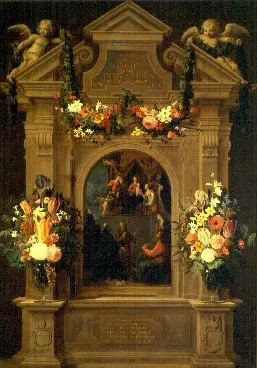
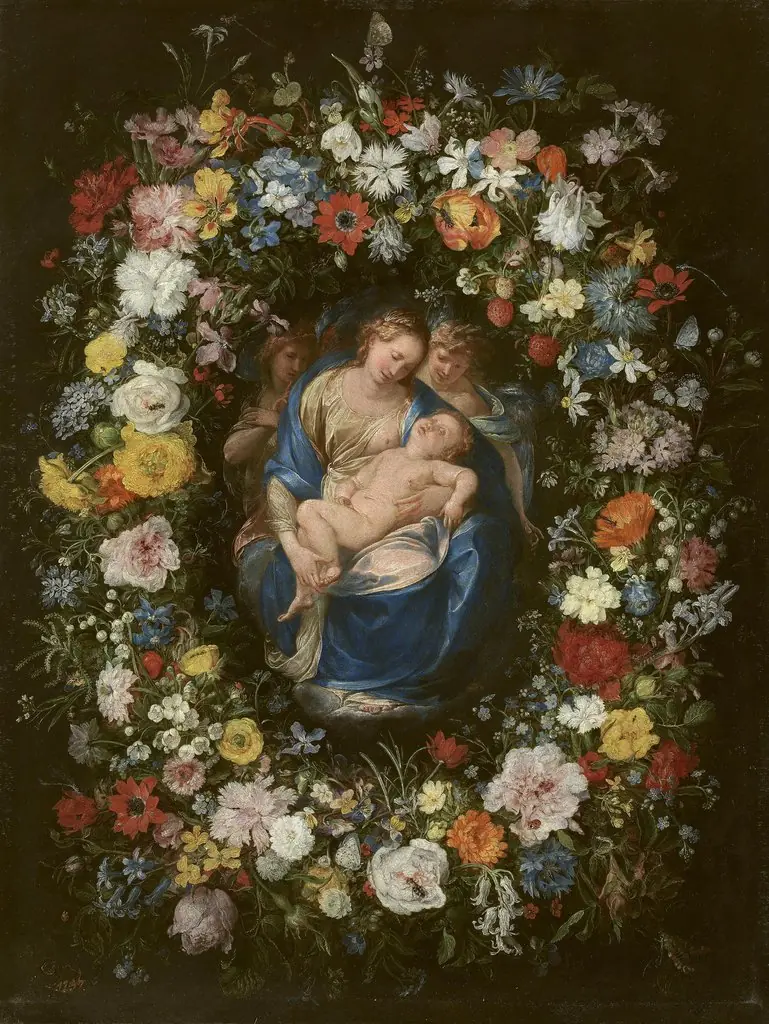 Garland with the Virgin, the Christ Child and two Angels
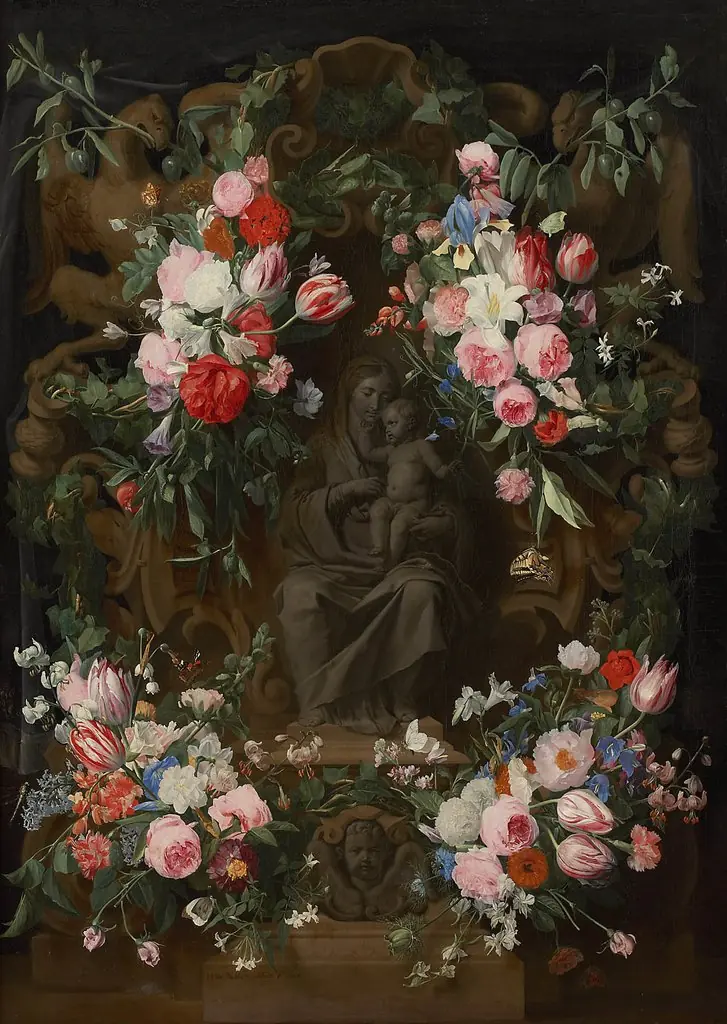 Seated Maria in a Flower Garland
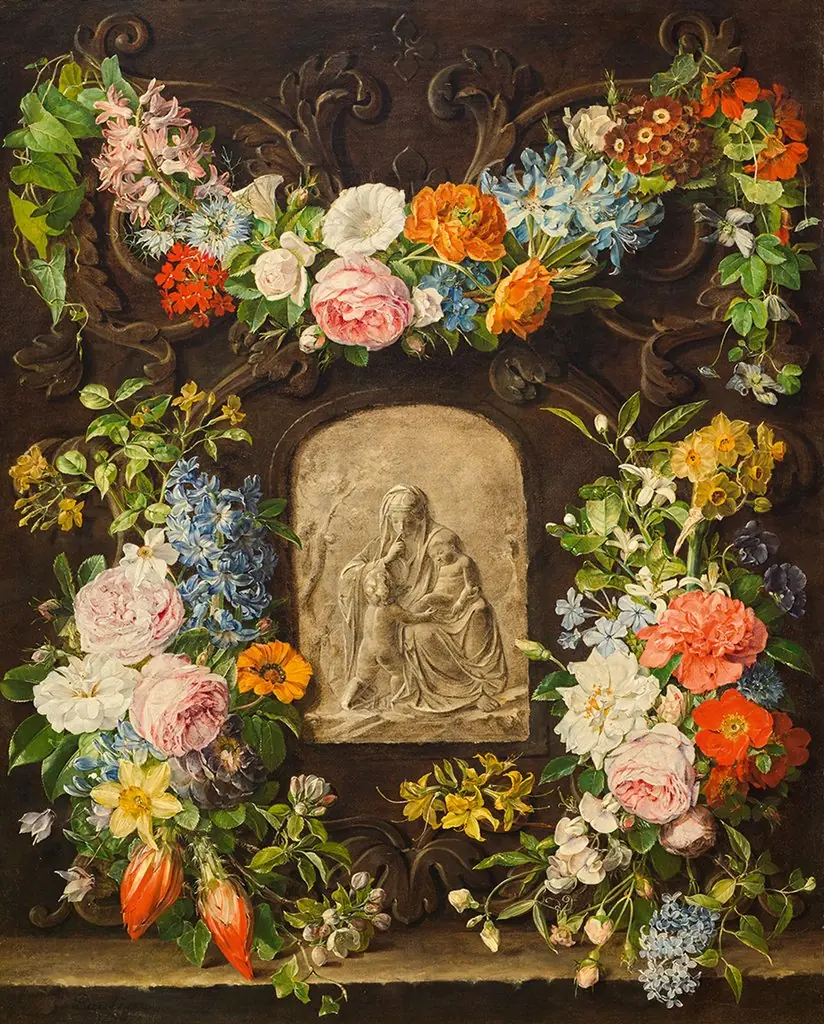 Flower garland with a relief of a Madonna
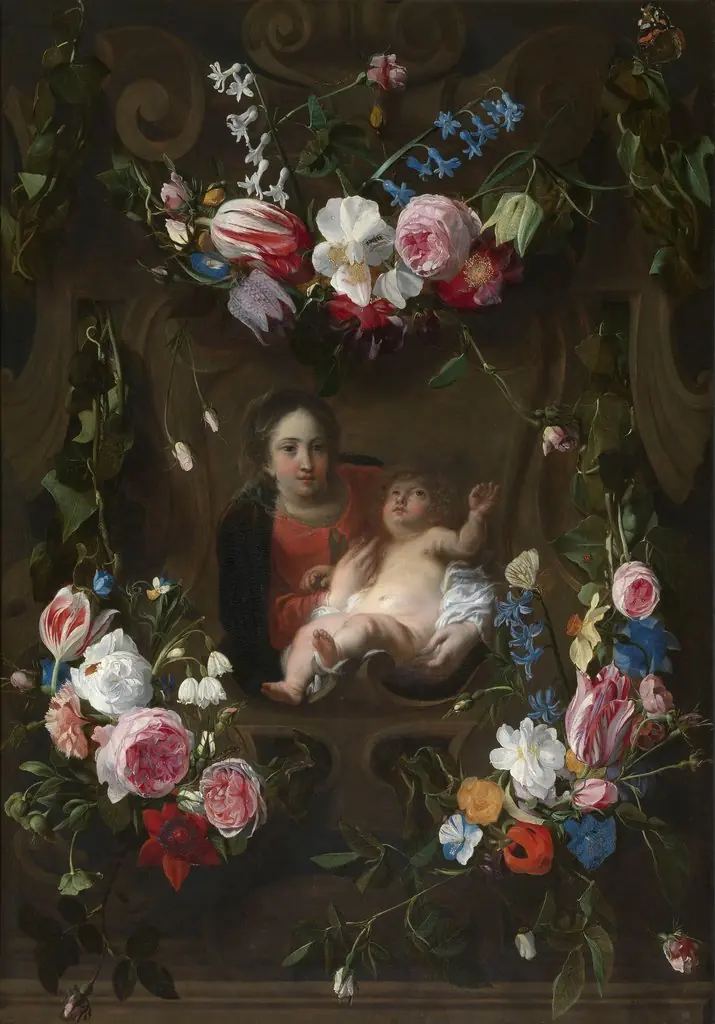 Madonna Surrounded by a Garland of Flowers
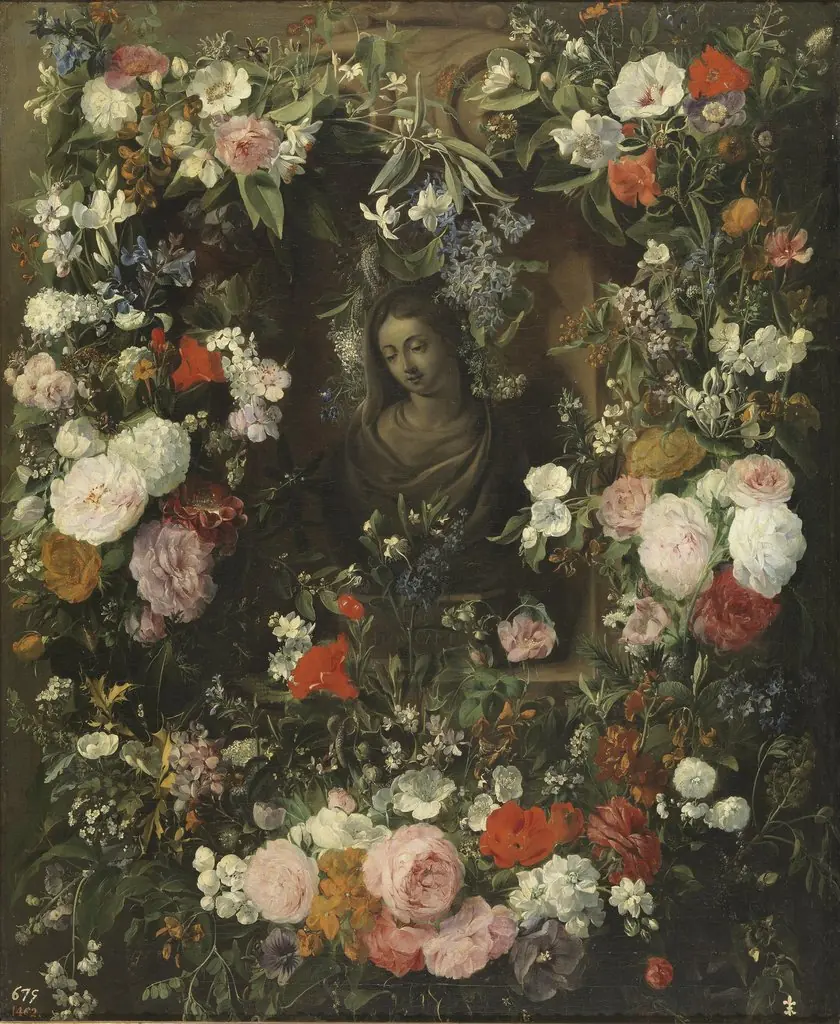 Garland surrounding the Virgin Mary
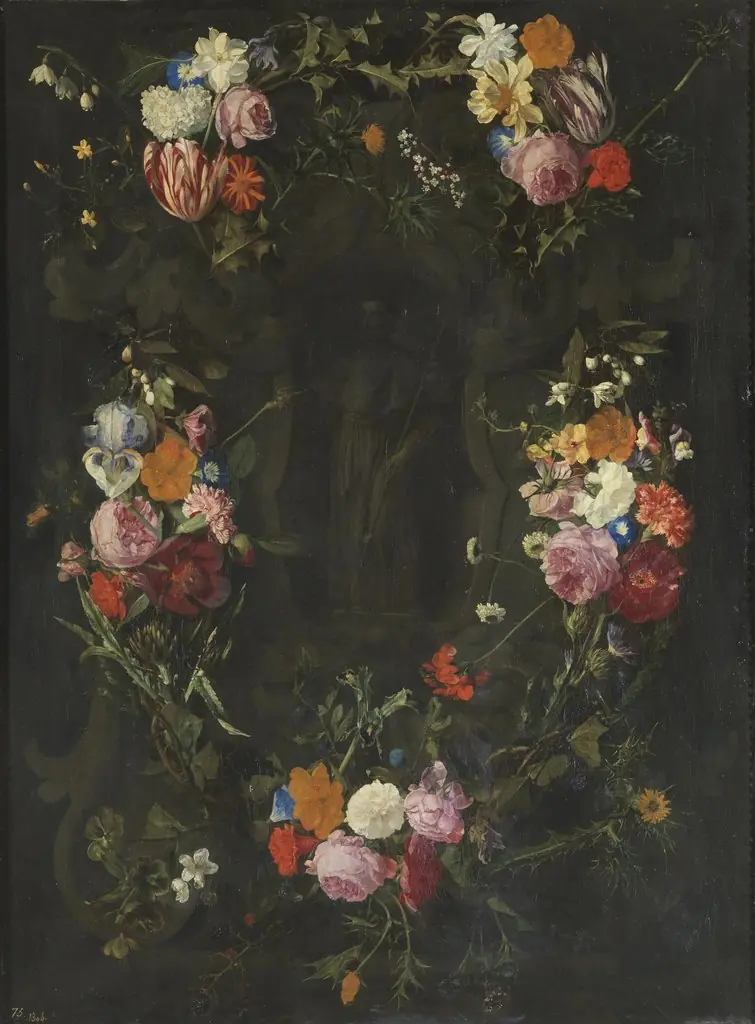 Saint Francis Xavier in a Garland