Artwork
Drovers with cattle under an arch of the Colosseum in Rome
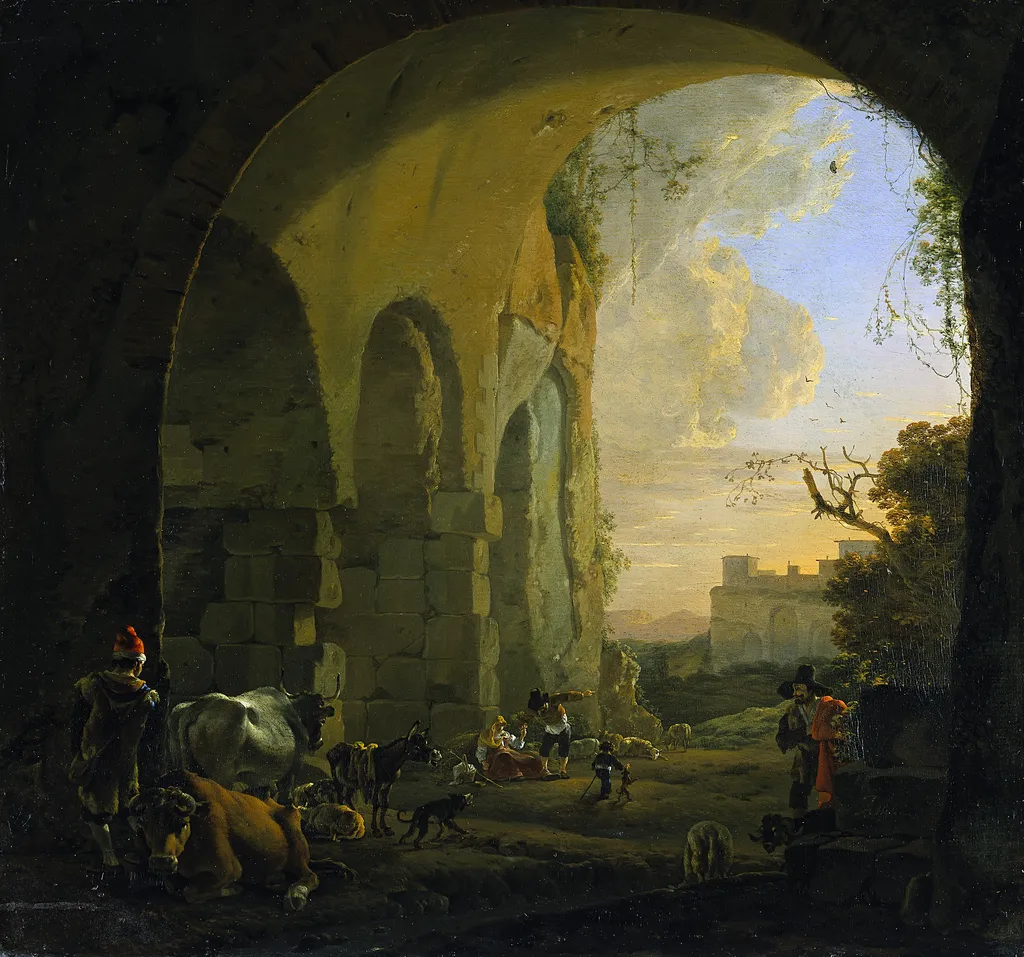
Drovers with cattle under an arch of the Colosseum in Rome is an oil painting by the Dutch Golden Age artist Jan Asselijn. It dates from 1640 and is held in the collection of the Rijksmuseum.
About this work
Overview
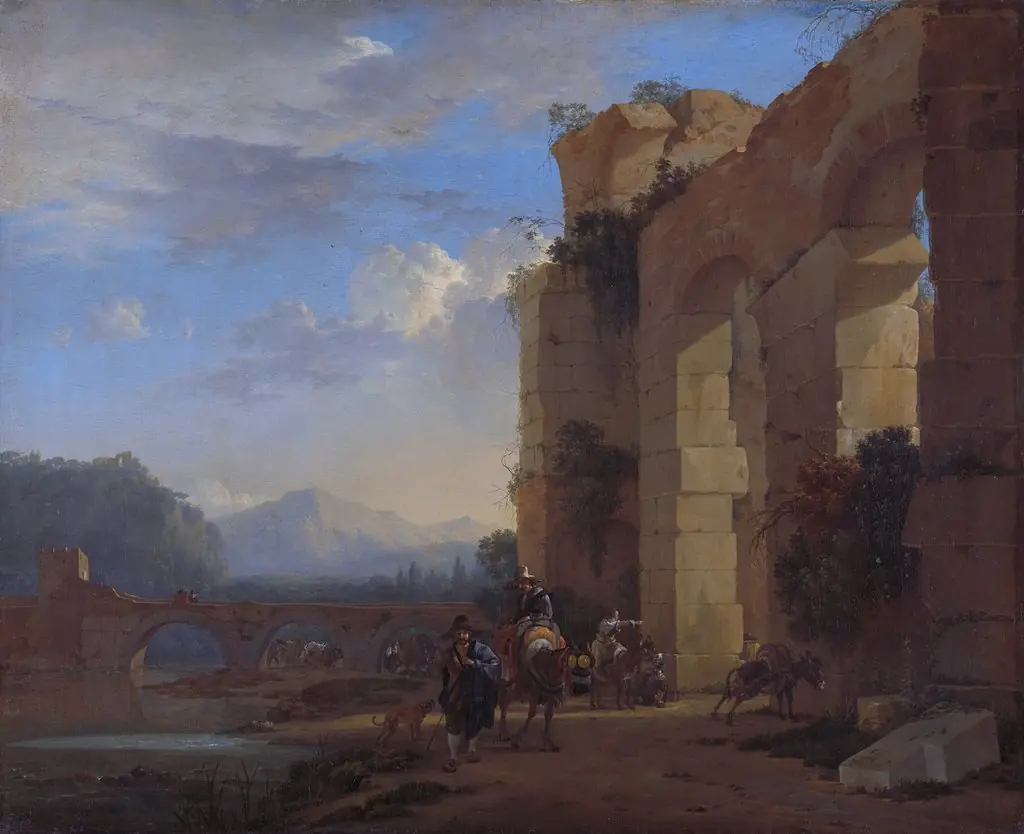
Jan Asselijn’s 1640 oil painting, titled *Drovers with Cattle under an Arch of the Colosseum in Rome*, presents a tranquil scene of livestock and their handlers beneath a massive stone arch. The composition balances the earthy foreground of cows, dogs and figures with a luminous sky framed by the ancient structure, while a distant castle punctuates the horizon. The work is part of the Rijksmuseum’s collection.
Subject & Meaning
The canvas captures a moment of everyday rural activity set against the monumental backdrop of the Roman Colosseum’s arch. By placing drovers and their cattle in the shadow of a historic ruin, Asselijn juxtaposes the continuity of agrarian life with the enduring presence of antiquity, suggesting a dialogue between the timeless landscape and the fleeting human labor within it.
Technique & Style
Executed in oil on canvas, the painting demonstrates Asselijn’s Dutch Golden Age sensibility for atmospheric perspective and naturalistic detail. The artist employs a warm, diffused light that bathes the sky and highlights the textures of stone and animal fur, while the figures are rendered with restrained chiaroscuro, creating depth without overt dramatization.
History & Provenance
Created in 1640, the work has remained in the Netherlands and is now housed in Amsterdam’s Rijksmuseum. Its acquisition reflects the museum’s focus on Dutch 17th‑century painters and the broader European fascination with classical Roman motifs during the period.
Context
Asselijn, a Dutch landscape specialist, frequently incorporated Italianate elements after his travels in Italy. The inclusion of the Colosseum’s arch aligns with the 17th‑century Dutch appetite for exotic, historically charged scenery, merging Northern realism with Southern antiquity to satisfy collectors’ tastes for both topographical accuracy and romanticized ruin.
Artist & collection