Artwork
Muleteers beside an Italian Ruin
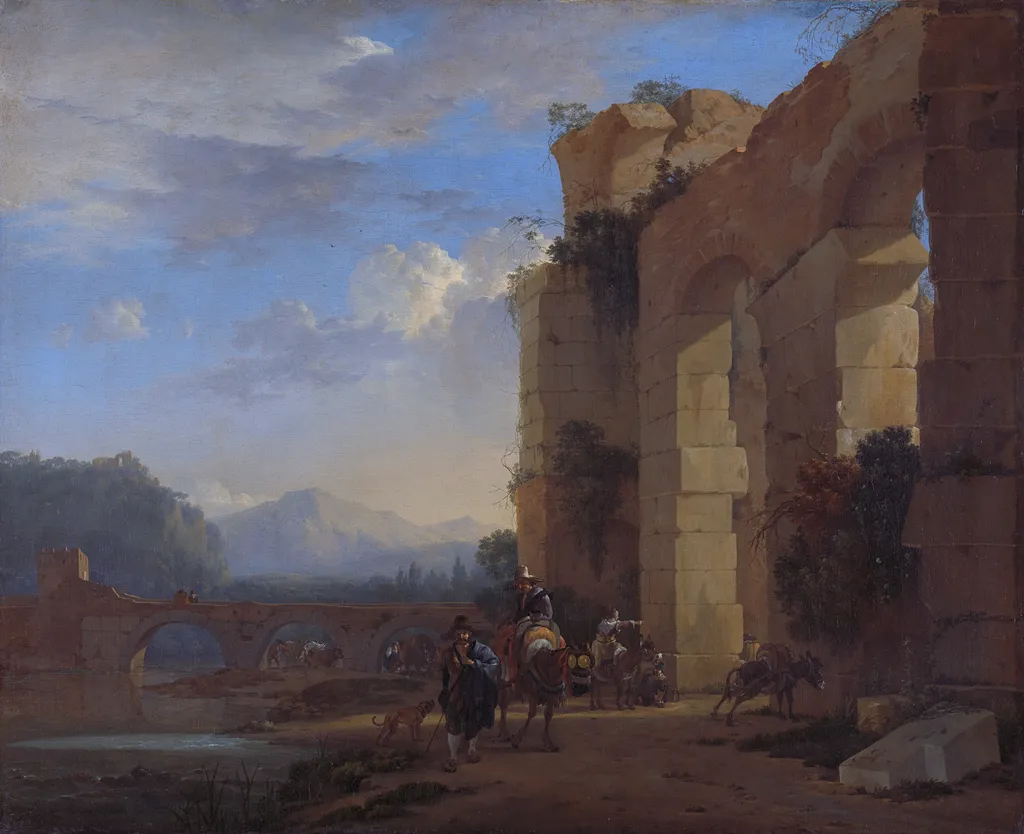
Muleteers beside an Italian Ruin is an oil painting by the Dutch Golden Age artist Jan Asselijn. It dates from 1650 and is held in the collection of the Rijksmuseum.
About this work
Overview
A bridge spans a body of water in the mid-ground, leading the eye toward a soft, clouded sky that bathes the scene in a warm, late-afternoon light.
Muleteers beside an Italian Ruin, painted by Jan Asselijn in 1650, is an oil-on-canvas landscape that exemplifies the Dutch fascination with Italianate scenery during the seventeenth century. The composition centers on a group of muleteers guiding their beasts along a path adjacent to monumental classical ruins, characterized by broken columns and crumbling masonry. These architectural fragments serve as a focal point, contrasting the enduring weight of stone with the transient movement of the travelers. A bridge spans a body of water in the mid-ground, leading the eye toward a soft, clouded sky that bathes the scene in a warm, late-afternoon light. Asselijn, who traveled to Italy in the 1630s, frequently incorporated such Roman motifs to evoke a sense of the sublime and the passage of time. This work reflects his mature style, where the integration of human figures within a vast, atmospheric landscape demonstrates his skill in balancing narrative detail with the grandeur of the natural and built environment. The painting stands as a significant example of the Italianate landscape genre within the Dutch Golden Age, showcasing the artist's ability to synthesize observed Italian topography with the compositional clarity typical of his Dutch contemporaries.
Subject & Meaning
The composition centers on a group of muleteers guiding their laden mules past the weathered remains of classical structures. Broken columns and crumbling walls suggest a bygone era, with a bridge spanning over water in the foreground. The scene is bathed in the soft glow of late afternoon light, casting a calm atmosphere over the figures and their canine companion. Moss-covered stones further emphasize the antiquity of the ruins, contrasting with the active presence of the travelers.
Technique & Style
Executed in oil paint, Asselijn’s work demonstrates a careful rendering of light and atmosphere. The artist employs a palette that captures the gentle quality of a late afternoon sky, with subtle blues and cloud formations. The detailed depiction of the ancient ruins, from their structural decay to the moss growing on the stones, highlights a keen observation of textures and historical elements. This approach contributes to the painting's serene and contemplative mood.
History & Provenance
Created by Jan Asselijn around the mid-17th century, Muleteers beside an Italian Ruin has been preserved as an important example of Dutch landscape painting. The artwork is presently housed within the esteemed collection of the Rijksmuseum, where it contributes to the institution's comprehensive display of art from the Dutch Golden Age. Its continued presence there allows for ongoing study and appreciation of Asselijn's artistic contributions.
Own this work as a print
Artist & collection

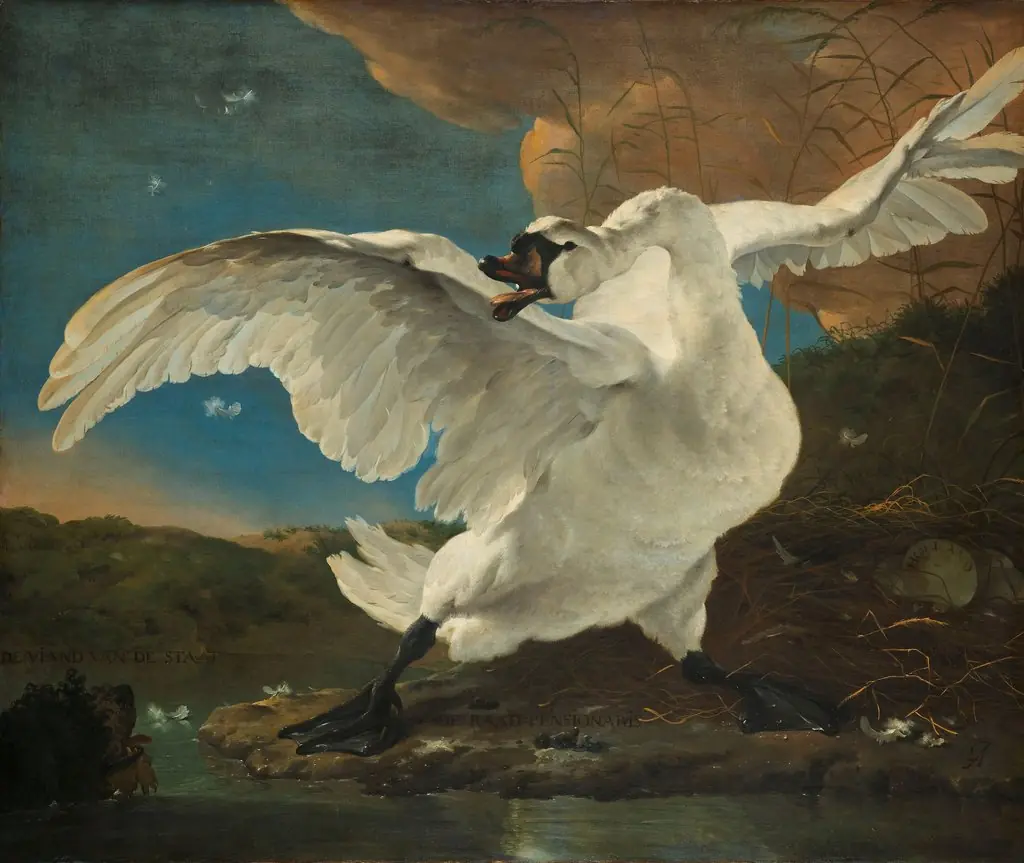 The Threatened Swan
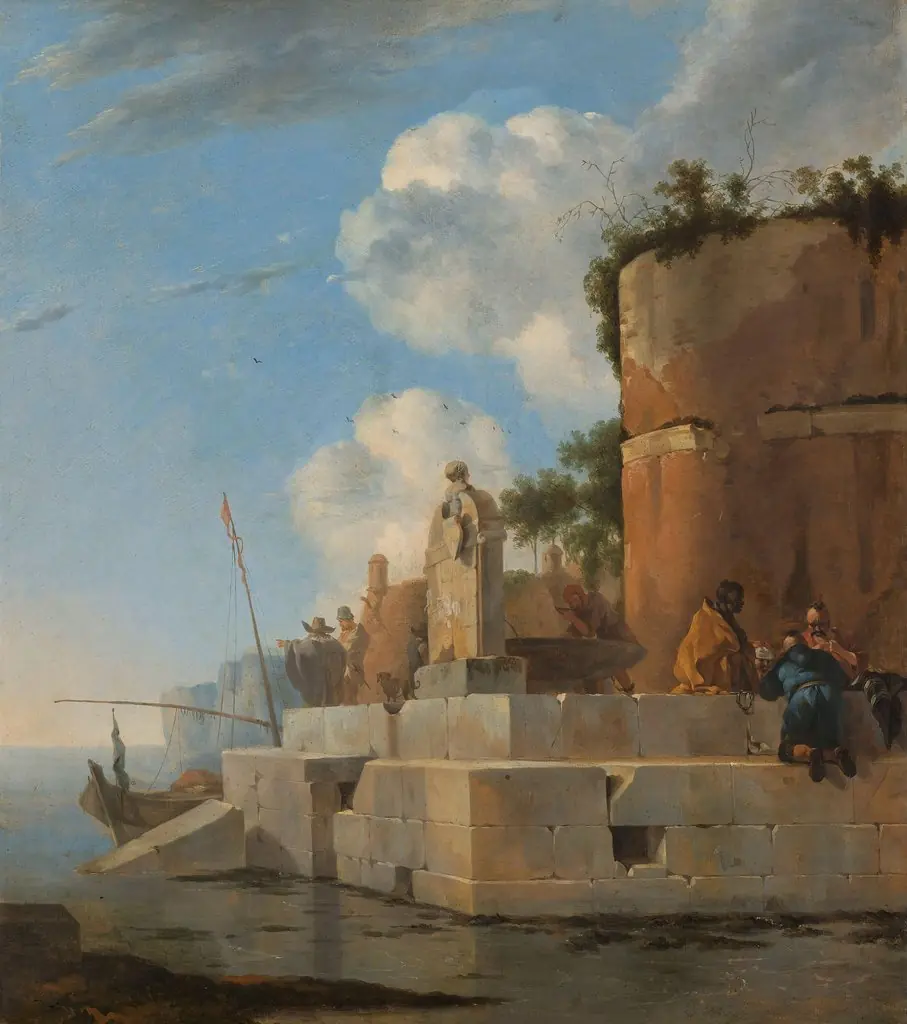 A Coastal Ruin in Italy
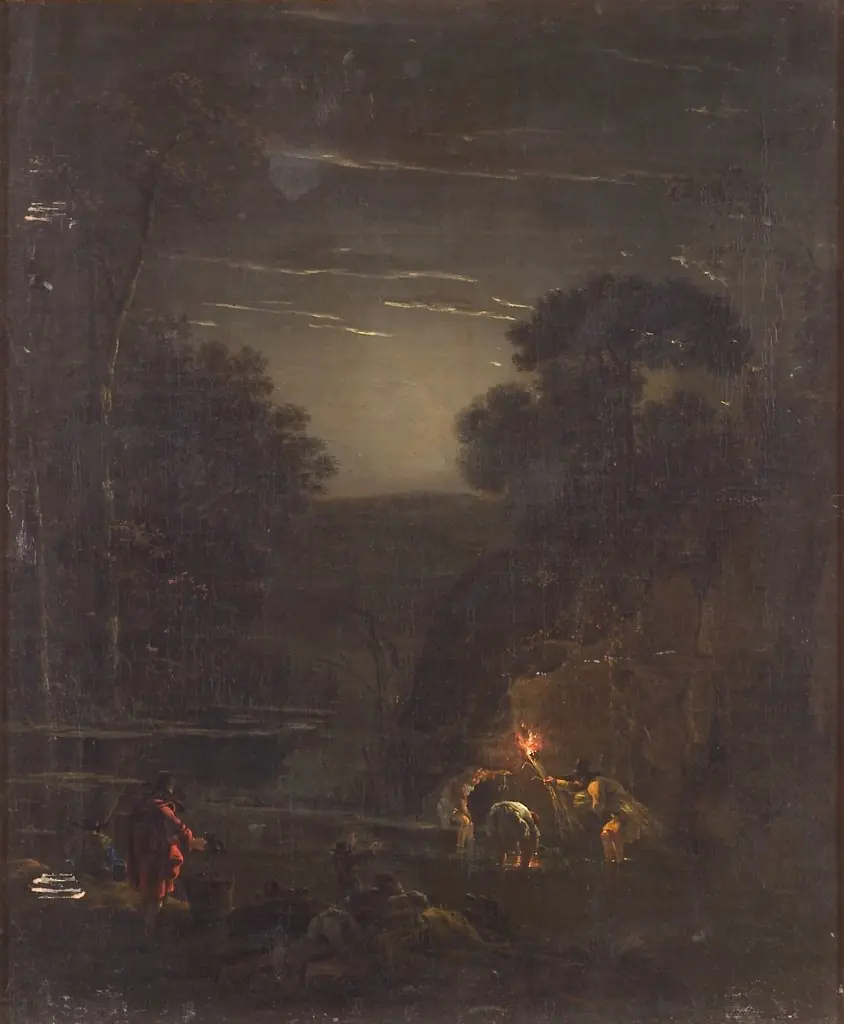 Nocturnal Crayfishing
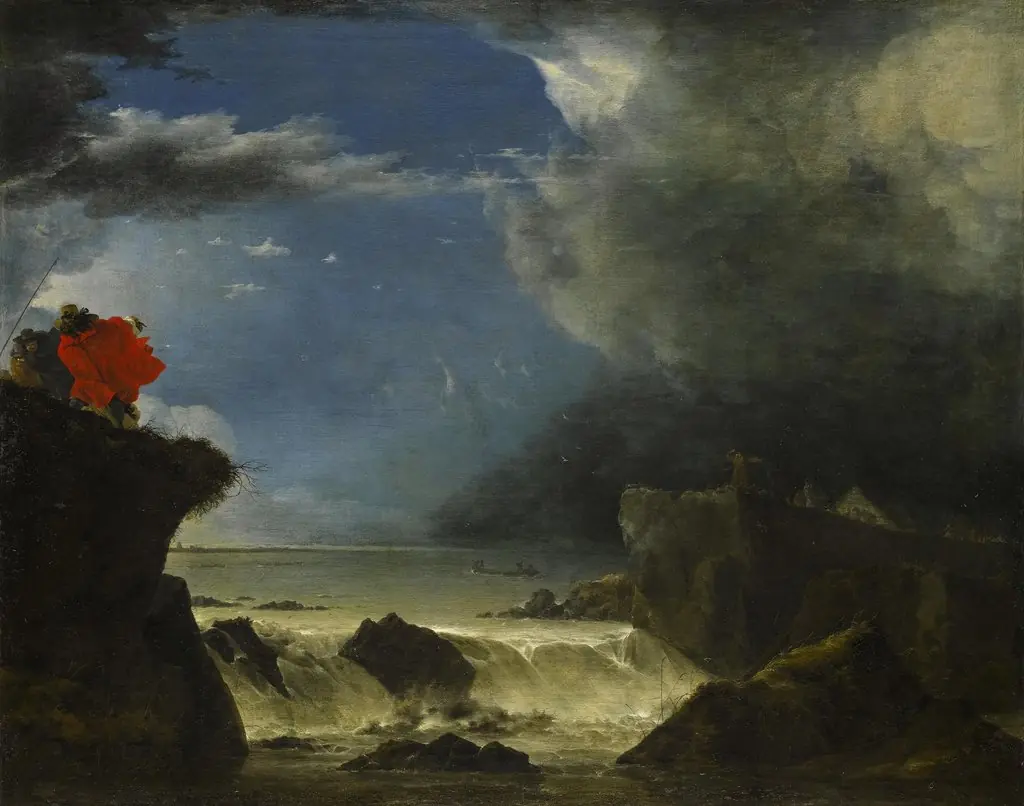 The Breach of the Sint Anthonisdijk on the Night of 5–6 March 1651
 Winter Landscape
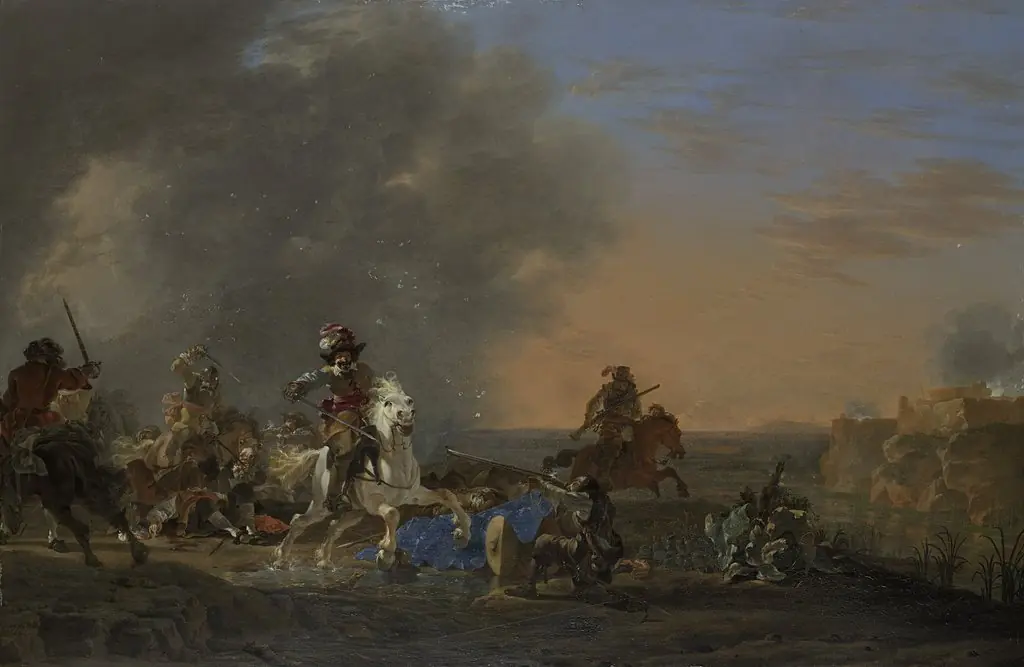 Cavalry attack at sunset
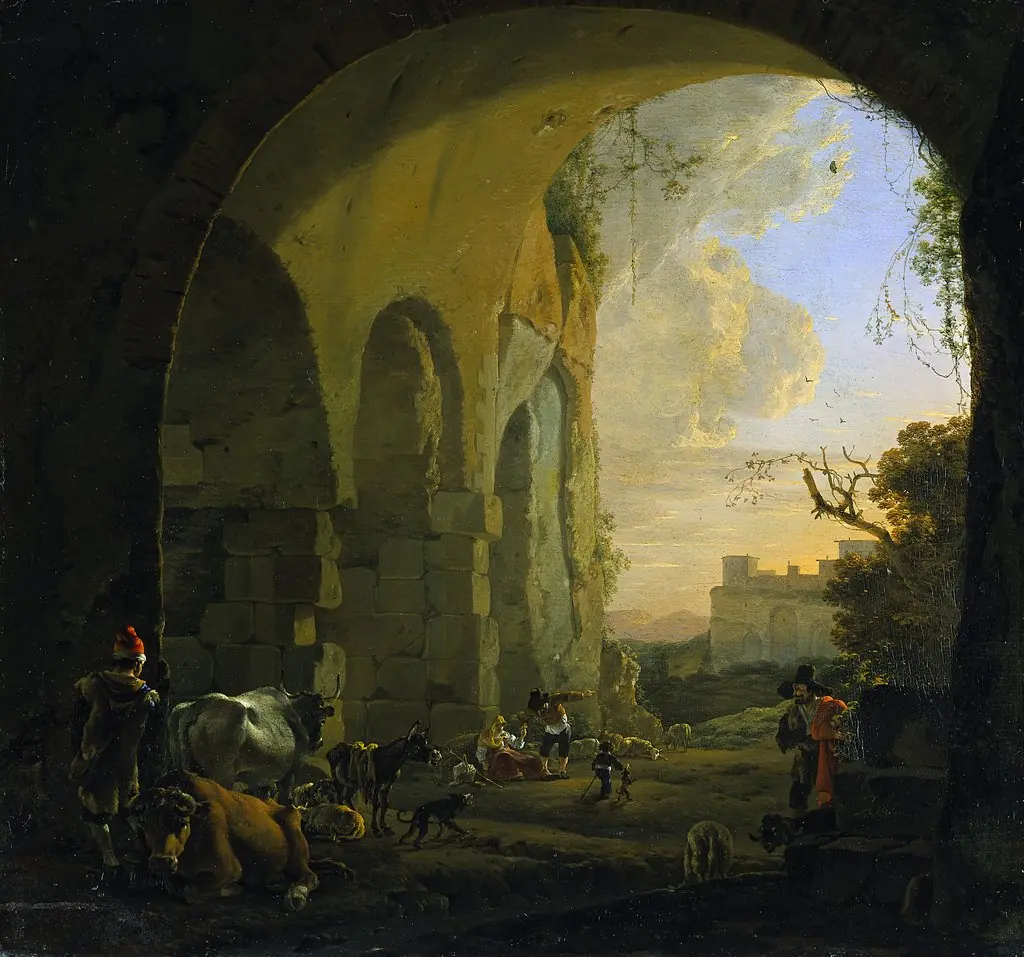 Drovers with cattle under an arch of the Colosseum in Rome
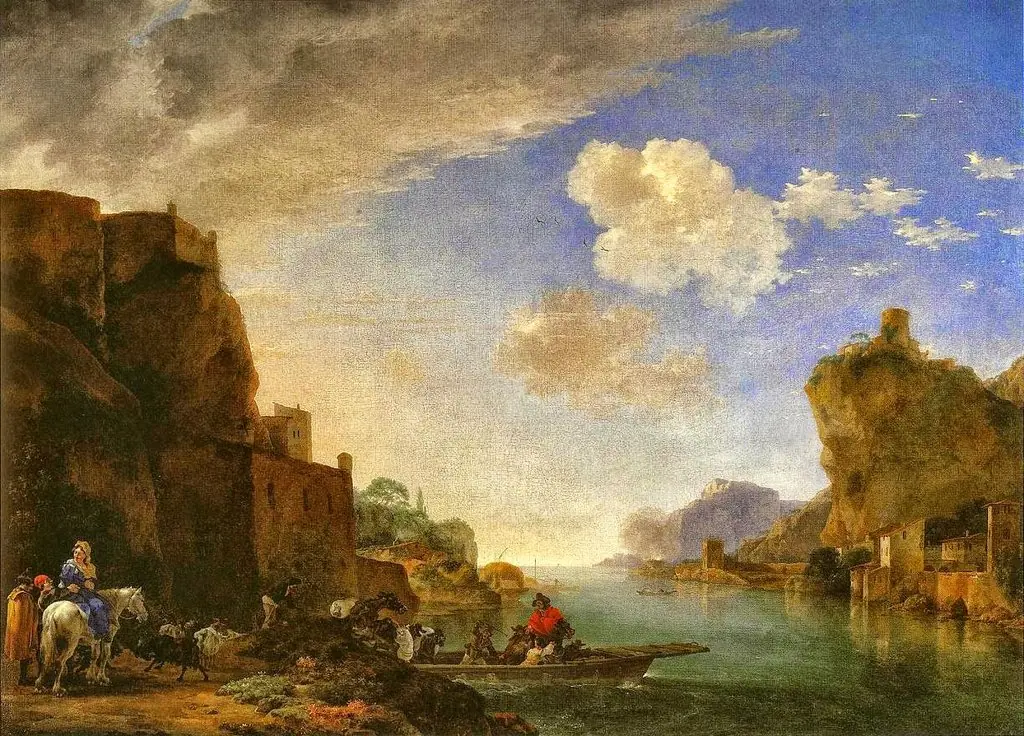 River Landscape with the Fort Saint-Jean and the Chateau Pierre-Scize in Lyon