Artwork
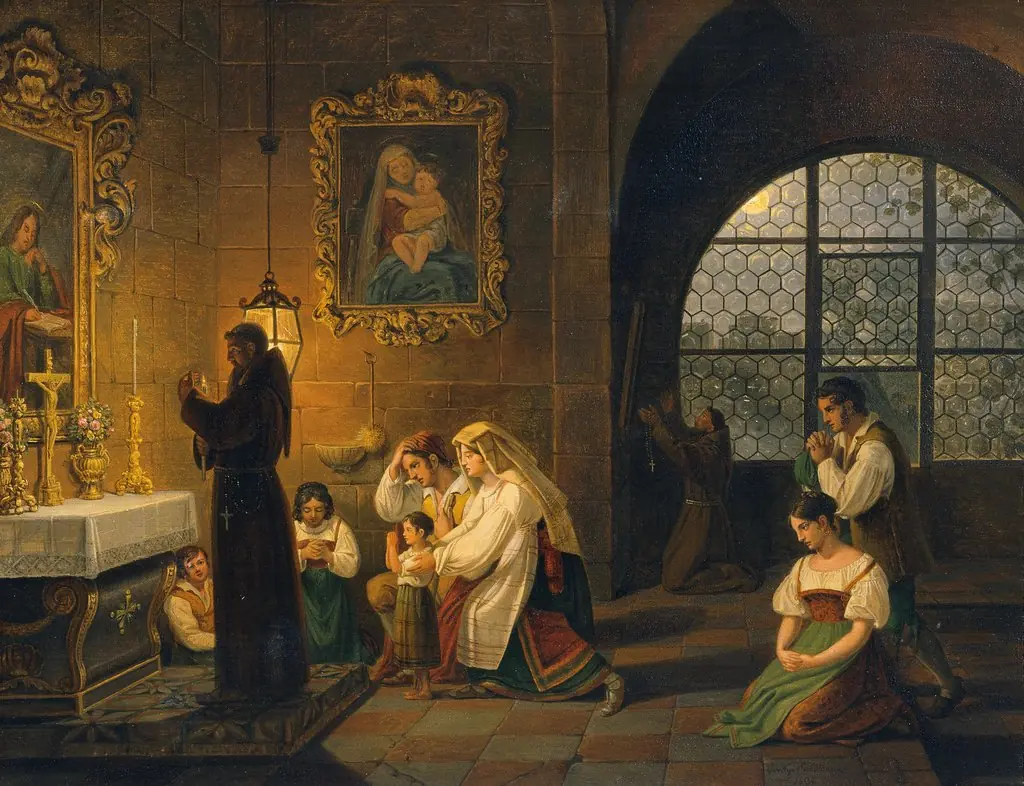
Vow. A Woman Lighting Candles
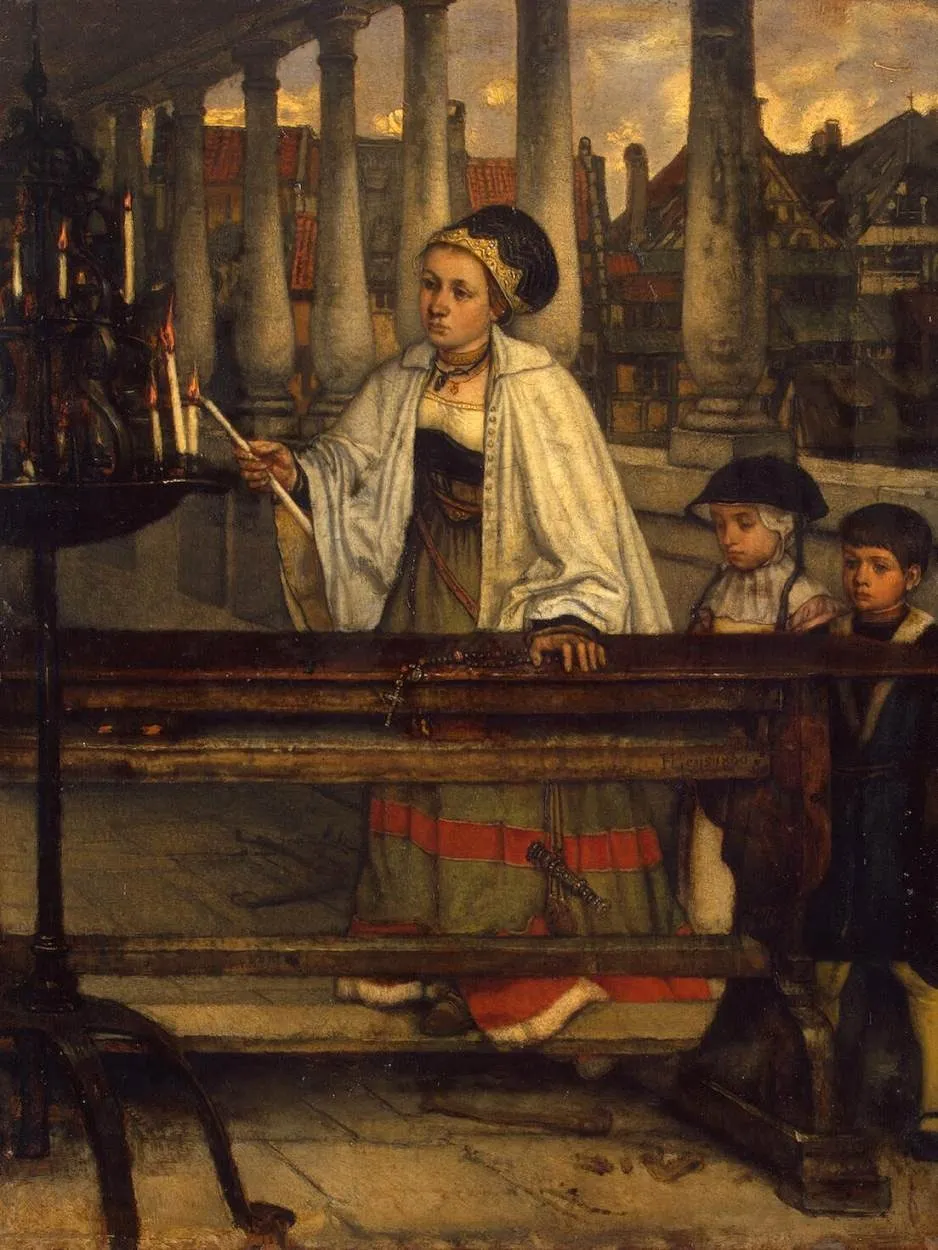
Vow. A Woman Lighting Candles is an oil painting by the Biedermeier artist Jan August Hendrik Leys. It dates from 1860 and is held in the collection of the Hermitage Museum. Henri Leys completed this oil painting in 1860, capturing a quiet domestic moment during a period of artistic transition in Belgium.
About this work
The use of oil paint and the attention to detail in the painting also indicate that it is a work of art from this time period.
The painting depicts a woman in a white robe, standing at a table with a candle in her hand. She is surrounded by two children, who are looking at her. The woman's face is serious, and her eyes are focused on the candle. The background of the painting is a cityscape with buildings and columns.
The woman's clothing and the style of the painting suggest that it is from the 19th century. The use of oil paint and the attention to detail in the painting also indicate that it is a work of art from this time period.
The painting is held at the State Hermitage Museum, which is known for its collection of European art. The technique used in the painting, chiaroscuro, creates a sense of depth and contrast between light and dark areas.
Overview
Henri Leys completed this oil painting in 1860, capturing a quiet domestic moment during a period of artistic transition in Belgium. Though rooted in Romantic traditions, the work reflects a shift toward Realism through its unembellished portrayal of everyday ritual. The painting is part of the State Hermitage Museum’s European collection, where it stands as a subtle example of 19th-century narrative painting.
Subject & Meaning
A woman in a simple white garment lights a candle at a wooden table, flanked by two children who observe her in silence. The act suggests a private vow or devotional rite, possibly tied to personal or familial prayer. Her focused gaze and the stillness of the scene convey introspection rather than theatrical piety, emphasizing inner resolve over public ceremony.
Technique & Style
Leys employed chiaroscuro to model forms with soft contrasts, lending depth to the figures and interior space. The brushwork is precise yet restrained, highlighting textures of fabric, wood, and wax without ornamentation. The background, rendered in muted tones, suggests an architectural setting without distracting from the central figures, reinforcing the painting’s intimate mood.
History & Provenance
Painted during Leys’s mature period, the work emerged as Belgium moved from Romantic idealism toward observational realism. It entered the Hermitage’s collection in the late 19th century, likely through diplomatic or acquisition channels common among European museums at the time. Its presence there reflects the institution’s interest in regional European art beyond the major centers.
Context
In mid-19th-century Belgium, artists like Leys sought to elevate ordinary life through careful composition and emotional restraint. While contemporaries in France and Germany pursued social commentary or dramatic history, Leys focused on quiet, domestic rituals—offering a counterpoint to grander narratives and aligning with broader Northern European tendencies toward introspective realism.
Legacy
Though not widely reproduced, the painting exemplifies Leys’s role in bridging Romantic sentiment and Realist observation. It influenced later Belgian painters who valued psychological nuance over spectacle. Its preservation in the Hermitage ensures its visibility within a broader European context, where its understated power continues to invite quiet contemplation.
Artist & collection
Artist
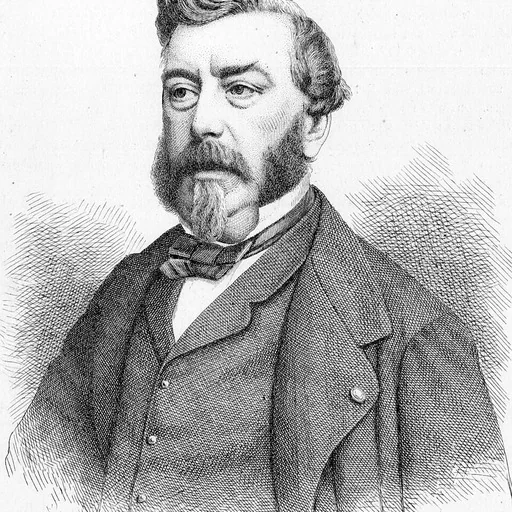
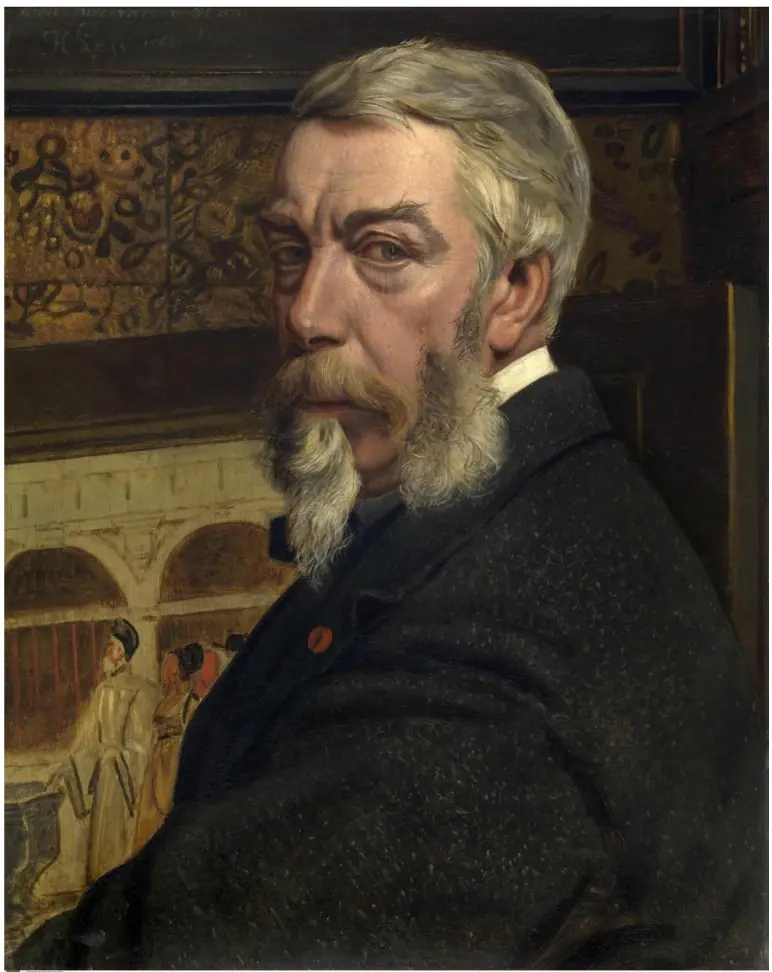
Henri Leys, Hendrik Leys or Jan August Hendrik, Baron Leys (18 February 1815 – 26 August 1869) was a Belgian painter and printmaker.

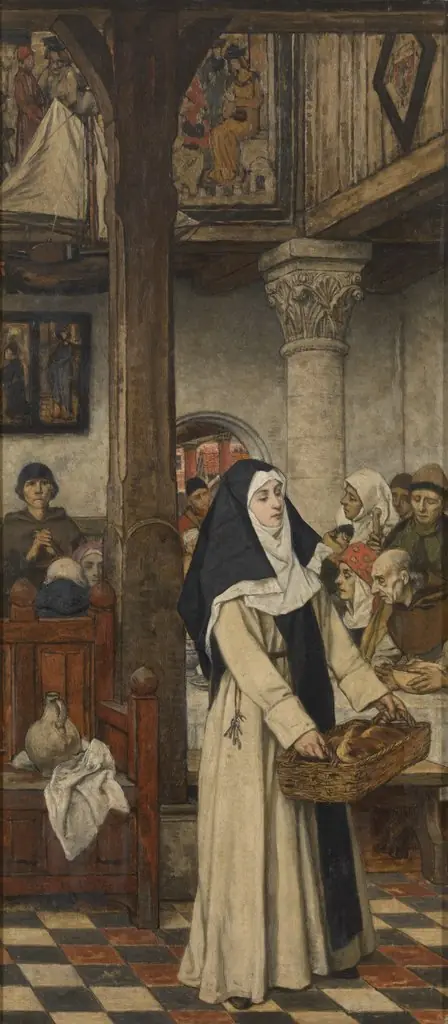 Poor Relief
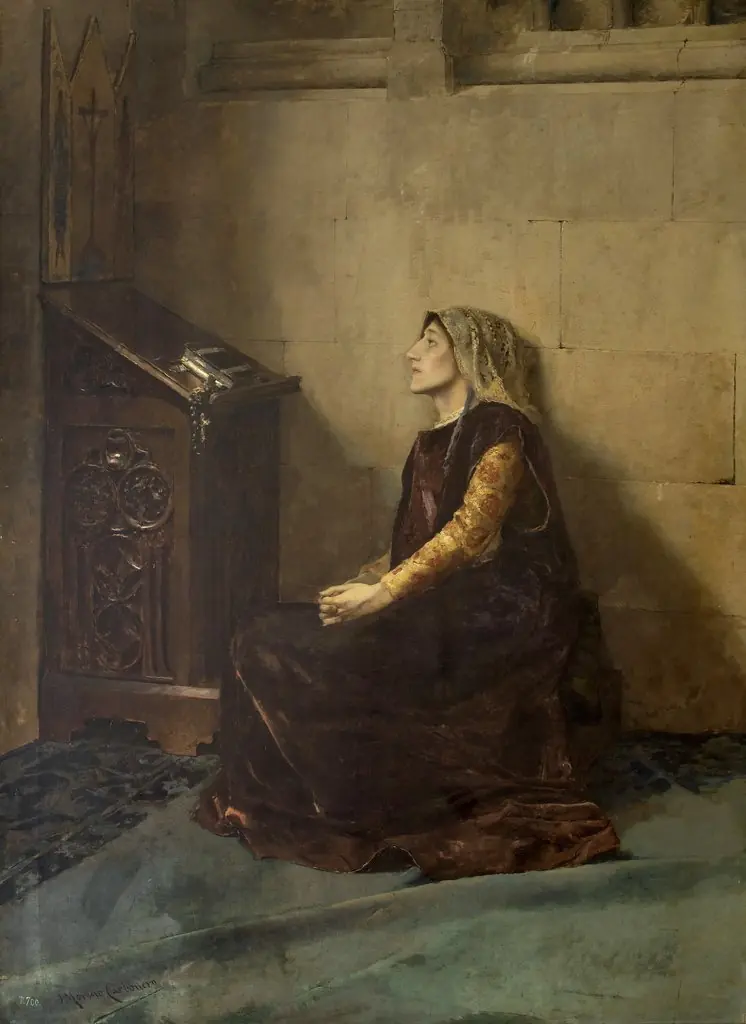 Doña Blanca de Navarra
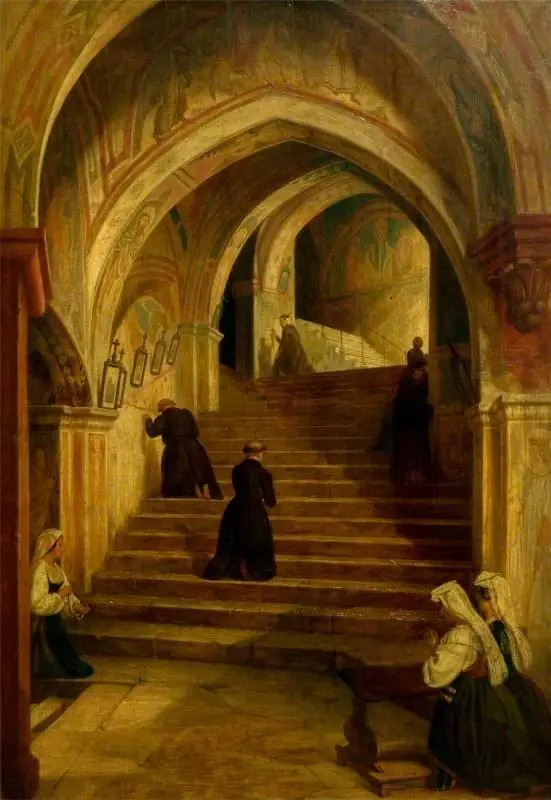 The Scala Santa at the Benedictine Monastery of Subiaco, near Rome
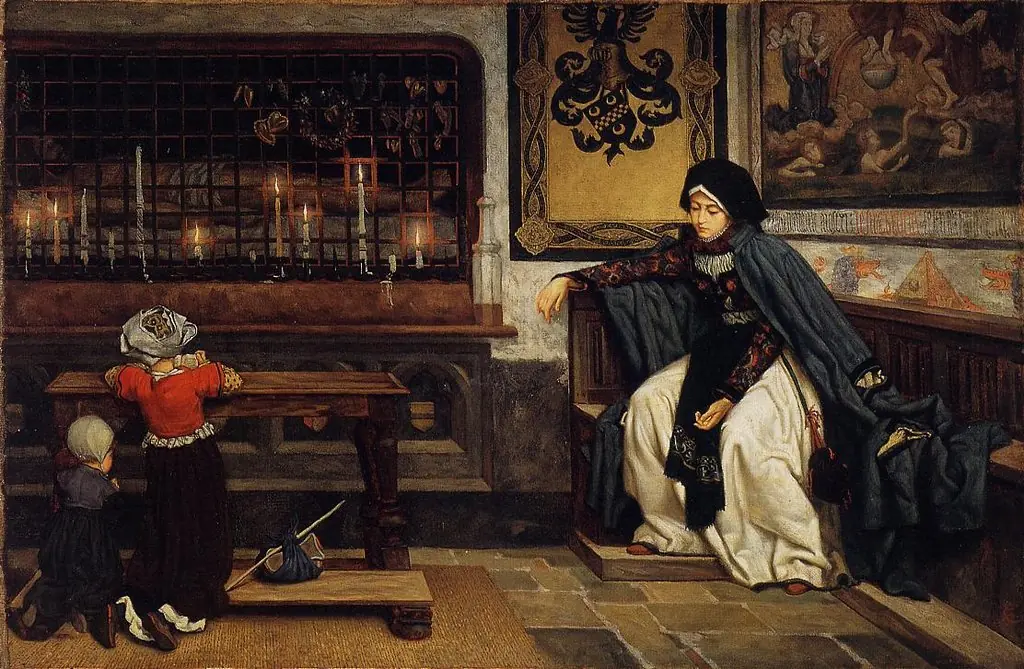 Marguerite in Church
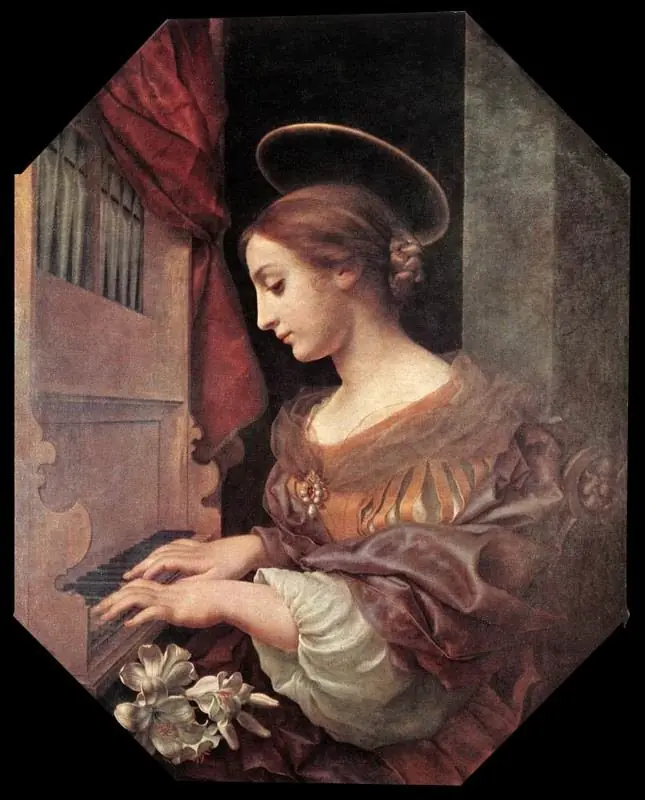 St Cecilia at the Organ
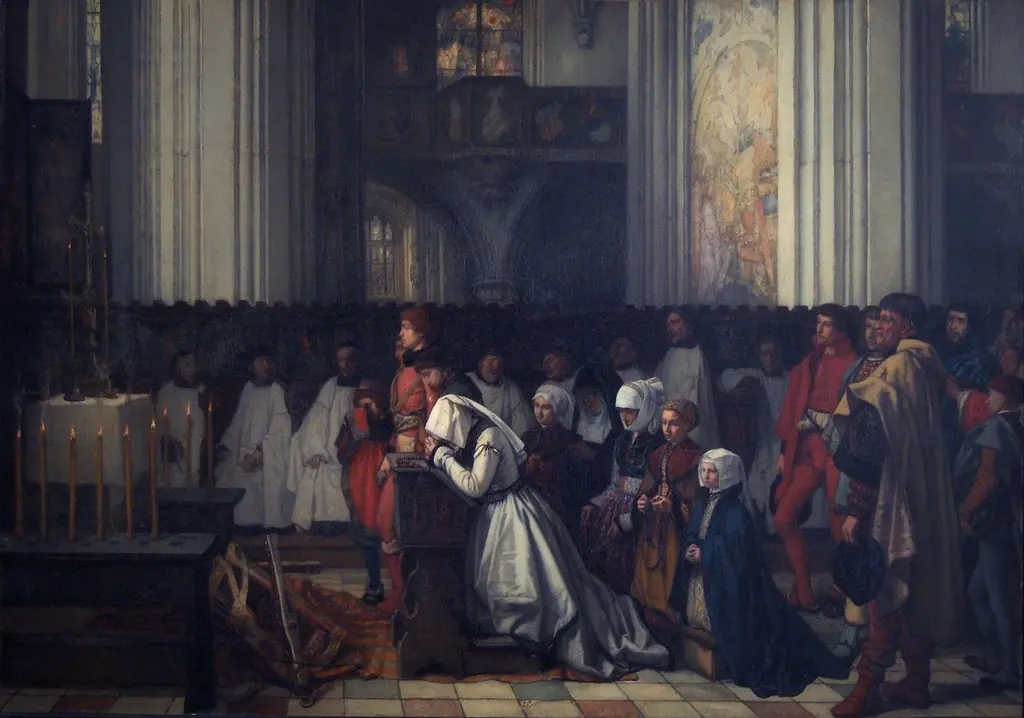 The Trental Mass for Berthal de Haze
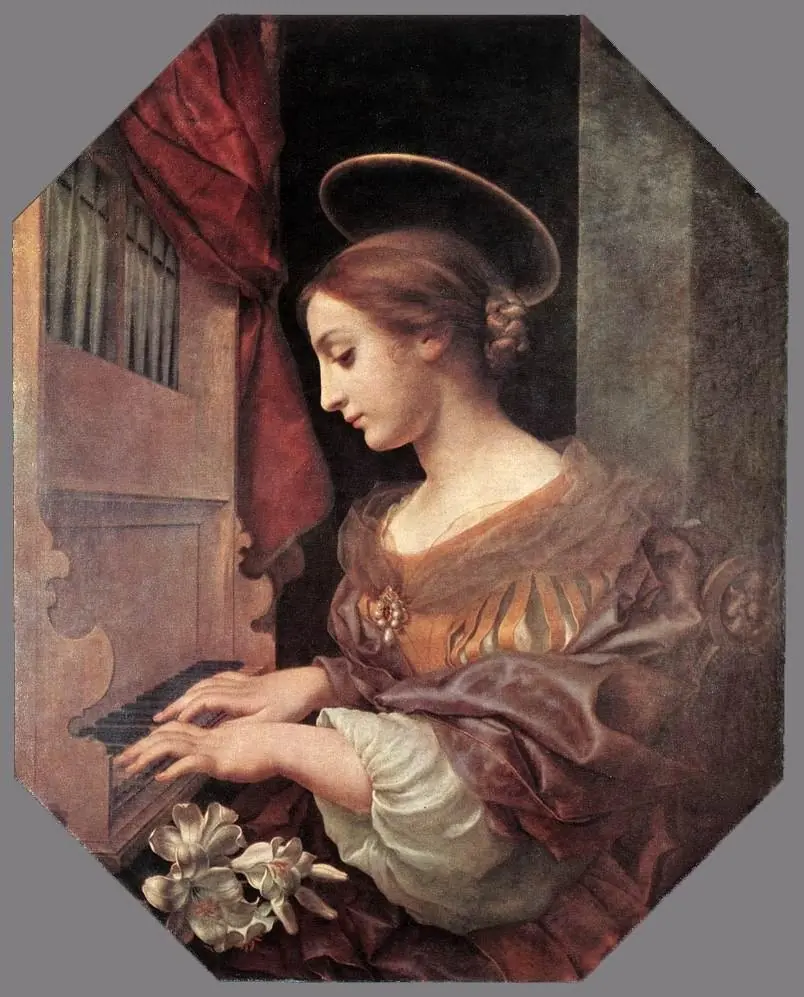 St Cecilia at the Organ.
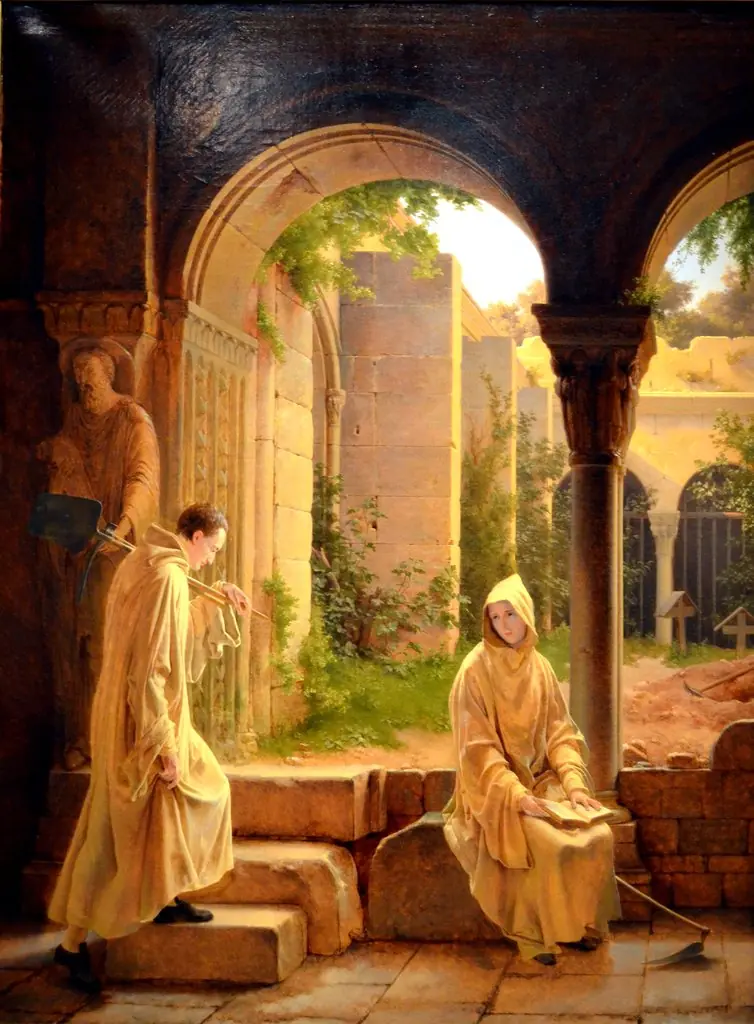 Comminges and Adelaide in the Trappist Monastery
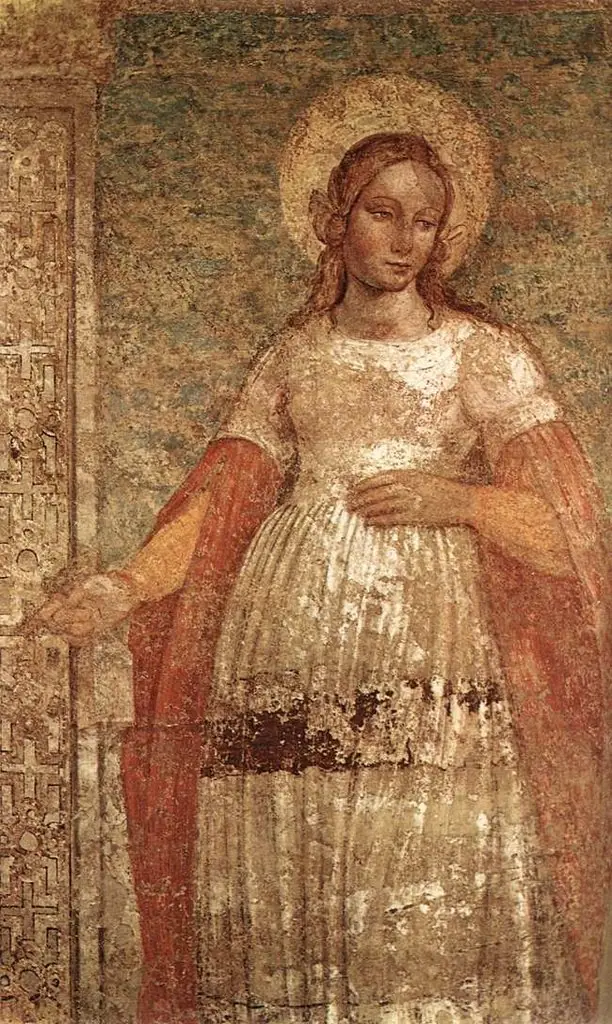 St Agnes
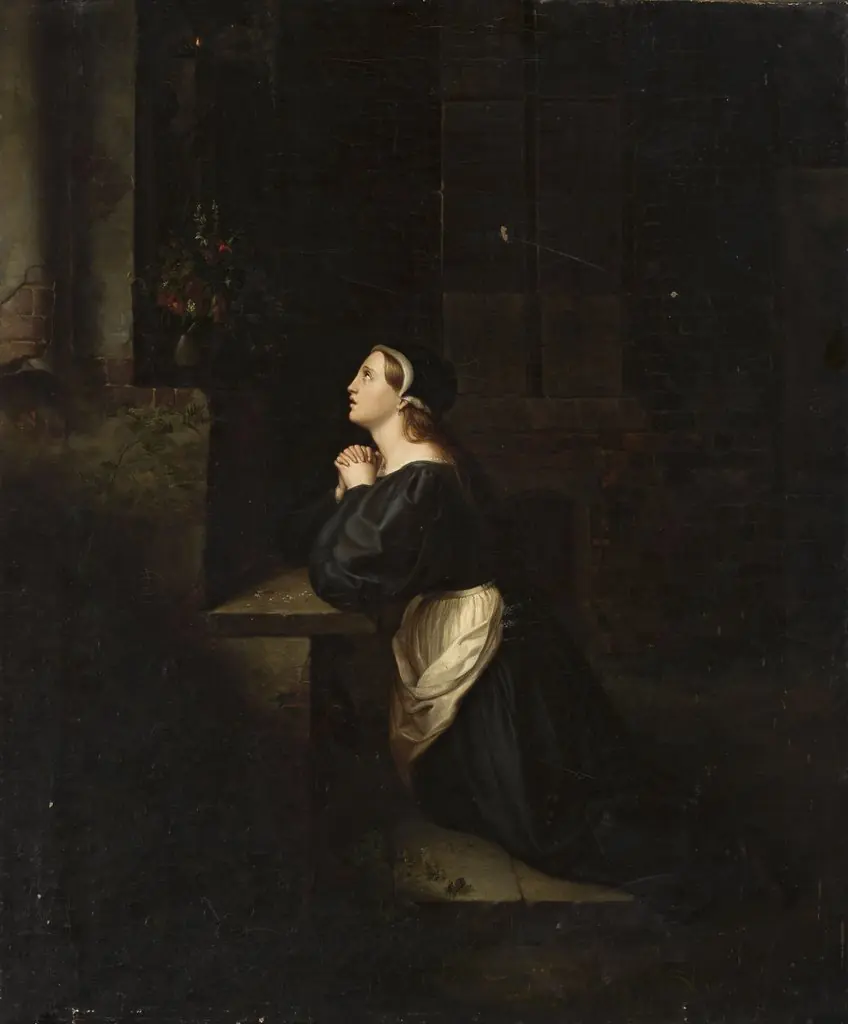 Prayer
 Das Innere einer italienischen Kirche
 Interior of the Capella Palatina in Palermo, Italy