Artwork
The Scala Santa at the Benedictine Monastery of Subiaco, near Rome
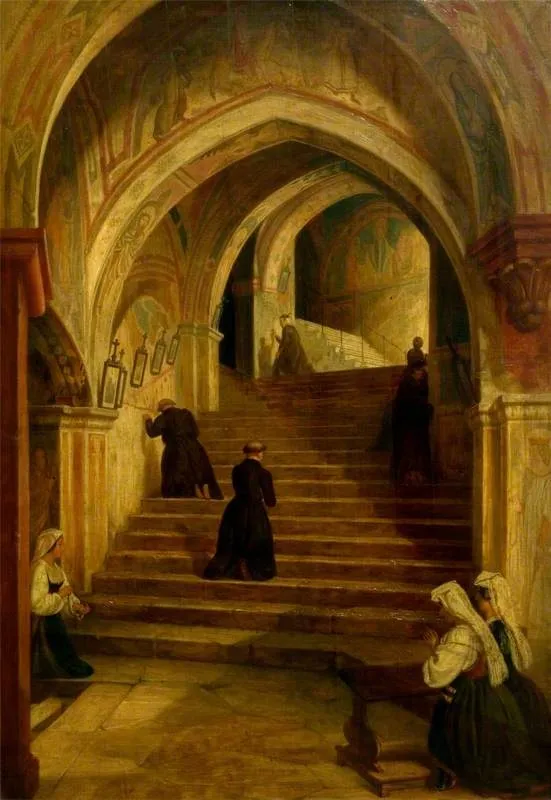
The Scala Santa at the Benedictine Monastery of Subiaco, near Rome is an oil painting by the British Romanticist artist Solomon Hart. It dates from 1845 and is held in the collection of the Victoria and Albert Museum.
About this work
Overview
Painted in 1845 by Solomon Alexander Hart, this oil on canvas work captures the Scala Santa within the Benedictine Monastery of Subiaco, near Rome.
Painted in 1845 by Solomon Alexander Hart, this oil on canvas work captures the Scala Santa within the Benedictine Monastery of Subiaco, near Rome. Hart, a British artist and the first Jewish member of the Royal Academy, rendered the site with careful attention to its spiritual atmosphere. The painting is part of the Victoria and Albert Museum’s collection and reflects the British Romantic tradition’s interest in sacred architecture and contemplative human behavior.
Subject & Meaning
The painting portrays pilgrims ascending the sacred staircase, some kneeling in prayer, others moving in quiet procession. The staircase, believed to be the steps from Pontius Pilate’s palace in Jerusalem, holds deep religious significance. Hart emphasizes devotion through stillness and gesture, avoiding spectacle. The scene conveys reverence not through grandeur alone, but through the subdued presence of individuals engaged in personal worship.
Technique & Style
Hart employed chiaroscuro to model the stone architecture and guide the viewer’s gaze upward along the staircase. The interplay of light and shadow enhances the depth of the arched vaults and textured walls. Frescoes lining the corridor are rendered with restrained detail, suggesting historical layers without overwhelming the composition. His brushwork is precise yet unobtrusive, favoring atmospheric cohesion over ornamental flourish.
History & Provenance
Created during Hart’s travels in Italy, the painting was completed in 1845 and later entered the Victoria and Albert Museum’s collection. It reflects the 19th-century British fascination with continental religious sites and the growing interest in documenting sacred spaces through art. As a Jewish artist in a predominantly Christian cultural milieu, Hart’s choice of subject may reflect both scholarly curiosity and a desire to engage with broader European artistic traditions.
Context
In mid-19th-century Britain, travel to Italy and the depiction of its religious sites were common among Romantic painters. Hart’s work aligns with this trend, yet his perspective as a Jewish observer adds a layer of cultural distance. The painting does not seek to convert or idealize, but to observe — offering a quiet record of ritual practice in a place long venerated by pilgrims across centuries.
Legacy
Though not widely exhibited today, the painting remains a significant example of Hart’s contribution to British art. It stands as a testament to his technical discipline and his role in expanding the scope of 19th-century British painting to include diverse spiritual landscapes. His ability to convey solemnity without sentimentality continues to inform understandings of religious representation in Victorian art.
Artist & collection
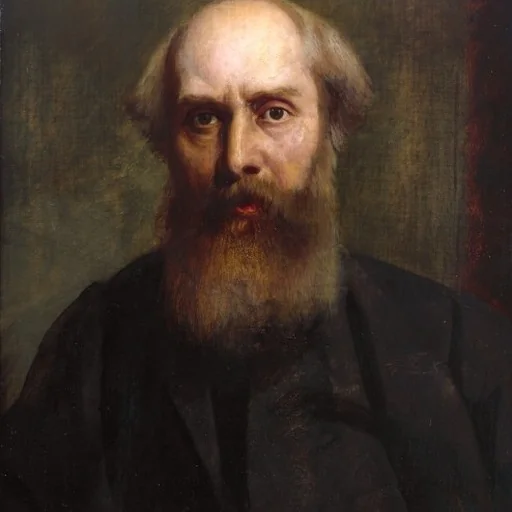
Artist
Solomon Alexander Hart (April 1806 – 11 June 1881) was a British painter and engraver. He was the first Jewish member of the Royal Academy in London and was probably the most important Jewish artist working in England in the 19th century.

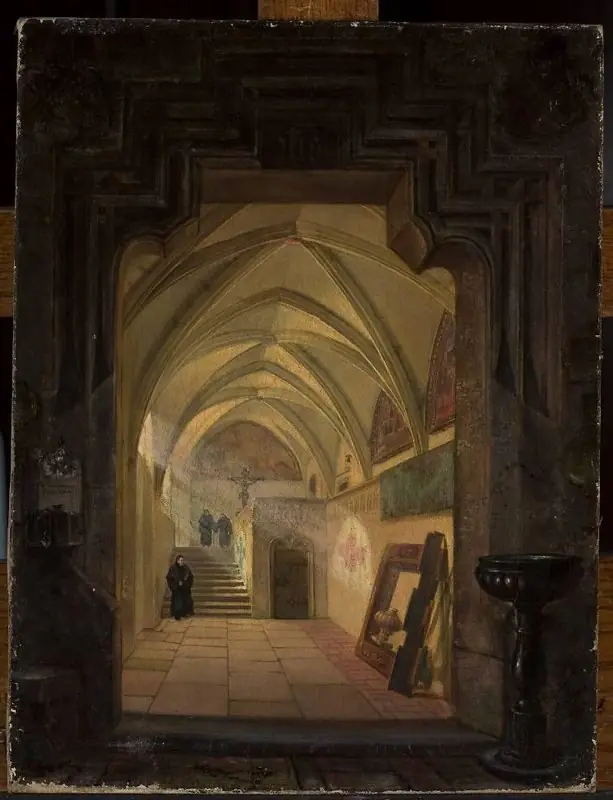 Interior of the cloister at the church of St. Catherine in Kraków
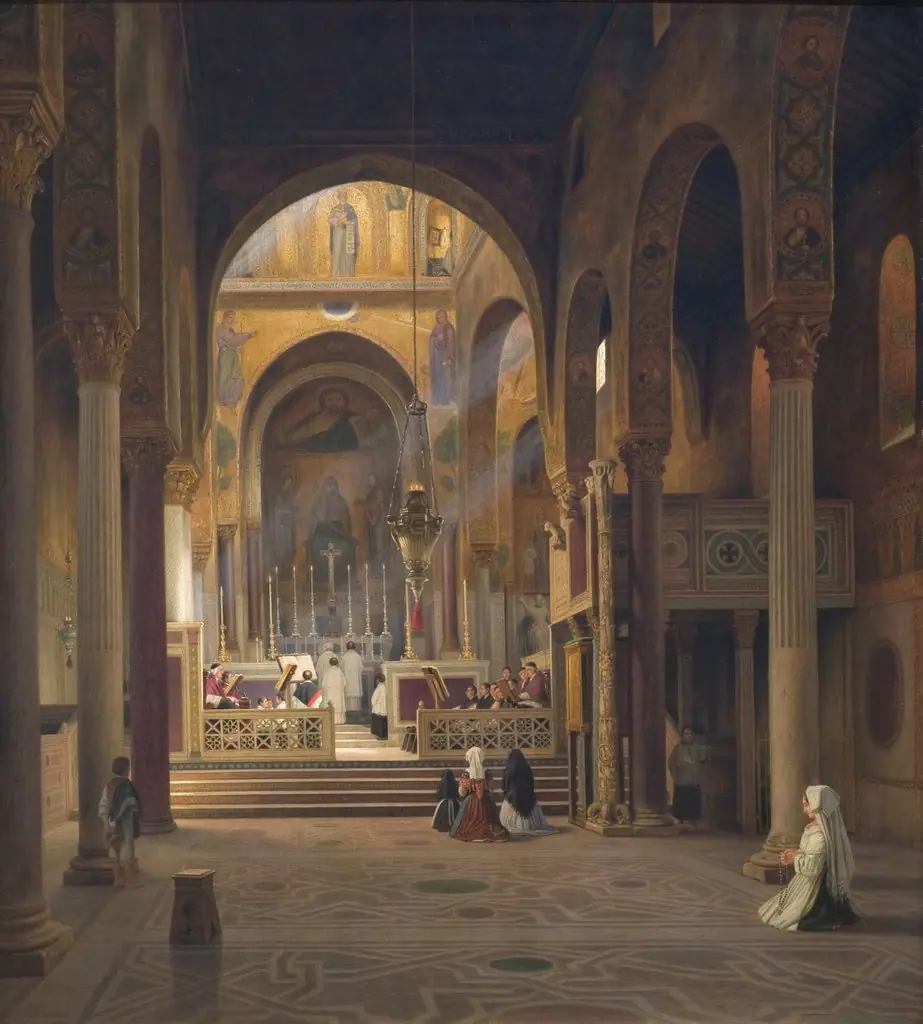 Interior of the Capella Palatina in Palermo, Italy
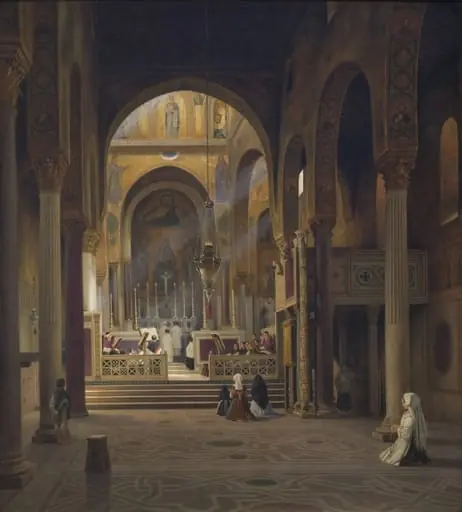 Interior of the Capella Palatina in Palermo, Italy
 The Cloisters, San Lorenzo fuori le mura
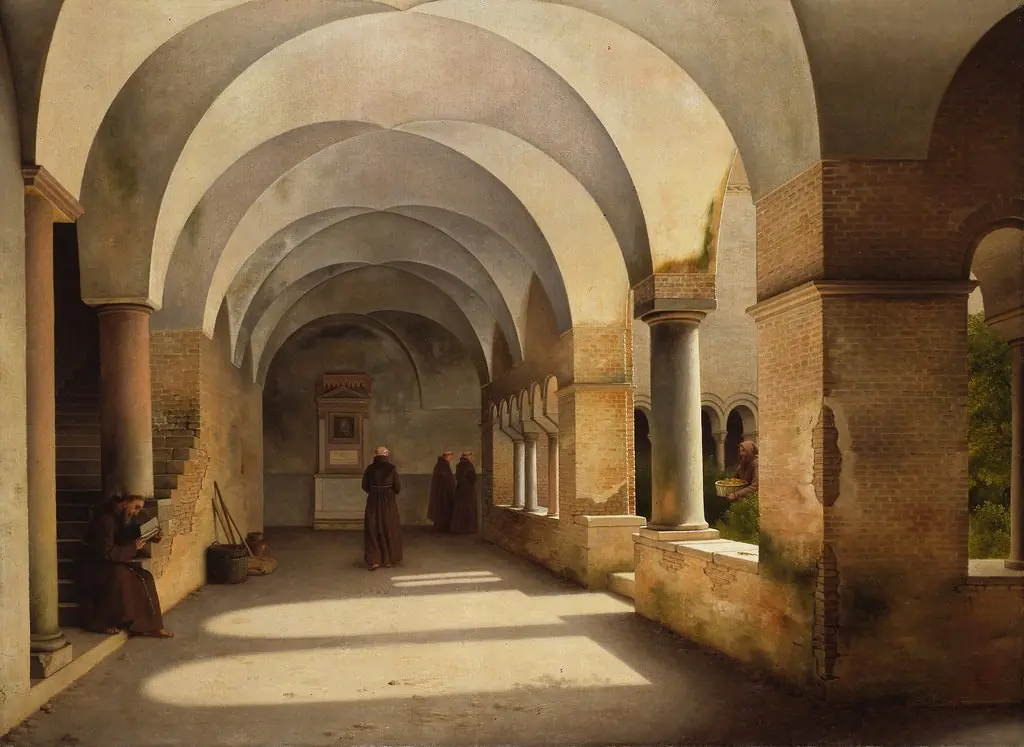 The Cloisters, San Lorenzo fuori le mura
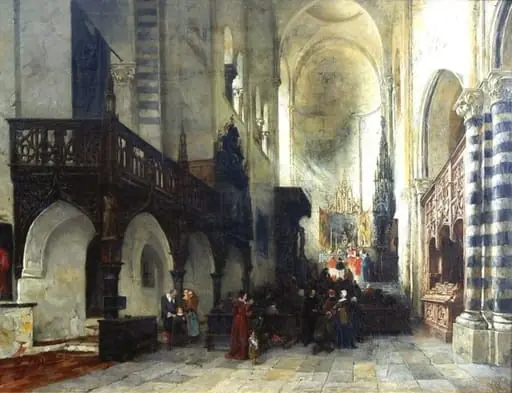 Interior de biserică
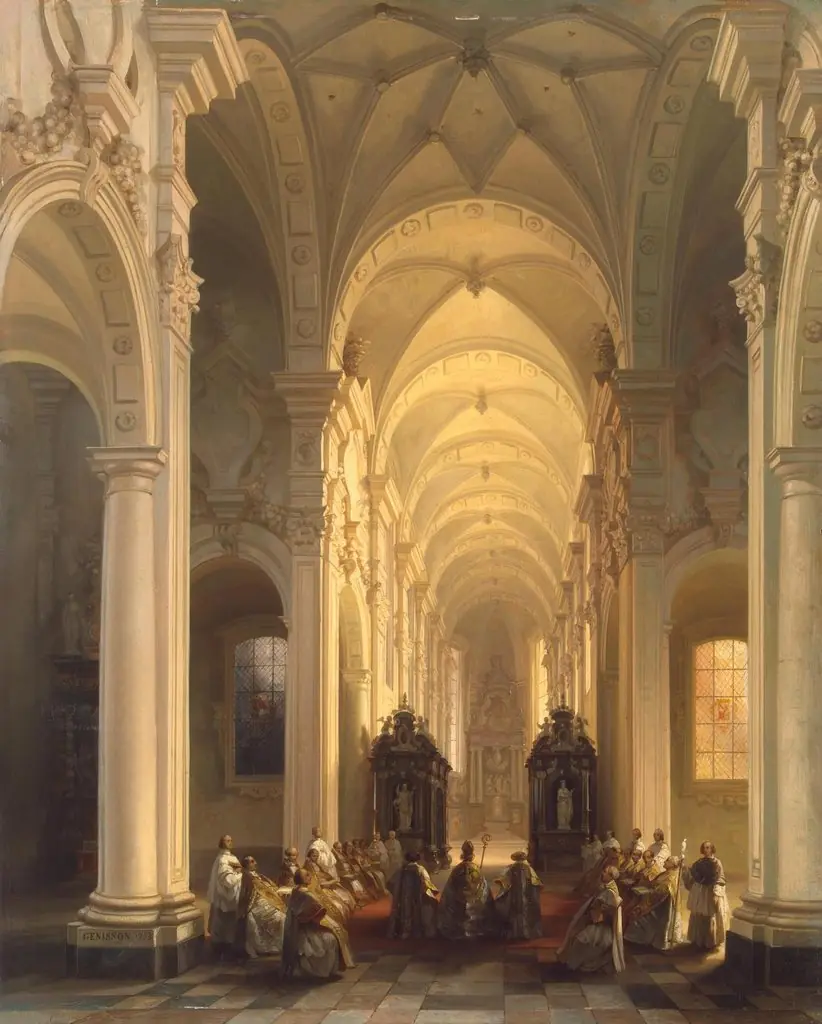 Interior of a Church in Averbode
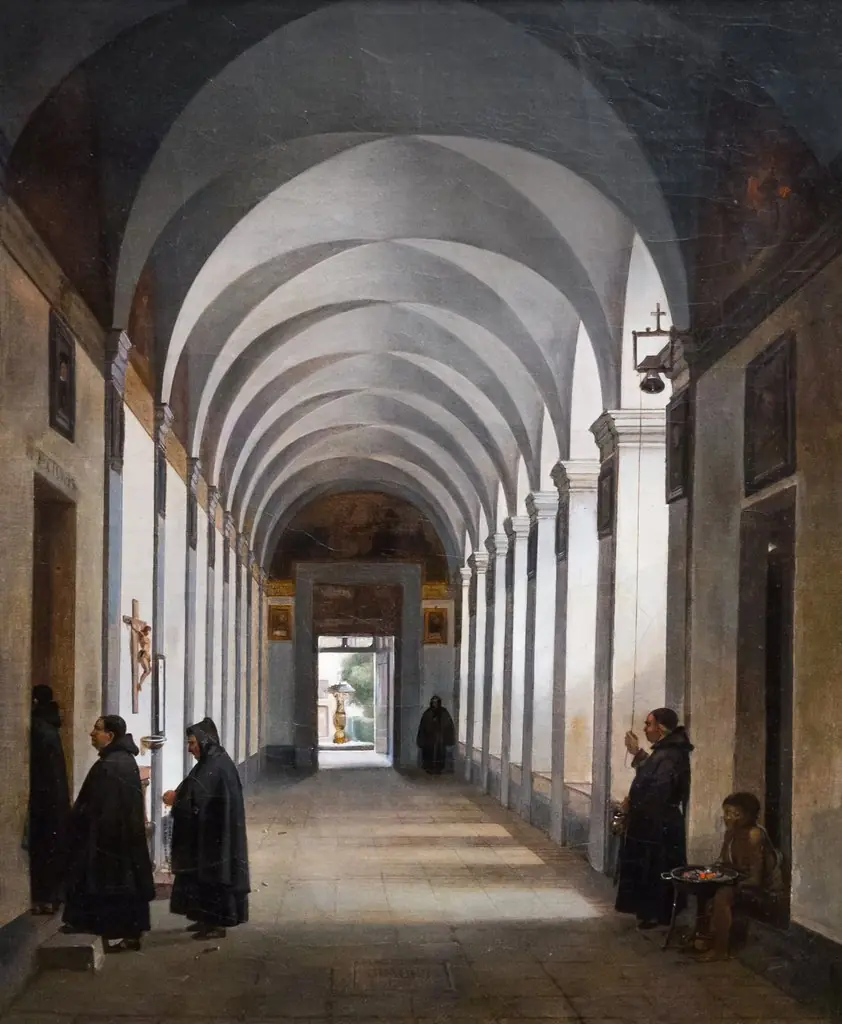 Monks in the Cloister of the Church of Gesù e Maria, Rome
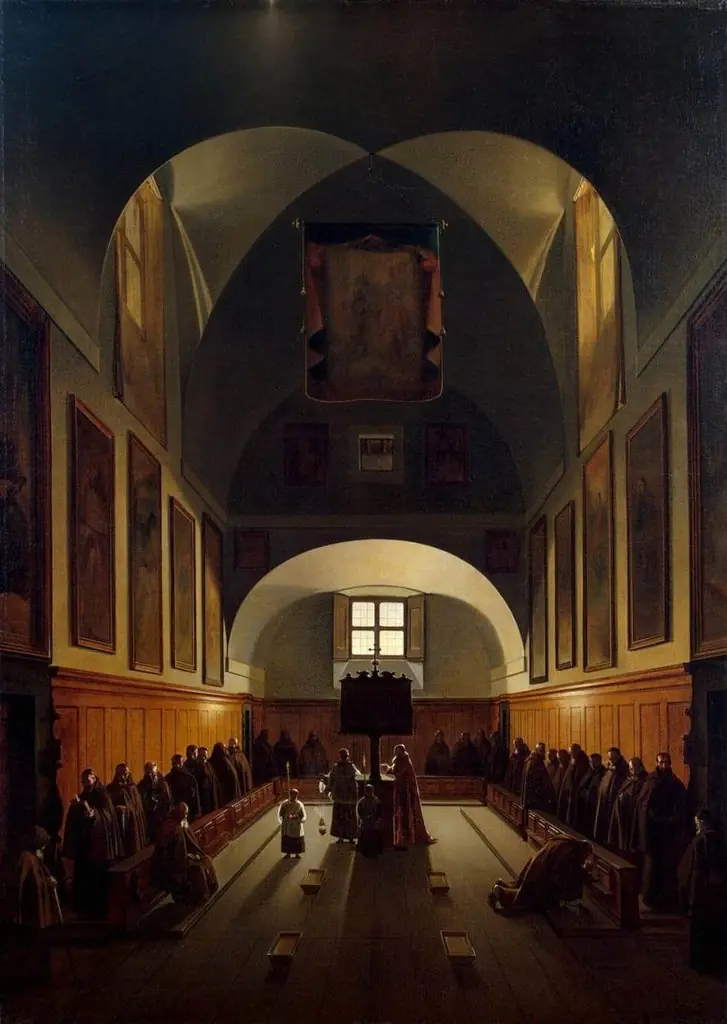 Interior of the Choir in the Capuchin Church on Piazza Barberini in Rome
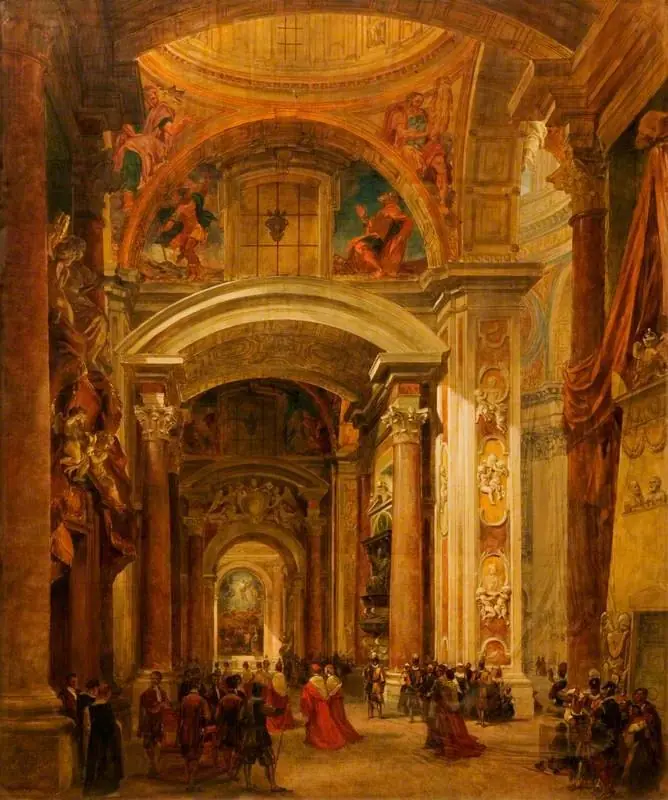 Interior of St Peter's, Rome
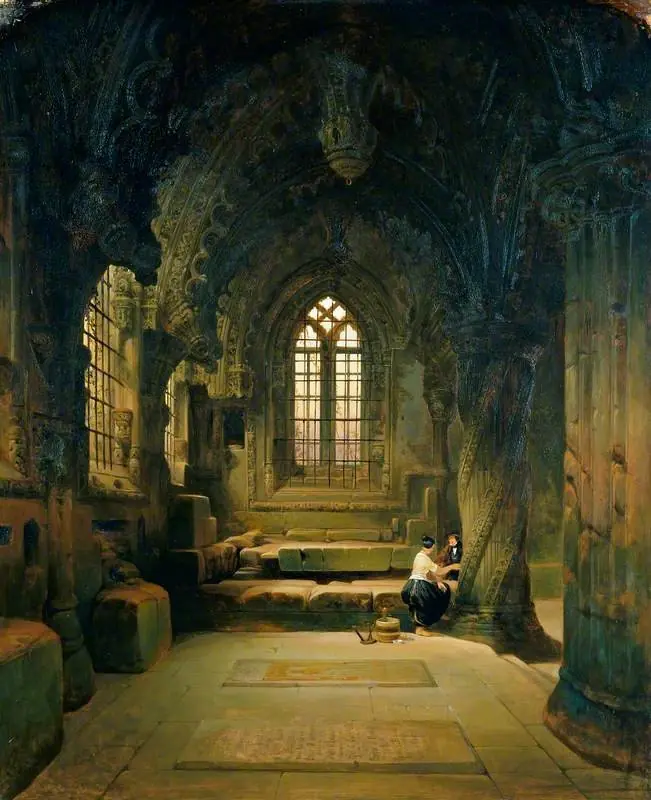 Entrance to the Crypt, Roslin Chapel
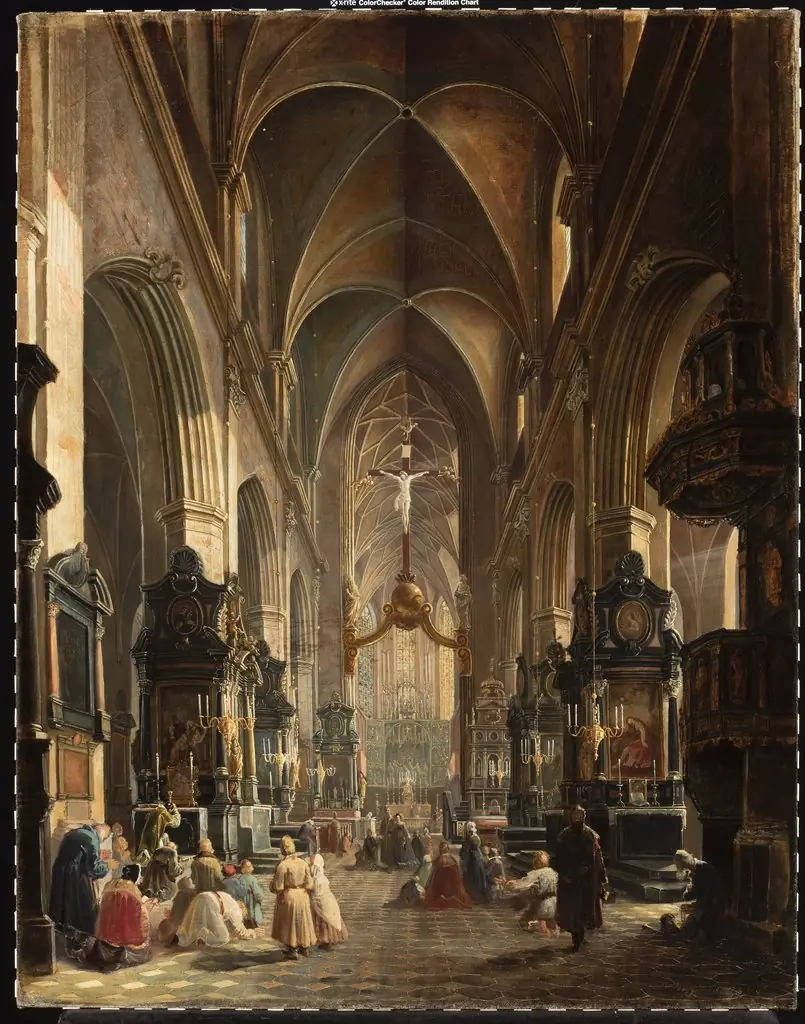 Interior of the Church of Virgin Mary in Kraków