Artwork
Marriage of Bacchus and Ariadne
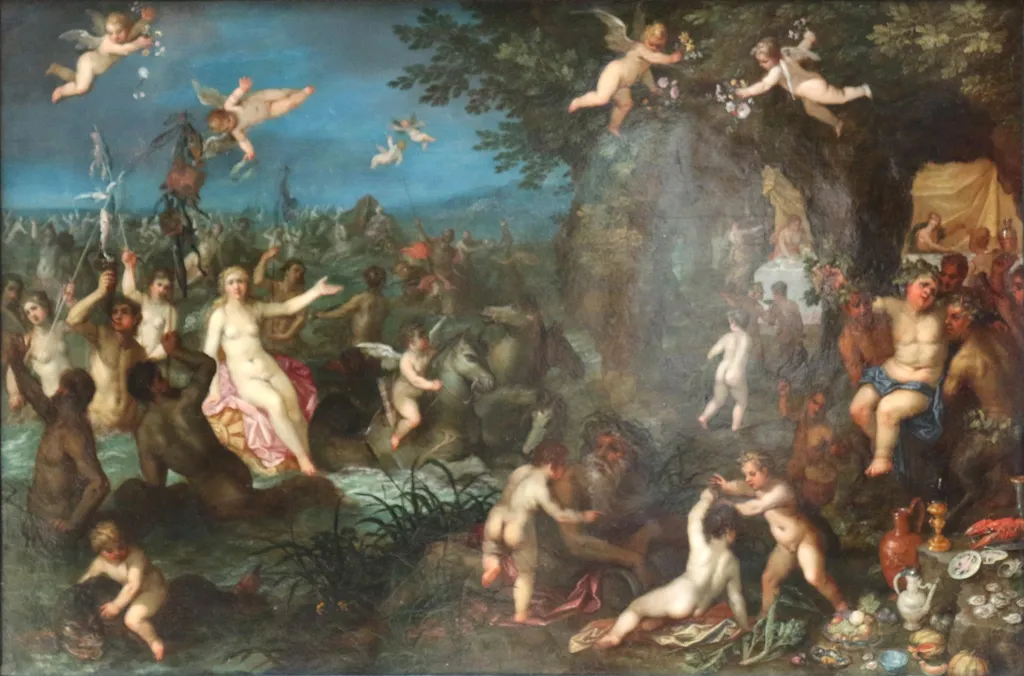
Marriage of Bacchus and Ariadne is an oil painting by the Flemish Baroque painting artist Jan Brueghel, the elder. It dates from 1606 and is held in the collection of the Royal Museums of Fine Arts of Belgium. Painted around 1606, this work by Jan Brueghel the Elder portrays the mythological union of Bacchus and Ariadne.
About this work
Overview
It stands as one of several mythological scenes he produced during his peak years in Antwerp, a center of artistic innovation in the early Baroque period.
Painted around 1606, this work by Jan Brueghel the Elder portrays the mythological union of Bacchus and Ariadne. Executed on copper, a less common support for large-scale compositions, the painting reflects Brueghel’s technical precision and his engagement with classical themes. It stands as one of several mythological scenes he produced during his peak years in Antwerp, a center of artistic innovation in the early Baroque period.
Subject & Meaning
The scene illustrates the wedding of Bacchus, god of wine and revelry, and Ariadne, the abandoned princess of Crete whom he elevated to divine status. Their union symbolizes transformation and divine favor, common motifs in Renaissance and Baroque mythological art. Brueghel renders the moment with ceremonial grandeur, surrounded by attendants, satyrs, and putti, reinforcing the theme of celestial celebration and earthly ecstasy.
Technique & Style
Brueghel employed copper as a support for its smooth, non-porous surface, which allowed for fine brushwork and luminous color saturation. His meticulous detail, especially in flora, fabric, and figures, aligns with his reputation for intricate naturalism. The composition is orderly yet lively, balancing classical symmetry with Baroque energy, a hallmark of his mature style developed alongside contemporaries like Rubens.
History & Provenance
The painting has remained in Belgian institutional collections since at least the 19th century and is now held by the Royal Museums of Fine Arts of Belgium. Its continuous presence in public ownership suggests early recognition of its artistic value. While specific earlier owners are not well documented, its survival in good condition reflects careful stewardship through centuries of political and cultural change.
Context
Created during a period when Flemish artists were reinterpreting classical narratives with heightened realism and decorative richness, this work reflects broader trends in Antwerp’s art market. Brueghel’s collaboration with Rubens and his focus on mythological subjects placed him at the heart of a movement that fused humanist scholarship with visual splendor, appealing to both aristocratic patrons and learned collectors.
Legacy
Brueghel’s use of copper for mythological painting influenced later artists seeking durability and fine detail. While not as widely known as his landscapes or floral works, this painting exemplifies his versatility and technical mastery. It remains a key reference in studies of early 17th-century Flemish mythological art and the material choices that defined the period’s painterly practices.
Own this work as a print
Artist & collection
Artist
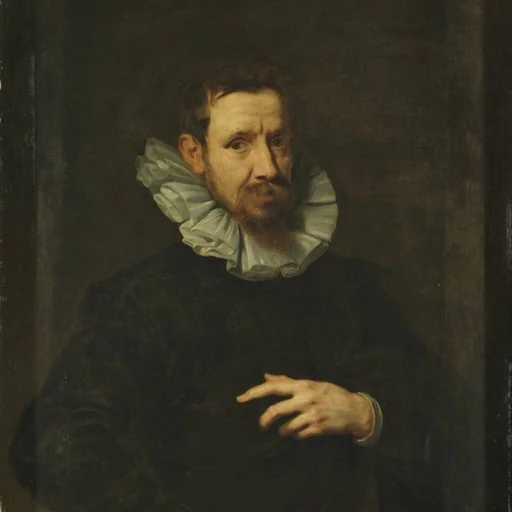
Jan Brueghel the Elder ( BROY-gəl, US also BROO-gəl; Dutch: ; 1568 – 13 January 1625) was a Flemish painter and draughtsman.

Museum
Royal Museums of Fine Arts of Belgium
Continue through works from the same source collection.
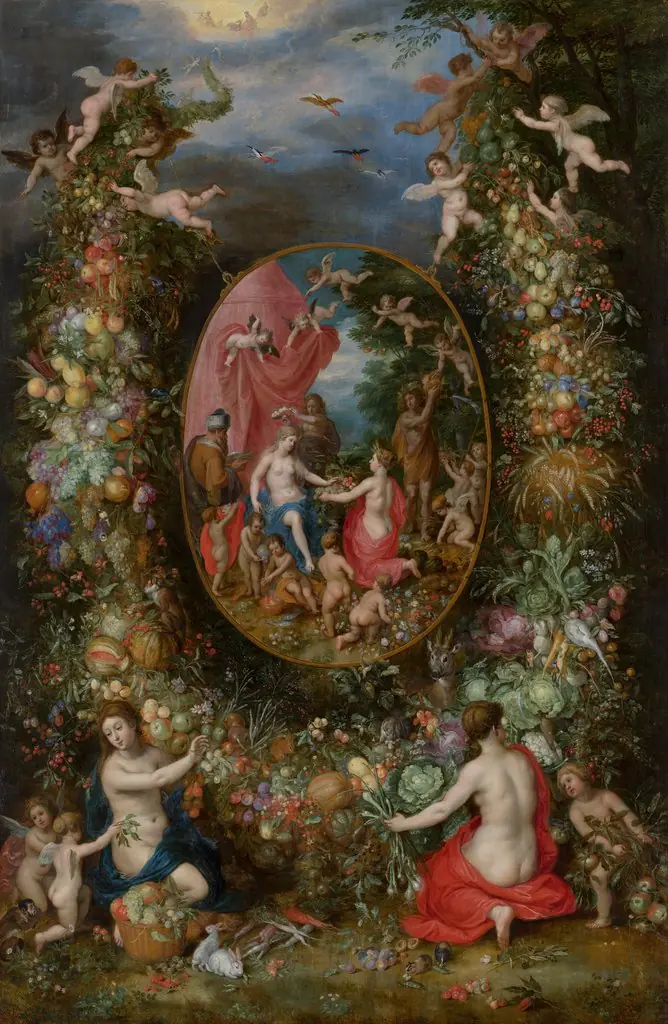
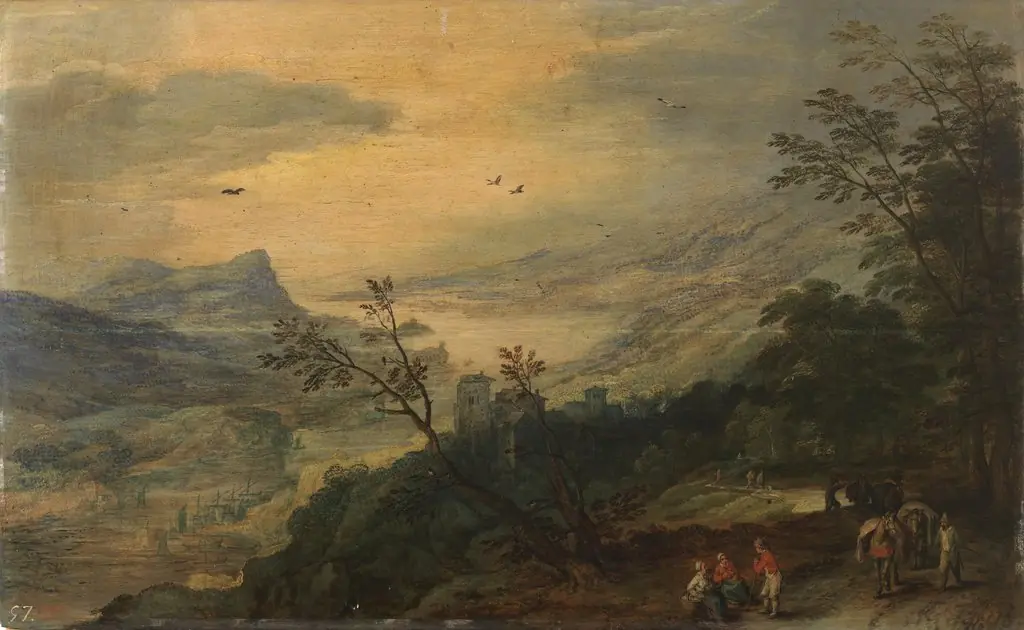
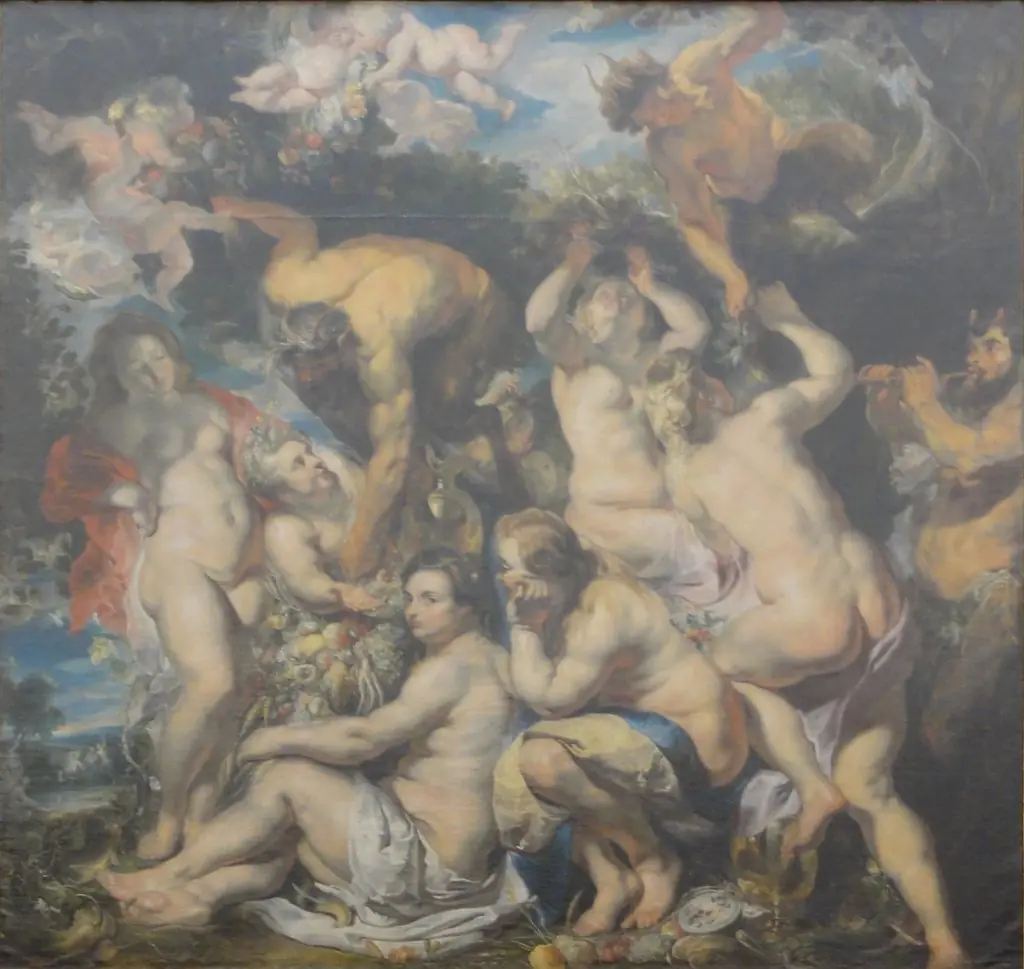 Allegory of fertility
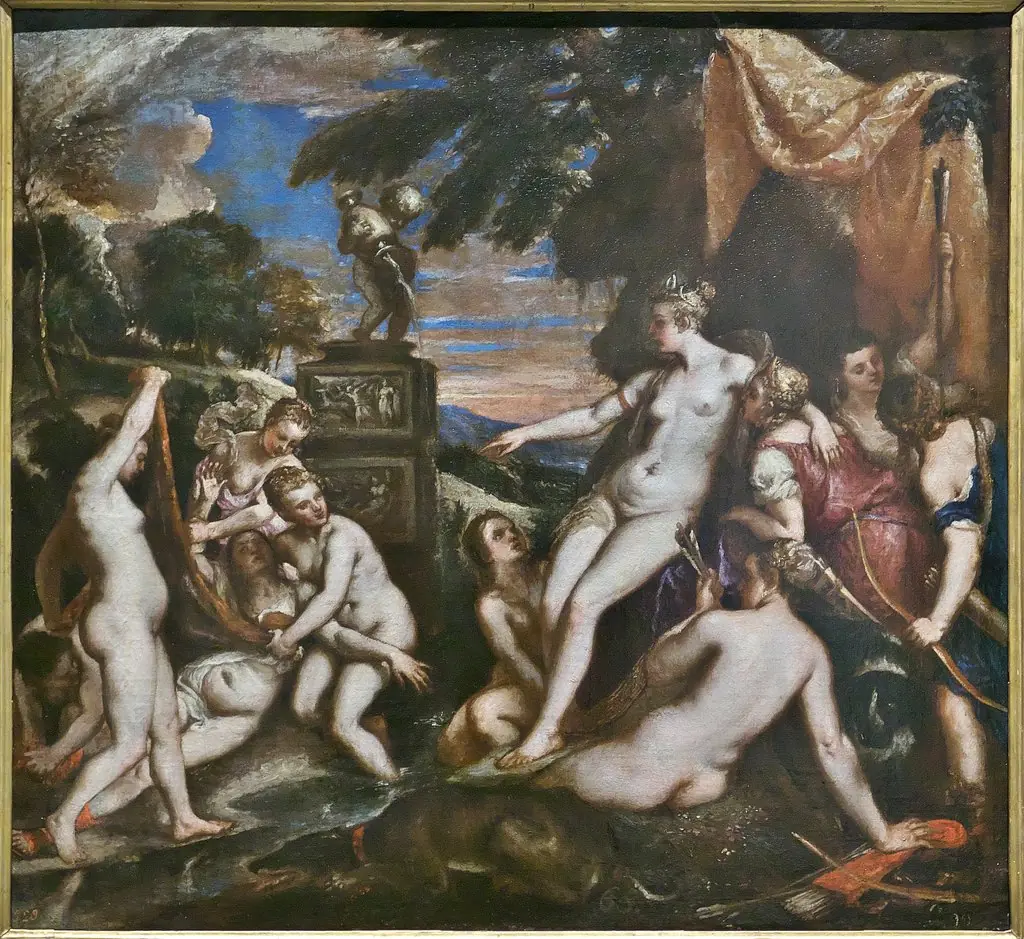 Diana and Callisto
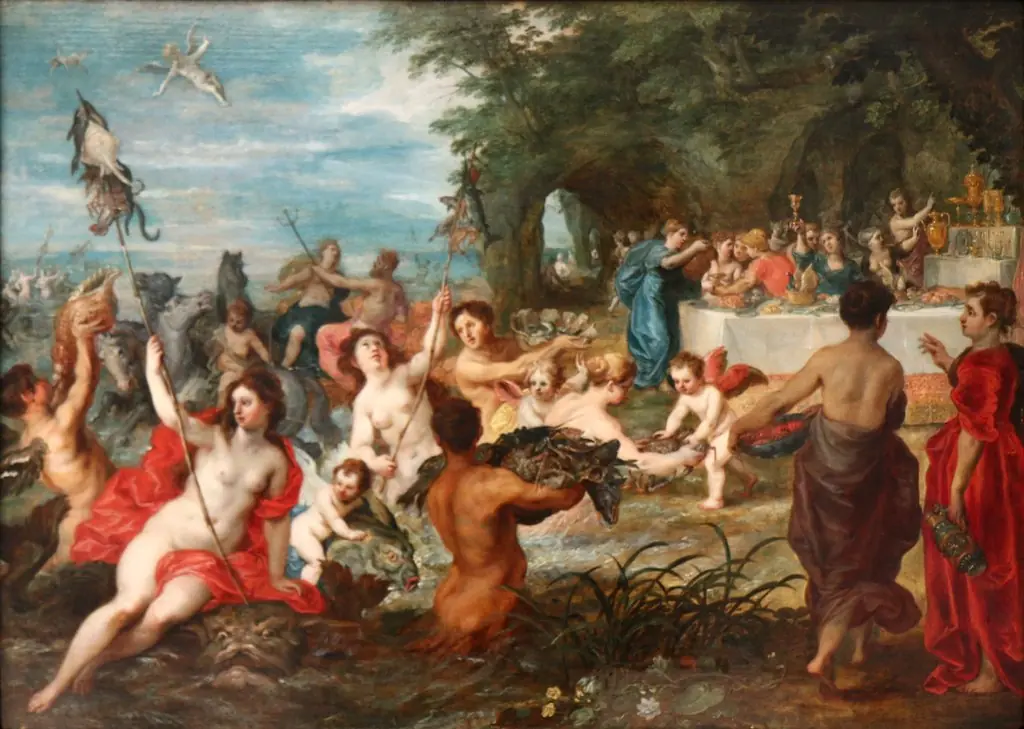 The wedding of Thetis and Peleus
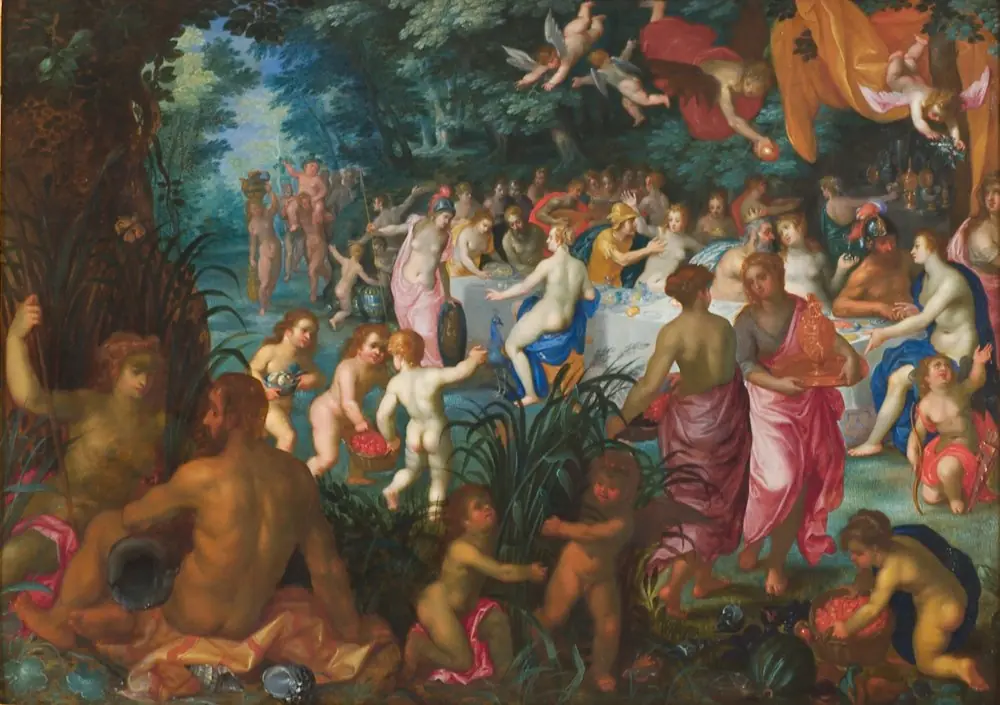 The Marriage of Peleus and Thetis
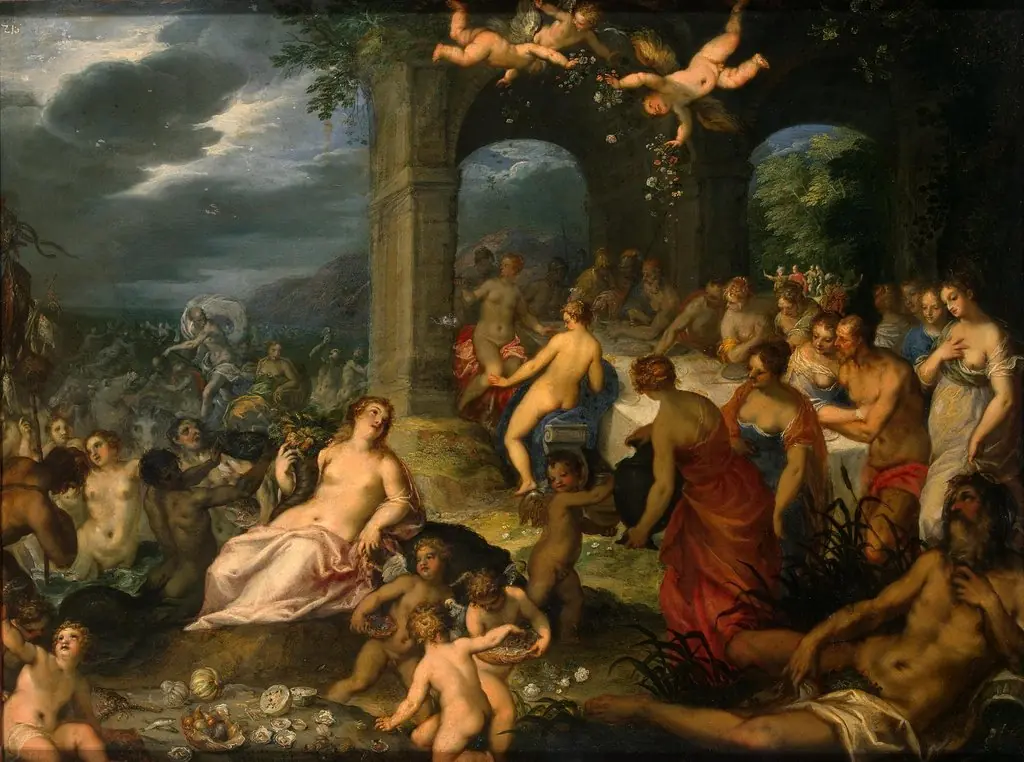 Feast of the Gods (The Marriage of Peleus and Thetis)
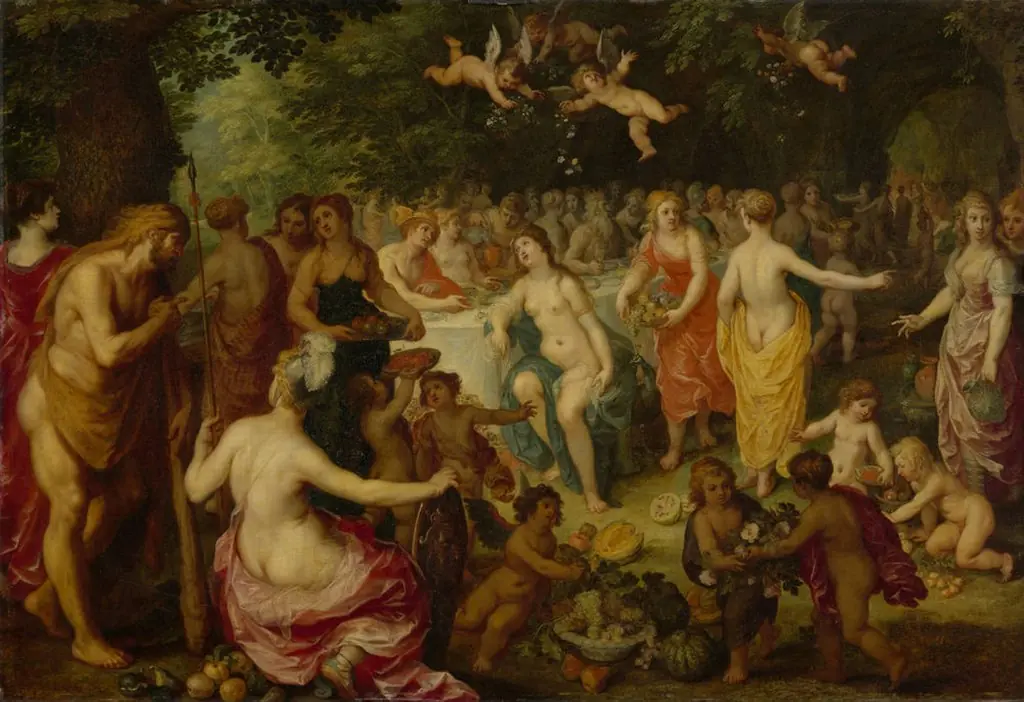 The Feast of the Gods
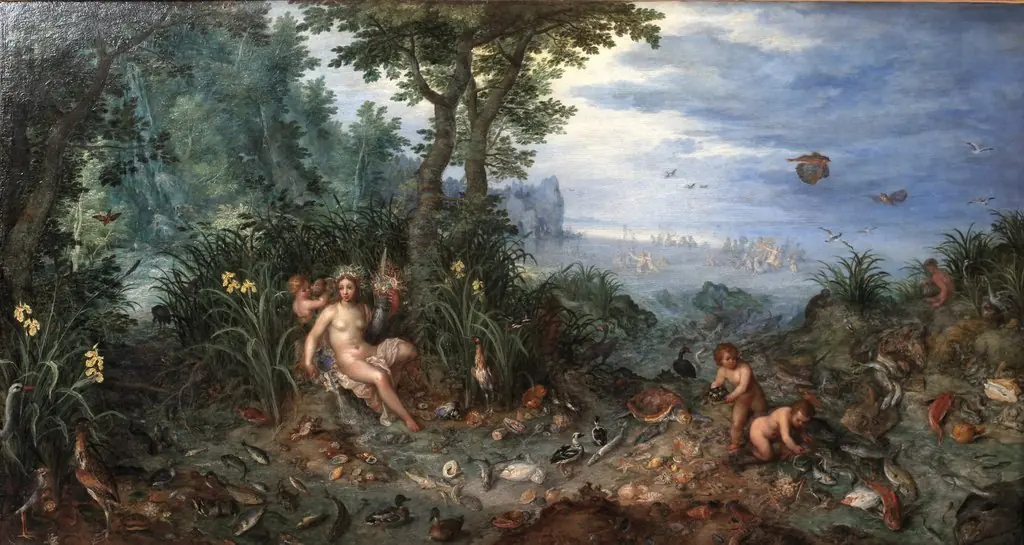 Water
Water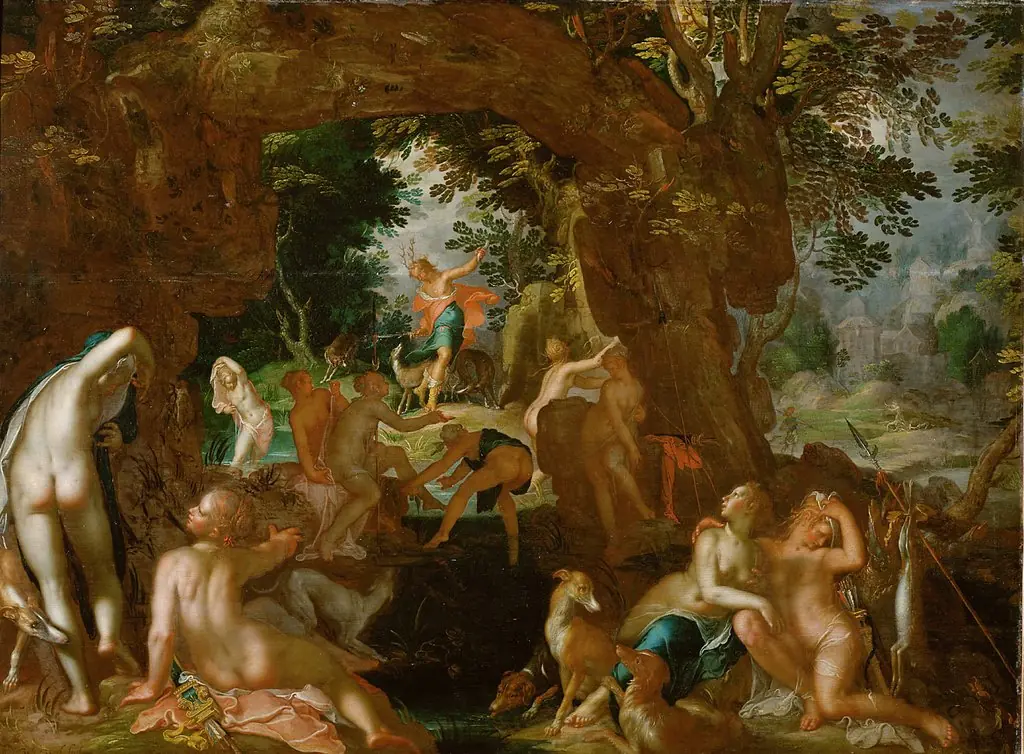 Actaeon is changed into a stag and killed by his own dogs
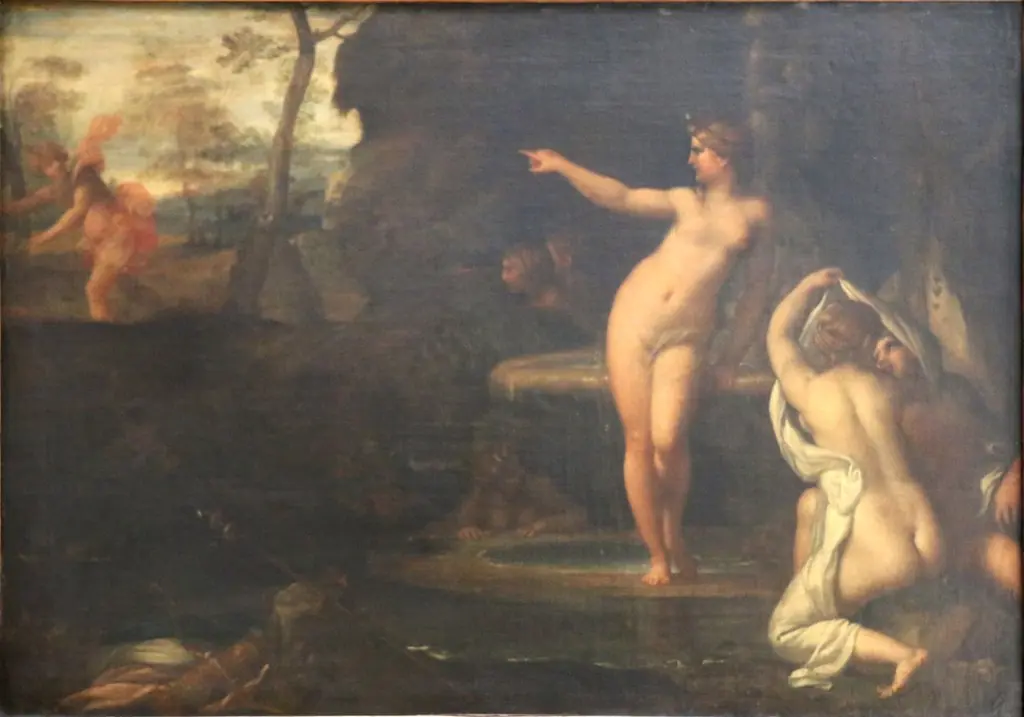 Diana Surprised by Actaeon
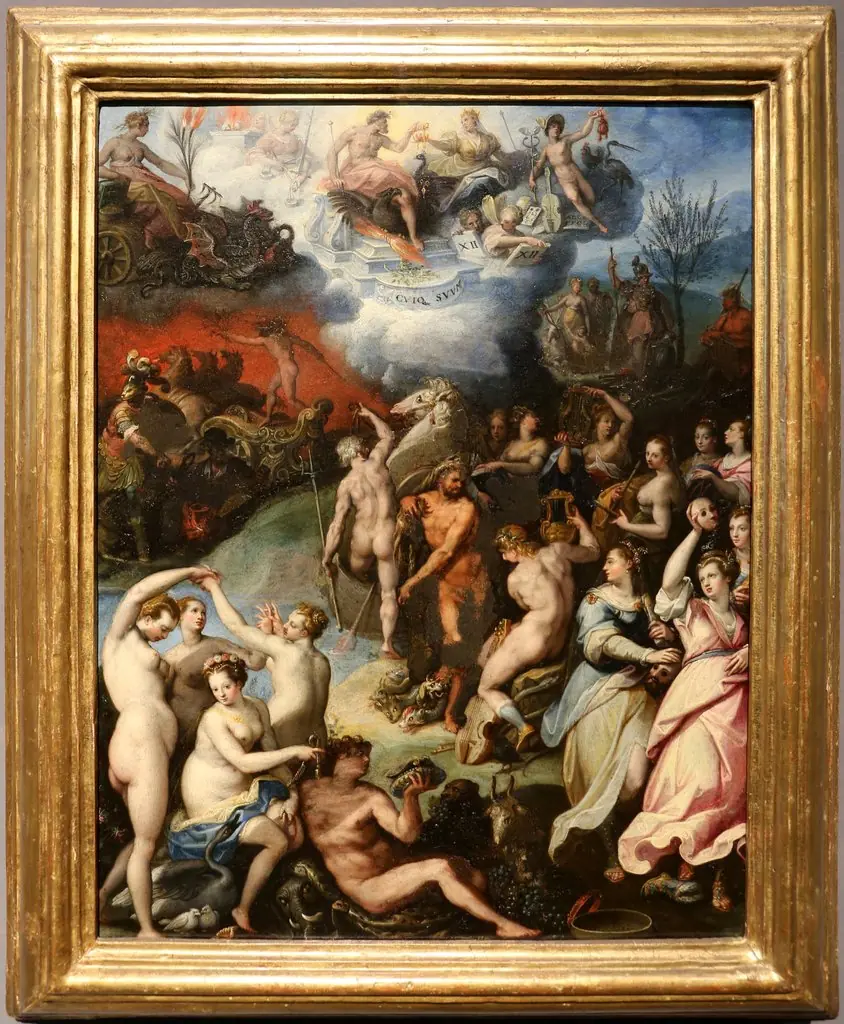 Hercules Musagetes and the gods of Olympus
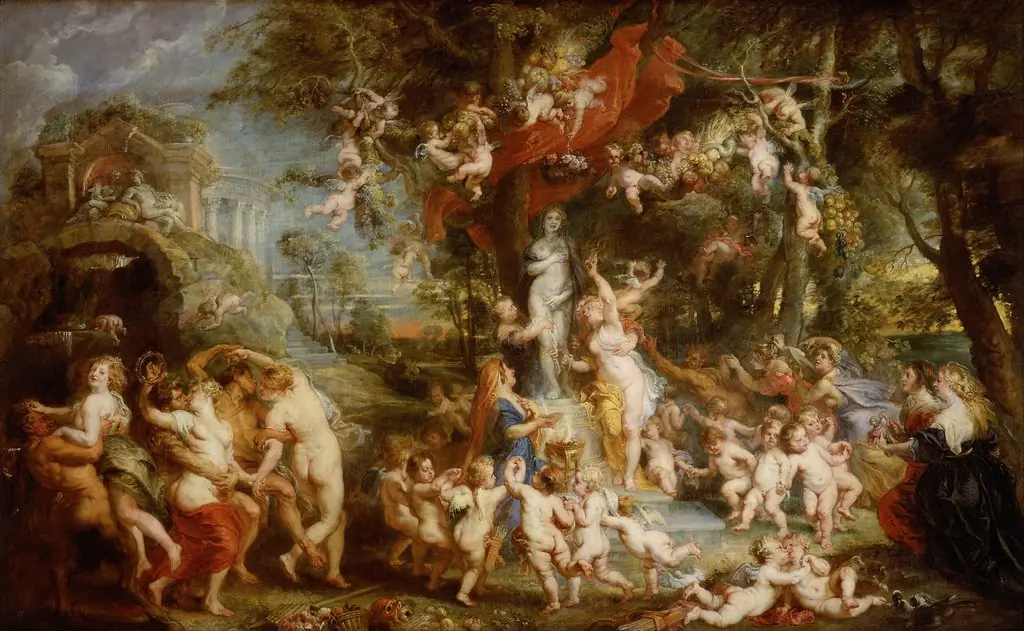 The Feast of Venus
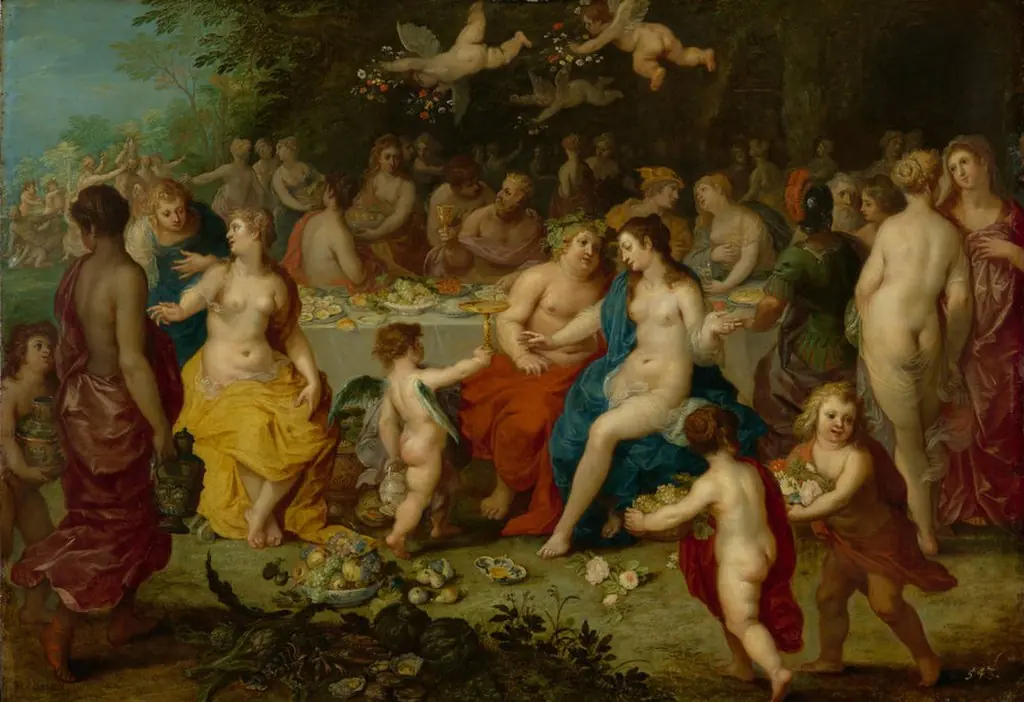 The wedding banquet of Bacchus and Ariadne