Artwork
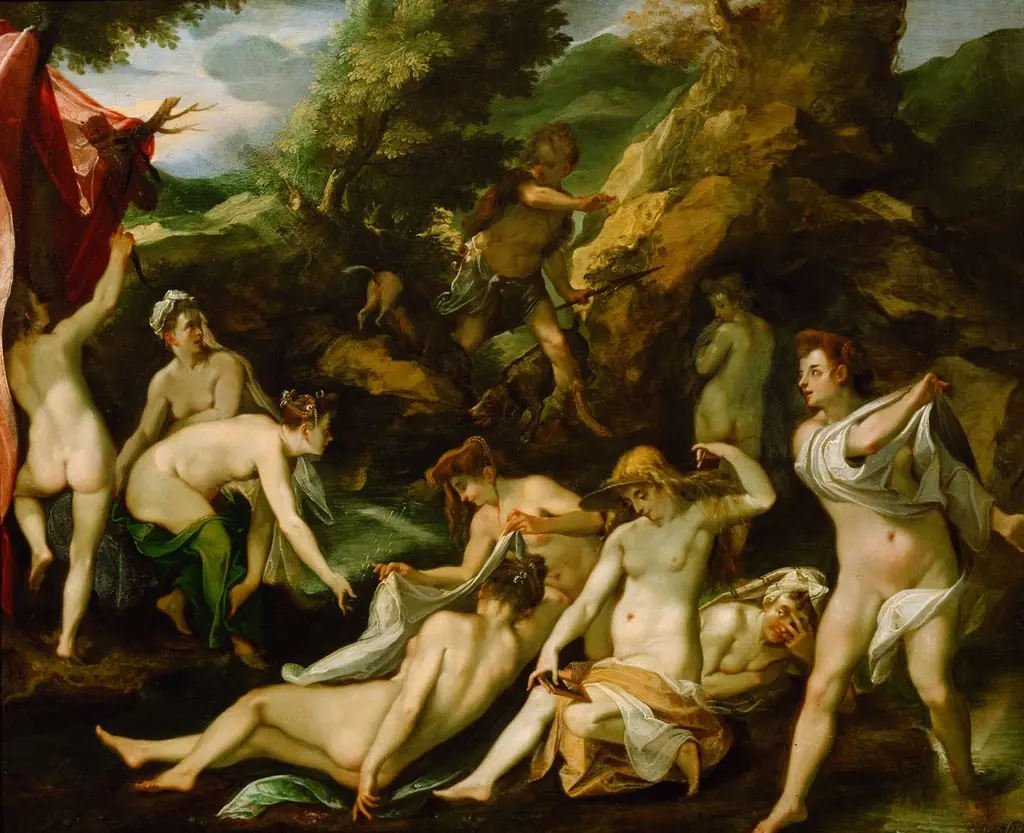
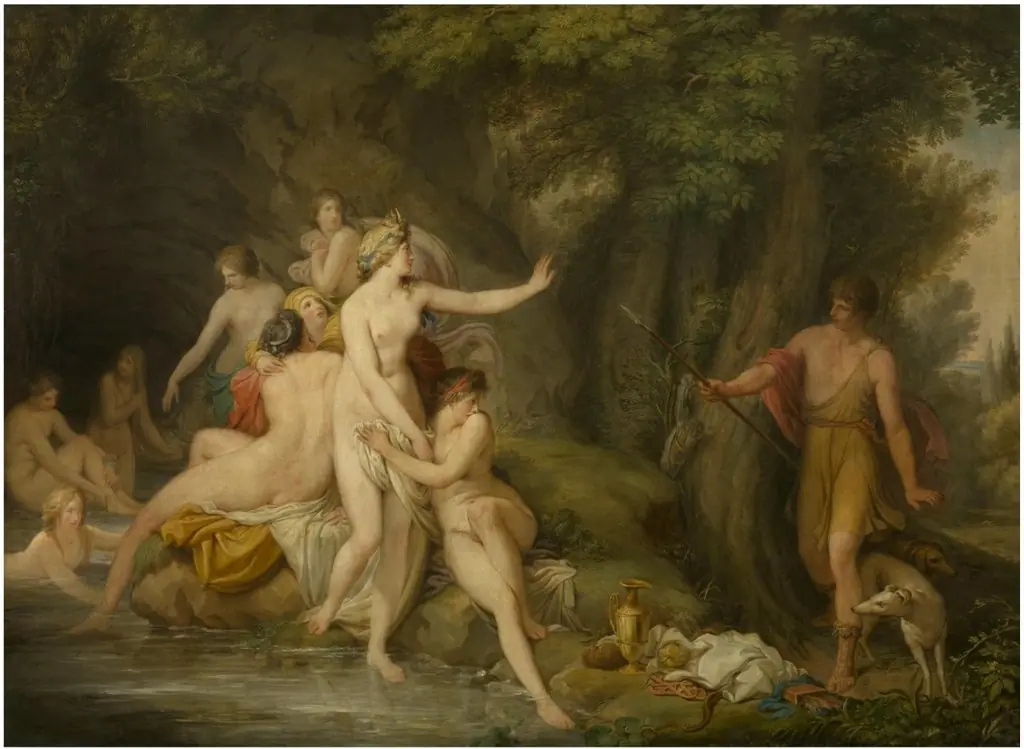
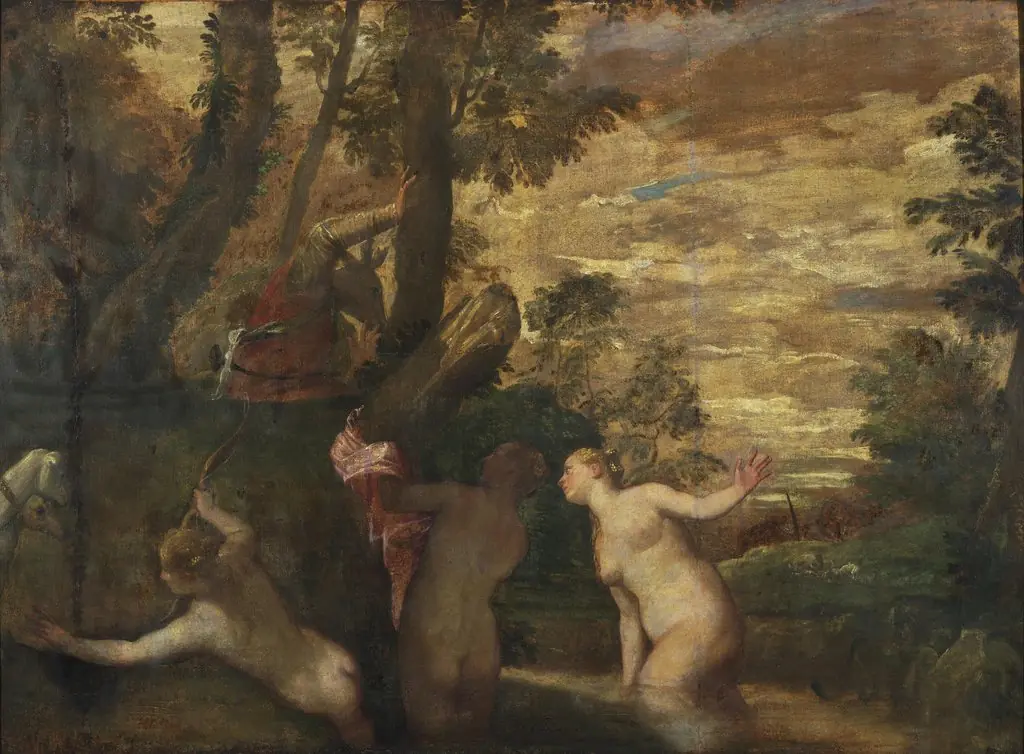
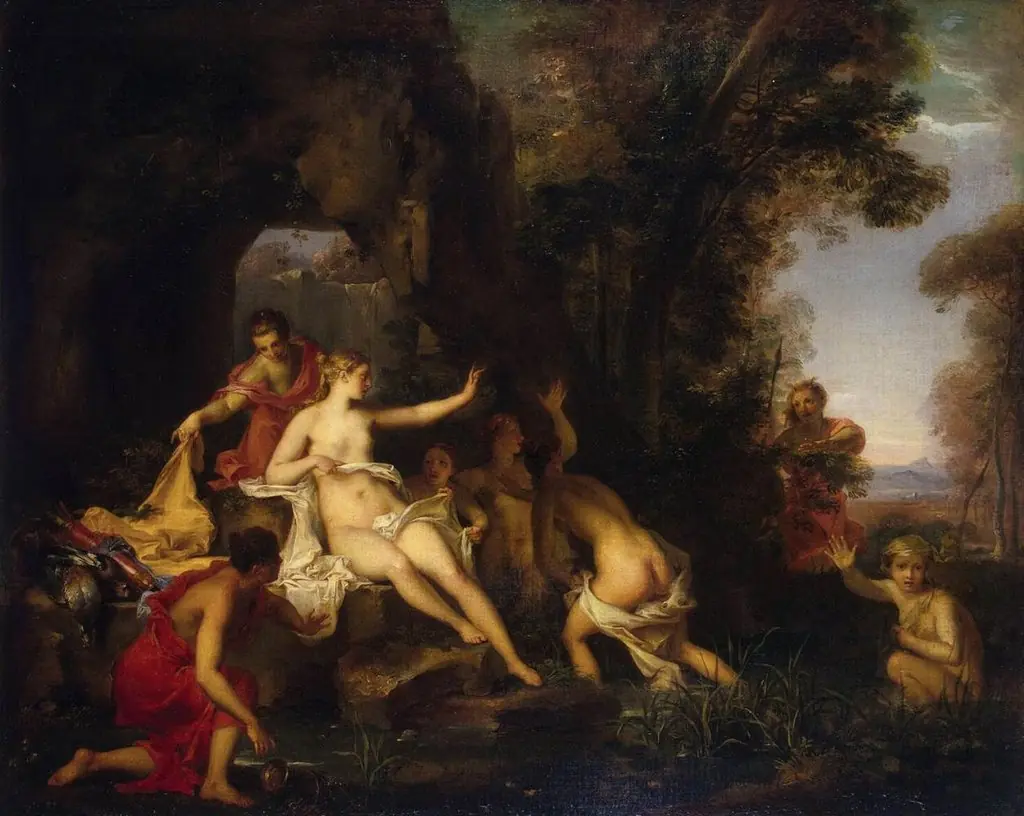
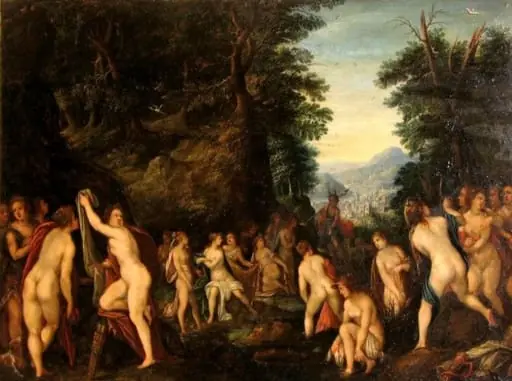
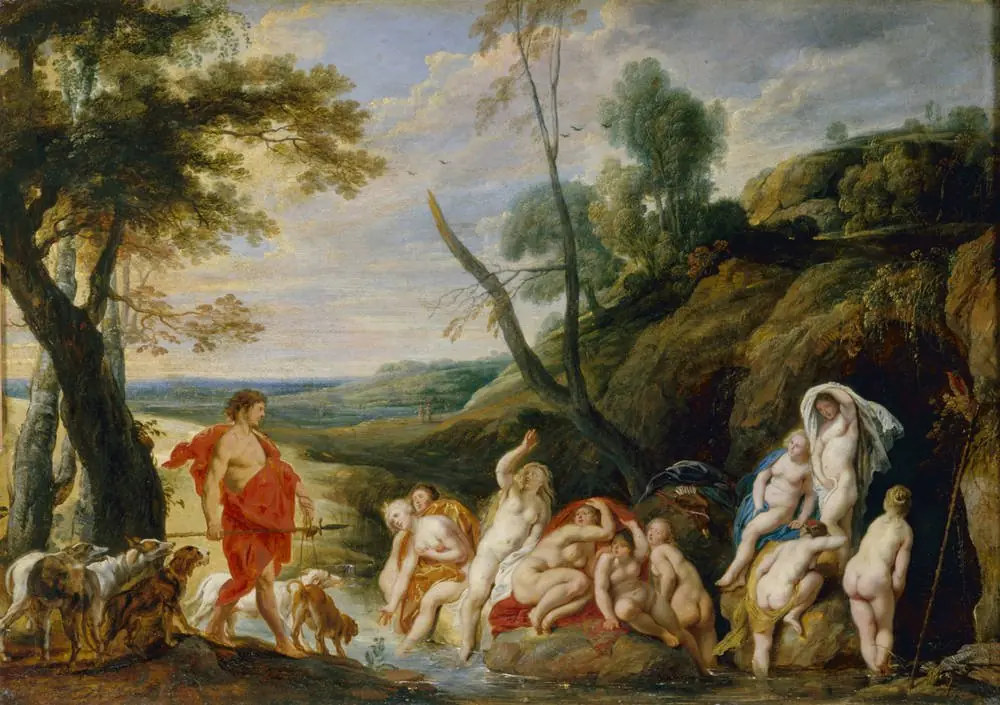
Diana Surprised by Actaeon
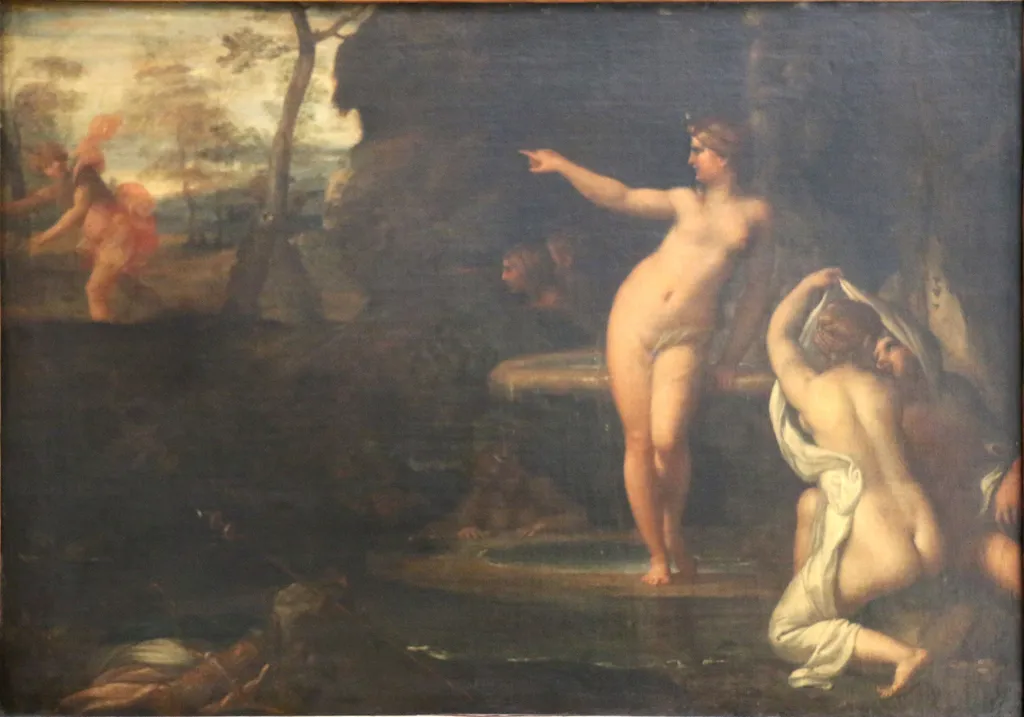
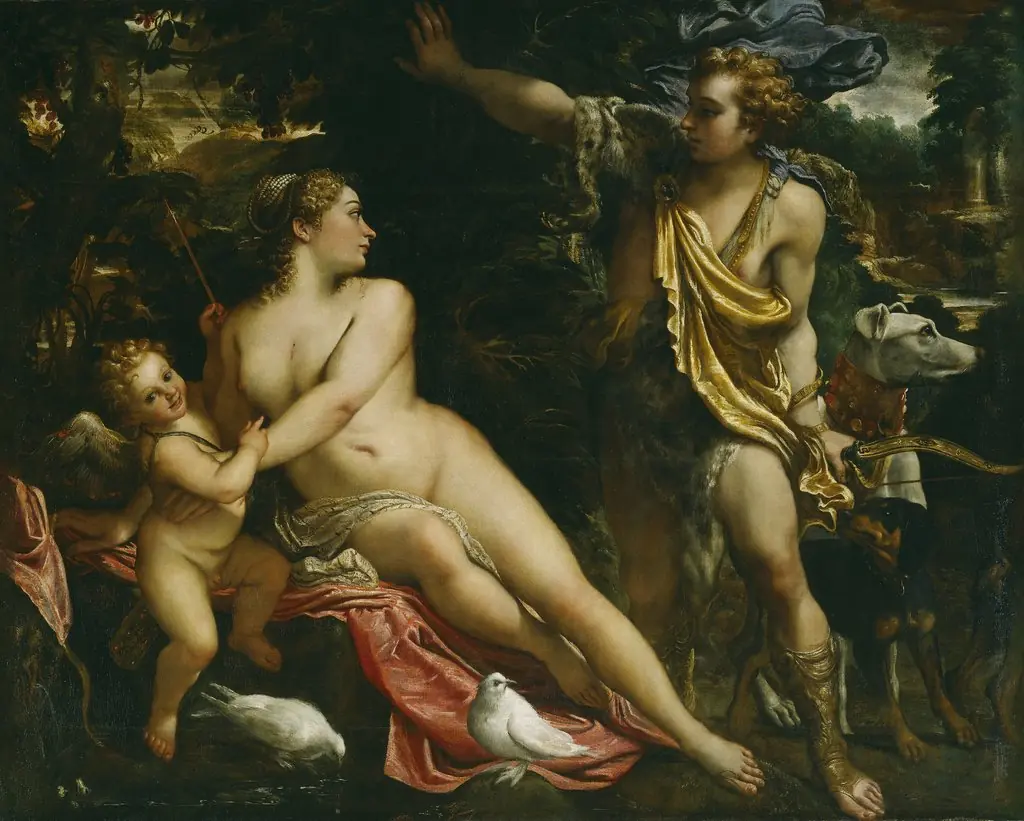
Diana Surprised by Actaeon is an oil painting by Annibale Carracci. It dates from 1550 and is held in the collection of the Royal Museums of Fine Arts of Belgium.
About this work
Overview
Painted in the late 16th century, *Diana Surprised by Actaeon* is an oil-on-canvas work by the Italian artist Annibale Carracci.
Painted in the late 16th century, *Diana Surprised by Actaeon* is an oil-on-canvas work by the Italian artist Annibale Carracci. It depicts a moment from Ovid’s *Metamorphoses* and is part of the collection at the Royal Museums of Fine Arts of Belgium. Carracci, known for bridging Mannerism and Baroque, rendered this mythological scene with a focus on naturalism and emotional immediacy, departing from the stylized conventions of his predecessors.
Subject & Meaning
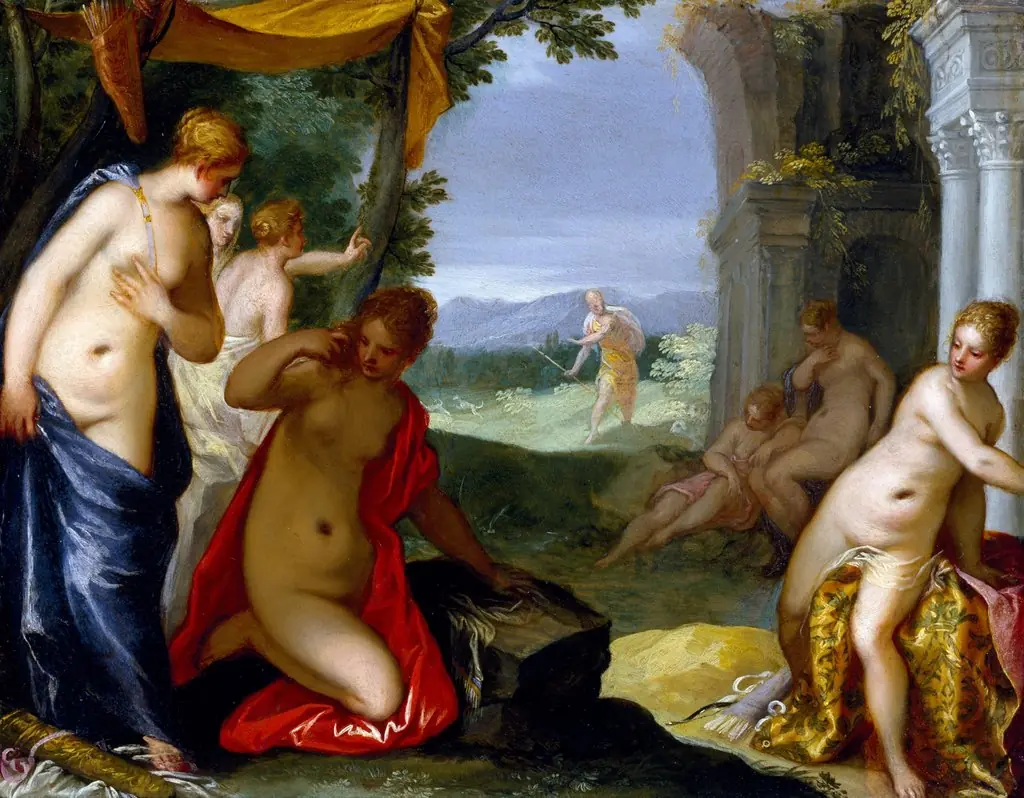
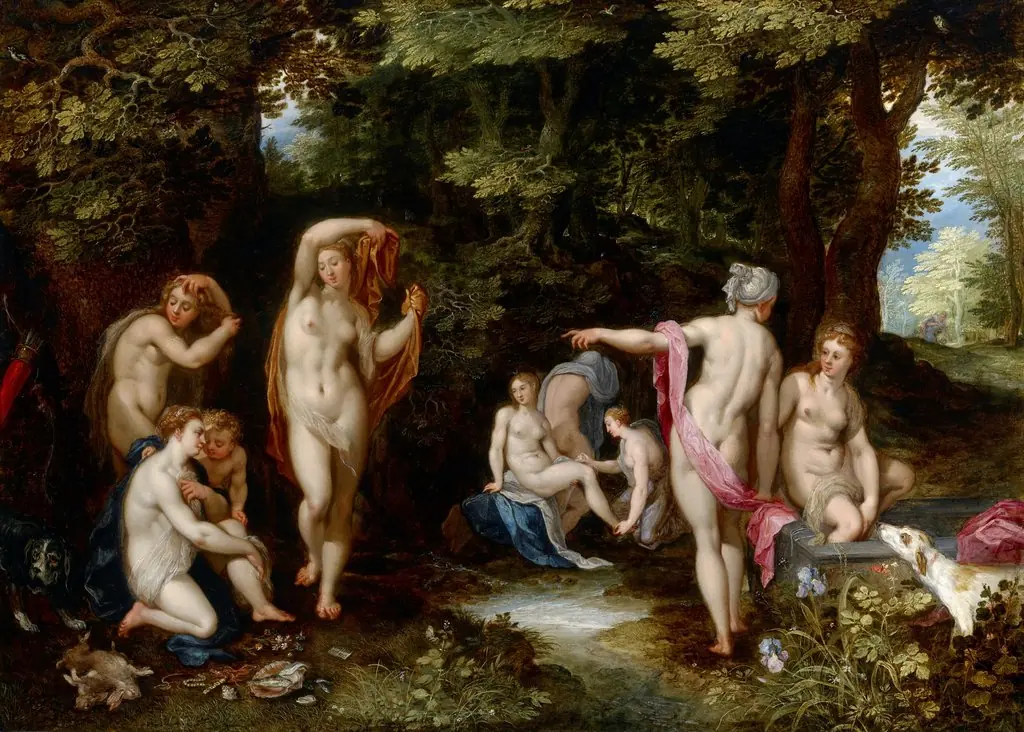
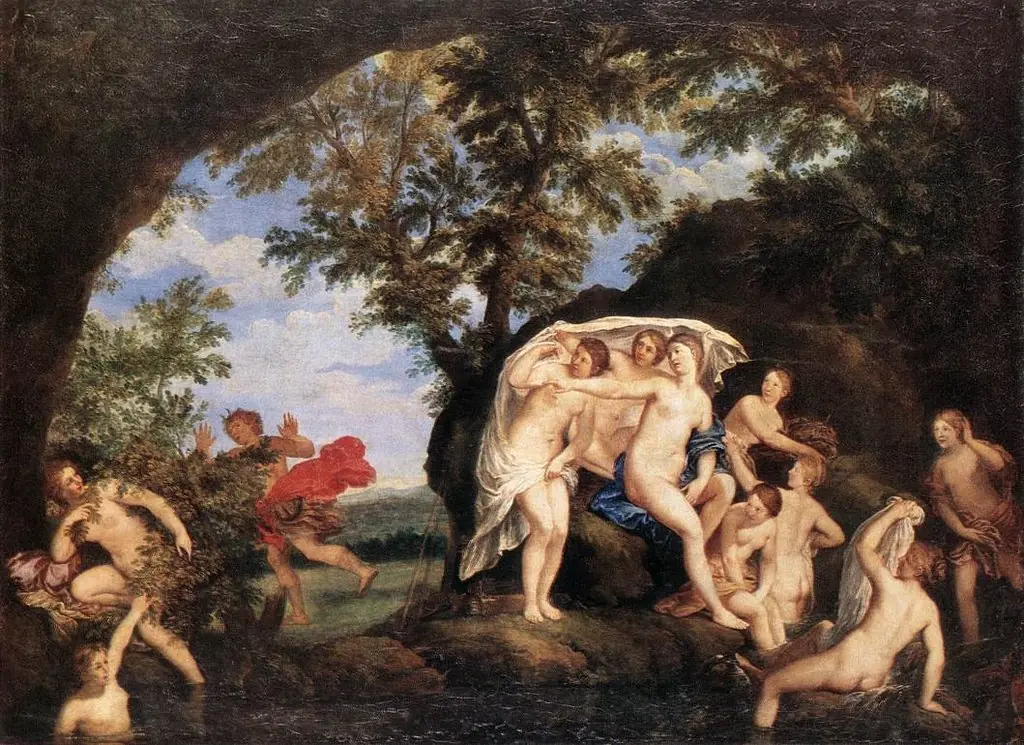
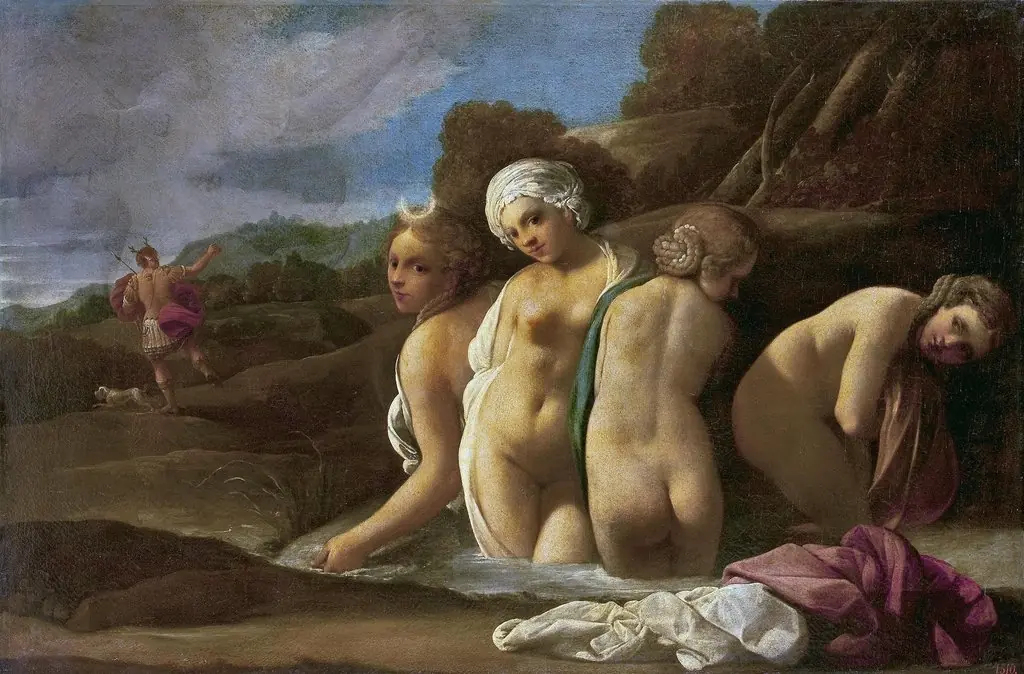
The painting illustrates the moment when the hunter Actaeon, having accidentally seen the goddess Diana bathing, is discovered and doomed to transformation. Diana, crowned with foliage and gesturing sharply, embodies divine wrath. Her attendants react with shock and modesty. The antlered figure in the background, Actaeon in his metamorphosis, and the red-clad observer suggest impending doom and the violation of sacred boundaries, reinforcing themes of divine retribution and human transgression.
Technique & Style
Carracci employed visible, deliberate brushwork to model flesh and foliage with tactile realism. The palette leans on muted earth tones—olive greens, ochres, and browns—grounding the mythic scene in a tangible woodland setting. Light falls naturally across the figures, enhancing volume without theatricality. The composition balances tension and stillness, with diagonal movement from the fleeing Actaeon counterpointed by the statuesque stillness of Diana and her nymphs.
History & Provenance
The painting was created during Carracci’s formative years, likely before his move to Rome, when he was refining his approach in Bologna. It entered the collection of the Royal Museums of Fine Arts of Belgium in the 19th century, having passed through private European collections. Its attribution to Carracci has been consistently supported by stylistic analysis and archival records, though its exact commissioning context remains undocumented.
Context
In the late 1500s, Italian artists sought to revive classical narratives with renewed emotional and physical authenticity. Carracci, alongside his brother and cousin, rejected Mannerist artificiality in favor of observed nature and narrative clarity. This work reflects that shift, aligning with broader efforts to reconcile Renaissance ideals with a more dynamic, human-centered approach to mythological subjects.
Legacy
Though less famous than Carracci’s later frescoes in Rome, *Diana Surprised by Actaeon* exemplifies his early contribution to the Baroque transition. Its emphasis on psychological realism and naturalistic setting influenced subsequent generations of painters who sought to animate myth with believable human emotion. The painting remains a key reference in studies of 16th-century Italian narrative painting.
Artist & collection
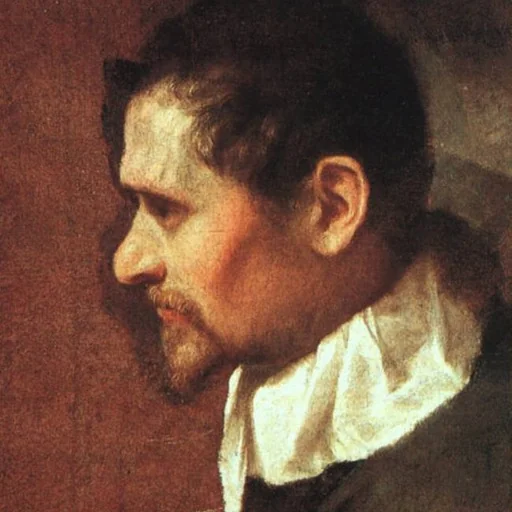
Artist
Annibale Carracci ( kə-RAH-chee, UK also kə-RATCH-ee, Italian: ; November 3, 1560 – July 15, 1609) was an Italian painter and instructor, active in Bologna and later in Rome.

Museum
Royal Museums of Fine Arts of Belgium
Continue through works from the same source collection.