Artwork
Minerva Visits the Muses
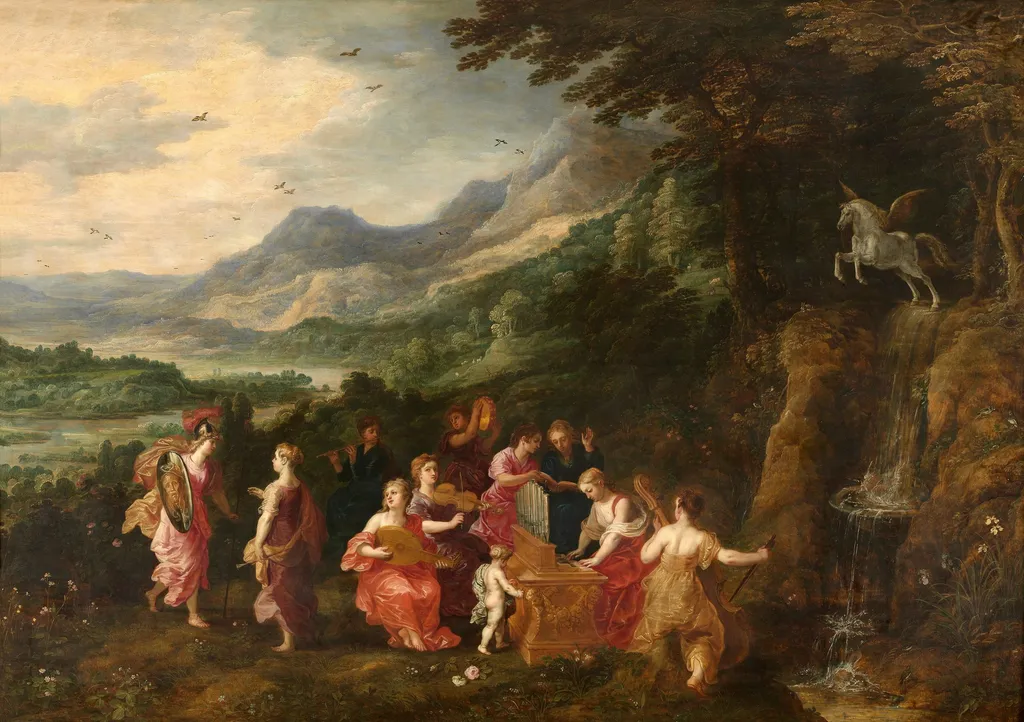
Minerva Visits the Muses is an oil painting by the Flemish Baroque painting artist Jan Brueghel, the elder. It dates from 1617 and is held in the collection of the Royal Museum of Fine Arts Antwerp. Joos de Momper’s oil painting on oak panel presents a mythological gathering set against a verdant mountain slope.
About this work
Overview
Nine female figures, identified as the Muses, occupy a clearing where they perform music beside a small, decorative organ.
Joos de Momper’s oil painting on oak panel presents a mythological gathering set against a verdant mountain slope. Nine female figures, identified as the Muses, occupy a clearing where they perform music beside a small, decorative organ. The composition extends into a softened, distant landscape that includes trees, a waterfall, and a solitary white unicorn perched on a rocky ledge, creating a tranquil, lyrical atmosphere.
Subject & Meaning
The work visualizes a episode from Ovid’s Metamorphoses in which the goddess Minerva ascends Mount Helicon to hear the Muses and to witness the spring of Hippocrene. Though the deity herself is not explicitly shown, the presence of the muses and the natural setting evoke the themes of artistic inspiration and the harmonious union of music, poetry, and the natural world.
Technique & Style
Executed in oil on oak, the painting showcases de Momper’s characteristic handling of atmospheric perspective, with a detailed foreground of figures and instruments receding into a pastel-hued background. The artist employs a muted palette for the landscape while rendering the muses’ robes in vivid pinks, reds, and purples, creating a contrast that highlights the celebratory mood of the scene.
History & Provenance
Created in the early 17th century, the canvas entered the collection of the Royal Museum of Fine Arts in Antwerp, where it remains on display. The museum’s acquisition records indicate that the work has been part of its holdings since the 19th‑century expansion of the Flemish painting department, reflecting the institution’s focus on regional masters.
Context
De Momper’s depiction aligns with the broader Flemish tradition of integrating mythological subjects into richly detailed natural settings, a practice also evident in the works of Jan Brueghel the Elder. The inclusion of a unicorn—a symbol of purity—adds a layer of allegorical meaning, reinforcing the association between the muses’ creative purity and the untouched wilderness of Mount Helicon.
Own this work as a print
Artist & collection
Artist
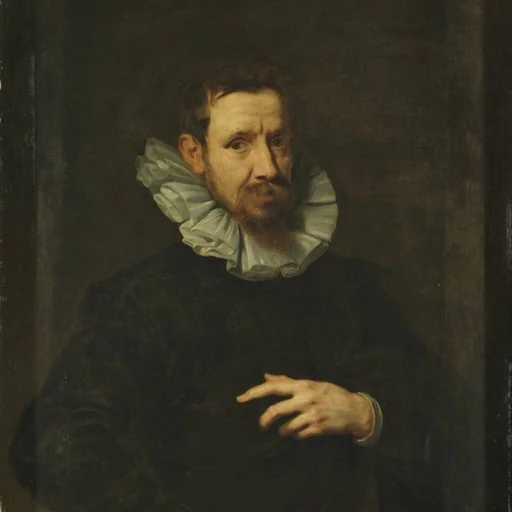
Jan Brueghel the Elder ( BROY-gəl, US also BROO-gəl; Dutch: ; 1568 – 13 January 1625) was a Flemish painter and draughtsman.

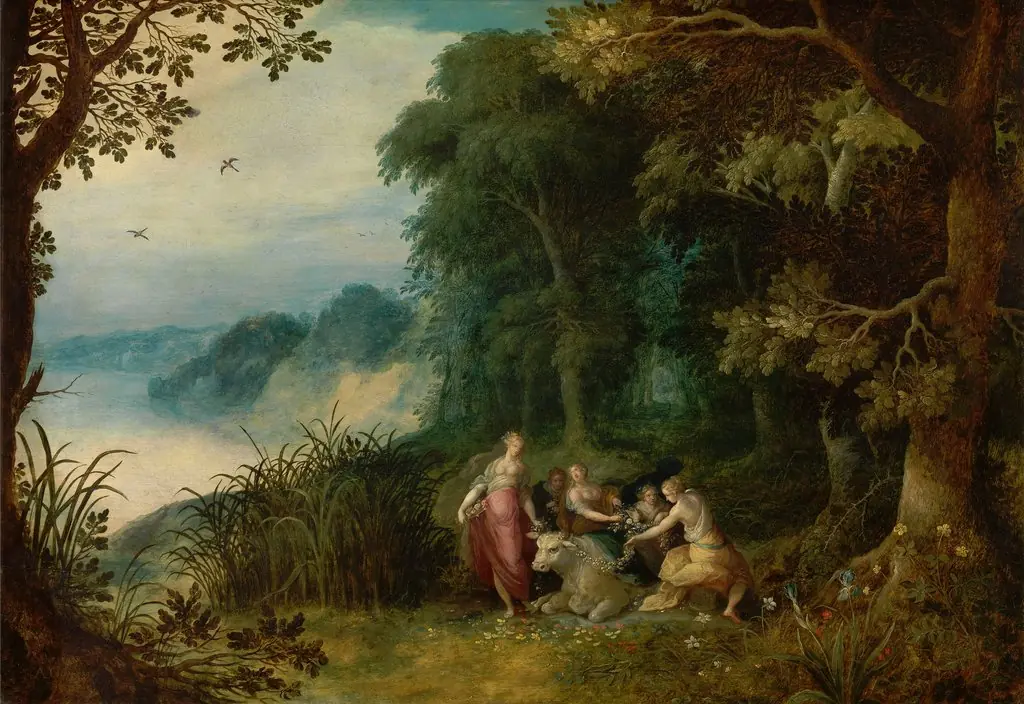 The rape of Europa
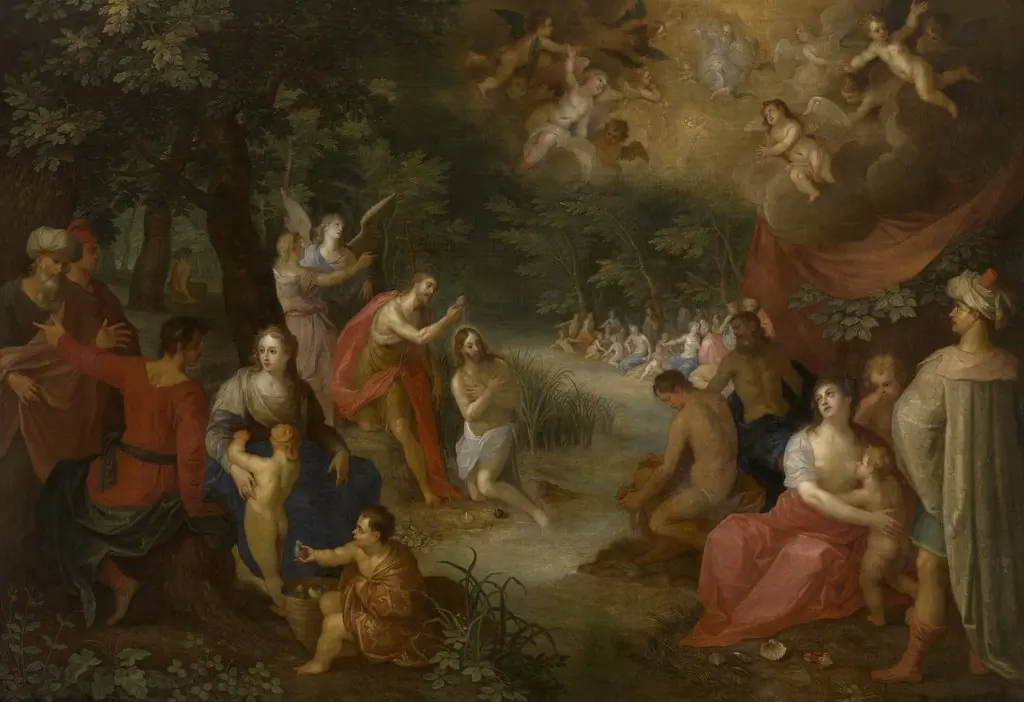 The Baptism of Christ
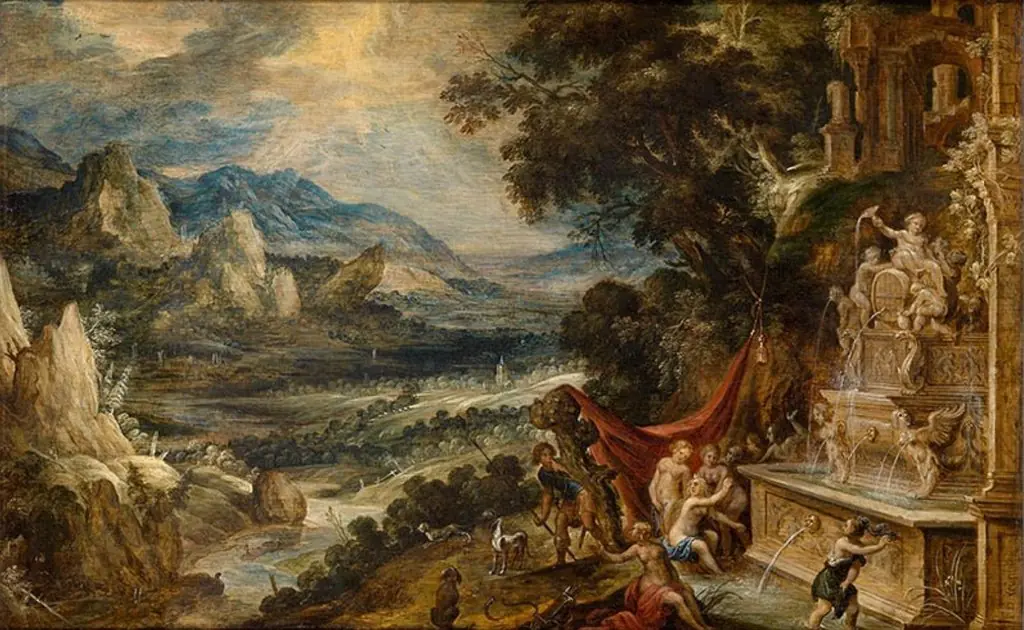 Landscape with Diana and Actaeon
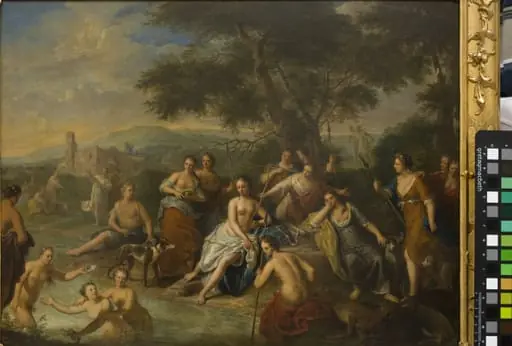 Diana and her Nymphs
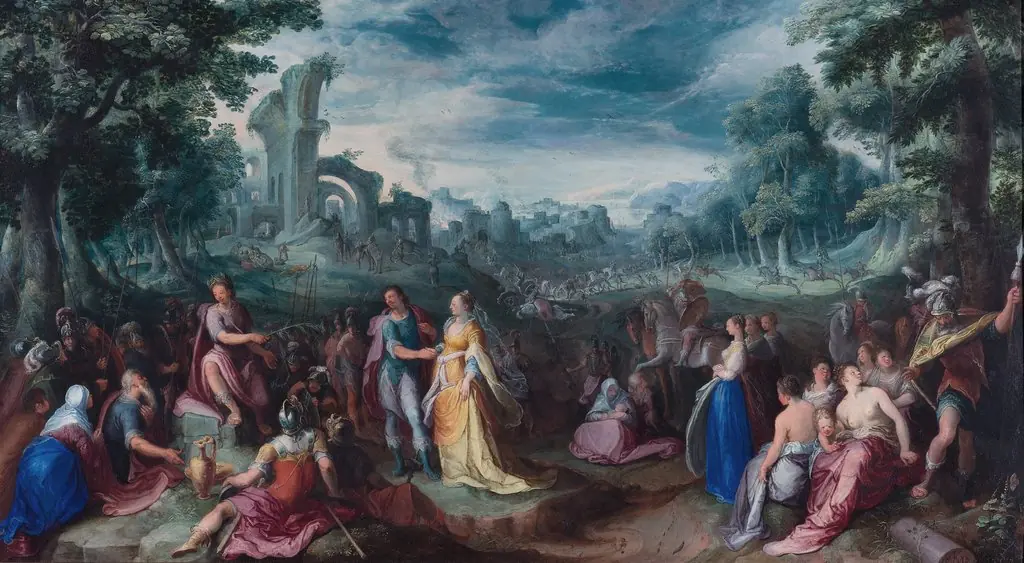 The Continence of Scipio
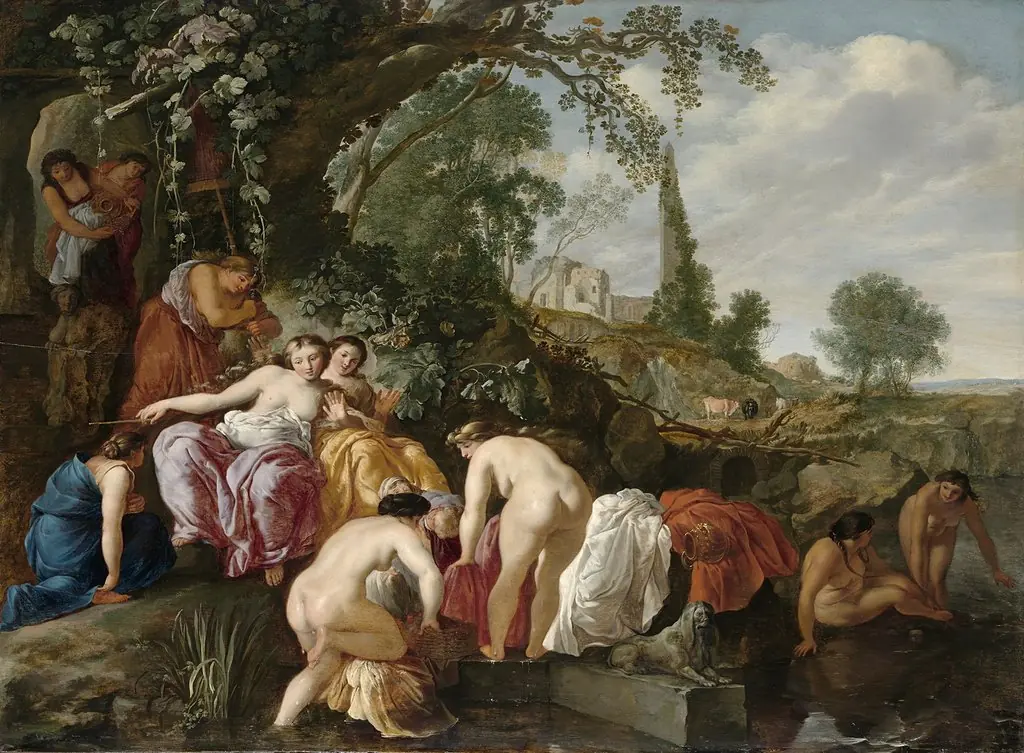 The Finding of Moses
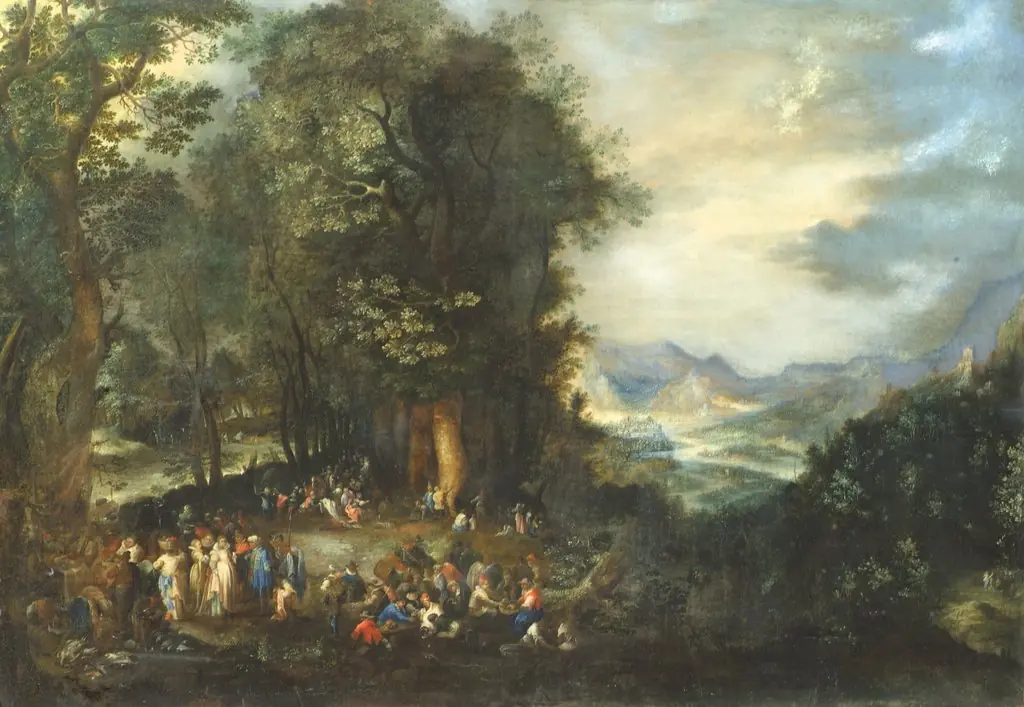 Sutler Camp at the Edge of the Forest
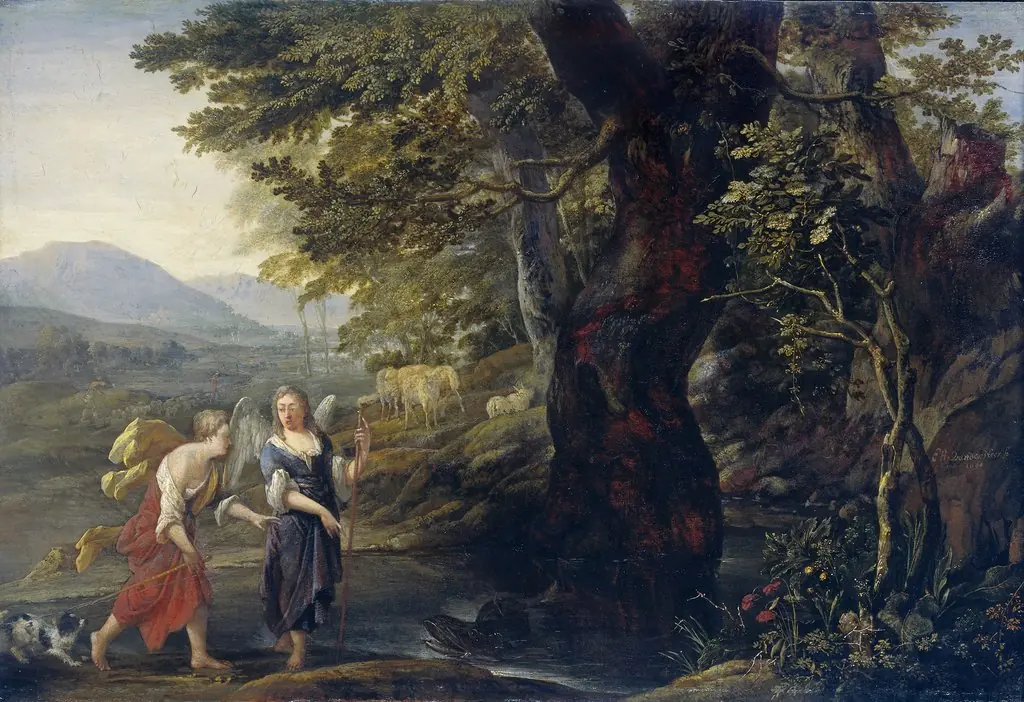 Tobias and the Angel
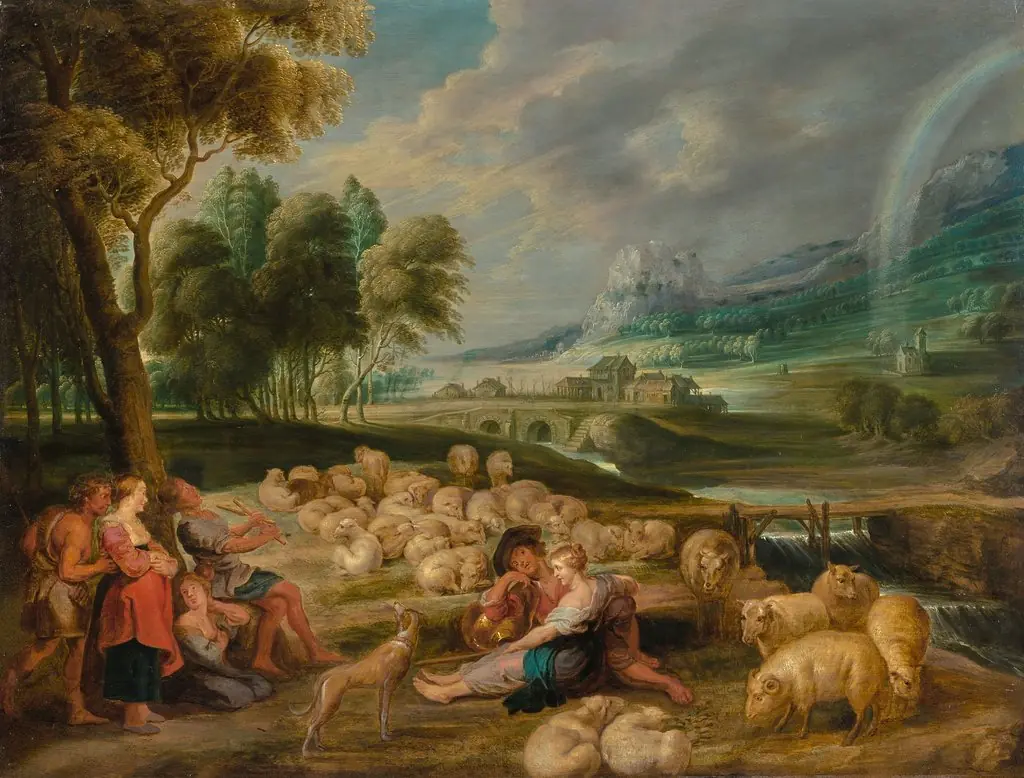 Landscape with a rainbow
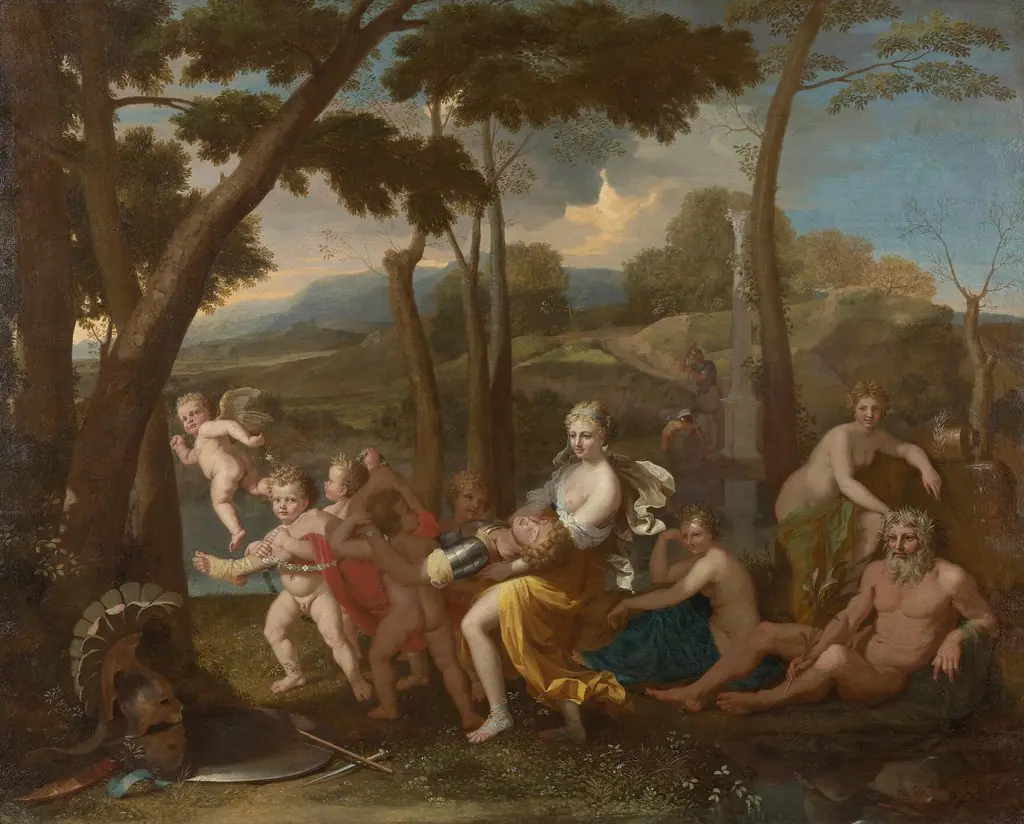 The Abduction of the Euthanized Rinaldo
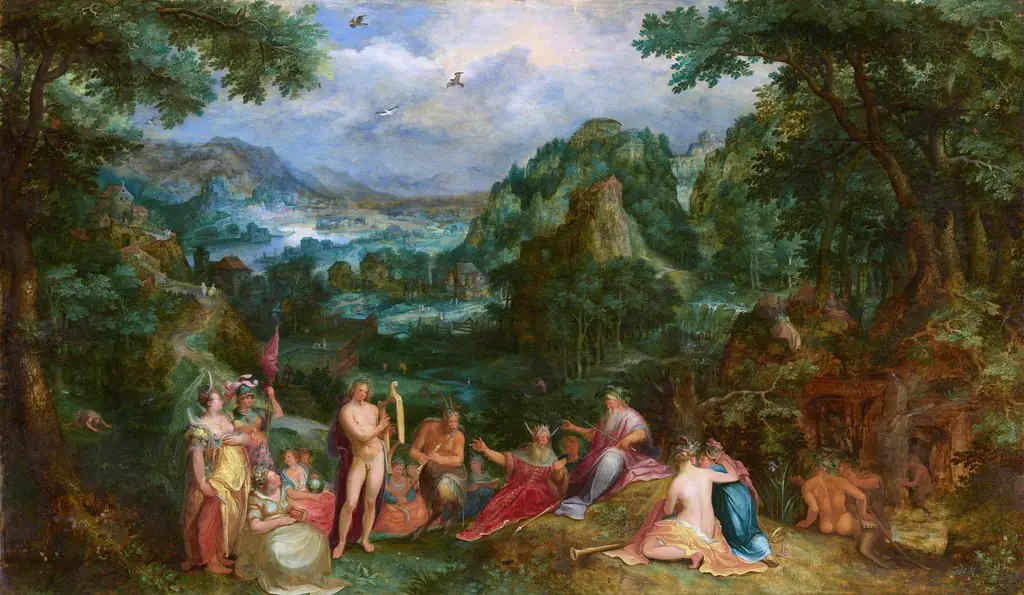 Landscape with the judgment of Midas
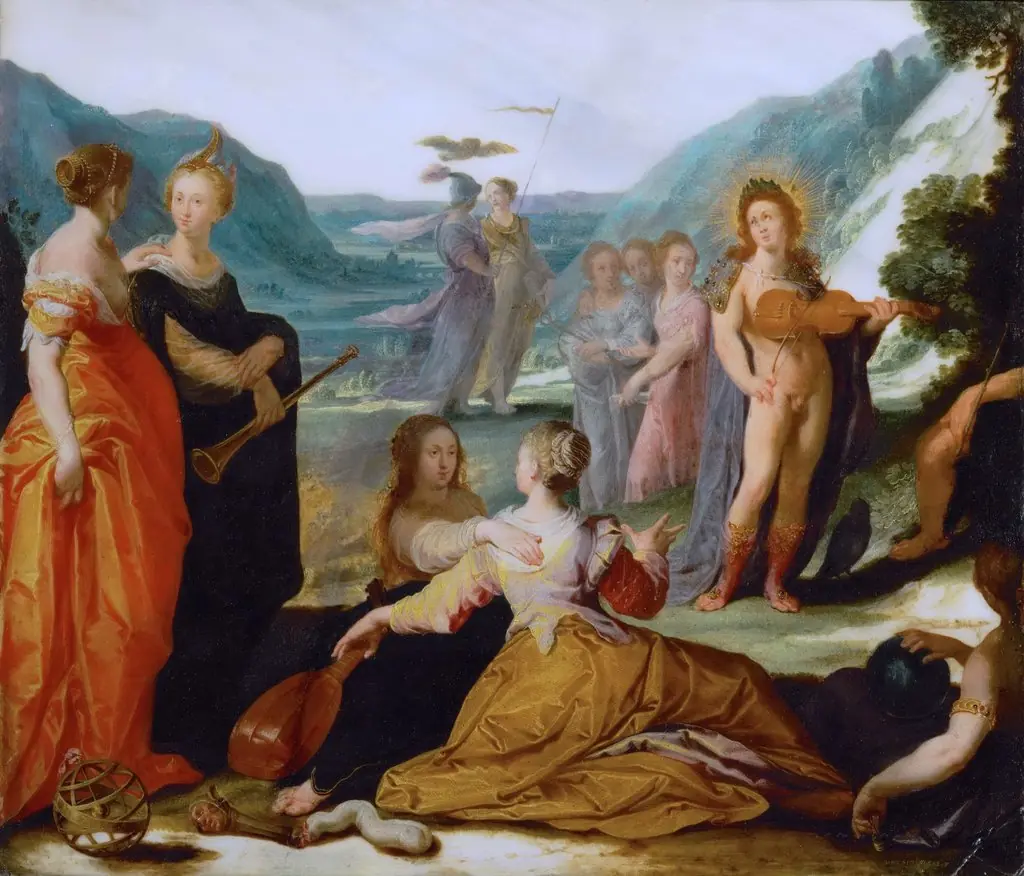 Apollo and the Muses