Artwork
Village Kermis
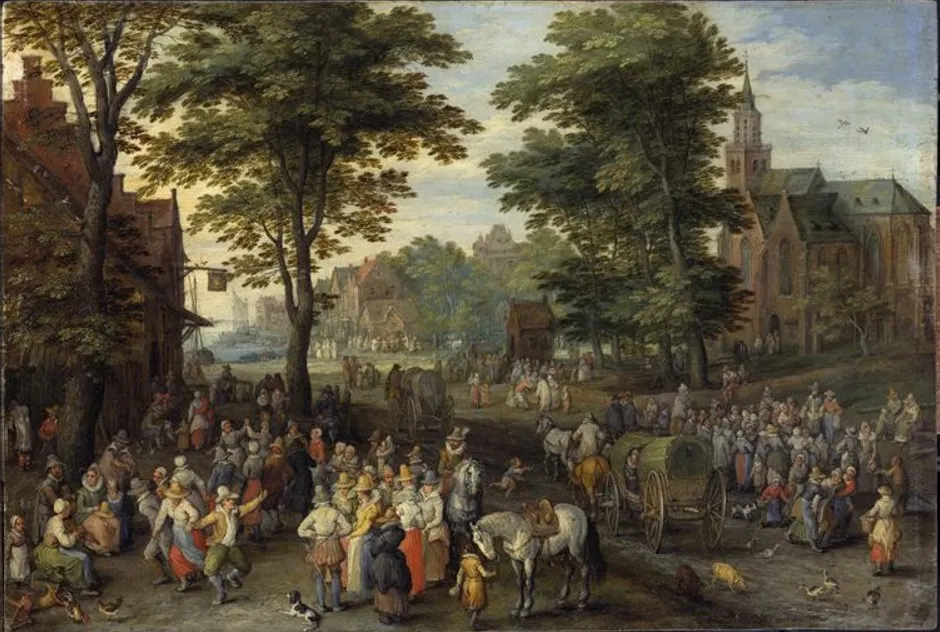
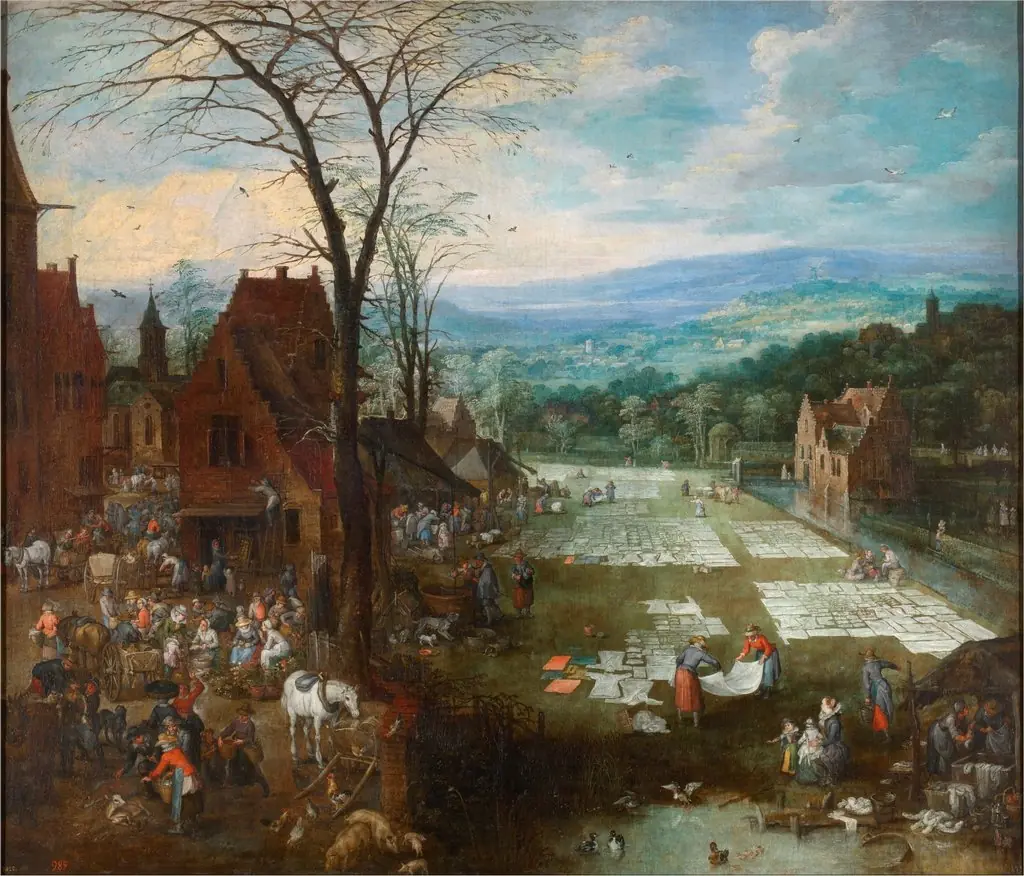
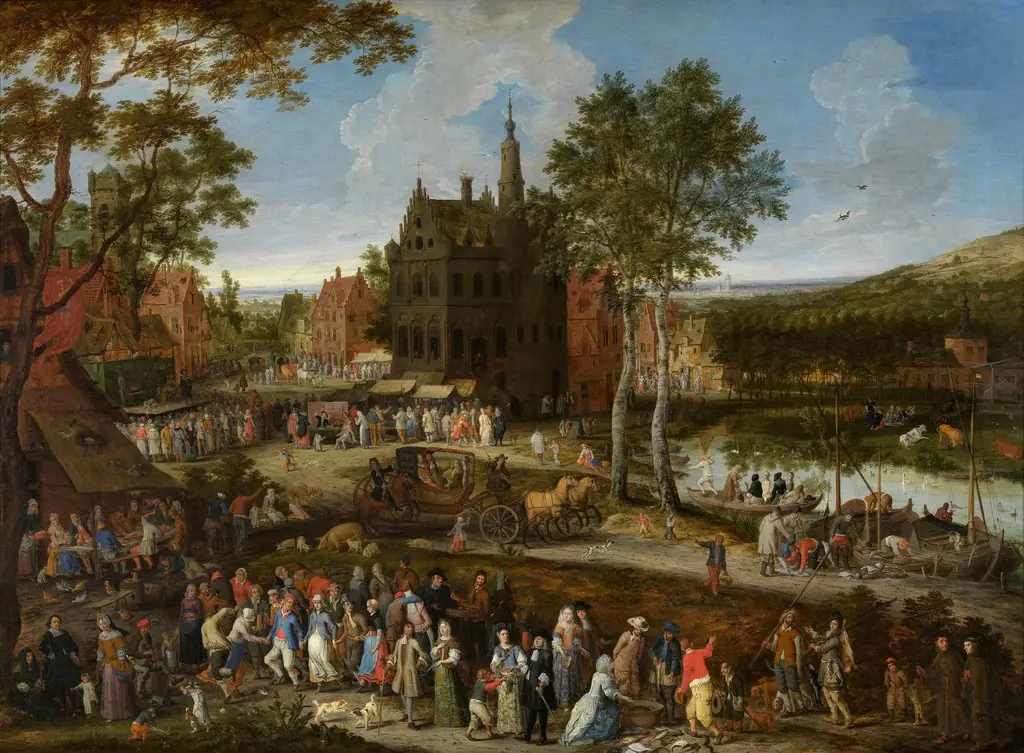
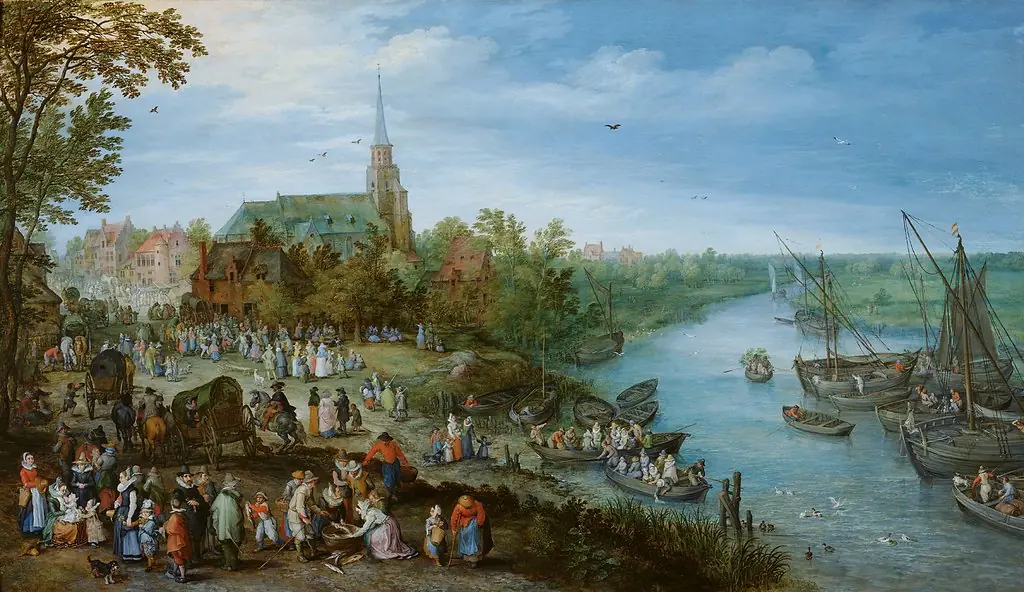
Village Kermis is an oil painting by the Flemish Baroque painting artist Jan Brueghel, the elder. It dates from 1612 and is held in the collection of the Bavarian State Painting Collections.
About this work
Overview
Painted in 1612, *Village Kermis* is an oil-on-panel work by Jan Brueghel the Elder, capturing a rural festival in the Flemish countryside.
Painted in 1612, *Village Kermis* is an oil-on-panel work by Jan Brueghel the Elder, capturing a rural festival in the Flemish countryside. It reflects the artist’s interest in everyday life and communal gatherings, rendered with meticulous detail and a vibrant palette. The scene unfolds in a sunlit village square, where figures move through a landscape of modest dwellings and leafy trees, suggesting a seasonal celebration tied to local tradition.
Subject & Meaning
The painting portrays a kermis, a traditional Flemish village fair often held in honor of a patron saint. Figures of all ages engage in leisure activities—dancing, conversing, eating, and watching performances—emphasizing community and shared ritual. The absence of overt religious symbols shifts focus to social interaction, presenting the event as a moment of collective joy rather than devotional observance.
Technique & Style
Brueghel employed fine brushwork to distinguish individual figures and textures, from fabric folds to wooden cart wheels. His layered application of oil paint creates depth and luminosity, while the composition guides the eye through a diagonal flow of movement. The background recedes with soft atmospheric perspective, contrasting with the sharp detail of the foreground, enhancing the sense of spatial immersion.
History & Provenance
Commissioned during the height of Brueghel’s career, the painting entered private collections in the Low Countries before being acquired by a major European museum in the 19th century. Its survival through centuries of political and religious upheaval speaks to its enduring appeal among collectors. Documentation confirms its attribution to Brueghel and dates it firmly to 1612, aligning with his mature period.
Context
In early 17th-century Flanders, village fairs were vital social events, blending commerce, entertainment, and religious observance. Brueghel’s depiction aligns with a broader trend among Flemish artists to elevate ordinary life through careful observation. His collaborations with Rubens influenced his handling of figures and movement, though here his focus remains on quiet, unidealized human activity rather than grandeur.
Legacy
The painting exemplifies Brueghel’s role in shaping genre painting in Northern Europe. Its emphasis on naturalistic detail and social observation influenced later Dutch and Flemish artists who pursued similar themes. While not widely exhibited in his lifetime, *Village Kermis* remains a key reference for understanding how everyday rituals were rendered with dignity and precision in Baroque art.
Artist & collection
Artist
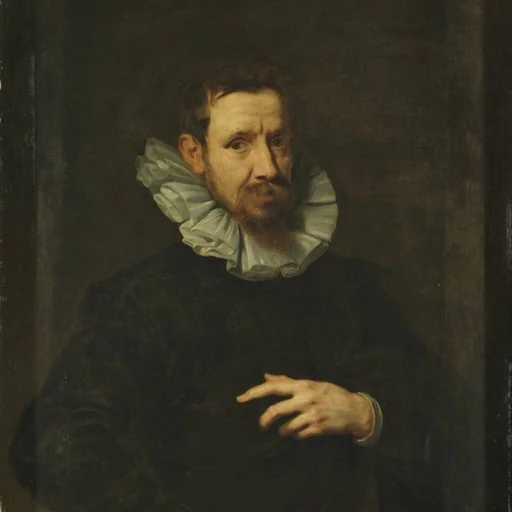
Jan Brueghel the Elder ( BROY-gəl, US also BROO-gəl; Dutch: ; 1568 – 13 January 1625) was a Flemish painter and draughtsman.