Artwork
Giardino Garnier – Bordighera. From the journey to Italy
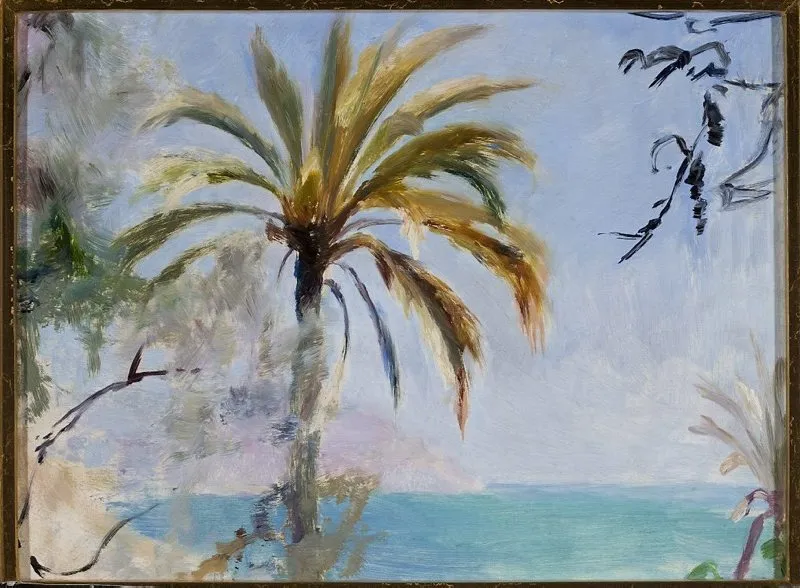
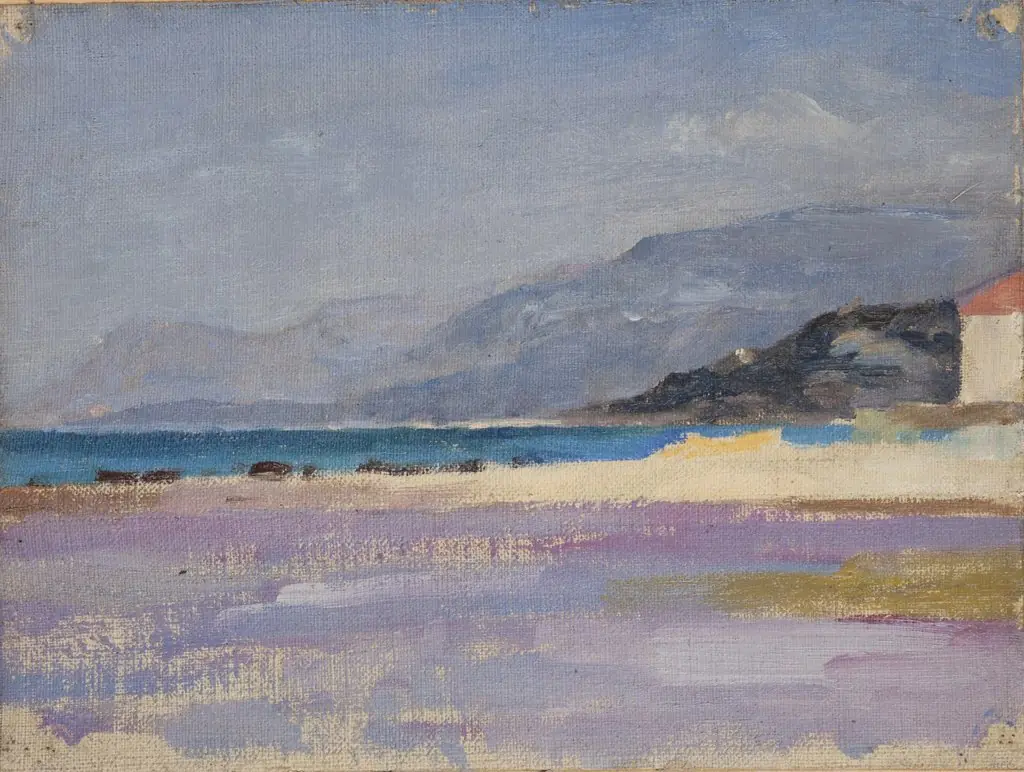
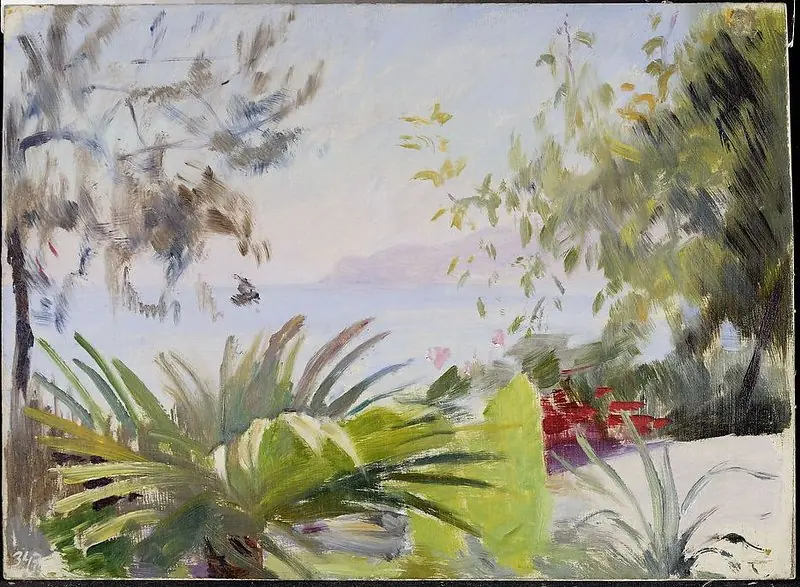
Giardino Garnier – Bordighera. From the journey to Italy is an oil painting by the Post-Impressionist artist Jan Ciągliński. It dates from 1898 and is held in the collection of the National Museum in Warsaw.
About this work
Overview
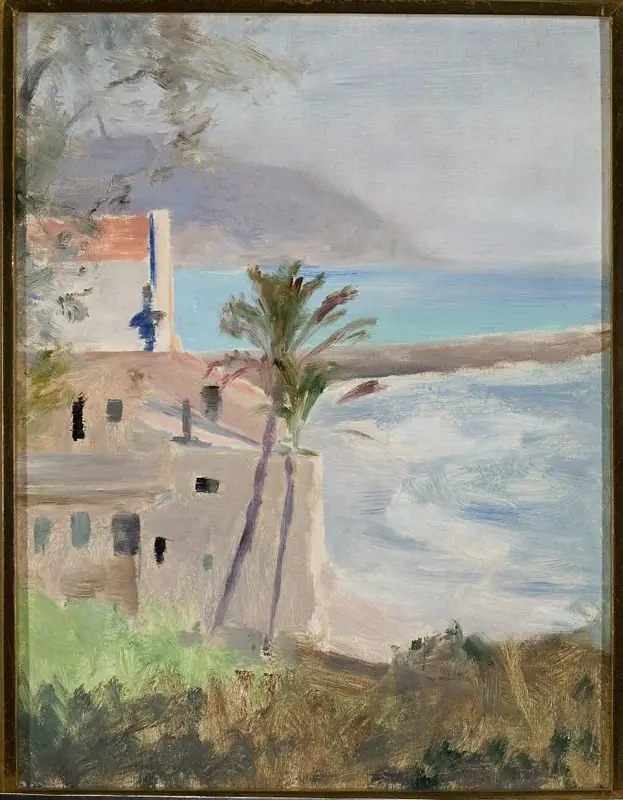
Jan Ciągliński painted *Giardino Garnier – Bordighera* in 1898 during a trip to Italy, capturing a quiet coastal garden in the Ligurian town of Bordighera.
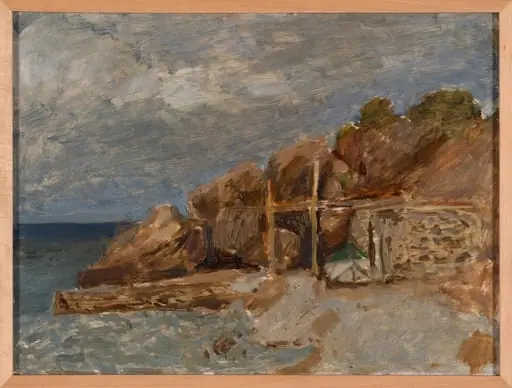
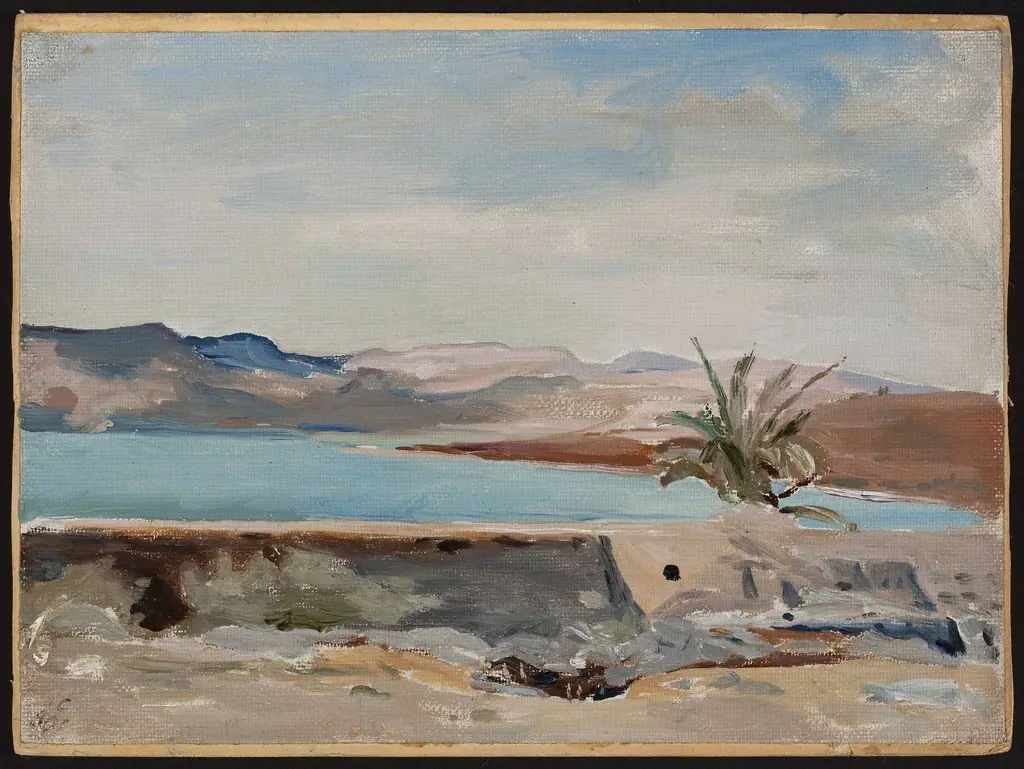
Jan Ciągliński painted *Giardino Garnier – Bordighera* in 1898 during a trip to Italy, capturing a quiet coastal garden in the Ligurian town of Bordighera. Executed in oil on canvas, the work belongs to his series of Italian landscapes and reflects his engagement with post-impressionist approaches to light and color. It is now part of the National Museum in Warsaw’s collection, representing his lesser-known but significant contributions to Polish plein air painting.
Subject & Meaning
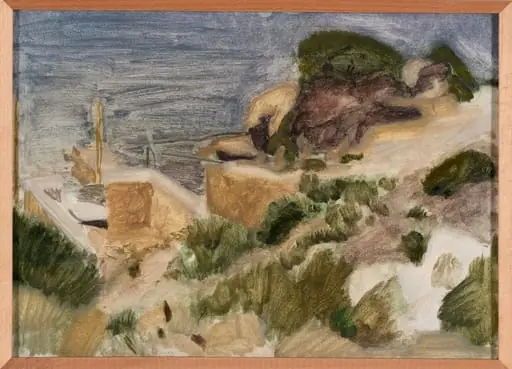
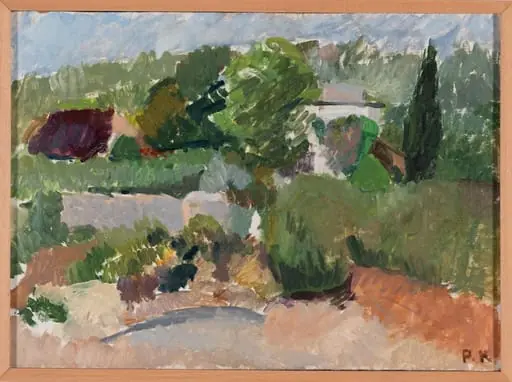
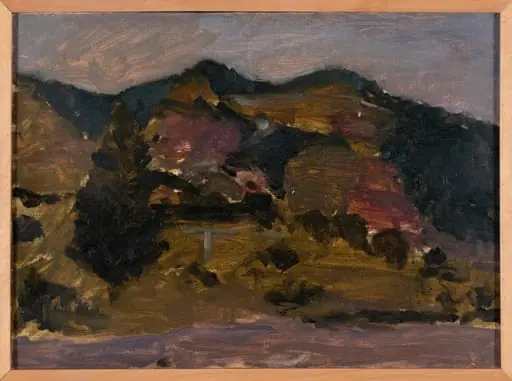
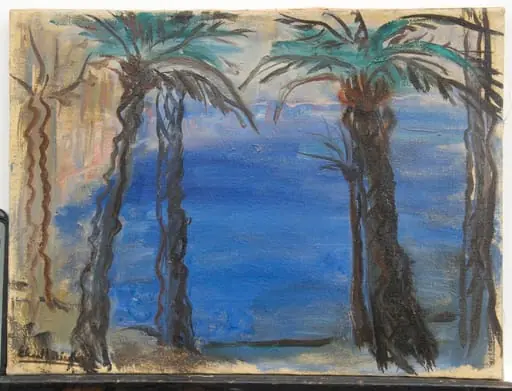
The painting presents a tranquil garden overlooking the Mediterranean, centered on a lone palm tree whose fronds sway gently against a horizon of sea and sky. There is no human presence, emphasizing solitude and natural harmony. The scene evokes a meditative stillness, not as a tourist’s snapshot but as a personal response to the quiet rhythm of the Italian coast—offering a contemplative pause rather than narrative drama.
Technique & Style
Ciągliński employed loose, textured brushwork to suggest the movement of palm leaves and the ripple of water, avoiding rigid definition. Color is applied in soft gradients—warm ochres and umbers for the foliage, cool blues and whites for the sea and sky—creating atmospheric unity. The composition is deliberately open, with no sharp focal point, encouraging the eye to drift across the surface, reinforcing the painting’s sense of calm and immersion.
History & Provenance
Created during Ciągliński’s travels in southern Italy, the painting entered the National Museum in Warsaw’s holdings in the early 20th century, likely through direct acquisition or donation. Its preservation reflects the museum’s interest in Polish artists who engaged with European artistic currents beyond the Russian Empire, where Ciągliński was primarily active. The work has remained in public collection since its acquisition, with no record of private ownership.
Context
Ciągliński worked within a network of Polish artists influenced by French and Italian post-impressionism, though he remained largely outside major artistic centers. His Italian landscapes, including this one, reveal a quiet departure from academic traditions, embracing looser forms and natural light. The choice of Bordighera—a quiet resort favored by northern Europeans—suggests a preference for understated beauty over grandeur, aligning with broader trends among artists seeking respite from urban life.
Legacy
While Ciągliński is not widely recognized outside Poland, *Giardino Garnier – Bordighera* stands as a quiet example of how Polish painters absorbed international styles without adopting their dominant narratives. The painting contributes to a broader understanding of late 19th-century Eastern European art as engaged with, yet distinct from, Western European movements. Its enduring presence in the National Museum underscores its role as a subtle but authentic record of personal observation.
Artist & collection
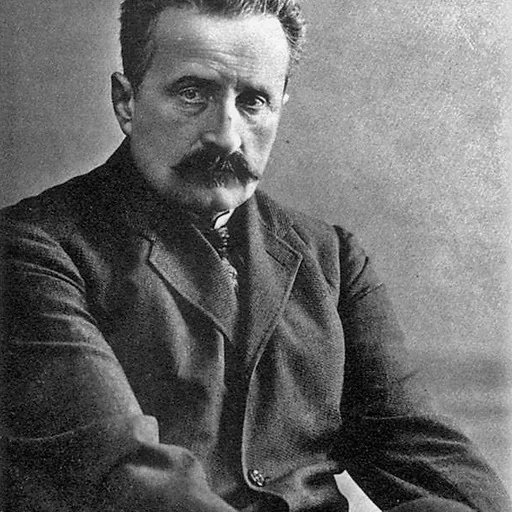
Artist
Jan Ciągliński (Polish: ; Russian: Ян/Иван Францевич Ционглинский, romanized: Yan/Ivan Frantsevich Tsionglinskiy; 20 February 1858 – 6 January 1913) was a Polish painter, active in St.