Artwork
Sahara (Desert)
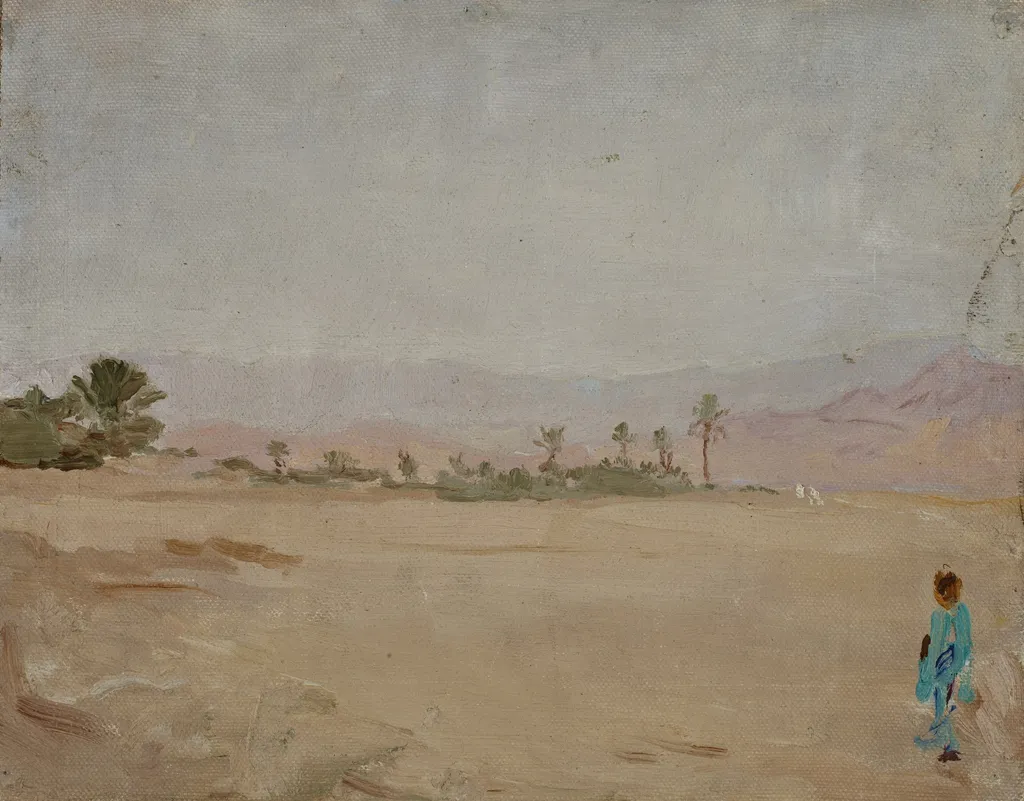
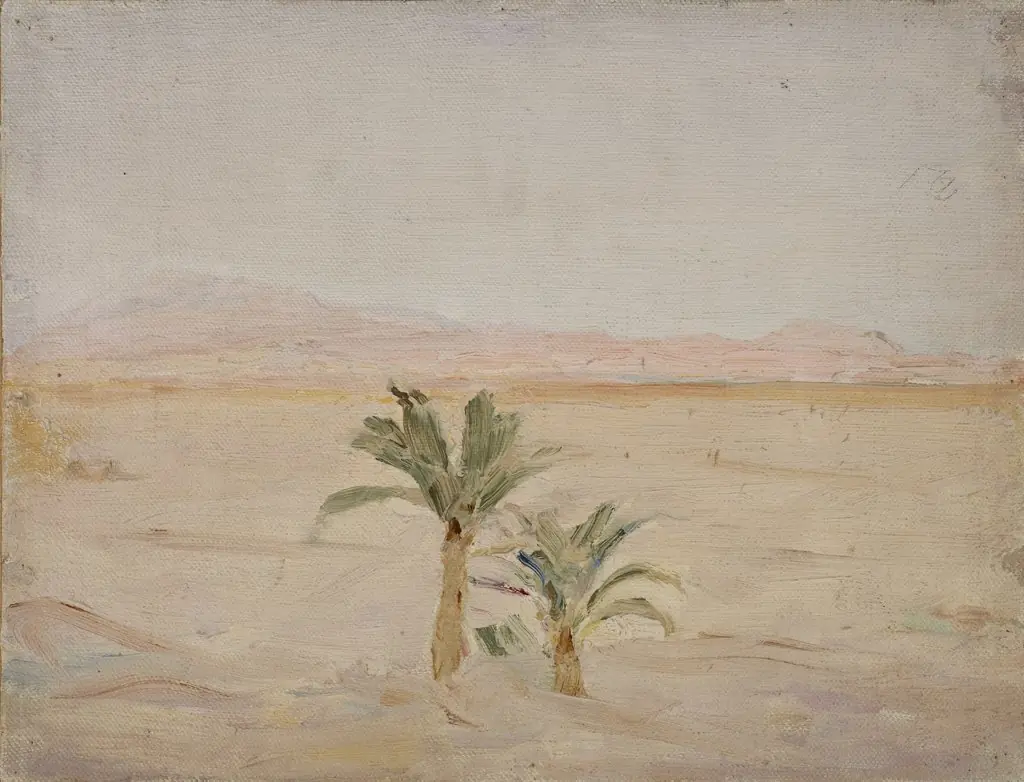
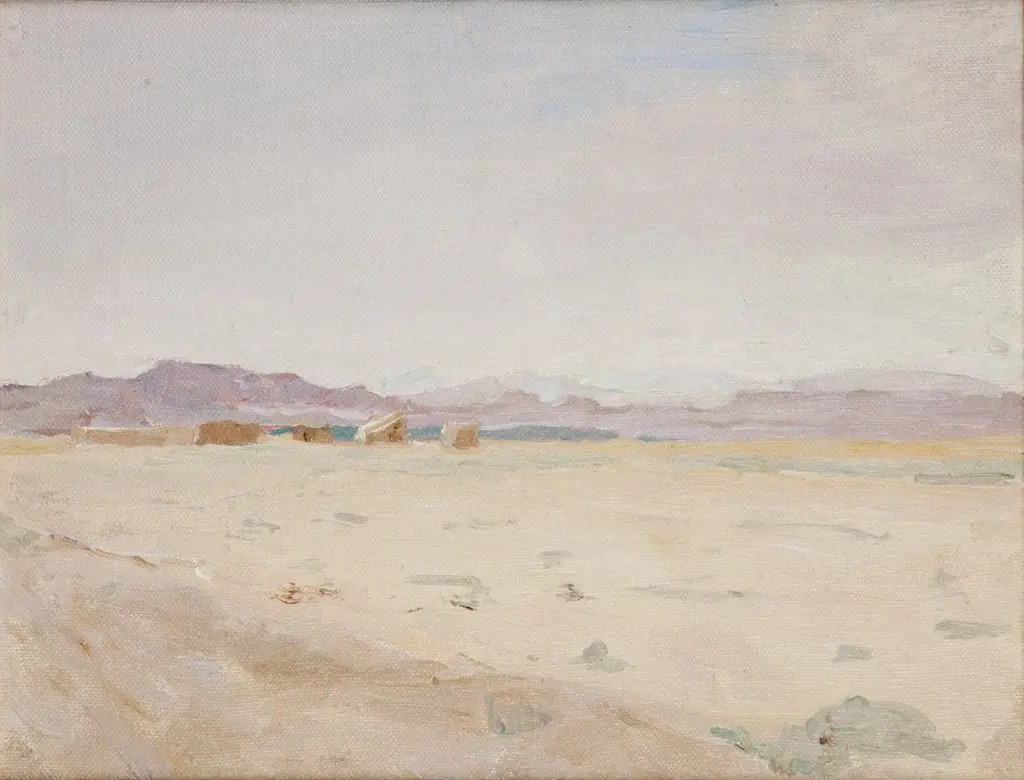
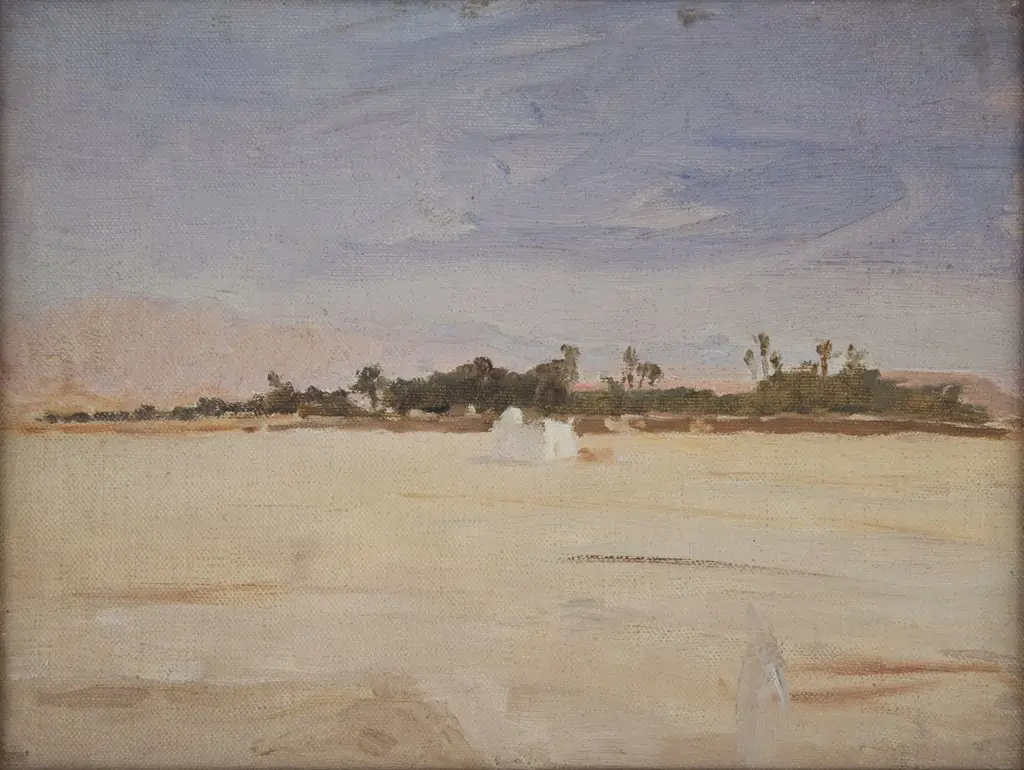
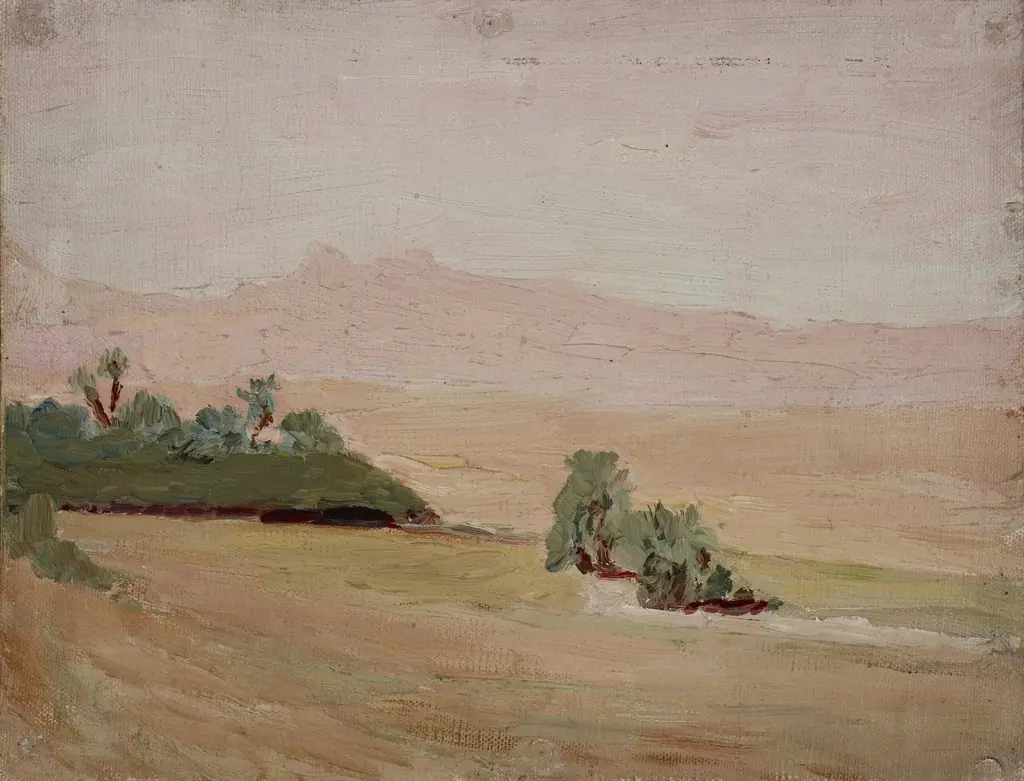
Sahara (Desert) is an unspecified painting by the Impressionist artist Jan Ciągliński. It dates from 1909 and is held in the collection of the National Museum in Kraków.
About this work
Overview
Unlike dramatic Orientalist scenes common at the time, this painting favors quiet observation over narrative spectacle, emphasizing mood over detail.
Jan Ciągliński, a Polish artist active in late imperial Russia, painted Sahara (Desert) in 1909 during a period of sustained engagement with Impressionist approaches. The work is part of the National Museum in Kraków’s collection and reflects his interest in atmospheric landscapes. Unlike dramatic Orientalist scenes common at the time, this painting favors quiet observation over narrative spectacle, emphasizing mood over detail.
Subject & Meaning
The painting presents an expansive desert under a muted, overcast sky, with sparse palm trees suggesting distant oases. A solitary figure in light blue, carrying a dark burden, appears in the lower right—small enough to underscore isolation rather than dominate the scene. The absence of clear narrative invites contemplation of solitude, endurance, and the scale of nature against human presence.
Technique & Style
Ciągliński employed loose, blended brushwork typical of Impressionism, using soft transitions between tones to suggest heat haze and shifting dunes. Earthy ochres and grays dominate, with minimal contrast to preserve a subdued harmony. Light is diffused rather than directional, creating a sense of stillness. The figure is rendered with minimal detail, integrating it into the landscape rather than isolating it as a focal point.
History & Provenance
Created during Ciągliński’s time in St. Petersburg, the painting was likely made after his travels or from memory, as he rarely ventured into North Africa. It entered the National Museum in Kraków’s holdings in the early 20th century, possibly through Polish cultural networks or private donation. Its preservation reflects interest in Polish artists working beyond national borders during the partitions.
Context
In early 20th-century Europe, desert imagery often carried exotic or romantic connotations. Ciągliński’s approach diverged from this trend, avoiding theatricality in favor of restrained observation. His work aligns with broader European Impressionist tendencies to capture transient light and quiet moments, even when depicting foreign locales, reflecting a shift toward introspective realism over spectacle.
Legacy
Sahara (Desert) remains a quiet example of Polish Impressionism’s engagement with global landscapes. While Ciągliński is not widely known outside Poland, this painting contributes to understanding how artists from smaller nations interpreted international themes through local aesthetic sensibilities. It stands as a modest but deliberate counterpoint to more flamboyant Orientalist works of the era.
Artist & collection
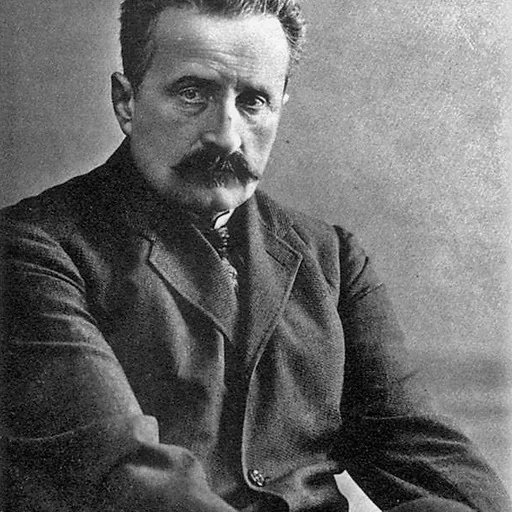
Artist
Jan Ciągliński (Polish: ; Russian: Ян/Иван Францевич Ционглинский, romanized: Yan/Ivan Frantsevich Tsionglinskiy; 20 February 1858 – 6 January 1913) was a Polish painter, active in St.