Artwork
Sahara (The Sirocco in the Desert)
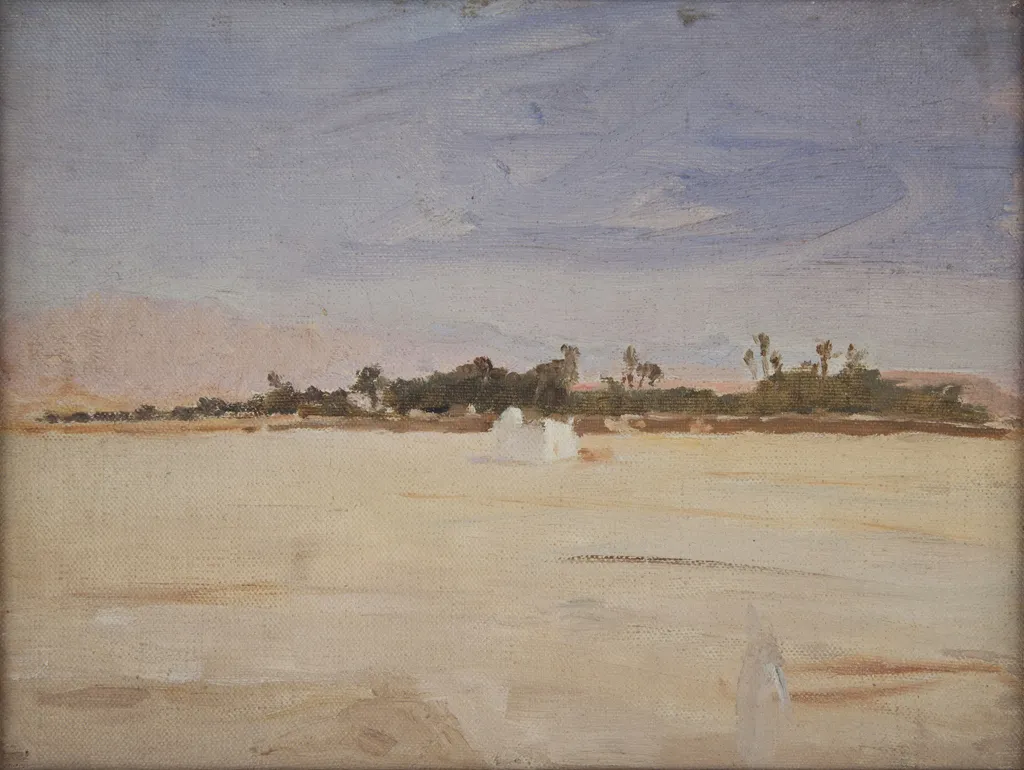
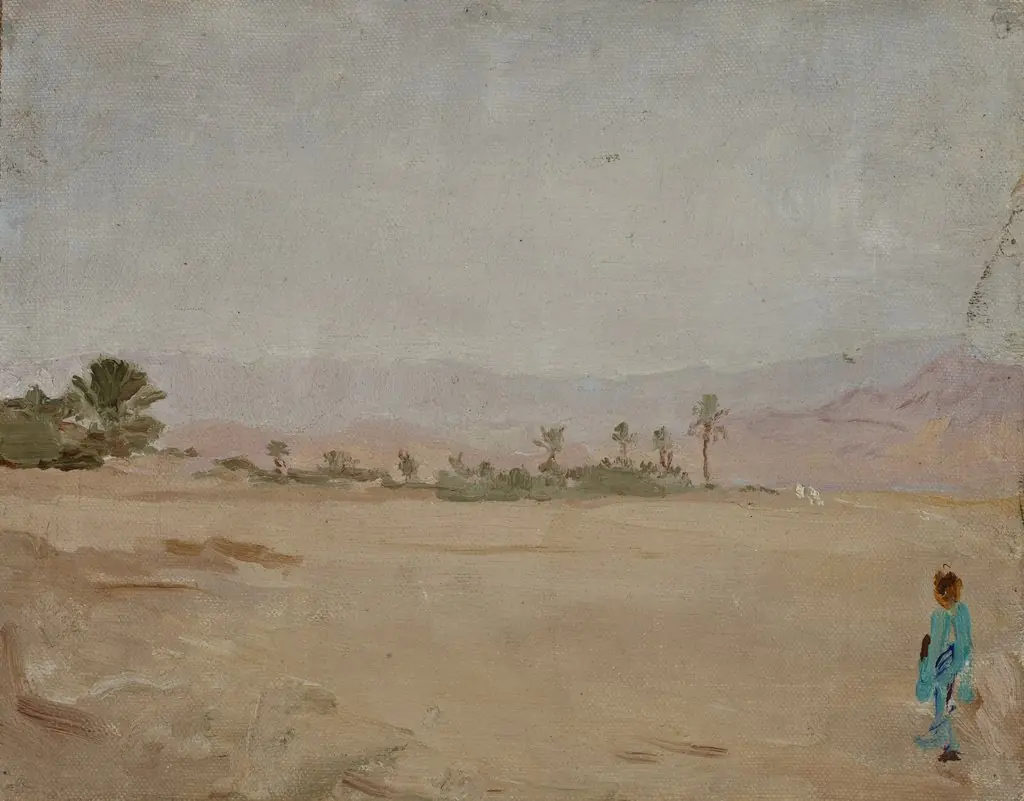
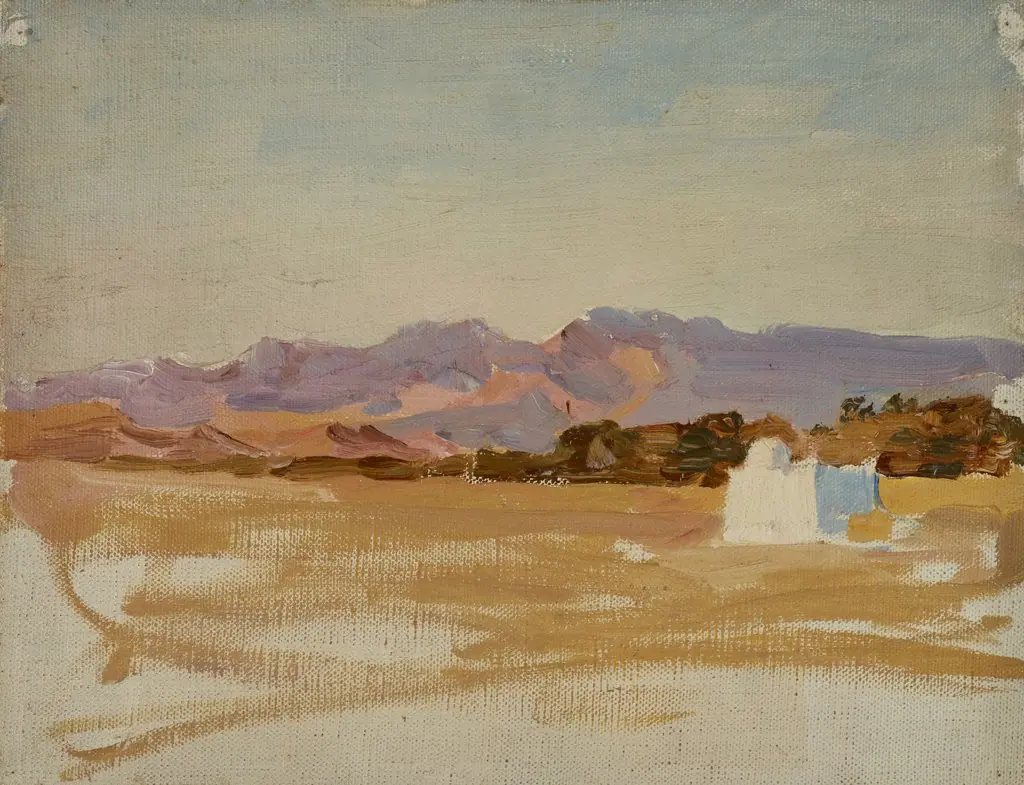
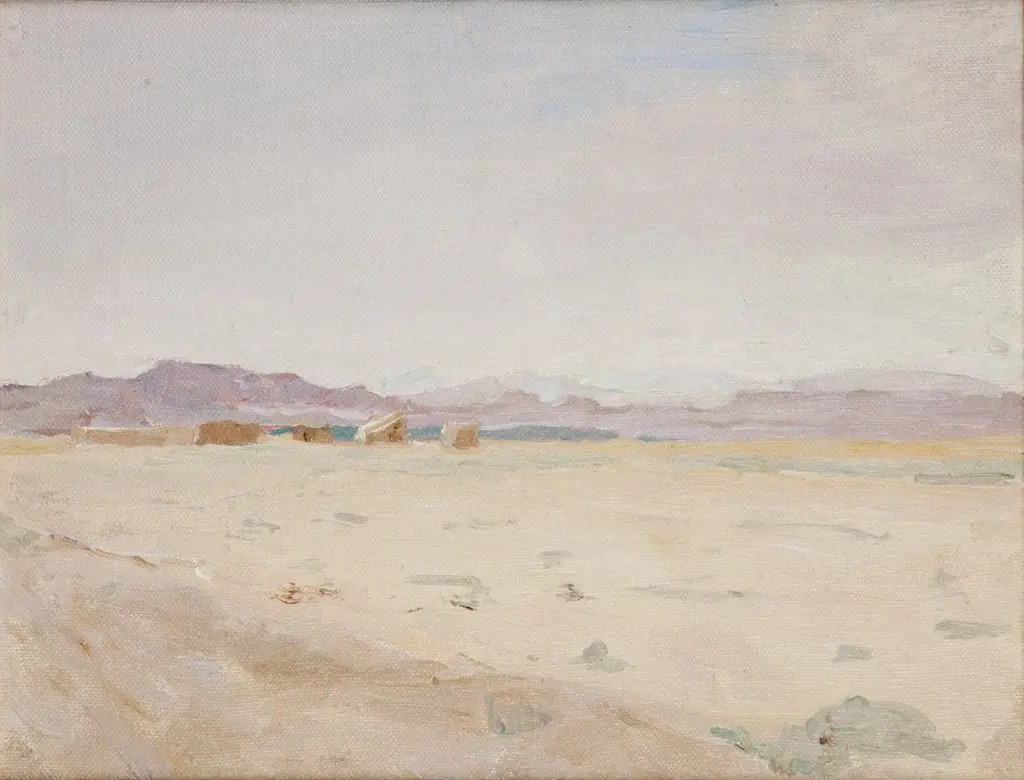
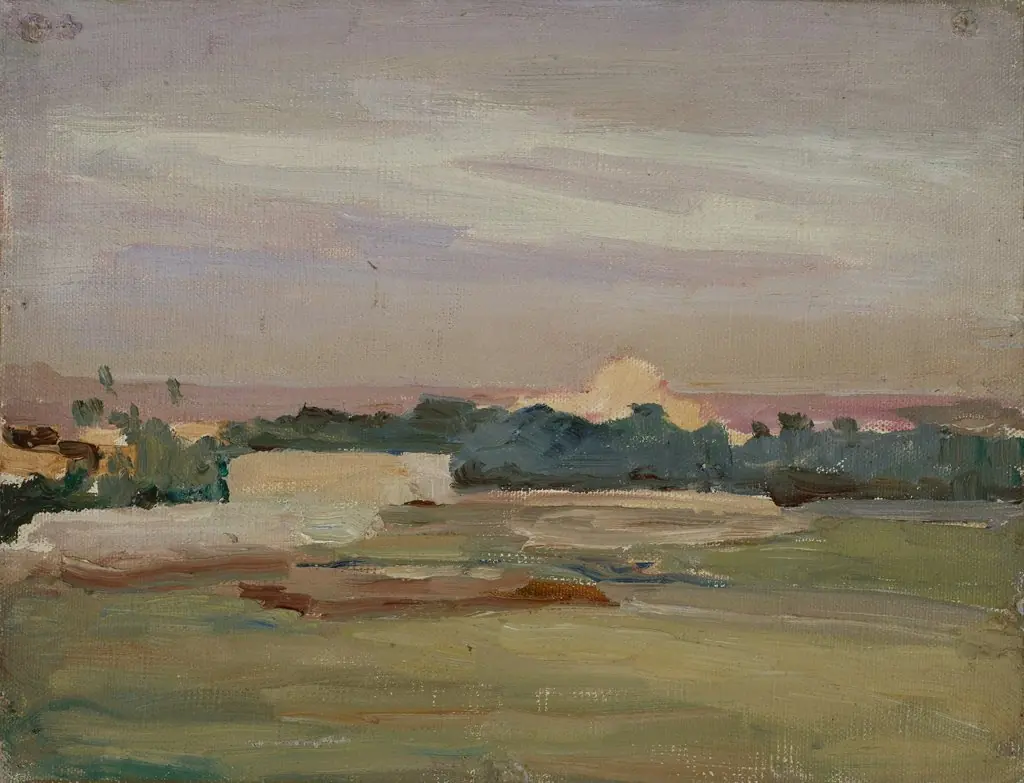
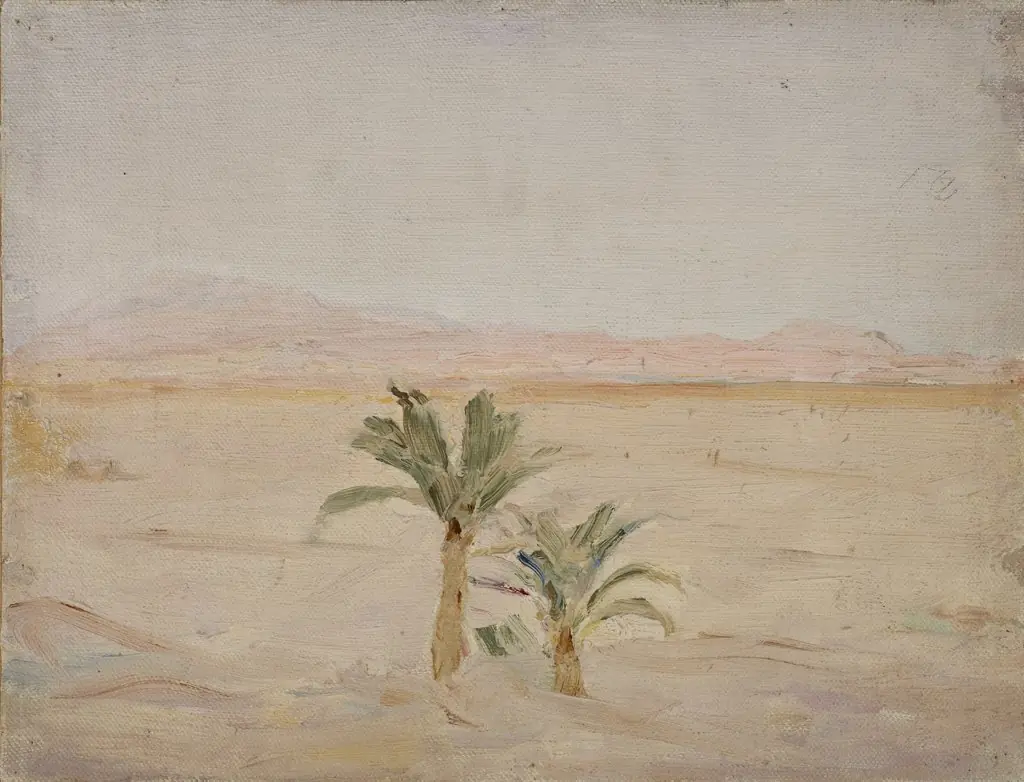
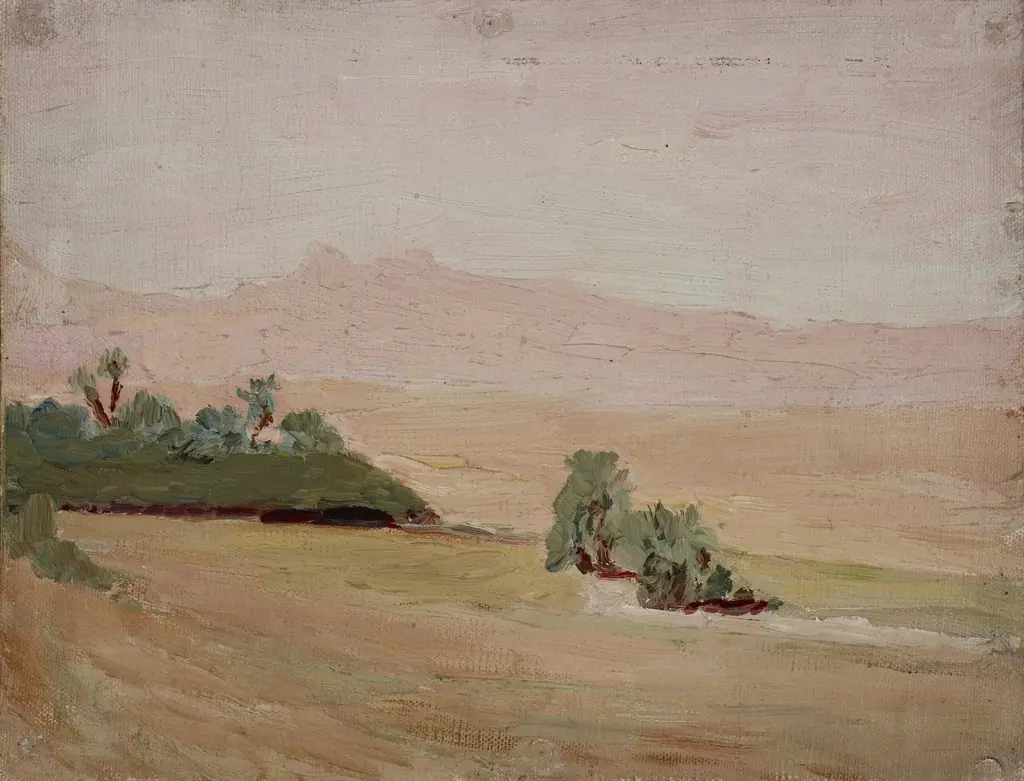
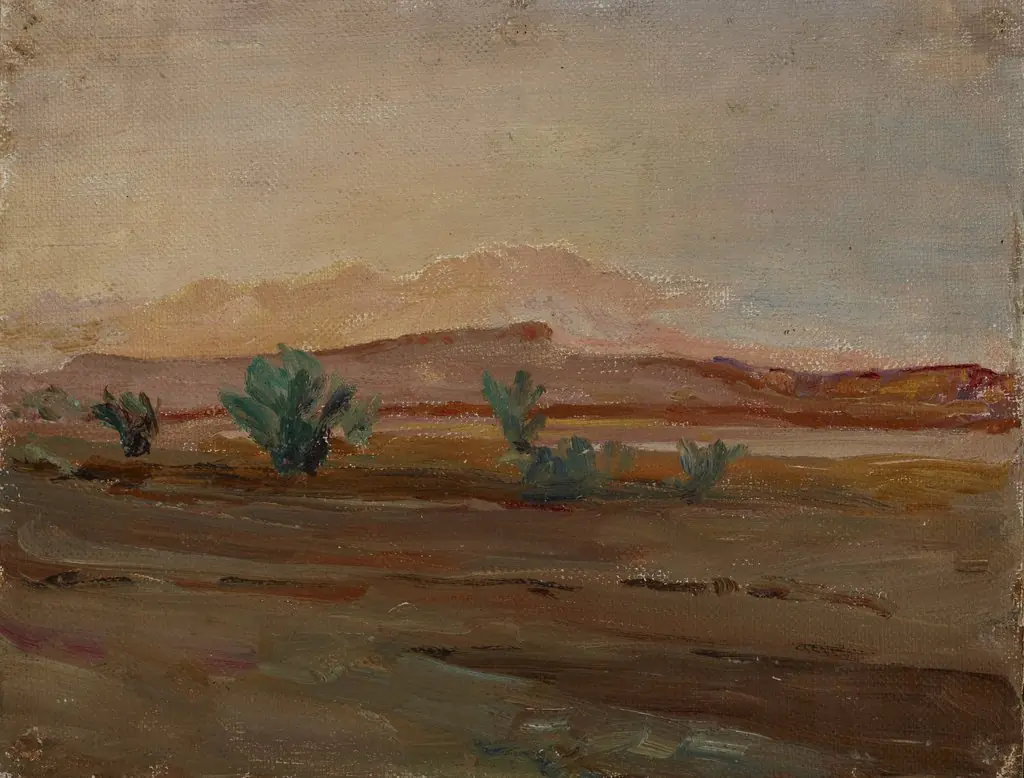
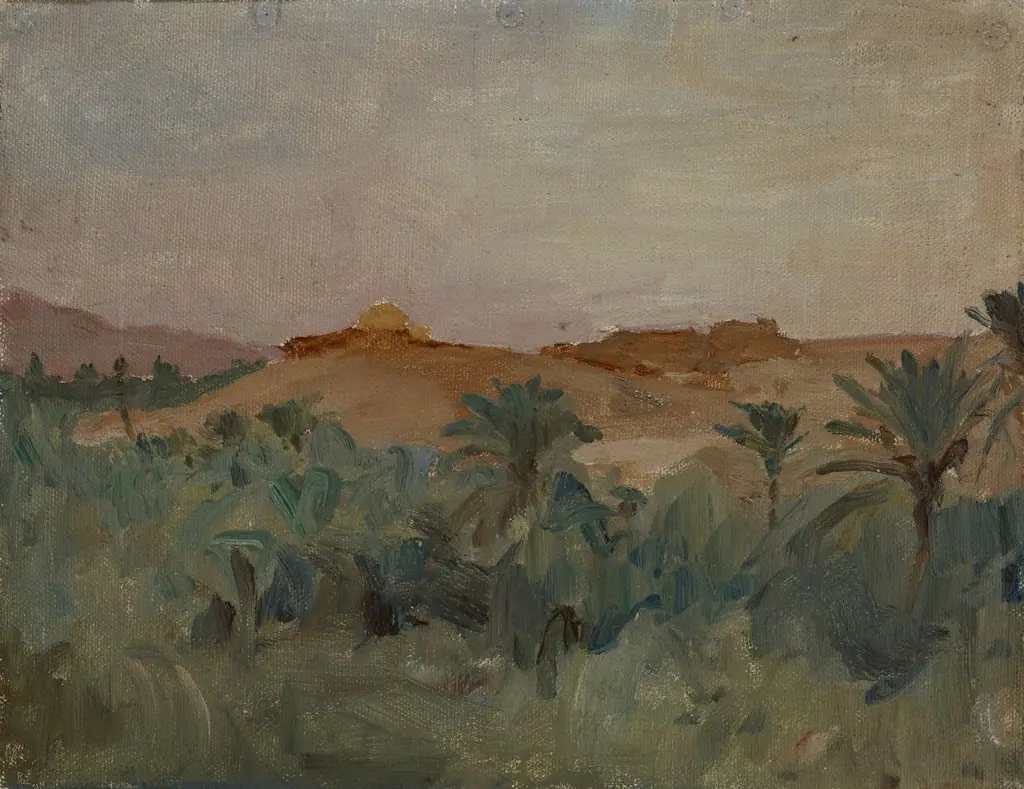
Sahara (The Sirocco in the Desert) is an unspecified painting by the Post-Impressionist artist Jan Ciągliński. It dates from 1909 and is held in the collection of the National Museum in Kraków.
About this work
Overview
The work emerged during a period of stylistic transition, blending observational clarity from Impressionism with the structural emphasis of Post-Impressionism.
Jan Ciągliński, a Polish artist based in St. Petersburg during the late Russian Empire, completed Sahara (The Sirocco in the Desert) in 1909. The work emerged during a period of stylistic transition, blending observational clarity from Impressionism with the structural emphasis of Post-Impressionism. It captures a quiet moment in the desert, where natural forces shape the landscape without human intervention.
Subject & Meaning
The painting portrays the desert under the influence of the sirocco, a hot, dry wind that stirs the dunes. Rather than depicting chaos, Ciągliński emphasizes stillness and subtle motion—the sand drifting, the sky holding its breath. Sparse vegetation in the distance anchors the scene, suggesting life persisting against harsh conditions. The mood is contemplative, evoking solitude rather than danger.
Technique & Style
Ciągliński used loose, textured brushwork to suggest wind-blown sand, while maintaining a controlled palette of soft blues, ochres, and whites. Light falls evenly across the dunes, creating gentle tonal shifts that imply volume without harsh contrast. The sky, lightly clouded, recedes with atmospheric perspective, reinforcing the vastness of the space. His method avoids dramatic effects, favoring quiet observation.
History & Provenance
Painted in 1909, the work entered the collection of the National Museum in Kraków, where it remains today. Ciągliński’s time in St. Petersburg placed him within a cosmopolitan artistic milieu, yet he maintained ties to Polish cultural circles. The painting reflects his broader interest in landscapes beyond Europe, possibly inspired by travel or photographic sources from North Africa.
Context
At the turn of the 20th century, European artists increasingly turned to non-European landscapes as subjects, often filtered through colonial-era curiosity. Ciągliński’s Sahara does not exoticize the desert but treats it with quiet dignity. His approach aligns with a broader trend among Eastern European painters who sought personal, introspective responses to nature rather than grand narratives.
Legacy
Though not widely known outside Poland, Ciągliński’s work contributes to a lesser-discussed strand of late 19th- and early 20th-century landscape painting that prioritized mood over spectacle. Sahara exemplifies his ability to convey natural phenomena with restraint, offering a counterpoint to more theatrical Orientalist depictions of the desert common in his era.
Artist & collection
Artist
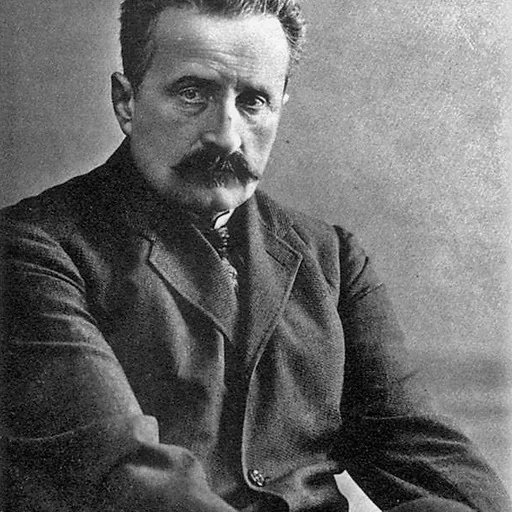
Jan Ciągliński (Polish: ; Russian: Ян/Иван Францевич Ционглинский, romanized: Yan/Ivan Frantsevich Tsionglinskiy; 20 February 1858 – 6 January 1913) was a Polish painter, active in St.