Artwork
Spain (Elche)
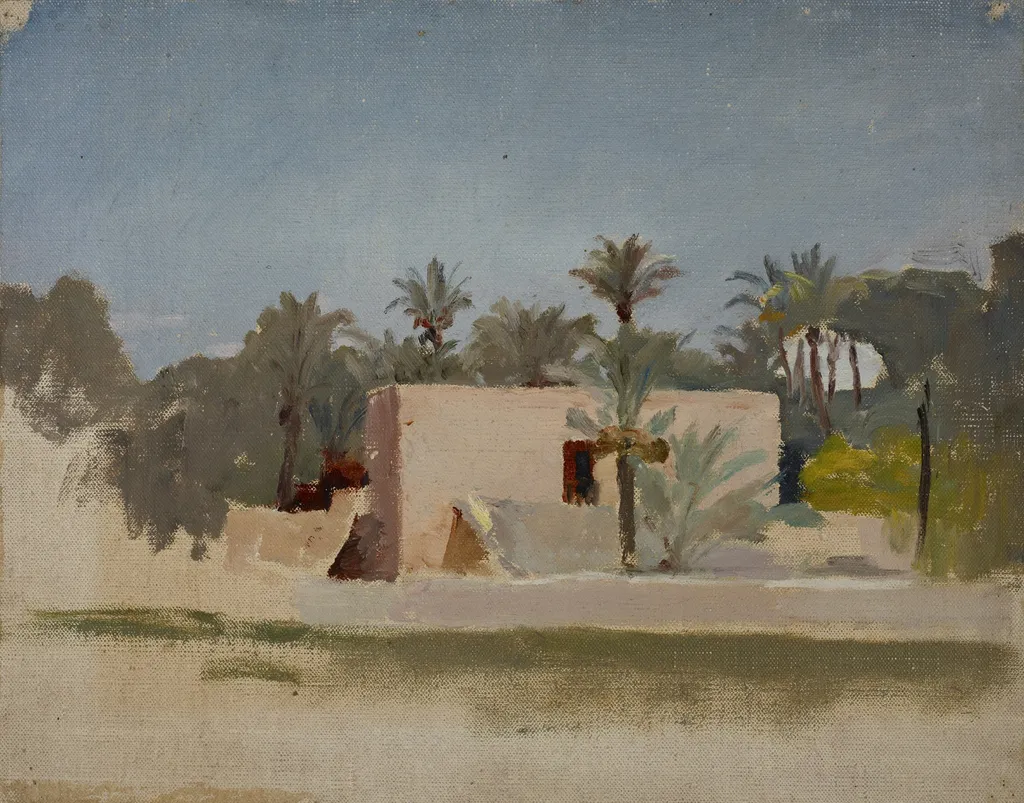
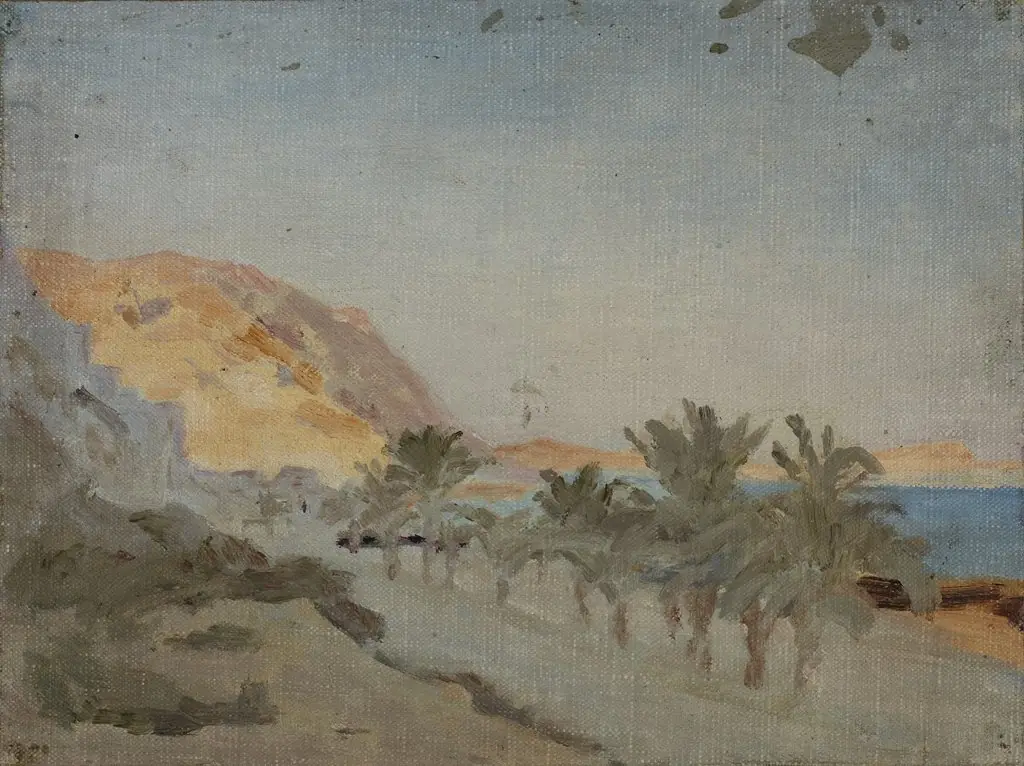
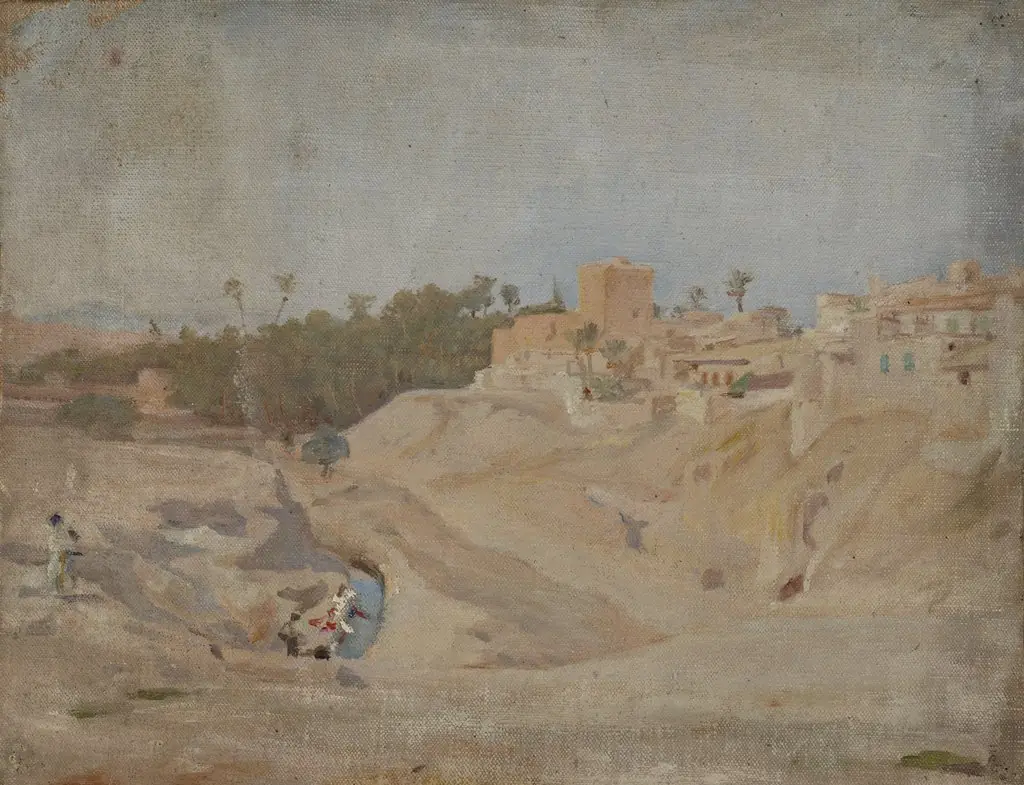
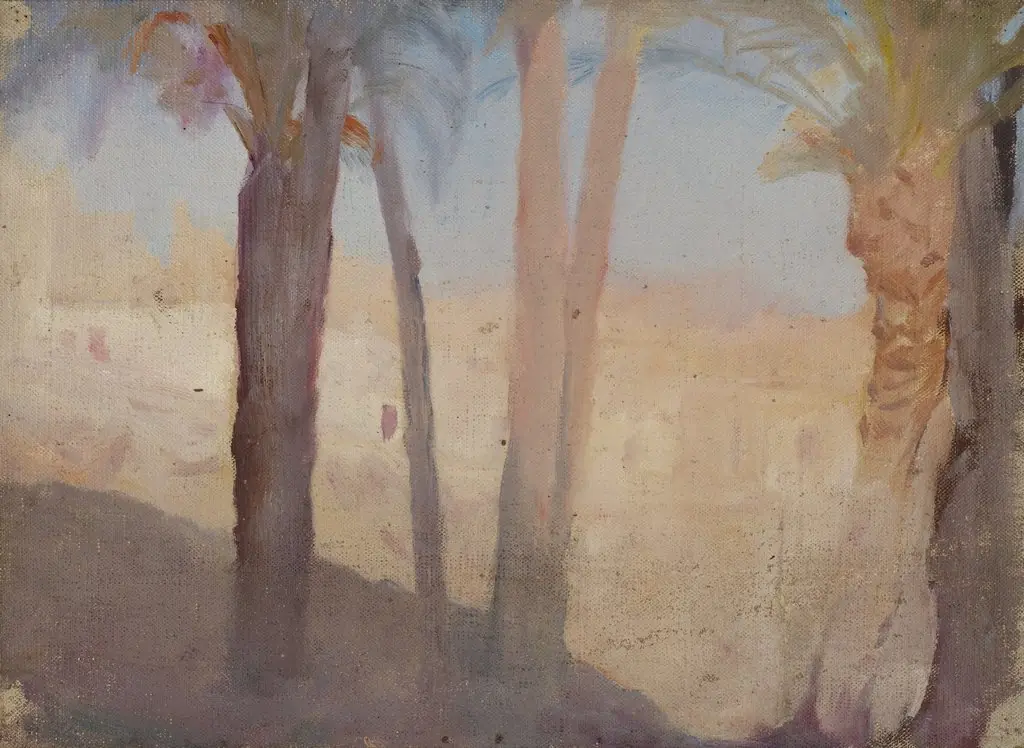
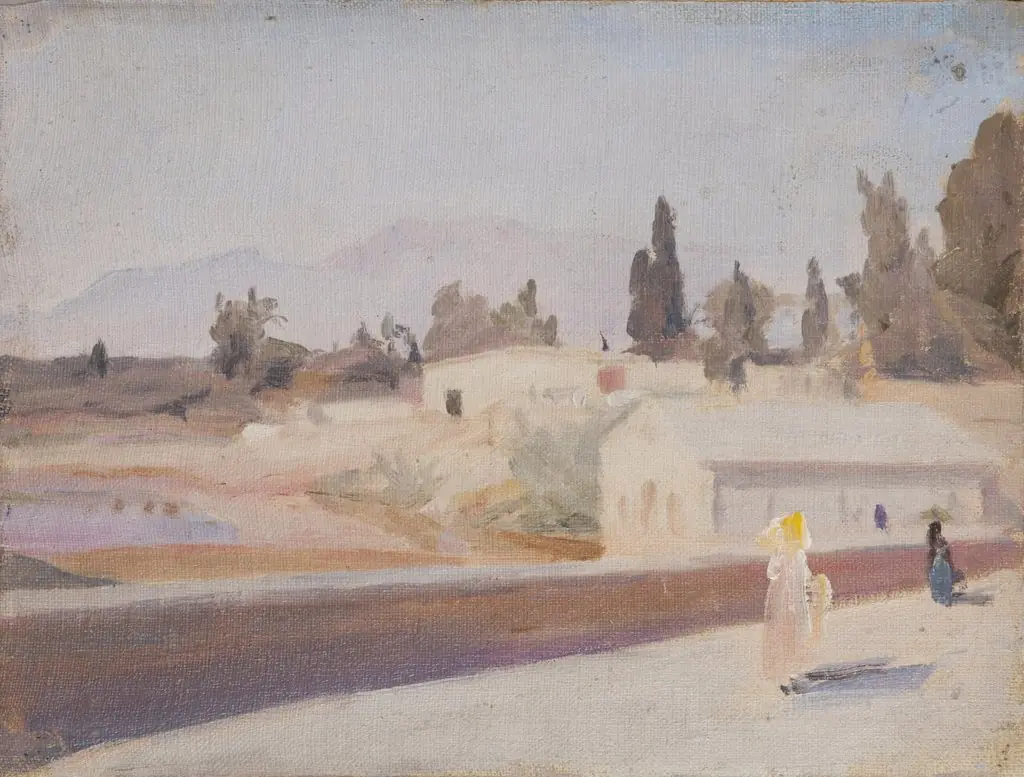
Spain (Elche) is an unspecified painting by the Impressionist artist Jan Ciągliński. It dates from 1900 and is held in the collection of the National Museum in Kraków.
About this work
The artist's use of color and composition creates a sense of calm and tranquility, inviting the viewer to step into the peaceful scene.
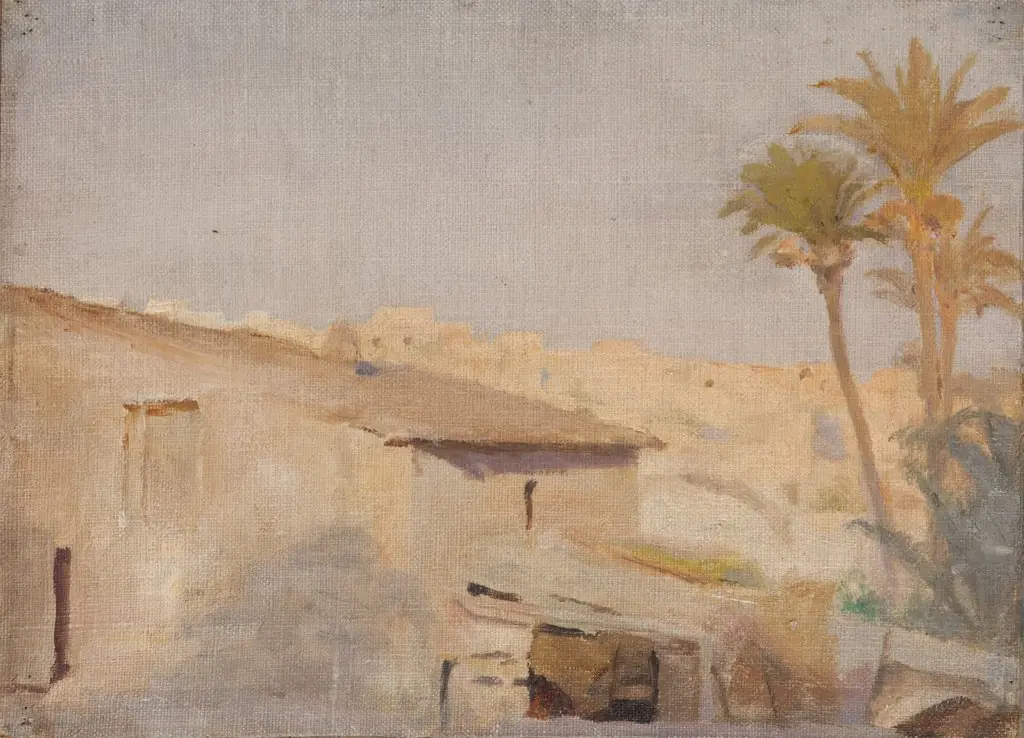
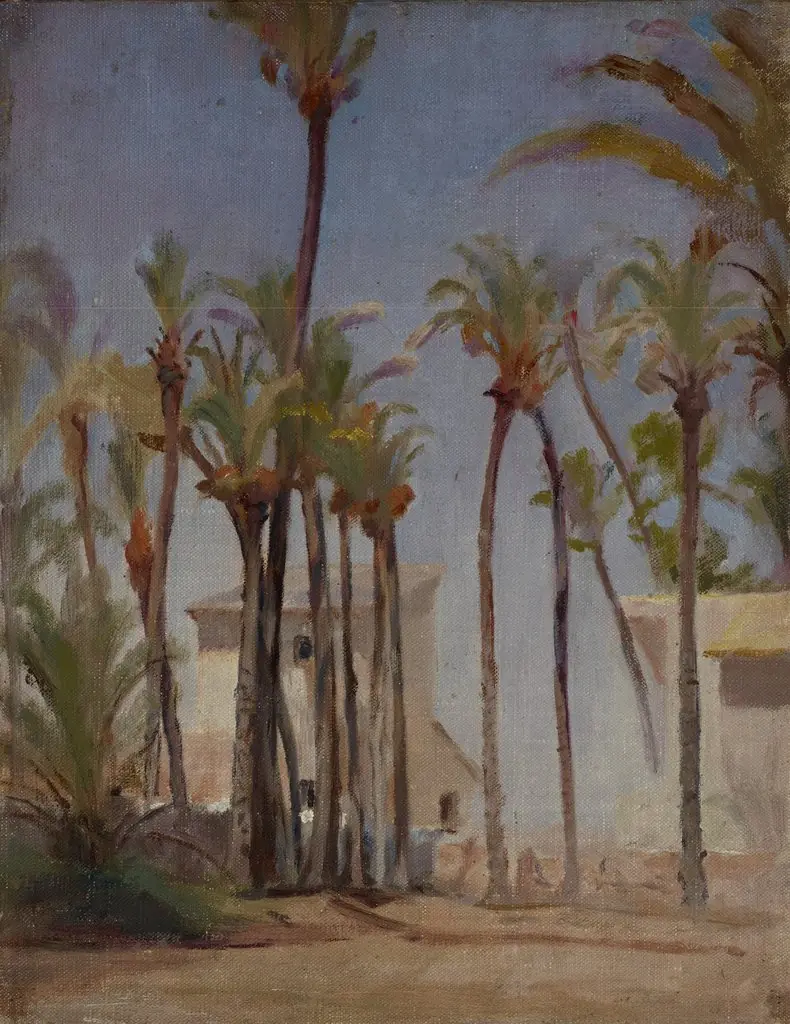
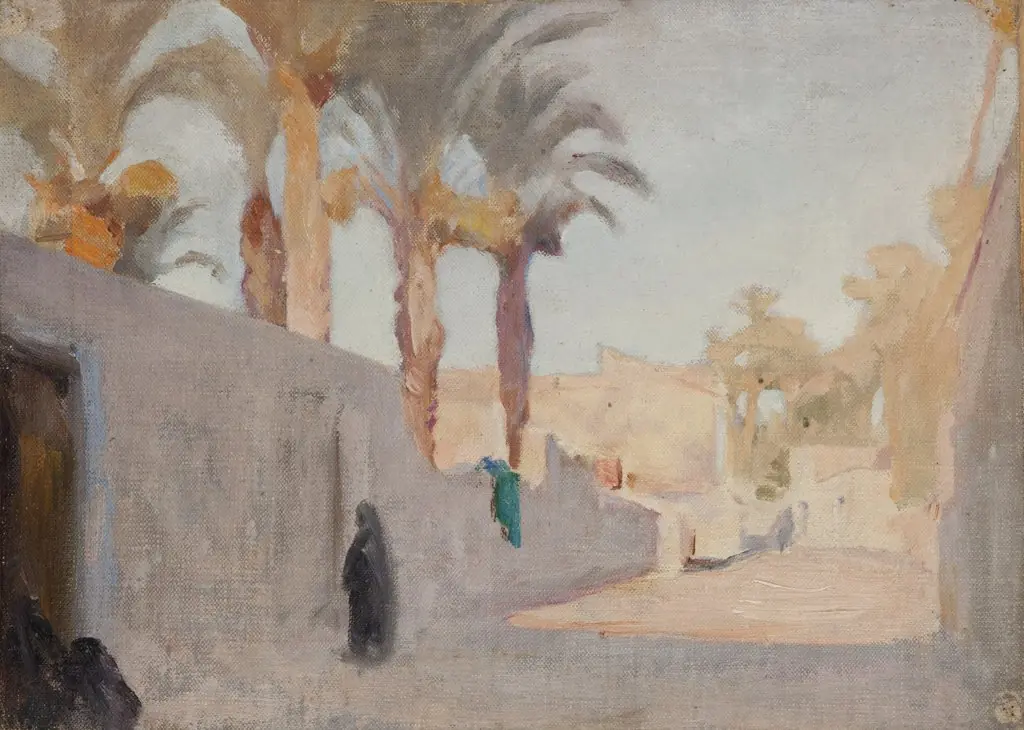
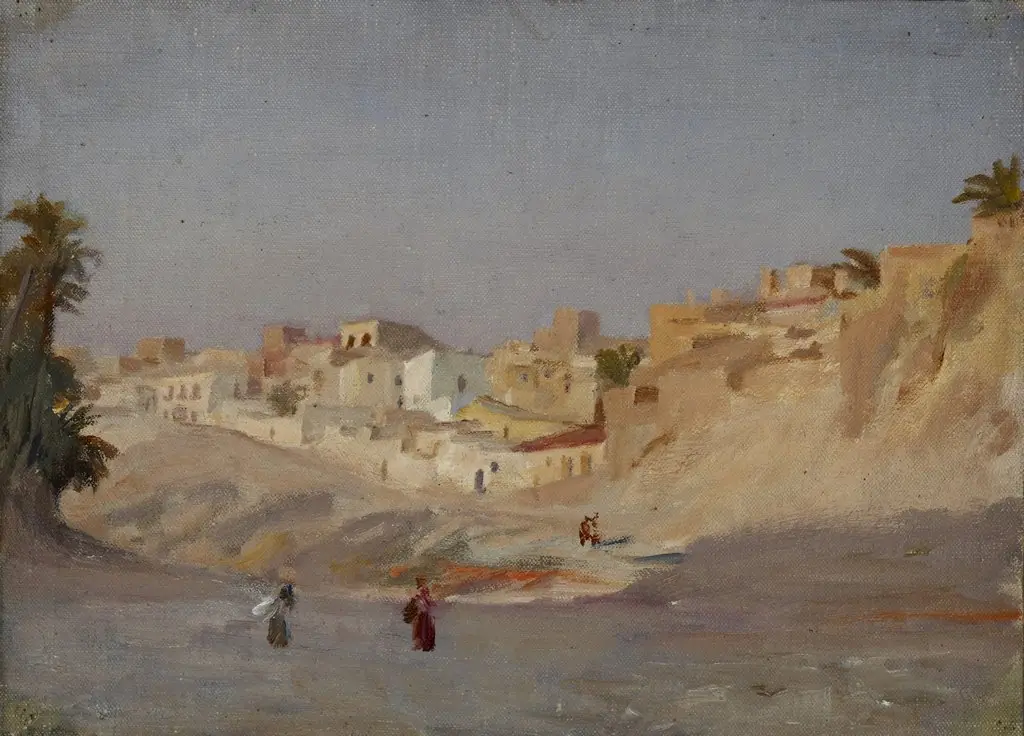
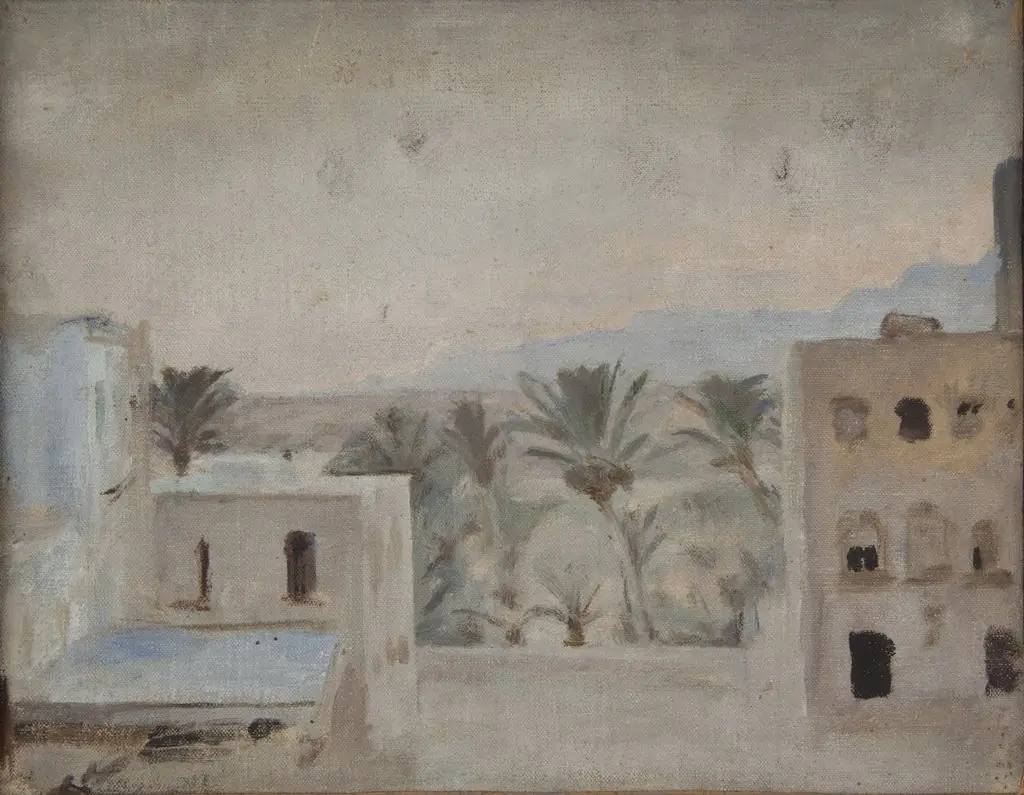
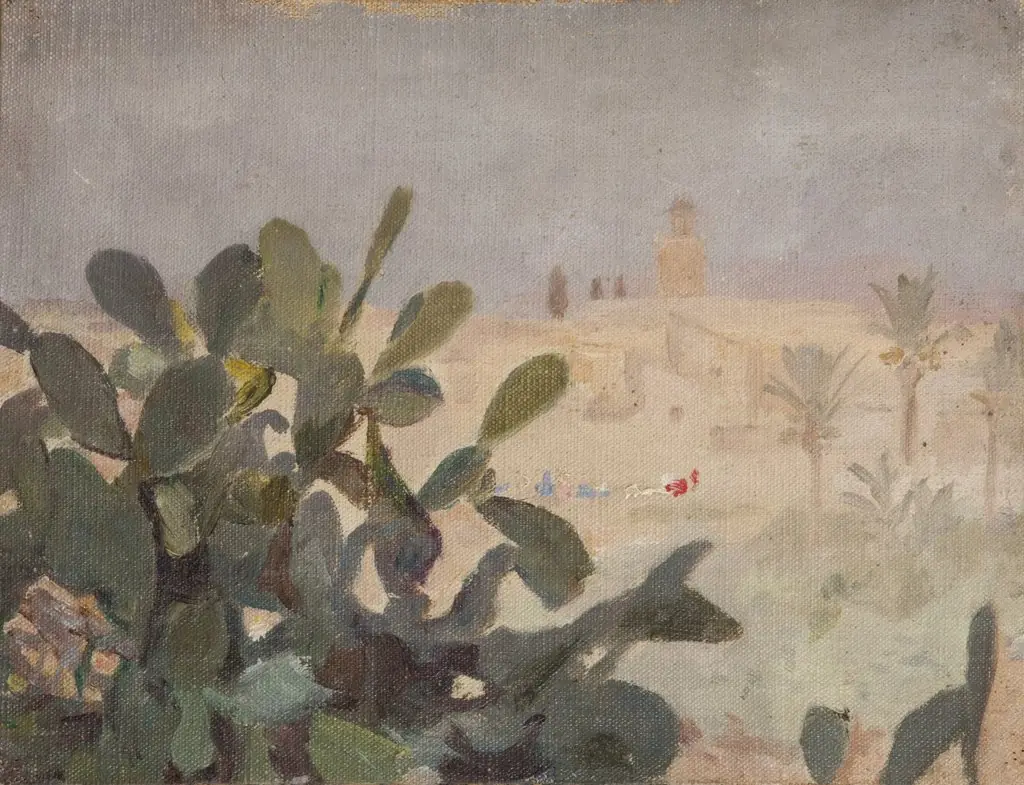
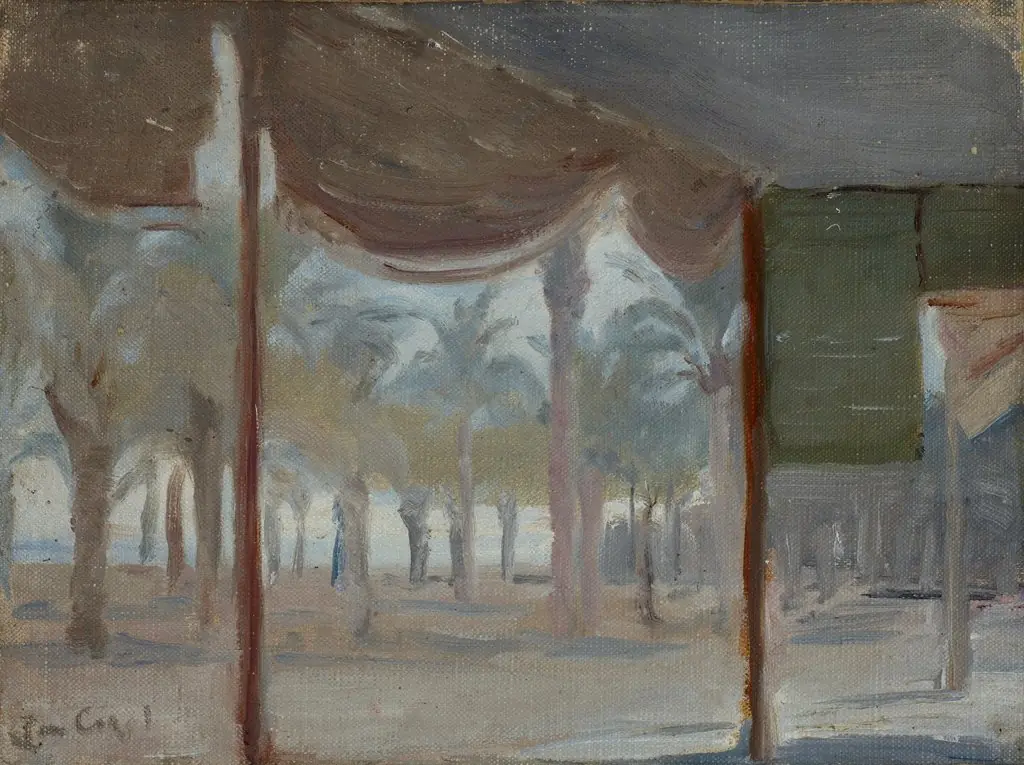
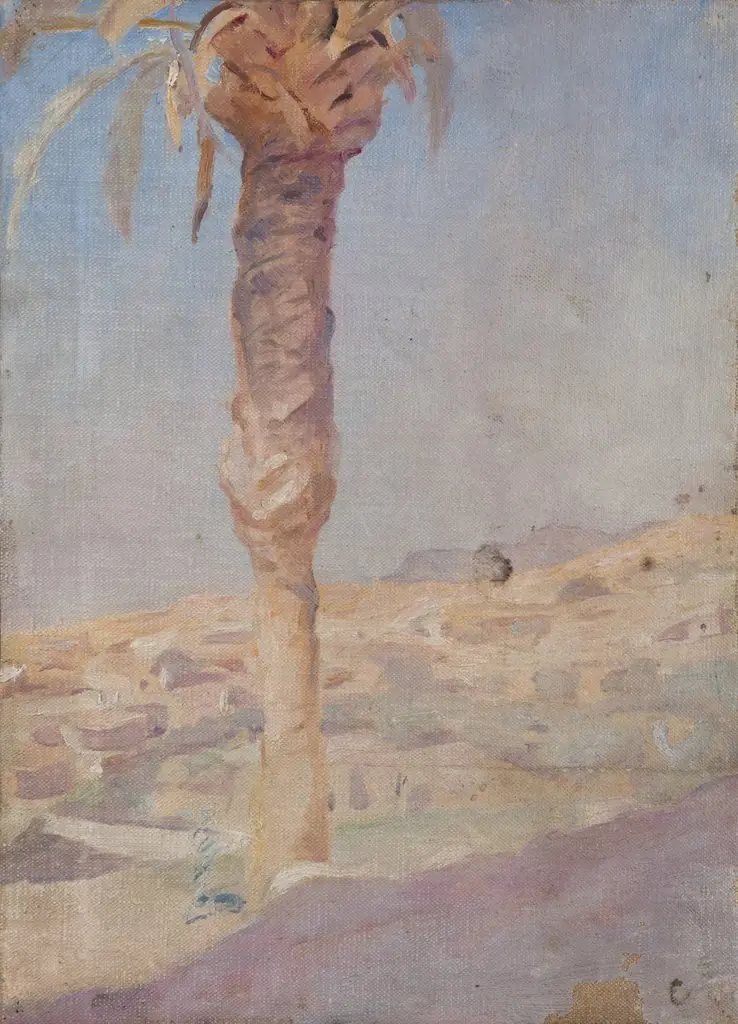
The painting "Spain (Elche)" by Jan Ciągliński, created in 1899, depicts a serene landscape. In the foreground, a sandy area stretches out, punctuated by a few trees and bushes. A small, tan-colored building with a flat roof sits in the center, surrounded by palm trees and other foliage. The sky above is a soft blue, with a few clouds scattered about.
The artist's use of color and composition creates a sense of calm and tranquility, inviting the viewer to step into the peaceful scene. The painting's soft focus and muted tones add to its dreamy quality, making it feel like a warm summer day.
For more information on the artist's work, visit the National Museum in Kraków.
Overview
Jan Ciągliński’s oil painting *Spain (Elche)*, executed around the turn of the twentieth century, presents a tranquil Mediterranean landscape. A modest, tan‑hued structure sits amid a sparsely vegetated foreground, while palm trees and distant foliage frame the scene beneath a pale blue sky dotted with soft clouds. The composition conveys a quiet, sun‑lit atmosphere that invites contemplation of a summer day in southern Spain.
Subject & Meaning
The work captures a specific locale in the town of Elche, emphasizing the interplay of architecture, vegetation, and open sky. By focusing on ordinary elements—a simple building, a few trees, and the expansive horizon—the painting reflects an interest in everyday serenity rather than grand narrative, suggesting a meditative appreciation of place and light.
Technique & Style
Ciągliński employs the hallmarks of Impressionism: loose, visible brushstrokes and a palette that favors softened, muted tones. Light is rendered through subtle gradations of color rather than precise detail, creating a slightly blurred effect that enhances the sense of atmospheric warmth and fleeting illumination characteristic of the movement.
History & Provenance
Completed in 1900 (some records note 1899), the canvas entered the collection of the National Museum in Kraków, where it remains on display. The painting’s acquisition reflects the museum’s commitment to representing Polish artists who worked abroad and contributed to the development of modern art in Eastern Europe.
Context
Ciągliński, a Polish painter who spent much of his career in St. Petersburg during the reigns of Alexander III and Nicholas II, is regarded as a pioneer of Russian Impressionism. His exposure to Western European trends and his travels to Spain informed a hybrid visual language that merged Russian artistic circles with the light‑focused sensibilities of French Impressionism.
Own this work as a print
Artist & collection
Artist
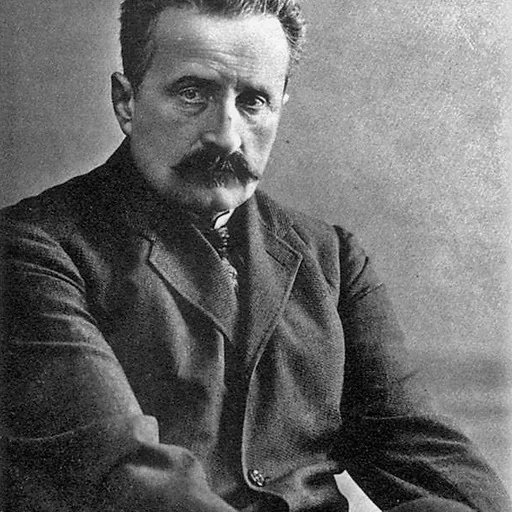
Jan Ciągliński (Polish: ; Russian: Ян/Иван Францевич Ционглинский, romanized: Yan/Ivan Frantsevich Tsionglinskiy; 20 February 1858 – 6 January 1913) was a Polish painter, active in St.