Artwork
Portrait of Coenraad van Hulst, Actor, as President of the Arts-Promoting Company VW in Amsterdam (so named after the founders Casper Vreedenberg and Jan van Well)
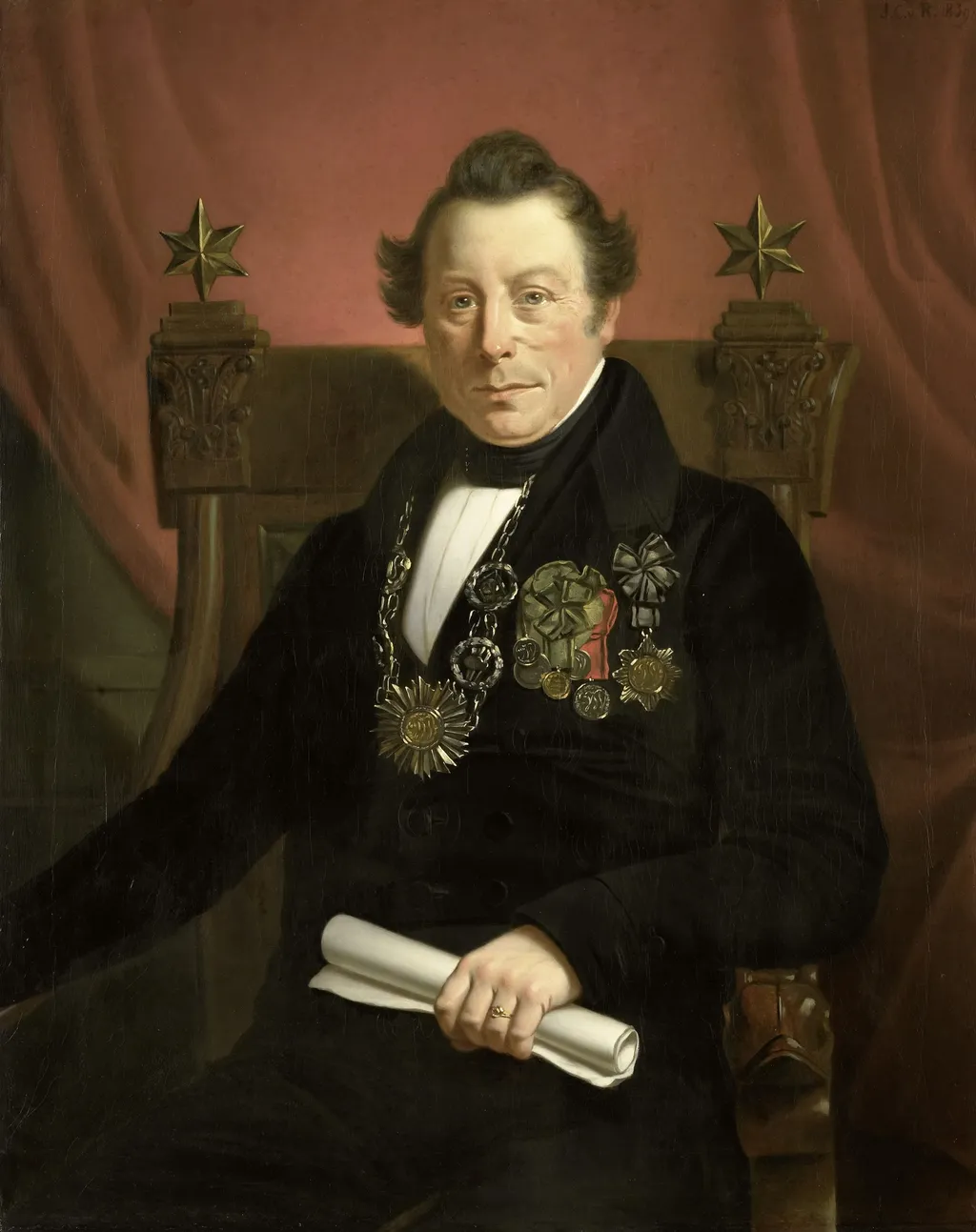
Portrait of Coenraad van Hulst, Actor, as President of the Arts-Promoting Company VW in Amsterdam (so named after the founders Casper Vreedenberg and Jan van Well) is an oil painting by the Biedermeier artist Jan Cornelis van Rossum. It dates from 1839 and is held in the collection of the Rijksmuseum.
About this work
Overview
Jan Cornelis van Rossum’s 1839 oil portrait presents Coenraad van Hulst, a Dutch actor who served as president of the Arts‑Promoting Company VW in Amsterdam. The work, now in the Rijksmuseum, measures the subject seated in an upholstered chair against a plain red backdrop, his dark coat and white cravat contrasting with a chain of medals and a rolled document in his hand.
Subject & Meaning
The medals encircling his neck suggest official recognition, likely linked to his leadership of the arts‑supporting society.
Van Hulst is depicted in formal attire, emphasizing his civic role rather than his theatrical career. The medals encircling his neck suggest official recognition, likely linked to his leadership of the arts‑supporting society. The rolled paper he grasps may represent a charter, decree, or theatrical script, underscoring the intersection of cultural patronage and performance in early‑19th‑century Amsterdam.
Technique & Style
The portrait employs a restrained chiaroscuro, with a focused light source illuminating the figure while the red wall recedes into shadow. Van Rossum’s brushwork renders the textures of fabric, metal, and paper with meticulous detail, creating a sense of three‑dimensional presence. The limited background elements—a plain wall and two small gold stars on pedestals—serve to isolate the sitter and highlight his status.
History & Provenance
Executed in 1839, the painting entered the Rijksmuseum’s collection as part of its 19th‑century Dutch portrait holdings. Its provenance traces back to the artist’s studio and subsequent private ownership before acquisition by the museum, where it remains a documented example of civic portraiture linked to Amsterdam’s cultural institutions of the period.
Own this work as a print
Artist & collection
Artist
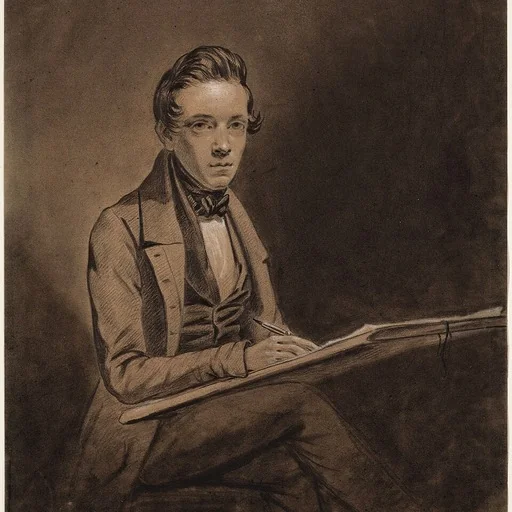
Jan Cornelis van Rossum (1820–1905) was an artist, born in Amsterdam.

 Erster Obersthofmeister Fürst Rudolf Colloredo-Mannsfeld (1772-1843)
 Portrait of Yevstafy Ye. Staden (1774-1845)
 Adam-François-Jules-Armand (1771-1848), Count van der Duyn van Maasdam
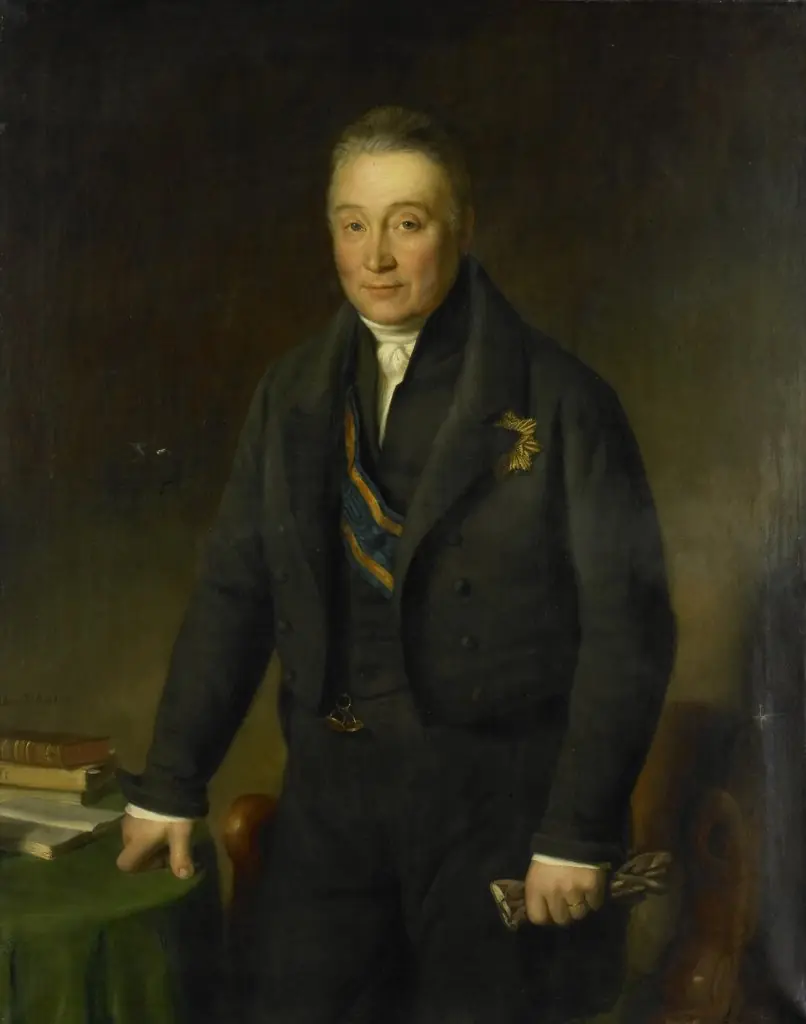 Portrait of Count Adam-François-Jules-Armand van der Duyn van Maasdam
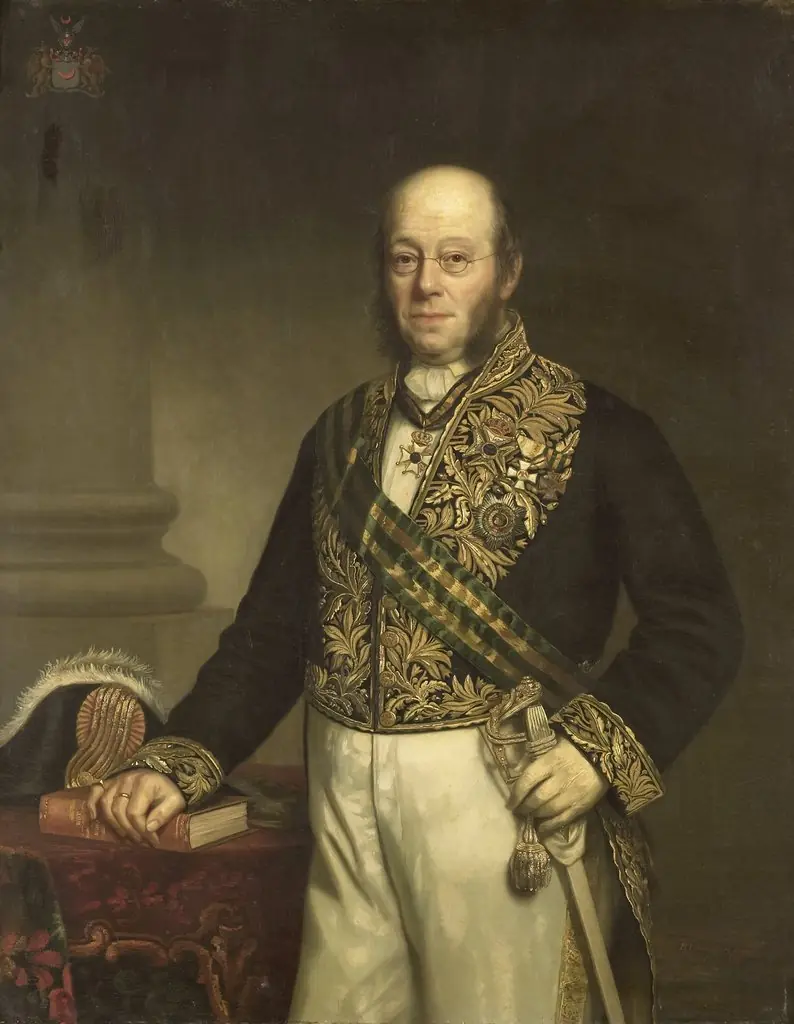 Ludolph Anne Jan Wilt Baron Sloet van de Beele (1806-90). Gouverneur-generaal (1861-66)
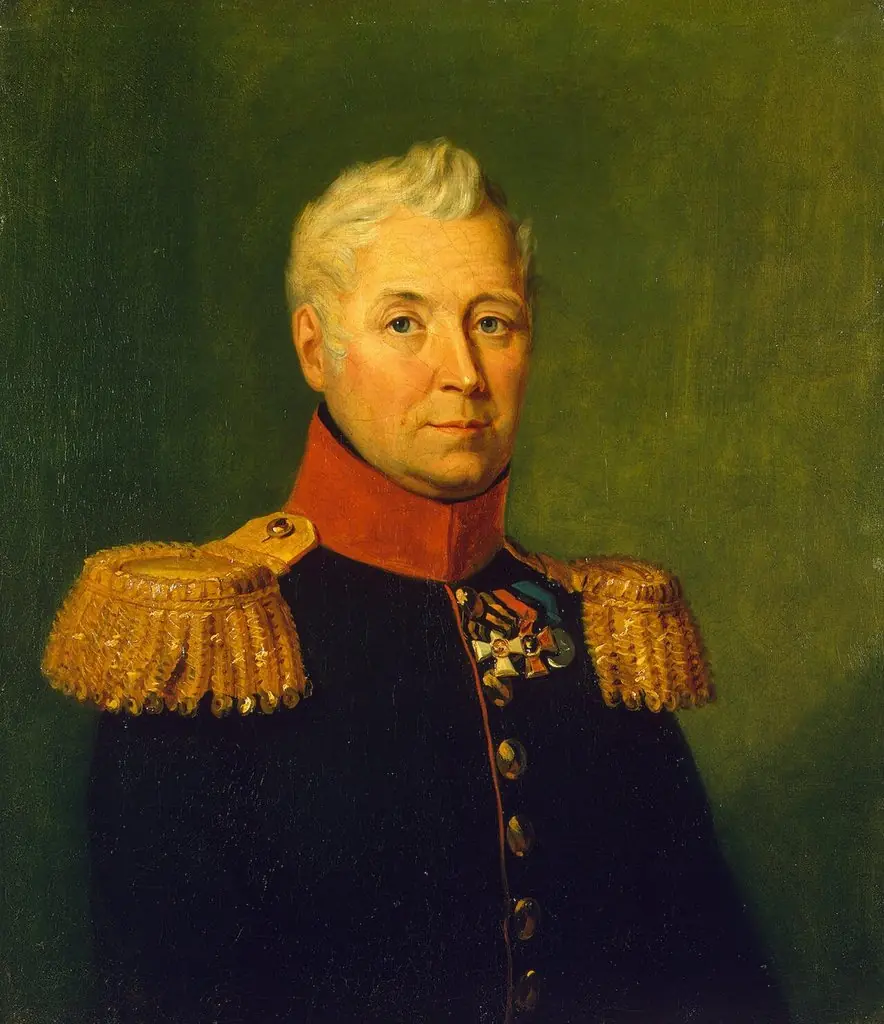 Portrait of Andrey T. Maslov (1770-1828)
 Portrait of Alexander Ya. Knyazhnin (1771-1829) (1st)
 Portrait of Pyotr P. Konovnitsyn (1764-1822) (replica of the 1821 portrait)
 Henry O´Shea
 Untitled
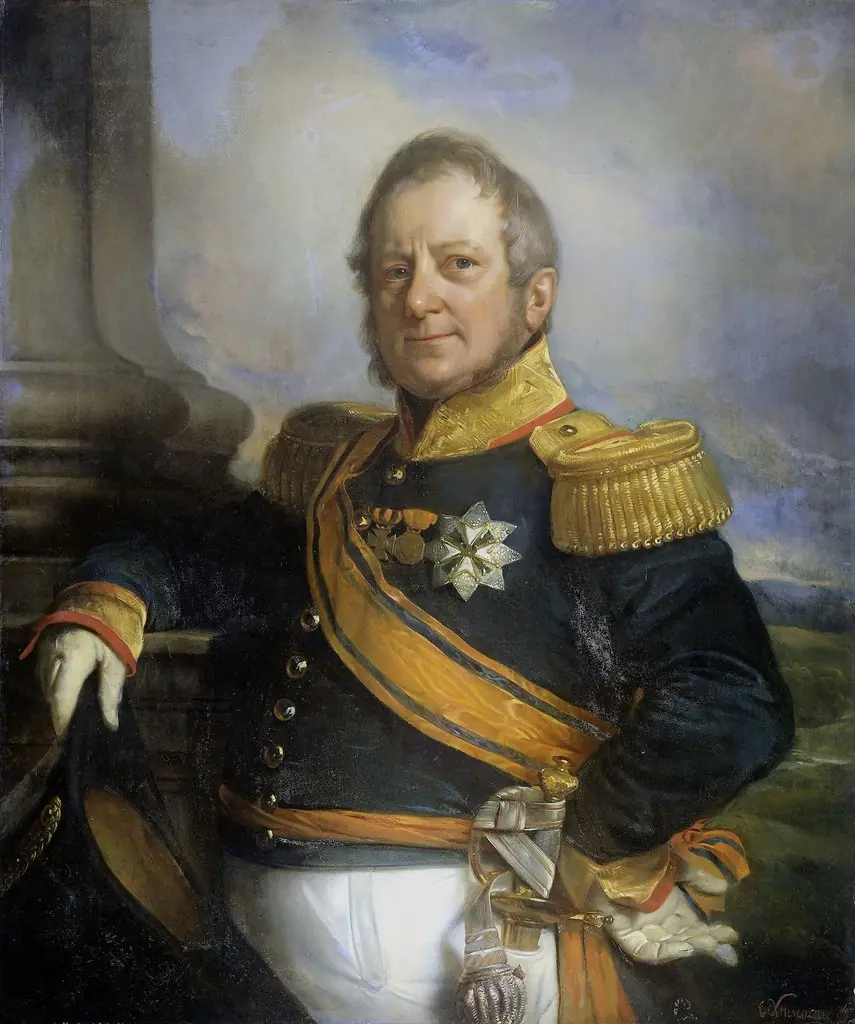 Portrait of Hendrik Merkus, Baron de Kock, Army Commandant and after 1826 Lieutenant Governor-General of the Dutch East Indies
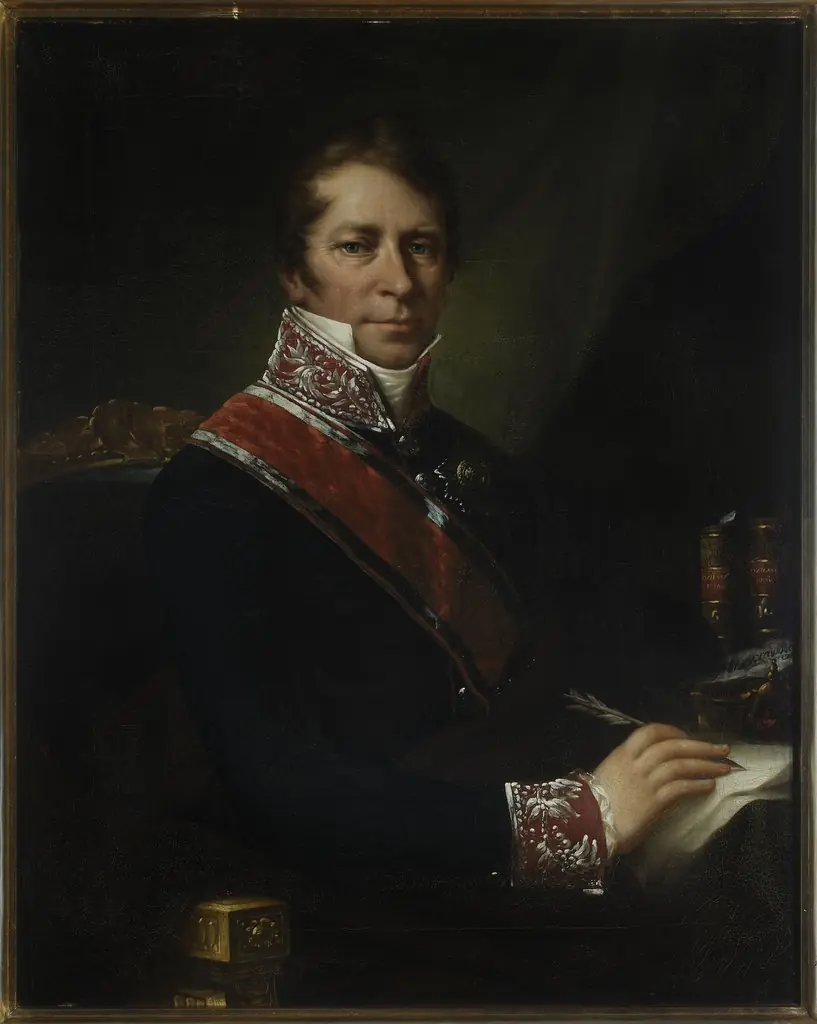 Portrait of Ksawery Potocki