Artwork
Ruinen
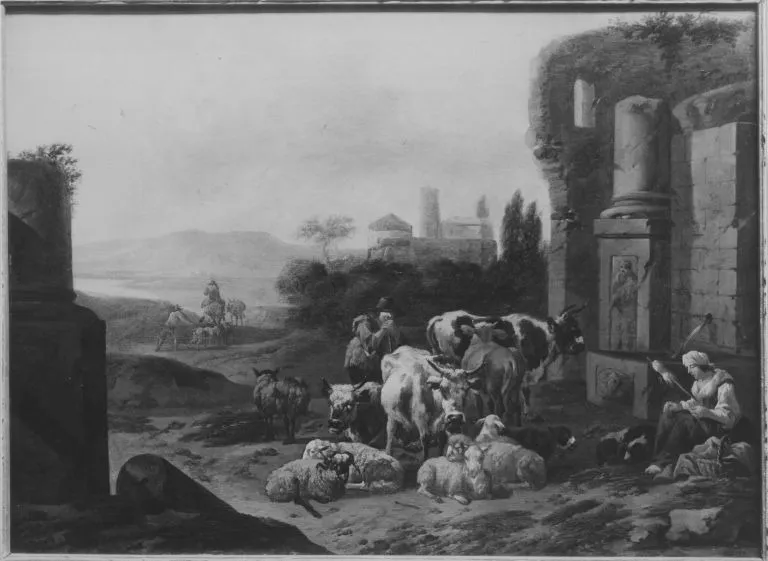
Ruinen is an unspecified painting by the Dutch Golden Age artist Jan Frans Soolmaker. It is held in the collection of the Bavarian State Painting Collections.
About this work
Overview
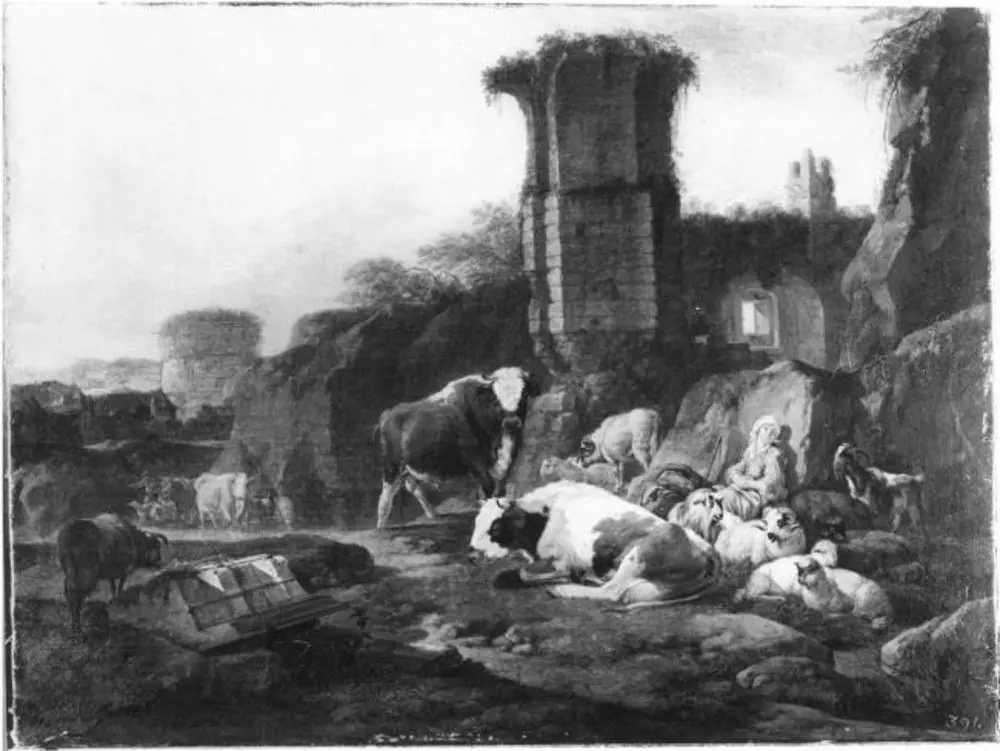
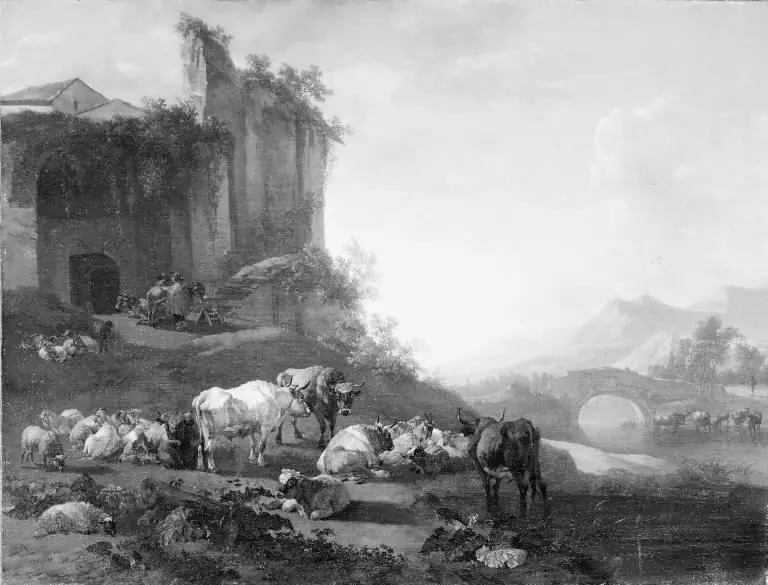
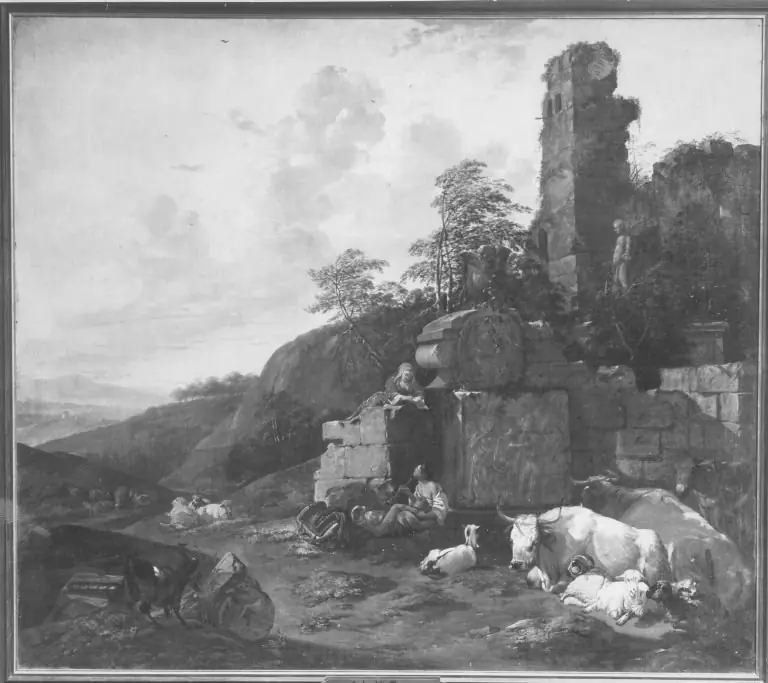
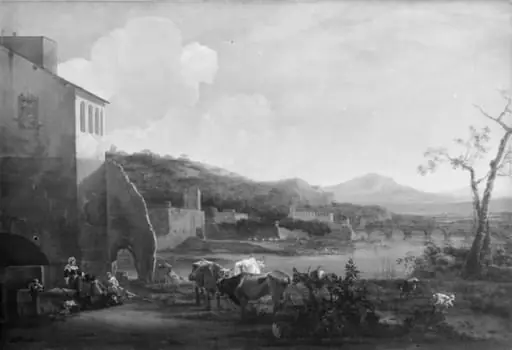
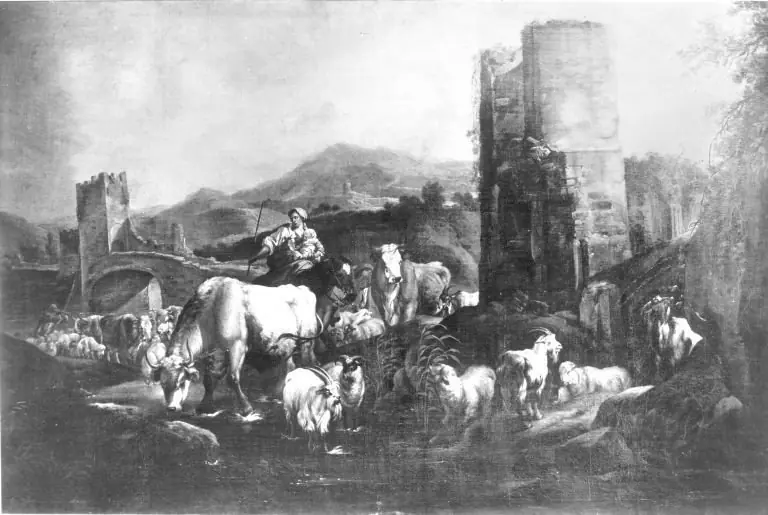
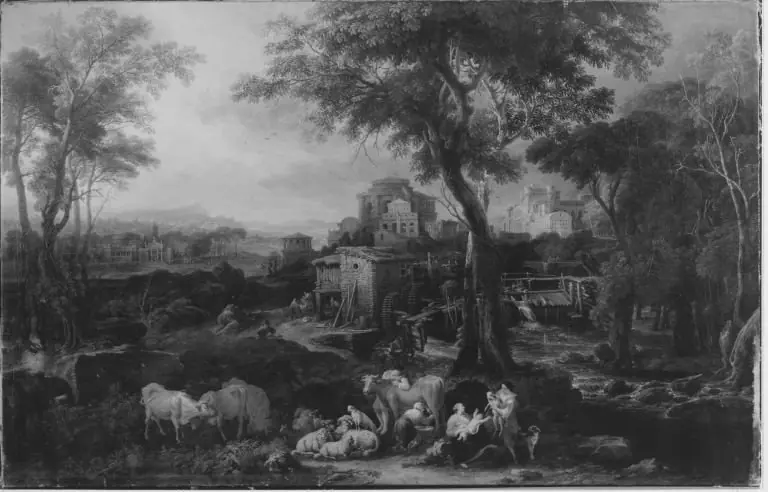
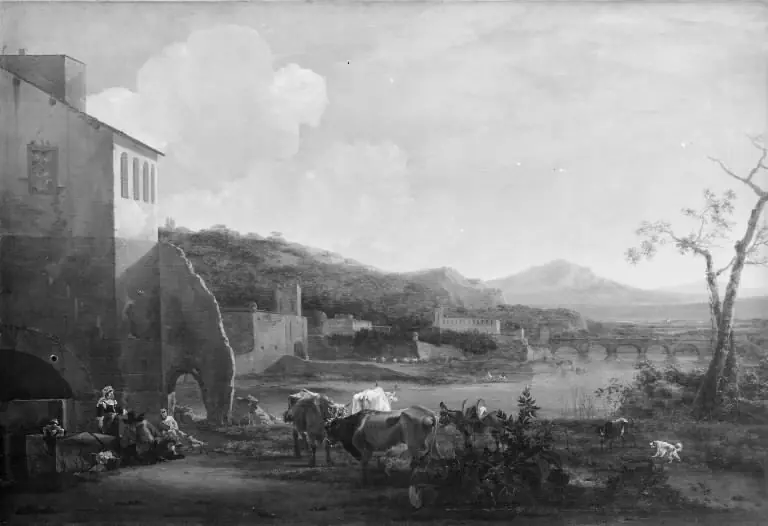
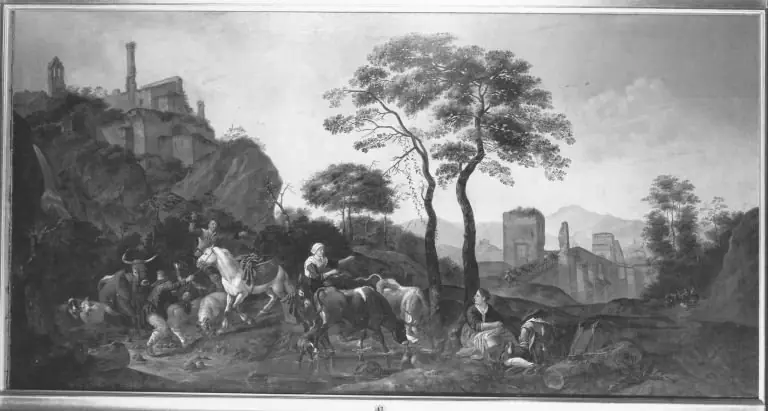
Created circa 1650, *Ruinen* is an oil painting by the Flemish artist Jan Frans Soolmaker. Executed during the Dutch Golden Age, the work is part of the Alte Pinakothek’s collection. It presents a pastoral scene set before a ruined wall and distant architecture, populated by livestock and a few figures engaged in everyday activity.
Subject & Meaning
The composition centers on a group of cows, sheep and goats gathered near a stone barrier, while a woman seated on the ground holds a staff and another figure stands behind the herd. A rider on horseback appears in the background, suggesting a tranquil rural routine framed by the remnants of an ancient structure.
Technique & Style
Soolmaker employs a balanced palette of muted earth tones, rendering the landscape with careful attention to light and atmospheric perspective. The brushwork reflects the Italianate influence common to his oeuvre, echoing the pastoral idealism of contemporaries such as Nicolaes Berchem, while maintaining a clear, detailed rendering of figures and animals.
History & Provenance
The artist, active in Antwerp, Haarlem and Amsterdam, produced *Ruinen* as part of his series of Arcadian scenes. After changing hands among private collectors, the painting entered the Alte Pinakothek’s holdings, where it remains on display as an example of mid‑17th‑century Flemish‑Dutch landscape painting.
Context
During the mid‑1600s, Flemish painters often incorporated classical ruins and bucolic settings to evoke a nostalgic vision of pastoral life. Soolmaker’s work aligns with this trend, blending genre elements—livestock and shepherds—with architectural fragments that suggest a timeless, idealized countryside.
Artist & collection
Artist
Jan Frans Soolmaker (1635 – after 1665, possibly 1686) was a Flemish painter and draughtsman, mainly known for his Italianizing landscapes, with equestrian and arcadian scenes.