Artwork
Italienische Landschaft mit Vieh
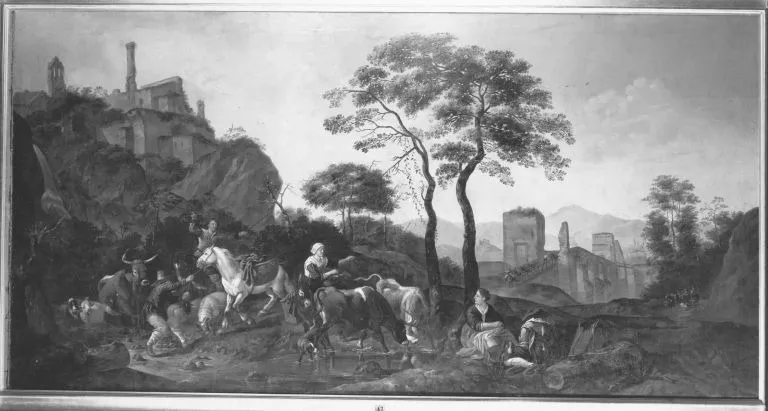
Italienische Landschaft mit Vieh is an unspecified painting by the Flemish Baroque painting artist Theodor Roos. It dates from 1662 and is held in the collection of the Bavarian State Painting Collections.
About this work
Overview
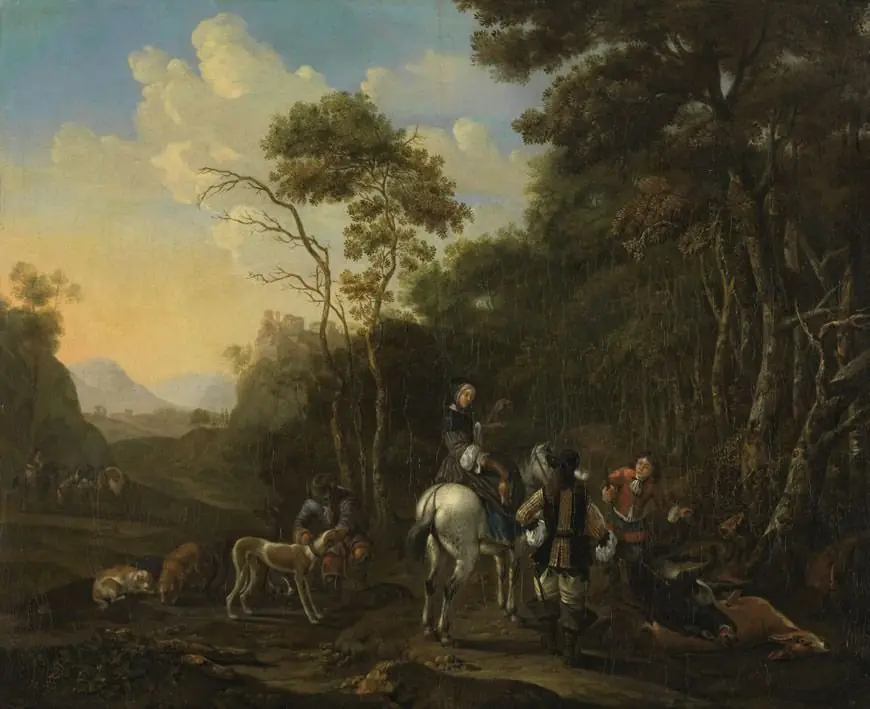
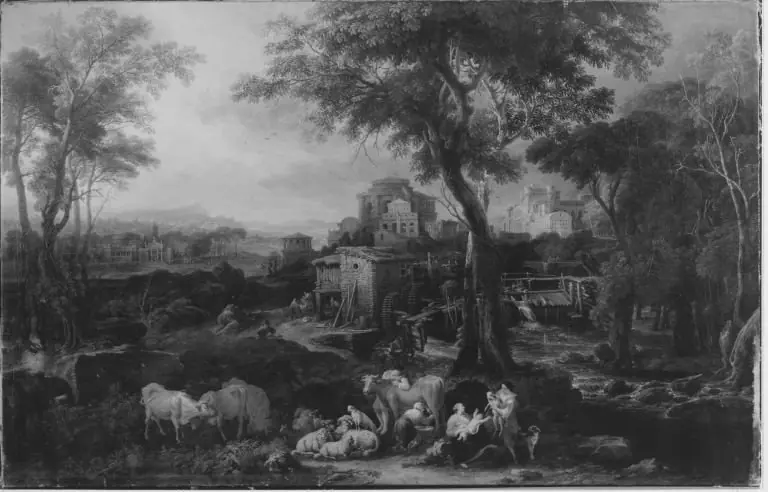
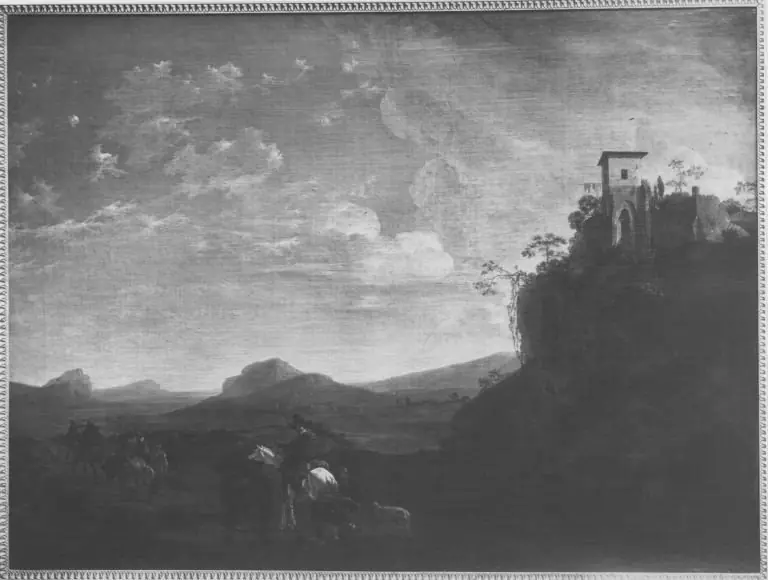
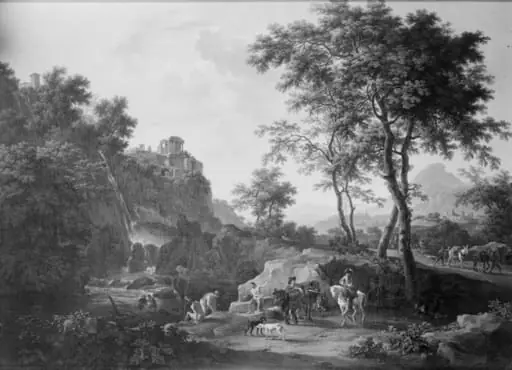
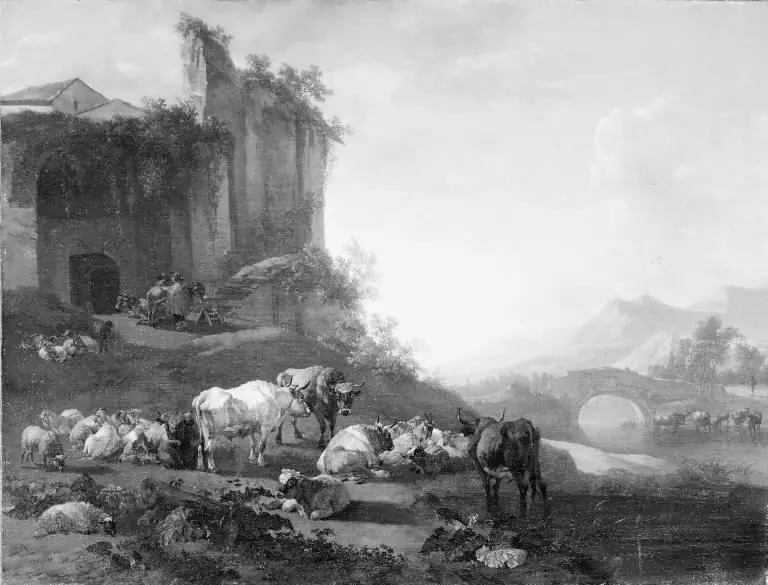
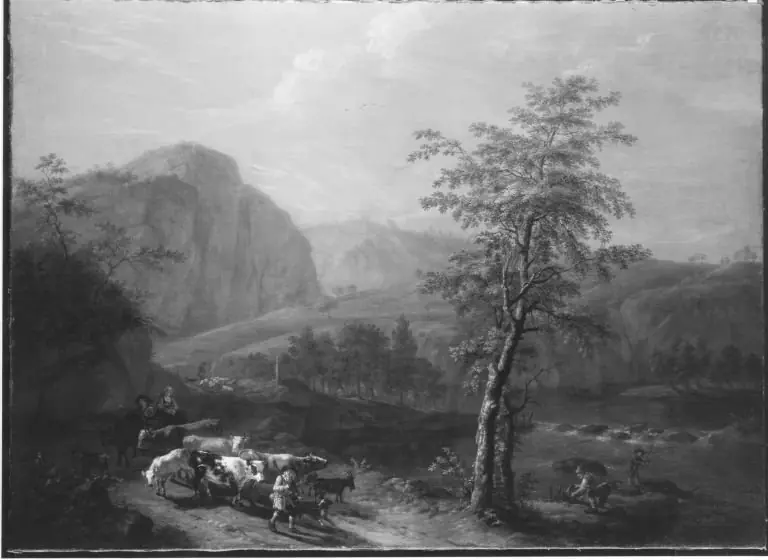
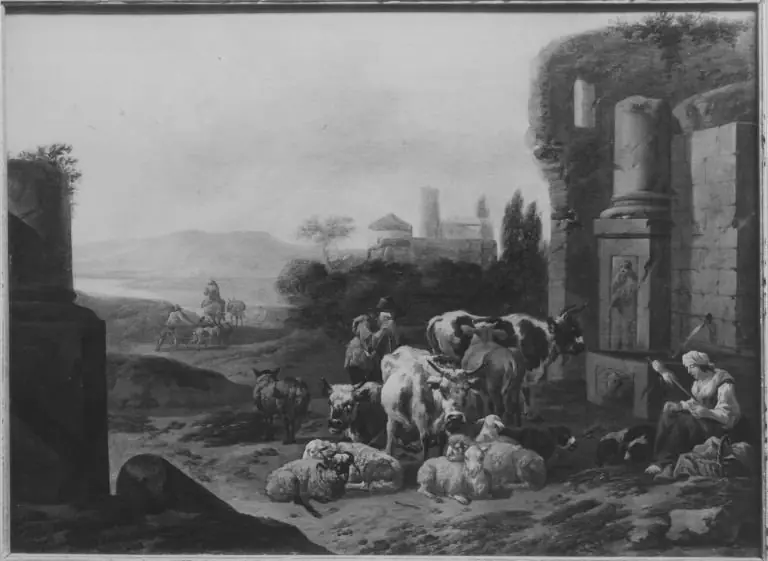
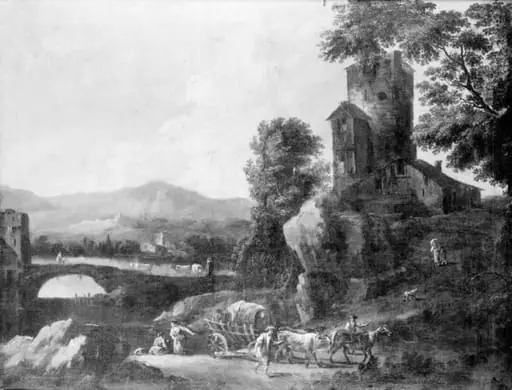
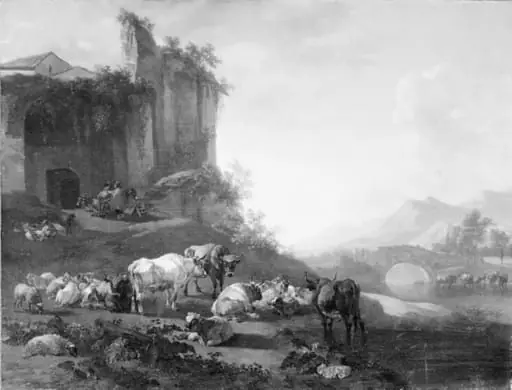
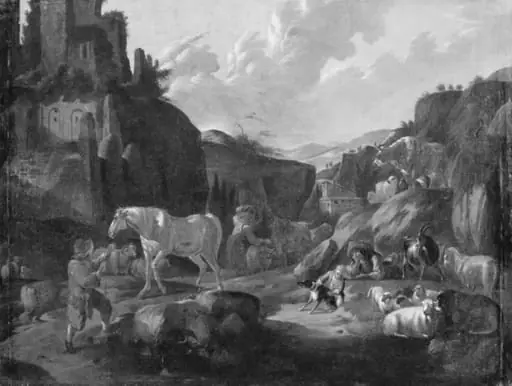
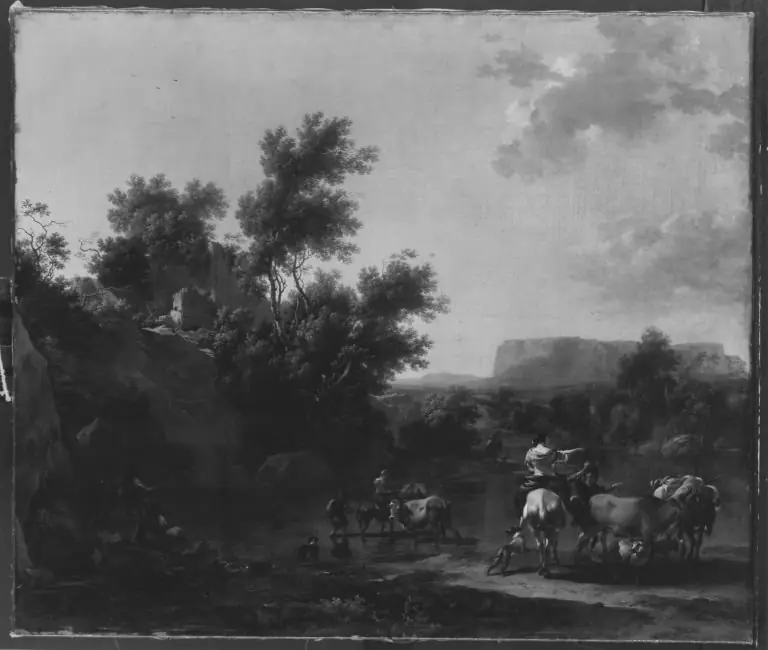
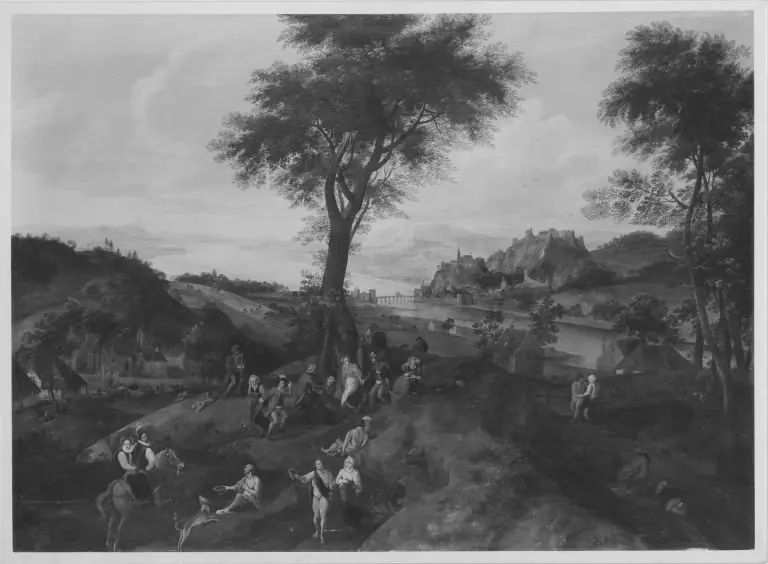
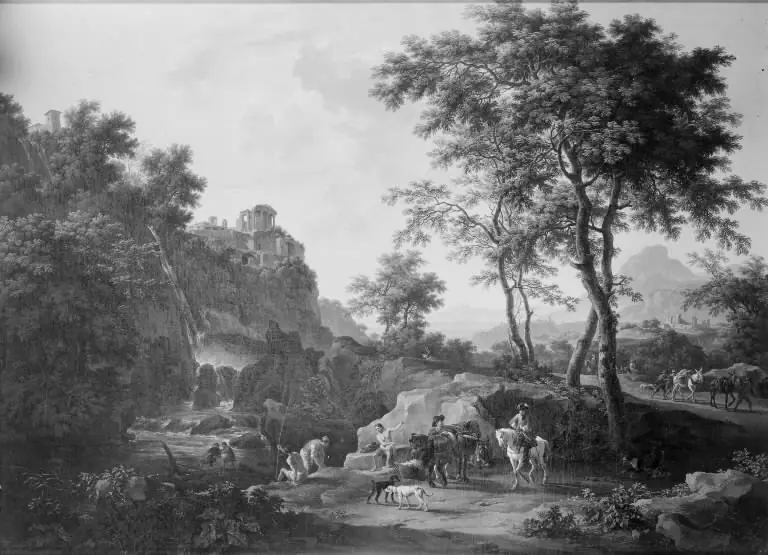
Painted in 1662 by Theodor Roos, this landscape depicts a quiet rural scene in Italy, rendered with careful attention to naturalism. The composition centers on a group of figures and animals in the foreground, set against a receding backdrop of rolling hills, trees, and distant structures. The work is part of the Alte Pinakothek’s collection in Munich, where it has remained since its acquisition.
Subject & Meaning
The presence of horses, dogs, and people conveys a sense of communal rhythm, grounded in the rhythms of the land rather than grandeur or symbolism.
The scene portrays everyday rural life, with a seated woman surrounded by livestock and companions, suggesting a moment of rest or labor. No narrative or mythological reference is evident; instead, the focus lies in the quiet dignity of ordinary activity. The presence of horses, dogs, and people conveys a sense of communal rhythm, grounded in the rhythms of the land rather than grandeur or symbolism.
Technique & Style
Roos employs chiaroscuro to model forms and suggest spatial depth, using soft transitions between light and shadow to enhance the atmosphere. Brushwork is precise yet unobtrusive, allowing the natural textures of fur, fabric, and earth to emerge without theatricality. The palette is muted, dominated by earth tones, reinforcing the painting’s tranquil, observational tone rather than dramatic effect.
History & Provenance
The painting was completed in 1662 during Roos’s time in Italy, where he traveled as part of a broader German artistic tradition of studying southern landscapes. It entered the Alte Pinakothek’s holdings in the 19th century, likely through the Bavarian royal collection’s expansion of Northern European and Italianate works. Its provenance remains unbroken since then.
Context
Roos worked within a network of German artists who traveled to Italy in the 17th century, drawn by its light and classical ruins. His landscapes reflect this influence, blending northern attention to detail with southern topography. Unlike grand historical scenes, this work aligns with a growing interest in quiet, observed nature, a trend seen in contemporary Dutch and German painting.
Legacy
Though not widely known outside specialist circles, the painting exemplifies the quiet realism favored by German artists in post-Reformation Europe. It contributes to the understanding of how northern painters interpreted Italian scenery without romanticizing it. Its preservation in a major public collection ensures its continued role in studies of early modern landscape conventions.
Artist & collection