Artwork
Dogs and Dead Game
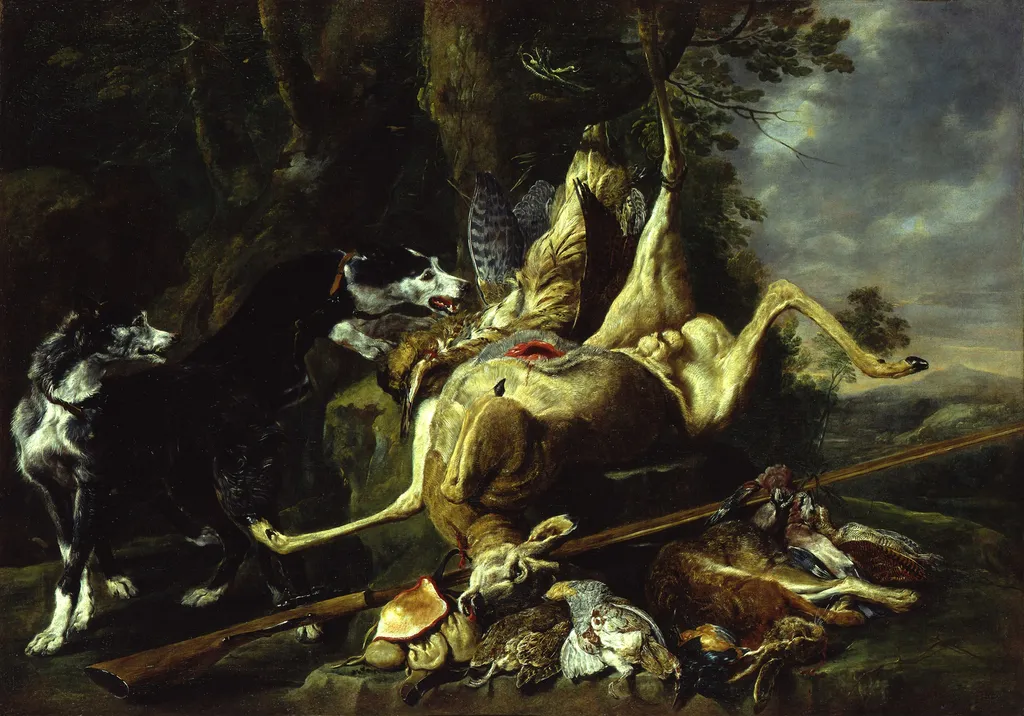
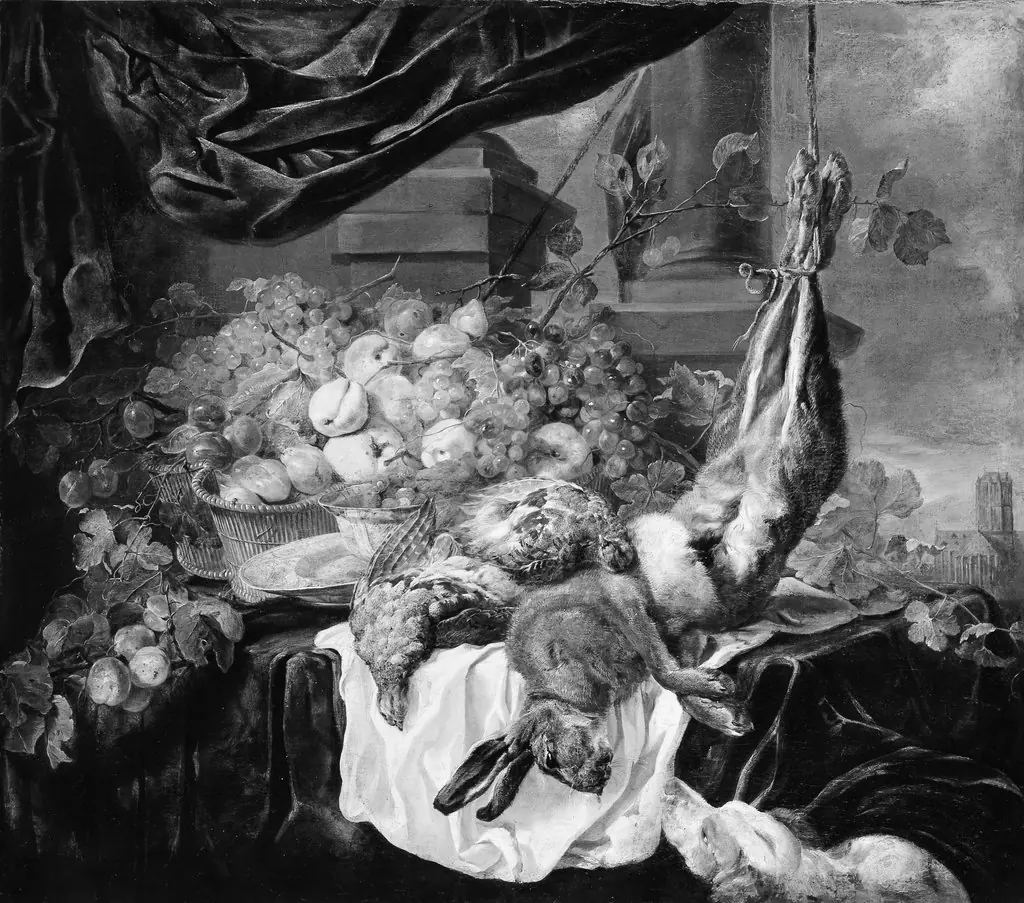
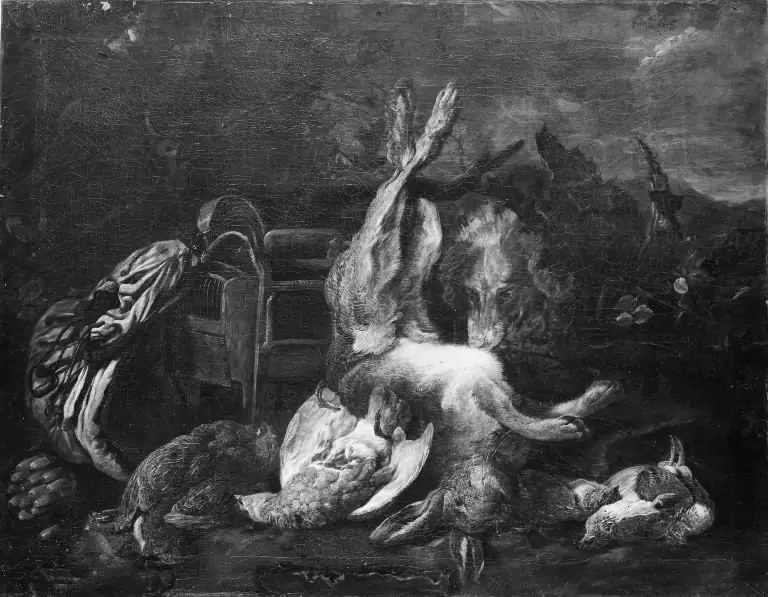
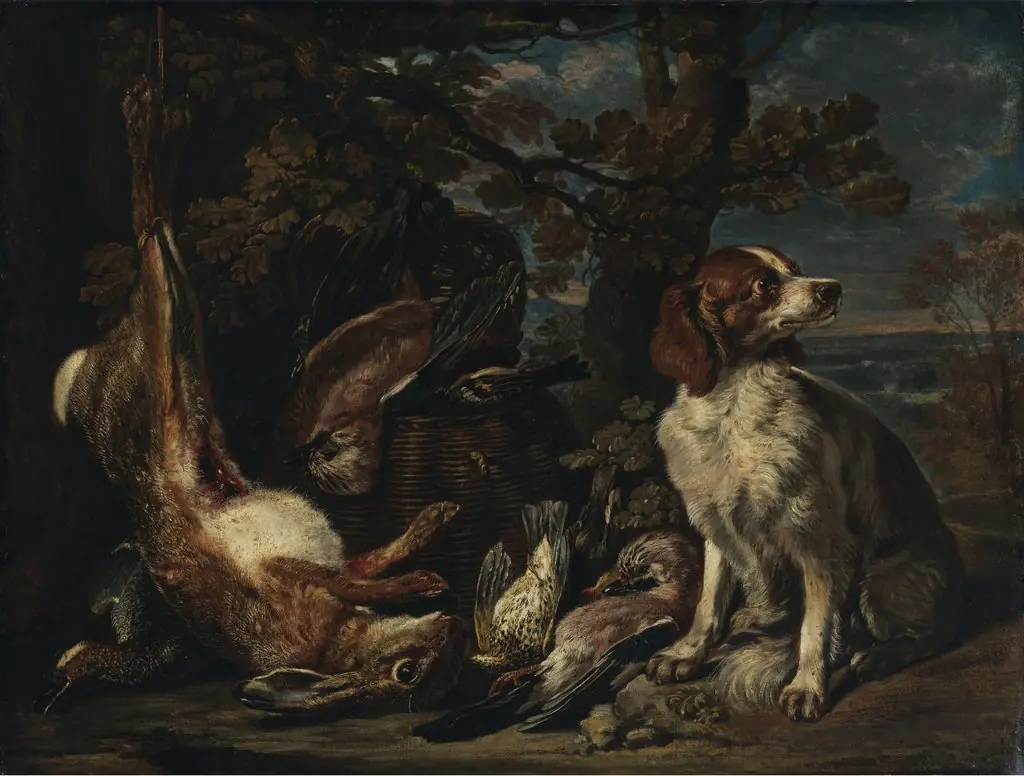
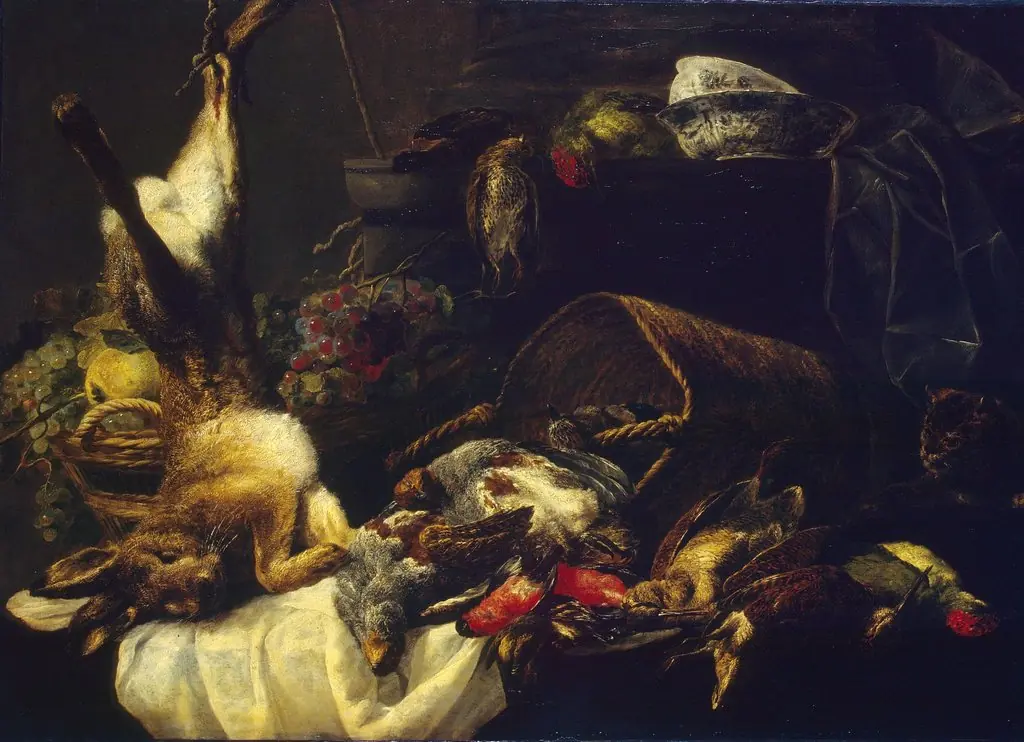
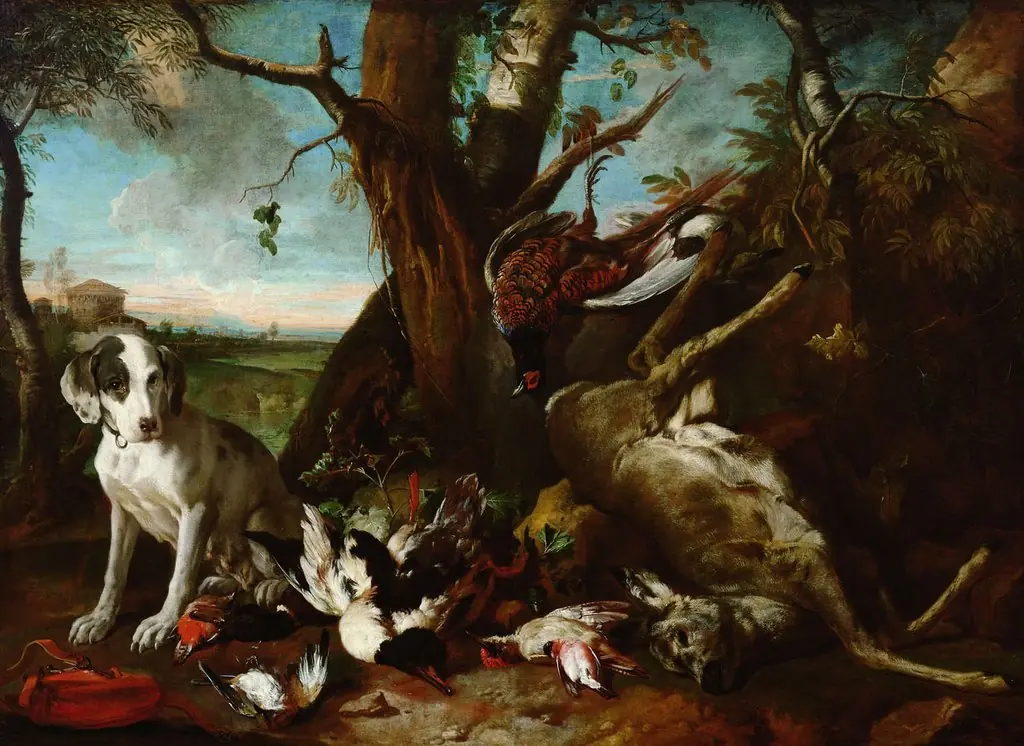
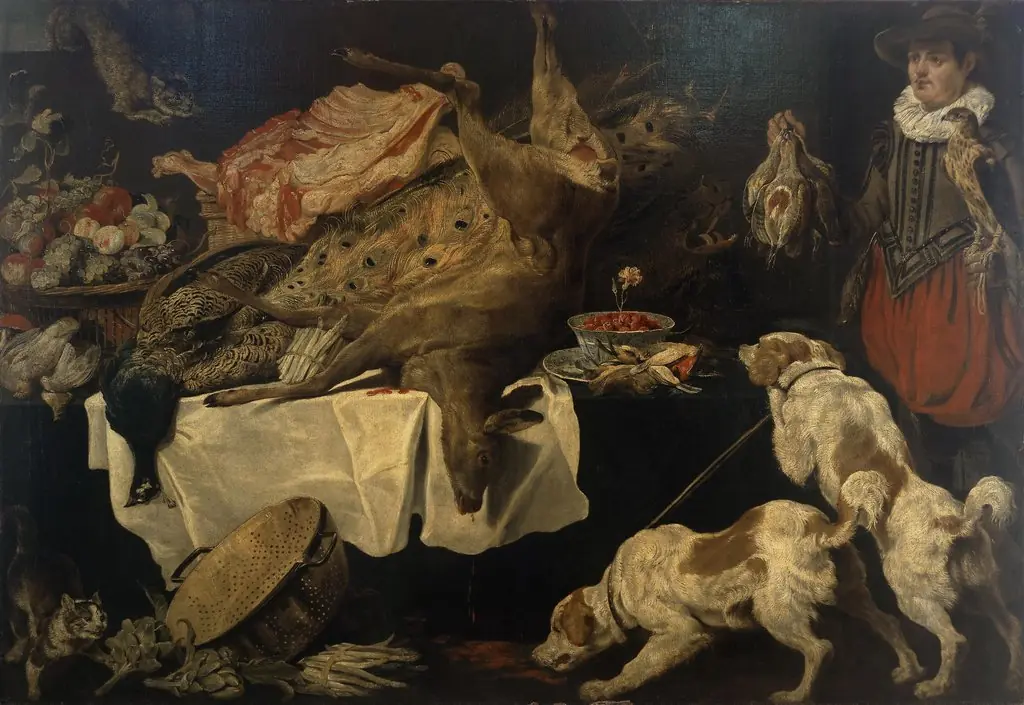
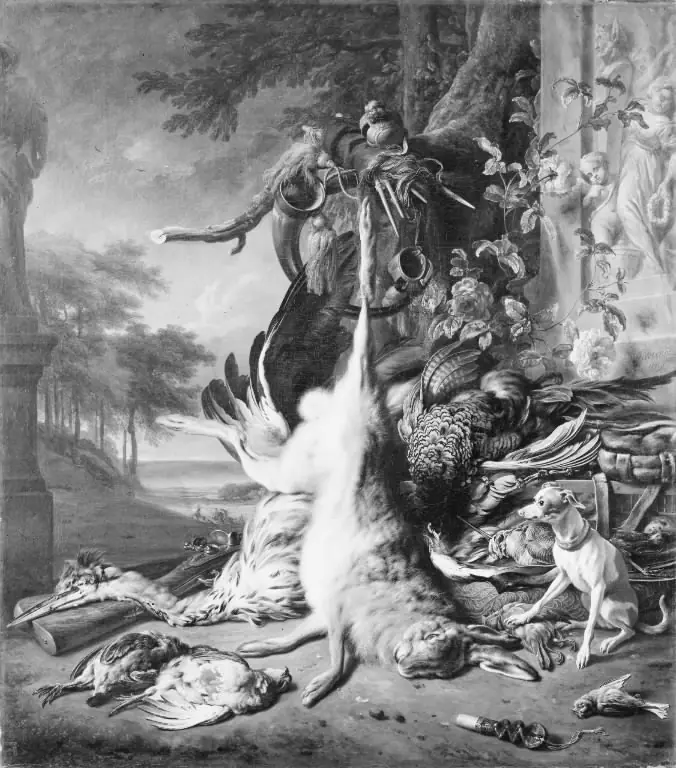
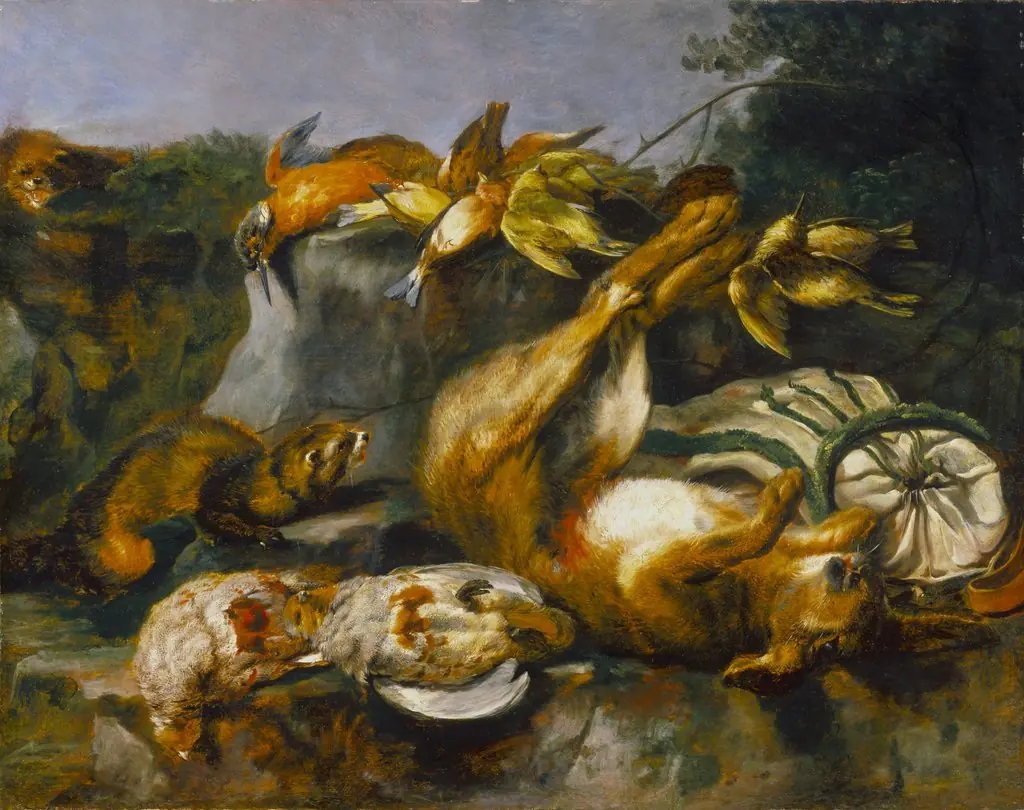
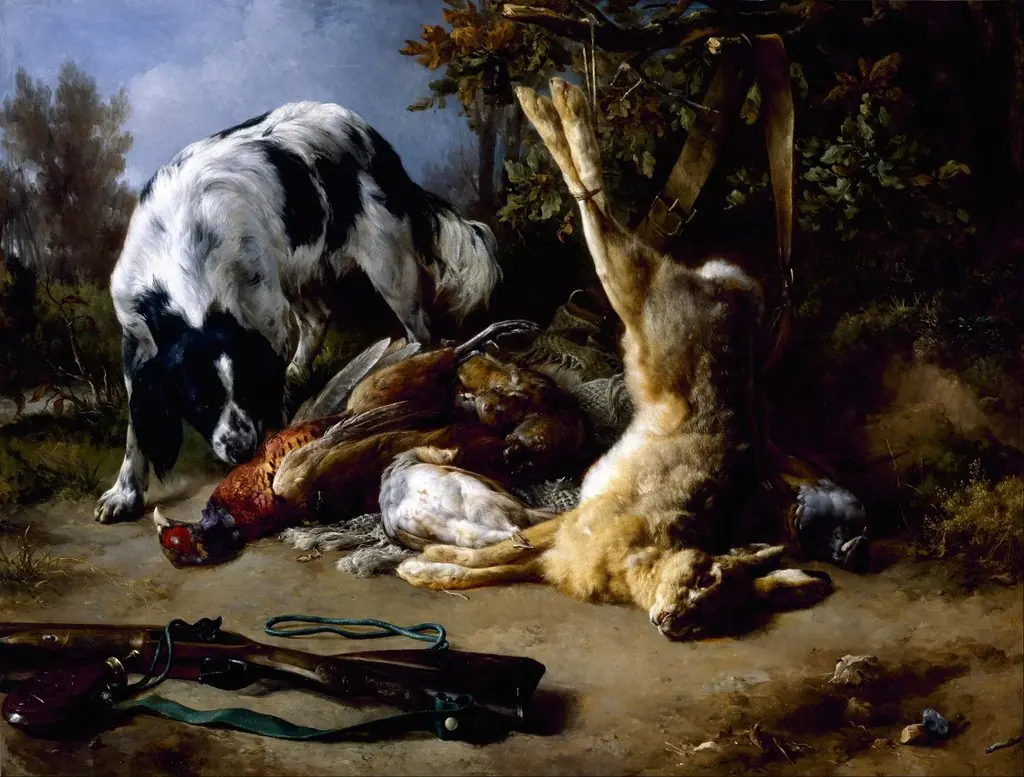
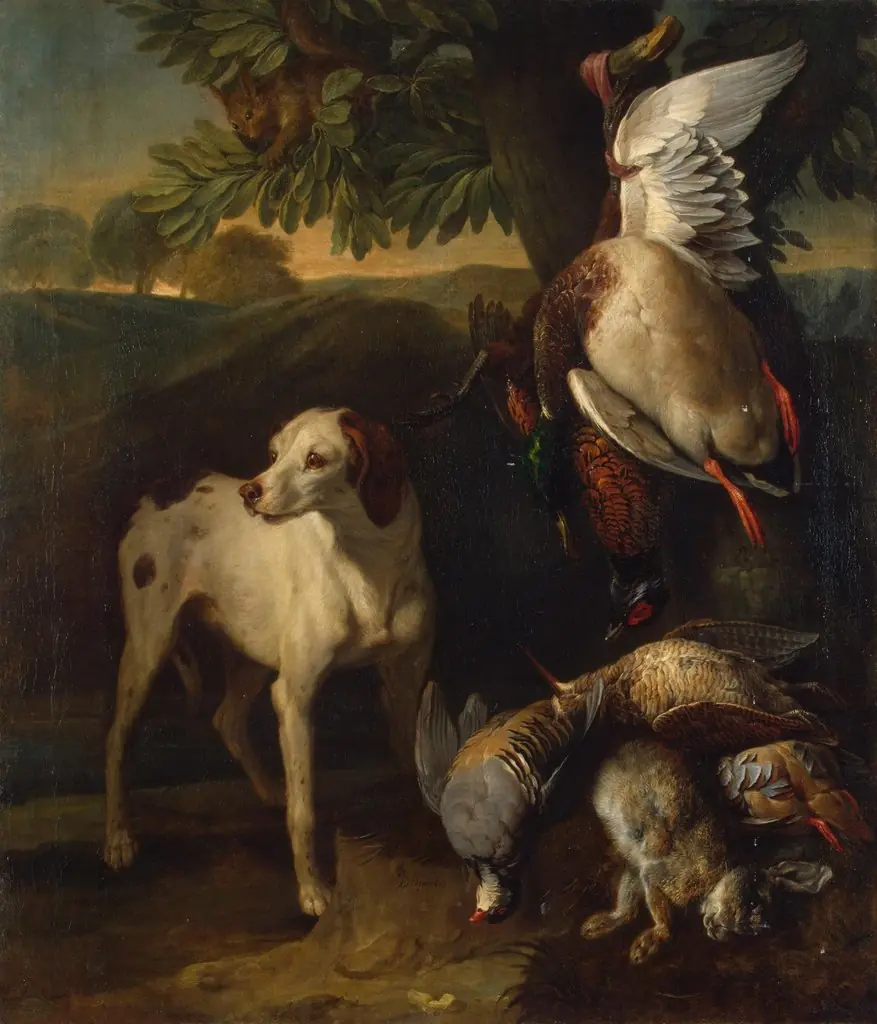
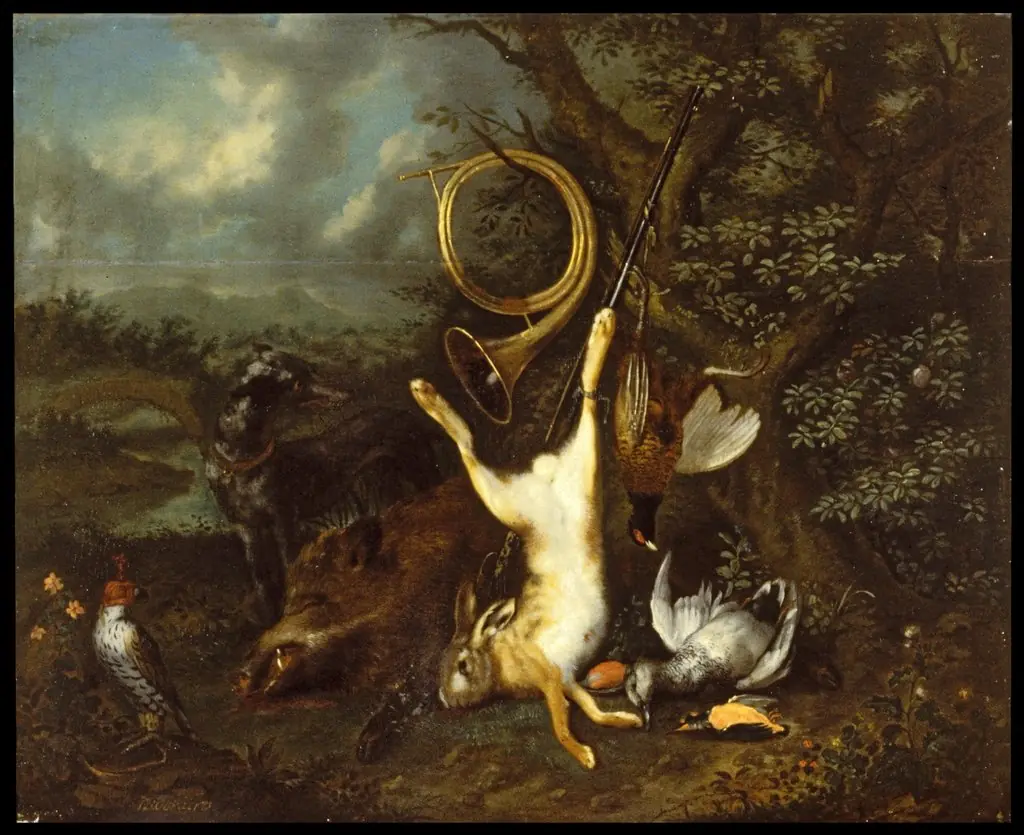
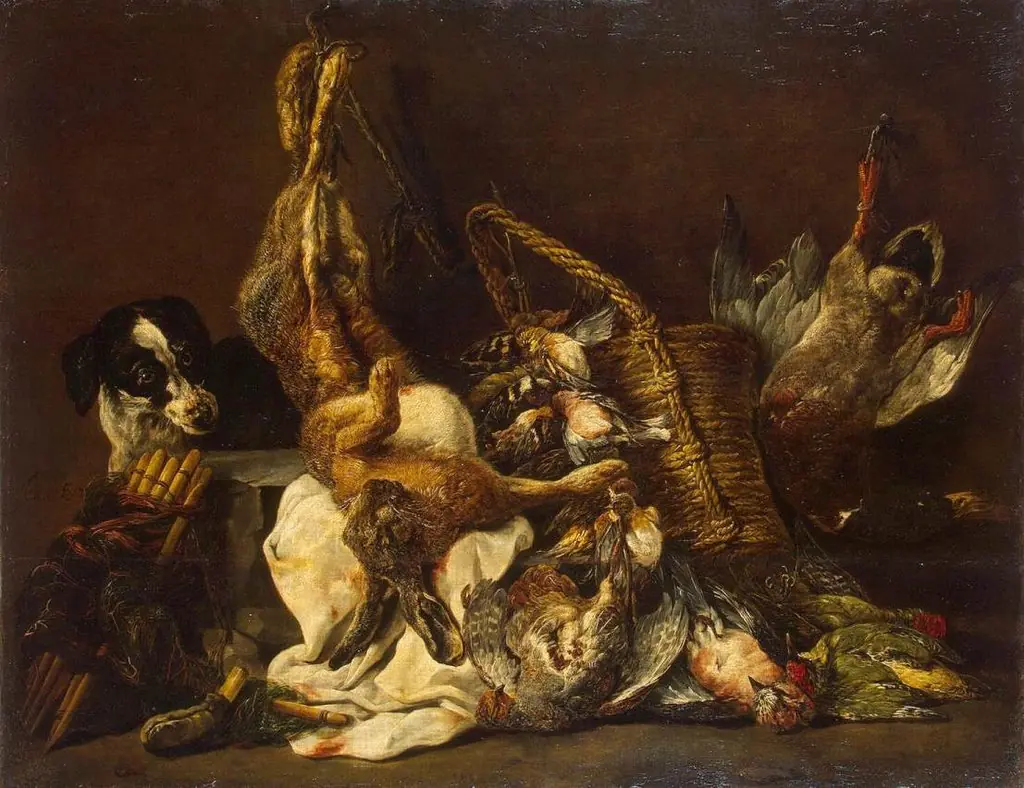
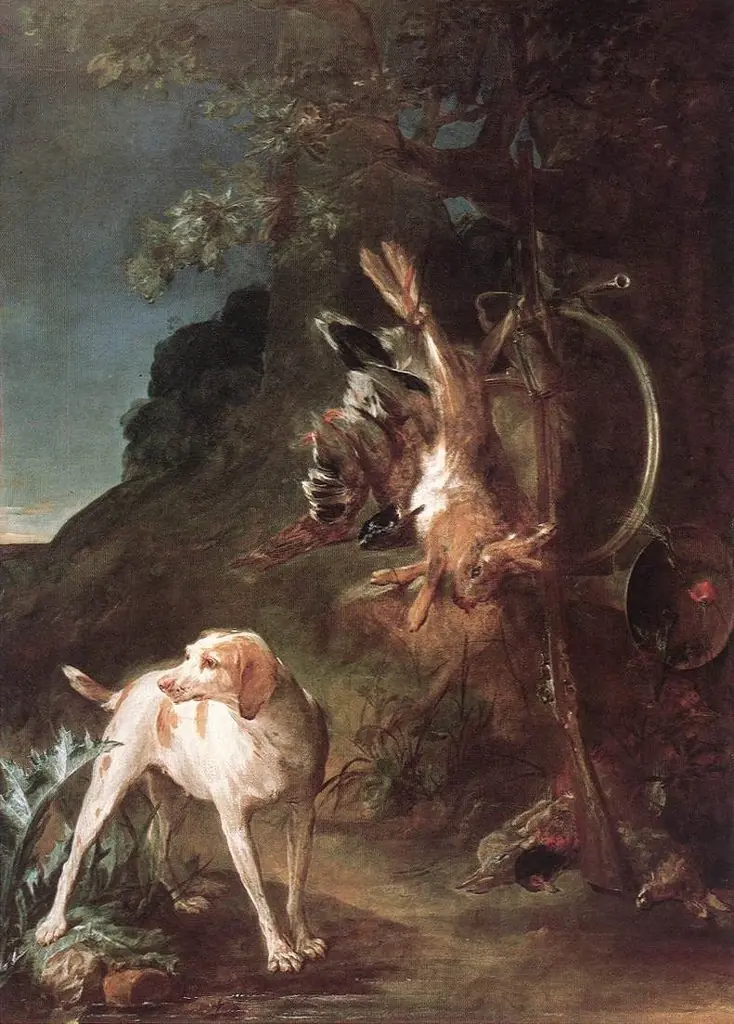
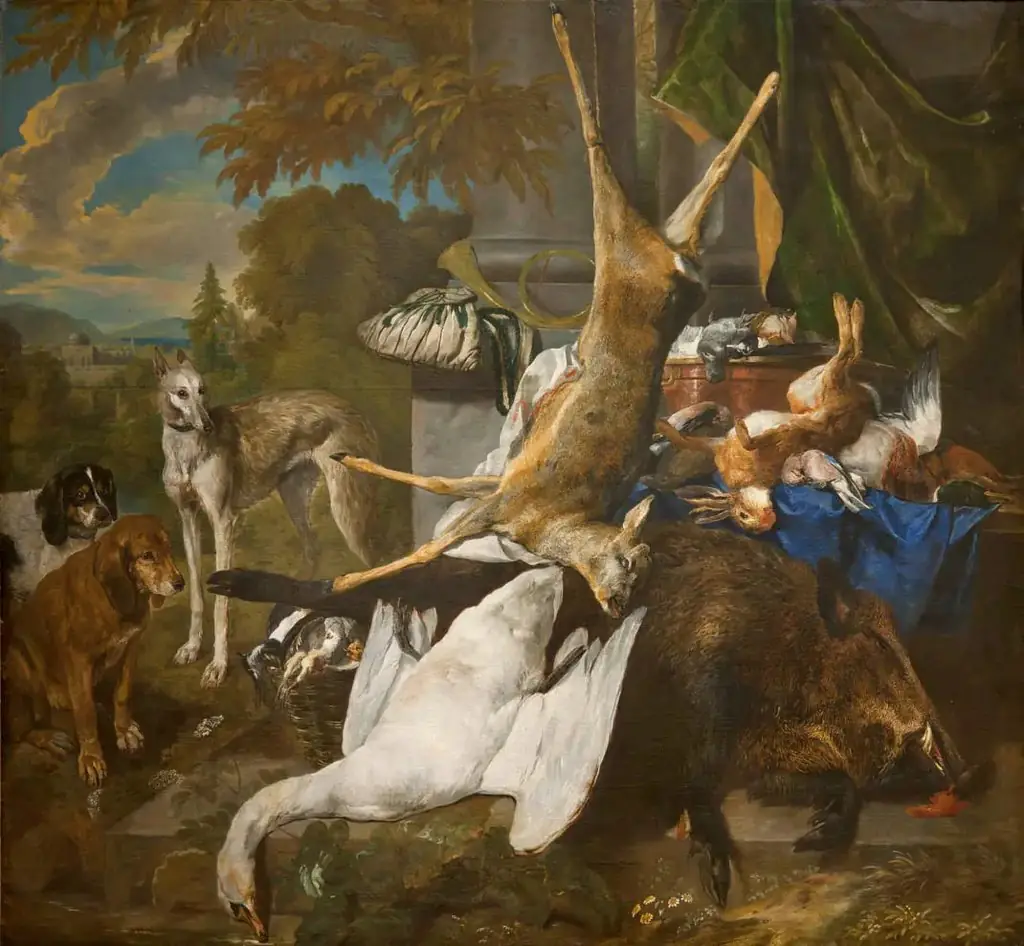
Dogs and Dead Game is an oil painting by the Flemish Baroque painting artist Jan Fyt. It dates from 1649 and is held in the collection of the Bode Museum.
About this work
Overview
Painted in 1649 by the Flemish artist Jan Fyt, this still life presents a hunting aftermath with precision and quiet gravity.
Painted in 1649 by the Flemish artist Jan Fyt, this still life presents a hunting aftermath with precision and quiet gravity. It combines dead game, hunting tools, and two attentive dogs in a single composition, reflecting Fyt’s reputation for rendering animals and game with anatomical accuracy and atmospheric depth. The work resides in the Gemäldegalerie Berlin, part of a broader tradition of Northern European still life painting that elevated everyday subjects to formal study.
Subject & Meaning
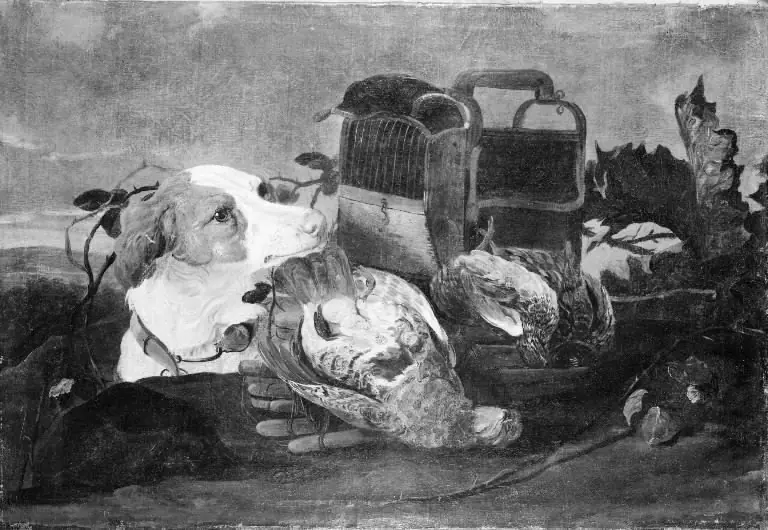
The central focus is a large deer, flanked by birds and hunting equipment, arranged as if recently brought to rest. Two dogs, one dark-and-white, the other brown, stand guard over the kill, their alert postures suggesting vigilance rather than triumph. The scene evokes the ritual of the hunt without glorifying it, emphasizing the quiet stillness after action and the natural order of predation and provision.
Technique & Style
Fyt employs chiaroscuro to model fur, feathers, and flesh with subtle gradations of light, enhancing the three-dimensionality of each element. Brushwork is deliberate yet visible, capturing texture—rough hides, glossy feathers, and polished antlers—without idealization. The composition is tightly controlled, with objects arranged diagonally to guide the eye toward the deer, while the left-lit source casts soft shadows that unify the scene in naturalistic depth.
History & Provenance
Created during Fyt’s mature period in Antwerp, the painting reflects the demand among wealthy patrons for detailed animal still lifes that celebrated aristocratic hunting culture. It entered the Gemäldegalerie Berlin’s collection in the 19th century, likely through acquisitions of Flemish works by Prussian collectors. Its preservation has allowed continued study of 17th-century Flemish techniques and iconography.
Context
In mid-17th-century Flanders, still lifes of game were more than decorative; they signaled wealth, access to land, and mastery over nature. Fyt’s work aligns with contemporaries like Snyders, but distinguishes itself through restrained drama and attention to individual animal physiognomy. The inclusion of live dogs alongside dead prey underscores the relationship between hunter, hound, and hunted in rural elite life.
Legacy
Fyt’s influence extended to later still life painters in the Netherlands and beyond, particularly in the treatment of animal texture and lighting. 'Dogs and Dead Game' remains a reference for the integration of living and deceased creatures within a single narrative space. It exemplifies how Flemish artists transformed the mundane into a disciplined, observational art form without overt symbolism or moralizing.
Own this work as a print
Artist & collection
Artist
Jan Fijt, Jan Fijt or Johannes Fijt (or Fyt) (19 August 1609 – 11 September 1661) was a Flemish Baroque painter, draughtsman and etcher.