Artwork
Stilleben
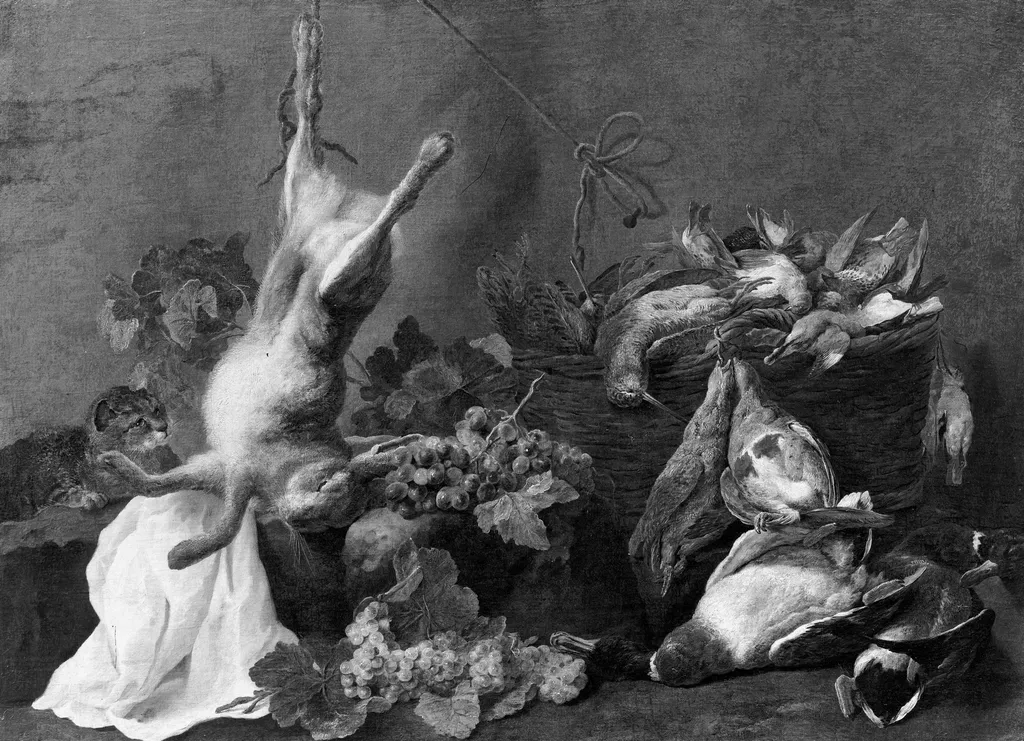
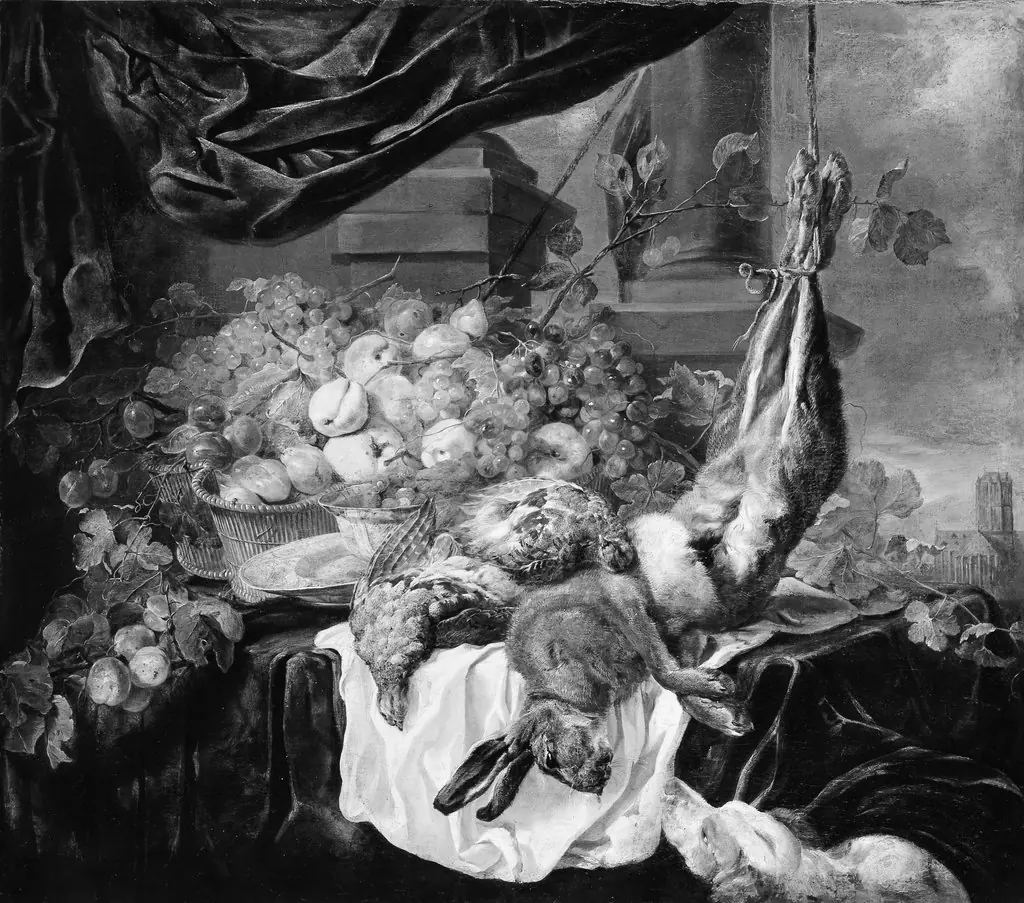
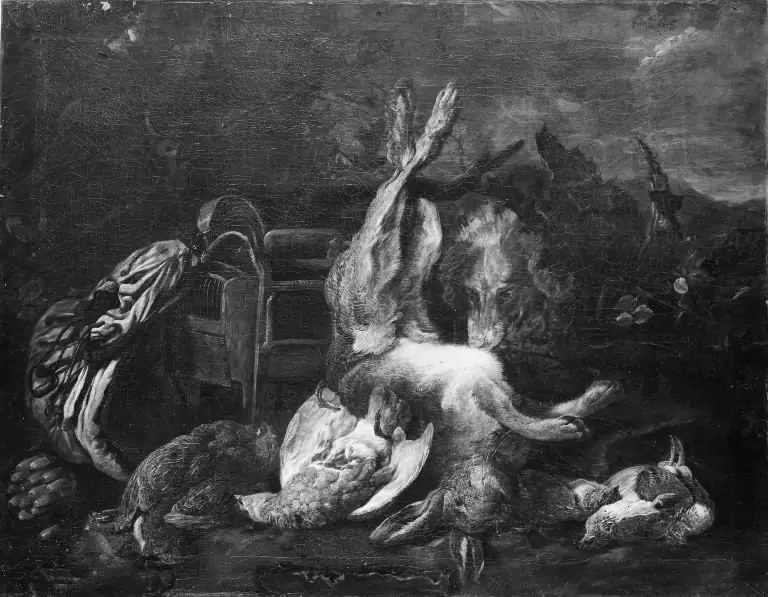
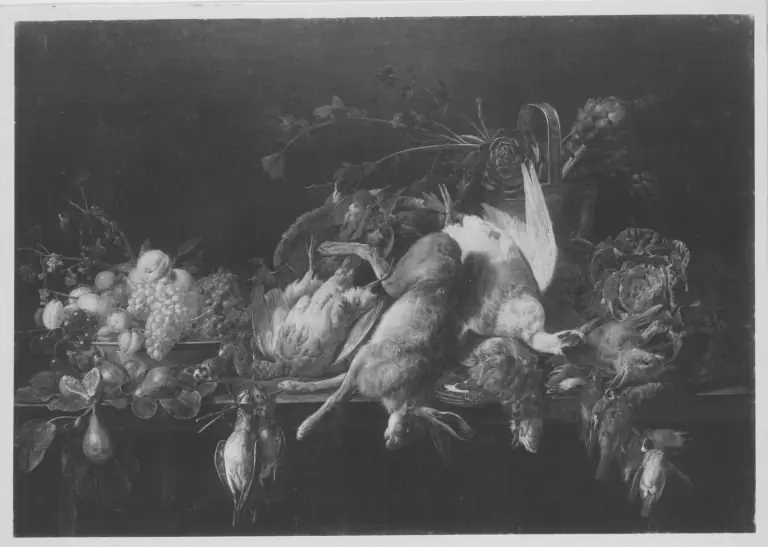
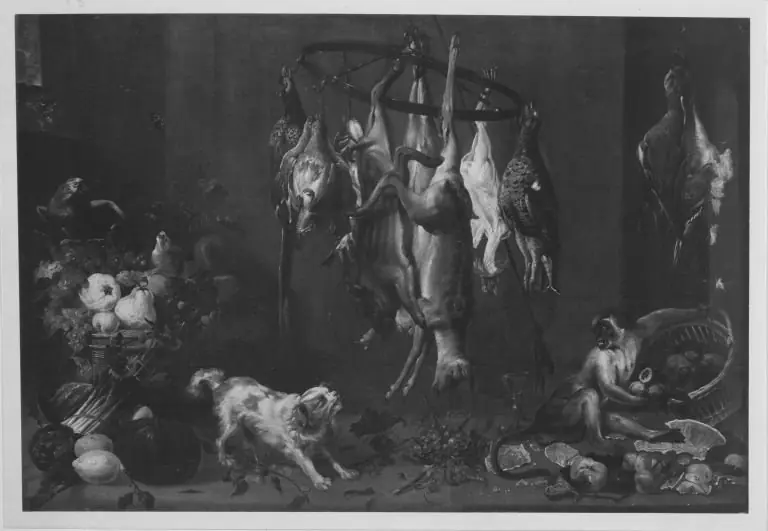
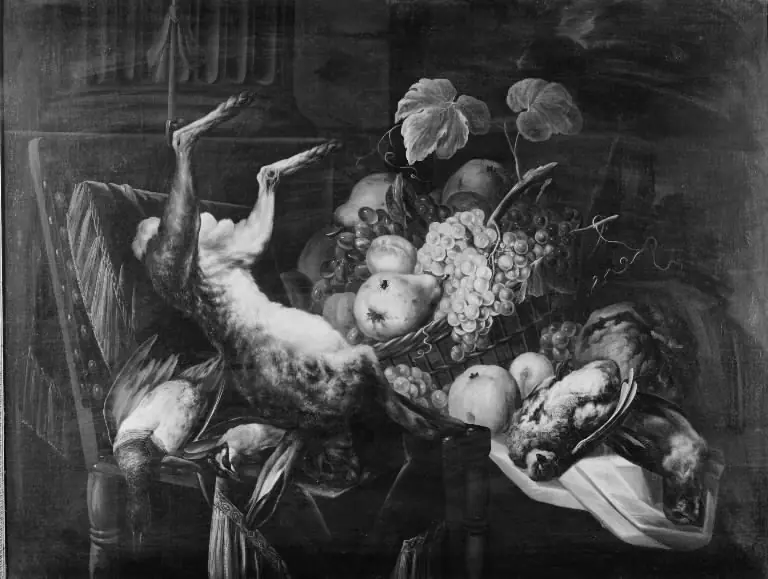
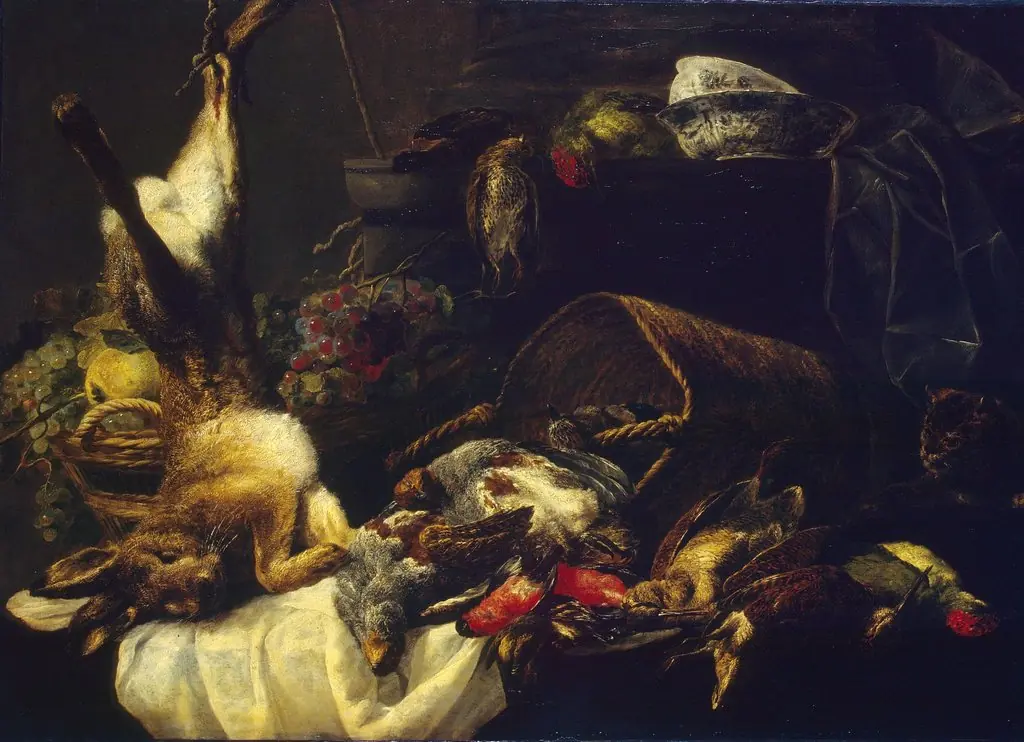
Stilleben is an oil painting by the Flemish Baroque painting artist Jan Fyt. It dates from 1645 and is held in the collection of the Gemäldegalerie Berlin.
About this work
Overview
Executed in oil, it presents a quiet yet deliberate arrangement of hunted game and natural elements against a dark, undefined background.
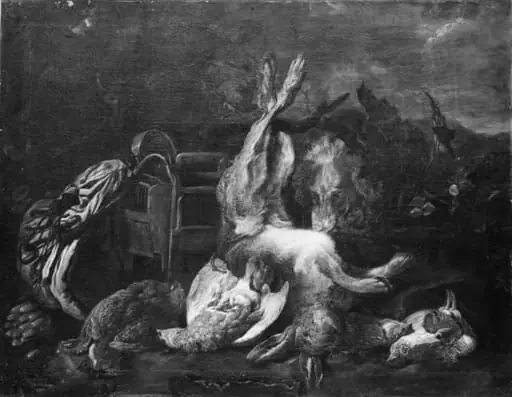
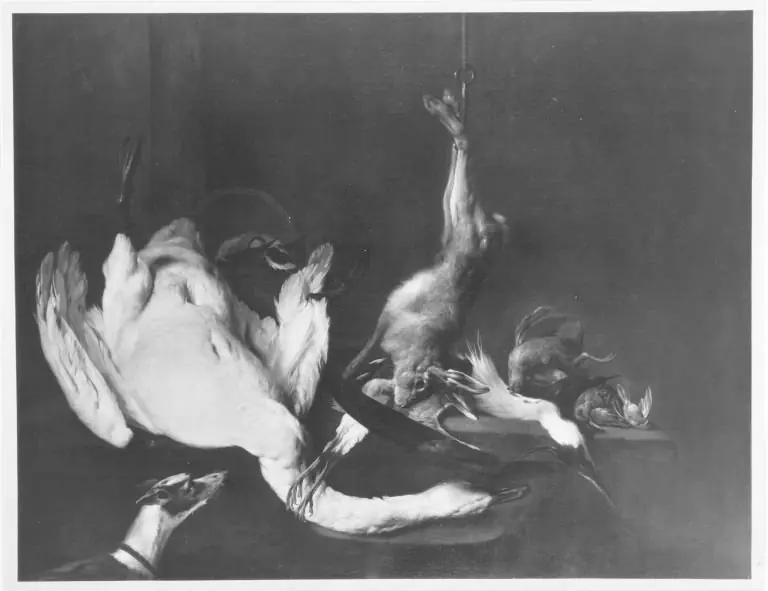
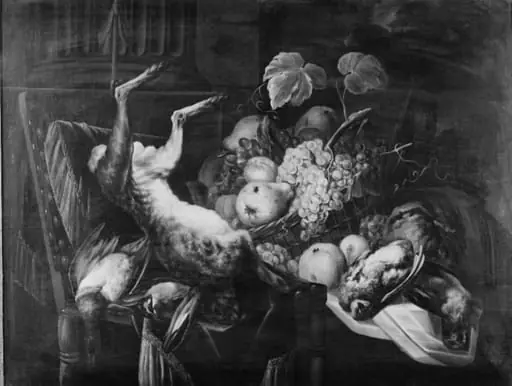
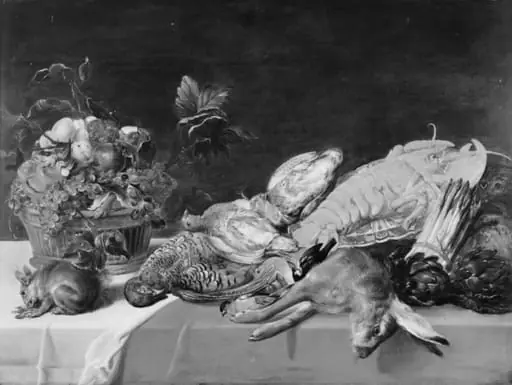
Painted in 1645 by the Flemish artist Jan Fyt, this still life is a representative work of mid-17th-century Baroque painting. Executed in oil, it presents a quiet yet deliberate arrangement of hunted game and natural elements against a dark, undefined background. The composition emphasizes texture and form through careful lighting, reflecting Fyt’s reputation for precise observation and technical control in depicting organic subjects.
Subject & Meaning
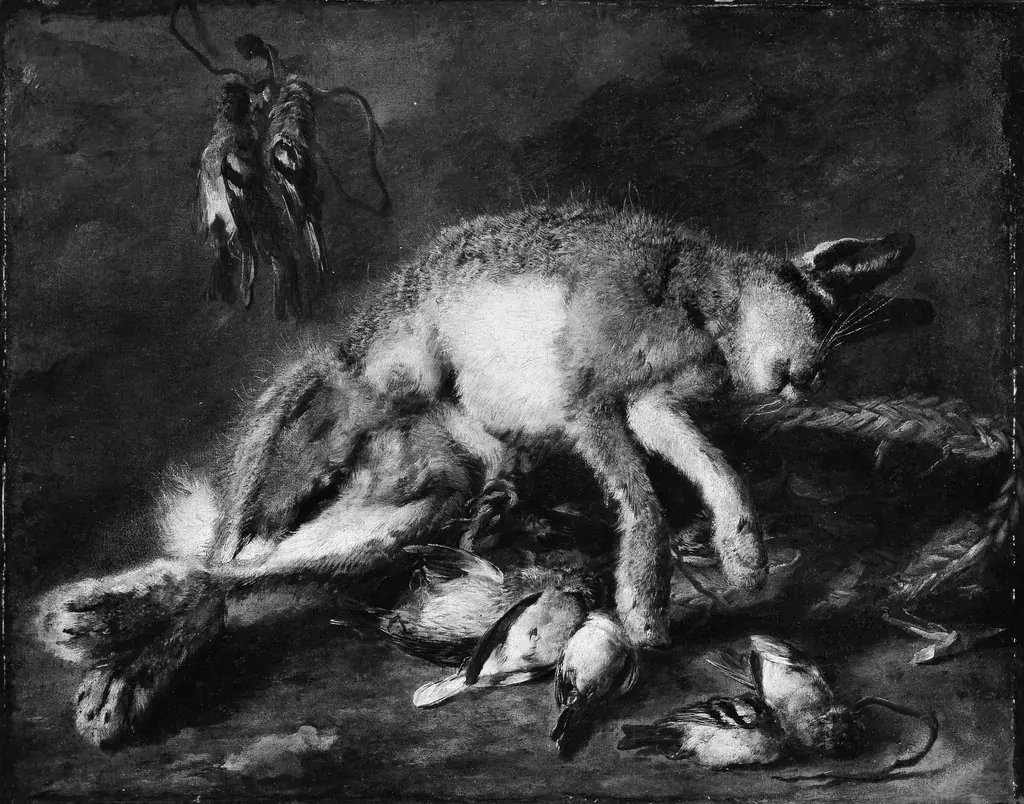
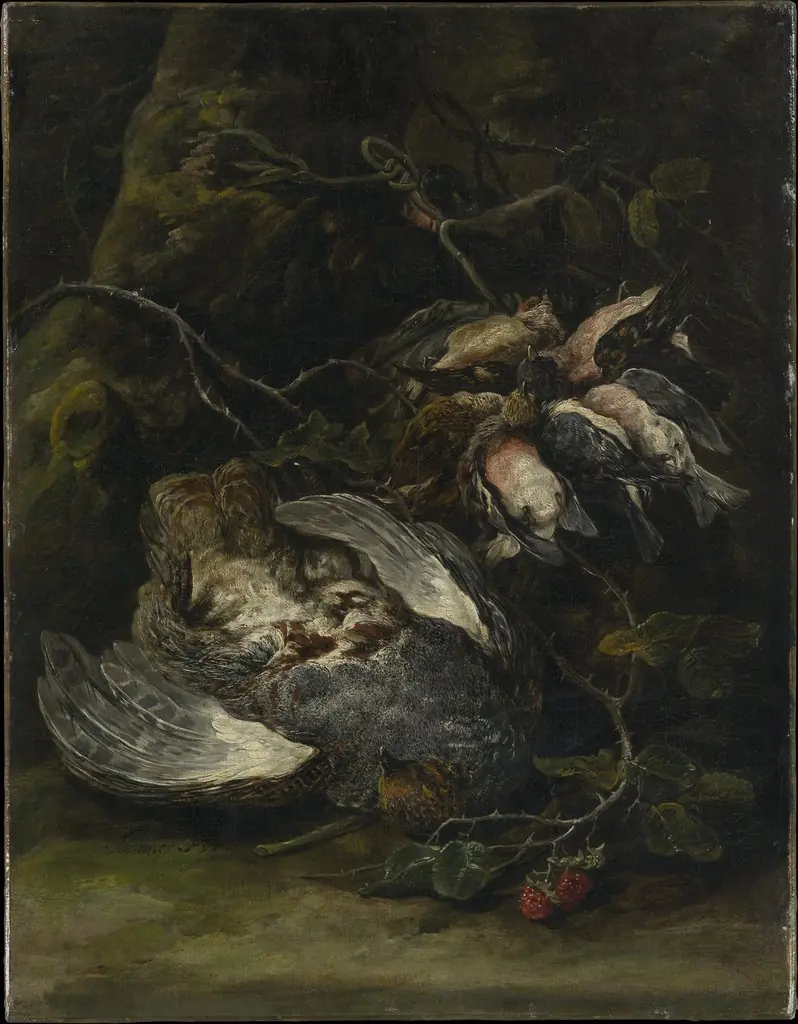
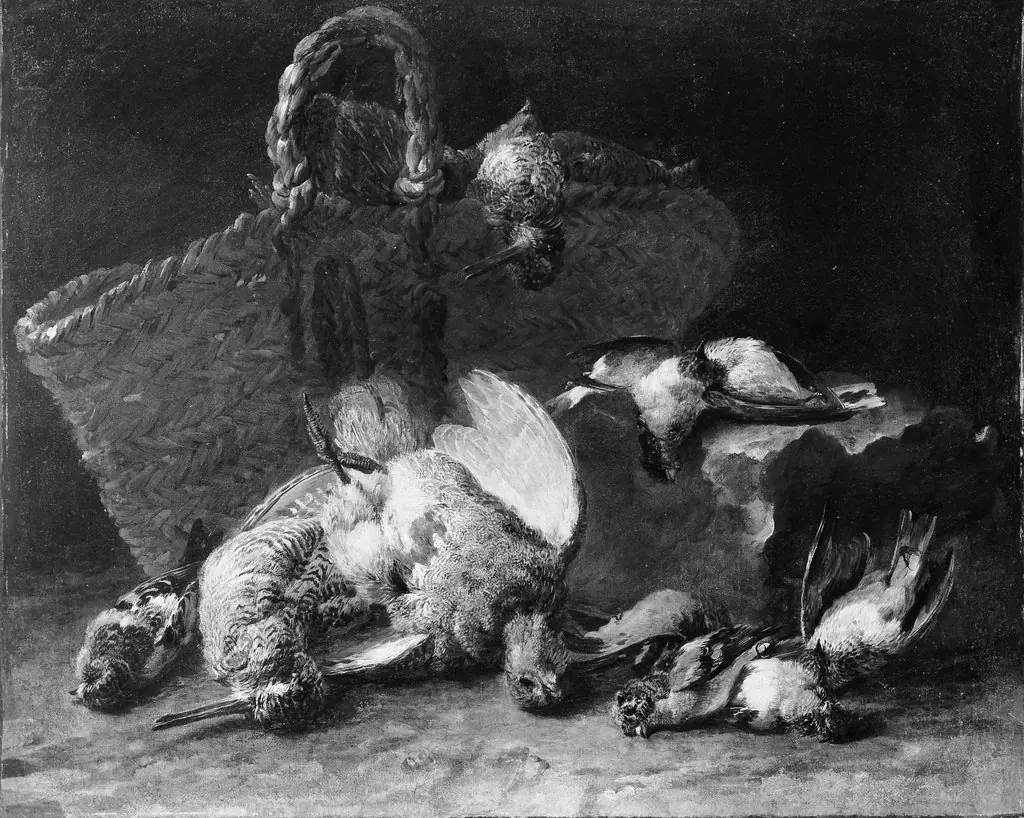
The painting centers on a dead rabbit suspended by its hind legs, surrounded by a basket of birds, clusters of grapes, and scattered foliage. These elements suggest a hunting outcome, common in Flemish still lifes as symbols of abundance or transience. The draped white cloth and rough stone imply a domestic or rustic setting, grounding the scene in tangible reality rather than idealized symbolism.
Technique & Style
Fyt employs chiaroscuro to model the forms with subtle gradations of light and shadow, enhancing the three-dimensionality of fur, feathers, and fruit. The muted palette—dominated by browns, grays, and off-whites—focuses attention on surface qualities: the sheen of skin, the fuzz of feathers, the dewy texture of grapes. Brushwork is restrained yet precise, avoiding theatricality in favor of quiet realism.
History & Provenance
The painting entered the collection of the Gemäldegalerie in Berlin, where it remains today. It was likely acquired during the 19th century as part of broader efforts to assemble a comprehensive record of Flemish Baroque art. While its early ownership is undocumented, its attribution to Fyt is consistent with his known output and stylistic fingerprints from the 1640s.
Context
In mid-17th-century Antwerp, still lifes featuring game and produce were popular among affluent patrons who valued both aesthetic refinement and moral undertones. Fyt’s work aligned with a tradition that celebrated naturalism and craftsmanship, often commissioned to reflect wealth, taste, or the cyclical nature of life and death. His focus on hunted animals distinguished him from contemporaries who favored floral arrangements.
Legacy
Fyt’s influence extended to later still life painters through his disciplined rendering of textures and controlled compositions. While not widely known outside specialist circles today, his work contributed to the evolution of naturalistic painting in Northern Europe. This painting exemplifies the quiet rigor of Flemish Baroque still life, valued for its observational fidelity rather than dramatic flourish.
Own this work as a print
Artist & collection
Artist
Jan Fijt, Jan Fijt or Johannes Fijt (or Fyt) (19 August 1609 – 11 September 1661) was a Flemish Baroque painter, draughtsman and etcher.