Artwork
The Four Trees
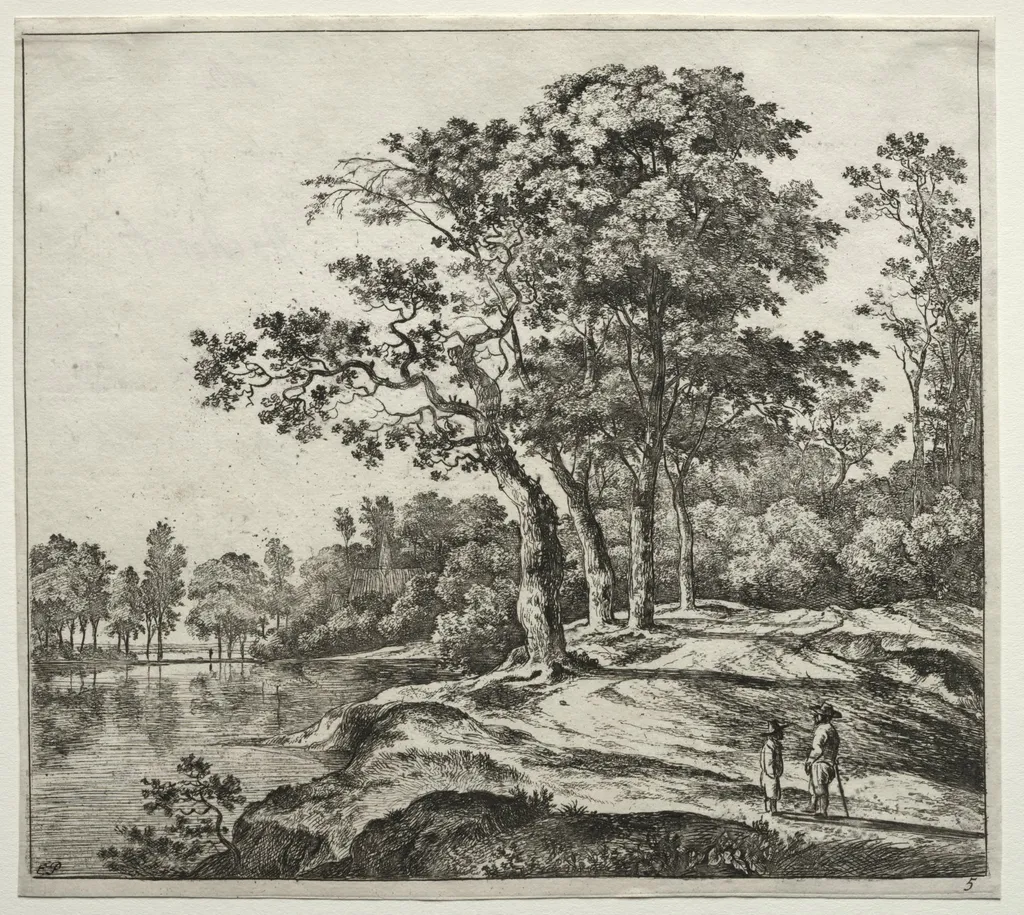
The Four Trees is a print by Jan Hackaert. It dates from 1666 and is held in the collection of the Cleveland Museum of Art.
About this work
Overview
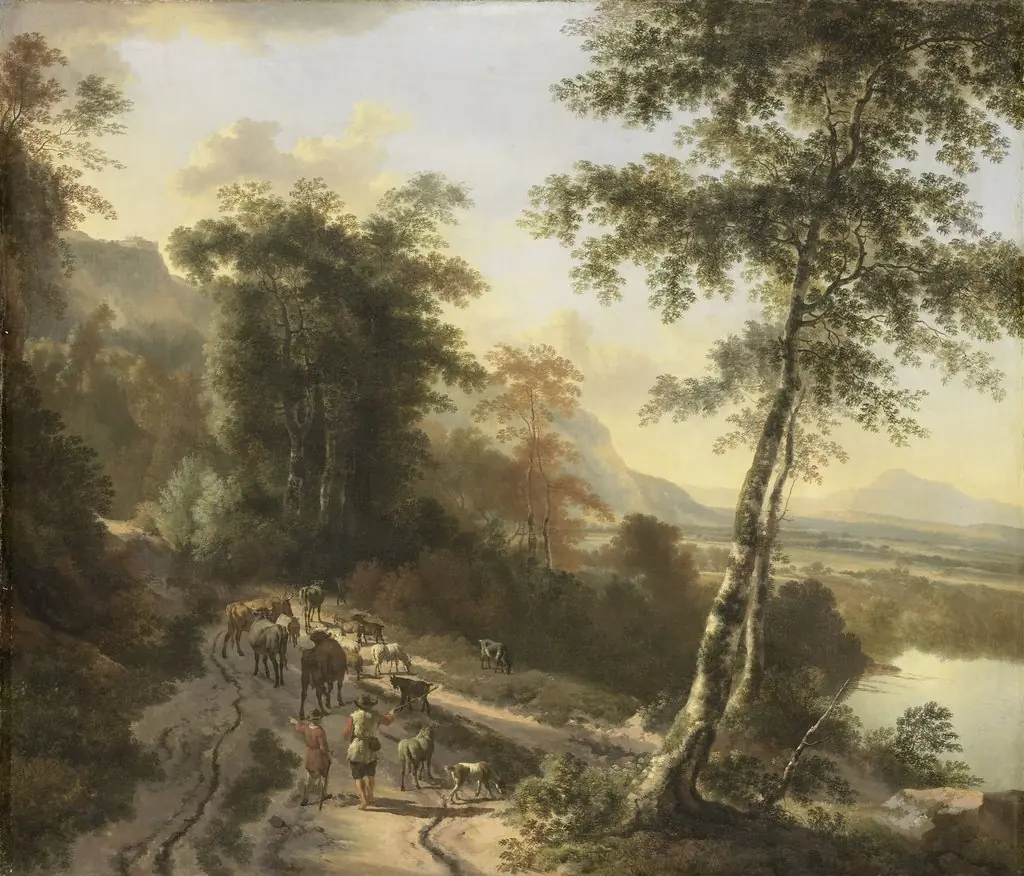
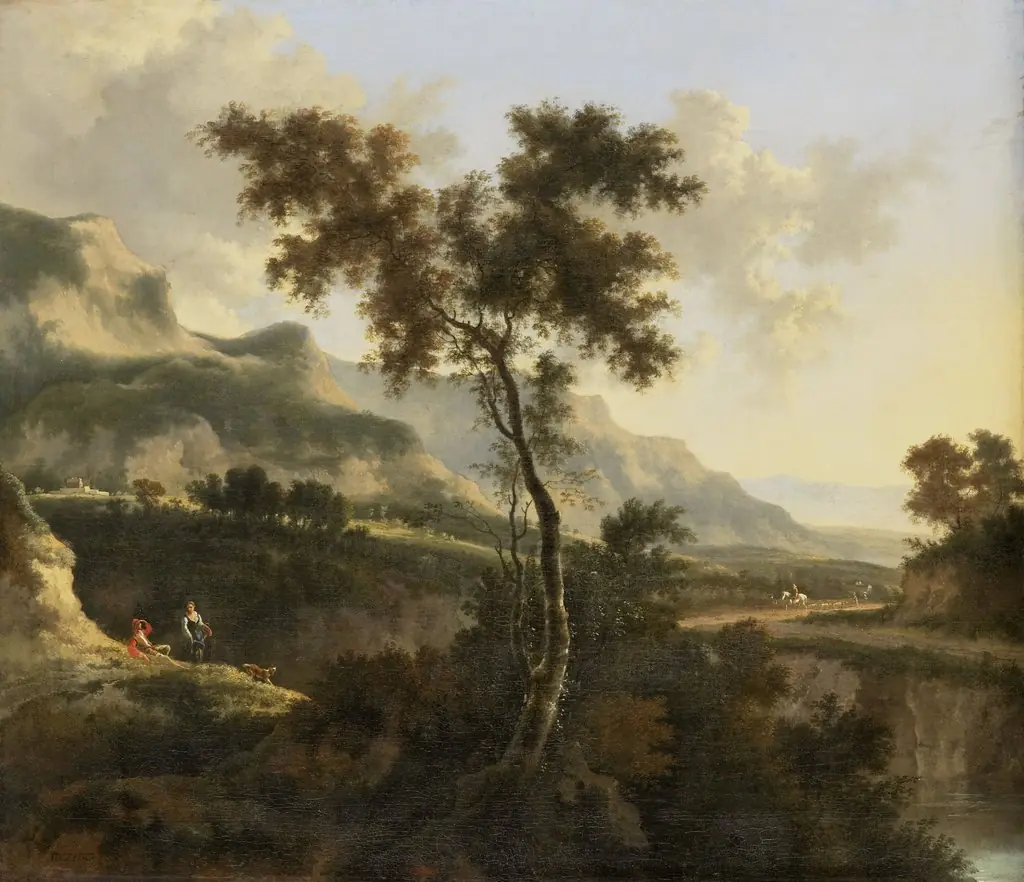
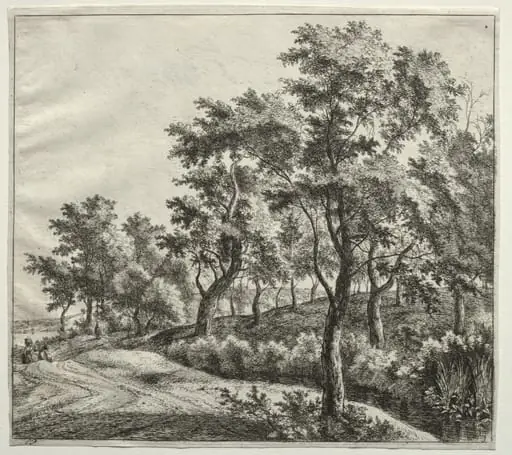
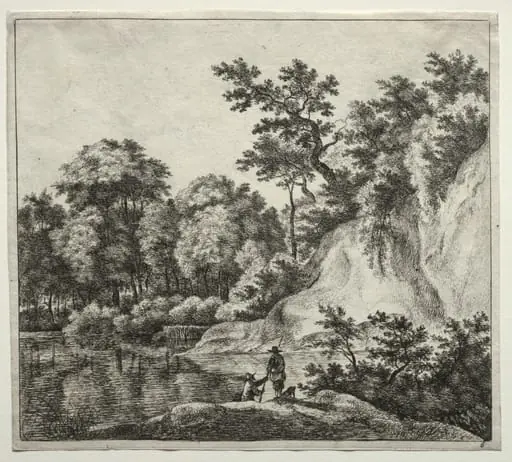
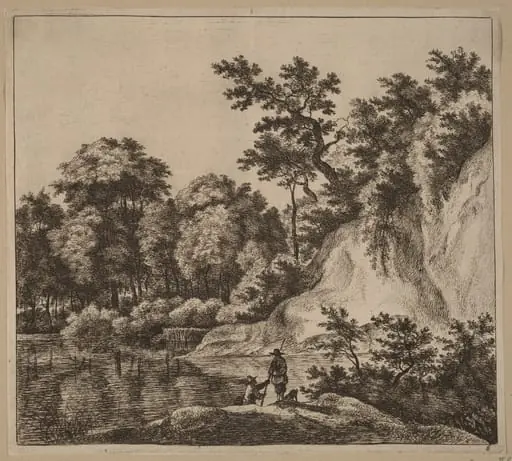
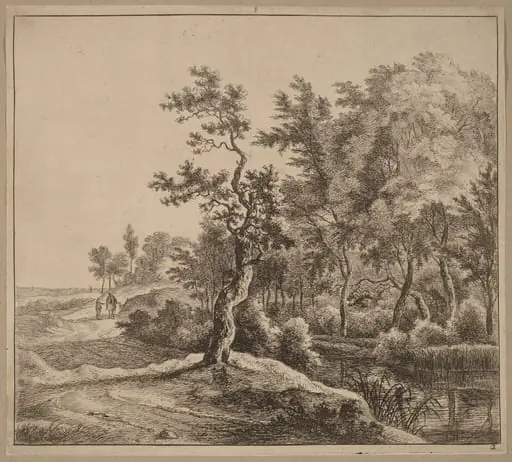
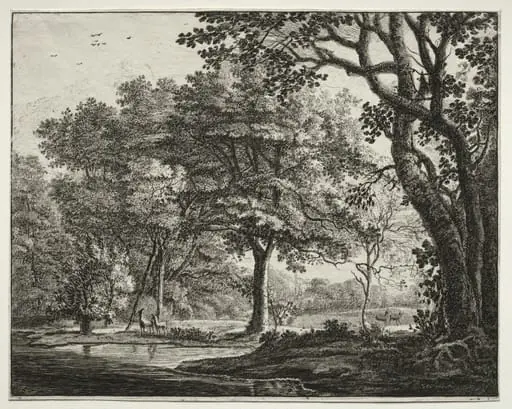
Created around 1666, The Four Trees is a monochrome print by Dutch artist Jan Hackaert. It resides in the collection of The Cleveland Museum of Art. The work captures a quiet rural scene: a narrow path winds beside a river, flanked by four prominent trees. The composition emphasizes texture and atmosphere through subtle tonal contrasts, achieved with fine incised lines on a light ground.
Subject & Meaning
Two figures traverse the path, their small scale underscoring the dominance of the natural environment. The trees, with gnarled trunks and roots dipping into the water, suggest endurance and quiet resilience. The scene conveys no narrative climax, instead inviting contemplation of solitude and the passage of time within a serene, unaltered landscape.
Technique & Style
Hackaert employed etching with meticulous line work, scraping away the ground to create dark, precise contours against a pale field. The effect resembles chiaroscuro, with gradations of shadow defining form and depth. Branches and roots are rendered with intricate detail, while the uneven terrain is suggested through irregular, broken lines, enhancing the tactile quality of the surface.
History & Provenance
The print dates to the mid-17th century, a period when Dutch artists increasingly turned to intimate landscape subjects. Hackaert, known for his topographical precision, likely produced this as part of a series of small-scale prints. It entered the Cleveland Museum of Art’s collection in the 20th century, where it remains a representative example of Dutch printmaking from the era.
Context
During the 1660s, Dutch printmakers focused on everyday landscapes, moving away from grand historical themes. Hackaert’s work reflects this trend, aligning with contemporaries who valued observation over idealization. The emphasis on natural detail and atmospheric tone mirrors broader interests in scientific observation and the quiet beauty of the Dutch countryside.
Legacy
The Four Trees exemplifies the quiet sophistication of Dutch etching in the late 17th century. While not widely reproduced, it illustrates Hackaert’s skill in translating natural observation into refined graphic form. Its preservation in a major museum underscores its role as a document of period aesthetics and printmaking technique.
Own this work as a print
Artist & collection