Artwork
The Toilet
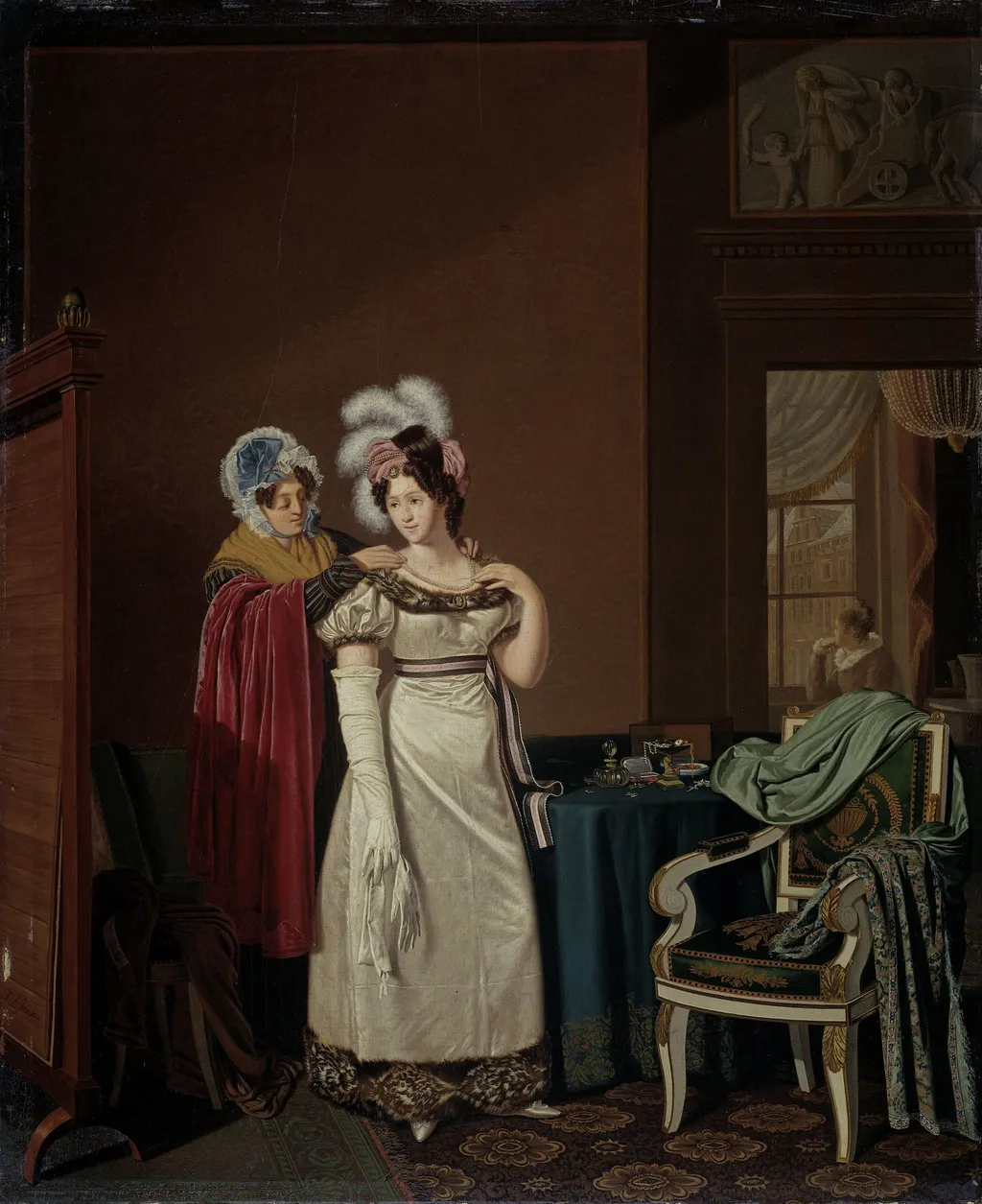
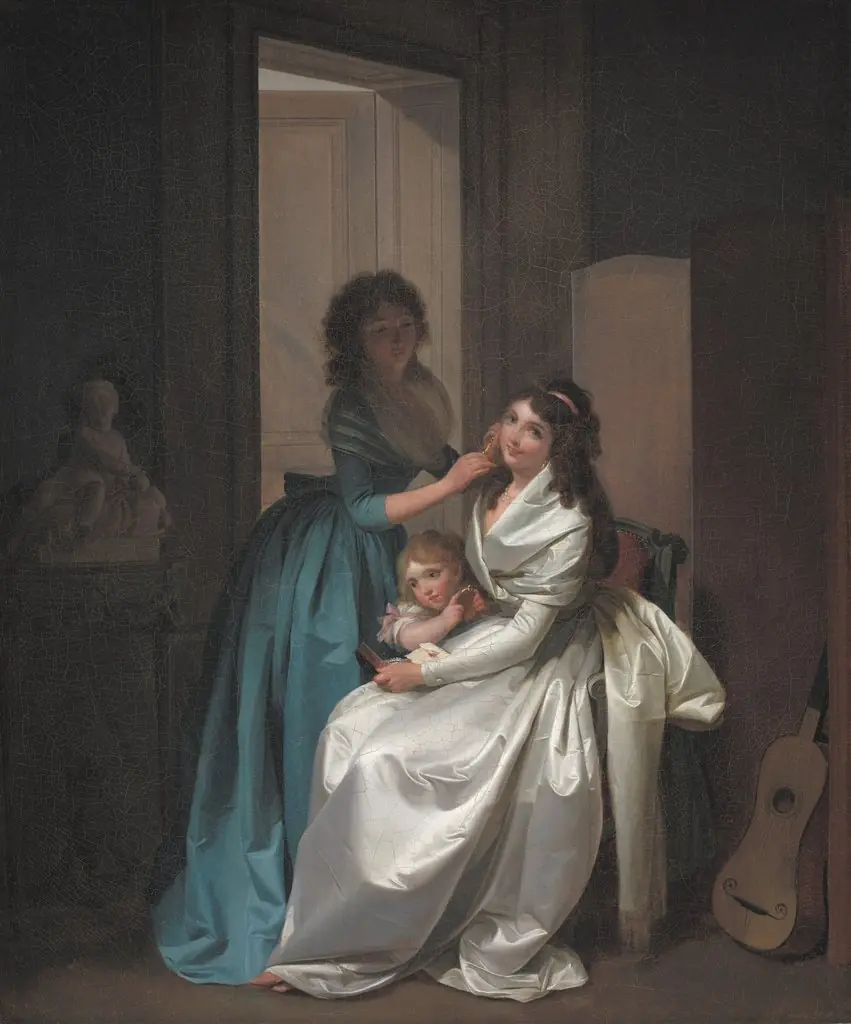
The Toilet is an oil painting by the Biedermeier artist Jan Lodewijk Jonxis. It dates from 1850 and is held in the collection of the Rijksmuseum.
About this work
Overview
Painted around 1850 by Dutch artist Jan Lodewijk Jonxis, this oil-on-canvas work depicts an intimate interior scene. It is part of the Rijksmuseum’s collection, where it is preserved as an example of mid-19th-century Dutch genre painting. The composition centers on two women in a private domestic setting, rendered with careful attention to texture and atmosphere.
Subject & Meaning
Their attire—particularly the white dress with fur trim—suggests upper-class status, yet the scene avoids grandeur, focusing instead on routine.
The painting captures a quiet moment of personal grooming: one woman adjusts her hair while another observes. Their attire—particularly the white dress with fur trim—suggests upper-class status, yet the scene avoids grandeur, focusing instead on routine. The absence of narrative tension invites contemplation of private life, reflecting a broader cultural interest in the subtleties of domestic routine during the period.
Technique & Style
Jonxis employed smooth, controlled brushwork to model forms with subtle gradations of light and shadow. The interplay of illumination across fabric, skin, and wood surfaces demonstrates a refined understanding of chiaroscuro, enhancing the three-dimensionality of the figures. The dark paneling and muted tones ground the scene, while highlights on the dress and faces draw the viewer’s attention to the women’s interaction.
History & Provenance
The painting entered the Rijksmuseum’s collection in the 19th century, likely acquired through official channels or private donation. Its attribution to Jonxis is supported by stylistic consistency with his other known works. No significant alterations or reattributions are recorded, and it has remained in public ownership since its acquisition.
Context
Created during a time when Dutch artists increasingly turned to intimate domestic scenes, the work aligns with a tradition that valued quiet observation over dramatic storytelling. Unlike earlier Dutch Golden Age interiors, this painting lacks symbolic allegory, instead emphasizing realism and the dignity of everyday moments within a well-appointed home.
Legacy
Though not widely exhibited outside the Netherlands, the painting contributes to scholarly understanding of mid-19th-century genre painting in the Low Countries. It reflects a shift toward psychological nuance and atmospheric realism, influencing later artists who sought to portray private life without sentimentality or moralizing.
Artist & collection


 Conversation Piece (The Sense of Smell)
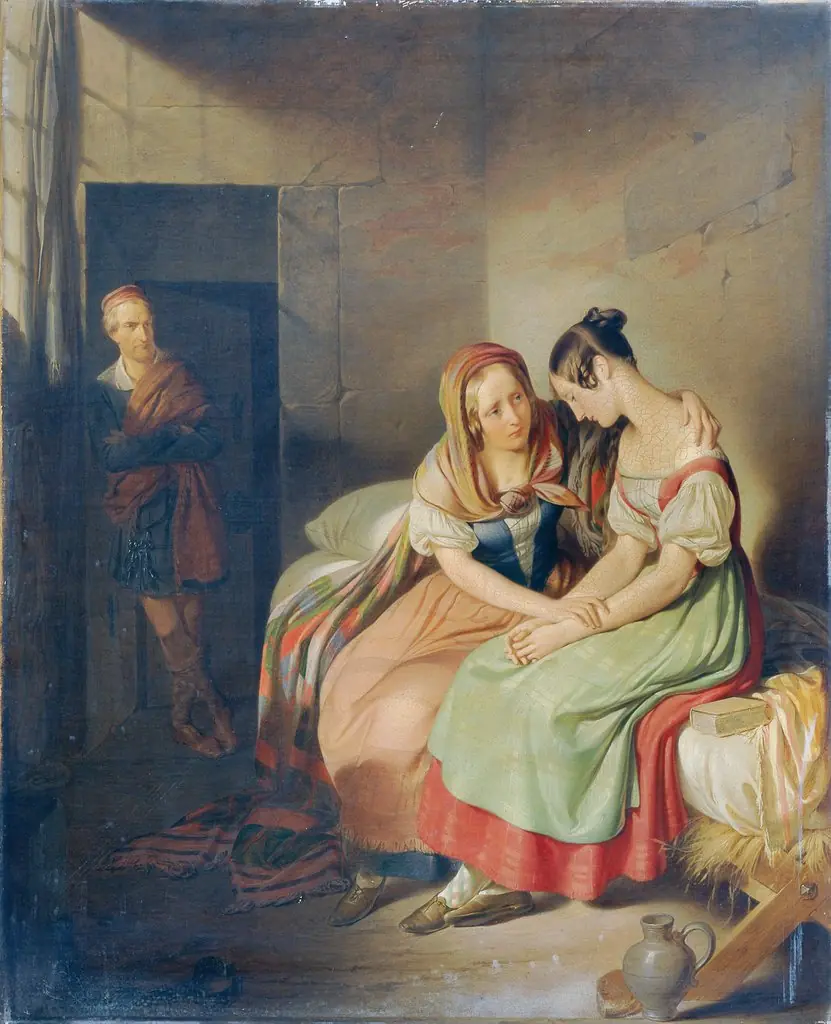 Die Lilie von St. Leonhard
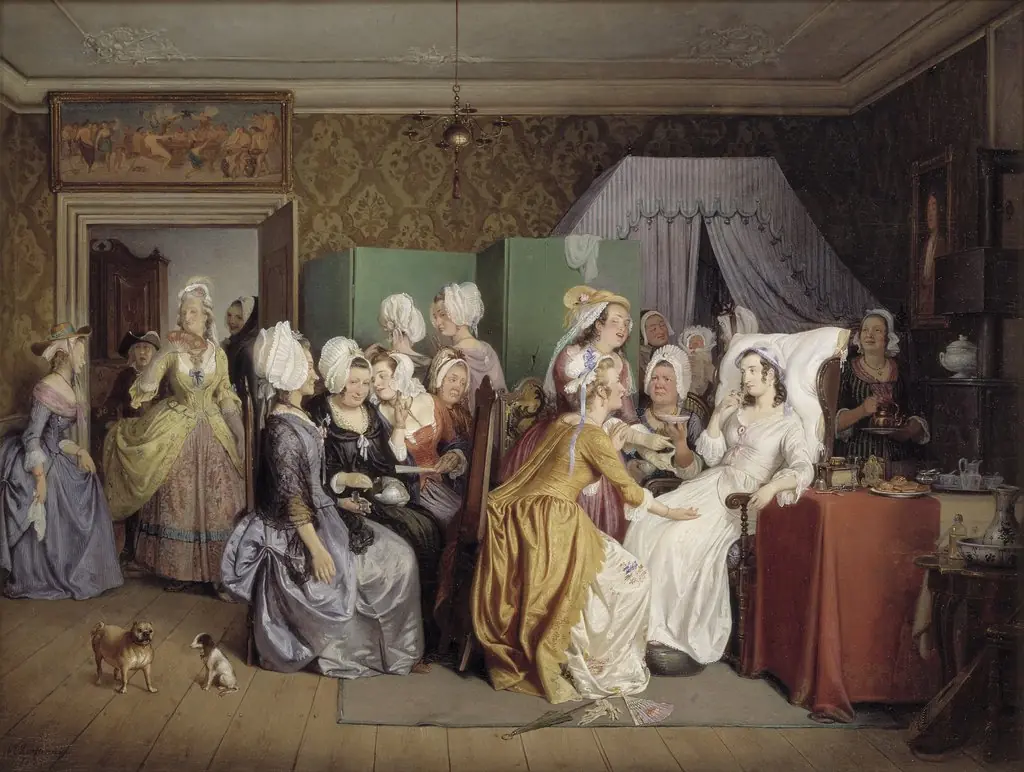 Scene from Ludwig Holberg's The Lying-in Room
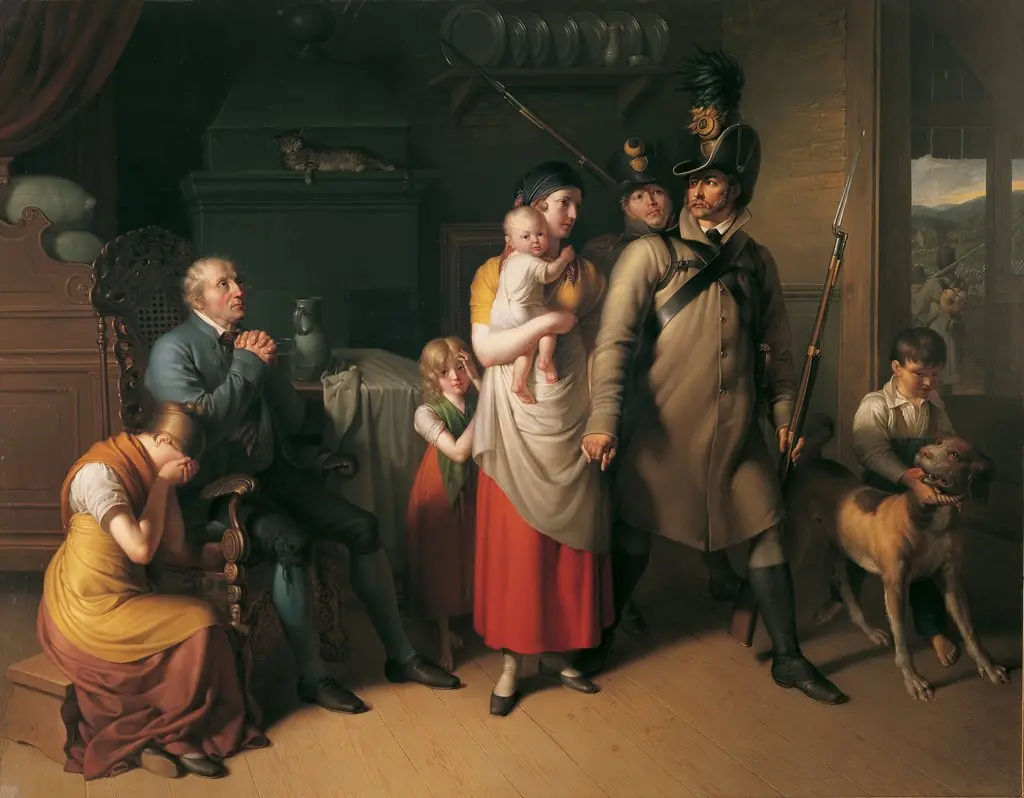 The Farewell of the Country Soldier
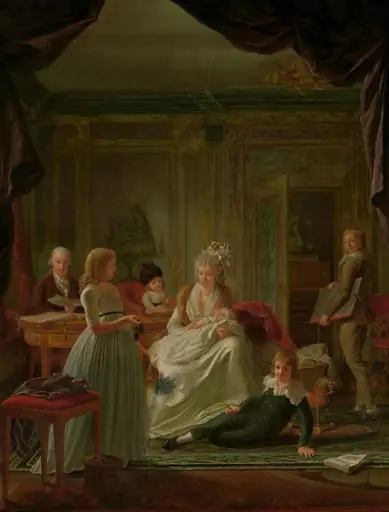 Portrait of Aernout van Beeftingh, his Wife Jacoba Maria Boon and their Children
 The Present
 Scene from Ludwig Holberg's The Lying-in Room
 The Letter
 Untitled
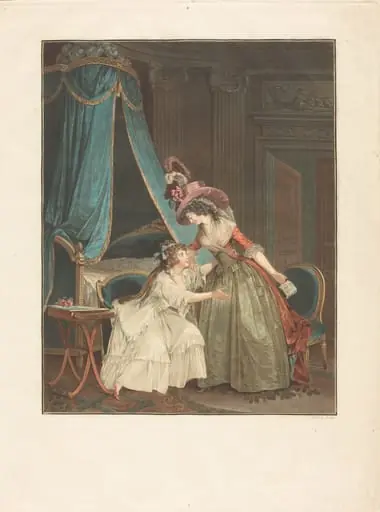 L'Indiscretion
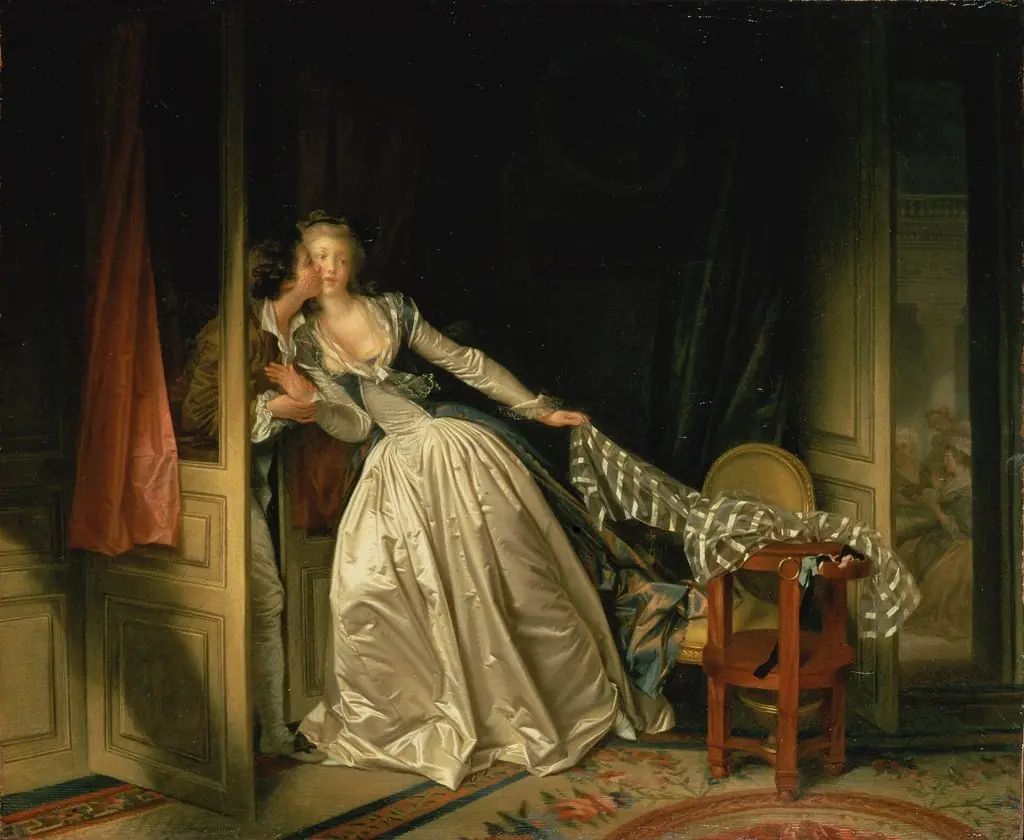 The Stolen Kiss