Artwork
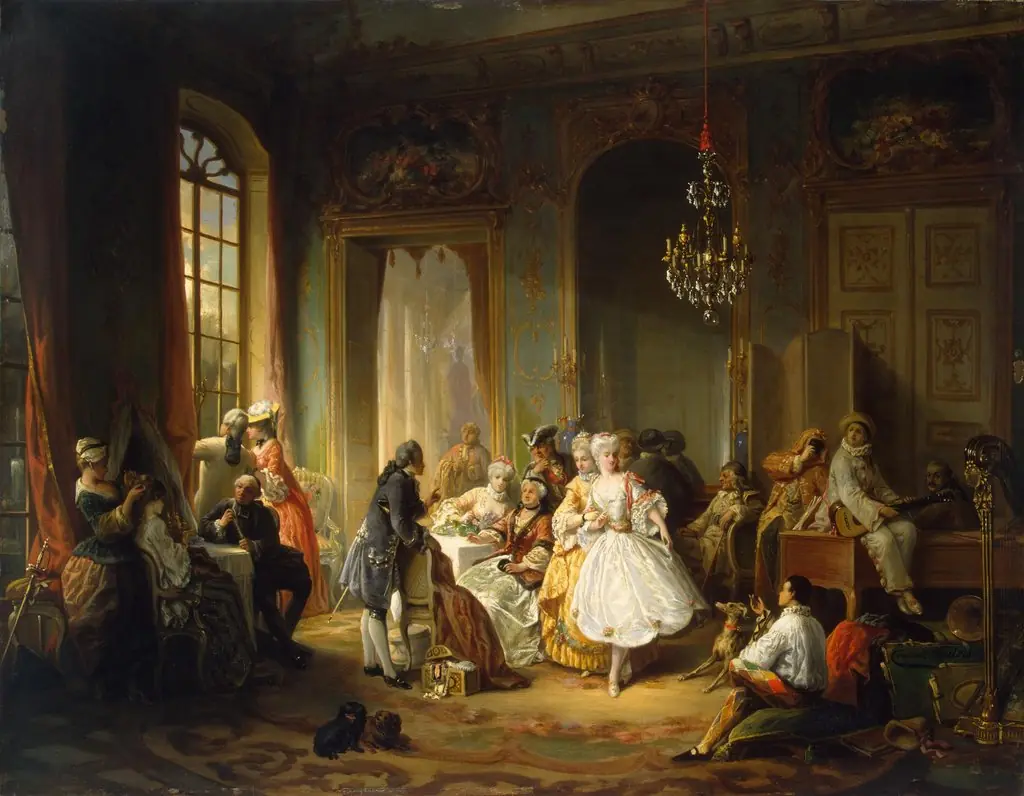
Scene from Ludwig Holberg's The Lying-in Room
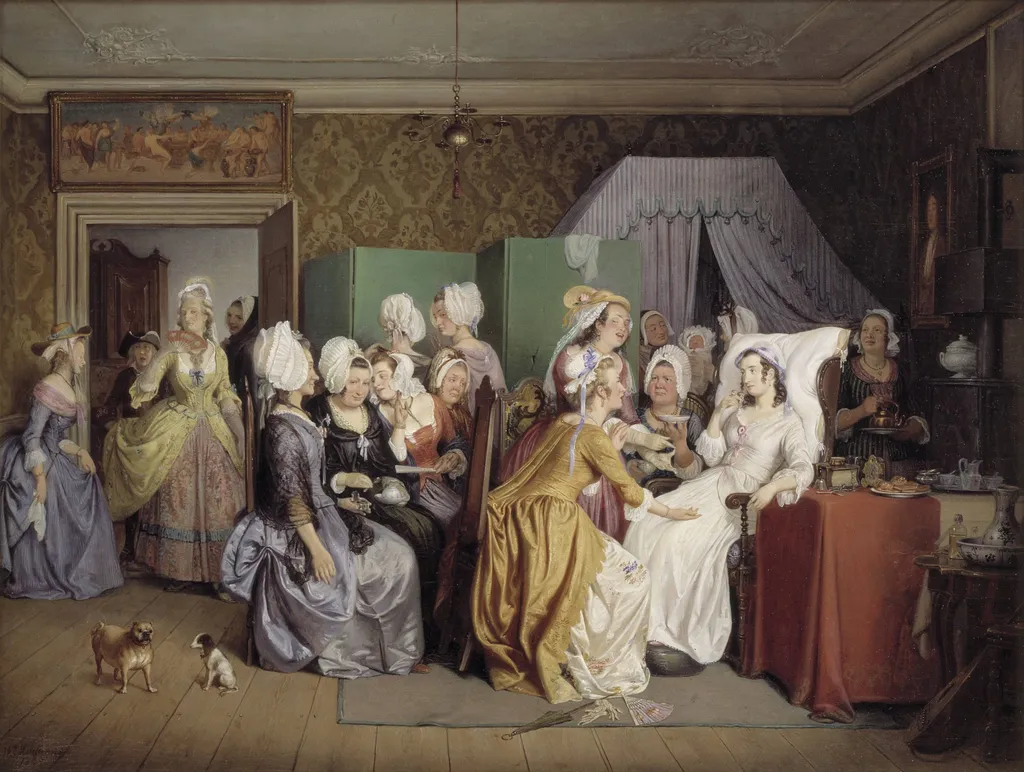
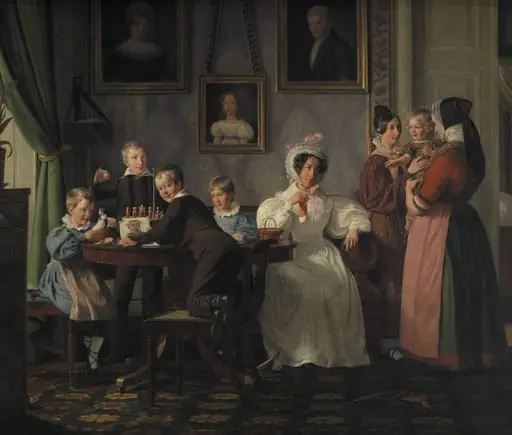
Scene from Ludwig Holberg's The Lying-in Room is a photography by the Romanticist artist Unknown. It dates from 1845 and is held in the collection of the Statens Museum for Kunst. Created in 1845 by the artist known as 330_person, this image illustrates a moment from Ludwig Holberg’s play *The Lying‑in Room*.
About this work
Overview
Created in 1845 by the artist known as 330_person, this image illustrates a moment from Ludwig Holberg’s play *The Lying‑in Room*. The work is part of the collection of the Museum of Ethnography. It captures a domestic interior filled with women in early‑nineteenth‑century attire gathered around a bed where a figure in white reclines.
Subject & Meaning
The composition presents a bustling yet restrained gathering of women, each dressed in elaborate gowns of muted blues, yellows and whites, their hair styled in high powdered coiffures. Some stand, others sit, while a few hold fans or exchange glances, suggesting a communal ritual surrounding childbirth or a postpartum visit, a theme central to Holberg’s comedy.
Technique & Style
Rendered with careful attention to interior detail, the image emphasizes the contrast between dark wood paneling, gold trim and the softer pastel palette of the figures. The arrangement of objects—a small dog near the doorway, a table with teacups and cake, and a curtain behind the bed—creates depth and a quiet, orderly atmosphere characteristic of Romantic-era genre scenes.
History & Provenance
The piece entered the Museum of Ethnography’s holdings after its acquisition in the early twentieth century, though the precise path from its creation to the museum remains undocumented. Its attribution to 330_person, a relatively obscure creator, is based on archival records linking the work to the 1845 illustration series for Holberg’s play.
Context
The image reflects Romanticism’s interest in everyday life and emotional nuance, portraying a domestic rite with a blend of sentiment and subtle humor. By visualizing a scene from a popular theatrical work, the artwork bridges literary culture and visual representation, illustrating how Romantic artists often drew upon contemporary drama to explore social customs.
Artist & collection

 Domestic Scene
 Giacomo and Cardinal Marco, investing Andrea, Abbot of San Zeno, with his Benefice
 The Nymph of Fontainebleau
 Portrait of a Woman
 Madonna and Child with Saints in the Enclosed Garden
 Venus and Minerva
 Family Group of Four on Sofa
 Wall painting from Room H of the Villa of P. Fannius Synistor at Boscoreale