Artwork
Saint Christopher and the Christ Child
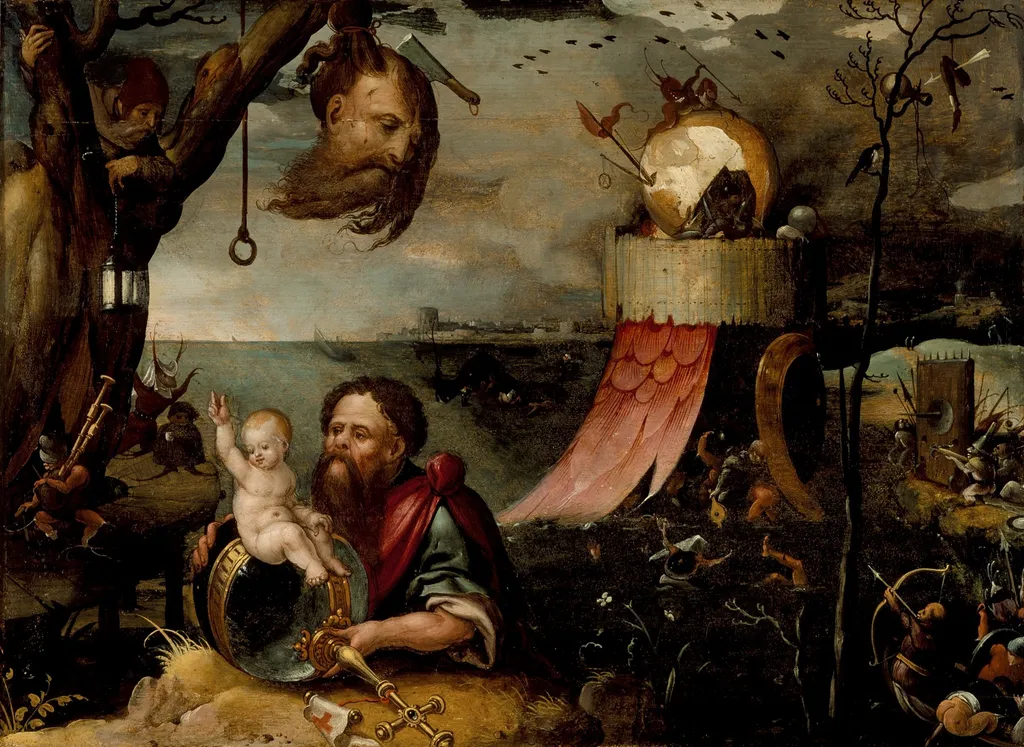
Saint Christopher and the Christ Child is an unspecified painting by the Mannerist artist Jan Mandijn. It dates from 1550 and is held in the collection of the Los Angeles County Museum of Art.
About this work
Overview
Mandijn, influenced by the fantastical style of Hieronymus Bosch, aligns with Mannerist tendencies through its dense composition and symbolic complexity.
Painted circa 1550 by Jan Mandijn, a Flemish artist active in Antwerp, this work portrays Saint Christopher bearing the Christ Child. Mandijn, influenced by the fantastical style of Hieronymus Bosch, aligns with Mannerist tendencies through its dense composition and symbolic complexity. The painting resides in the collection of the Los Angeles County Museum of Art, where it exemplifies Northern Renaissance religious imagery infused with eccentric detail.
Subject & Meaning
The scene illustrates Saint Christopher, traditionally the patron saint of travelers, carrying the infant Jesus across a river. The Christ Child, seated on a shield, radiates divine authority despite his small stature. Above, a large head suspended from a tree may reference pagan idols or demonic forces overcome by faith. The inclusion of a lantern and rope suggests pilgrimage and spiritual guidance, reinforcing the saint’s role as a protector.
Technique & Style
Mandijn employs a tightly packed, cluttered composition typical of Mannerism, where figures and objects crowd the space without clear spatial logic. Brushwork is precise yet expressive, with vivid colors and intricate textures in fabrics and foliage. The background merges a distant cityscape with choppy water and sailing vessels, creating a layered, dreamlike environment that prioritizes symbolic richness over naturalism.
History & Provenance
The painting was likely produced in Antwerp during the mid-16th century, a period of religious upheaval and artistic experimentation. Its survival into modern times suggests it remained in private or ecclesiastical hands before entering LACMA’s collection. No documented early ownership records are widely known, but its style and materials are consistent with Antwerp workshop practices of the era.
Context
In the decades after the Reformation, Catholic patrons in the Low Countries commissioned devotional images that emphasized saints’ intercessory power. Mandijn’s work reflects this trend, blending traditional iconography with Bosch-inspired grotesques to evoke spiritual struggle. The chaotic setting may mirror contemporary anxieties about faith, sin, and divine protection amid political and religious instability.
Legacy
Though Mandijn is less known than his contemporaries, this painting illustrates how Northern artists adapted Bosch’s visionary language for orthodox religious themes. The work contributes to understanding how Mannerist aesthetics served devotional purposes beyond mere novelty. Its preservation allows study of how religious narratives were visually reimagined in a turbulent era of European history.
Own this work as a print
Artist & collection
Artist
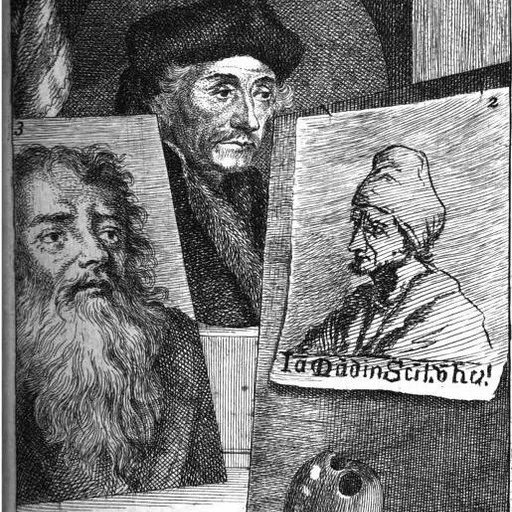
Jan Mandijn or Jan Mandyn (c. 1500, Haarlem – c. 1560, Antwerp) was a Renaissance painter of the Low Countries, who worked in Antwerp after 1530. He is known for his works with subject matter and style reminiscent of Hieronymus Bosch.

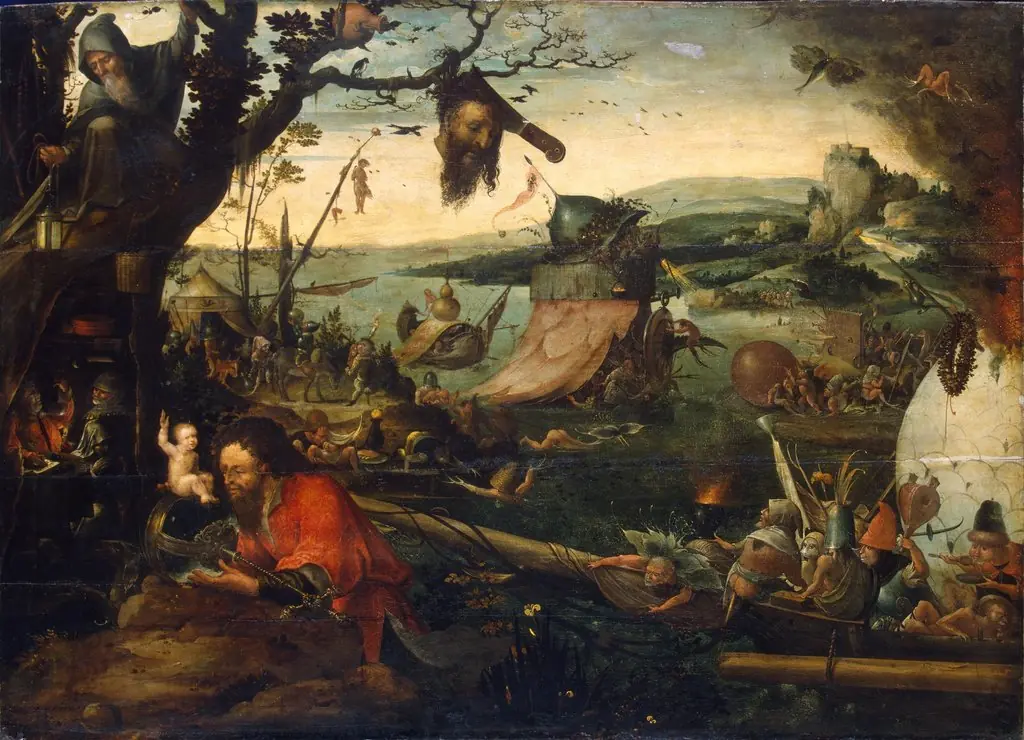
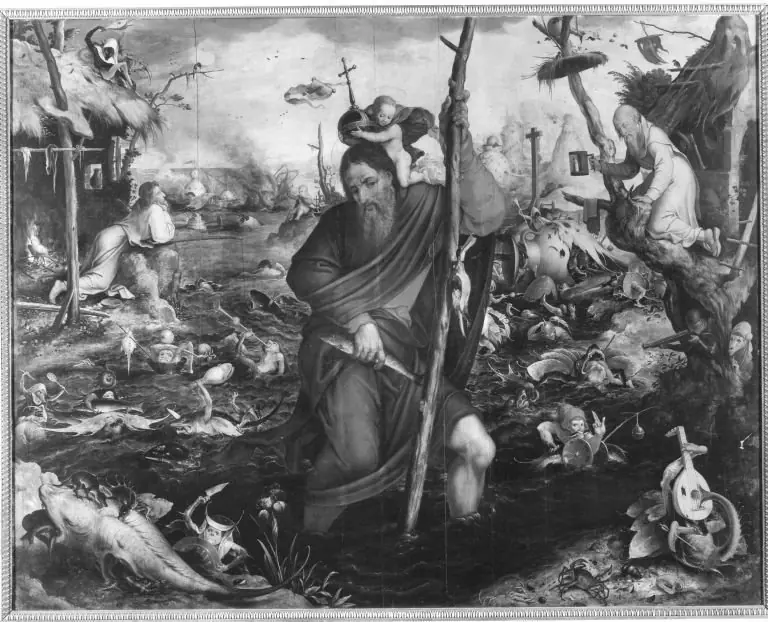
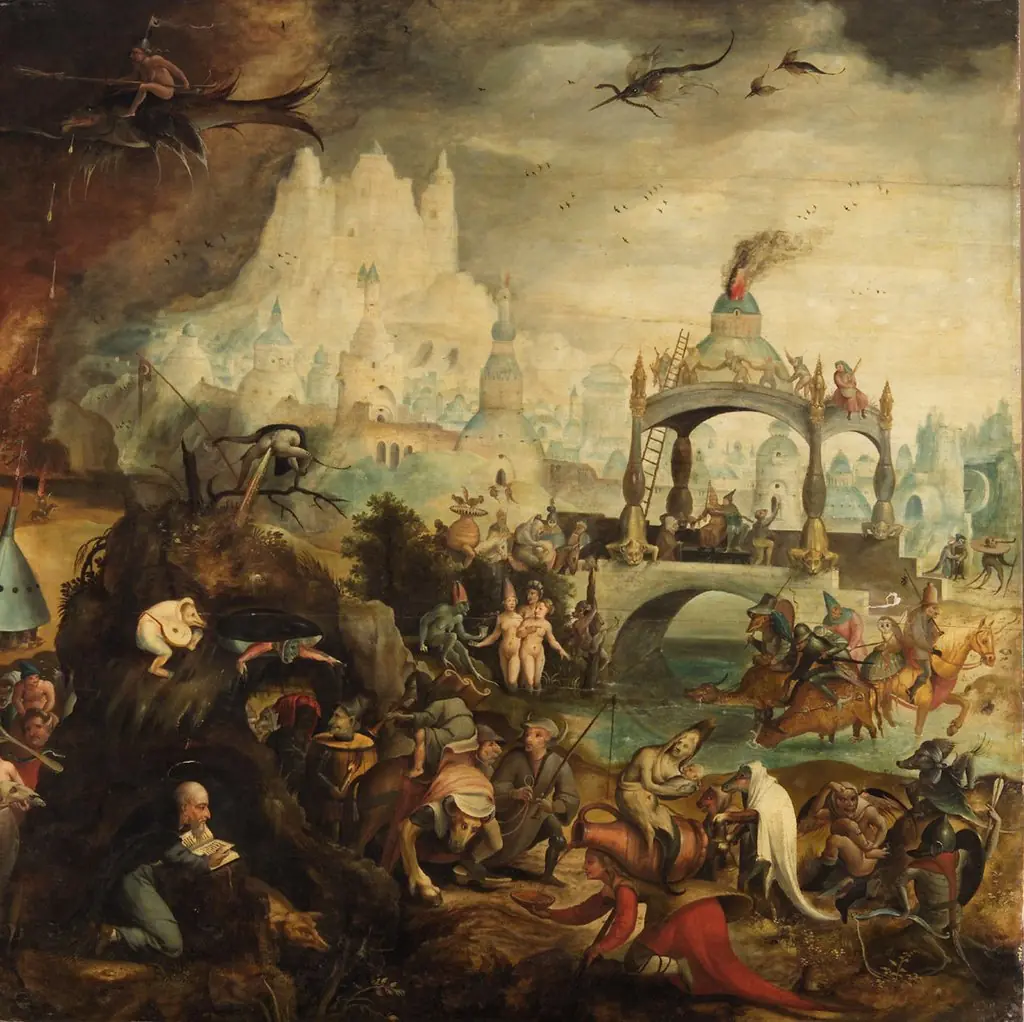
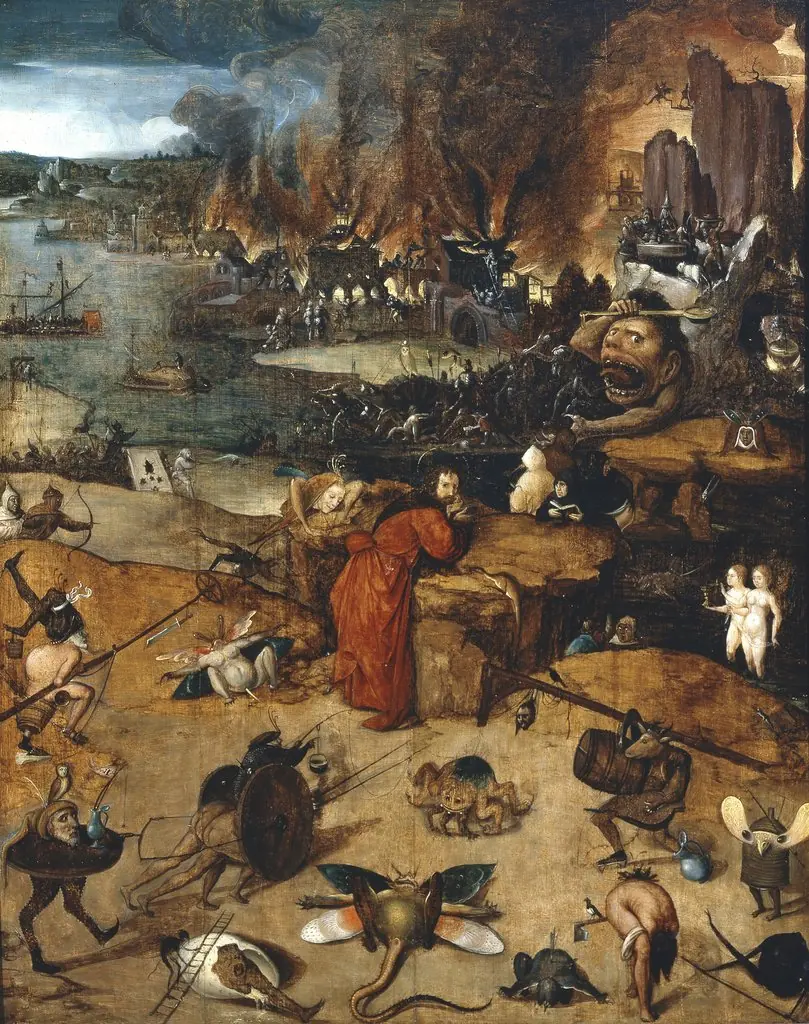 Temptation of St. Athony
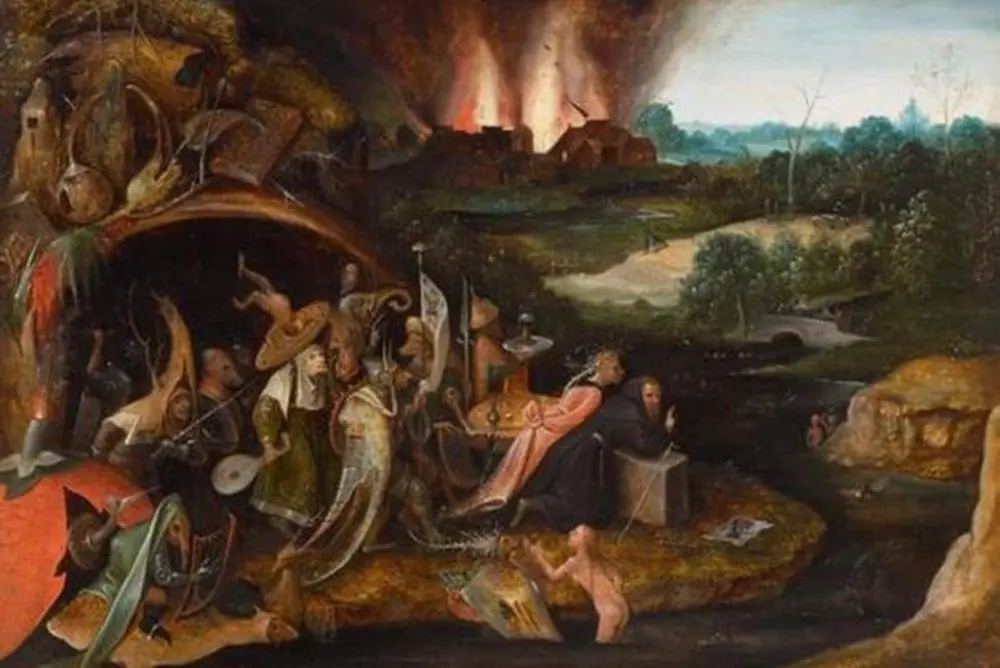 The temptation of St. Antony
 Allegory of Virtue and Vice
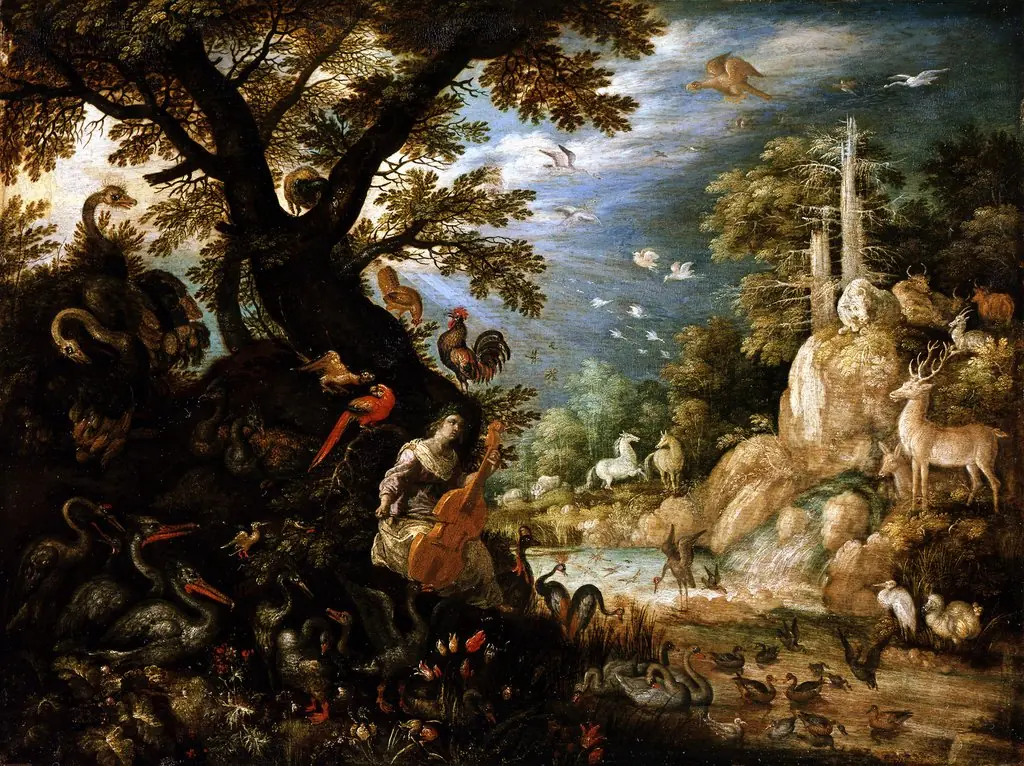 Landscape with Orpheus and the Animals
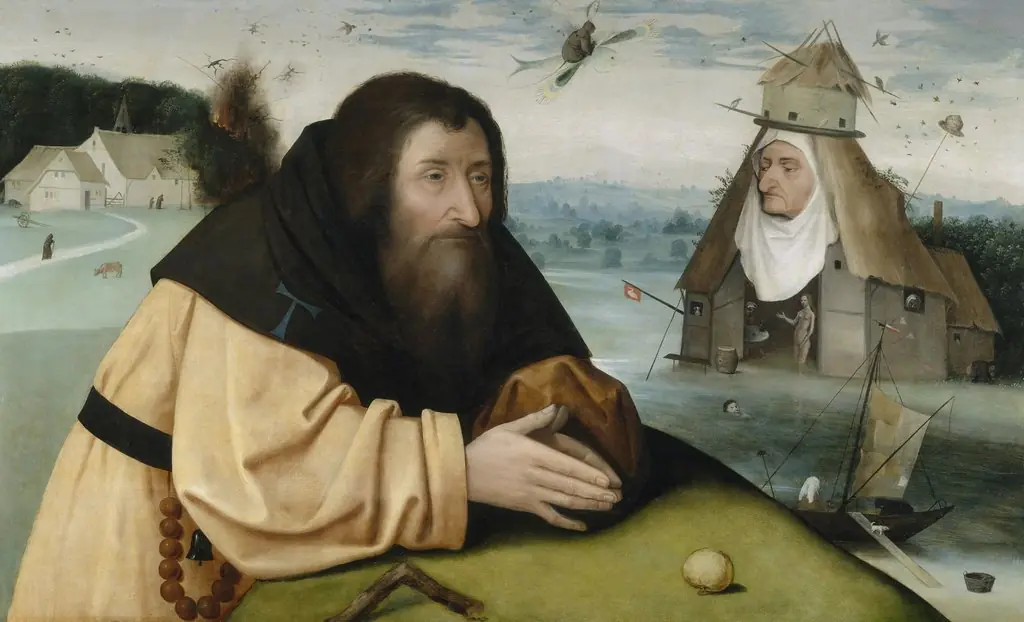 The Temptations of Saint Anthony
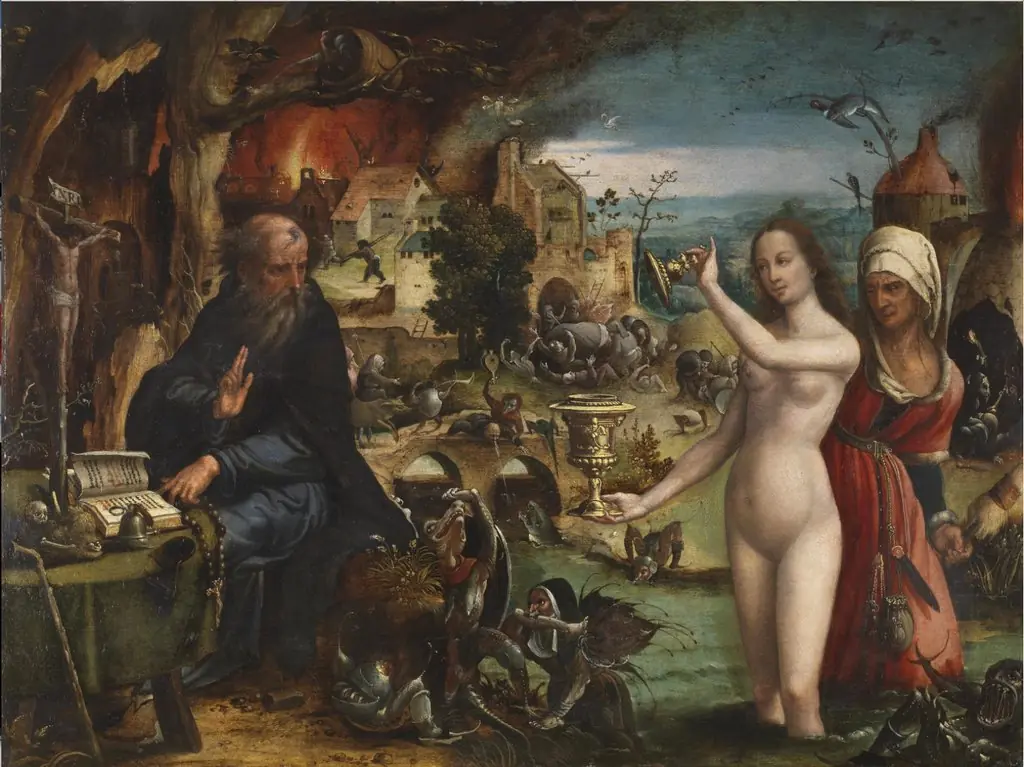 The Temptations of Saint Anthony Abbot
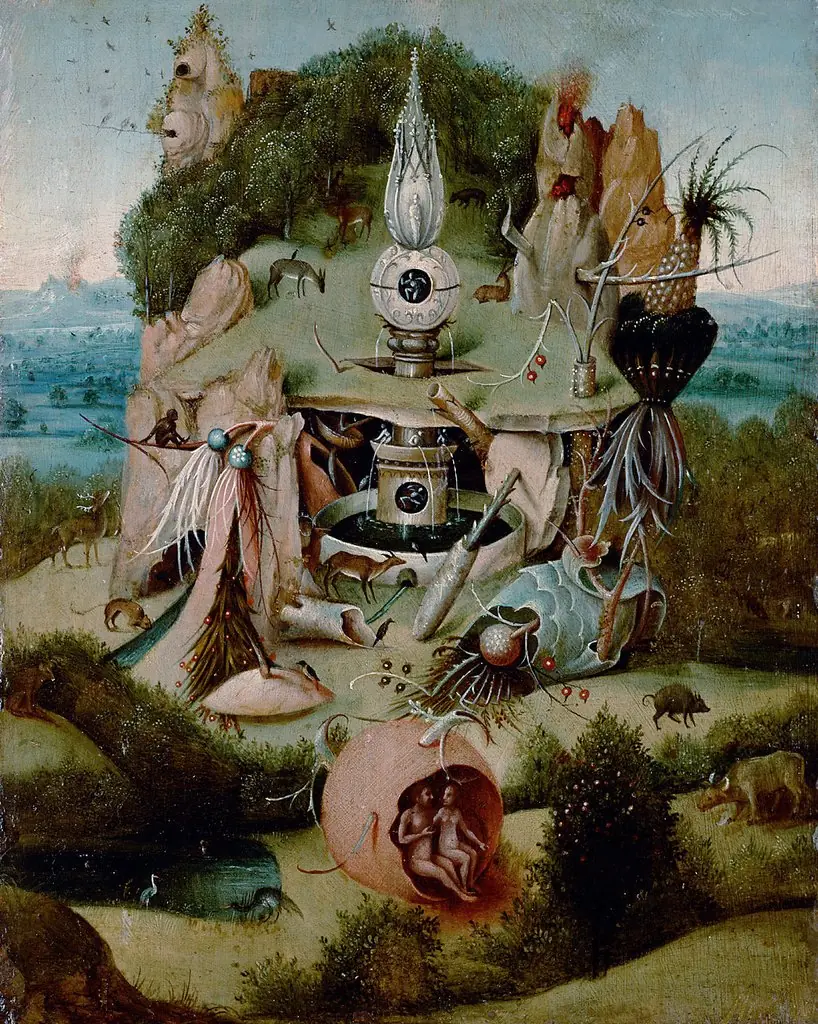 Garden of Eden
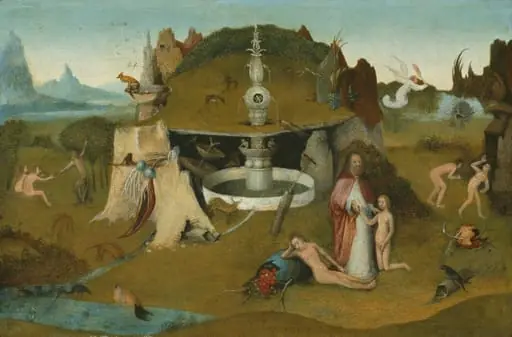 The Garden of Paradise
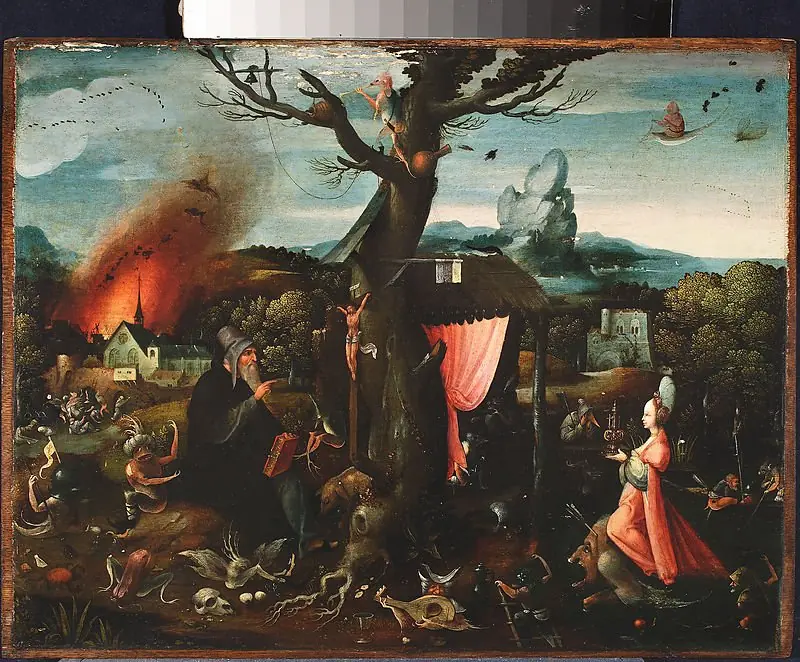 Temptation of St. Anthony (Jacobus de Voragine, Legenda aurea, Vitae Patrum)
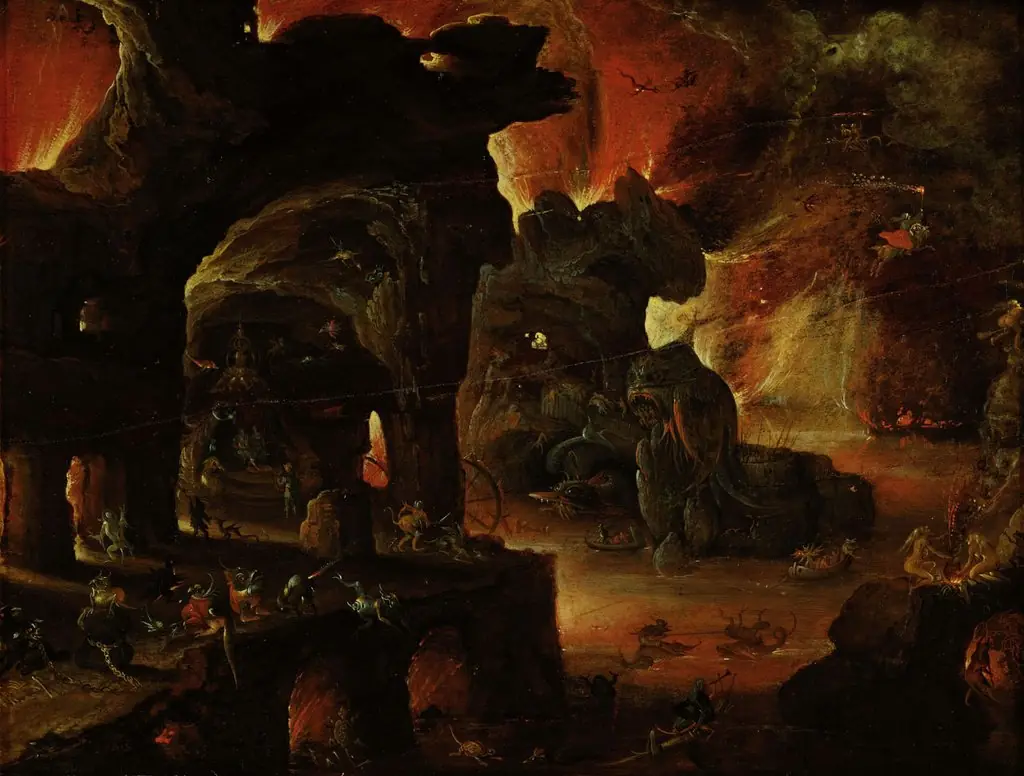 Orpheus in the Underworld