Artwork
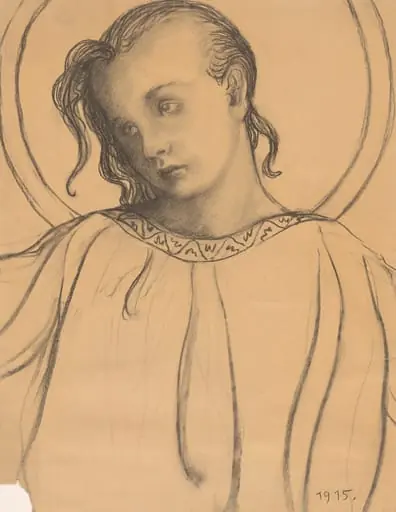
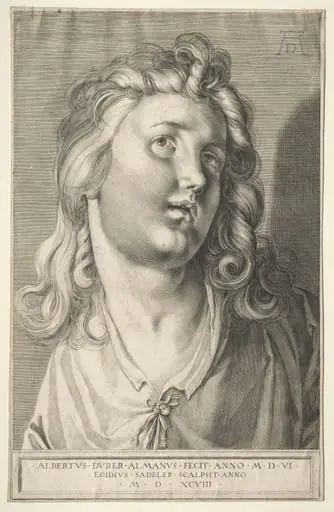
Carton for the polychrome from St Mary's Church - bust of an angel
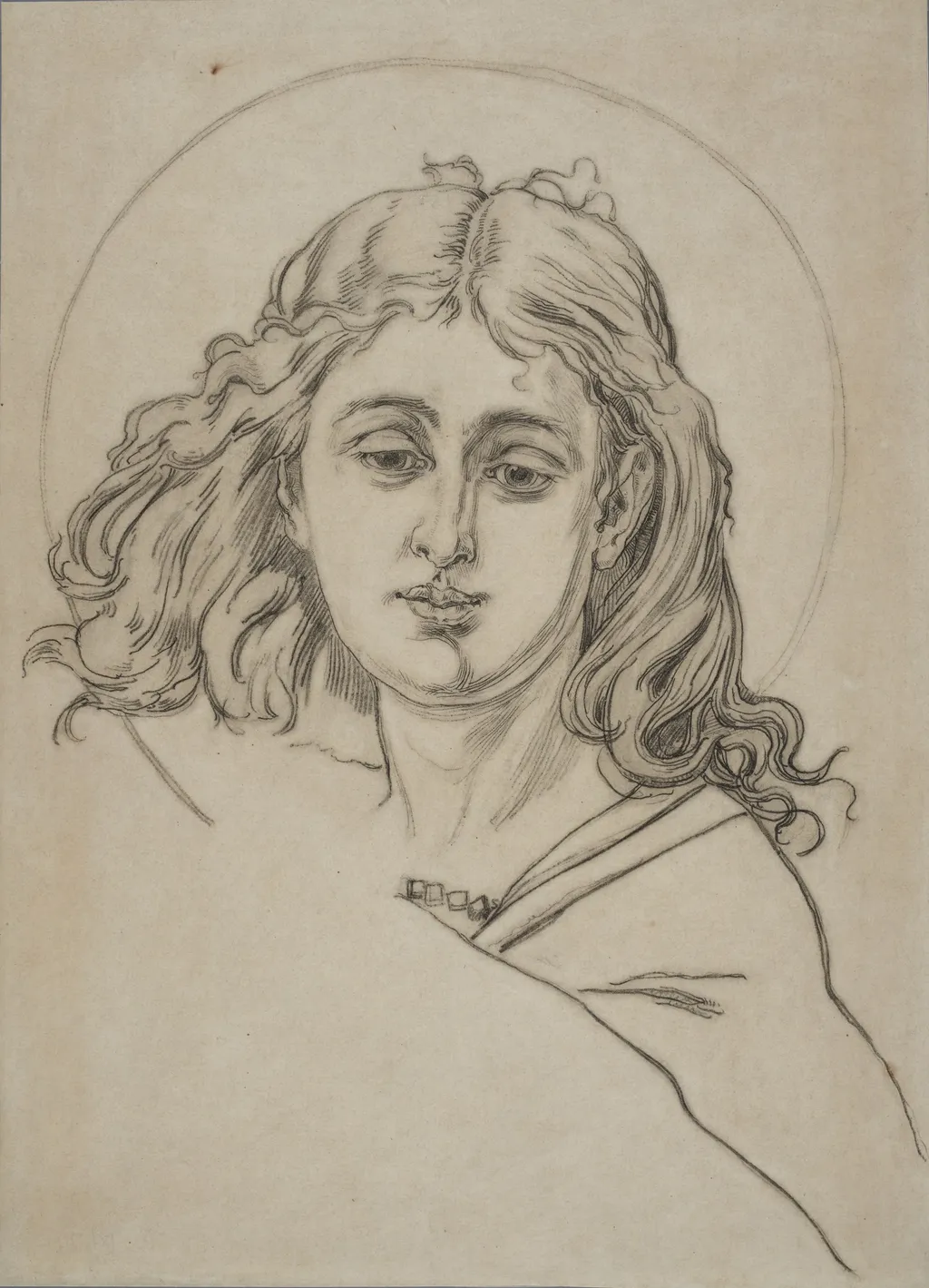
Carton for the polychrome from St Mary's Church - bust of an angel is an unspecified painting by Jan Matejko. It is held in the collection of the National Museum in Kraków.
About this work
Overview
Though best known for large-scale historical scenes, Matejko also engaged in ecclesiastical art, producing detailed studies for religious imagery.
Created in 1895, this preparatory drawing by Jan Matejko was intended as a model for a polychrome decoration in St. Mary’s Basilica in Kraków. Though best known for large-scale historical scenes, Matejko also engaged in ecclesiastical art, producing detailed studies for religious imagery. This work is one of several sketches developed to guide artisans in executing the church’s painted ornamentation, reflecting his commitment to integrating fine art with sacred architecture.
Subject & Meaning
The image depicts a serene angelic figure, rendered from the chest upward, with a calm, contemplative expression and a faint smile. The angel’s presence evokes divine grace rather than dramatic intervention, aligning with the devotional tone of the basilica’s interior. Its gentle features and unadorned demeanor suggest a quiet, enduring spiritual presence, consistent with late 19th-century ideals of sacred beauty that favored emotional subtlety over theatricality.
Technique & Style
Matejko employed precise draftsmanship and nuanced shading to model the angel’s face and flowing hair with lifelike texture. The rendering of individual strands and the soft folds of fabric demonstrates his mastery of tonal gradation and fine detail. Though executed in monochrome, the study anticipates the polychrome finish, with careful attention to how light would interact with painted surfaces, ensuring the final work would appear cohesive and naturalistic.
History & Provenance
The drawing was produced as part of a commission to restore and expand the interior decoration of St. Mary’s Basilica, a project Matejko undertook in his later years. It remained in his possession until his death in 1893, after which it passed to his family and later entered institutional collections. Its survival offers rare insight into the preparatory process behind religious artworks that were often lost to time or renovation.
Context
In the late 19th century, Poland’s cultural revival included efforts to restore historic religious sites as symbols of national identity. Matejko’s involvement in St. Mary’s decoration aligned with broader movements to reconnect Polish heritage with its medieval artistic traditions. His approach blended academic realism with reverence for Gothic aesthetics, positioning sacred art as both spiritual and cultural restoration.
Legacy
This study stands as a testament to Matejko’s versatility beyond historical epics, revealing his engagement with ecclesiastical art and collaborative craftsmanship. Though the final polychrome elements have faded or been altered, the drawing preserves the artist’s vision and technical rigor. It remains a key document for understanding how major Polish artists contributed to the visual culture of sacred spaces in the modern era.
Artist & collection
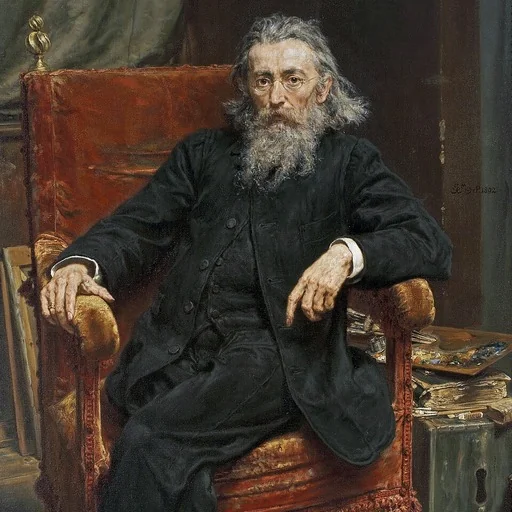
Artist
Jan Alojzy Matejko (Polish pronunciation: ; also known as Jan Mateyko; 24 June 1838 – 1 November 1893) was a Polish painter, a leading 19th-century exponent of history painting, known for depicting nodal events from Polish history.