Artwork
Wernyhora
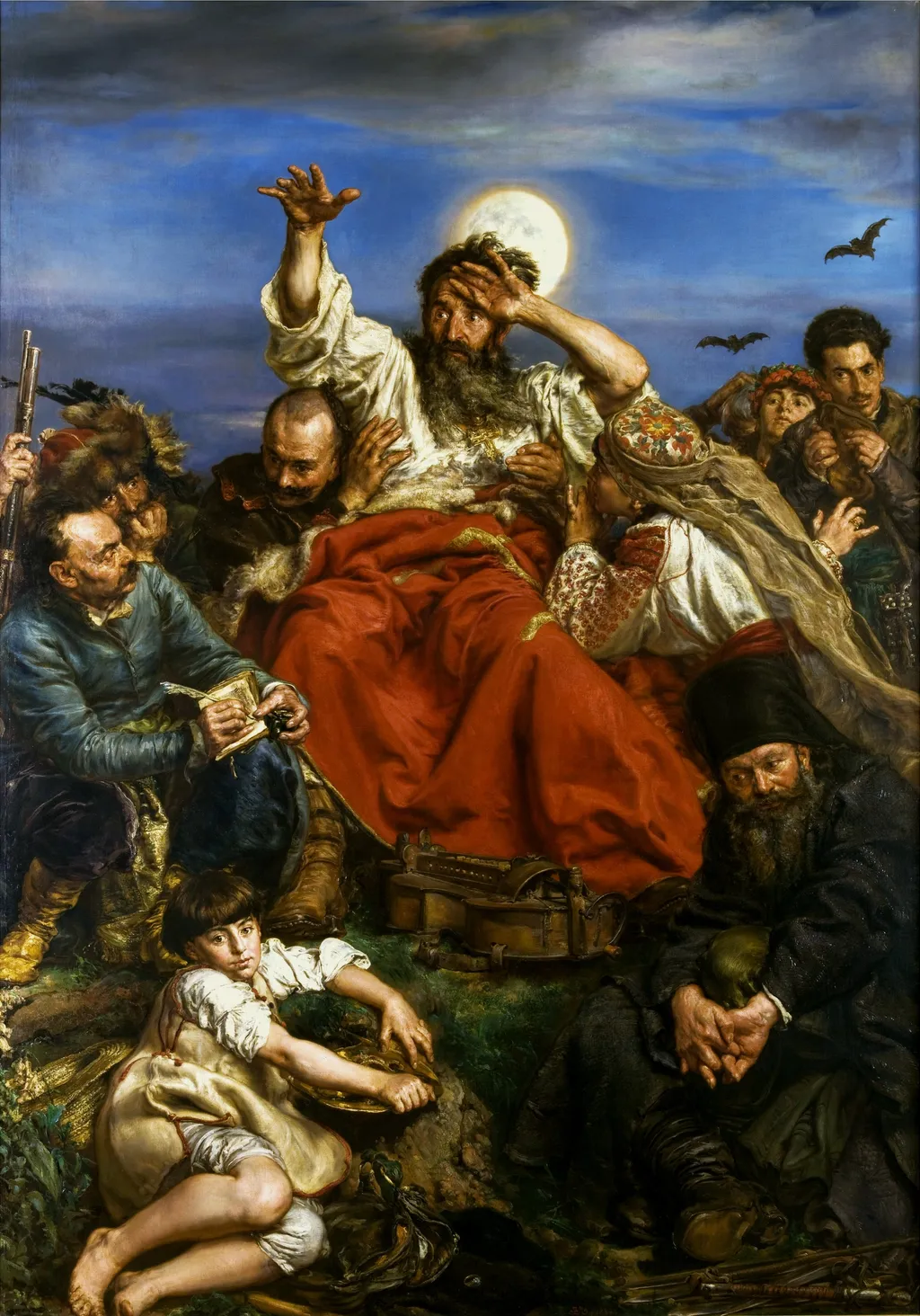
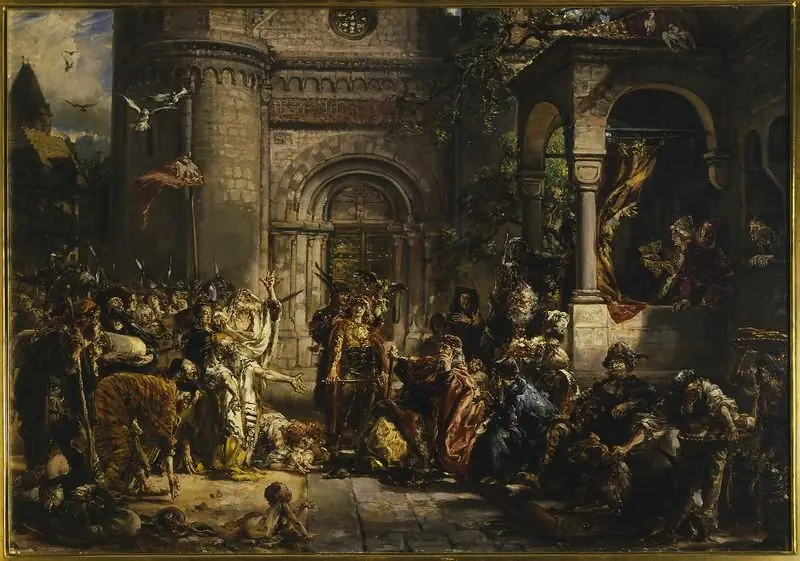
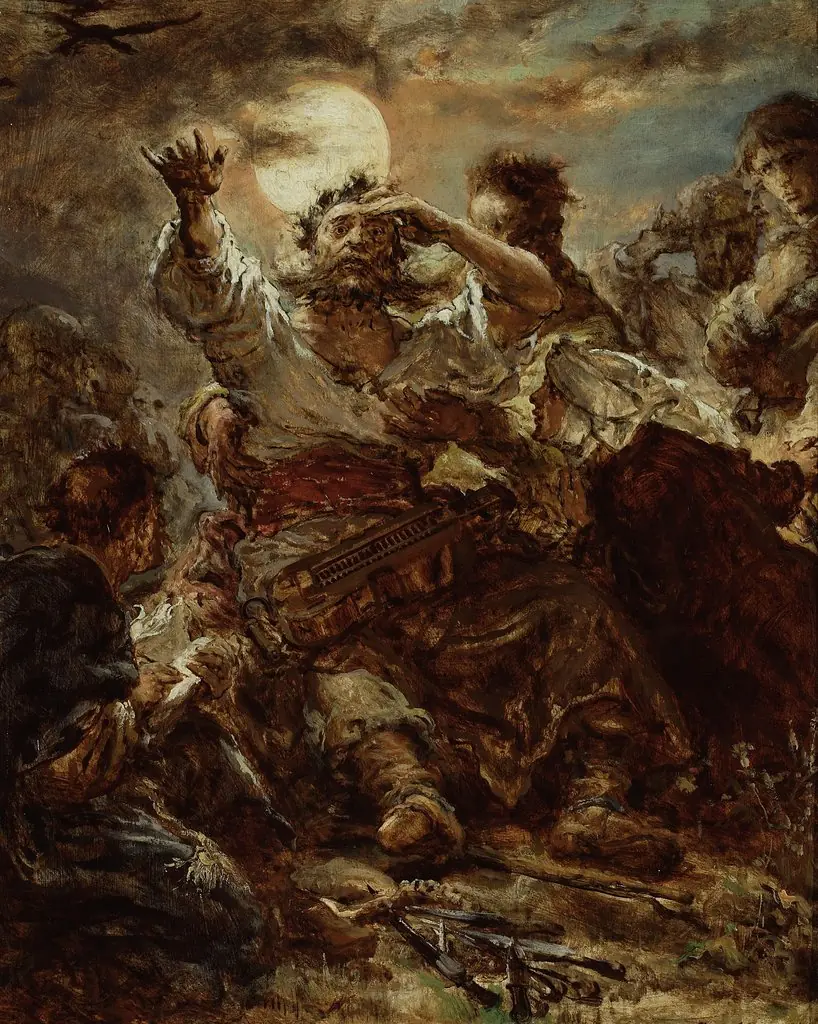
Wernyhora is an oil painting by Jan Matejko. It dates from 1892 and is held in the collection of the National Museum in Kraków.
About this work
Overview
Jan Matej Ko’s 1892 oil on canvas, titled Wernyhora, presents a nocturnal gathering centered on a charismatic figure in a vivid red robe. The composition is illuminated by a full moon, casting dramatic light across a varied assembly of individuals, including a child seated in the foreground, all rendered with meticulous detail.
Subject & Meaning
The central character represents the legendary Cossack prophet Wernyhora, a symbol of prophetic vision in Polish‑Ukrainian folklore. He is shown with his hands pressed to his forehead, suggesting contemplation or prophecy, while the surrounding figures—nobles, Cossacks, and common folk—reflect the diverse social strata of the era.
Technique & Style
Matejko employs a rich palette and fine textural rendering, contrasting the bright red garment with the subdued tones of the surrounding crowd. The chiaroscuro effect created by the moonlight enhances depth and drama, a hallmark of Matejko’s historical canvases.
History & Provenance
Completed in the late 19th century, Wernyhora entered the collection of the National Museum in Kraków, where it remains on display. The work forms part of Matejko’s extensive series of large‑scale historical paintings that sought to dramatize pivotal moments from Poland’s past.
Context
Created during a period of heightened national consciousness, the painting reflects Matejko’s interest in intertwining Polish and Ukrainian historical narratives. By invoking the mythic figure of Wernyhora, the work engages with contemporary debates about identity and destiny within the region.
Own this work as a print
Artist & collection
Artist
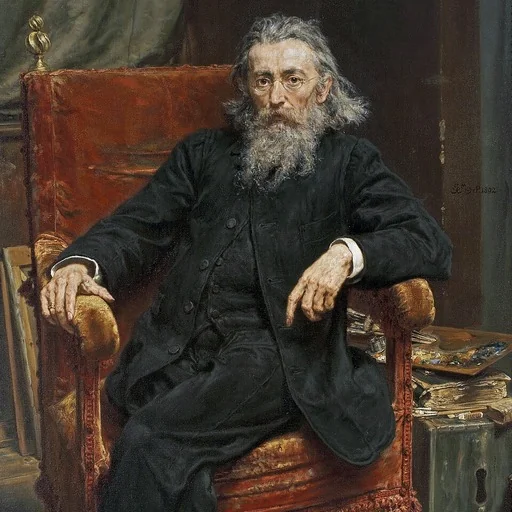
Jan Alojzy Matejko (Polish pronunciation: ; also known as Jan Mateyko; 24 June 1838 – 1 November 1893) was a Polish painter, a leading 19th-century exponent of history painting, known for depicting nodal events from Polish history.