Artwork
Untitled
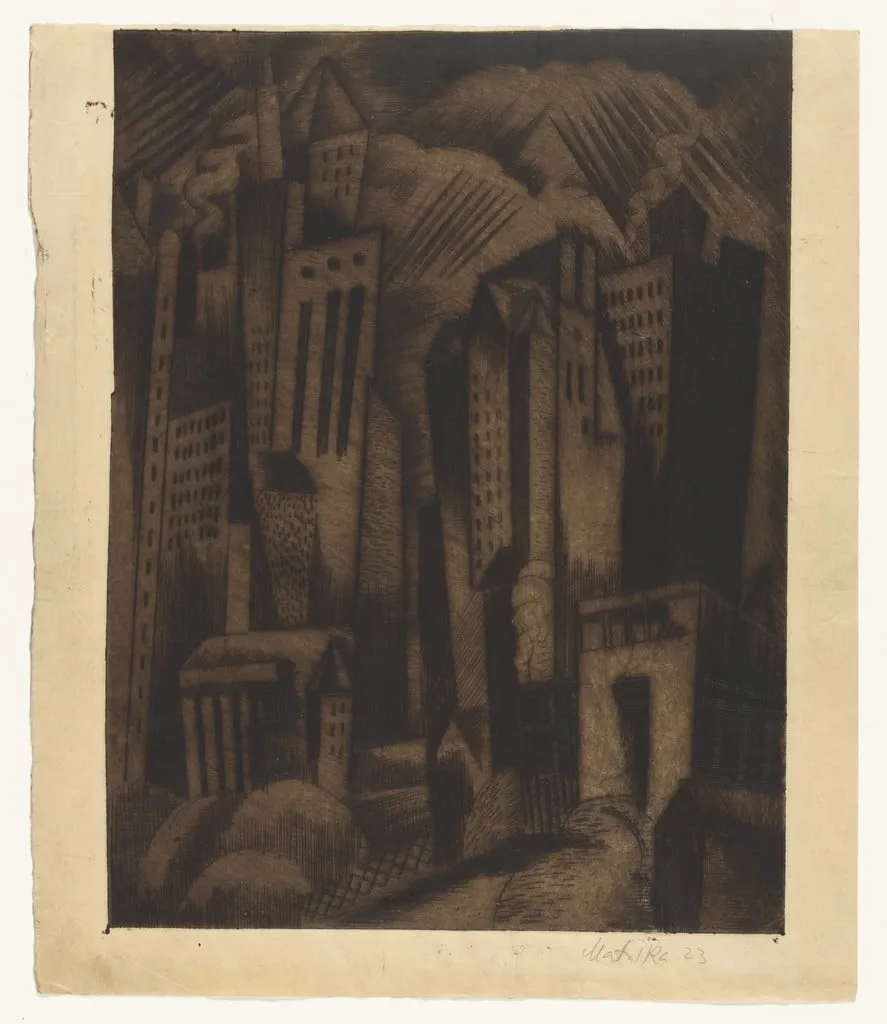
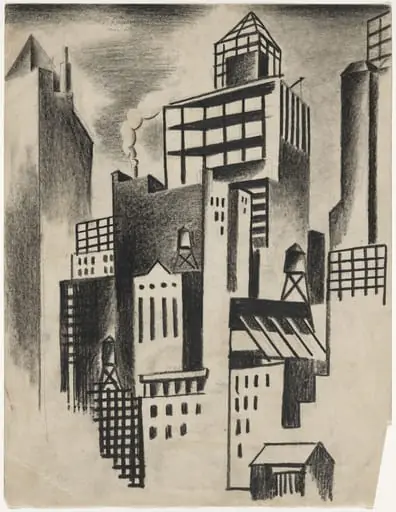
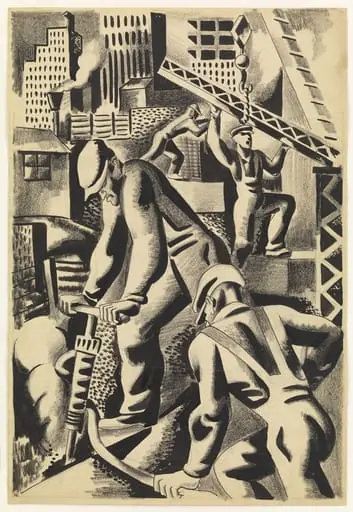
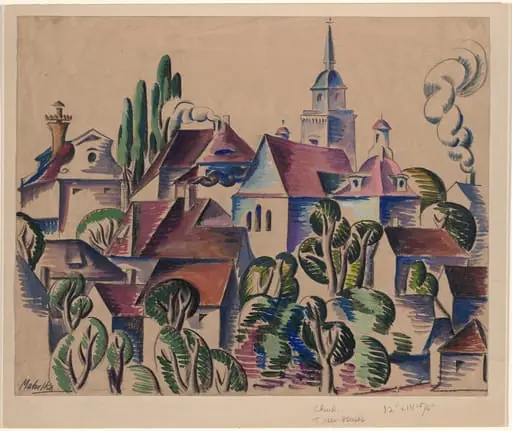
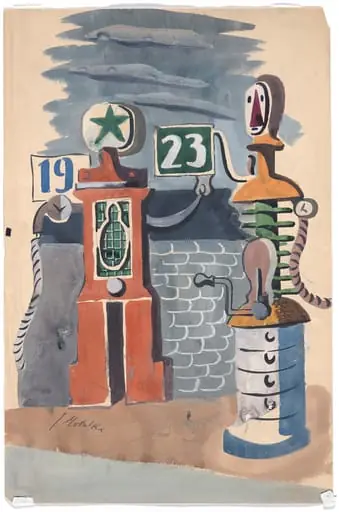
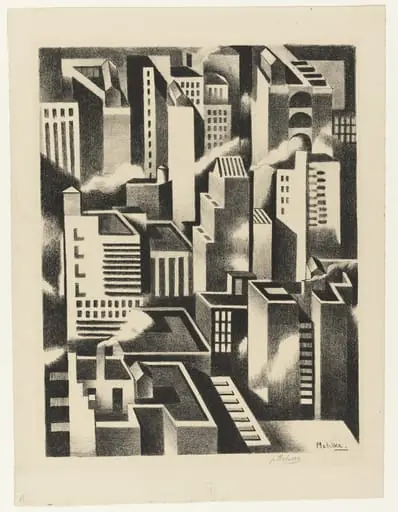
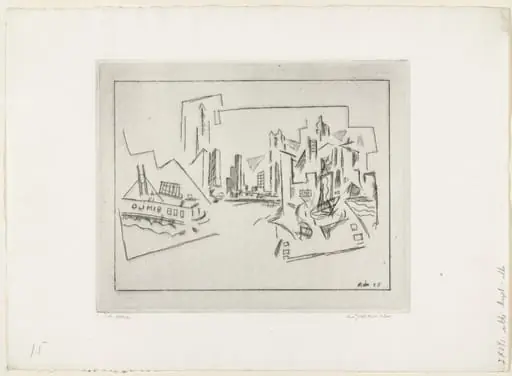
Untitled is an ink print by Jan Matulka. It dates from 1923 and is held in the collection of the Museum of Modern Art.
About this work
Overview
The work is part of The Museum of Modern Art’s collection and exemplifies early 20th-century experimentation with urban imagery.
Jan Matulka created this etching in 1923, using traditional intaglio techniques to produce a monochromatic print. The work is part of The Museum of Modern Art’s collection and exemplifies early 20th-century experimentation with urban imagery. Unlike polished architectural renderings, it embraces irregularity and tactile surface variation, reflecting a shift toward expressive abstraction in printmaking.
Subject & Meaning
The image depicts a dense, fragmented cityscape devoid of human figures or clear landmarks. Its overwhelming verticality and overlapping forms suggest the disorienting scale of modern urban life. The absence of detail invites interpretation—not as a specific place, but as an emotional response to industrialization, where structure feels unstable and identity is obscured by density.
Technique & Style
Matulka employed etching to incise lines directly into a metal plate, allowing for deep, textured marks that retain the energy of hand-drawn gestures. The rough, layered contours and uneven ink distribution create a sense of urgency and spontaneity. Dark areas are built through multiple biting stages, while lighter zones emerge through sparse, smudged lines, emphasizing process over precision.
History & Provenance
Created during Matulka’s time in New York, the work reflects his engagement with avant-garde circles and the city’s rapidly changing landscape. It entered MoMA’s collection in the 1930s, among early acquisitions focused on modern graphic arts. Its preservation underscores its significance as a document of interwar American printmaking, though it remained relatively obscure outside specialist circles.
Context
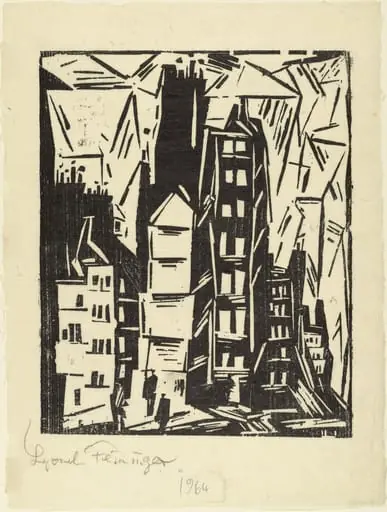
In the early 1920s, artists across Europe and America turned to abstraction and expressive mark-making to convey the psychological weight of modernity. Matulka’s etching aligns with contemporaneous works by George Bellows and Lyonel Feininger, who similarly used fractured forms to evoke urban anxiety. Unlike precisionist depictions, this piece resists clarity, favoring emotional resonance over representation.
Legacy
Though not widely exhibited, the etching contributed to a broader redefinition of printmaking as a medium for personal expression rather than reproduction. Its raw aesthetic influenced later generations of artists exploring the limits of line and tone. Today, it stands as a quiet but persistent example of how etching could capture the instability of the modern world without idealization.
Artist & collection

Artist
Jan Matulka was a Czech-American modern artist originally from Bohemia. Matulka's style ranged from Abstract expressionism to landscapes, sometimes in the same day. He has directly influenced artists like Dorothy…