Artwork
The Tiburtine Sibyl
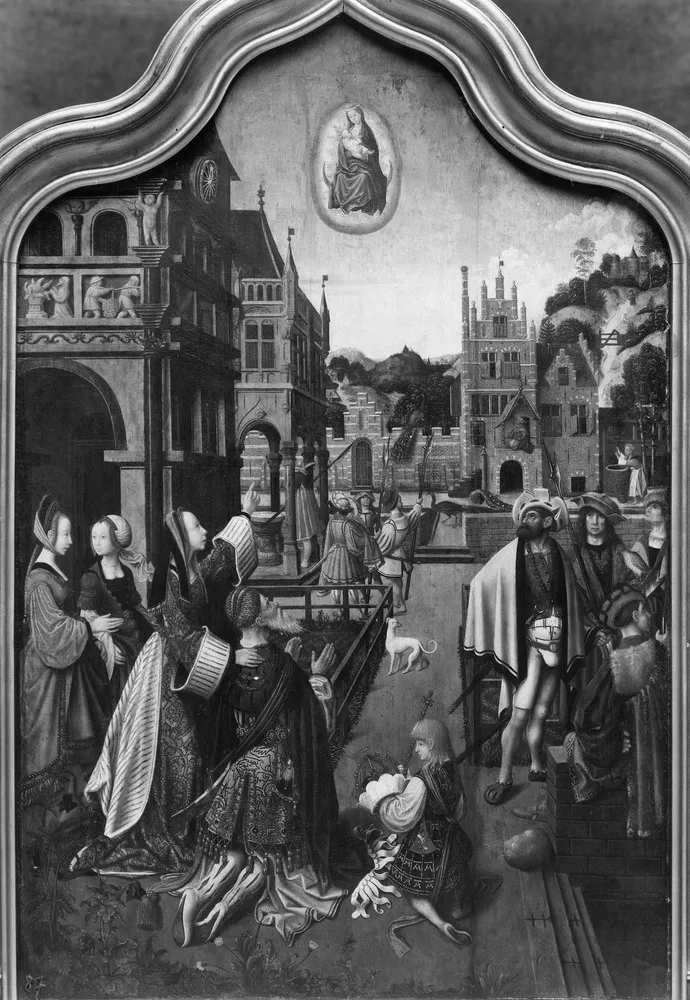
The Tiburtine Sibyl is an oil painting by the Northern Renaissance artist Jan Mostaert. It dates from 1525 and is held in the collection of the Royal Museum of Fine Arts Antwerp.
About this work
Overview
Mostaert, known for religious and portrait subjects, applied the meticulous techniques of Northern Renaissance painting.
Painted in 1525 by Jan Mostaert, a Dutch artist active in the early 16th century, this oil-on-panel work portrays the Tiburtine Sibyl, a prophetic figure from classical antiquity. Mostaert, known for religious and portrait subjects, applied the meticulous techniques of Northern Renaissance painting. The piece combines portraiture with landscape and architectural detail, reflecting the era’s interest in blending sacred and classical themes within a naturalistic setting.
Subject & Meaning
The Tiburtine Sibyl was believed in medieval and Renaissance Europe to have foretold the coming of Christ. Here, she is depicted as a regal, seated figure, crowned and holding an open book, suggesting her role as a divine messenger. Her presence bridges pagan prophecy and Christian revelation, a common theme in Northern art of the period. The setting reinforces her authority, placing her within a world of both natural and human-made order.
Technique & Style
Mostaert employed oil glazing and subtle chiaroscuro to model form and create atmospheric depth. The surface is rendered with fine brushwork, particularly in the intricate cityscape and the folds of the sibyl’s robe. The background’s division into landscape and urban elements showcases the artist’s attention to spatial organization. Textures of stone, foliage, and fabric are carefully differentiated, reflecting the Northern tradition of detailed observation.
History & Provenance
The painting has remained in the collection of the Royal Museum of Fine Arts Antwerp since at least the 19th century. Its early ownership is undocumented, but its survival in a major Flemish institution suggests it was valued locally during the early modern period. The panel’s condition and style align with works produced in the Netherlands during the 1520s, supporting its attribution to Mostaert’s mature phase.
Context
In early 16th-century Northern Europe, interest in classical mythology persisted alongside Christian devotion. Sibyls frequently appeared in altarpieces and devotional works as precursors to the Gospel. Mostaert’s depiction reflects this synthesis, where ancient prophecy serves Christian narrative. The detailed cityscape may reference contemporary Flemish towns, grounding the mythic in the familiar.
Legacy
While not widely reproduced, the painting exemplifies how Northern Renaissance artists integrated classical themes into religious contexts with technical precision. It remains a key example of Mostaert’s ability to merge portraiture with landscape, influencing later Dutch and Flemish painters interested in symbolic space and historical allegory. Its preservation in Antwerp underscores its regional significance.
Artist & collection
Artist
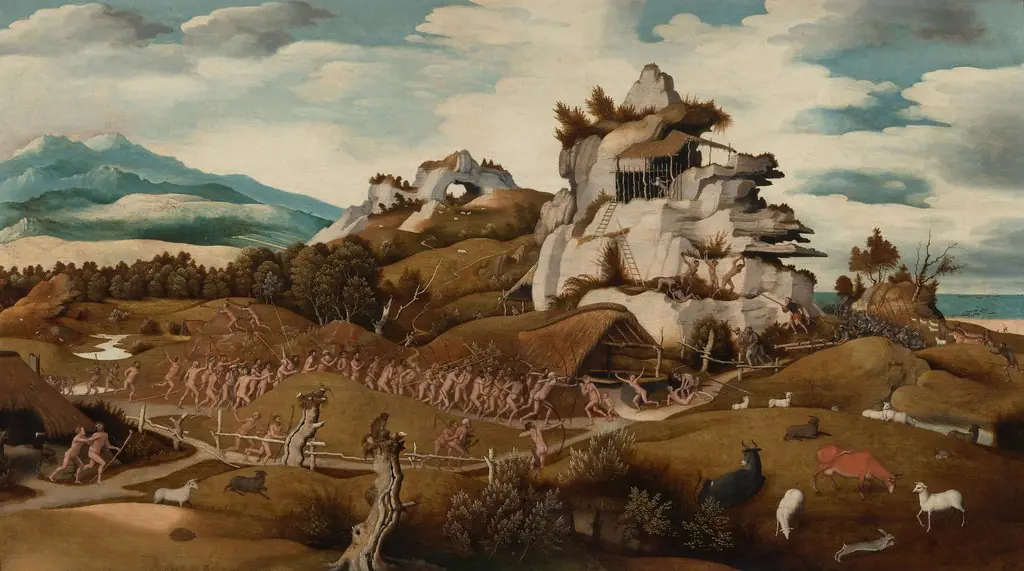
Jan Mostaert (c. 1475 – 1552/1553) was a Dutch Renaissance painter who is known mainly for his religious subjects and portraits. One of his most famous creations was the Landscape with an Episode from the Conquest of…

 Christ Shown to the People
 Landscape with a Scene of the Conquest of America
 Portrait of a man
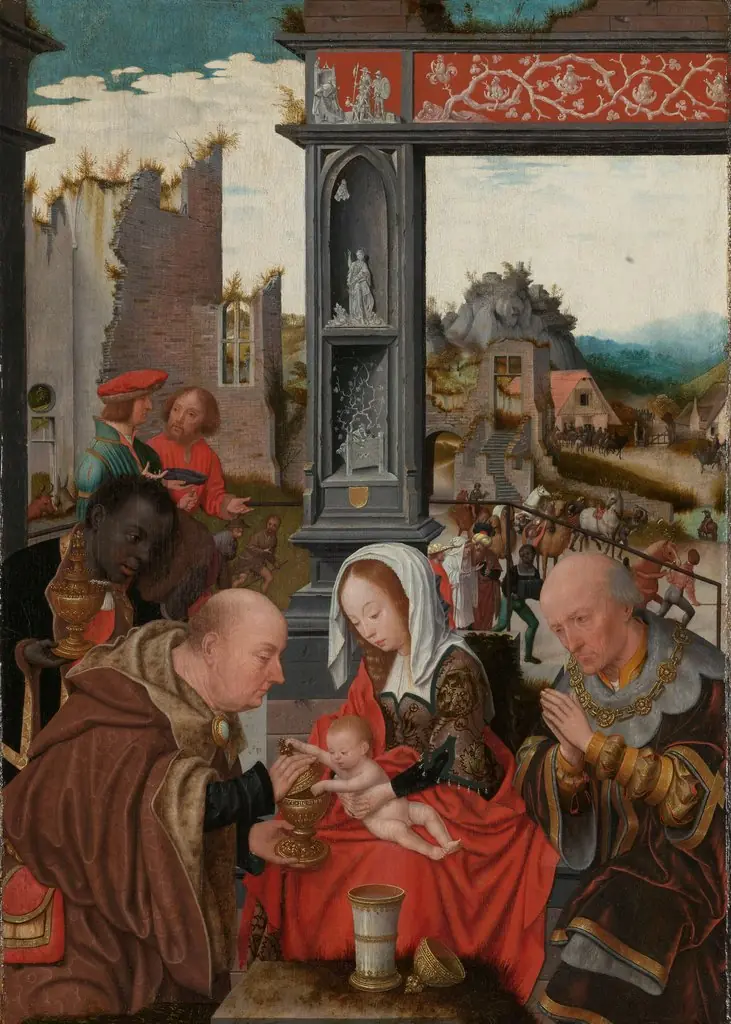 The Adoration of the Magi
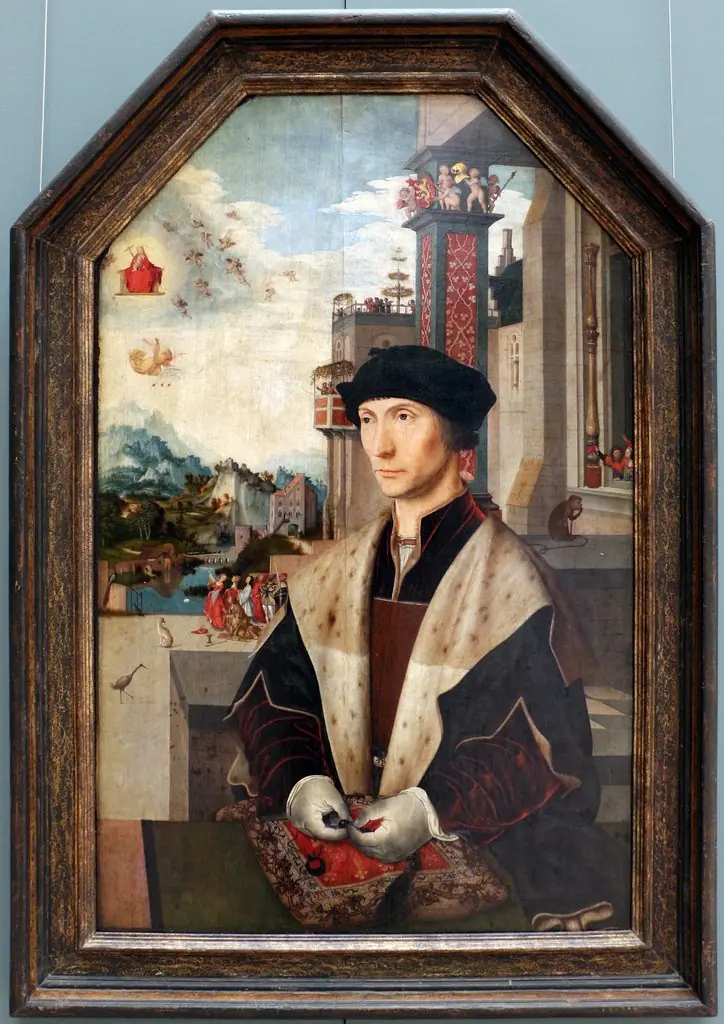 Portrait of the knight Abel van Coulster (1477-1548), representative to the Hof van Holland in 1512
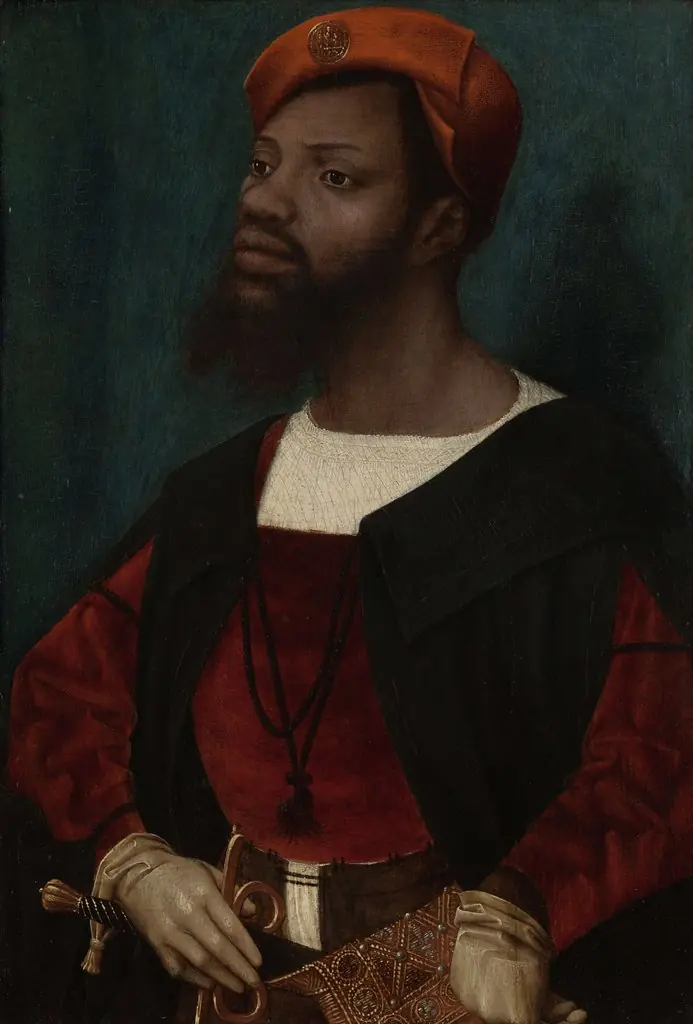 Portrait of an African Man (Christophle le More?)
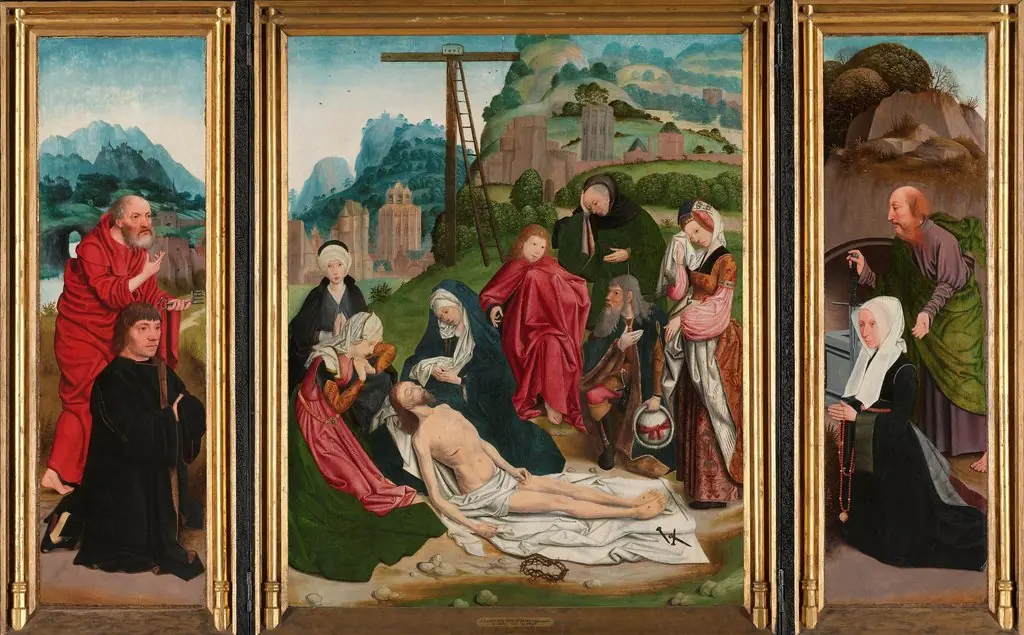 Triptych with the Lamentation (centre panel), the donor with St Peter (inner left wing), the donor’s wife with St Paul (inner right wing) and the donors’ coats of arms (outer wings)
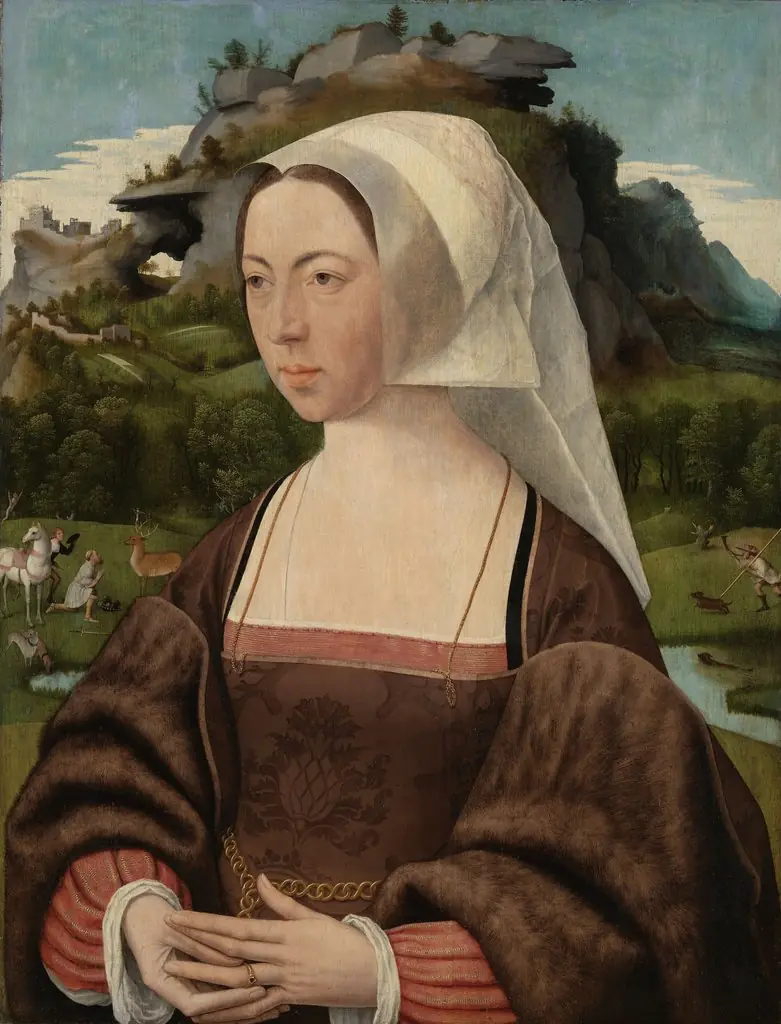 A Woman
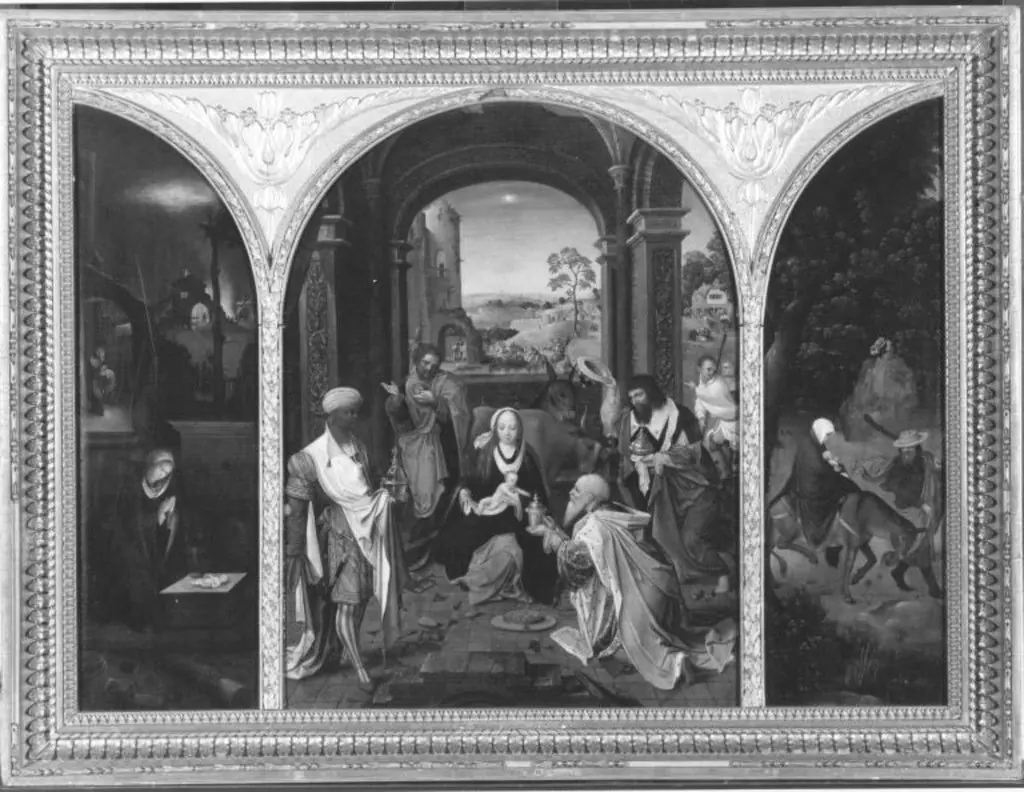 Triptych of the Adoration of the Magi with Nativity and Flight into Egypt on outer wings
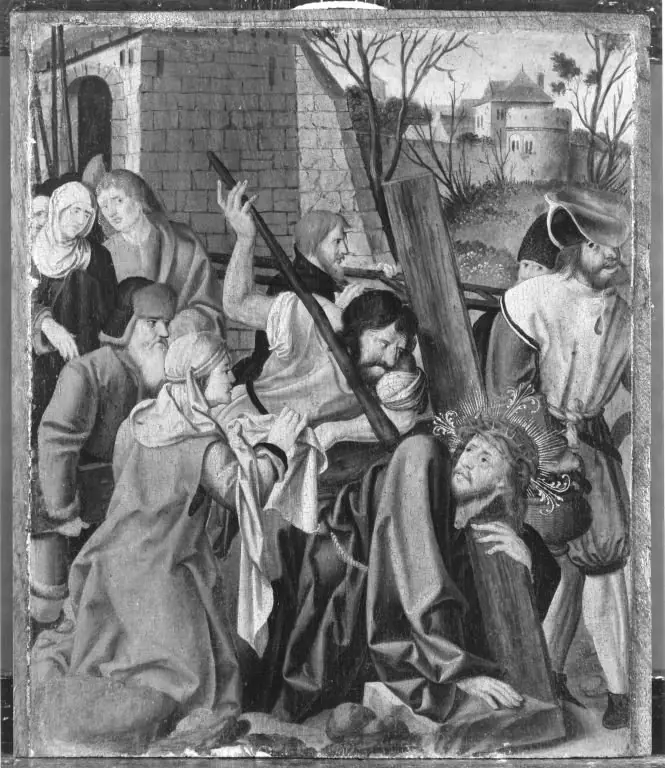 The carrying of the cross
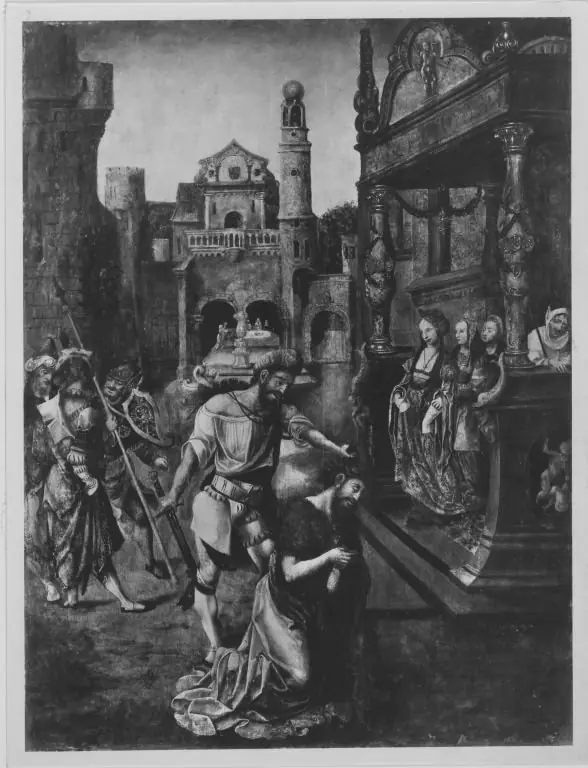 The beheading of John the Baptist
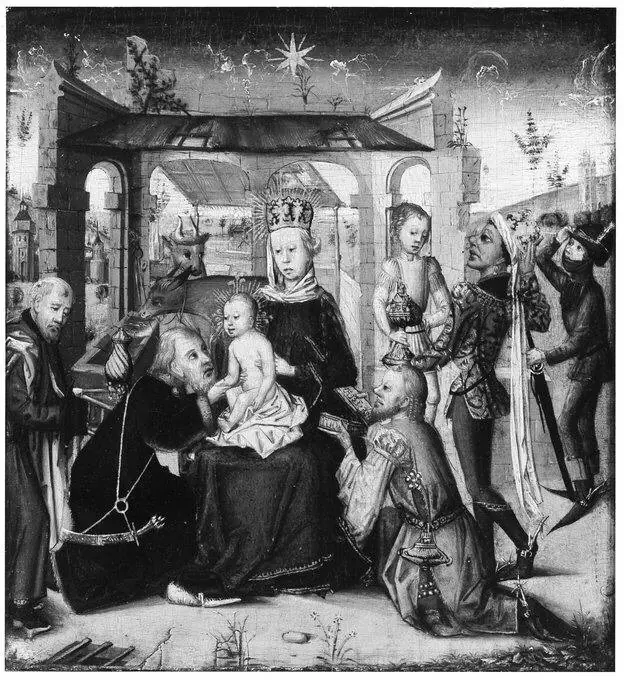 Adoration of the Magi
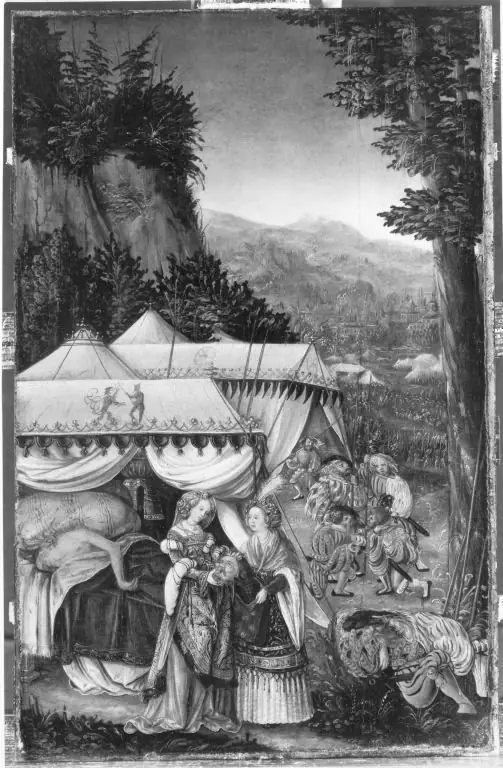 Judith and Holofernes
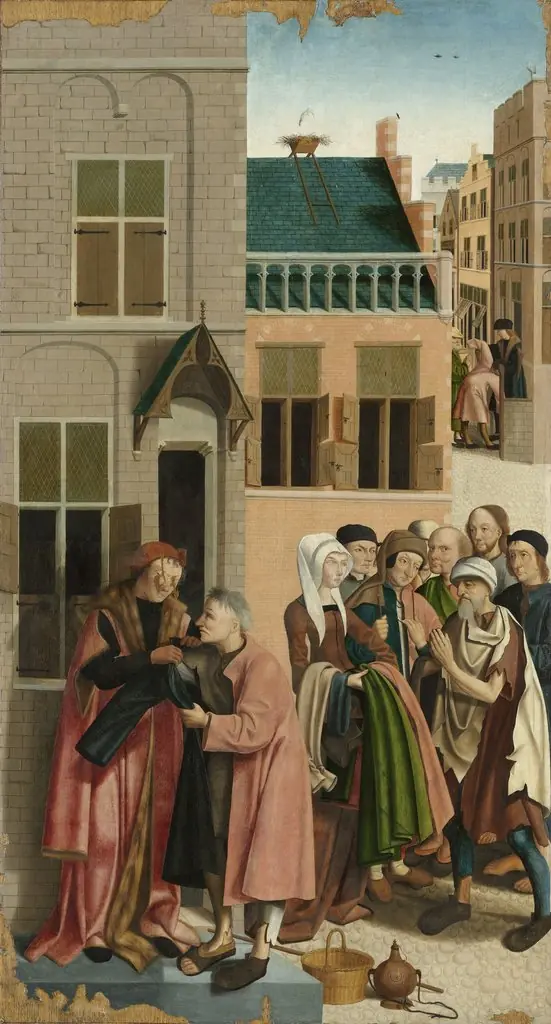 The Seven Works of Mercy
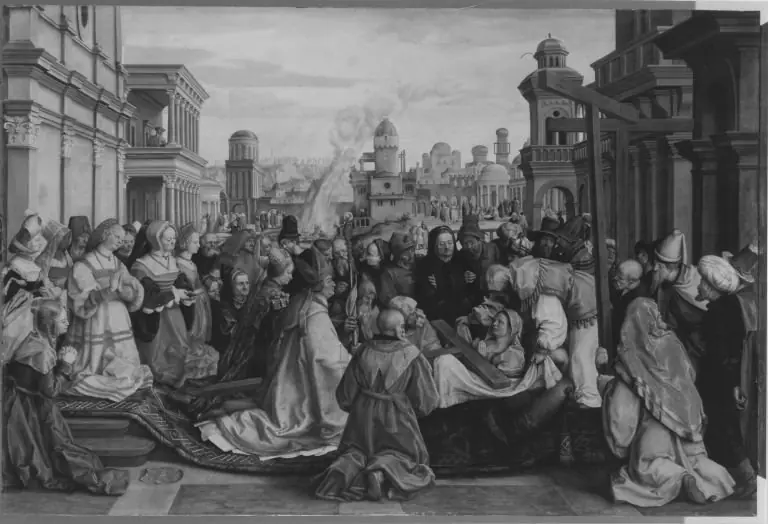 Historienzyklus: Kreuzauffindung der hl. Helena
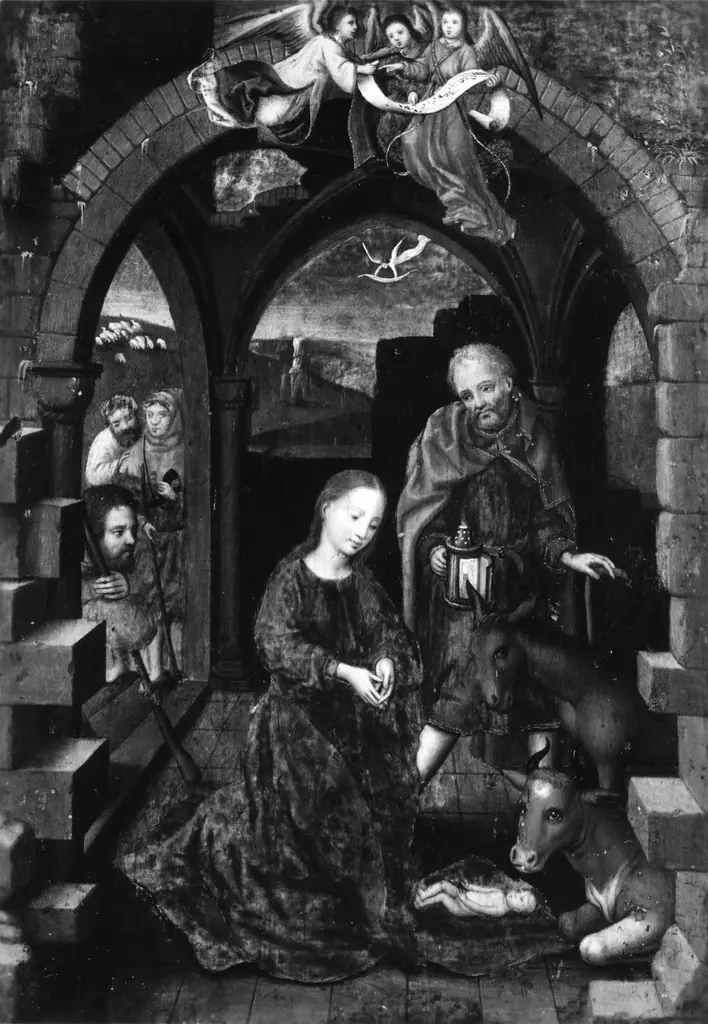 The Nativity with the Adoration of the Shepherds
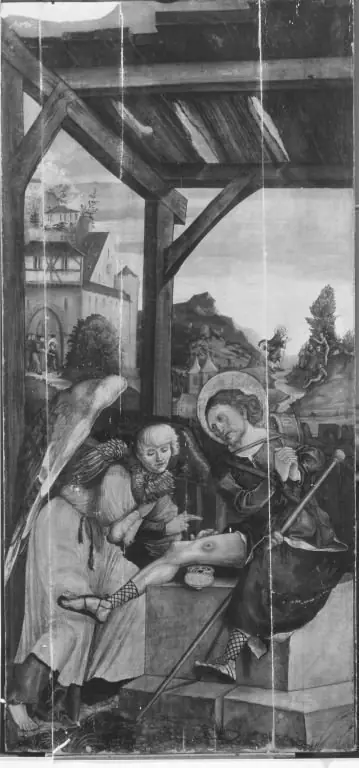 Scene from the Legend of St. Roch
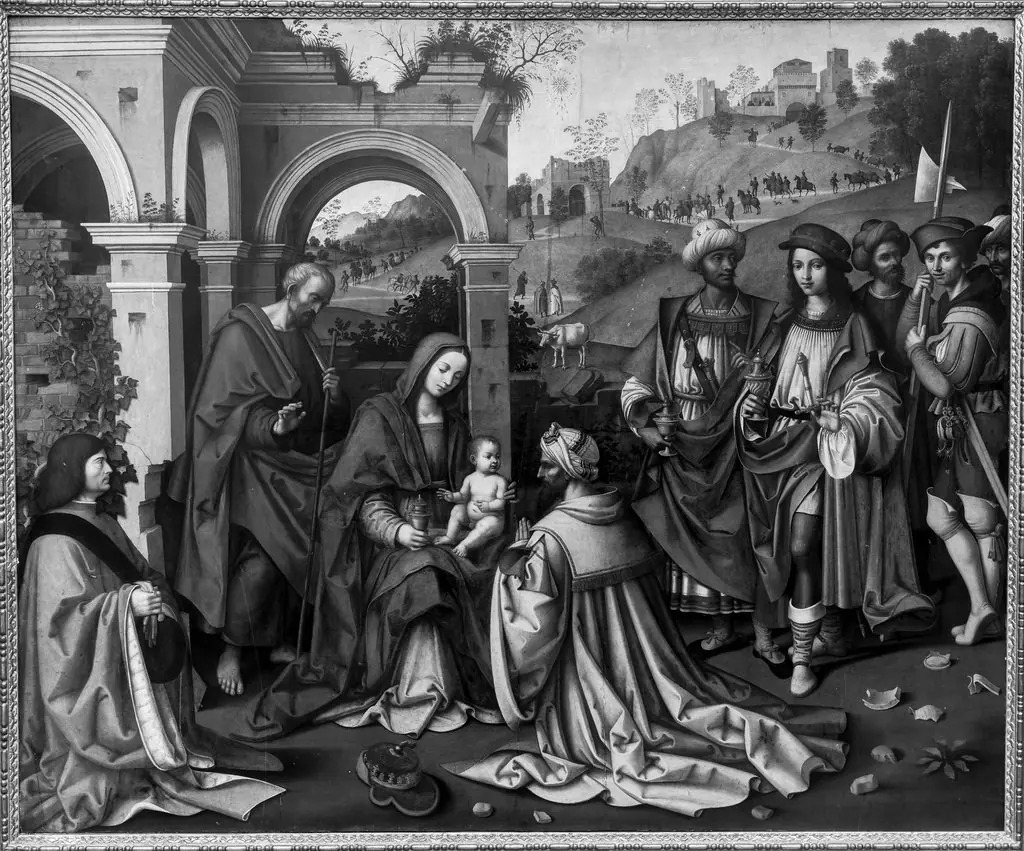 Adoration of the Kings
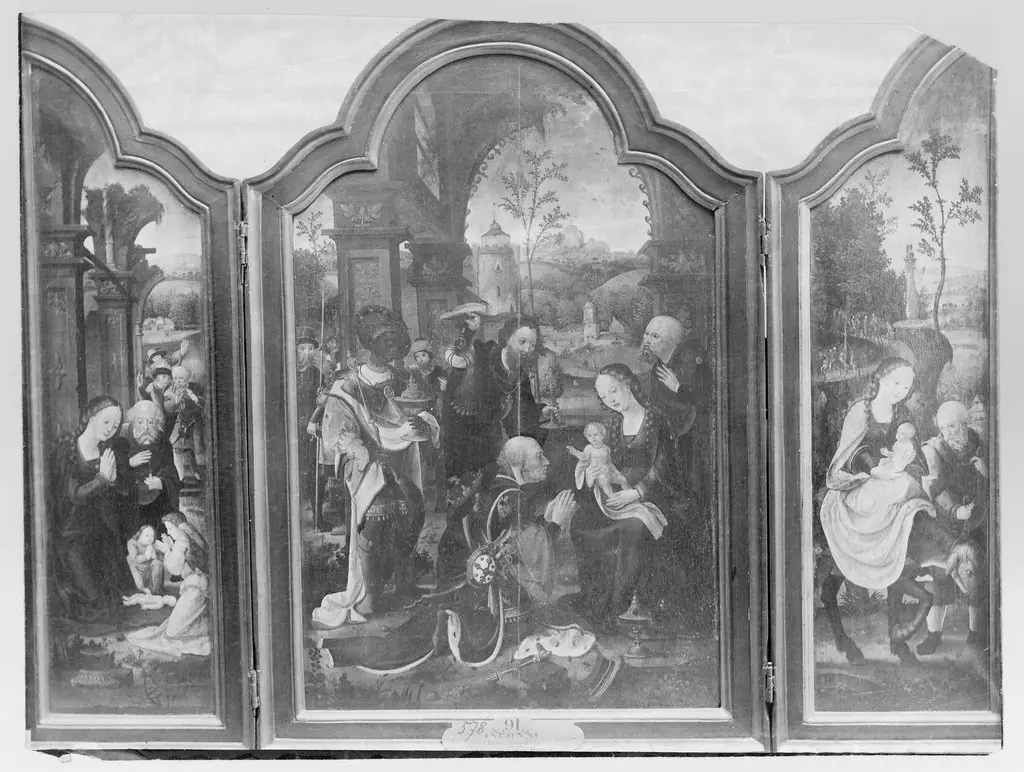 Nativity (left panel), Adoration of the Magi (central panel), Rest on the Flight into Egypt (right panel)
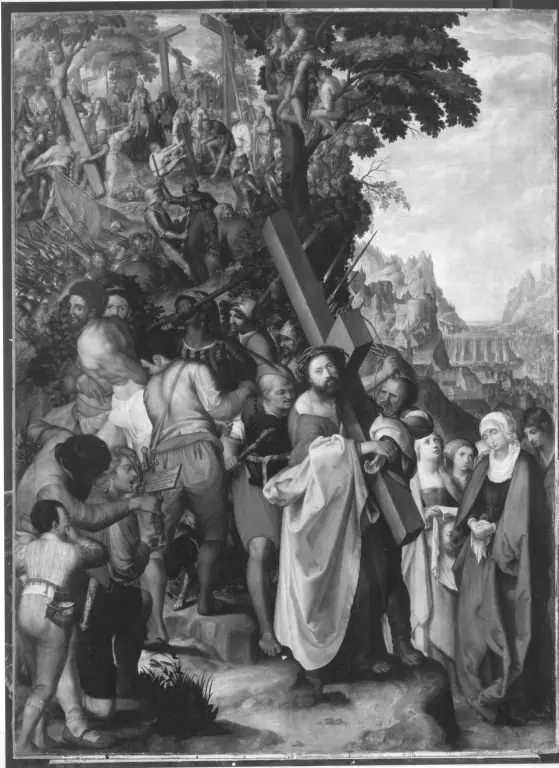 Kreuztragung Christi