Artwork
A Woman Mending a Stocking
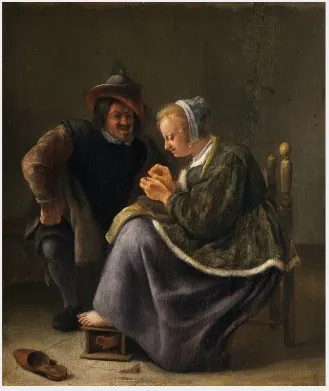
A Woman Mending a Stocking is an unspecified painting by the Dutch Golden Age artist Jan Steen. It dates from 1662 and is held in the collection of the National Gallery of Ireland.
About this work
Overview
Painted around 1662 by Jan Steen, this work depicts a quiet domestic moment: a woman seated in a wooden chair, repairing a stocking.
Painted around 1662 by Jan Steen, this work depicts a quiet domestic moment: a woman seated in a wooden chair, repairing a stocking. Her companion stands behind her, observing with a gentle expression. The scene unfolds against a plain wall, with minimal furnishings, focusing attention on the figures and their interaction. Warm tones and soft light enhance the intimacy of the moment, characteristic of Steen’s genre scenes from the Dutch Golden Age.
Subject & Meaning
The painting captures an ordinary act of domestic labor—mending clothing—elevated through subtle human connection. The man’s presence, smiling down at the woman, suggests companionship rather than oversight. Rather than moralizing, Steen presents a tender, unforced moment of daily life, reflecting the value placed on quiet domestic harmony in 17th-century Dutch society, where such scenes often carried understated emotional weight.
Technique & Style
Steen employs a restrained palette of earth tones and muted reds, with careful attention to texture: the weave of the stocking, the folds of fabric, the grain of wood. Light falls naturally from the left, modeling forms softly without dramatic contrast. Brushwork is precise yet unobtrusive, allowing the figures’ gestures and expressions to convey narrative. The composition is tightly framed, eliminating distraction and reinforcing the intimacy of the moment.
History & Provenance
The painting entered the collection of the National Gallery of Ireland in the 19th century, having passed through private hands in the Netherlands and Britain. Its attribution to Jan Steen has remained consistent since its early documentation. While its exact early ownership is unclear, its survival in good condition reflects its enduring appeal among collectors of Dutch genre painting during the 18th and 19th centuries.
Context
In mid-17th-century Holland, domestic interiors were a favored subject among genre painters. Steen, like his contemporaries, depicted everyday life with nuance, avoiding overt moral lessons. This work aligns with a broader cultural interest in the private sphere—women’s labor, marital companionship, and the quiet dignity of routine. Such scenes offered viewers a mirror to their own lives, grounded in realism rather than idealization.
Legacy
Though less celebrated than Steen’s more chaotic or humorous scenes, this painting exemplifies his ability to find quiet resonance in ordinary moments. It influenced later genre painters who sought emotional authenticity over theatricality. Today, it stands as a quiet testament to the dignity of domestic life, valued for its restraint and humanity rather than its spectacle.
Artist & collection
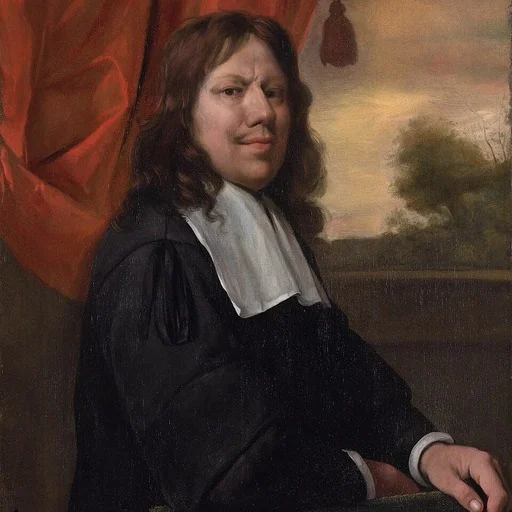
Artist
Jan Havickszoon Steen was a Dutch Golden Age painter, one of the leading genre painters of the 17th century.

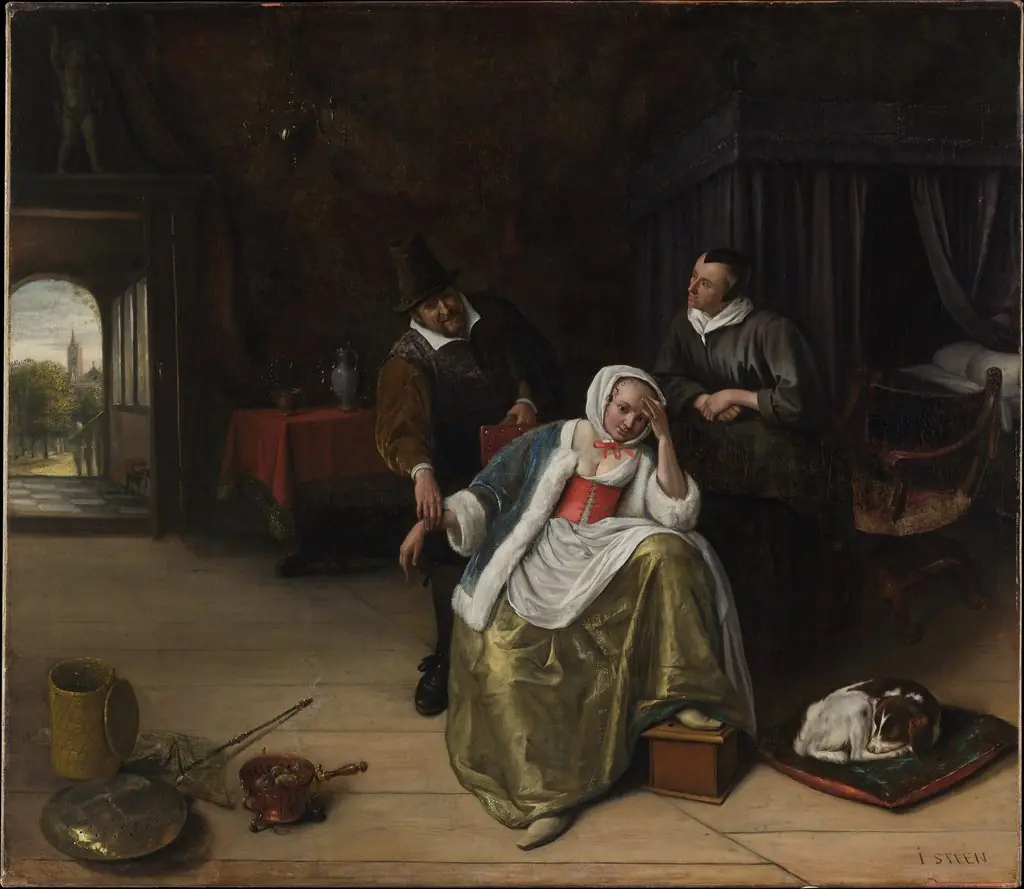 Paintings of physicians by Jan Steen
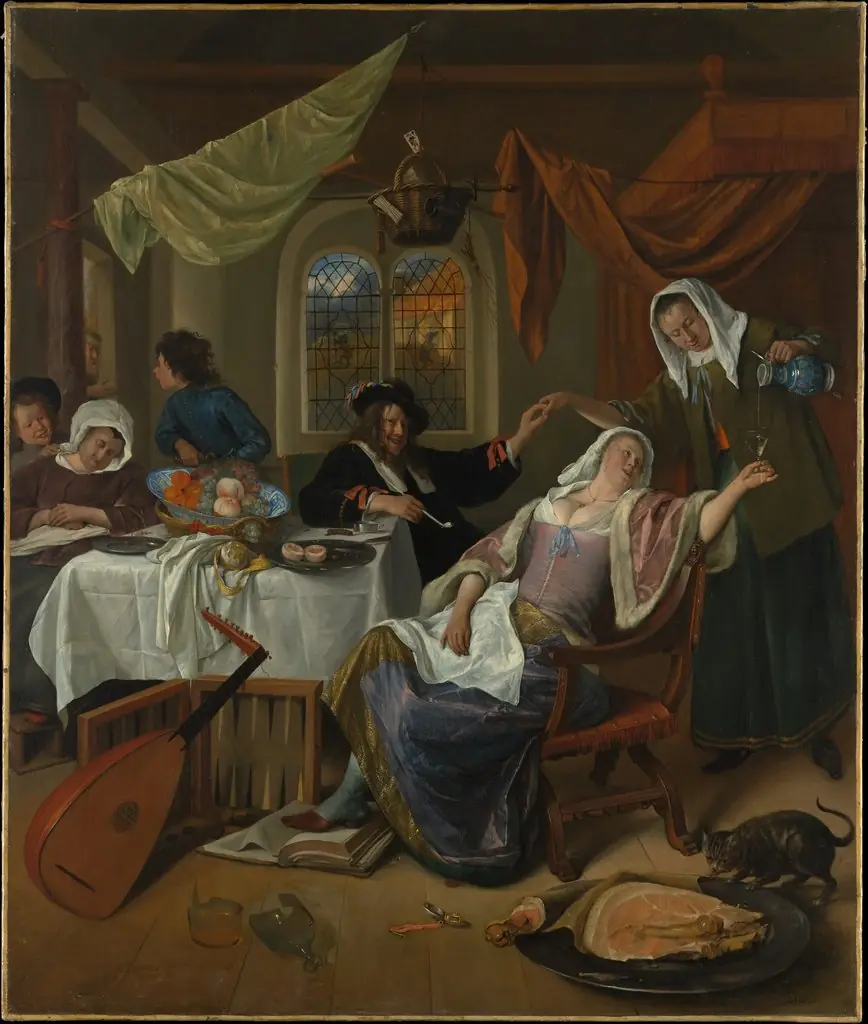 The Dissolute Household
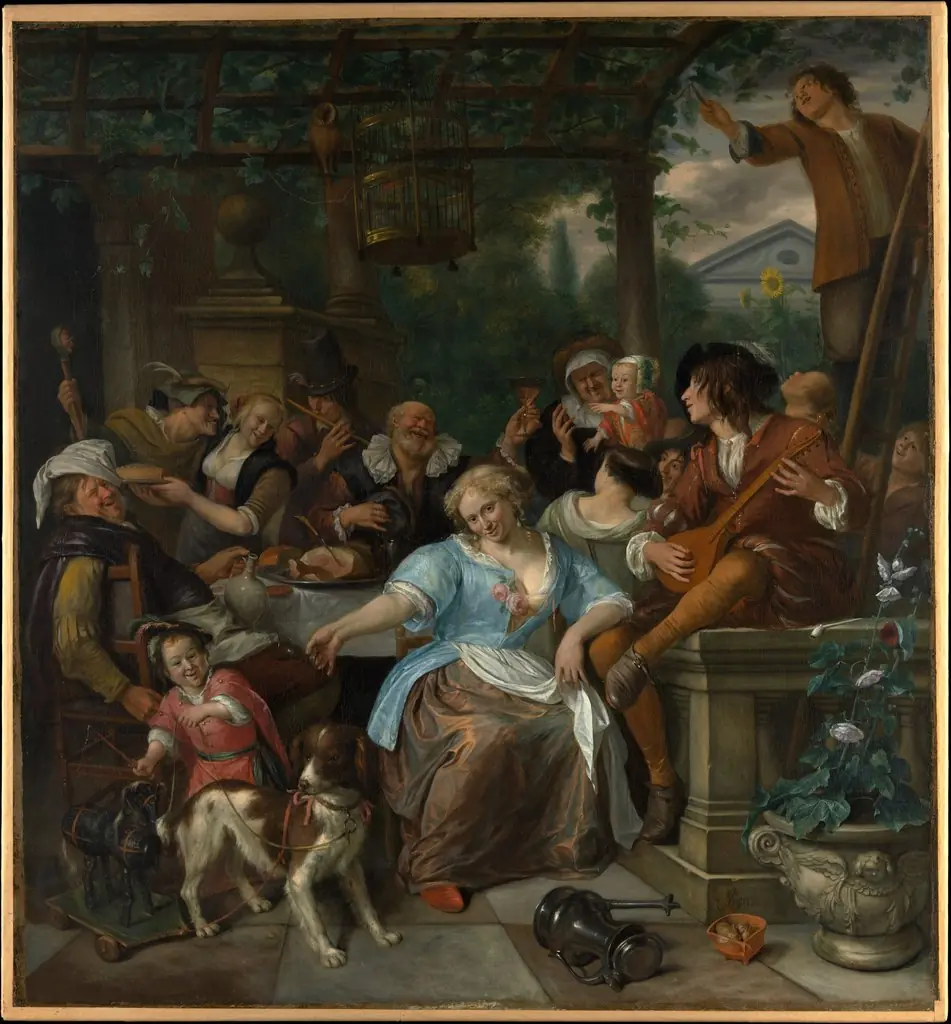 Merry Company on a Terrace
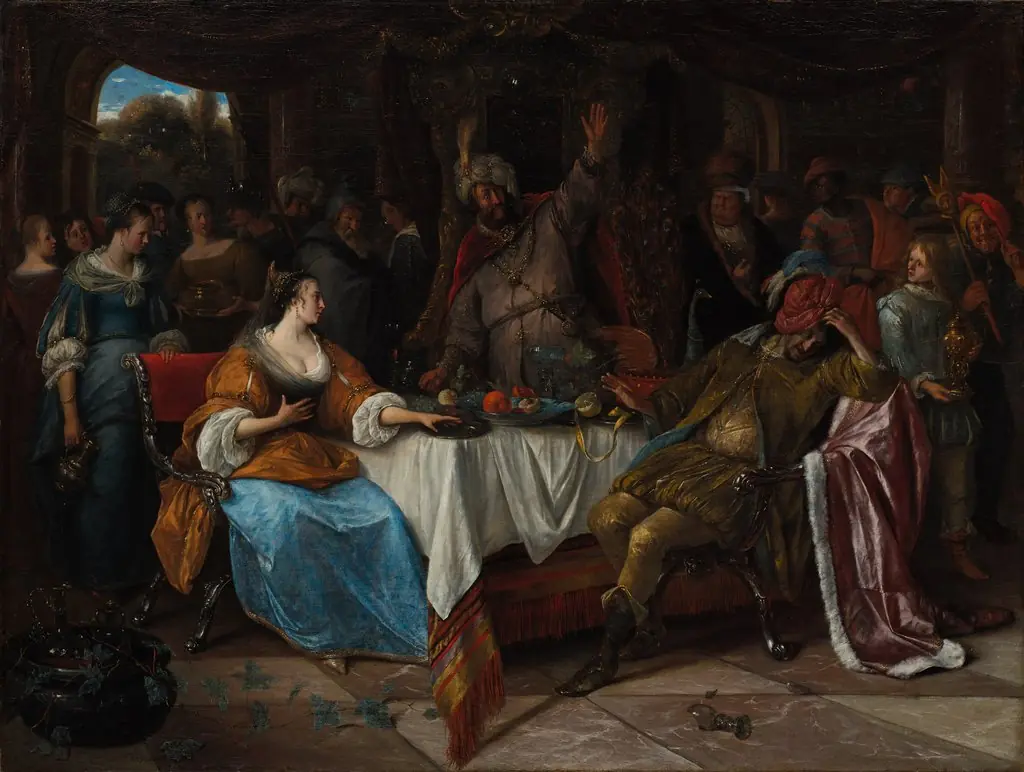 Esther, Ahasuerus, and Haman
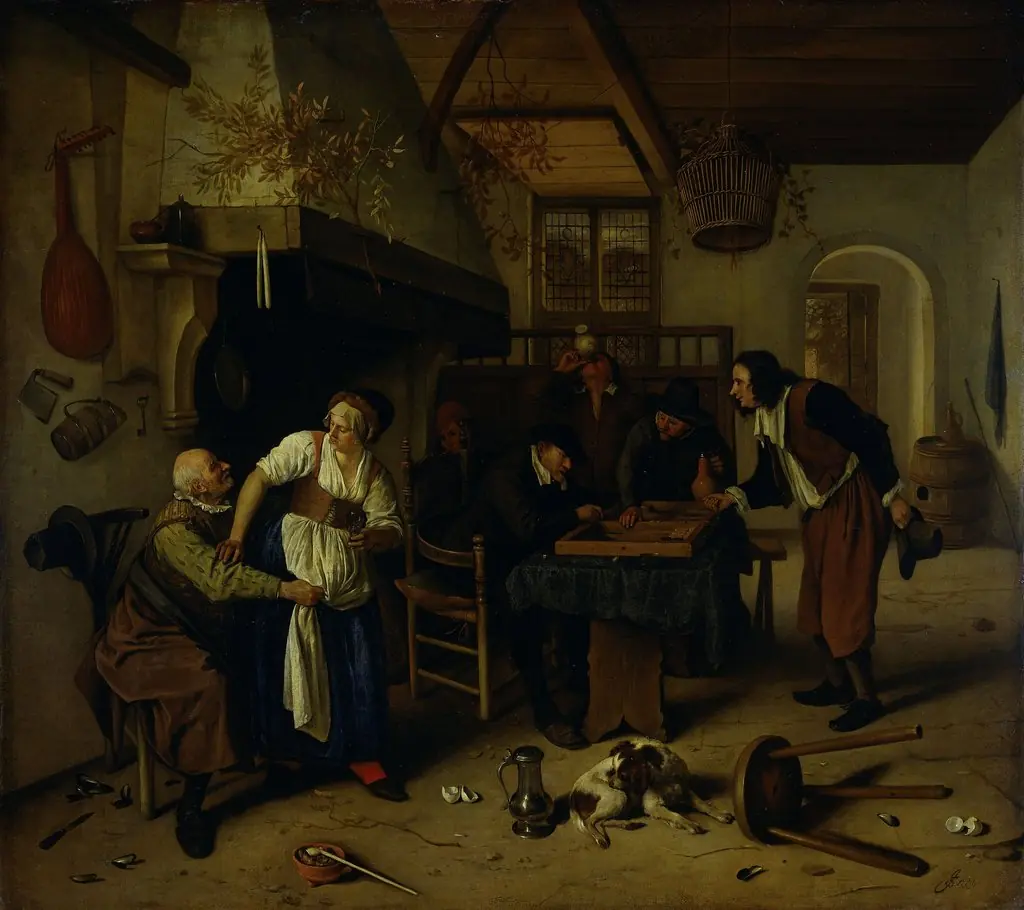 Interior of an inn with an old man amusing himself with the landlady and two men playing backgammon, known as 'Two kinds of games'
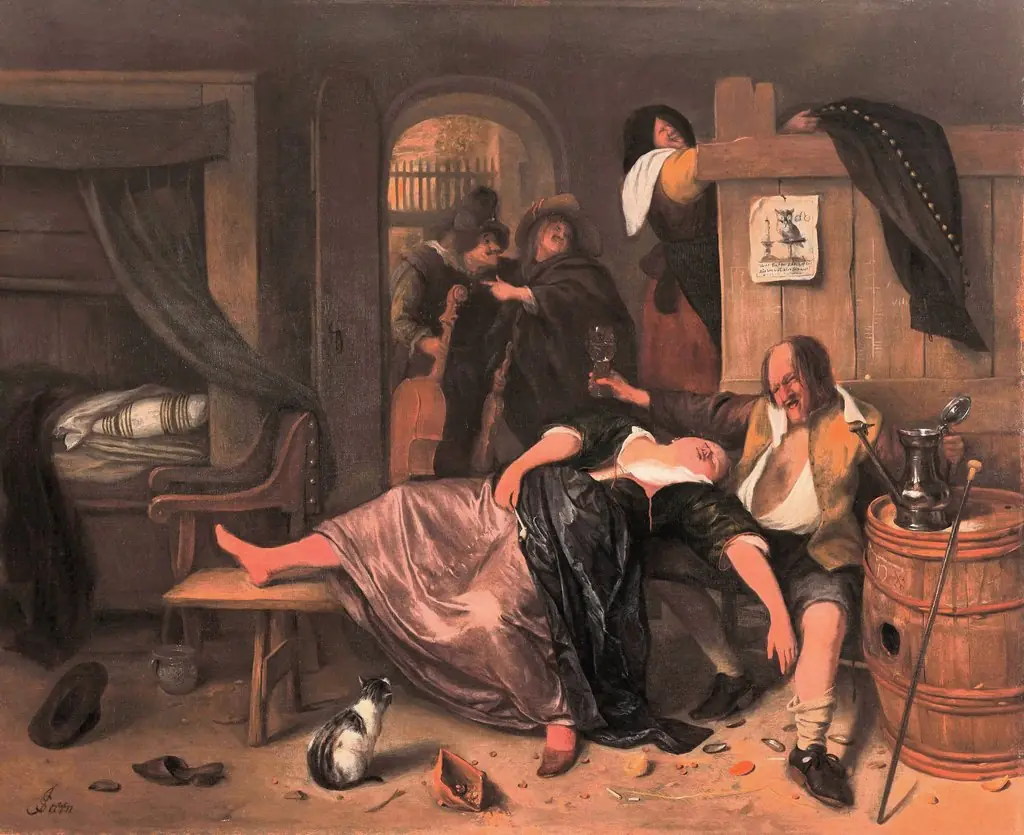 The Drunken Couple
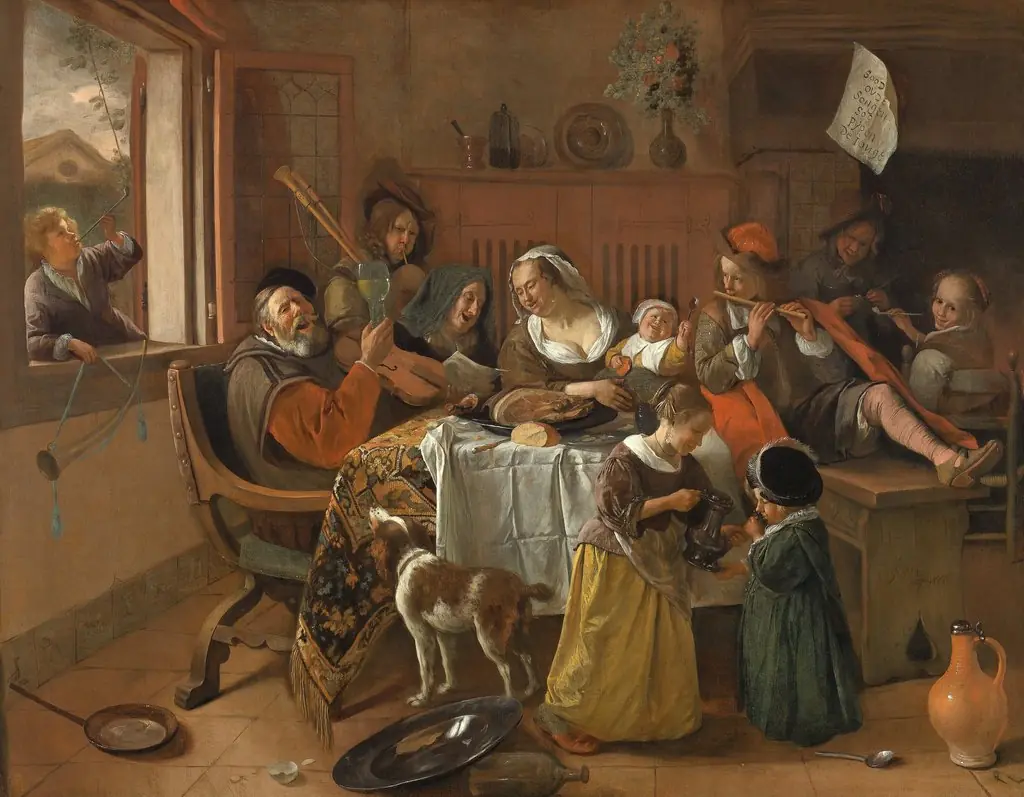 The Happy Family
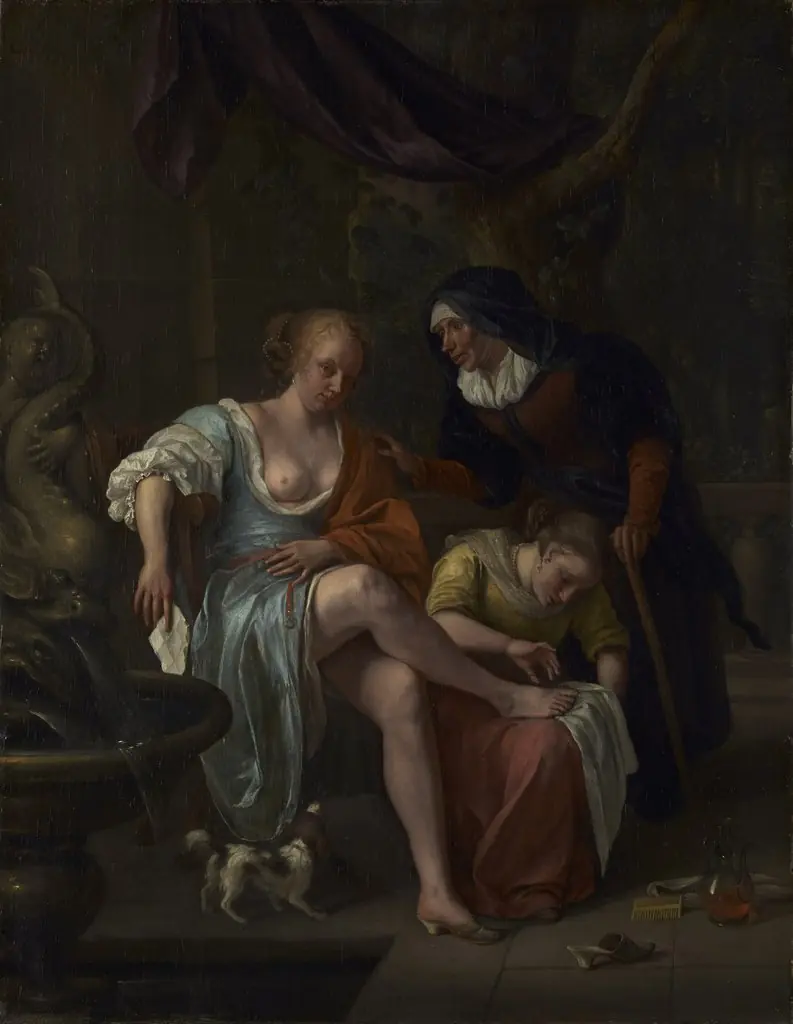 Bathsheba after the Bath
 The Repast
 A Seated Woman with a Letter, a Gentleman Standing by Her
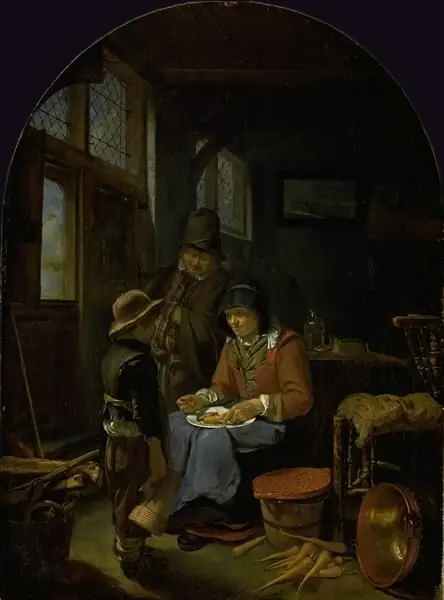 Sending the Boy for Beer
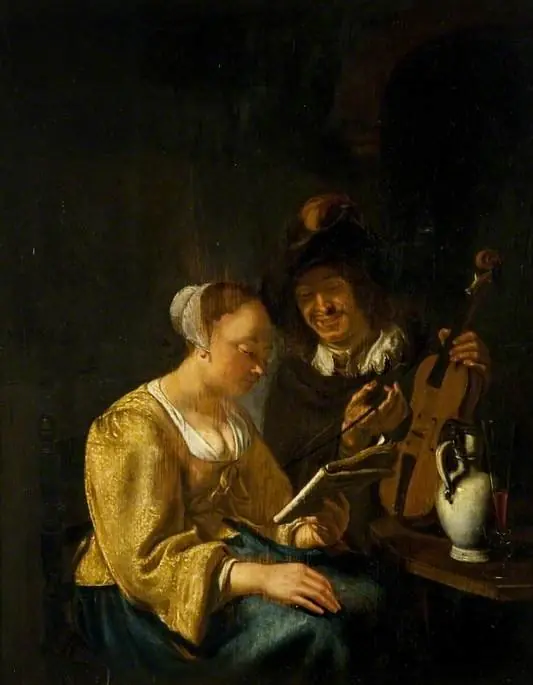 The Music Lesson
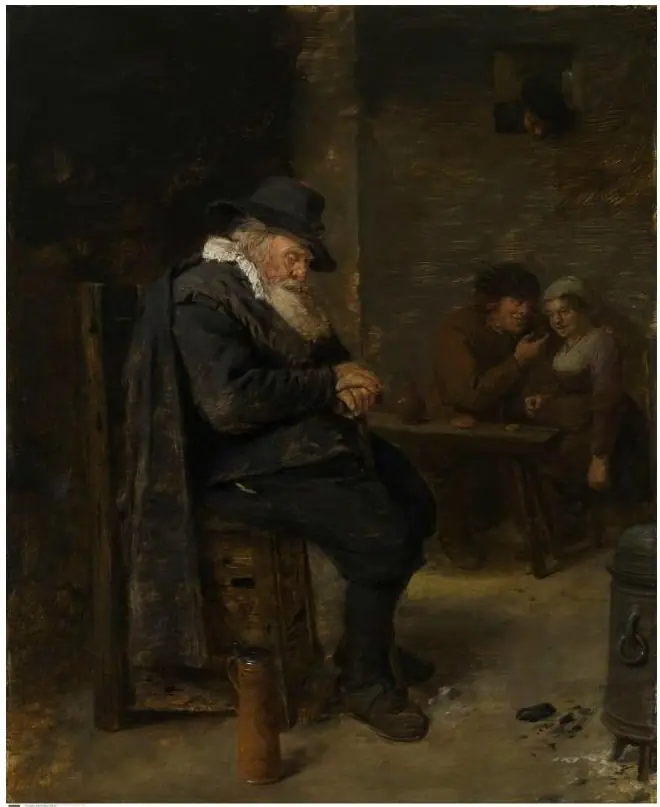 Interior of an inn with an old man asleep and an amorous couple
 The Breakfast
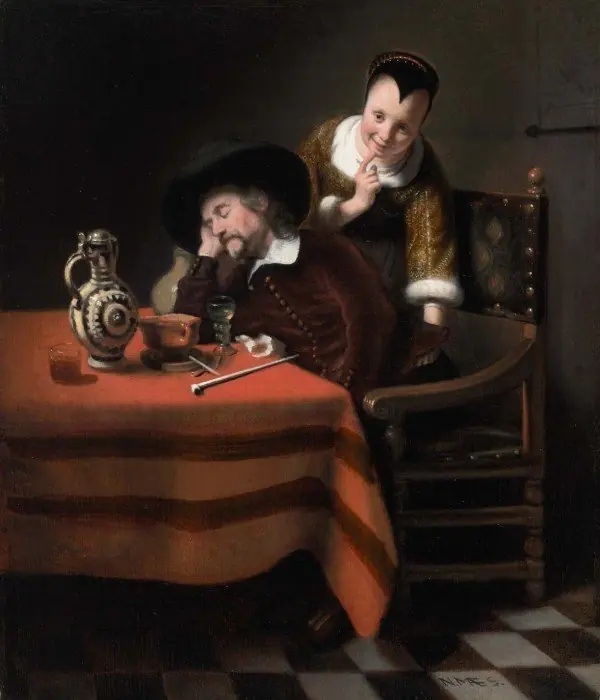 Sleeping Man having his Pockets Picked
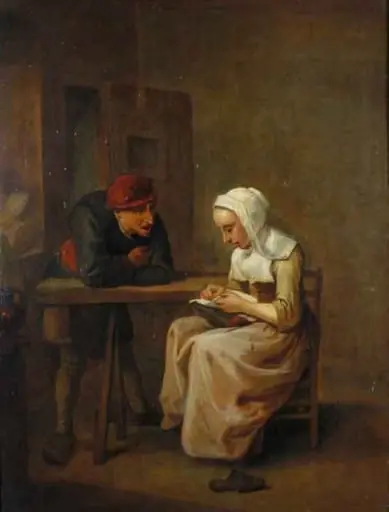 Conversație
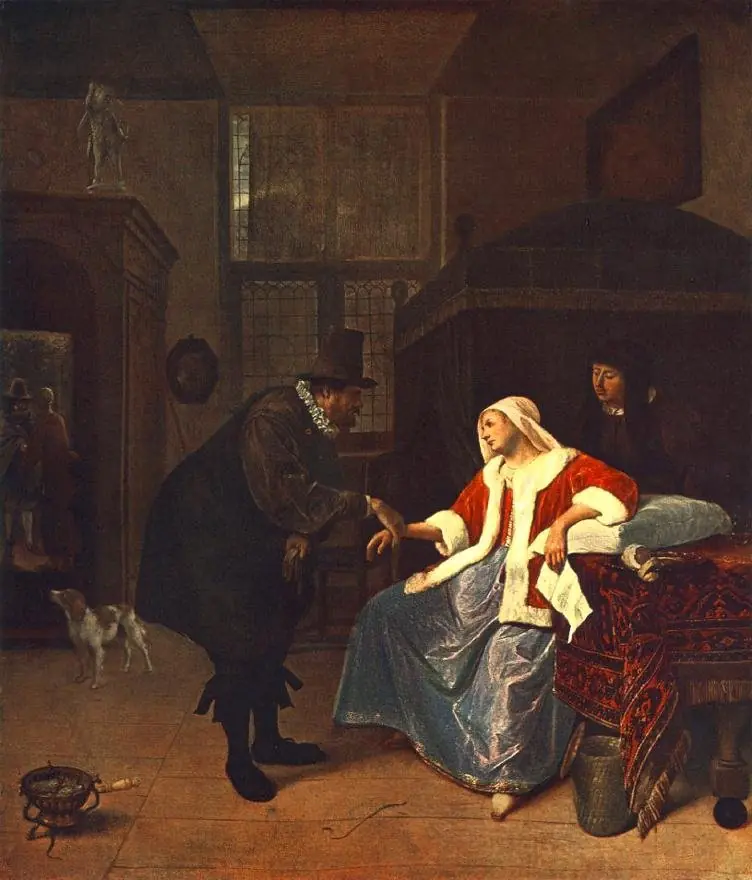 Love Sickness
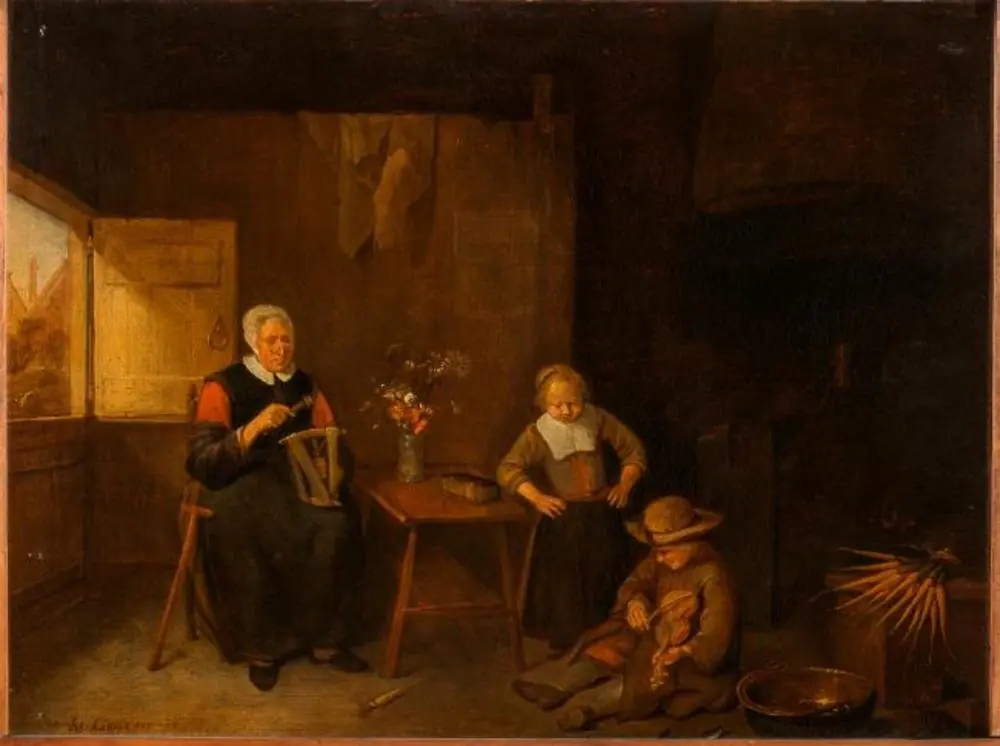 An Old Woman Twisting Threads and Two Children in the Room
 Scene in a Tavern
 Dutch courtship