Artwork
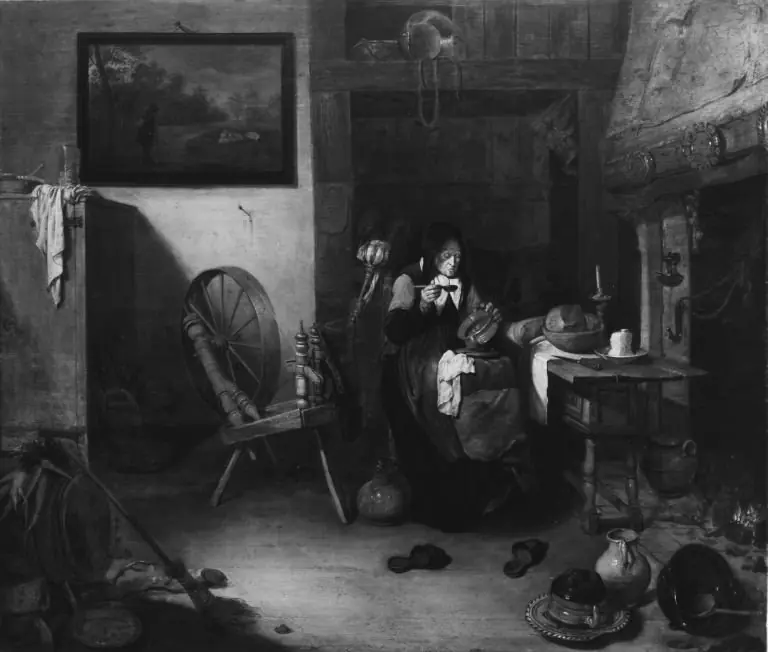
An Old Woman Twisting Threads and Two Children in the Room
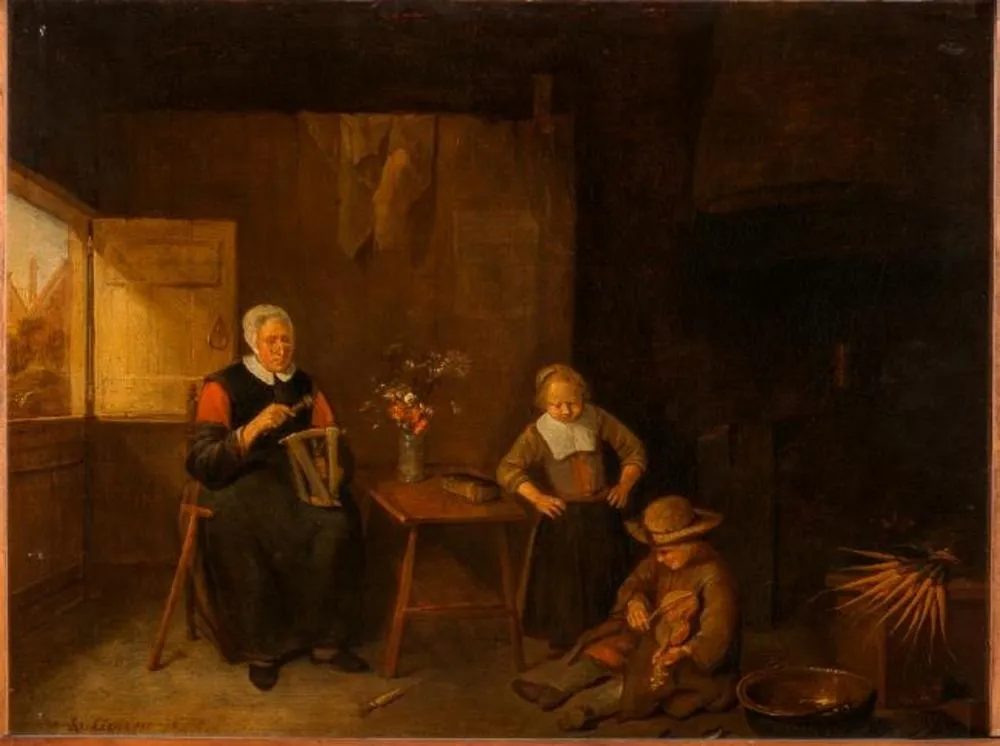
An Old Woman Twisting Threads and Two Children in the Room is an oil painting by the Dutch Golden Age artist Quirijn van Brekelenkam. It dates from 1662 and is held in the collection of the Hermitage Museum.
About this work
Overview
Painted in 1662 by Quirijn van Brekelenkam, this oil-on-canvas work captures a quiet domestic moment in a Leiden interior.
Painted in 1662 by Quirijn van Brekelenkam, this oil-on-canvas work captures a quiet domestic moment in a Leiden interior. It belongs to the Dutch Golden Age tradition of genre painting, focusing on ordinary life with restrained emotion. Van Brekelenkam, trained under Gerard Dou, employed meticulous detail and subtle lighting to elevate everyday actions into contemplative scenes, avoiding theatricality in favor of quiet realism.
Subject & Meaning
The painting centers on an elderly woman spinning thread, a common domestic task that symbolized diligence and the passage of time. Two children observe her—perhaps awaiting instruction or simply absorbed in the rhythm of her labor. The presence of bread and flowers on a nearby table suggests a modest but orderly household. The scene conveys continuity between generations, not through narrative drama, but through stillness and shared space.
Technique & Style
Van Brekelenkam used fine brushwork and controlled chiaroscuro to model forms with precision, characteristic of the fijnschilders tradition. Light enters from a single source near a window, casting soft shadows that define the texture of fabric, wood, and skin. The dim interior is rendered with restrained tones, enhancing the intimacy of the moment. Details like the spindle’s grain and the children’s collars are rendered with near-scientific clarity, yet without artificial embellishment.
History & Provenance
Created in Leiden during the height of Dutch genre painting, the work reflects the city’s artistic milieu, where artists like Dou and Rembrandt influenced a generation focused on interior scenes. The painting’s early ownership is undocumented, but its survival in good condition suggests it was valued by collectors who appreciated its quiet realism. It has remained within institutional or private collections since at least the 19th century.
Context
In mid-17th-century Holland, domestic interiors became popular subjects as urban middle-class life flourished. Artists like van Brekelenkam responded to a market that prized moral restraint and orderly home life. Unlike grand historical or religious scenes, these works offered viewers a mirror to their own routines. The inclusion of children and domestic tools reinforced ideals of piety, industry, and familial harmony.
Legacy
Though less widely known than contemporaries like Vermeer, van Brekelenkam’s work exemplifies the quiet power of Dutch genre painting. His focus on unembellished moments influenced later realist traditions. The painting’s endurance lies in its unforced authenticity—its ability to evoke the passage of time through gesture, light, and stillness rather than narrative climax.
Artist & collection
Artist
Quirijn or Quiringh Gerritsz van Brekelenkam (1622/29, Zwammerdam – 1669/79, Leiden) was a Dutch Baroque genre painter.

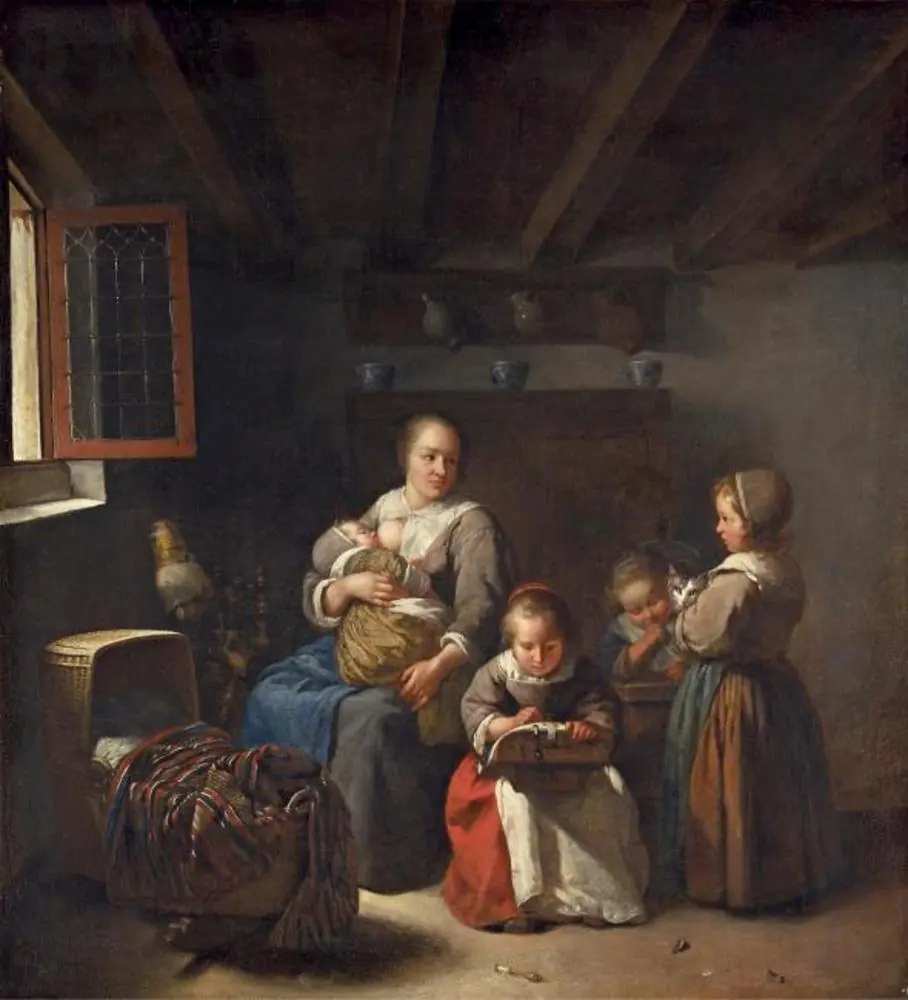 Nursing mother with three girls
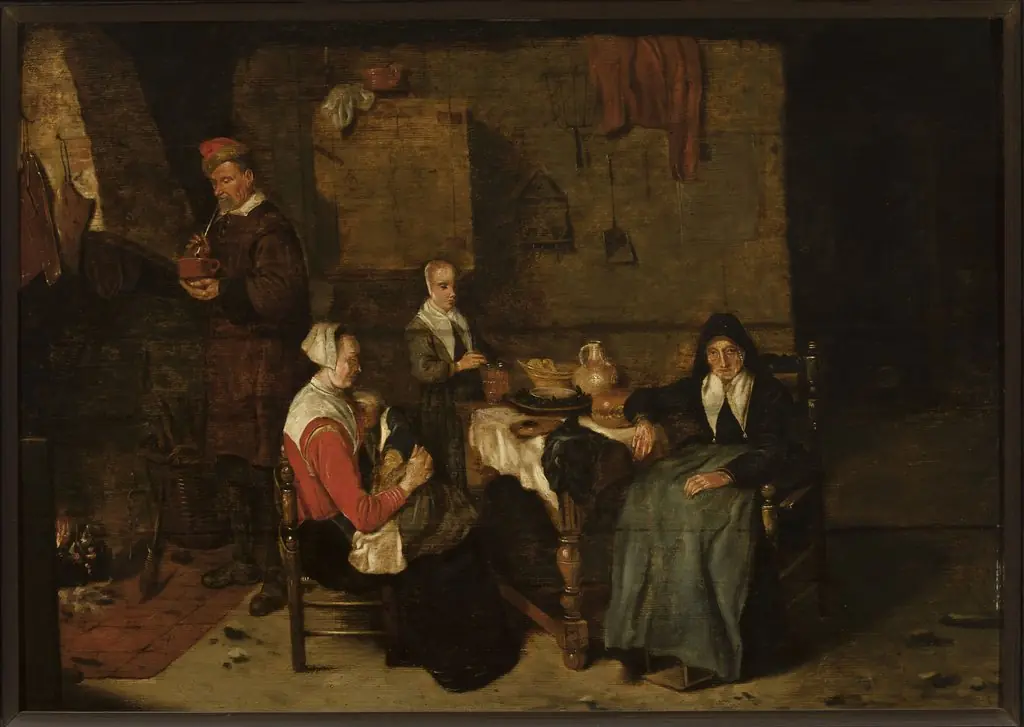 Family scene
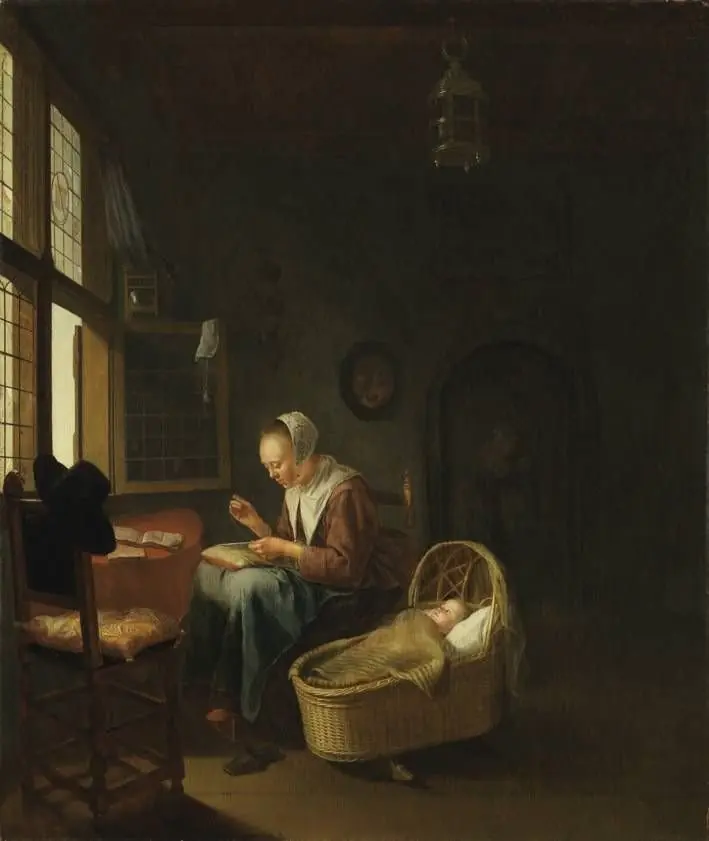 Eine nähende Mutter mit ihrem Kind
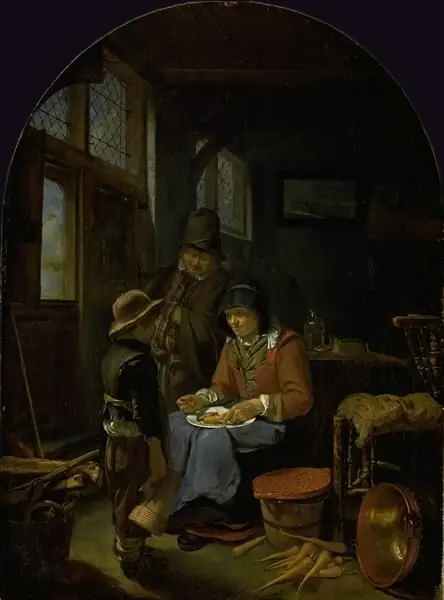 Sending the Boy for Beer
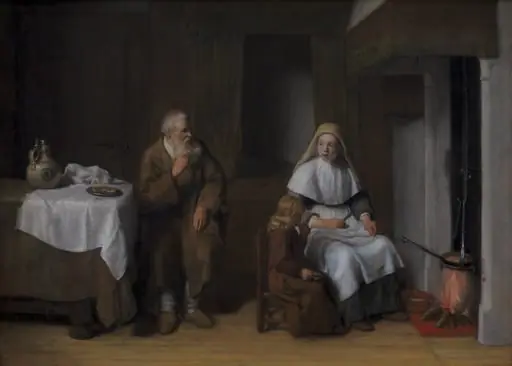 The Prophet Elijah with the Widow of Zarephath and her Son
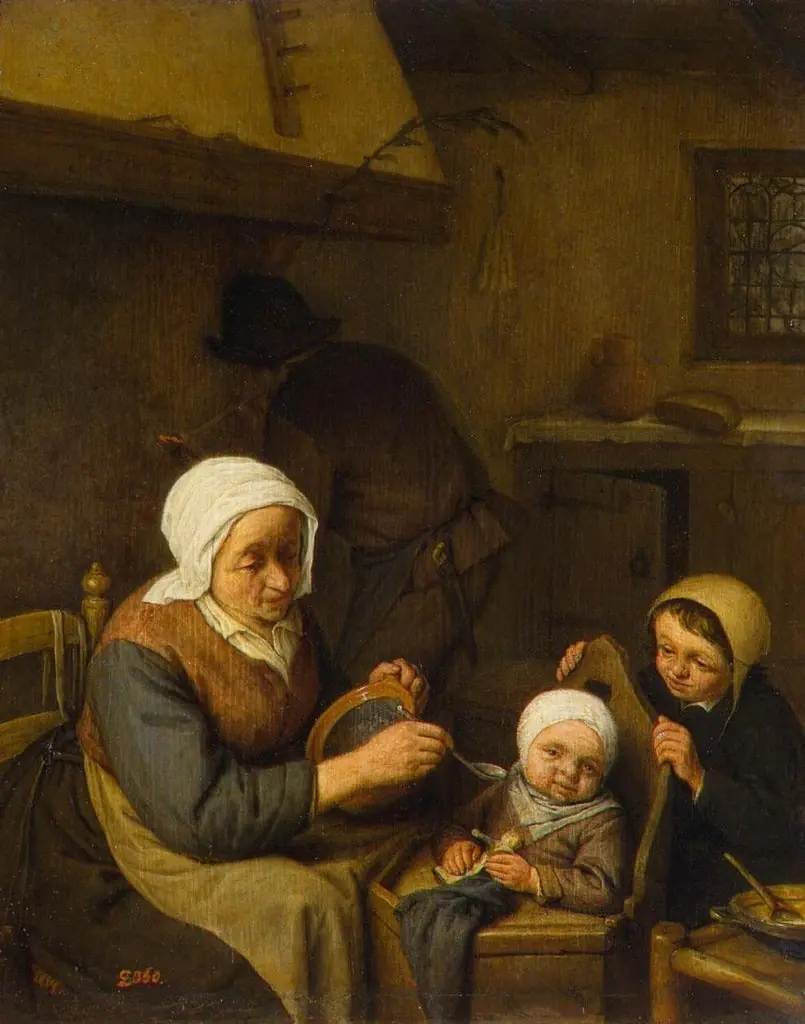 Peasant Family
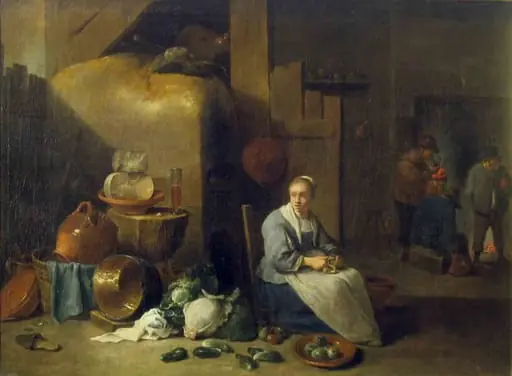 Interior flamand (olandez)
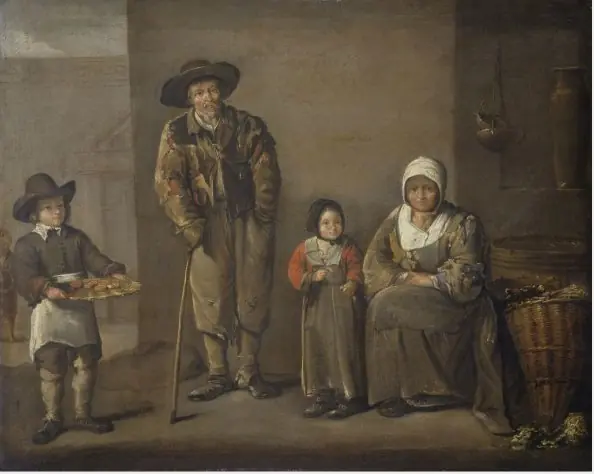 A Peasant Family
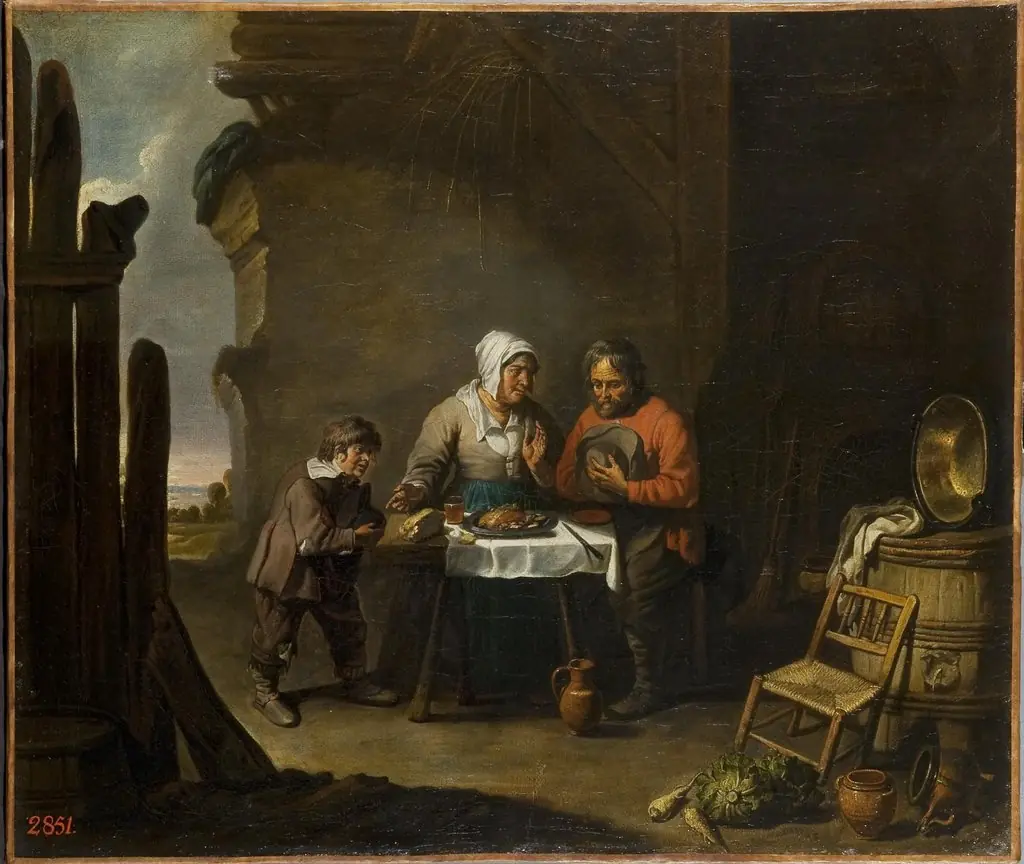 Saying Grace
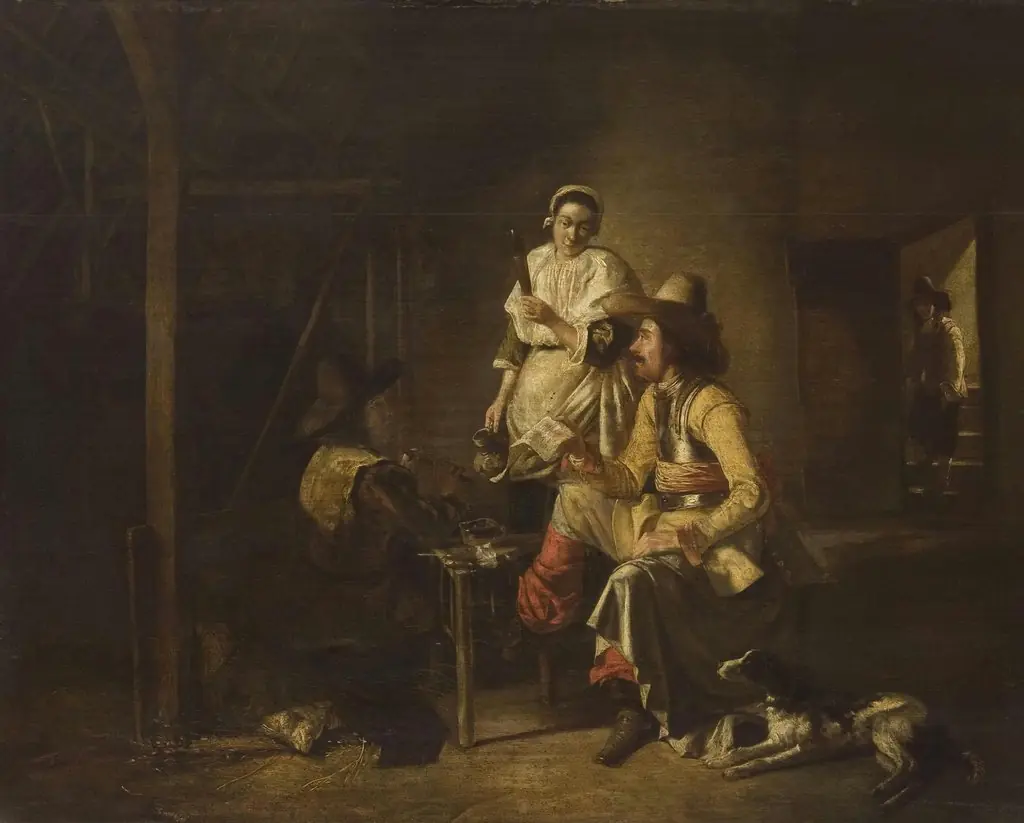 Soldiers with a Serving Maid in a Barn
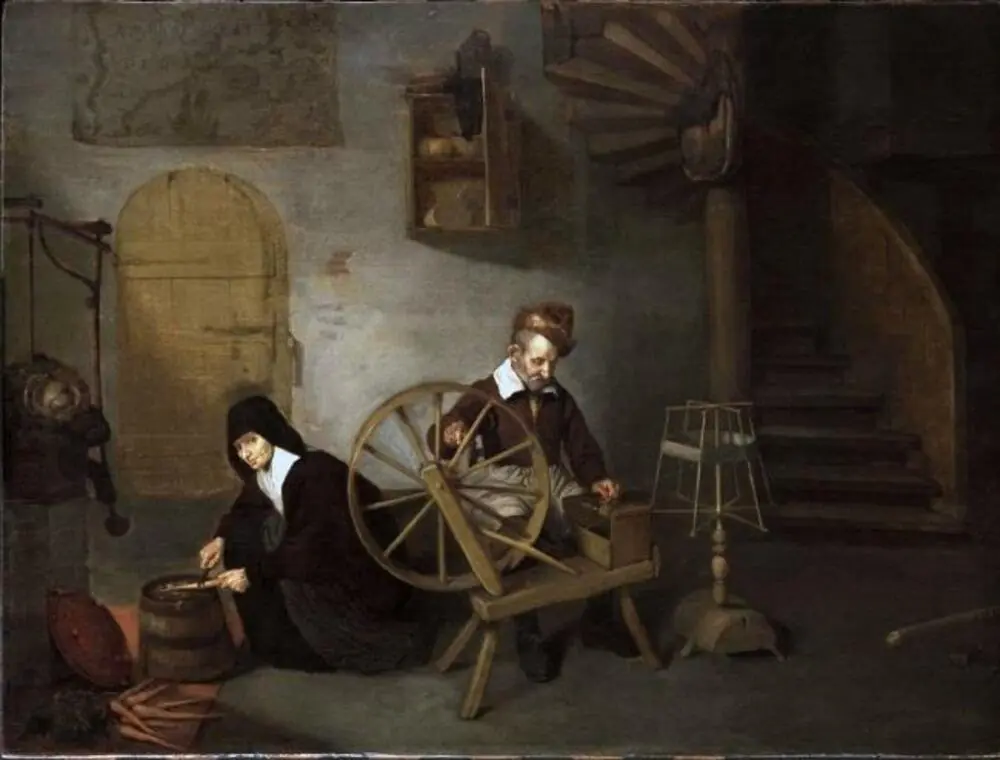 A Wool Spinner and His Wife
 The Barnyard