Artwork
The Satyr and the Peasant Family
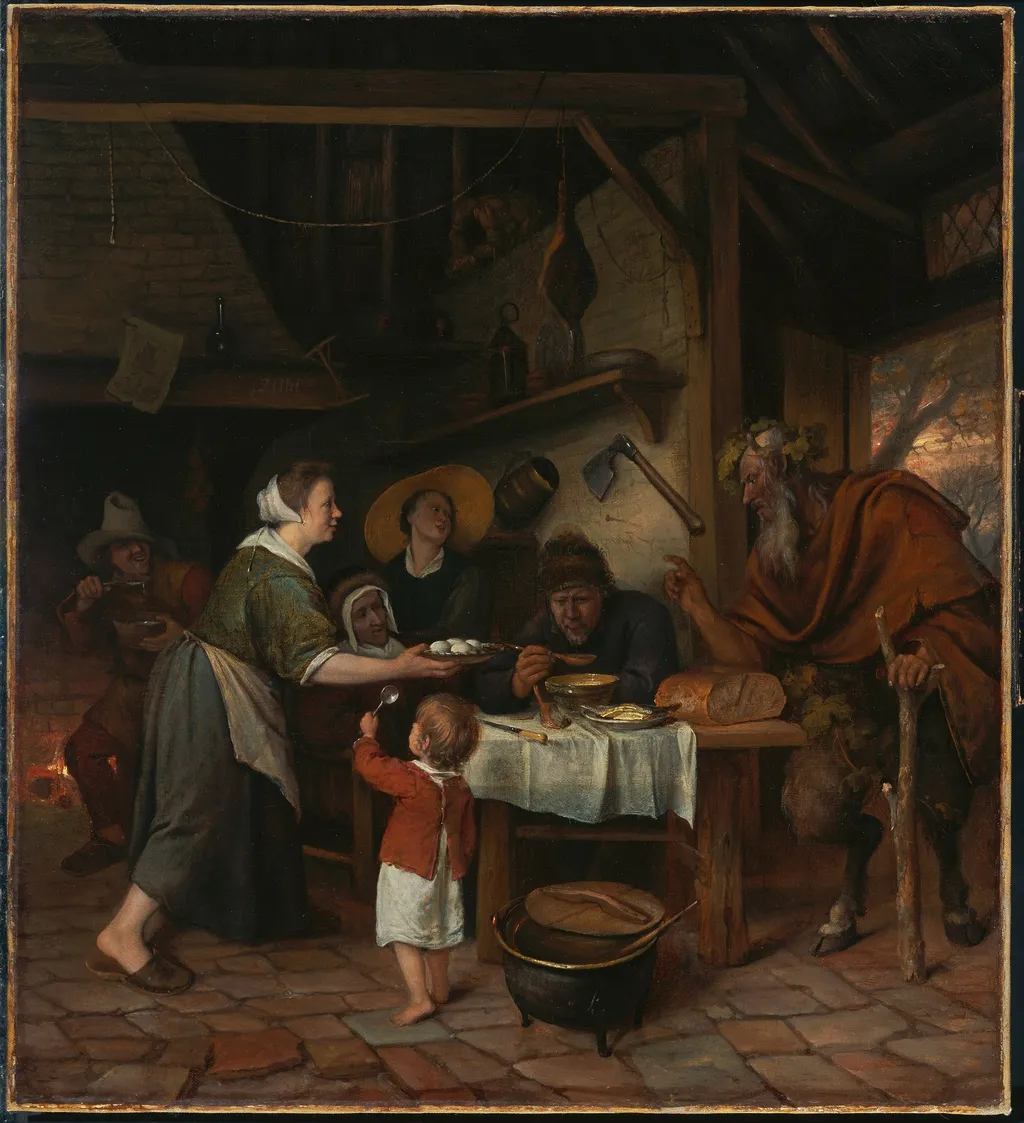
The Satyr and the Peasant Family is an oil painting by the Dutch Golden Age artist Jan Steen. It dates from 1660 and is held in the collection of the J. Paul Getty Museum.
About this work
Overview
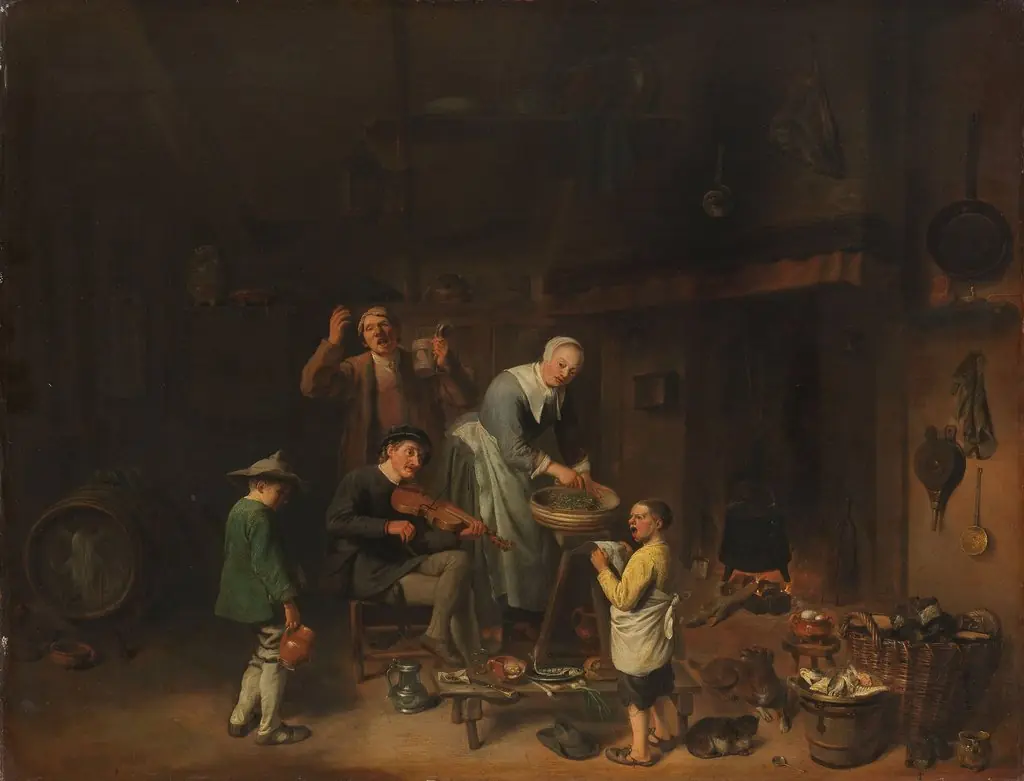
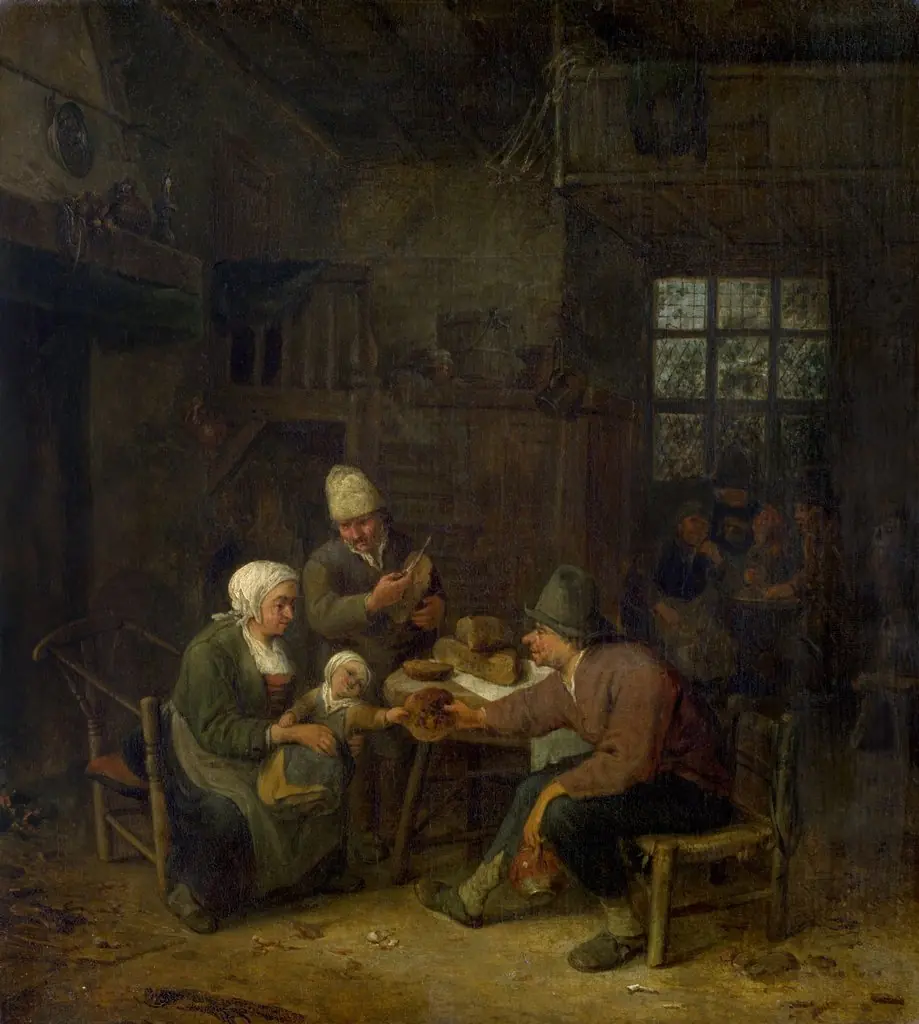
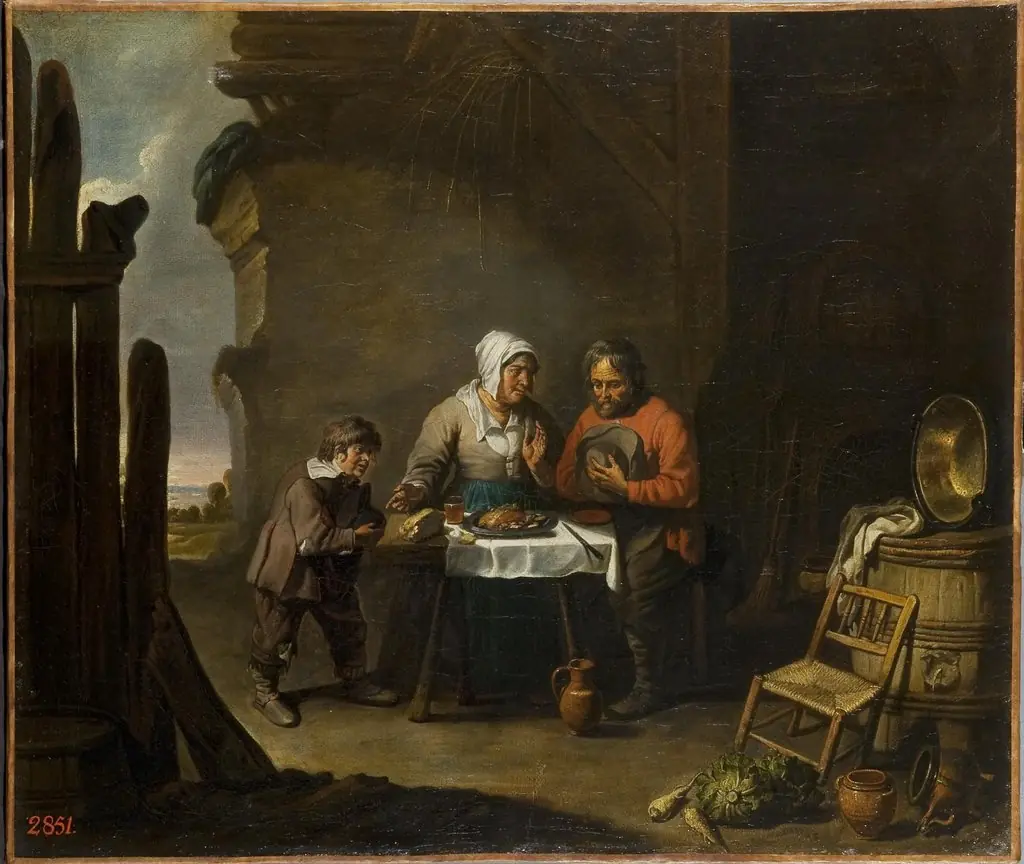
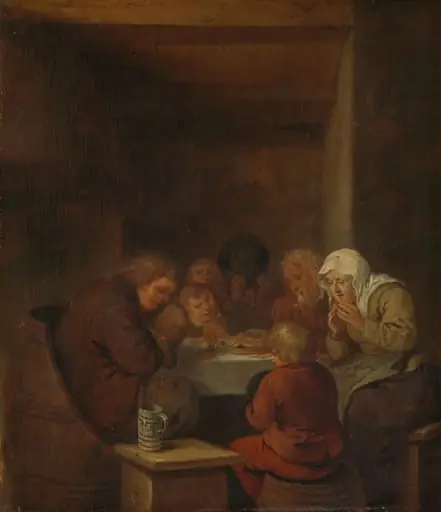
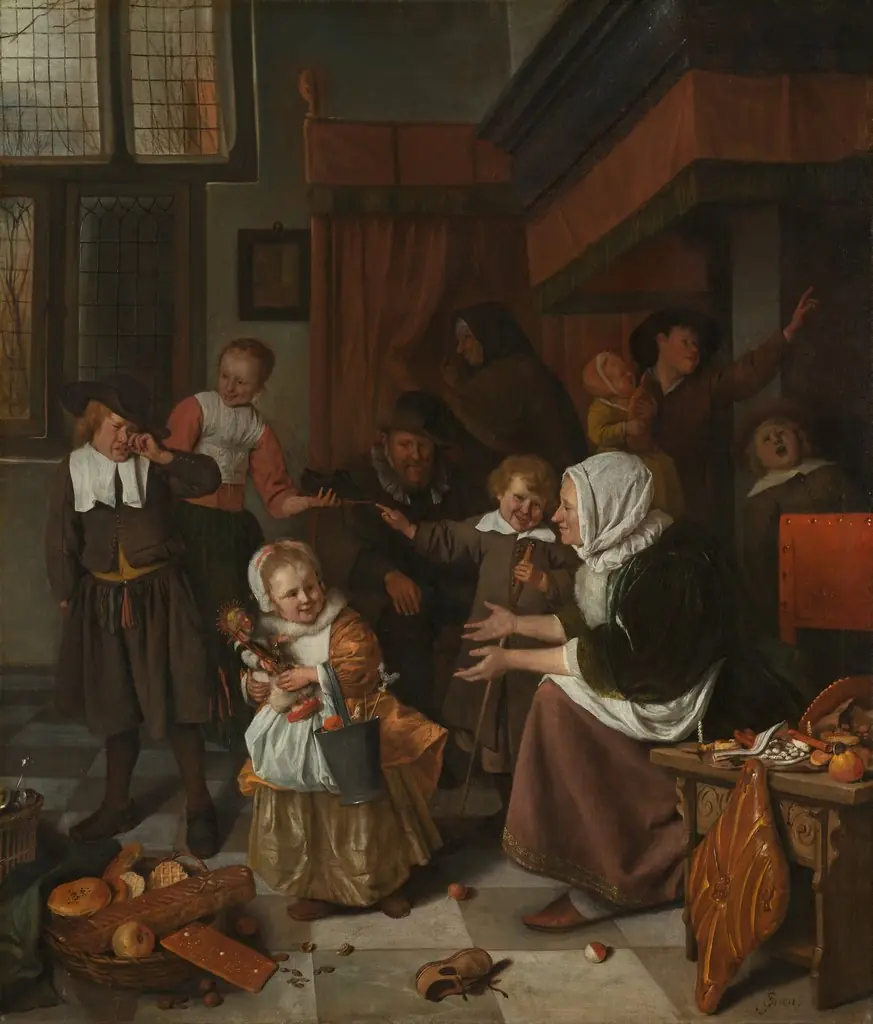
Jan Steen’s oil painting, dated 1660, portrays a bustling interior of a modest rural dwelling. The composition centers on a family gathering around a table, where a bearded man in a broad hat presides, a child stands nearby, and a woman serves food. Domestic objects—a hanging pot, a bowl of eggs, and assorted kitchenware—populate the space, creating a vivid snapshot of everyday life.
Subject & Meaning
The work captures a moment of communal hospitality, emphasizing the warmth of a peasant household as it receives a guest. The interaction between the figures, the abundance of food, and the intimate setting suggest themes of generosity and social cohesion within a modest community, reflecting the moralizing yet affectionate tone common in Steen’s genre scenes.
Technique & Style
Executed in oil on canvas, the painting employs a muted, earthy palette that enhances the sense of coziness. Steen’s handling of light—soft, diffused illumination falling across the figures—adds depth and realism. The detailed rendering of textures, from the rough wooden table to the gleam of metal pots, demonstrates his skill in depicting everyday material culture.
History & Provenance
Created in the mid‑seventeenth century, the canvas entered the collection of the J. Paul Getty Museum, where it is currently on display. Its provenance traces back to private Dutch collections before being acquired by the museum, illustrating the continued interest in Steen’s domestic narratives among European and American collectors.
Artist & collection
Artist
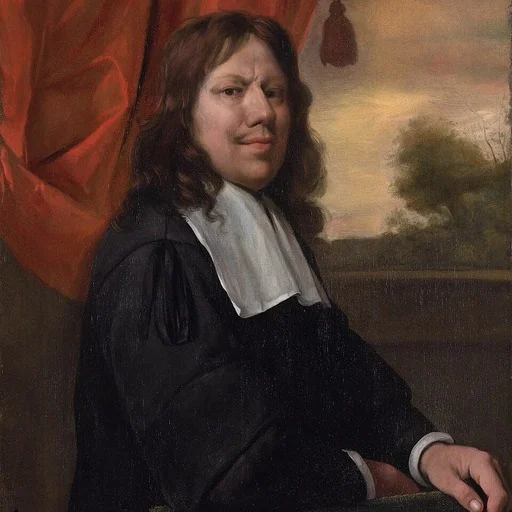
Jan Havickszoon Steen was a Dutch Golden Age painter, one of the leading genre painters of the 17th century.

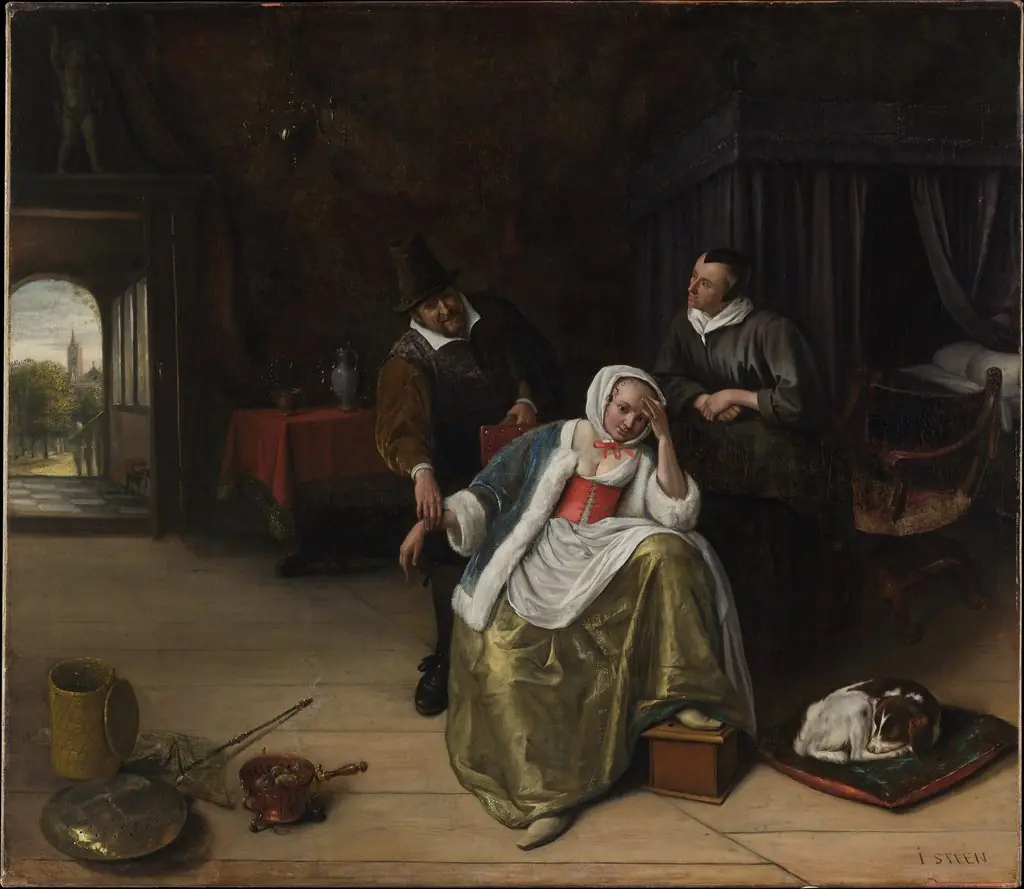 Paintings of physicians by Jan Steen
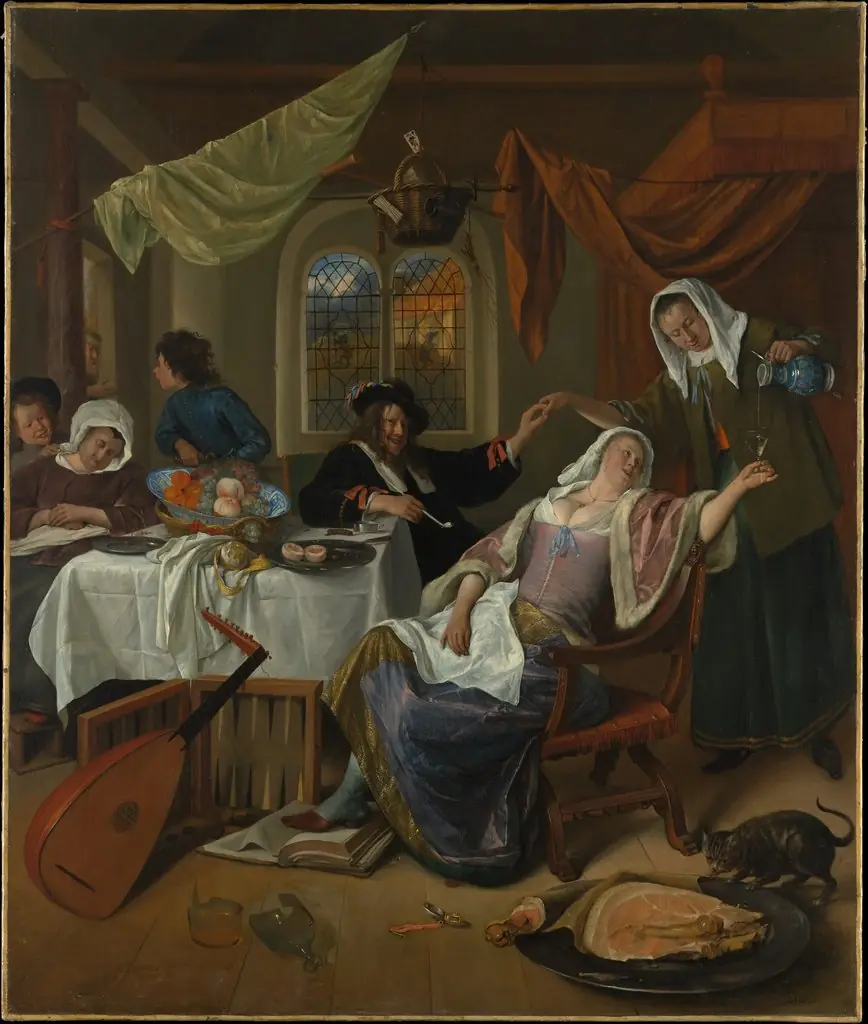 The Dissolute Household
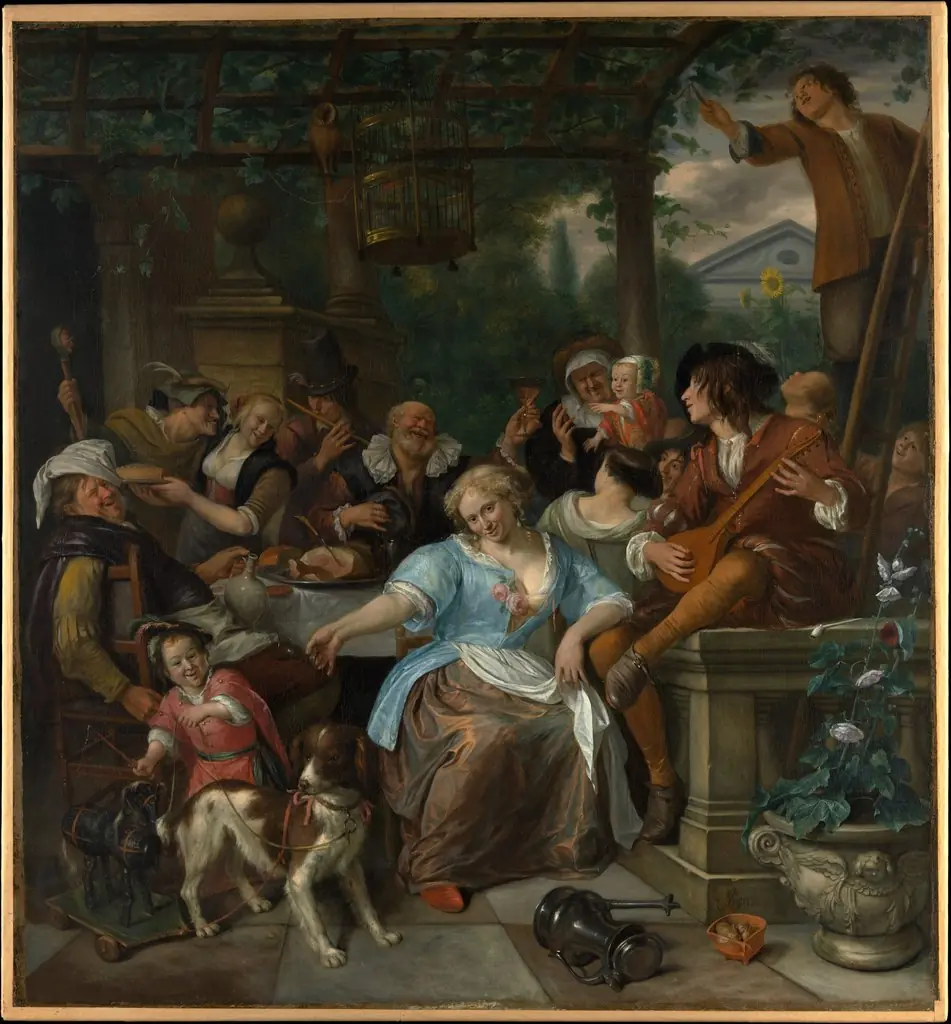 Merry Company on a Terrace
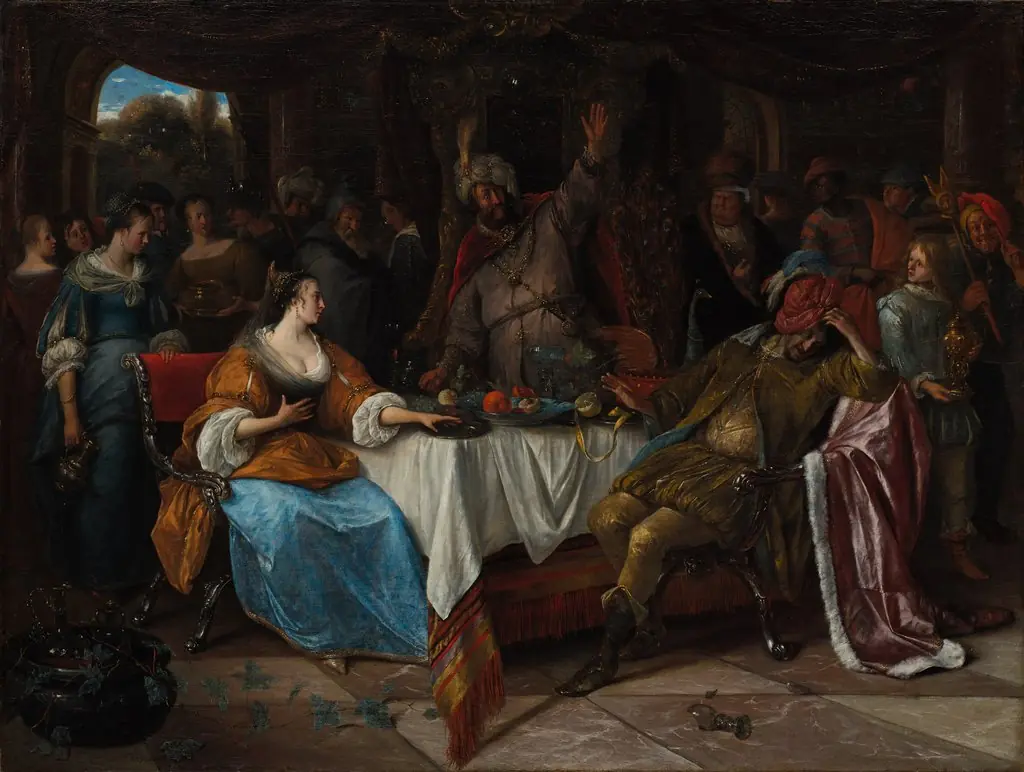 Esther, Ahasuerus, and Haman
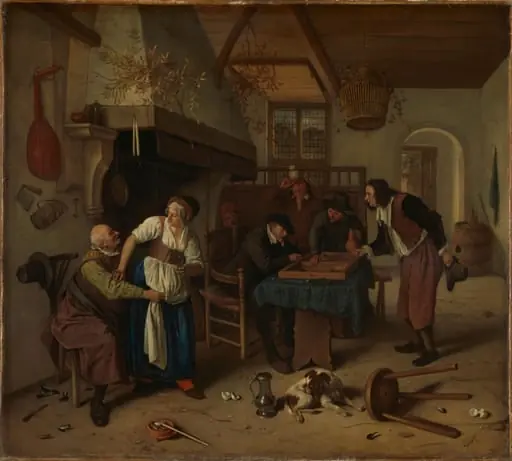
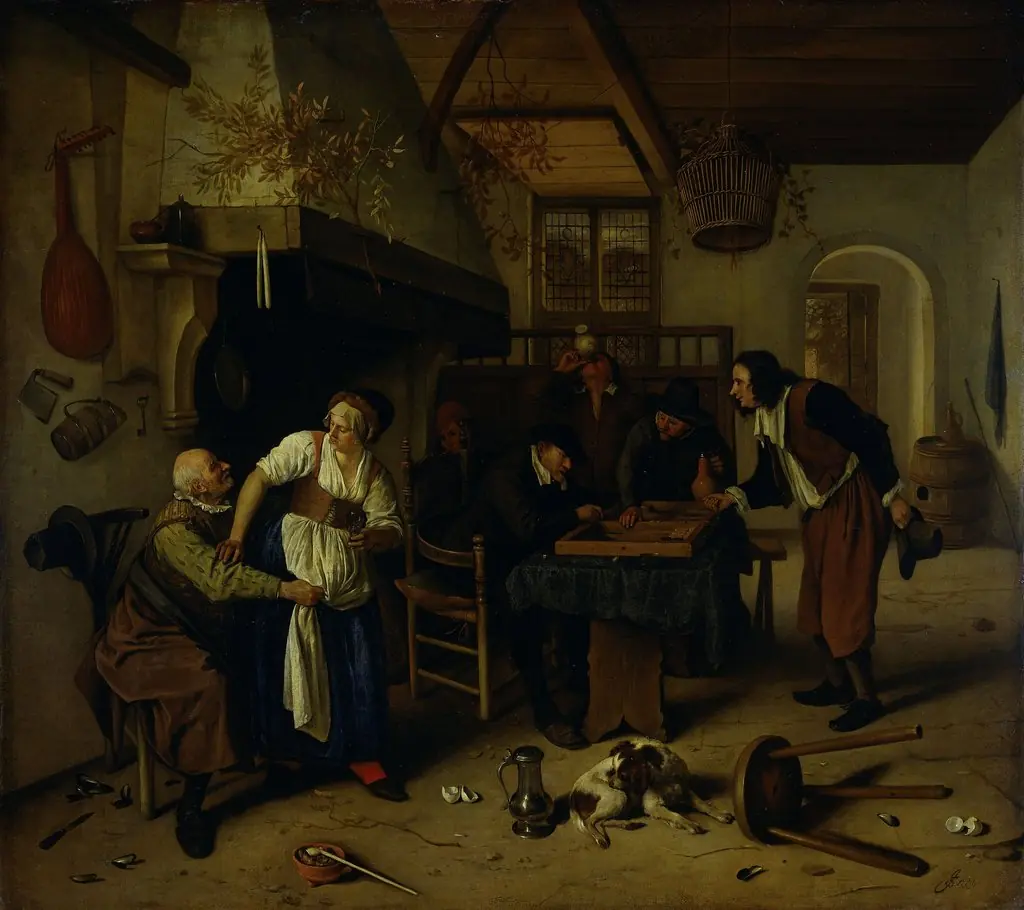 Interior of an inn with an old man amusing himself with the landlady and two men playing backgammon, known as 'Two kinds of games'
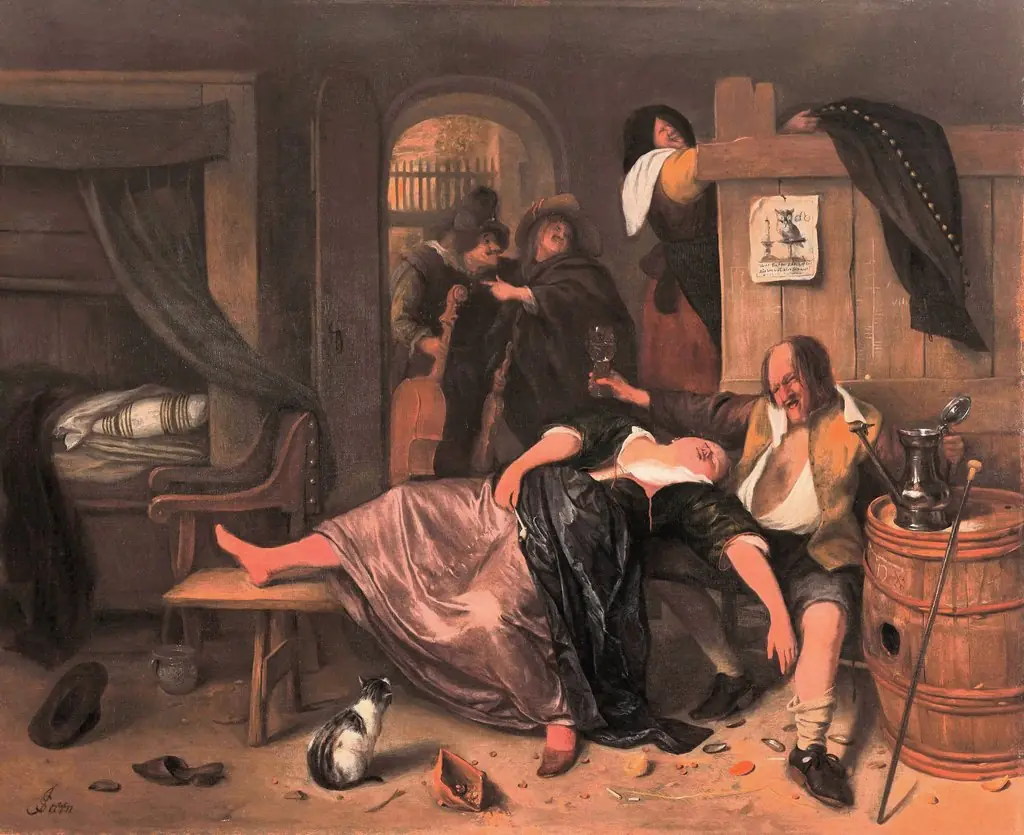 The Drunken Couple
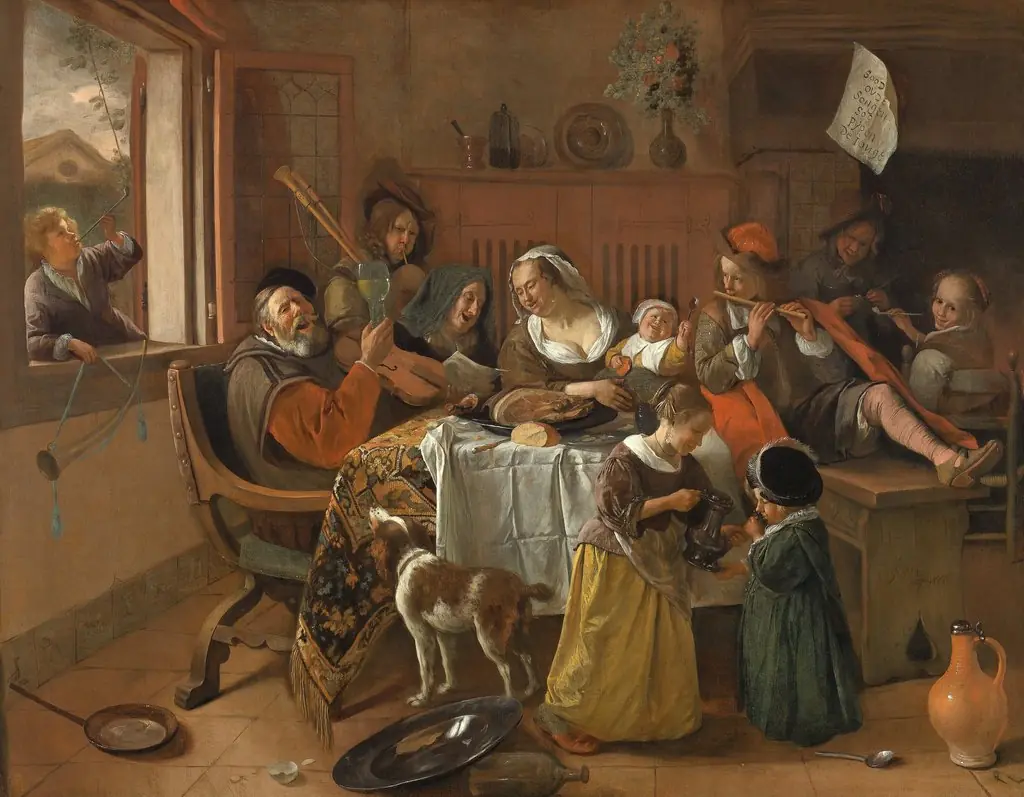 The Happy Family
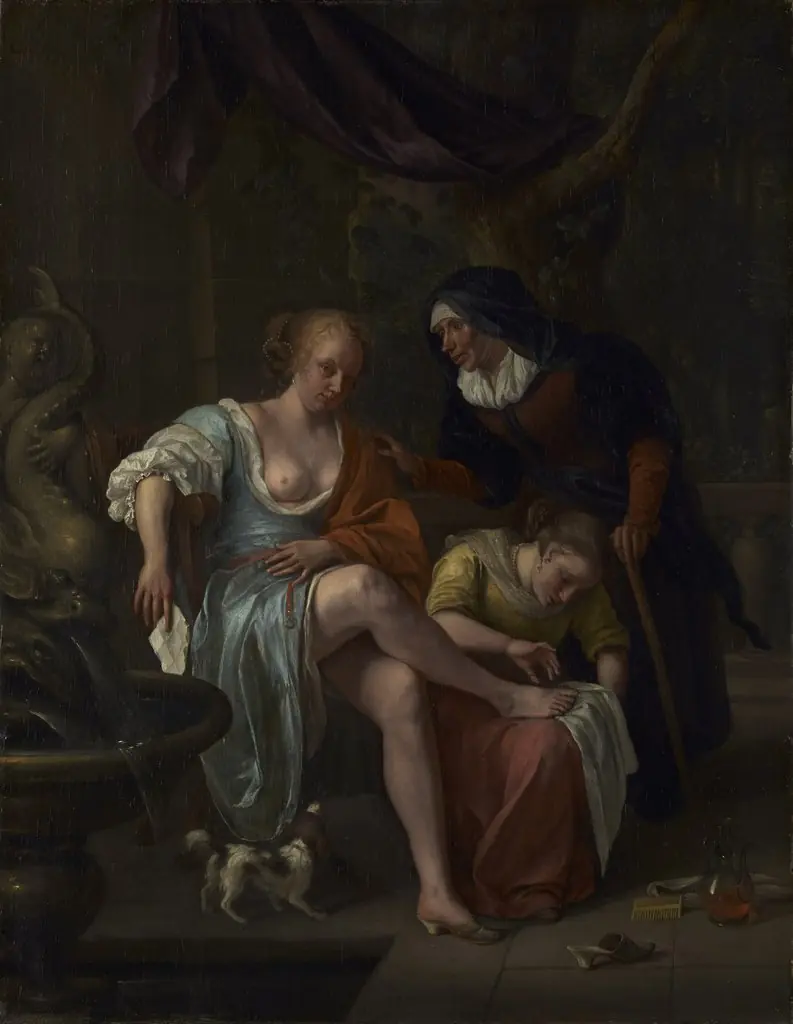 Bathsheba after the Bath