Artwork
The drawing lesson
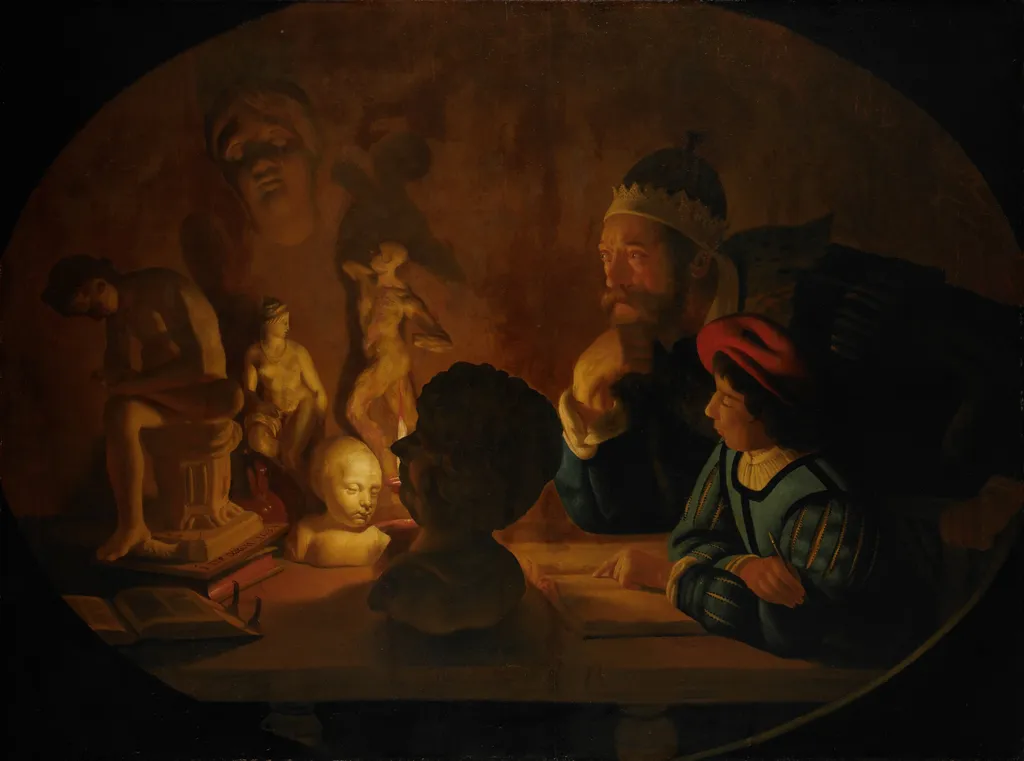
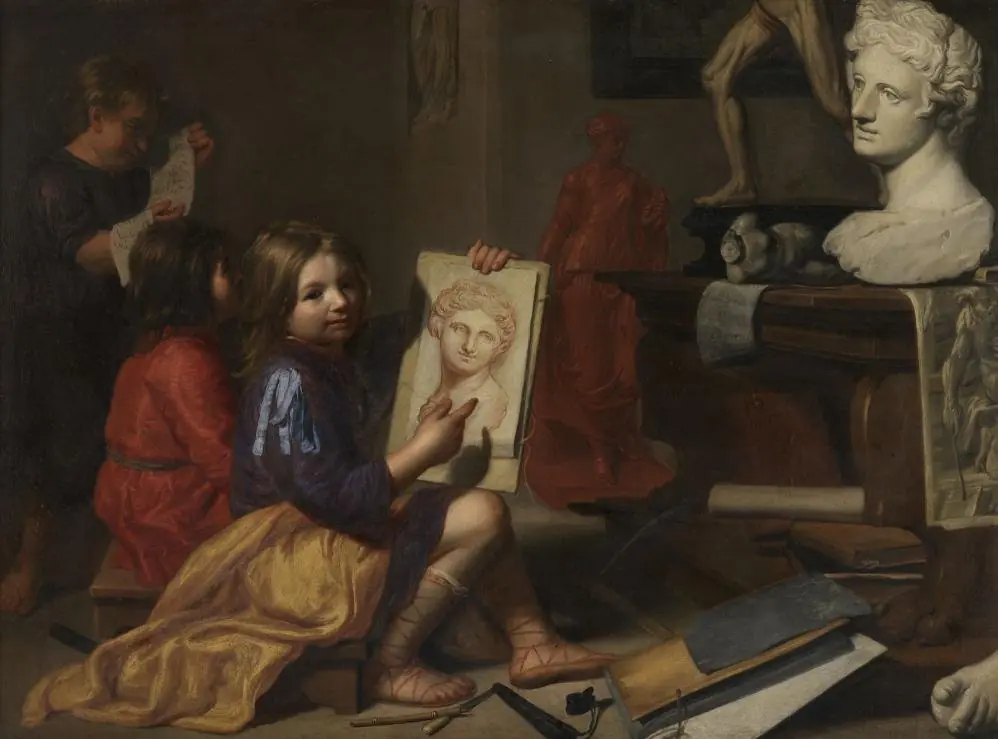
The drawing lesson is an oil painting by the Dutch Golden Age artist Jan ter Borch. It dates from 1634 and is held in the collection of the Rijksmuseum.
About this work
Overview
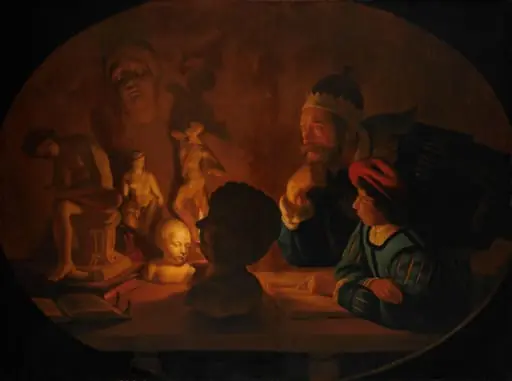
Jan van der Borch’s 1634 oil painting titled “The Drawing Lesson” is a genre work that resides in the Rijksmuseum. Executed in the Dutch Golden Age, the composition captures an intimate instructional moment between an adult and a child, rendered with careful attention to light and material detail.
Subject & Meaning
The scene presents a man in a blue robe and white headpiece guiding a young boy, who wears a striped blue shirt and a red cap, at a modest table. The adult’s hand gestures toward a sheet of paper while the boy, poised with his own hands, appears absorbed in learning the basics of drawing, suggesting an emphasis on education and the transmission of artistic skill.
Technique & Style
Borch employs chiaroscuro to model the figures, allowing the candle’s soft glow to illuminate the central participants and cast subtle shadows across the surrounding objects. The controlled palette of blues, whites, and warm candlelight enhances the three‑dimensionality of the space, while the meticulous rendering of textures—fabric, wood, and paper—reflects the Dutch realist tradition.
History & Provenance
Created in 1634, the work has remained in the Netherlands and is now part of the Rijksmuseum’s collection. Its provenance traces back to the artist’s workshop, later entering private collections before being acquired by the museum, where it contributes to the representation of 17th‑century domestic genre scenes.
Context
During the early 17th century, Dutch painters frequently depicted everyday instructional moments, reflecting the period’s growing value placed on learning and craftsmanship. Borch’s choice of a drawing lesson aligns with contemporary interests in the visual arts as a respectable pursuit and mirrors similar genre scenes by his peers.
Artist & collection