Artwork
Flowers in a Vase with the Siege of Gravelingen
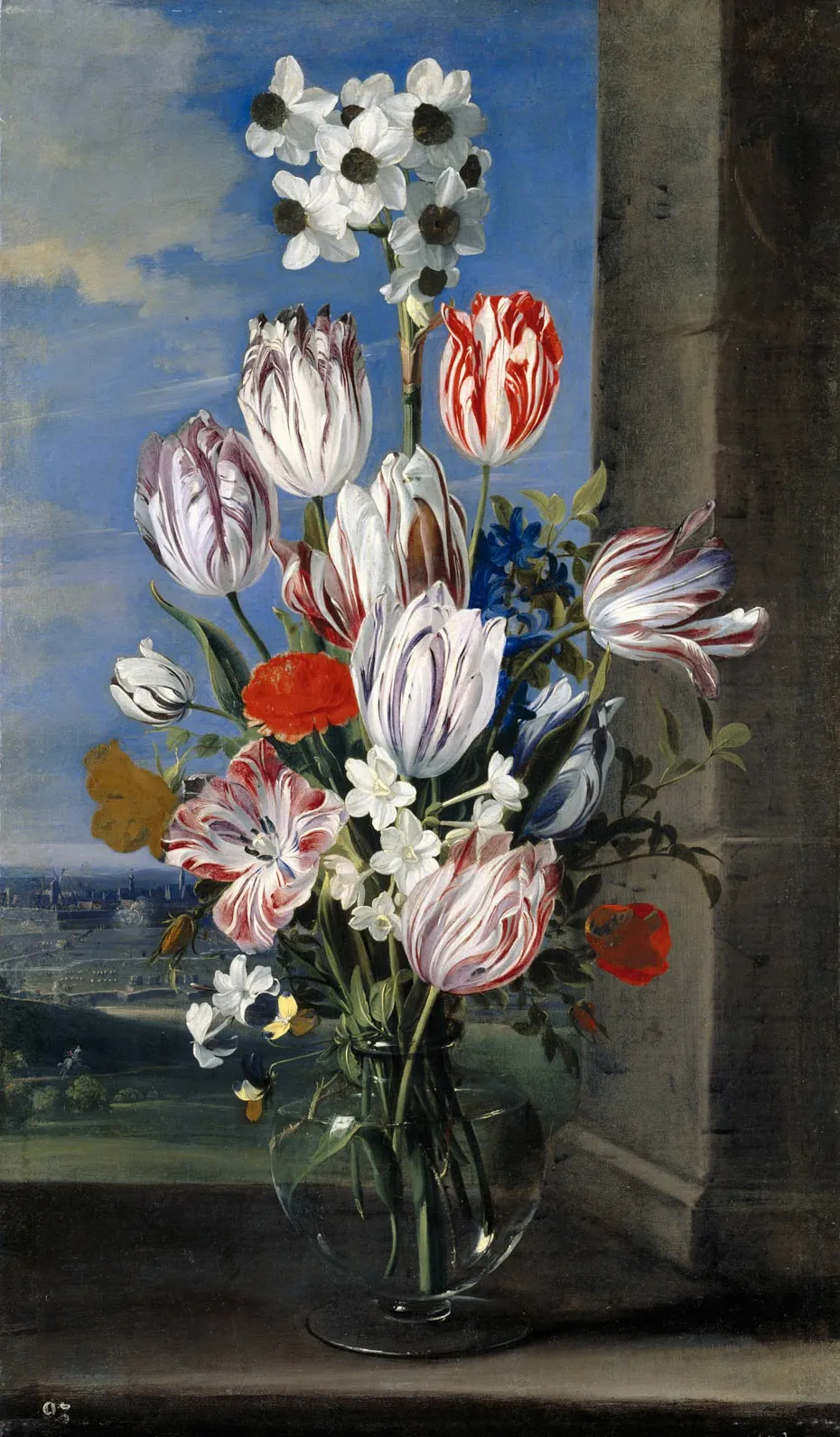
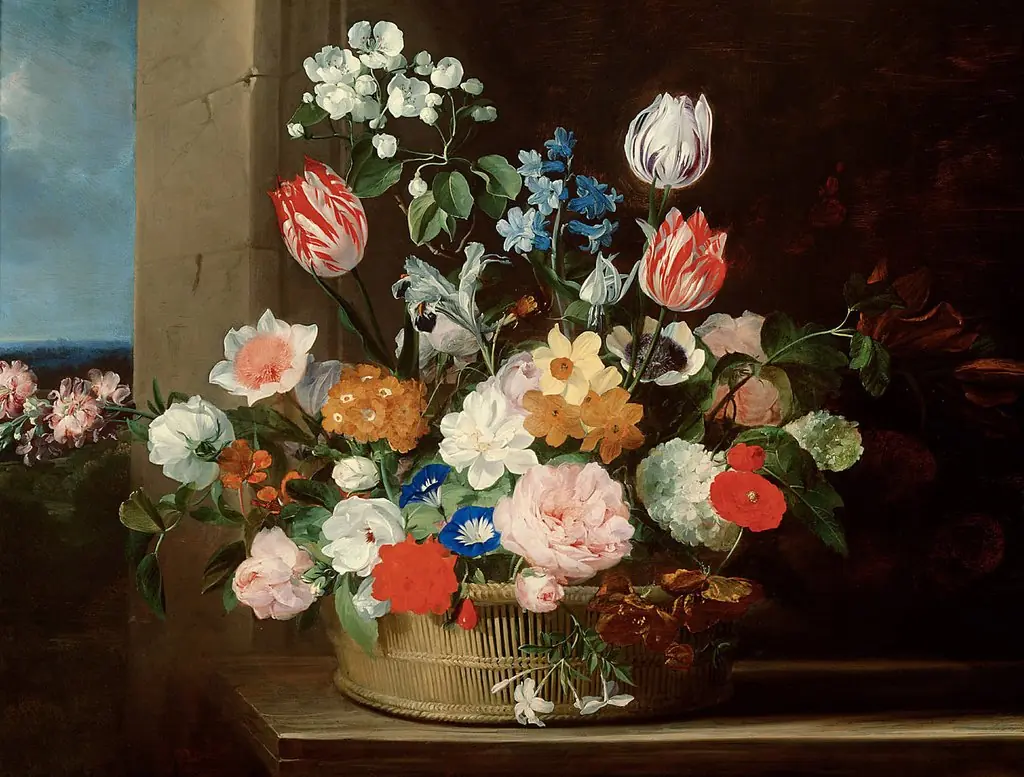
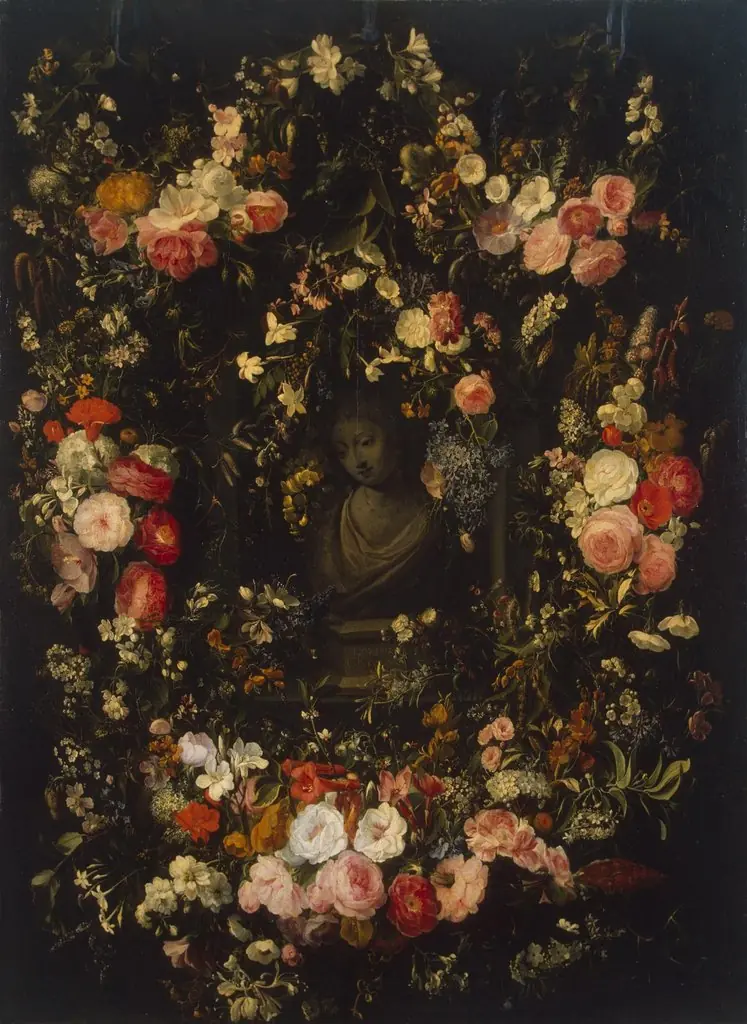
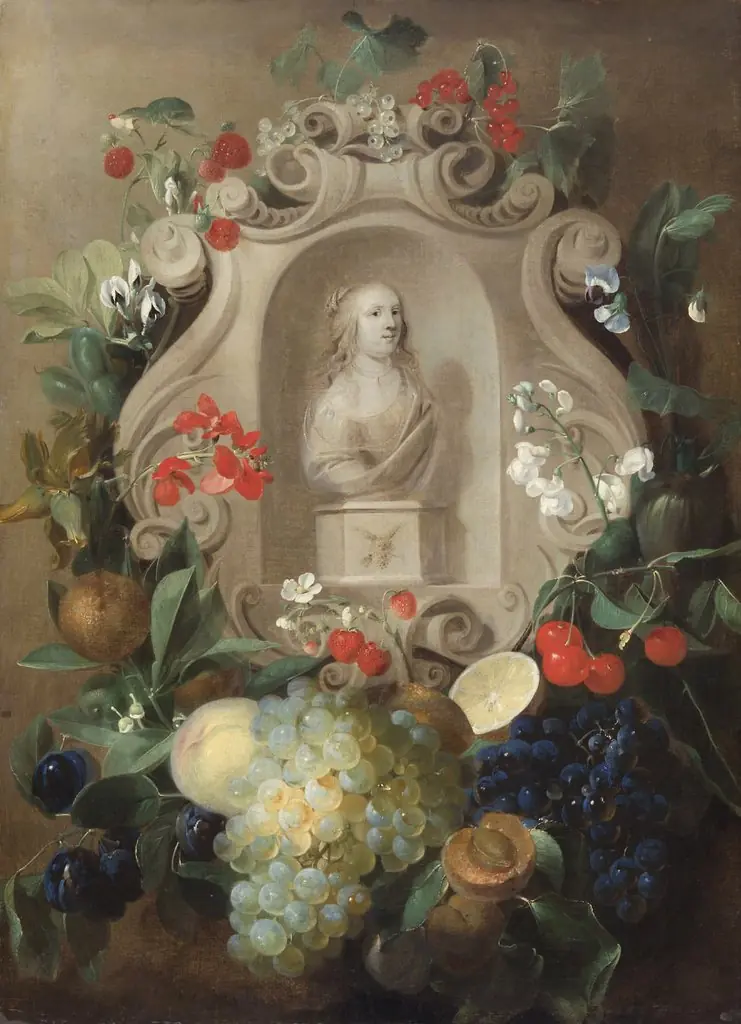
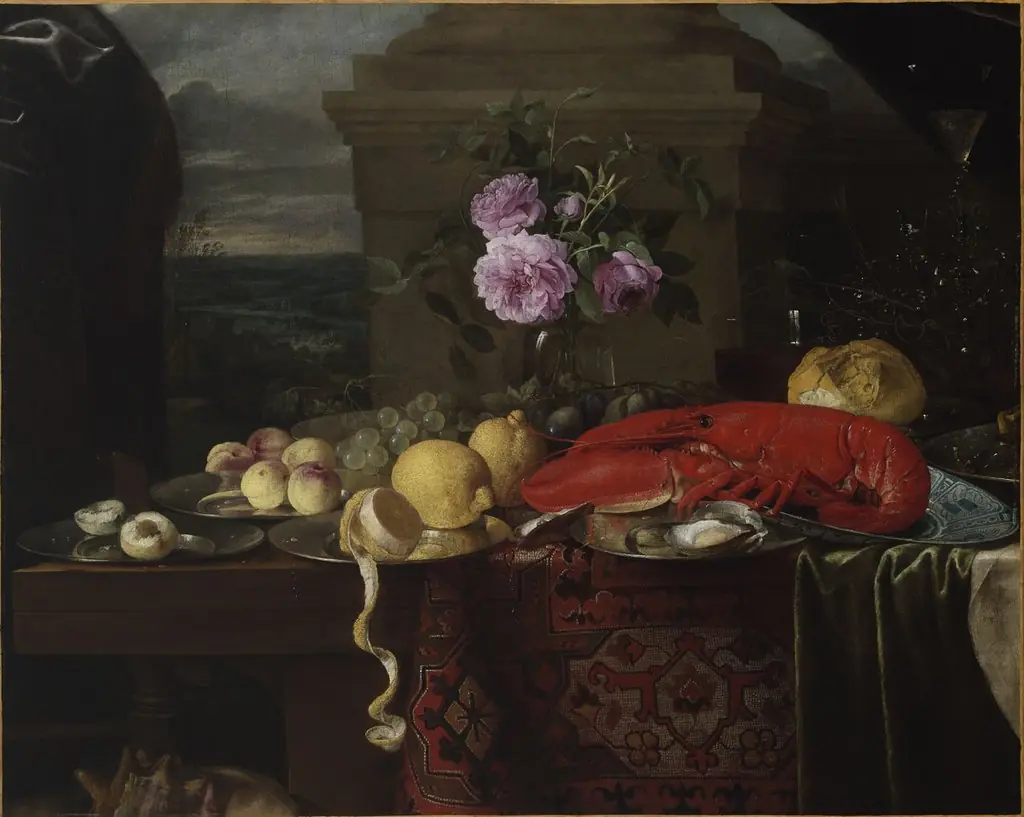
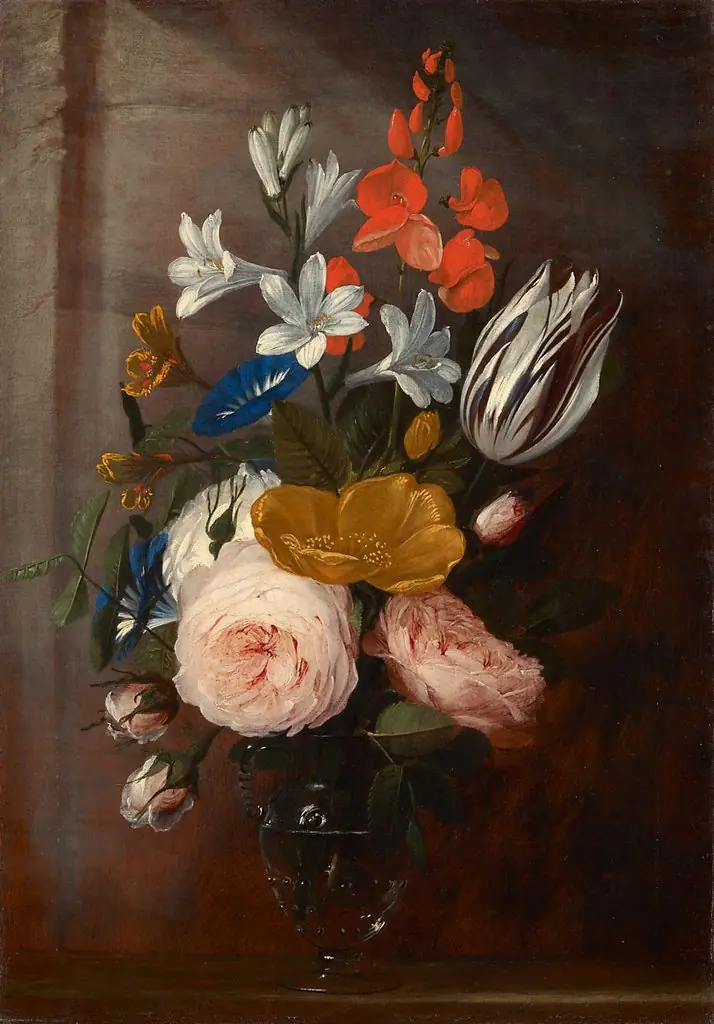
Flowers in a Vase with the Siege of Gravelingen is an oil painting by the Flemish Baroque painting artist Jan van den Hecke. It dates from 1652 and is held in the collection of the Kunsthistorisches Museum.
About this work
Overview
Active in Antwerp, Rome, and Brussels, he produced still lifes, landscapes, and battle scenes for patrons including Archduke Leopold Wilhelm of Austria.
Jan van den Hecke the Elder, a Flemish Baroque artist, painted *Flowers in a Vase with the Siege of Gravelingen* in 1652. Active in Antwerp, Rome, and Brussels, he produced still lifes, landscapes, and battle scenes for patrons including Archduke Leopold Wilhelm of Austria. This work merges two genres: a meticulously rendered floral arrangement and a distant historical event, demonstrating the artist’s range within the Flemish Baroque tradition of detailed naturalism.
Subject & Meaning
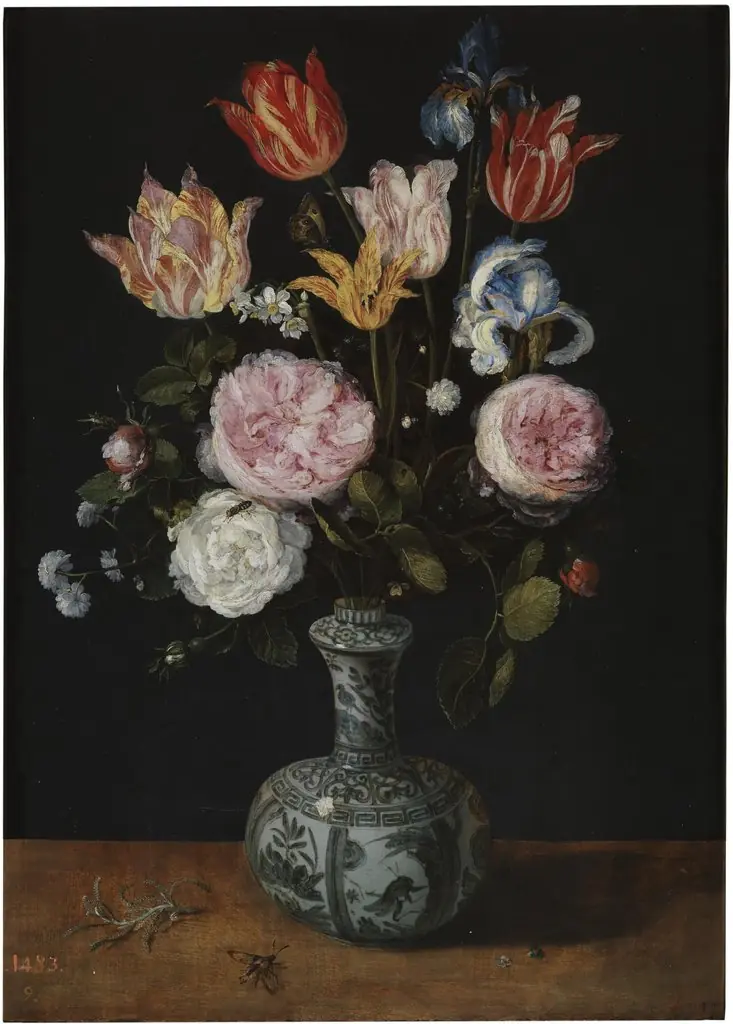
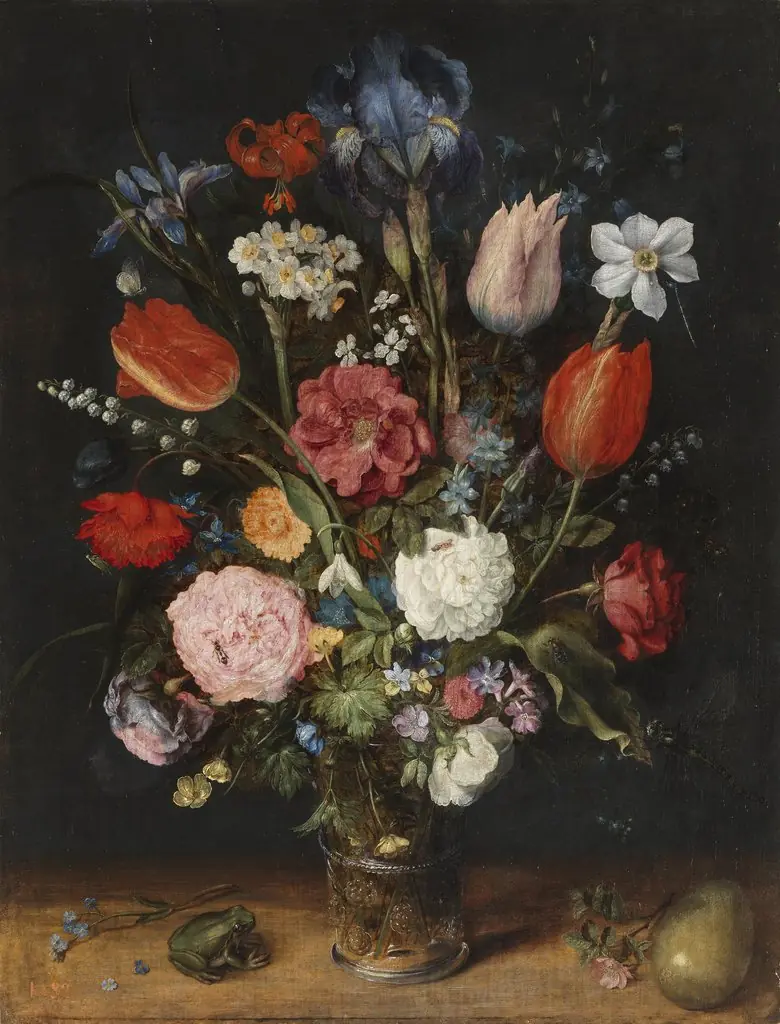
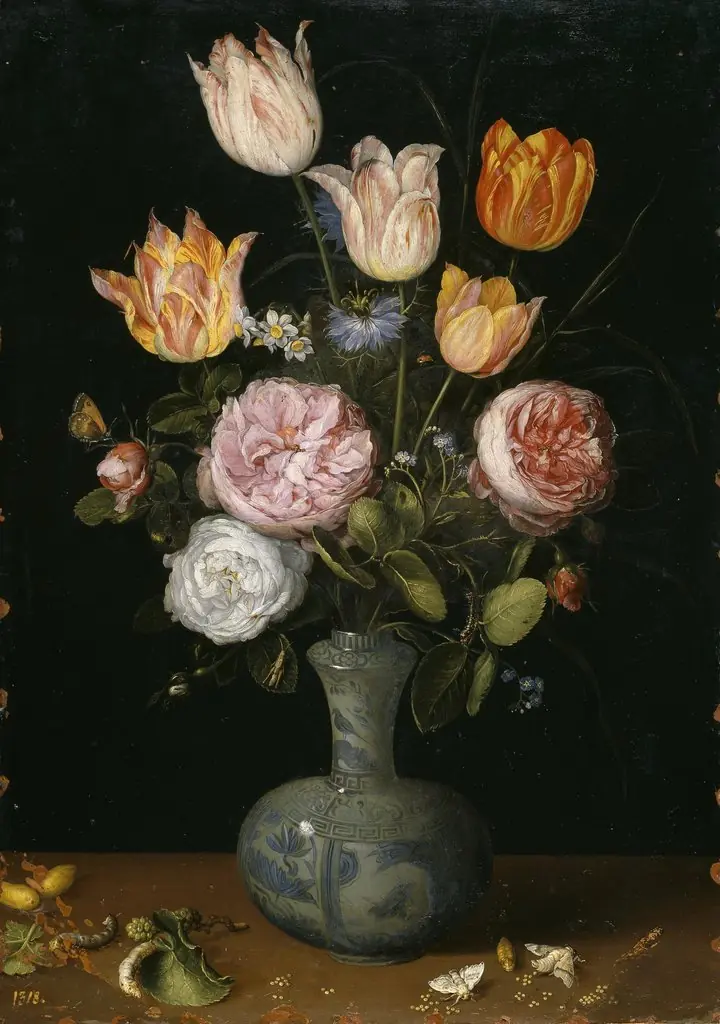
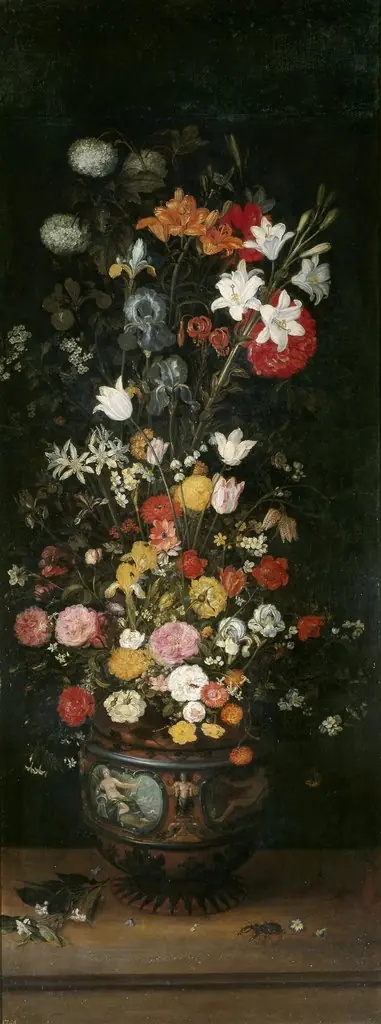
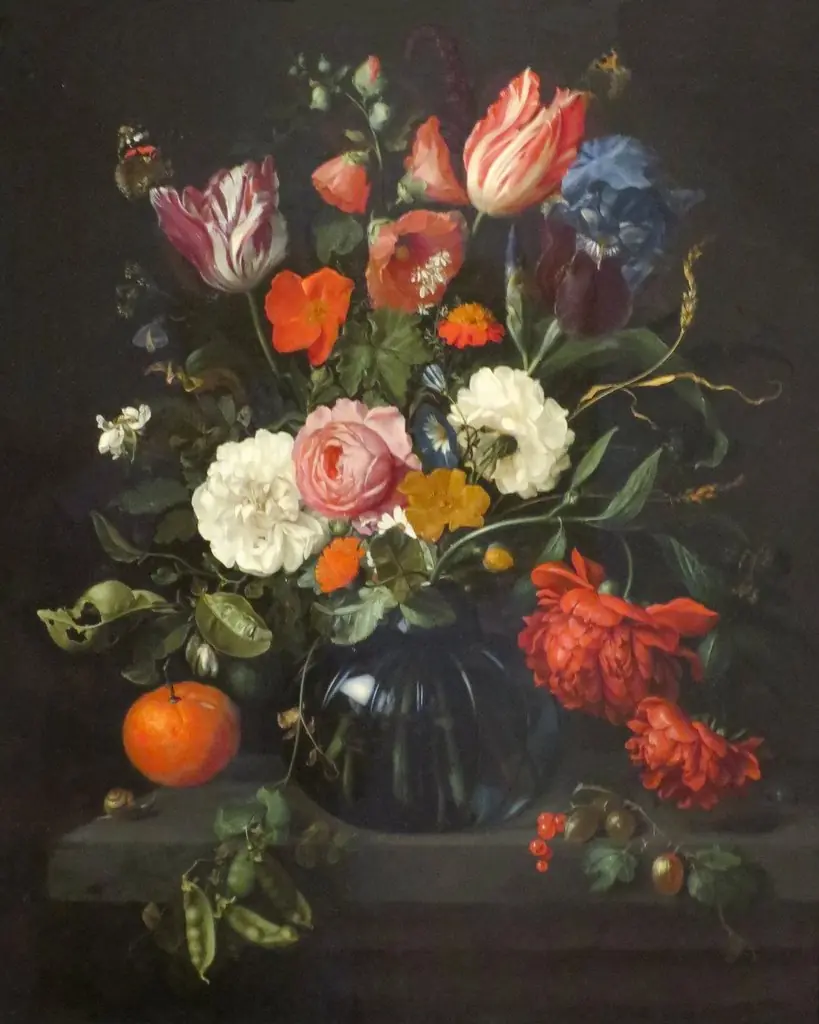
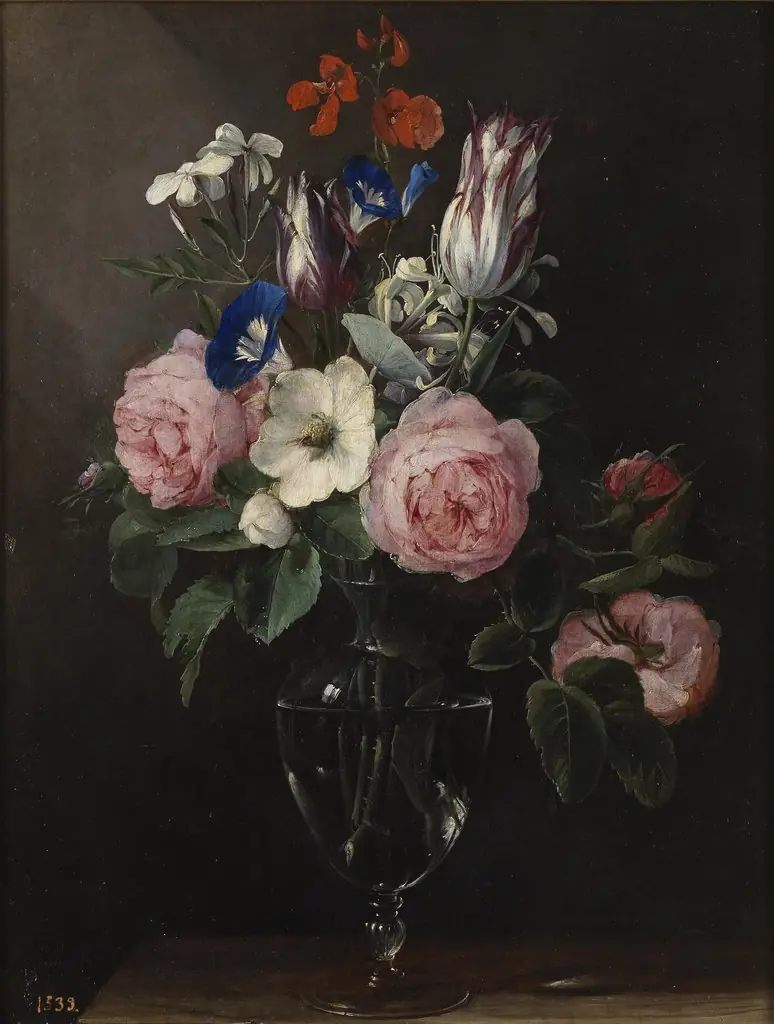
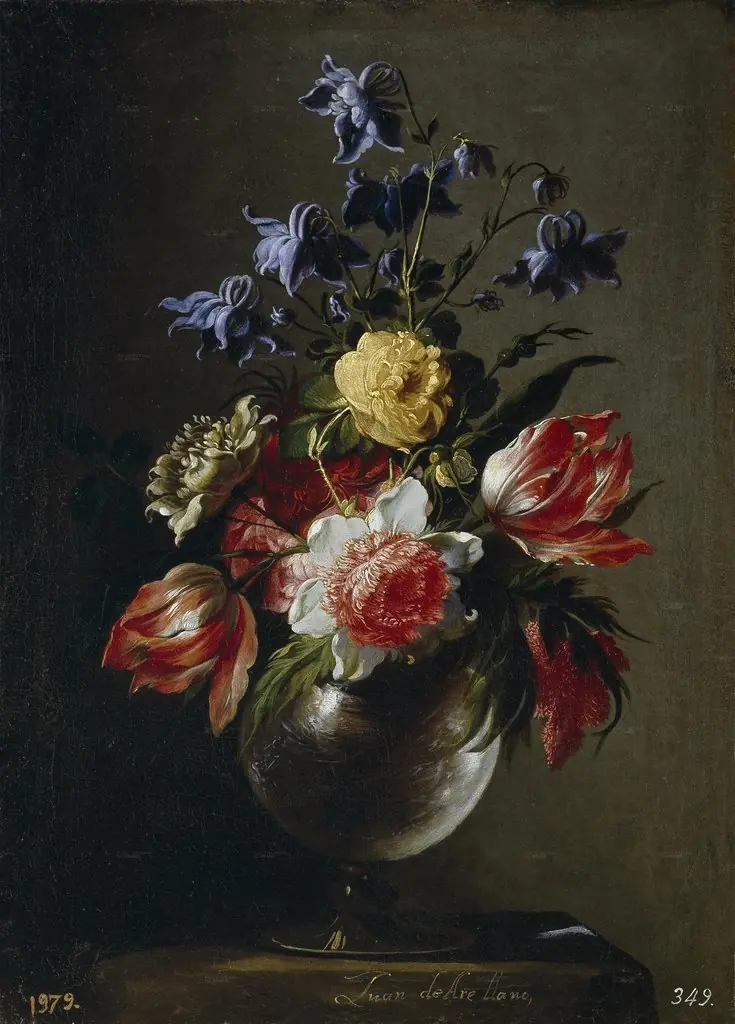
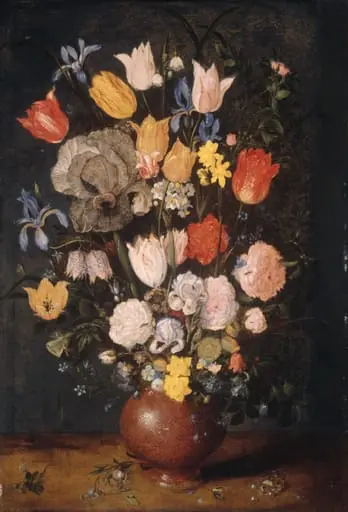
The painting juxtaposes a vibrant bouquet—tulips in white, pink, and red, interspersed with poppies and small white blooms—with a faint cityscape depicting the Siege of Gravelingen. The flowers, spilling from a glass vase, dominate the foreground, their delicate petals and striations rendered with precision. The subdued battle scene in the background suggests a contrast between fleeting beauty and human conflict, though the relationship between the two elements remains open to interpretation.
Technique & Style
Van den Hecke employed a refined technique to achieve the painting’s luminous effects, particularly in the tulip petals, which appear almost translucent. Layered glazes create depth and a glossy surface, enhancing the illusion of light catching the folds of the flowers. The composition balances intricate detail in the foreground with a softer, atmospheric treatment of the distant siege, reflecting the Flemish Baroque emphasis on both realism and spatial recession.
History & Provenance
Created in 1652, the painting entered the collection of Archduke Leopold Wilhelm of Austria, a prominent patron of Flemish art. It later became part of the holdings of the Kunsthistorisches Museum in Vienna, where it remains. The work’s dual focus on still life and historical narrative aligns with van den Hecke’s documented versatility, though specific early owners beyond the archduke are not recorded.
Context
The mid-17th century saw Flemish artists expanding traditional genres, often merging still life with other subjects. Van den Hecke’s inclusion of a battle scene—likely referencing the 1652 siege—reflects the era’s interest in historical events, even within compositions dominated by floral motifs. The tulips, prized for their rarity and beauty, also carried symbolic weight, evoking themes of transience and the passage of time.
Legacy
While not among the most widely reproduced works of the Flemish Baroque, *Flowers in a Vase with the Siege of Gravelingen* exemplifies the period’s fusion of genres and technical mastery. Its presence in the Kunsthistorisches Museum ensures its study as an example of van den Hecke’s hybrid compositions. The painting’s dual focus continues to invite analysis of how artists balanced decorative and narrative elements in the 17th century.
Artist & collection
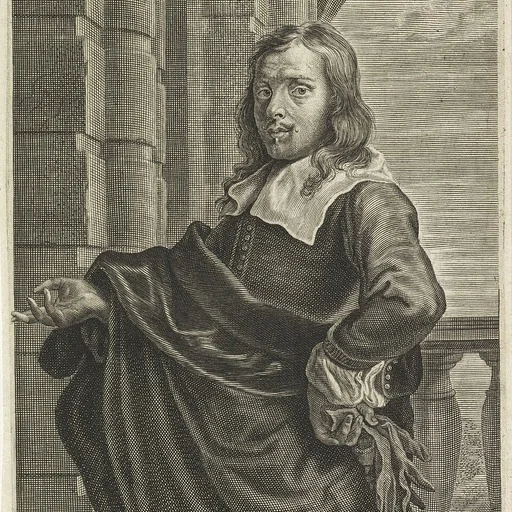
Artist
Jan van den Hecke or Jan van den Hecke the Elder (1620–1684) was a Flemish Baroque painter, draughtsman, printmaker and engraver, mainly known for his still lifes, landscapes and battle scenes.