Artwork
Hercules between Vice and Virtue
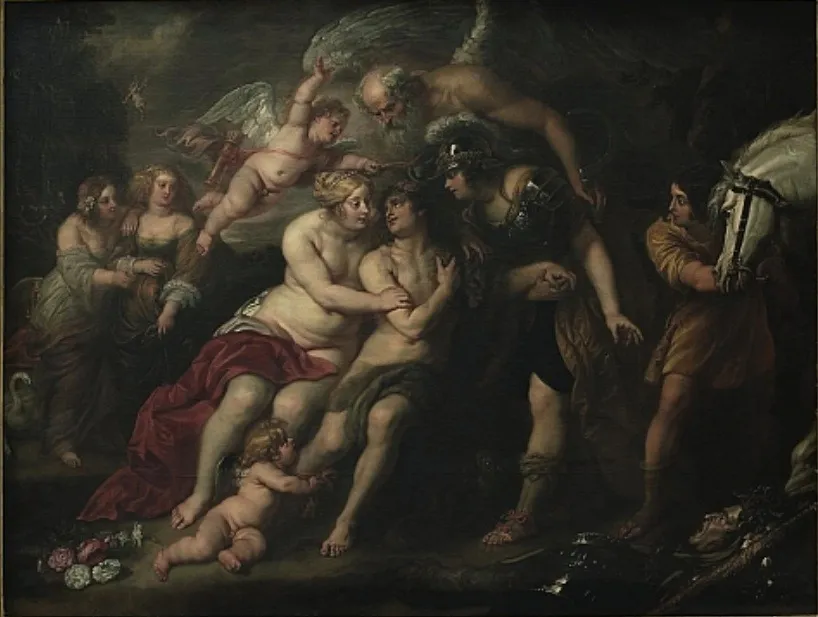
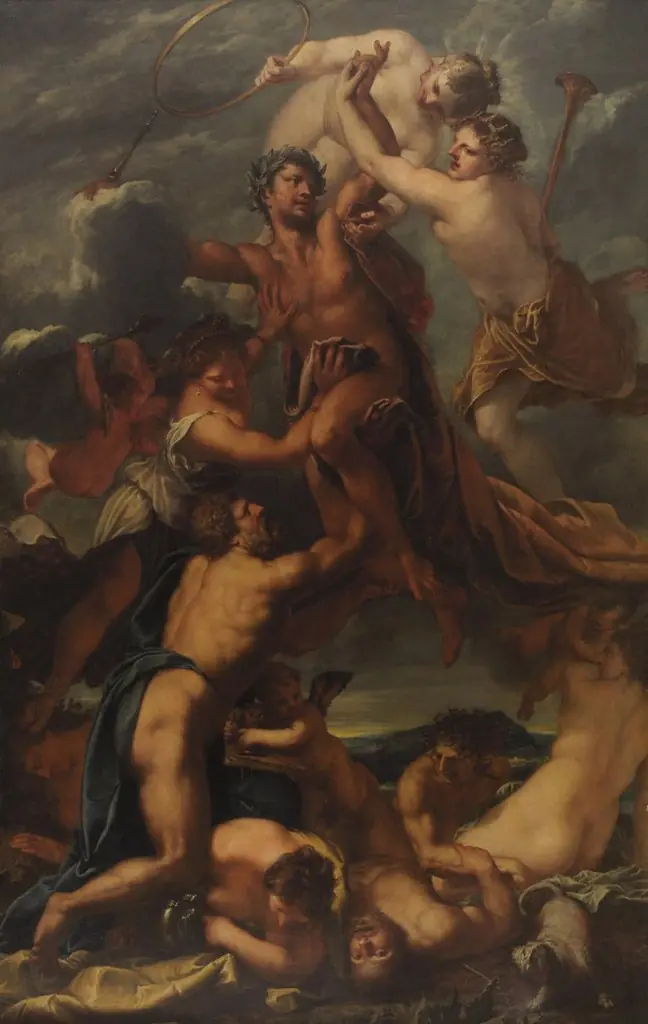
Hercules between Vice and Virtue is an oil painting by the Flemish Baroque painting artist Jan van den Hoecke. It dates from 1650 and is held in the collection of the Uffizi Gallery.
About this work
Overview
Hercules between Vice and Virtue is a 17th-century oil painting on canvas, created by Flemish artist Jan van den Hoecke around 1650. The work exemplifies the Flemish Baroque style.
Subject & Meaning
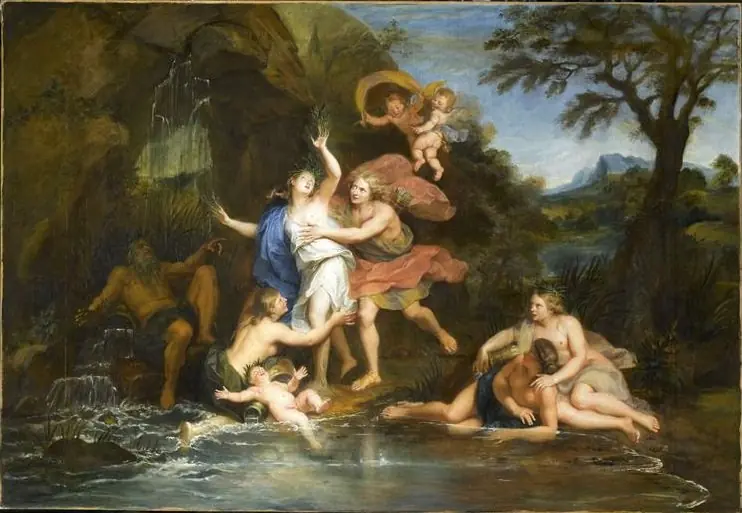
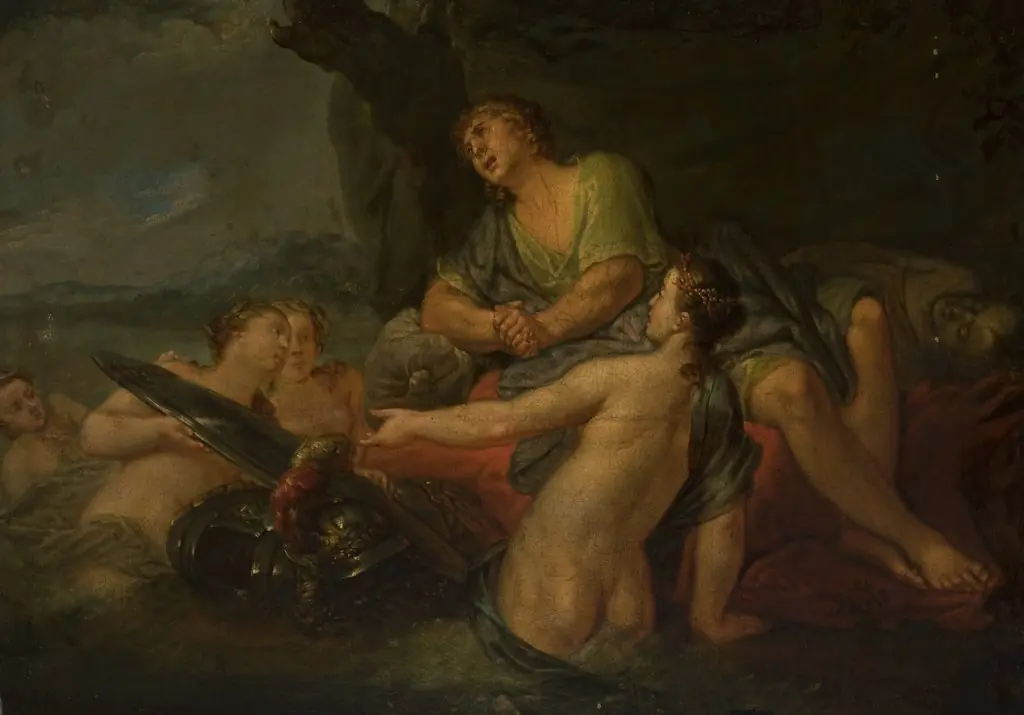
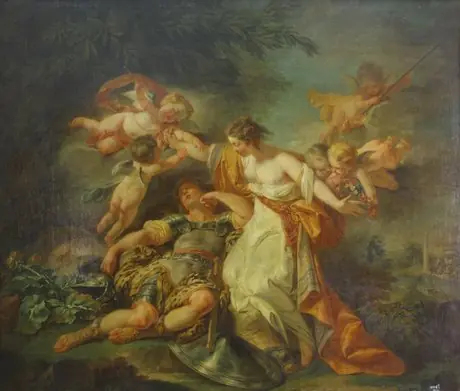
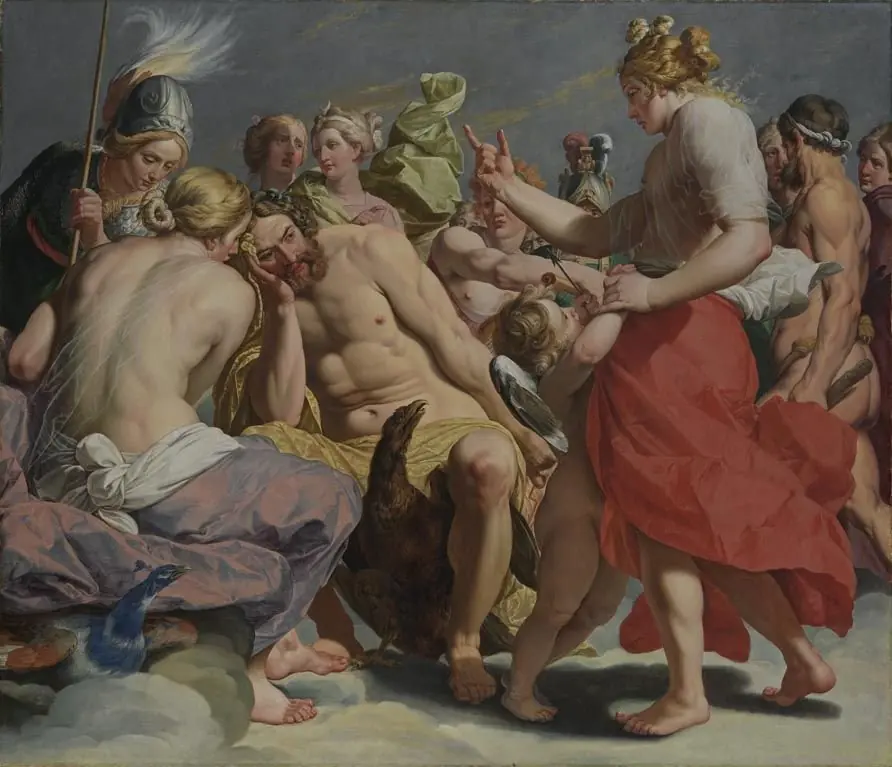
The painting depicts the mythological figure Hercules (Heracles) at a crossroads, symbolically choosing between Vice and Virtue. Compositionally, Hercules is central, embracing a female figure (Virtue) in red, while surrounded by contrasting attendants and a subtle, distant horse.
Technique & Style
Van den Hoecke employs chiaroscuro, leveraging deep shadows to accentuate key figures and guide the viewer's eye. The dramatic interplay of light and dark is characteristic of Flemish Baroque, enhancing the emotional and moral tension of the scene.
History & Provenance
Following van den Hoecke's time in Rubens' studio (1630s) and a decade in Rome, this work was later produced. It is now part of the Uffizi Gallery's collection.
Artist & collection
Artist
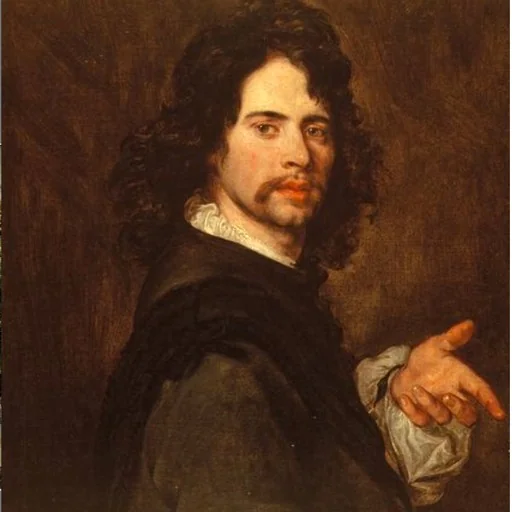
Jan van den Hoecke (baptised on 4 August 1611 – 1651) was a Flemish painter, draughtsman and designer of wall tapestries.