Artwork
Jacob and Esau are reconciled
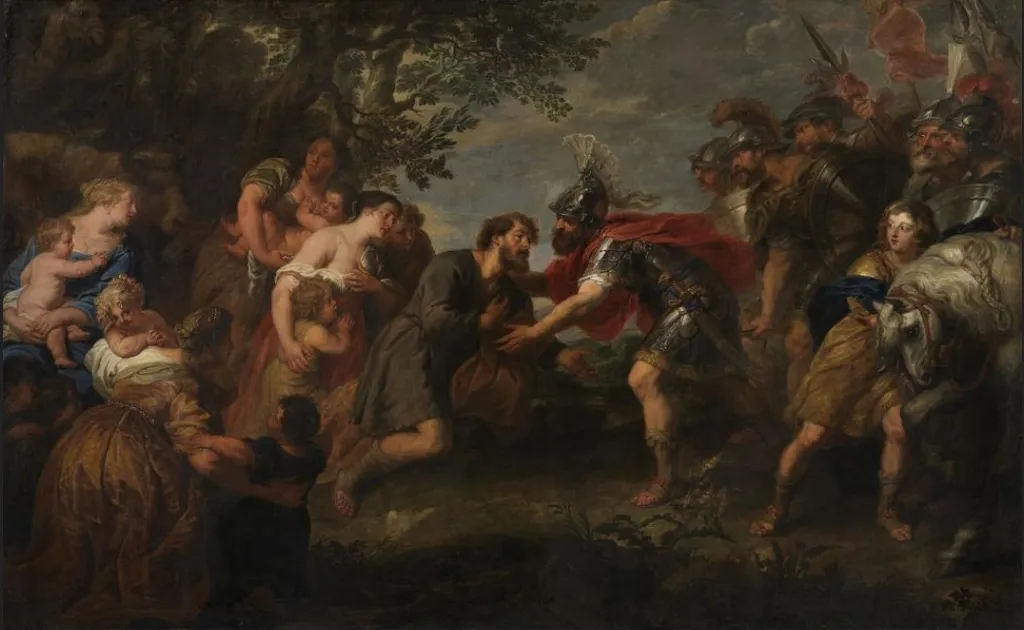
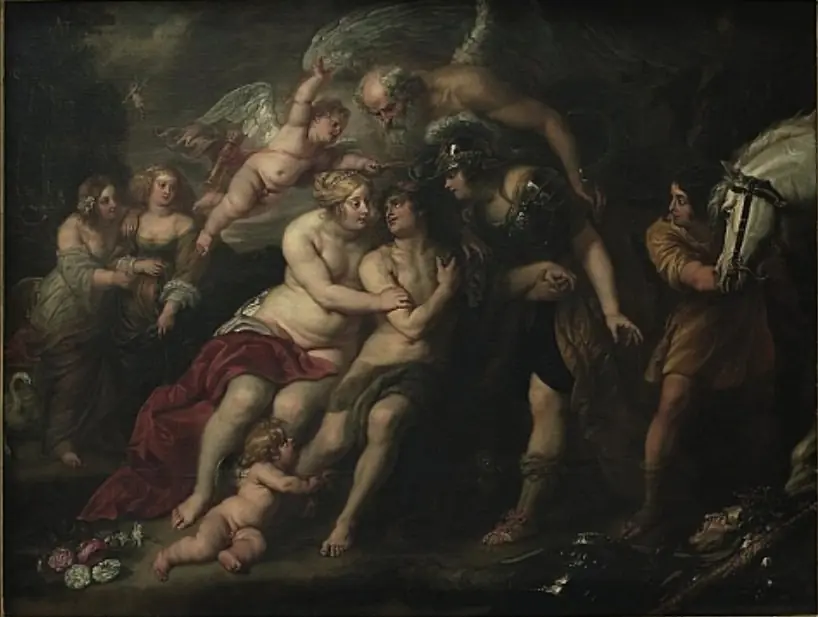
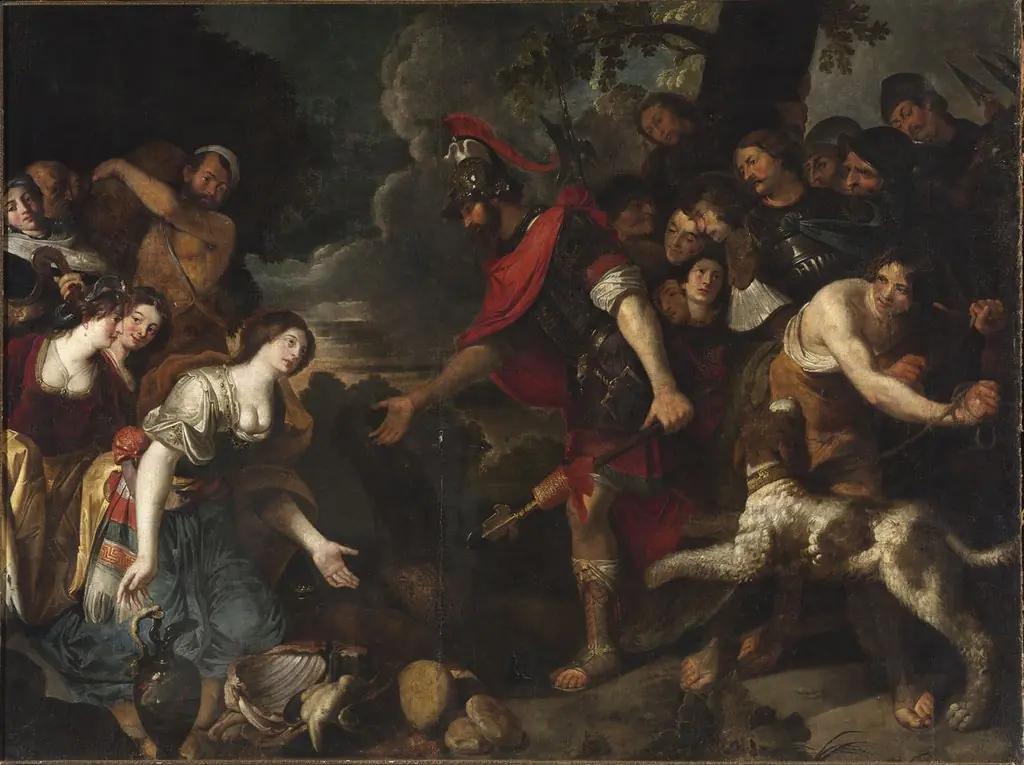
Jacob and Esau are reconciled is an oil painting by the Flemish Baroque painting artist Jan van den Hoecke. It dates from 1635 and is held in the collection of the Groeningemuseum.
About this work
Overview
Jacob and Esau are reconciled is a 1635 oil painting by Flemish Baroque artist Jan van den Hoecke, depicting a biblical scene of reconciliation within a religious genre framework.
Subject & Meaning
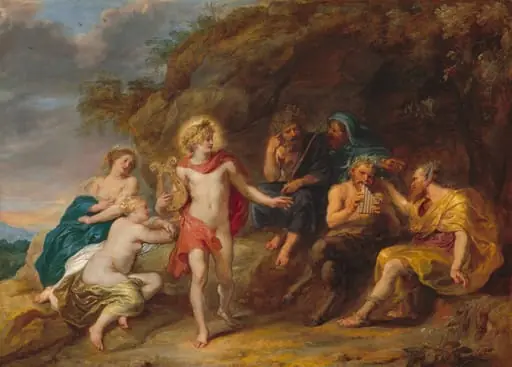
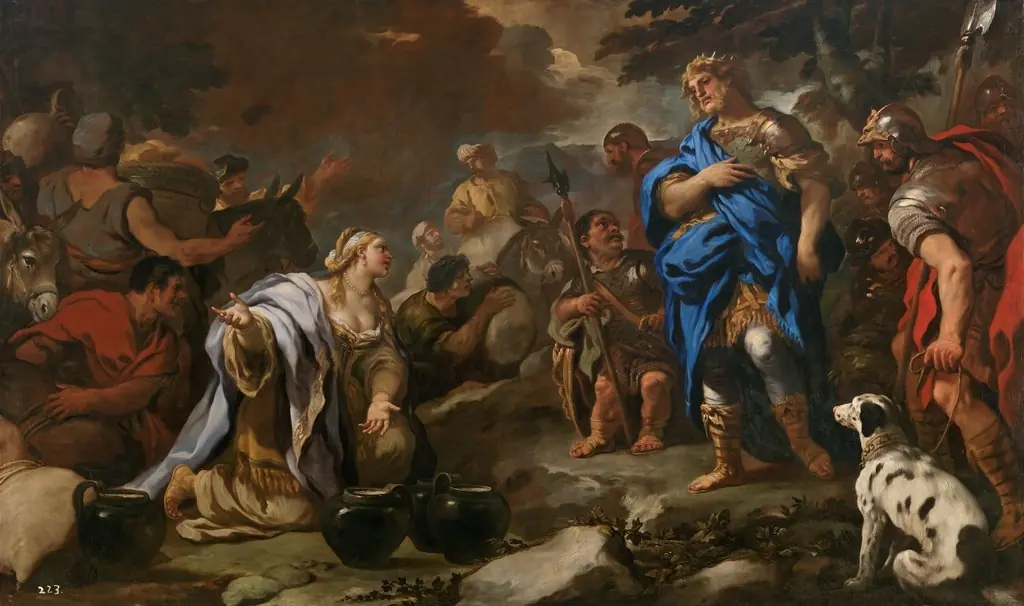
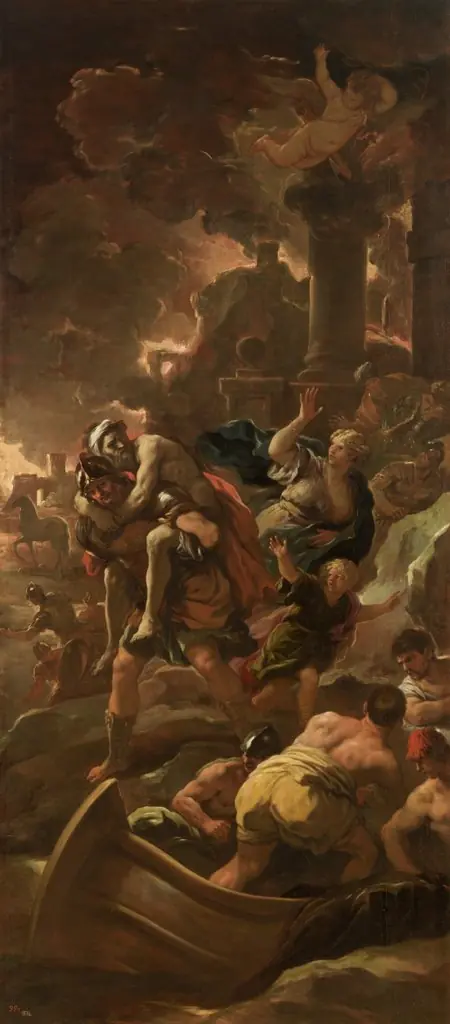
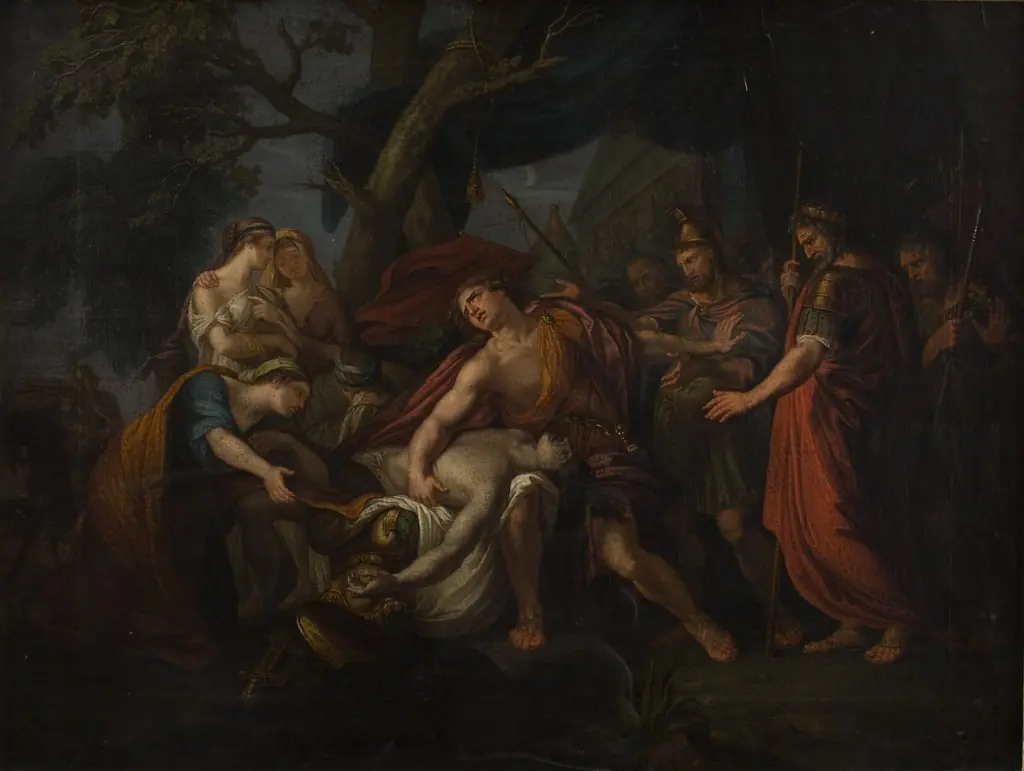
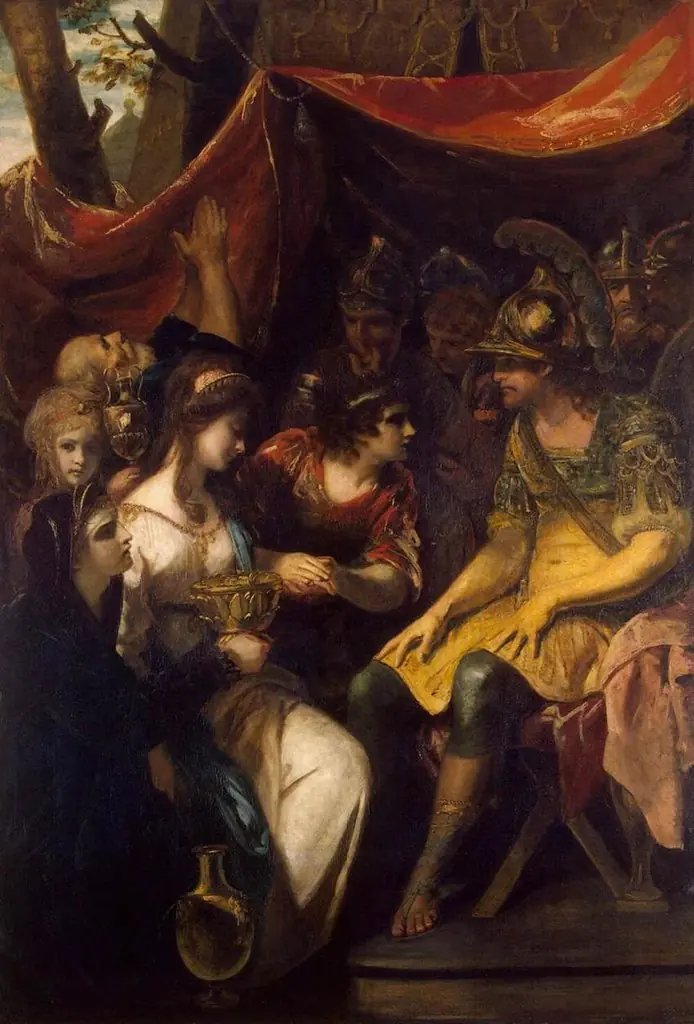
The painting illustrates the biblical reunion of Jacob and Esau. Compositionally, the central figures—a man in a red cloak and helmet reaching toward another holding a child—anchor the scene, surrounded by onlookers in armor and robes, a kneeling bearded man, and a woman with a baby, conveying a sense of witnessed reconciliation.
Technique & Style
Van den Hoecke employs chiaroscuro, juxtaposing deep shadows with bright highlights to create visual depth and draw attention to the central figures. The dramatic, swirling clouds and interplay of light and shadow further enhance the emotional intensity of the scene.
History & Provenance
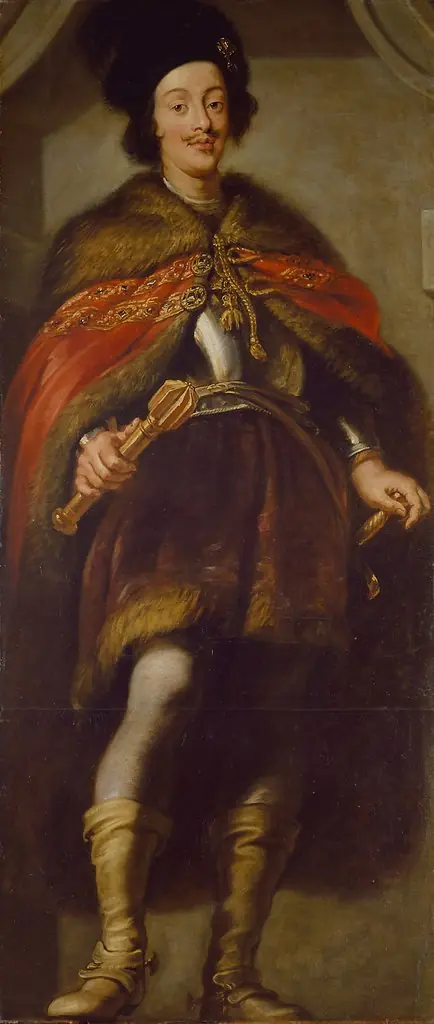
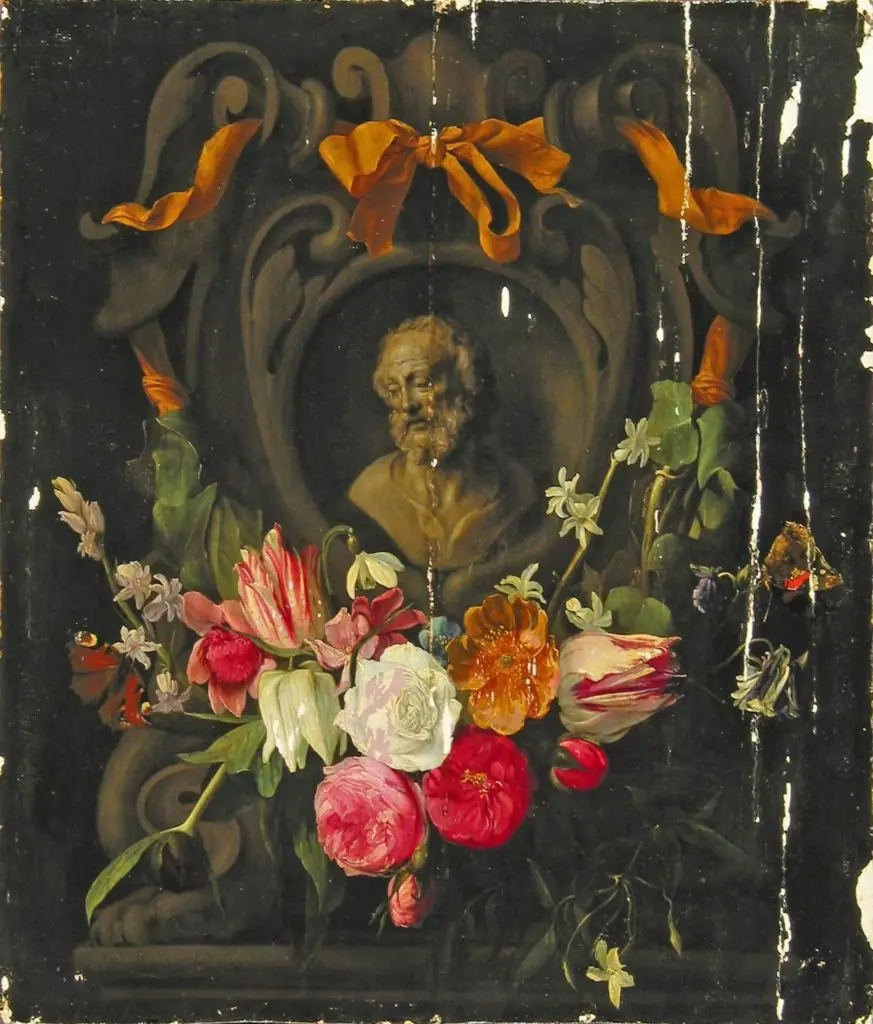
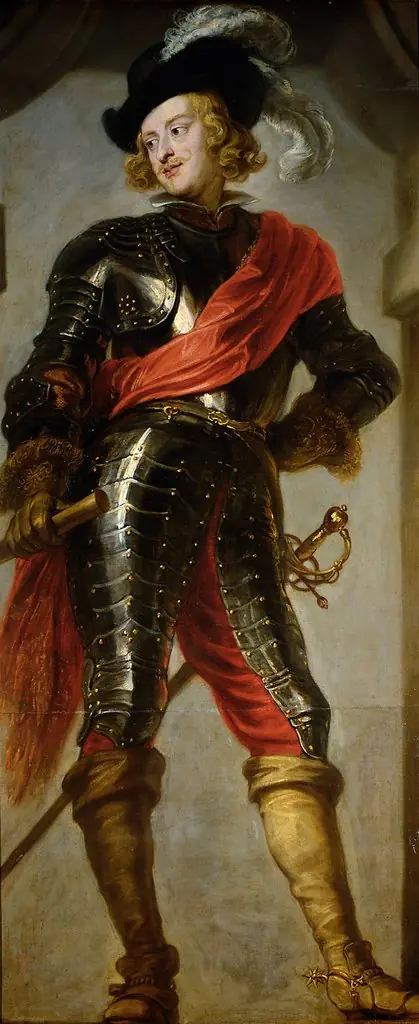
Created during van den Hoecke's time as a trained artist in Rubens’ studio, the painting is now part of the Groeningemuseum's collection. Van den Hoecke later worked as a court painter in Rome, Vienna, and Brussels.
Context
As a product of the Flemish Baroque, the painting reflects the movement's emphasis on emotional depth and dramatic lighting, influenced by van den Hoecke's training under Rubens.
Legacy
While specific legacy details of *Jacob and Esau are reconciled* are not highlighted, its style and technique contribute to the broader understanding of Flemish Baroque art's evolution and van den Hoecke's contribution to it.
Artist & collection
Artist
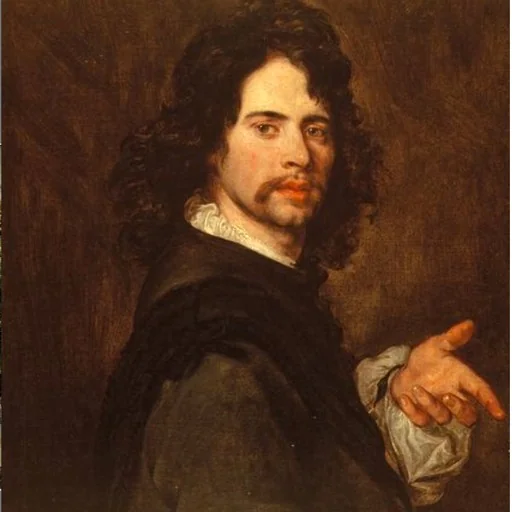
Jan van den Hoecke (baptised on 4 August 1611 – 1651) was a Flemish painter, draughtsman and designer of wall tapestries.