Artwork
The Old Palace in Brussels
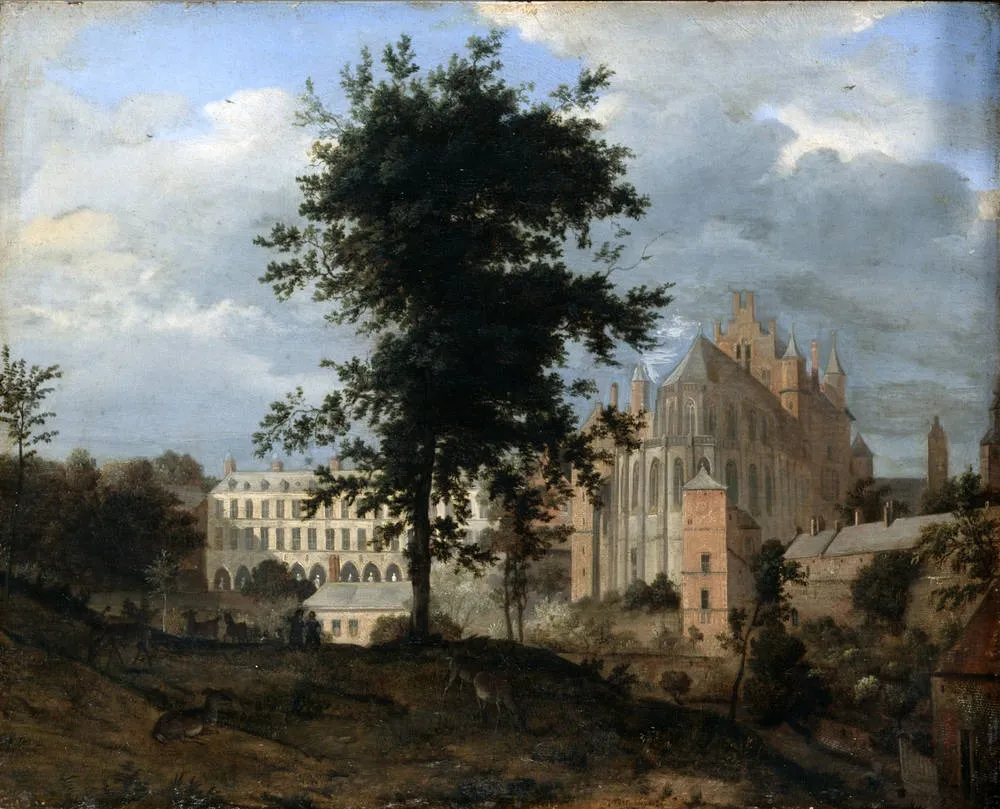
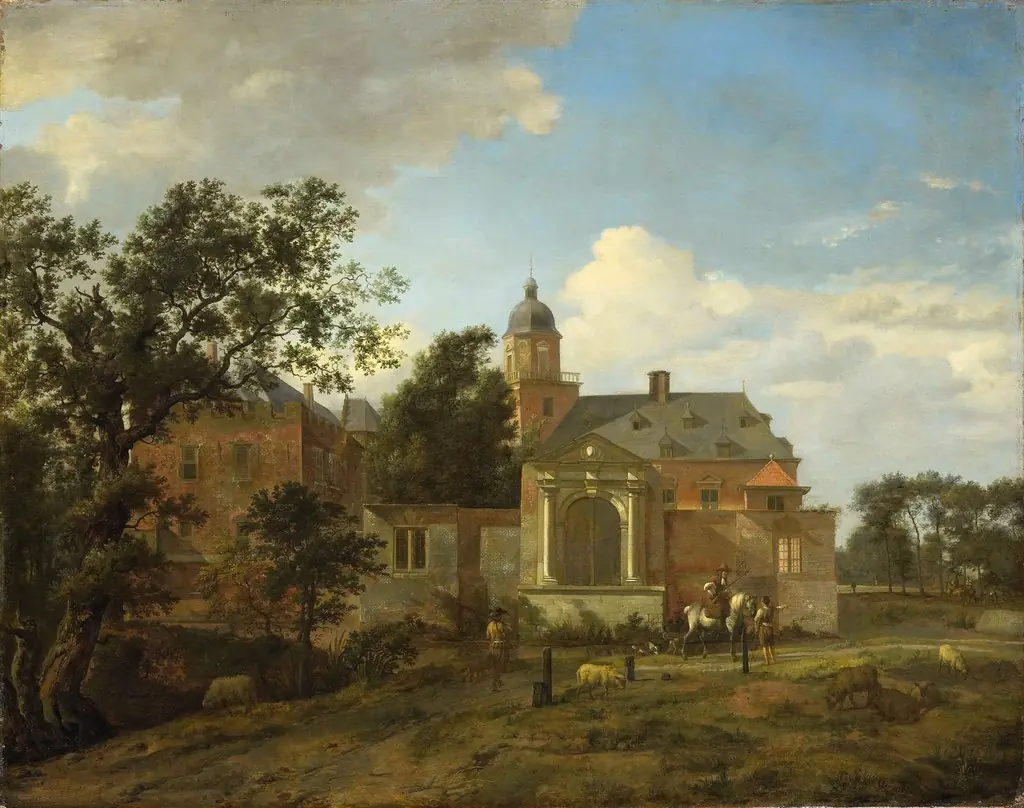
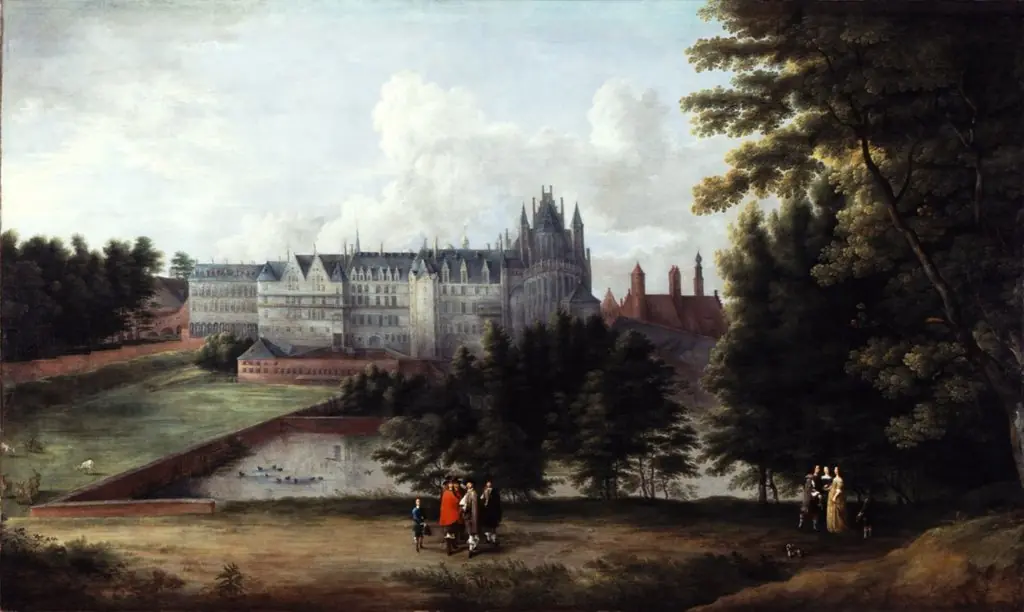
The Old Palace in Brussels is an oil painting by the Dutch Golden Age artist Jan van der Heyden. It dates from 1672 and is held in the collection of the Staatliche Kunstsammlungen Dresden.
About this work
Overview
The scene is neither dramatic nor idealized, instead offering a measured observation of architecture within its everyday surroundings.
Painted in 1672 by Jan van der Heyden, this oil-on-canvas work depicts the Old Palace in Brussels, a structure then serving as the seat of Habsburg governance in the Low Countries. Van der Heyden, a Dutch artist known for meticulous urban views, rendered the building with precision and quiet realism. The scene is neither dramatic nor idealized, instead offering a measured observation of architecture within its everyday surroundings.
Subject & Meaning
The Old Palace, with its clustered towers and numerous windows, stands as a symbol of administrative power in the Spanish Netherlands. Van der Heyden does not glorify the structure but presents it as a functioning part of urban life. Small figures—a horse, a dog, pedestrians—animate the foreground without drawing attention from the building, suggesting the palace’s role as a constant, unobtrusive presence in the daily rhythm of the city.
Technique & Style
Van der Heyden employed fine brushwork and a restrained palette of browns, grays, and muted ochres to convey texture and atmosphere. The sky, softly overcast, diffuses light evenly across the façade, enhancing architectural detail without harsh shadows. His technique reflects a scientific eye: surfaces are rendered with clarity, windows and stonework precisely aligned, and perspective carefully calculated to convey spatial depth without theatricality.
History & Provenance
Created during the height of the Dutch Golden Age, the painting entered the collection of the Gemäldegalerie Alte Meister in Dresden, where it remains today. Its journey from Brussels to Germany reflects the movement of artworks across European courts and collections in the 18th and 19th centuries. The work’s survival and preservation underscore its value as a document of early modern urban architecture.
Context
Van der Heyden painted this during a period when Dutch artists increasingly turned to secular, topographical subjects. Unlike Italianate landscapes, his townscapes emphasized accuracy over imagination. Brussels, under Spanish rule, was a political center, yet van der Heyden treated it with the same detached observation he applied to Amsterdam or Utrecht, reflecting a broader Dutch interest in documenting the built environment.
Legacy
This painting exemplifies van der Heyden’s contribution to architectural representation in Northern European art. His method influenced later topographical painters and surveyors who valued precision over sentiment. Though not widely celebrated in his time as a history painter, his works endure as valuable records of 17th-century urban form, appreciated for their quiet fidelity rather than dramatic flair.
Artist & collection
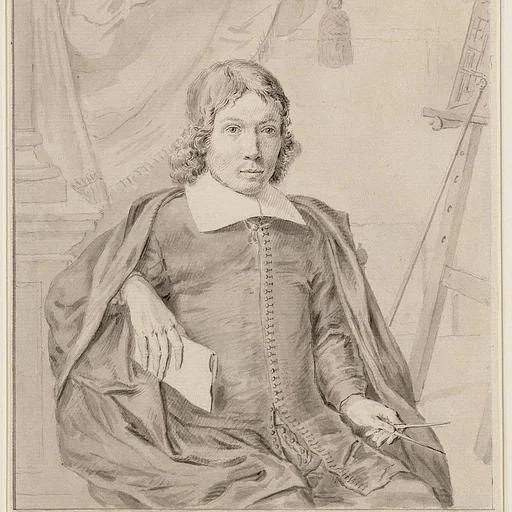
Artist
Jan van der Heyden (5 March 1637, Gorinchem – 28 March 1712, Amsterdam) was a Dutch Baroque-era painter, glass painter, draughtsman and printmaker.