Artwork
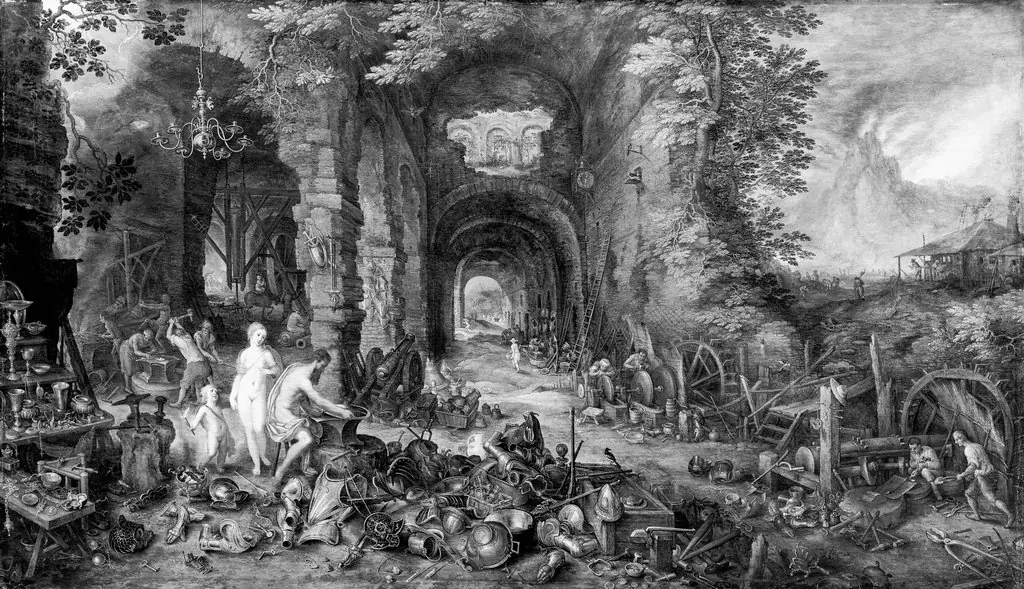
Venus at the Forge of Vulcan (Allegory of the Fire)
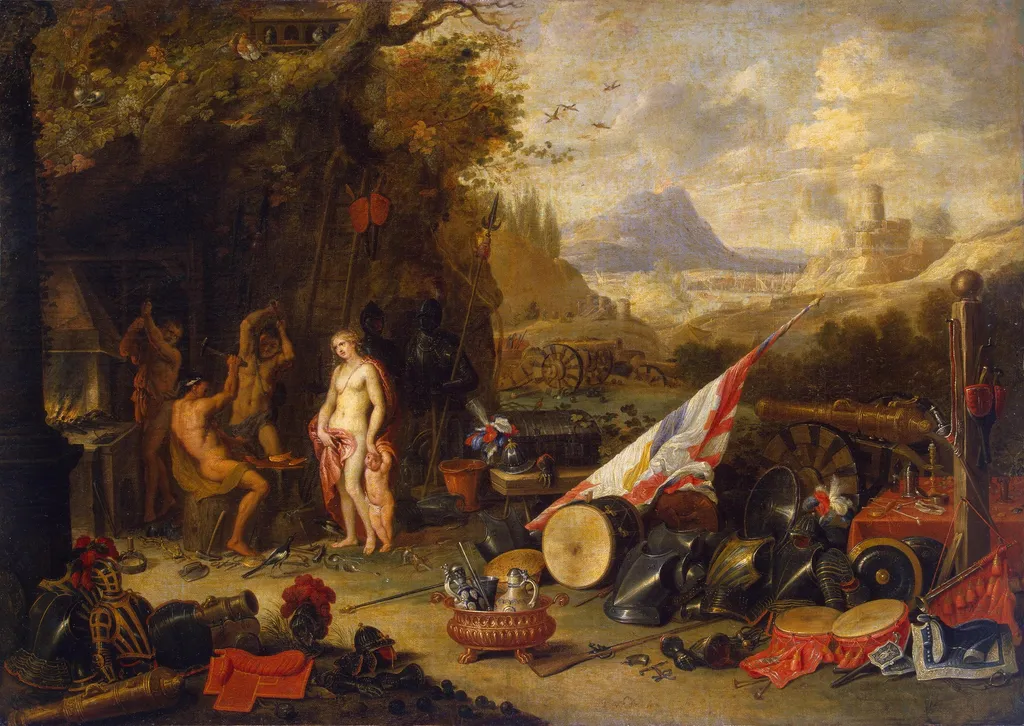
Venus at the Forge of Vulcan (Allegory of the Fire) is an oil painting by the Flemish Baroque painting artist Jan van Kessel the Elder. It dates from 1662 and is held in the collection of the Hermitage Museum.
About this work
Overview
The painting reflects the artist’s synthesis of narrative and decorative elements typical of mid‑seventeenth‑century Antwerp.
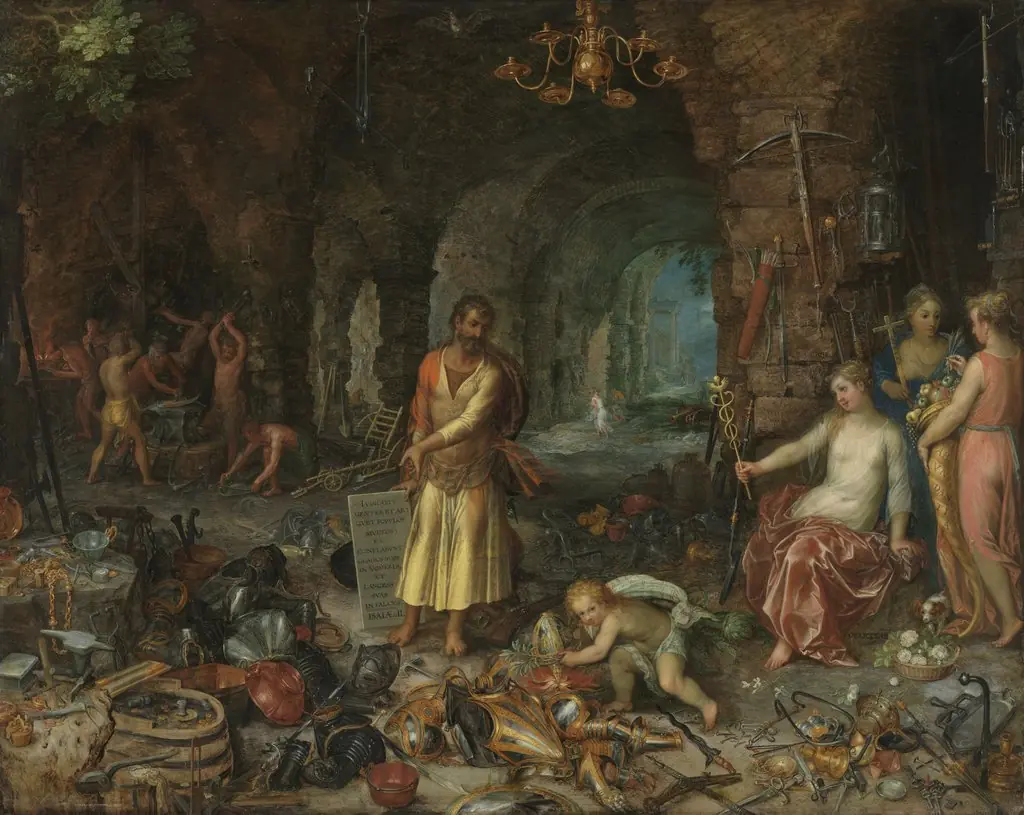
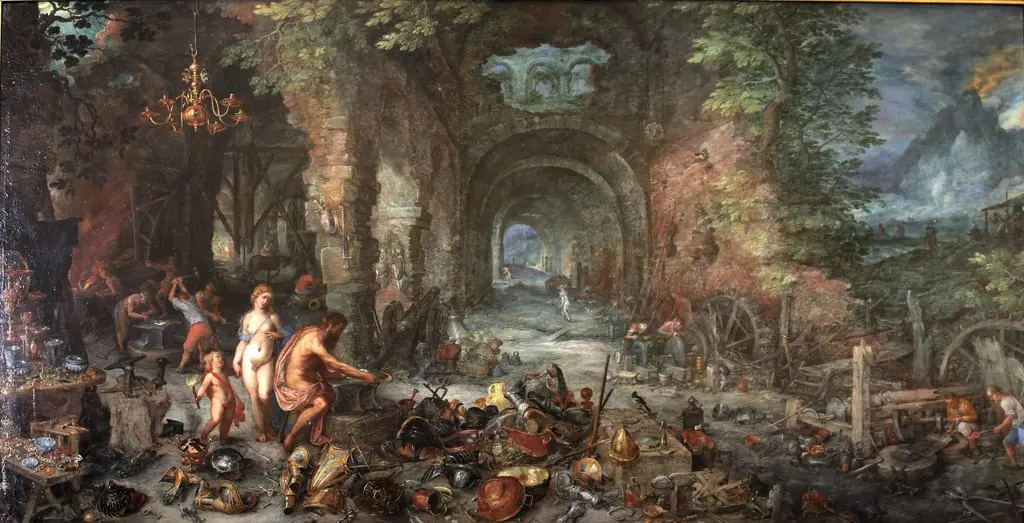
Created in 1662, this oil on canvas by Jan van Kessel the Elder belongs to the Flemish Baroque tradition. The composition presents an allegorical tableau titled *Venus at the Forge of Vulcan (Allegory of the Fire)*, in which the classical goddess of love is placed amid a setting that suggests a workshop of the god of metalworking. The painting reflects the artist’s synthesis of narrative and decorative elements typical of mid‑seventeenth‑century Antwerp.
Subject & Meaning
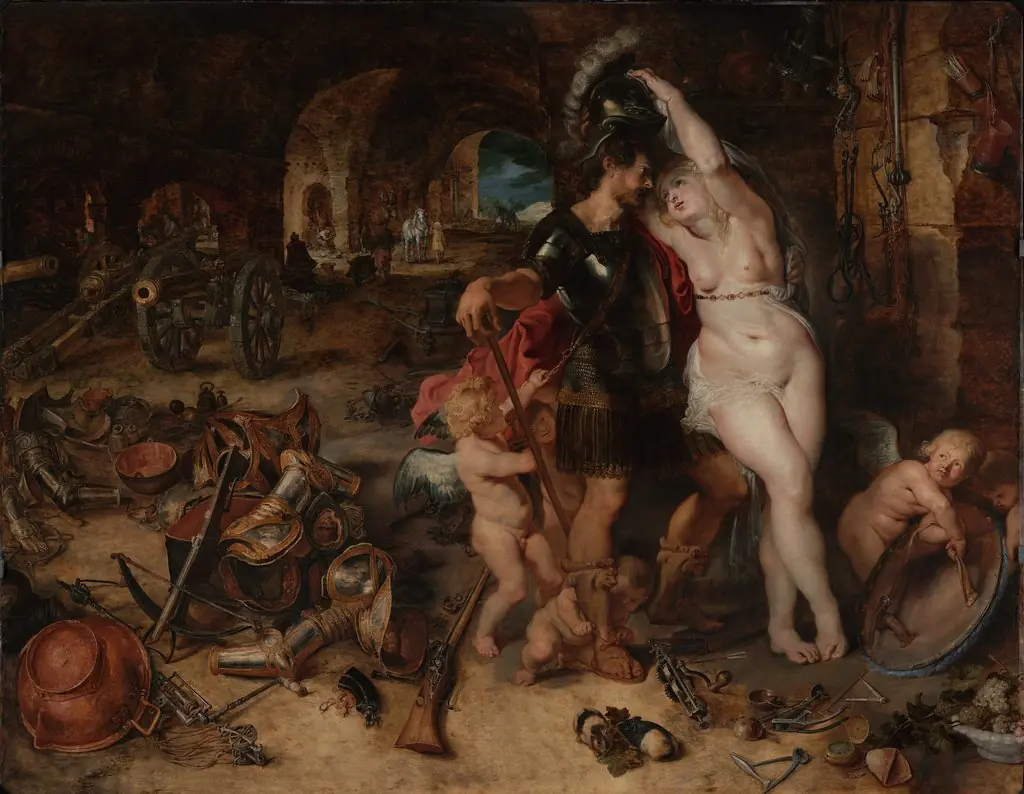
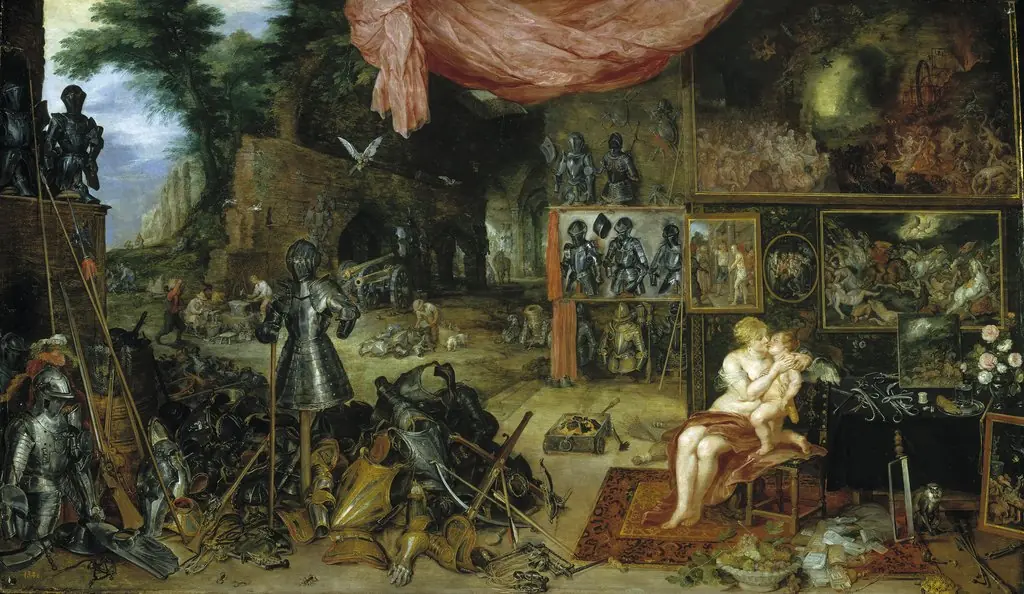
At the centre stands Venus, identified by her graceful posture and attributes of love, surrounded by symbols of warfare and industry—a red‑and‑white flag, a drum, and assorted armor and weapons. The juxtaposition of the love deity with the implements of fire and combat alludes to the mythic relationship between Venus and Vulcan, hinting at the transformative power of desire and creation.
Technique & Style
Van Kessel employs a palette that balances warm metallic tones of the armor with cool blues and greens of the distant landscape, creating a sense of depth through subtle chiaroscuro. The brushwork renders textures—from the sheen of metal to the foliage—while the composition’s diagonal lines convey a dynamic tension, suggesting imminent movement within the forge’s fiery atmosphere.
History & Provenance
Born in Antwerp in 1626, Jan van Kessel the Elder worked his entire career in the city, drawing on the legacy of his grandfather Jan Brueghel the Elder and other Flemish masters. The painting remained in private collections for centuries before entering a public museum collection in the early twentieth century, where it has been displayed as an example of Baroque allegorical painting.
Context
The work reflects the 17th‑century Flemish interest in allegory, where mythological subjects served as vehicles for moral and philosophical commentary. By placing Venus within a forge, van Kessel joins a broader artistic trend that linked classical narratives to contemporary concerns about industry, craftsmanship, and the interplay of passion and labor.
Own this work as a print
Artist & collection
Artist
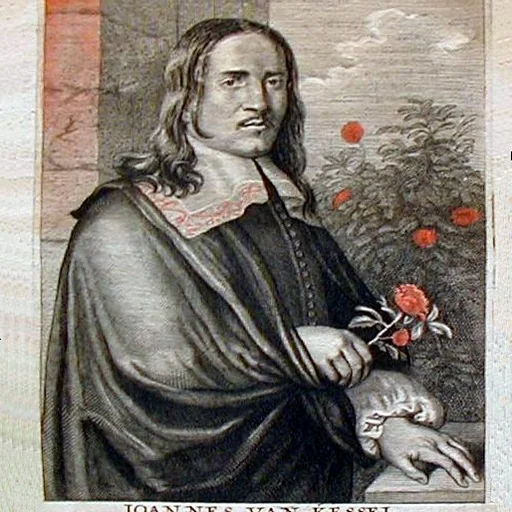
Jan van Kessel the Elder or Jan van Kessel (I) (baptized 5 April 1626, Antwerp – 17 April 1679, Antwerp) was a Flemish painter active in Antwerp in the mid-17th century.