Artwork
A monkey and a dog beside dead game and fruits, with the estate of Rijxdorp near Wassenaar in the background
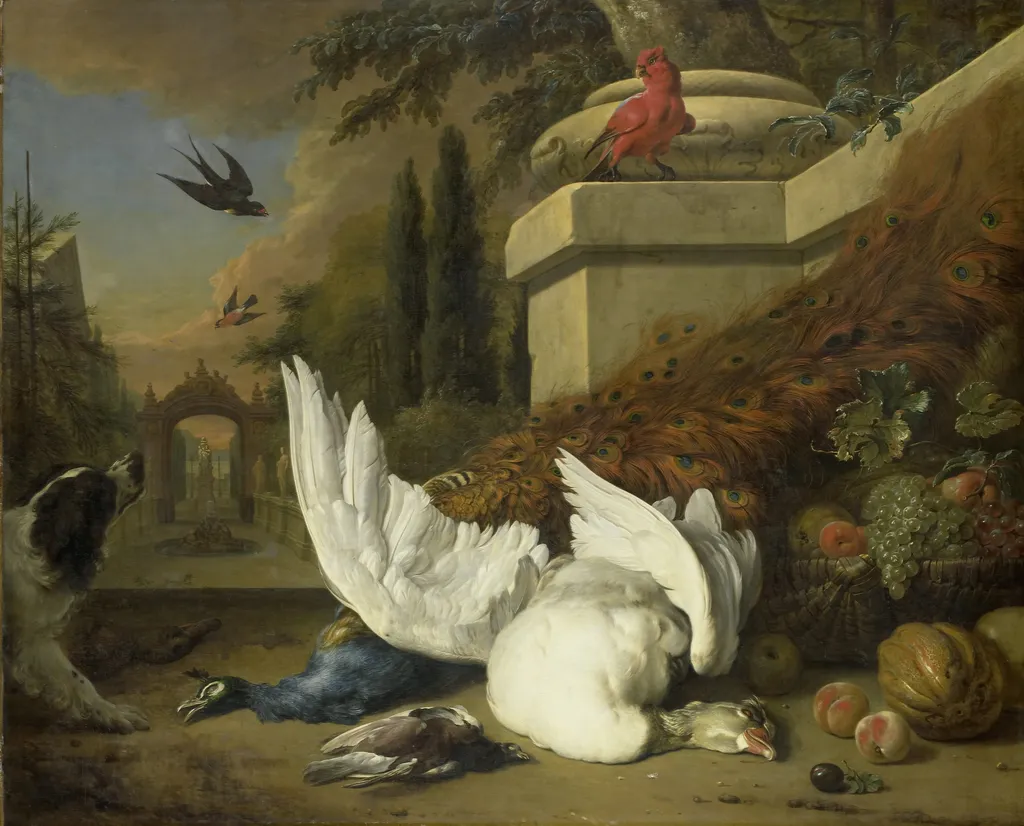
A monkey and a dog beside dead game and fruits, with the estate of Rijxdorp near Wassenaar in the background is an oil painting by the Dutch Golden Age artist Jan Weenix. It dates from 1700 and is held in the collection of the Rijksmuseum.
About this work
Overview
Created in 1700, this oil painting by Jan Weenix combines a still‑life arrangement with a landscape view of the Rijxdorp estate near Wassenaar. The composition centers on a dead peacock, a perched red bird, a curious monkey on a stone plinth, and a dog, surrounded by scattered apples, pears, and other game. In the distance, trees and a modest building suggest a country manor.
Subject & Meaning
The work juxtaposes the vitality of living creatures—a monkey observing a red bird and a dog sniffing the ground—with the mortality of hunted game, exemplified by the lifeless peacock and other birds. This contrast reflects the Dutch Golden Age fascination with the bounty of the hunt and the fleeting nature of life, while the monkey’s inquisitive gaze adds a note of playful observation.
Technique & Style
Weenix employs a meticulous brushwork typical of Dutch still‑life painters, rendering feathers, fur, and fruit with precise texture and subtle chiaroscuro.
Weenix employs a meticulous brushwork typical of Dutch still‑life painters, rendering feathers, fur, and fruit with precise texture and subtle chiaroscuro. The composition balances detailed foreground elements with a softer, atmospheric background, allowing the estate to recede while maintaining depth. The palette combines rich earth tones with bright accents, especially in the peacock’s plumage and the red bird.
History & Provenance
Jan Weenix, trained by his father Jan Baptist Weenix and the bird‑specialist Melchior d’Hondecoeter, was renowned for hunting scenes and animal studies. Although early attributions sometimes confused his works with his father’s, this painting has long been recognized as his. It entered the collection of the Rijksmuseum, where it remains on public display.
Context
The piece belongs to a broader Dutch tradition of lavish still‑life and hunting tableaux that celebrated wealth, domestic abundance, and the skill of the artist in rendering material detail. Such works often served as status symbols for affluent patrons who owned country estates like Rijxdorp, linking the painting’s background to its intended audience.
Own this work as a print
Artist & collection
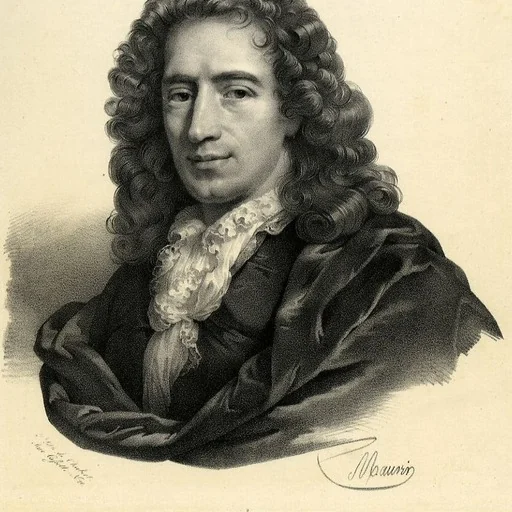
Artist
Jan Weenix or Joannis Wenix (between 1641/1649 – 19 September 1719 (buried)) was a Dutch painter.

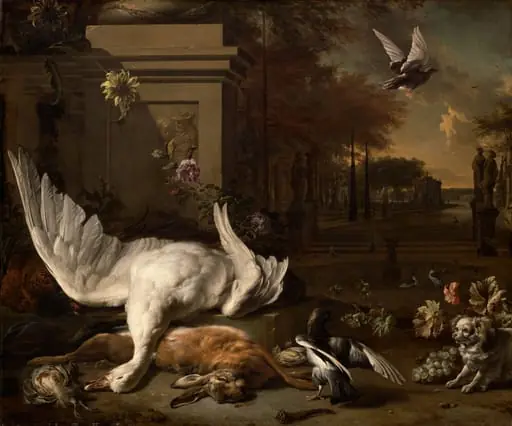 Still Life with Goose and Game before a Country Estate
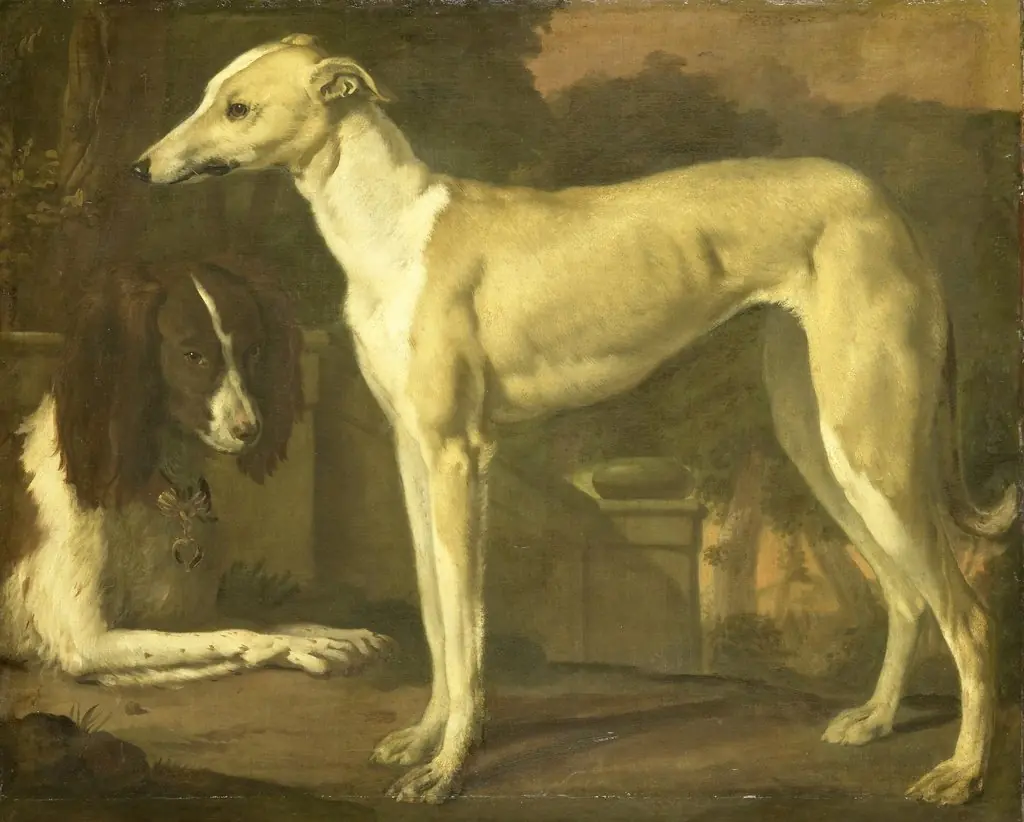 Portrait of a greyhound and a spaniel
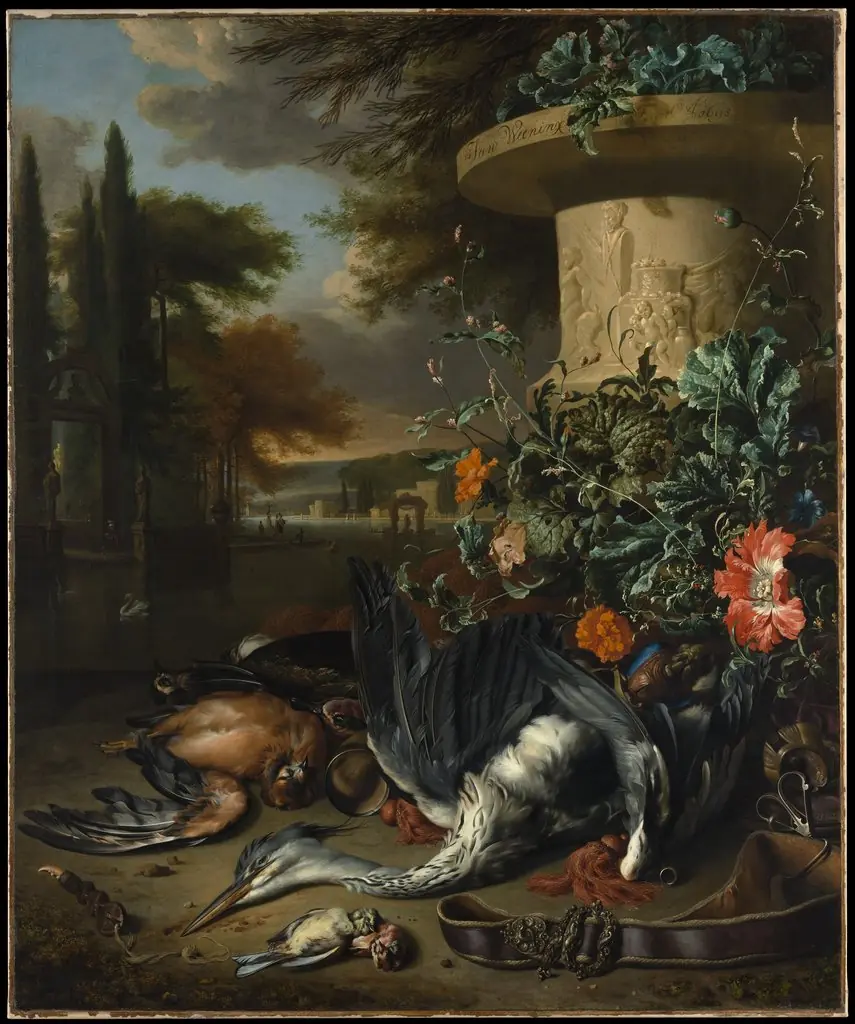 Gamepiece with a Dead Heron ("Falconer's Bag")
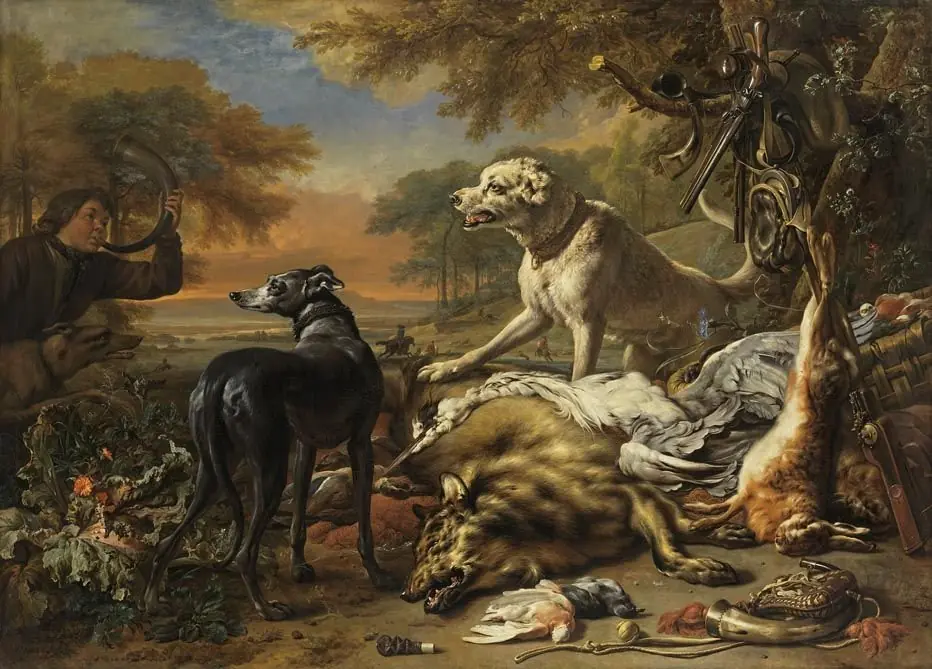 Hunting still life with wolf
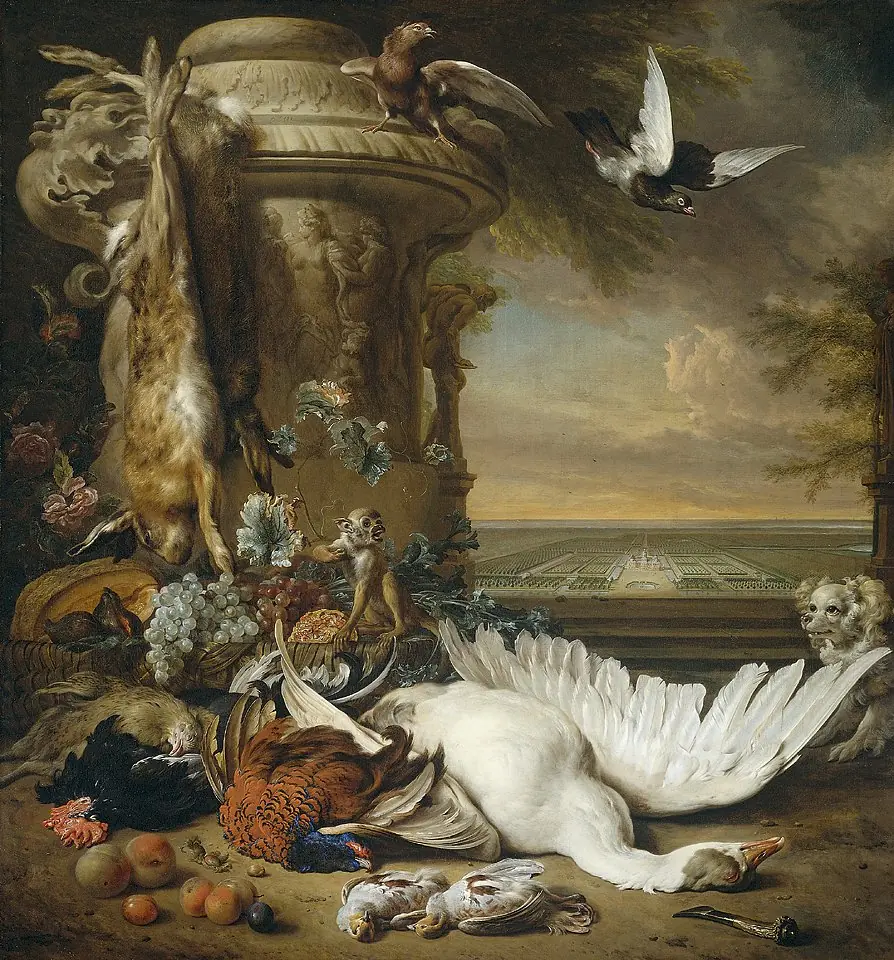 Still Life with Dead Game and Fruit beside a Garden Vase, with a Monkey, a Dog and Two Pigeons; in the Background Rijksdorp near Wassenaar, the Estate of Jonkheer Jacob Emmery, Baron of Wassenaar
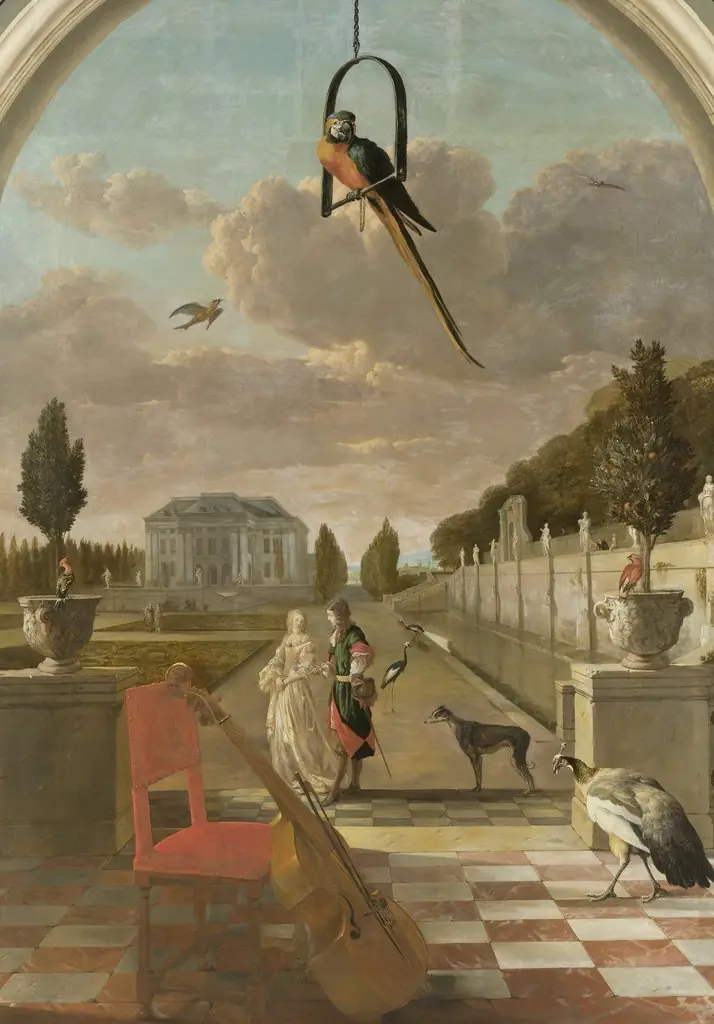 Park with country home
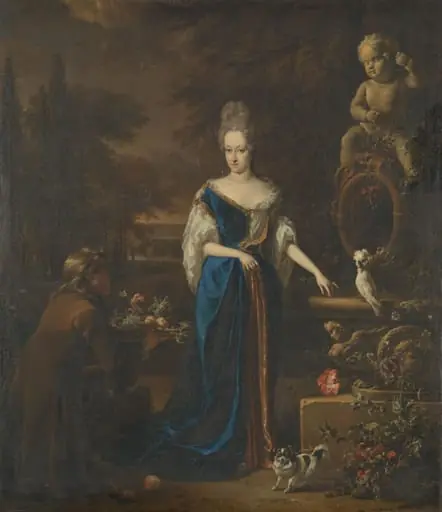 Portrait of Maria Cornelisz, Wife of Silvester van Tongeren
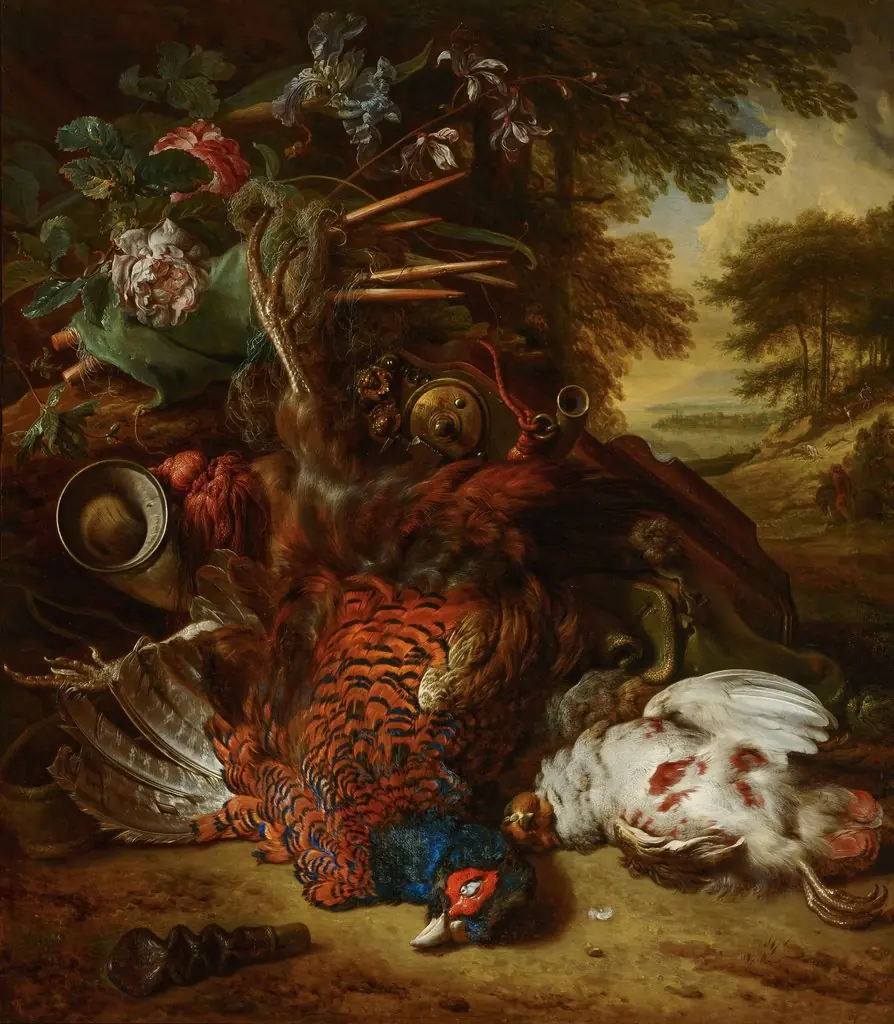 Hunting Still Life