Artwork
Portrait of Maria Cornelisz, Wife of Silvester van Tongeren
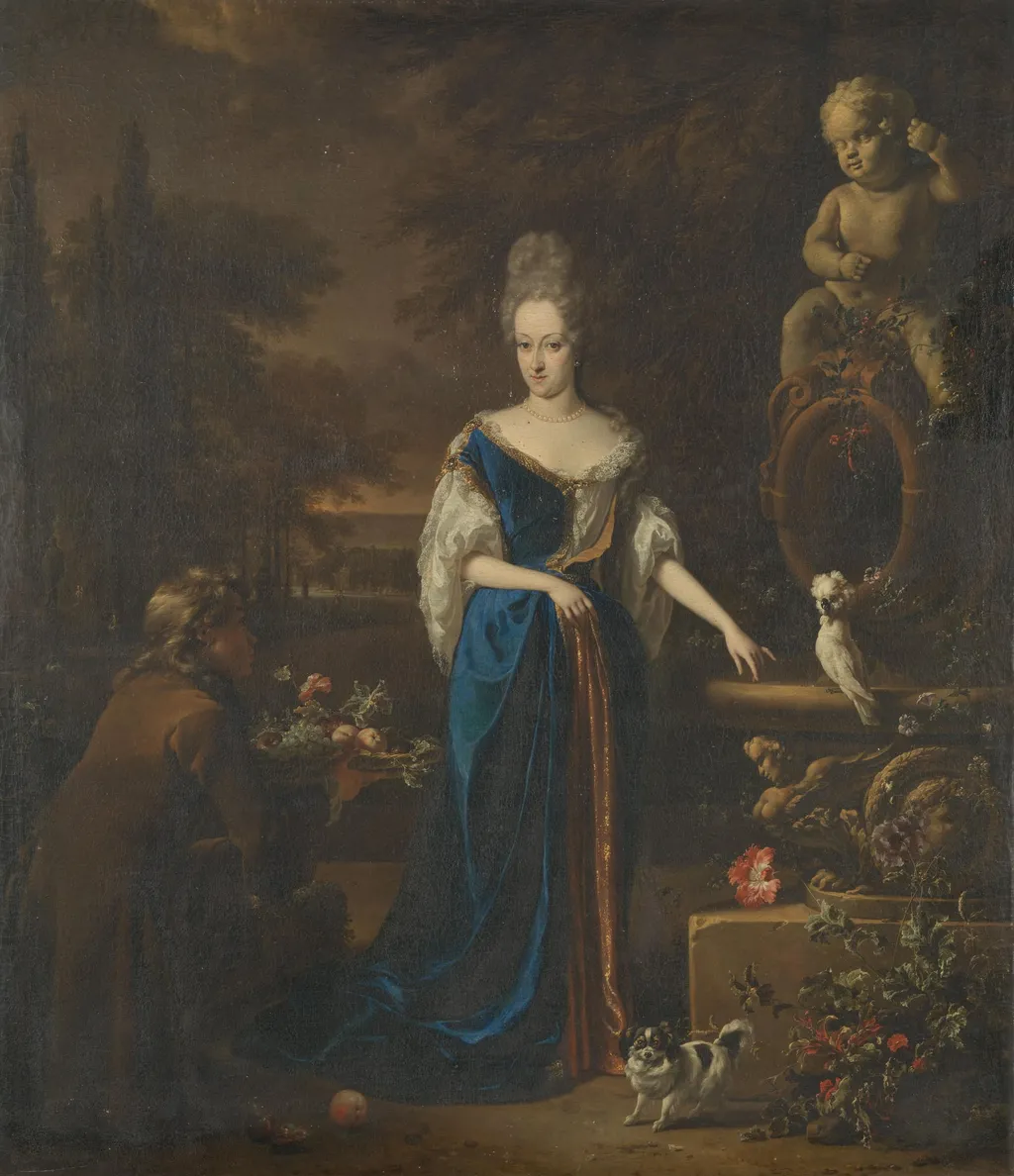
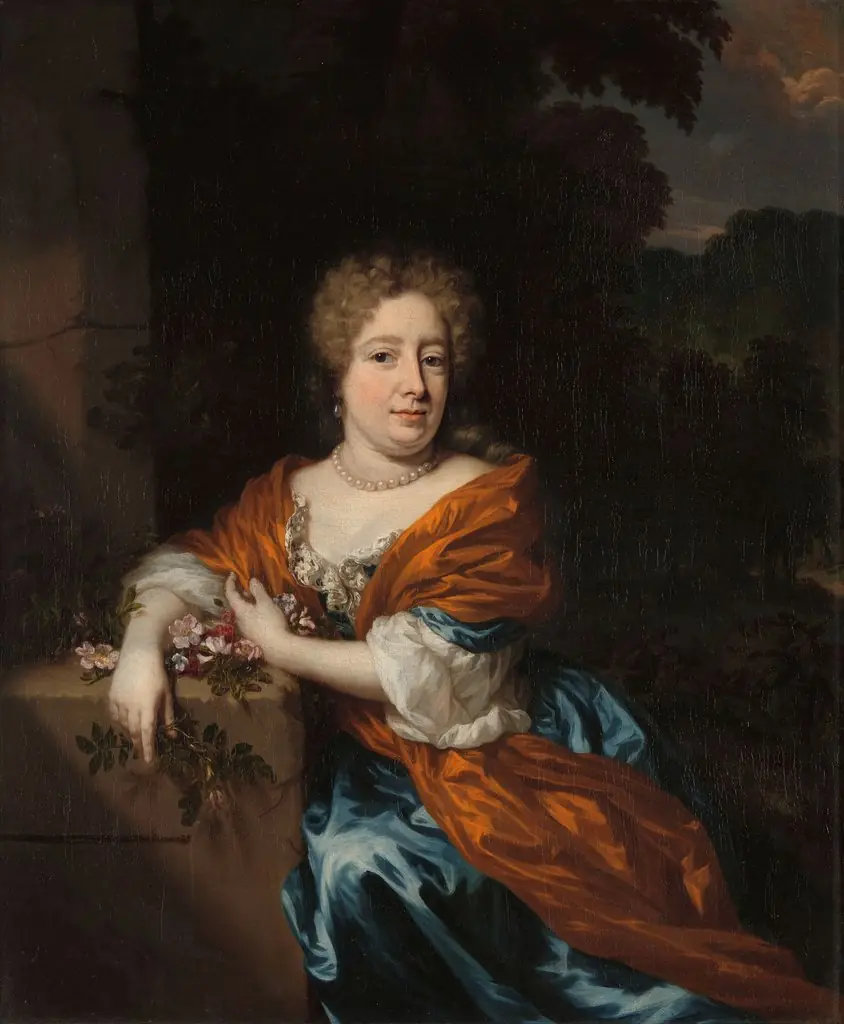
Portrait of Maria Cornelisz, Wife of Silvester van Tongeren is an unspecified painting by the Dutch Golden Age artist Jan Weenix. It dates from 1700 and is held in the collection of the Rijksmuseum. This portrait depicts Maria Cornelisz, wife of Silvester van Tongeren, in a formal, seated pose.
About this work
Overview
This portrait depicts Maria Cornelisz, wife of Silvester van Tongeren, in a formal, seated pose. It was designed as a pendant to her husband's portrait (SK-A-4958), intended for simultaneous display.
Subject & Meaning
Maria Cornelisz is shown in a black dress with hands folded over a prominent white lace collar, conveying dignity and modesty. The composition emphasizes her face and the intricate collar, suggesting attention to her personal and social stature.
Technique & Style
The painting exhibits characteristics common in 17th-century Dutch domestic portraiture: a dark background to accentuate the subject, meticulous rendering of textiles (notably the time-consuming lace collar), and a overall sense of restraint.
History & Provenance
The artist remains anonymous. Originally part of a pair with her husband's portrait, both were likely displayed in the Van Tongeren home before entering the museum collection.
Context
Such paired portraits were typical in Dutch households of the time, reflecting the importance of marital unity and social status. The Rijksmuseum holds similar examples, offering context for this work's origins and purpose.
Own this work as a print
Artist & collection
Artist
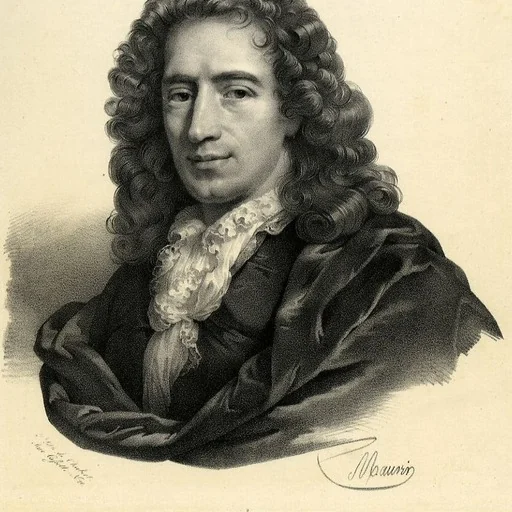
Jan Weenix or Joannis Wenix (between 1641/1649 – 19 September 1719 (buried)) was a Dutch painter.

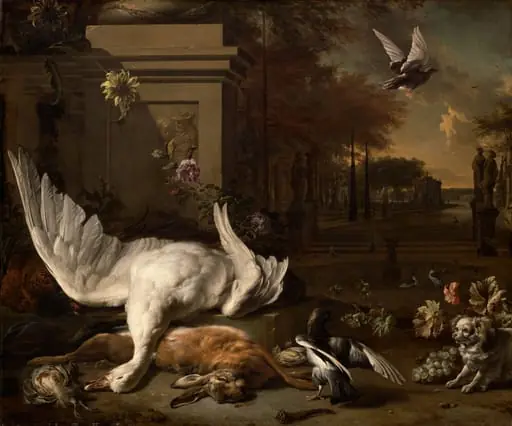 Still Life with Goose and Game before a Country Estate
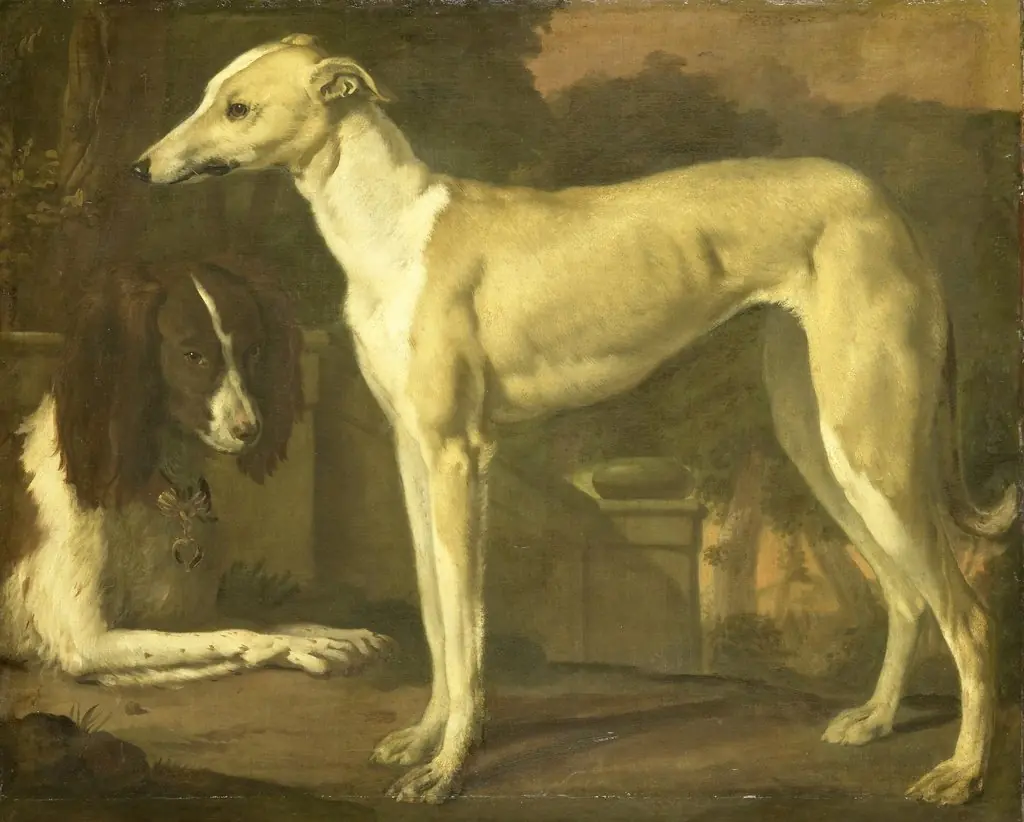 Portrait of a greyhound and a spaniel
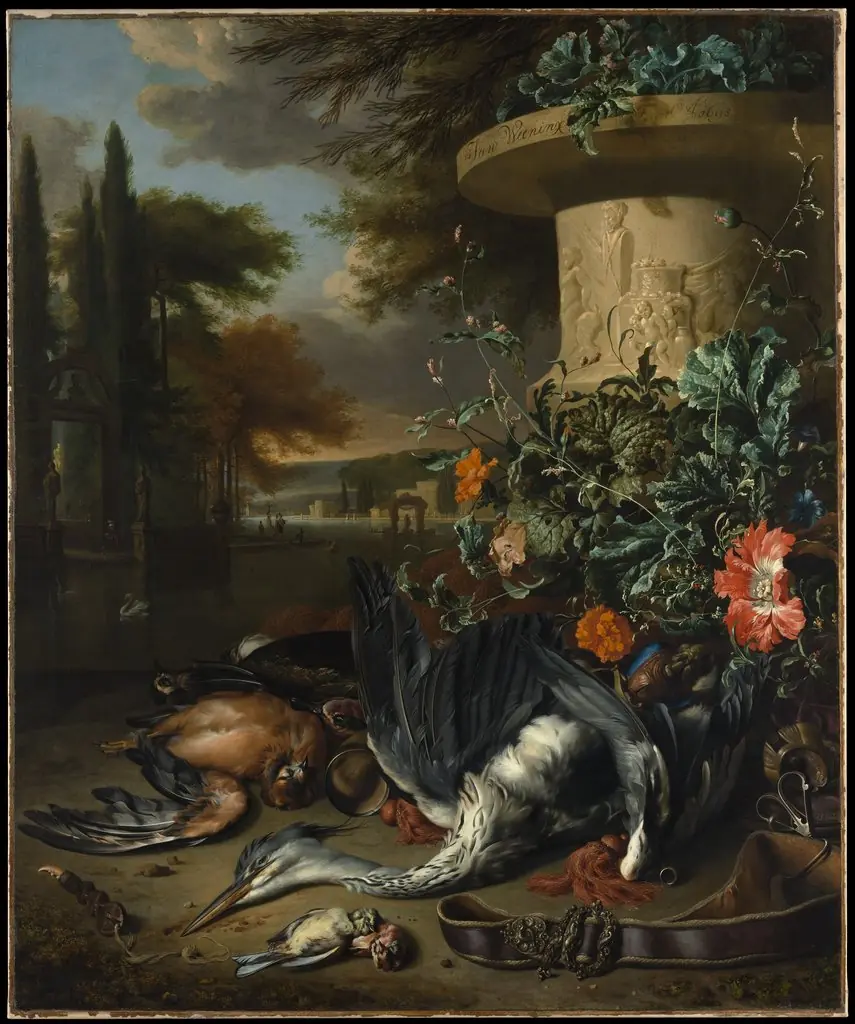 Gamepiece with a Dead Heron ("Falconer's Bag")
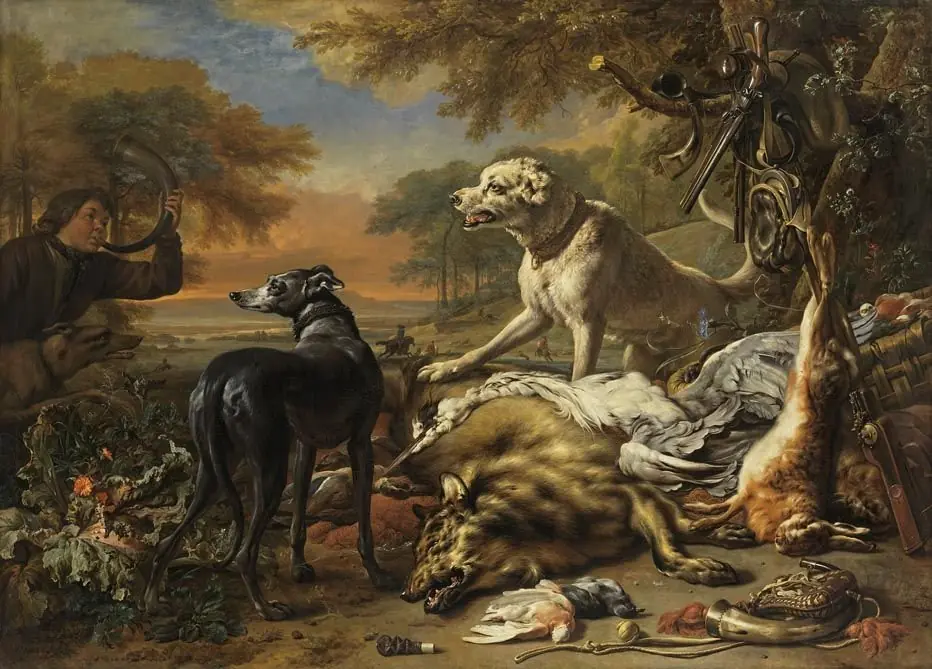 Hunting still life with wolf
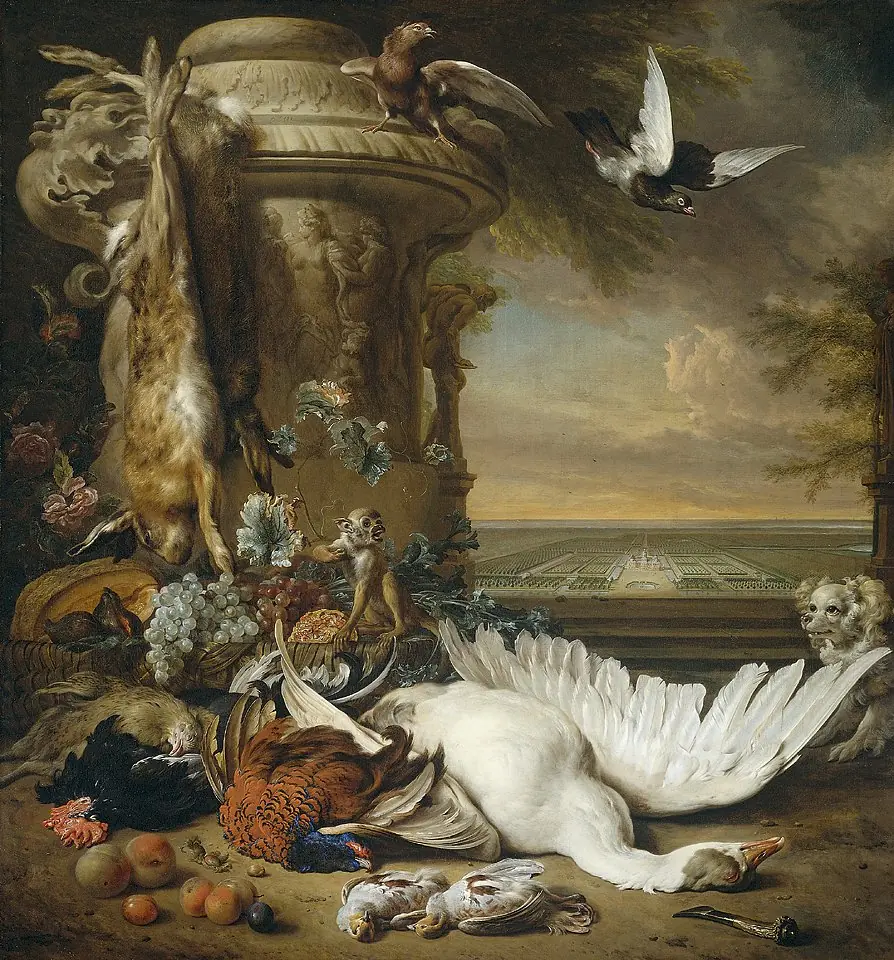 Still Life with Dead Game and Fruit beside a Garden Vase, with a Monkey, a Dog and Two Pigeons; in the Background Rijksdorp near Wassenaar, the Estate of Jonkheer Jacob Emmery, Baron of Wassenaar
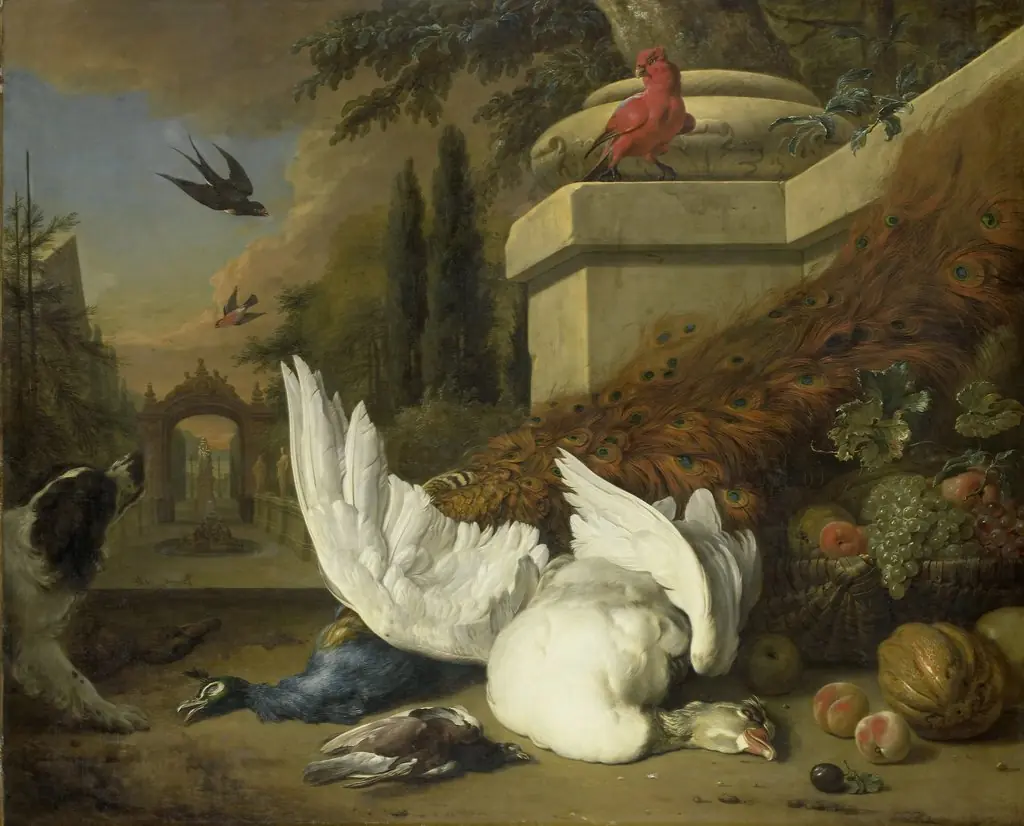 A monkey and a dog beside dead game and fruits, with the estate of Rijxdorp near Wassenaar in the background
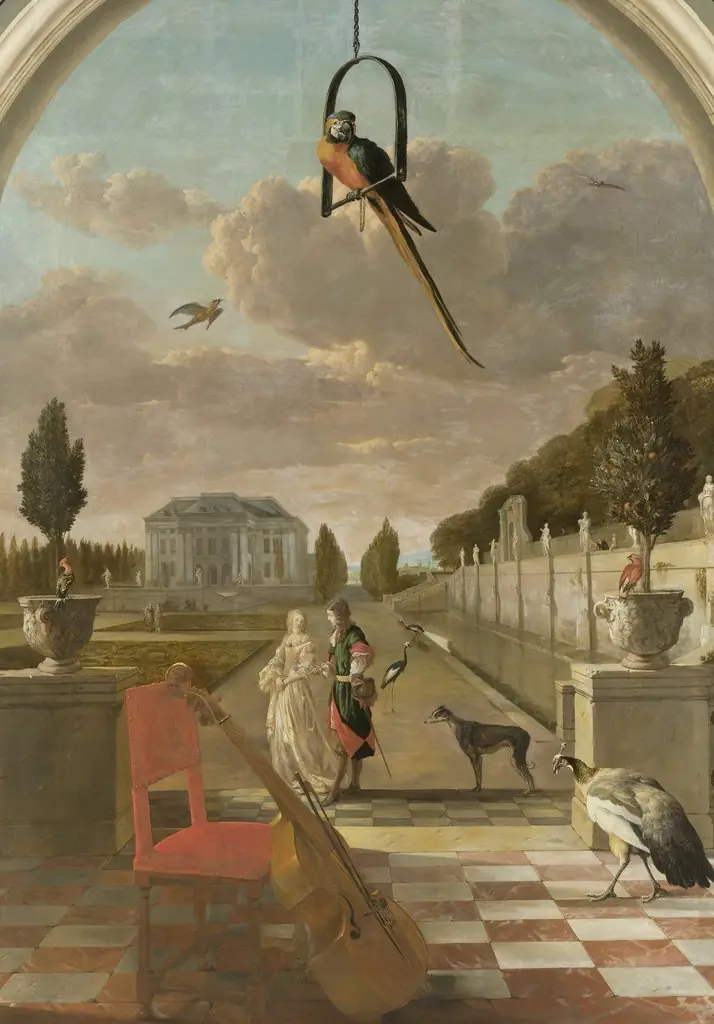 Park with country home
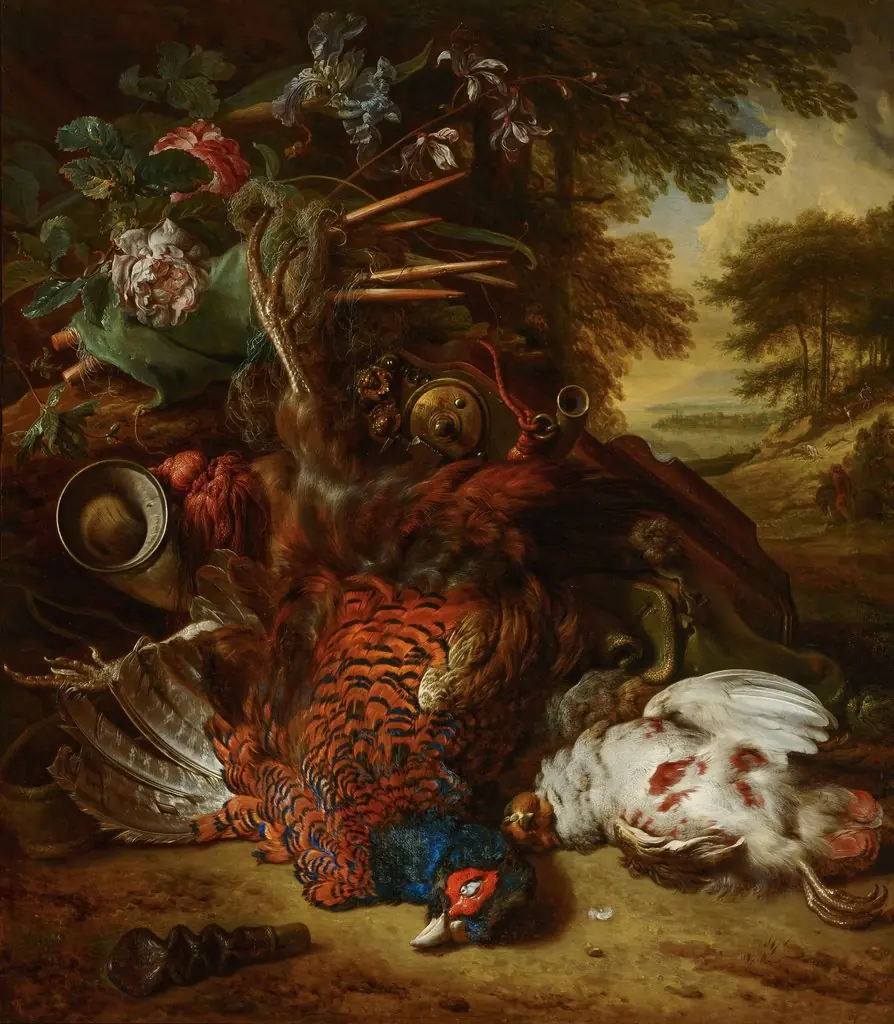 Hunting Still Life