Artwork
Hunting Still Life
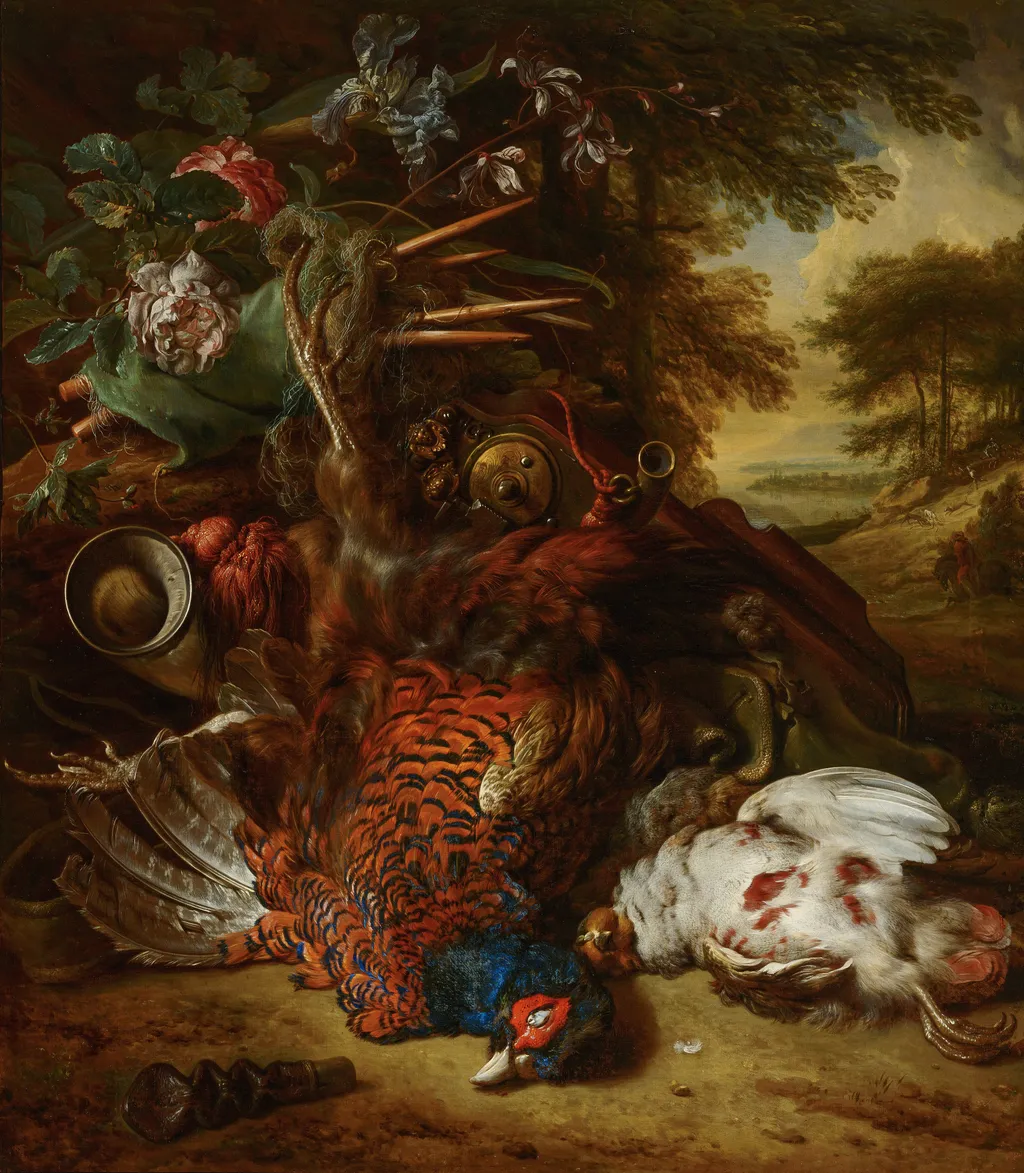
Hunting Still Life is an oil painting by the Rococo painting artist Jan Weenix. It dates from 1708 and is held in the collection of the Mauritshuis.
About this work
Overview
Created in 1708 by Dutch artist Jan Weenix, this oil painting presents a meticulously arranged hunting still life. The work is part of the Mauritshuis collection and exemplifies the decorative sensibility of the early Rococo period in the Netherlands.
Subject & Meaning
The composition centers on a pheasant with vivid orange‑blue plumage, surrounded by other dead birds and small game. A white bird, its breast stained with blood, lies nearby, while hunting accessories—a gun, a small hat, and a horn—are scattered among foliage, suggesting the aftermath of a hunt and the display of spoils.
Technique & Style
Weenix renders each feather with fine, tactile detail and captures the reflective quality of metal objects through subtle highlights. The painting employs a chiaroscuro effect, contrasting deep shadows with sharply illuminated areas to model form and enhance the three‑dimensional illusion of the subjects.
History & Provenance
Trained under his father Jan Baptist Weenix and cousin Melchior d’Hondecoeter, Jan Weenix built a reputation for game paintings. After its creation, the canvas entered the Mauritshuis, where it remains on public view as part of the museum’s Dutch Golden Age holdings.
Context
During the early 18th century, Dutch still‑life painters often celebrated the bounty of the hunt, reflecting both aristocratic leisure and the region’s commercial interest in game. Weenix’s work aligns with this tradition, combining realistic observation with the ornamental elegance characteristic of the Rococo movement.
Own this work as a print
Artist & collection
Artist
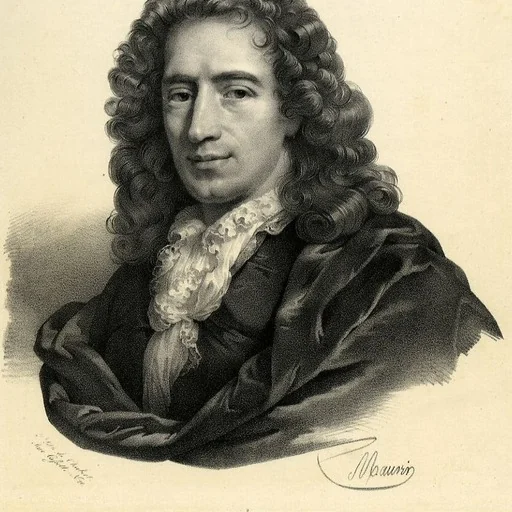
Jan Weenix or Joannis Wenix (between 1641/1649 – 19 September 1719 (buried)) was a Dutch painter.

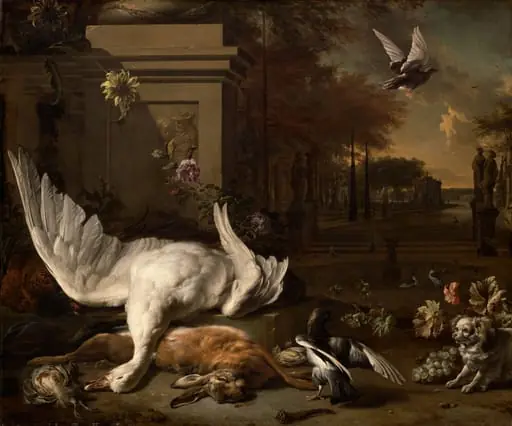 Still Life with Goose and Game before a Country Estate
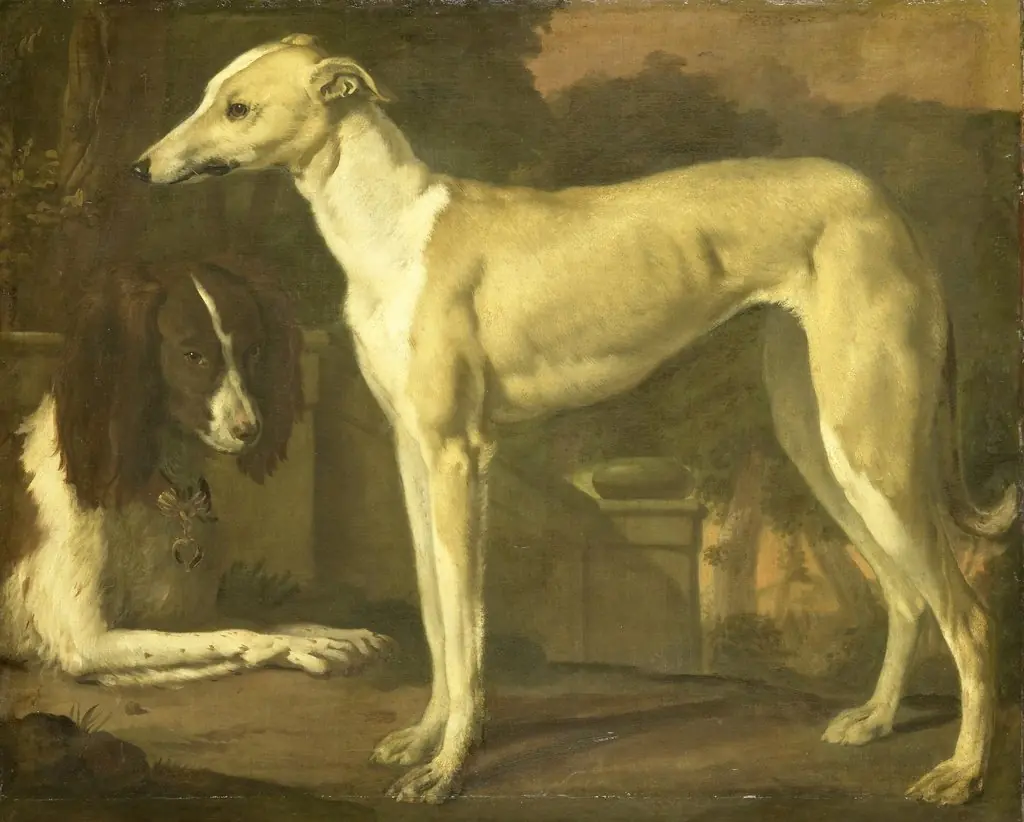 Portrait of a greyhound and a spaniel
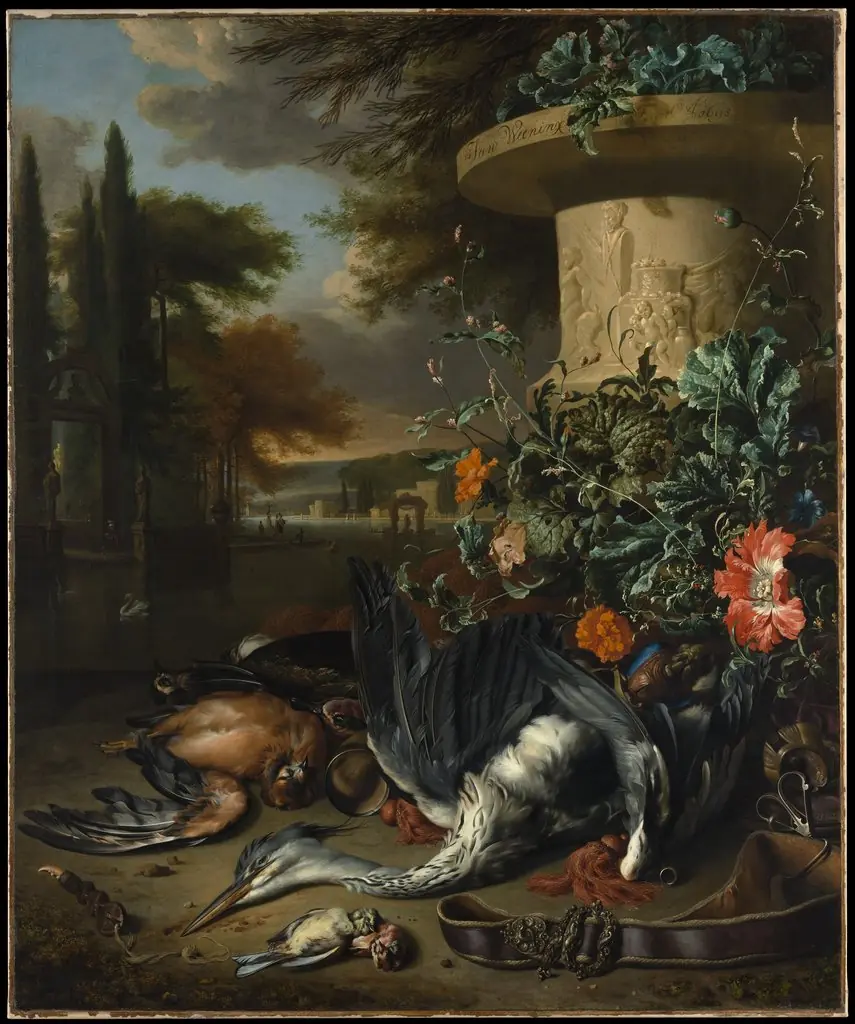 Gamepiece with a Dead Heron ("Falconer's Bag")
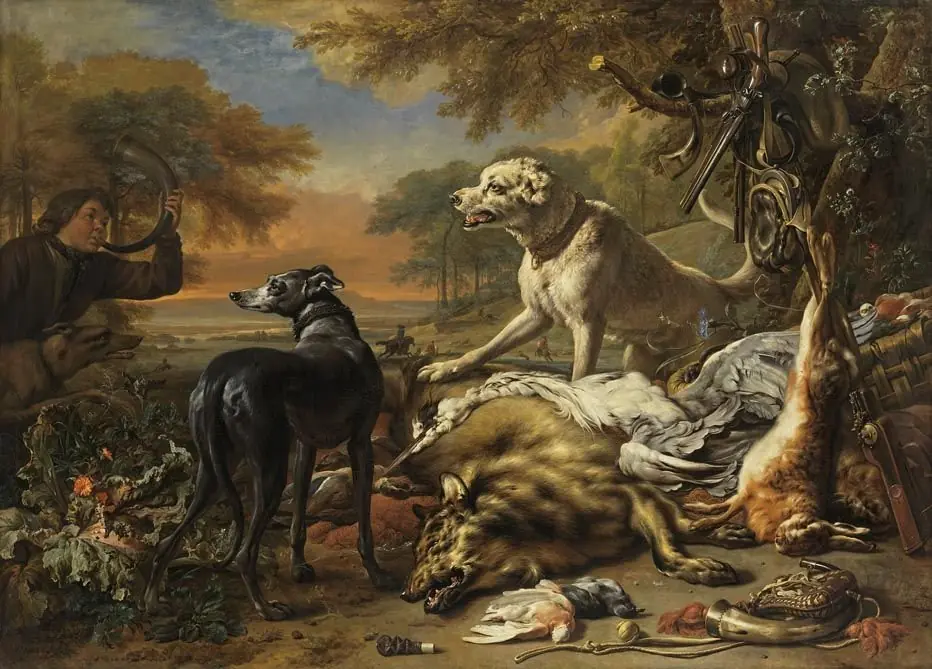 Hunting still life with wolf
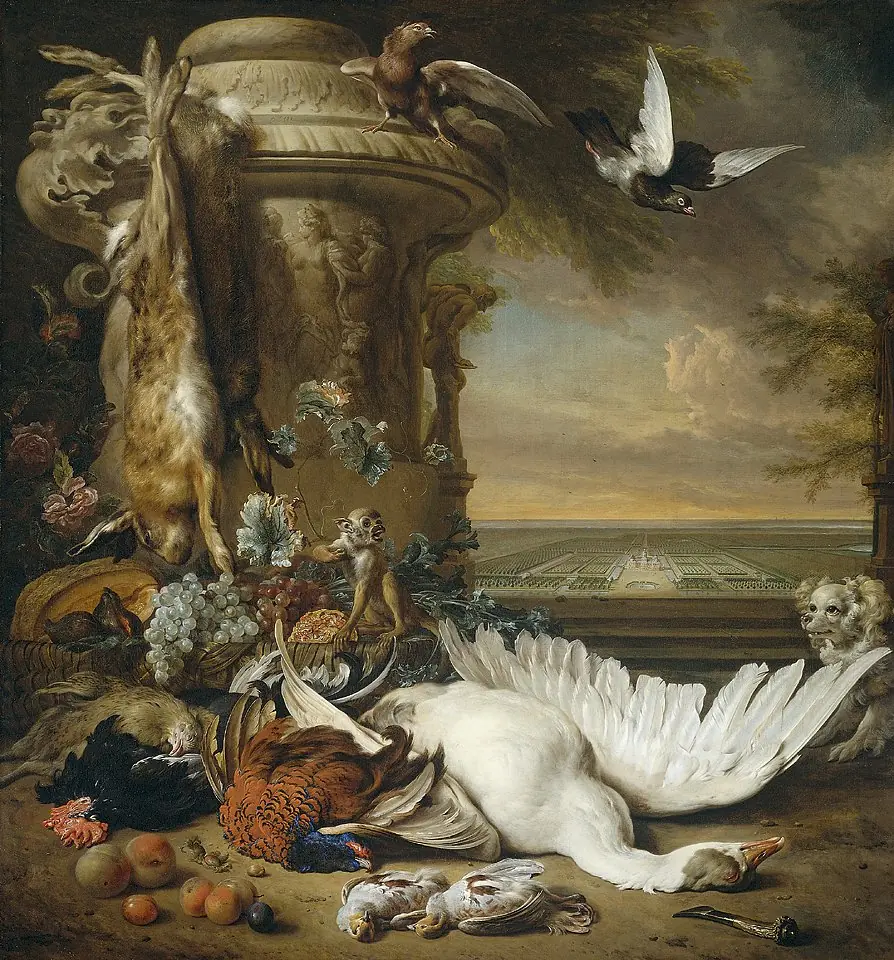 Still Life with Dead Game and Fruit beside a Garden Vase, with a Monkey, a Dog and Two Pigeons; in the Background Rijksdorp near Wassenaar, the Estate of Jonkheer Jacob Emmery, Baron of Wassenaar
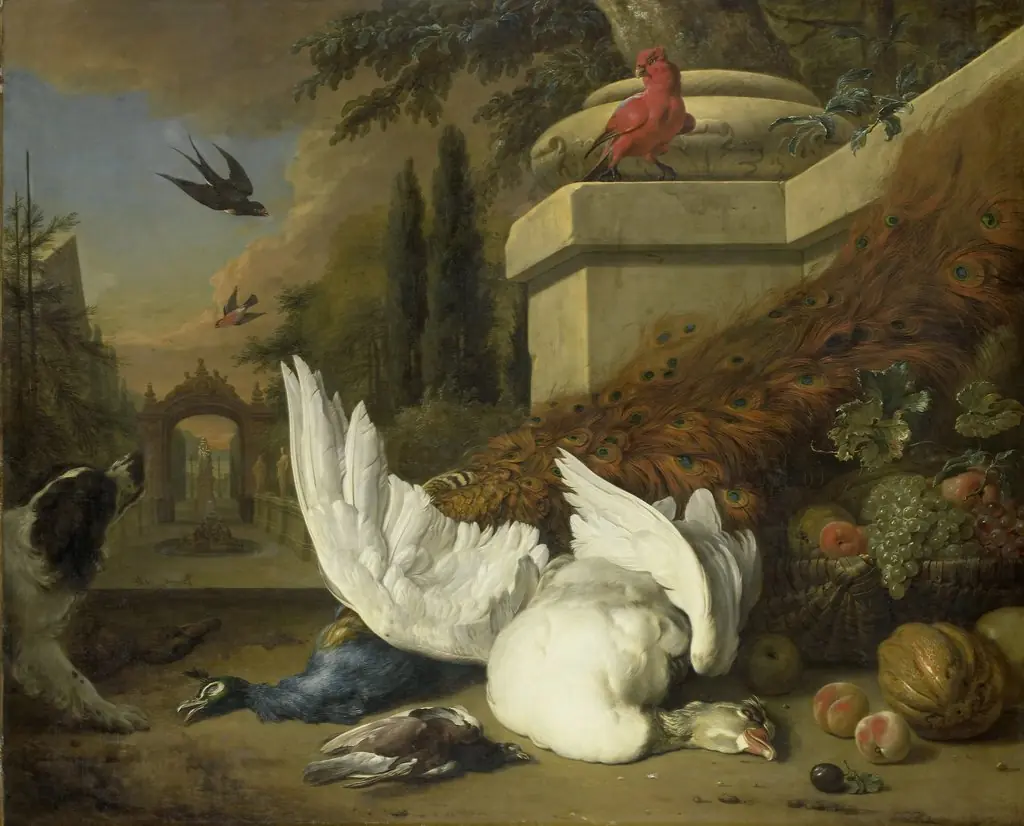 A monkey and a dog beside dead game and fruits, with the estate of Rijxdorp near Wassenaar in the background
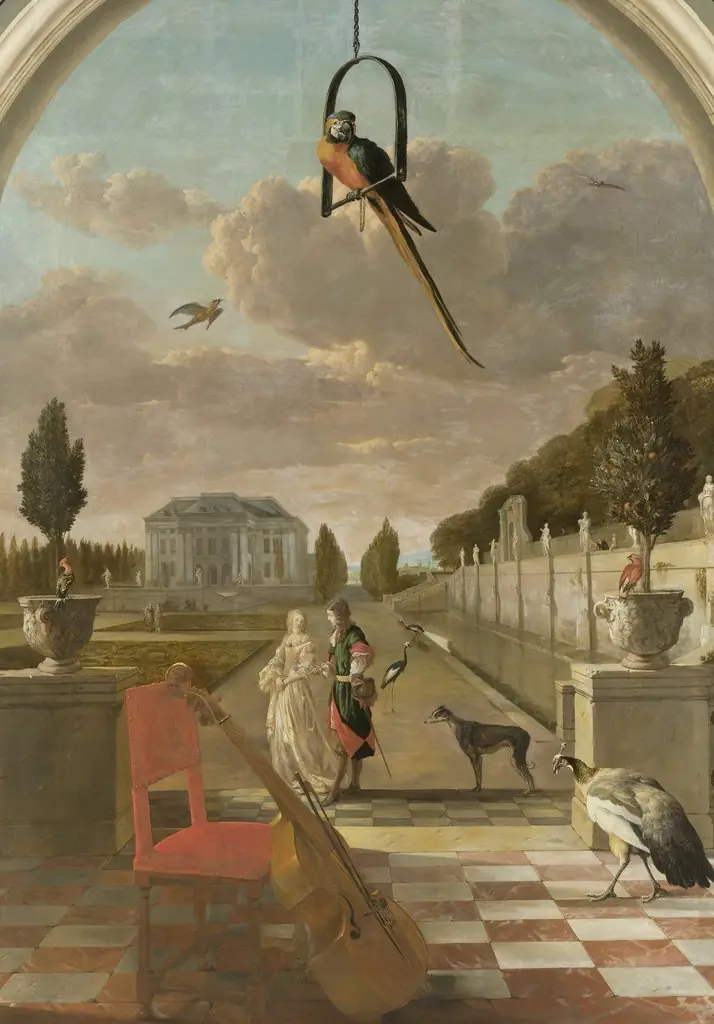 Park with country home
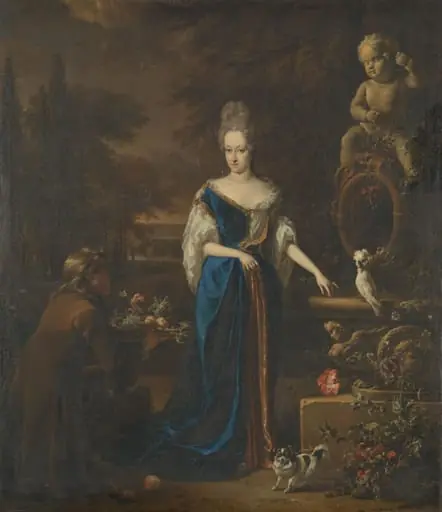 Portrait of Maria Cornelisz, Wife of Silvester van Tongeren