Artwork
Cavalry Combat
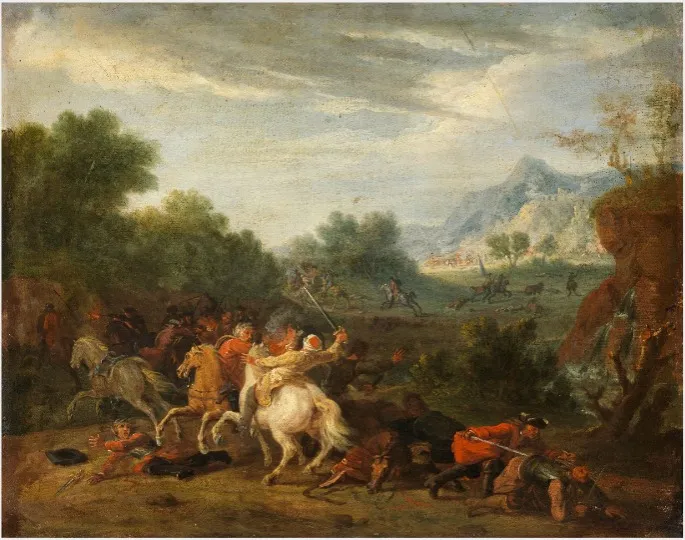
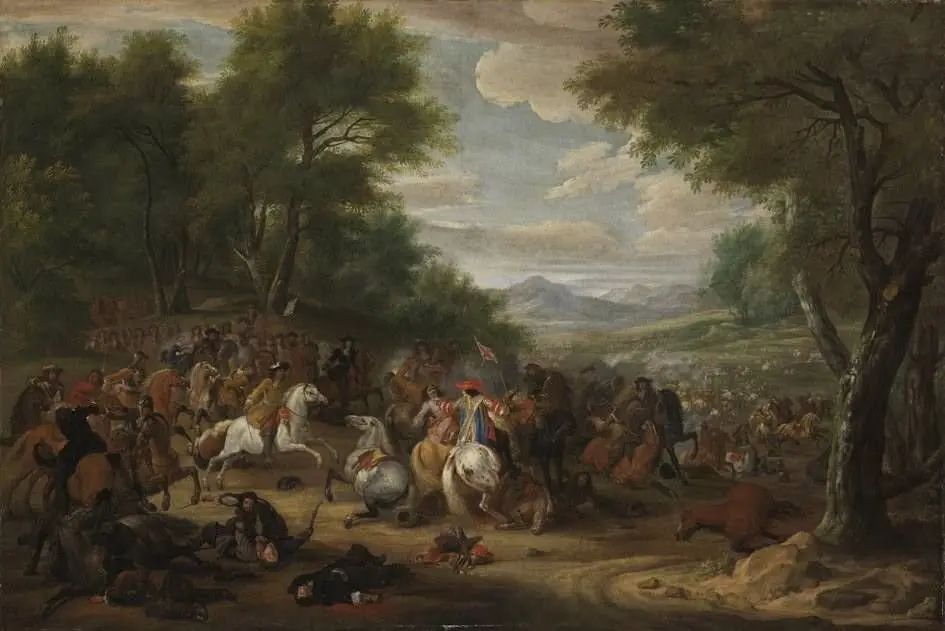
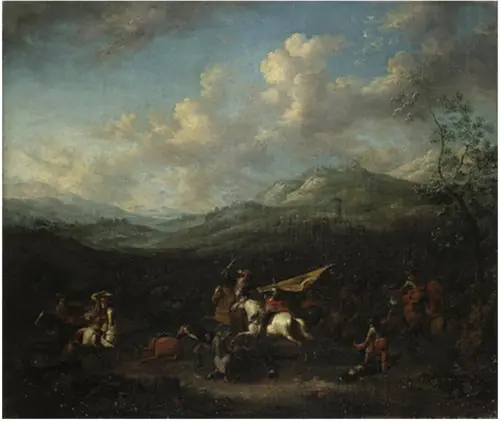
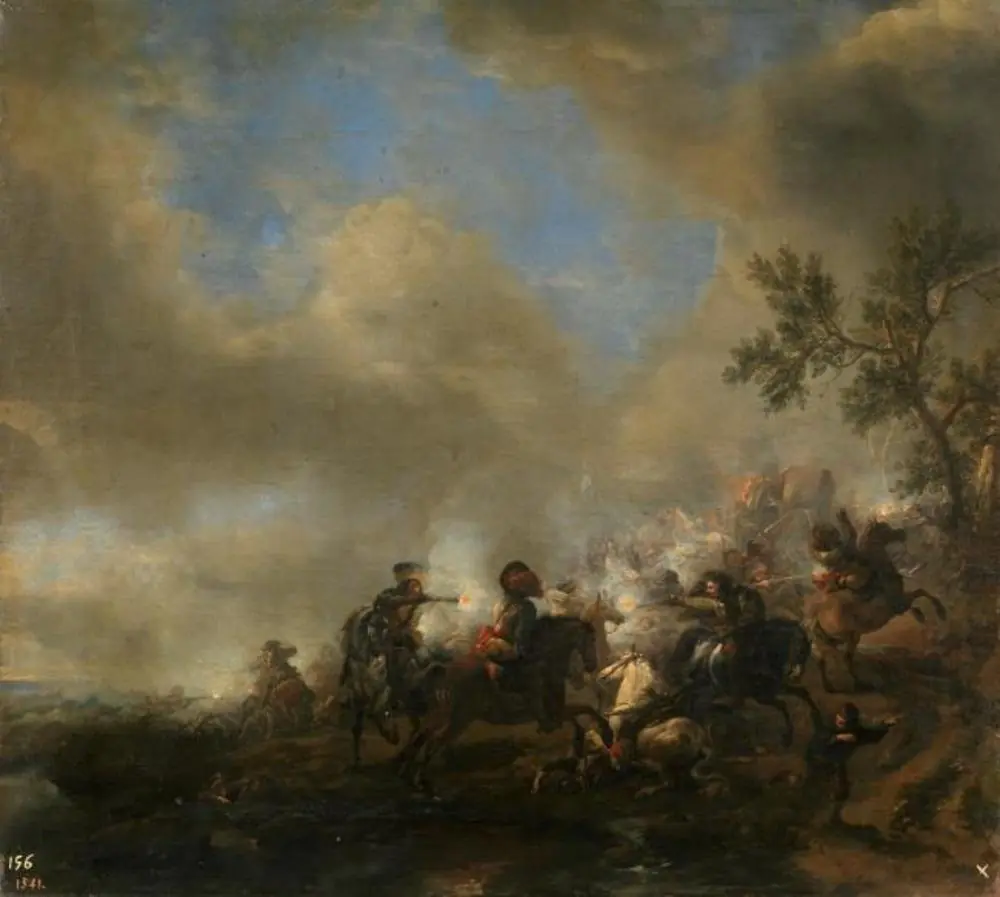
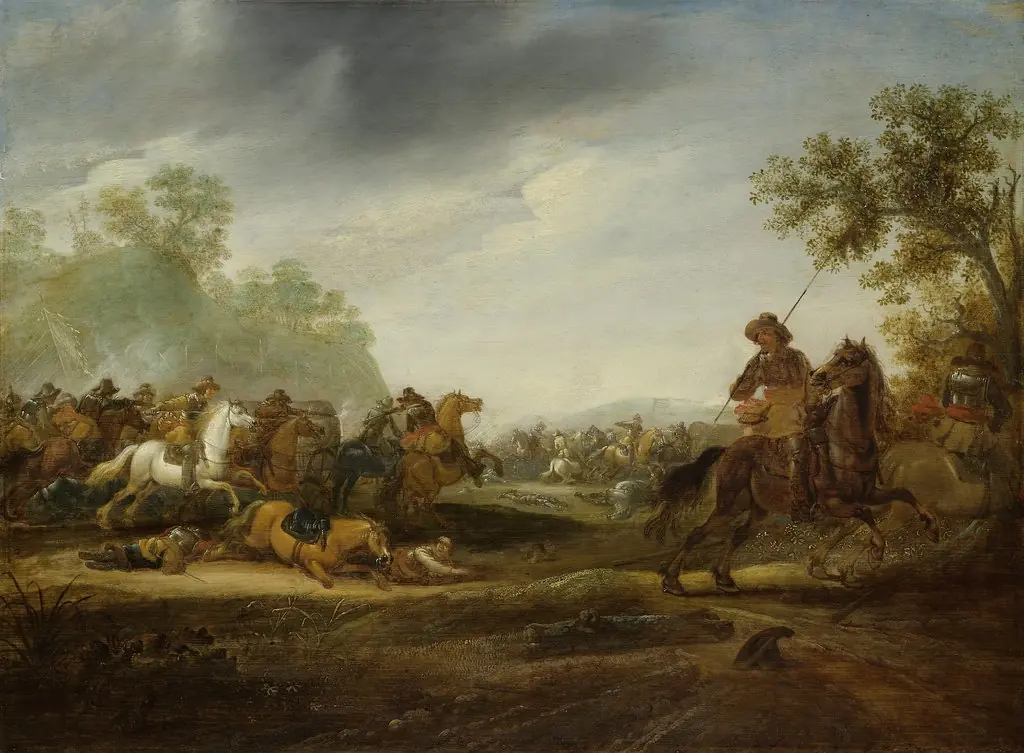
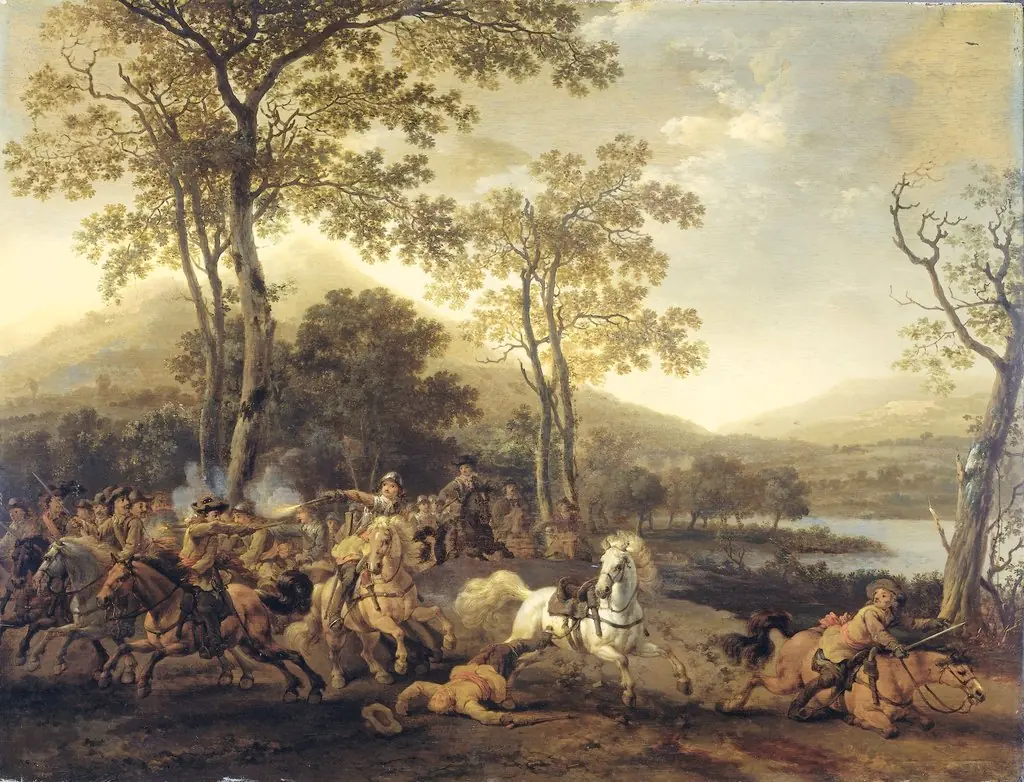
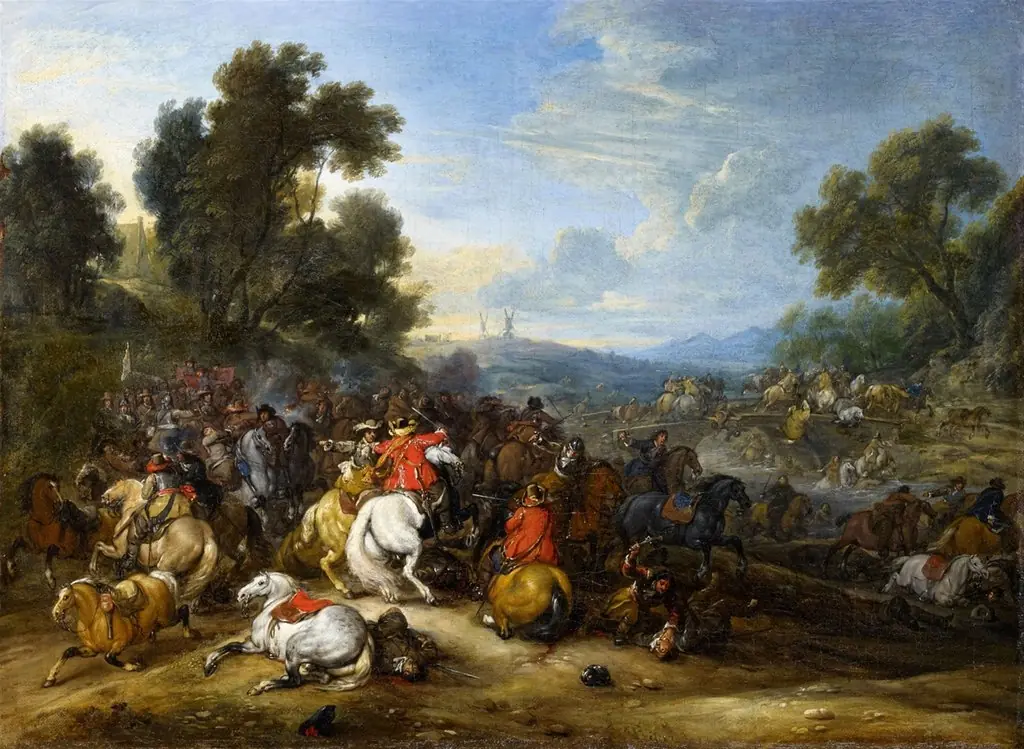
Cavalry Combat is an oil painting by Jan Wyck. It dates from 1680 and is held in the collection of the National Gallery of Ireland.
About this work
Overview
It is held in the National Gallery of Ireland’s collection, where it stands as a representative example of late 17th-century equestrian battle painting.
Painted circa 1680, Cavalry Combat is an oil on canvas by Dutch artist Jan Wyck, who spent much of his career in England after the Restoration. The work exemplifies his focus on military subjects, a niche that gained traction among British patrons seeking dynamic depictions of war. It is held in the National Gallery of Ireland’s collection, where it stands as a representative example of late 17th-century equestrian battle painting.
Subject & Meaning
The scene captures a moment of violent disarray in mounted combat, with no clear narrative resolution. A rearing white horse dominates the foreground, its motion contrasting with a fallen rider in a red coat, sword still clutched. The lack of identifiable leaders or flags suggests a focus on chaos rather than heroism, reflecting the unpredictable nature of cavalry engagements rather than glorifying victory.
Technique & Style
Wyck employed bold, fluid brushwork to convey motion and tension. Horses’ manes and riders’ garments are rendered with energetic strokes that suggest wind and struggle, while the background dissolves into soft, atmospheric haze. This contrast between detailed foreground and blurred distance enhances the immediacy of the conflict, a hallmark of his approach to battlefield composition.
History & Provenance
Jan Wyck migrated to England after 1660, joining a wave of Dutch and Flemish artists who found patronage among the restored Stuart court. His military scenes, including this one, were likely commissioned by officers or nobles with personal ties to recent conflicts. The painting entered the National Gallery of Ireland’s collection in the 19th century, though its earlier ownership remains undocumented.
Context
In late 17th-century Britain, military imagery became increasingly popular as national identity formed around standing armies and colonial campaigns. Dutch artists like Wyck, trained in the tradition of battle painting, filled a demand for realistic yet dramatic depictions of warfare. His work bridged Northern European techniques with British tastes, helping shape a visual language for military history in England.
Legacy
Wyck’s influence endured in British military art through his emphasis on kinetic energy and observational detail. While not widely celebrated today, his paintings contributed to the development of a genre that later artists would expand upon. Cavalry Combat remains a testament to the transnational exchange of artistic practices in the post-Restoration period.
Artist & collection
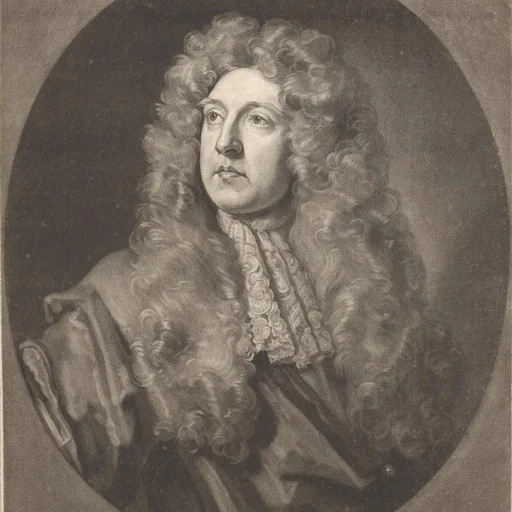
Artist
Jan Wyck (29 October 1645 – 17 May 1702), also known as Jan Wiyck or Jan Wick, was a Dutch Baroque painter, best known for his works on military subjects.