Artwork
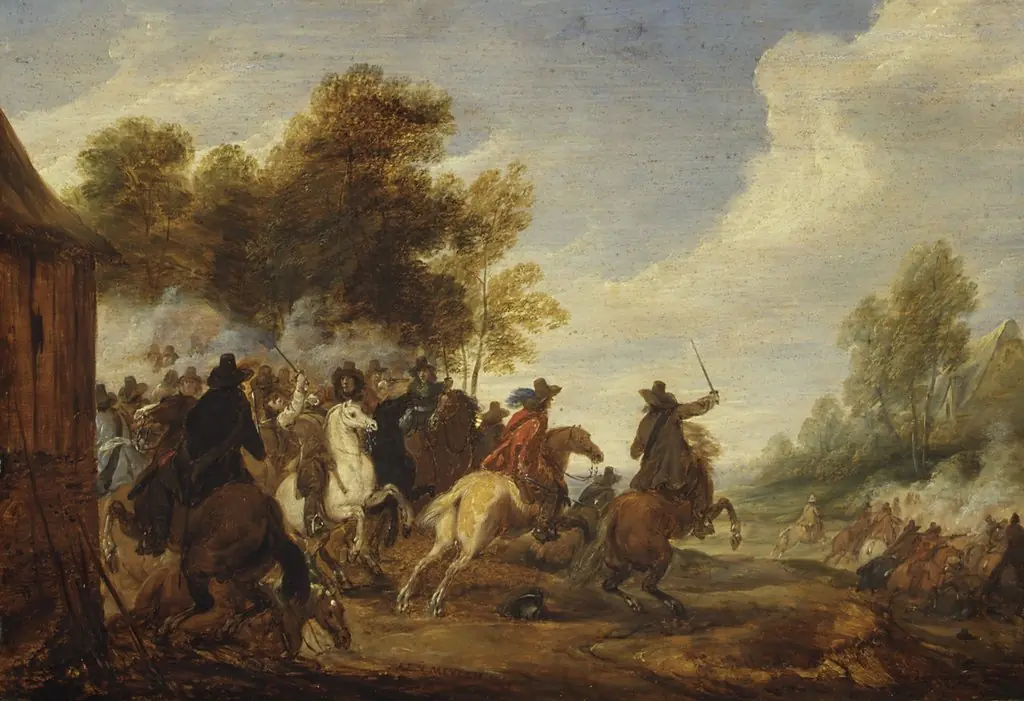
Cavalry battle
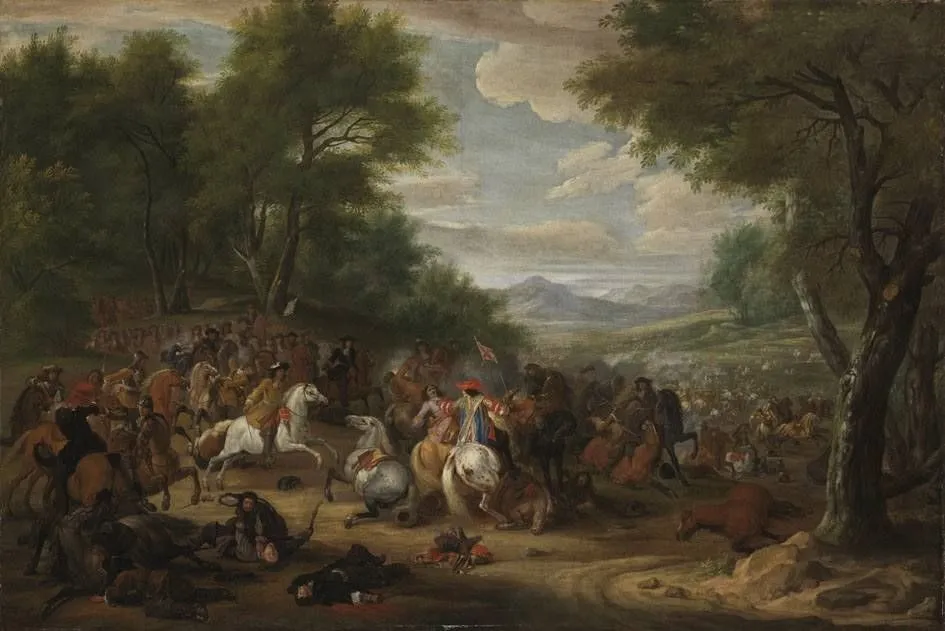
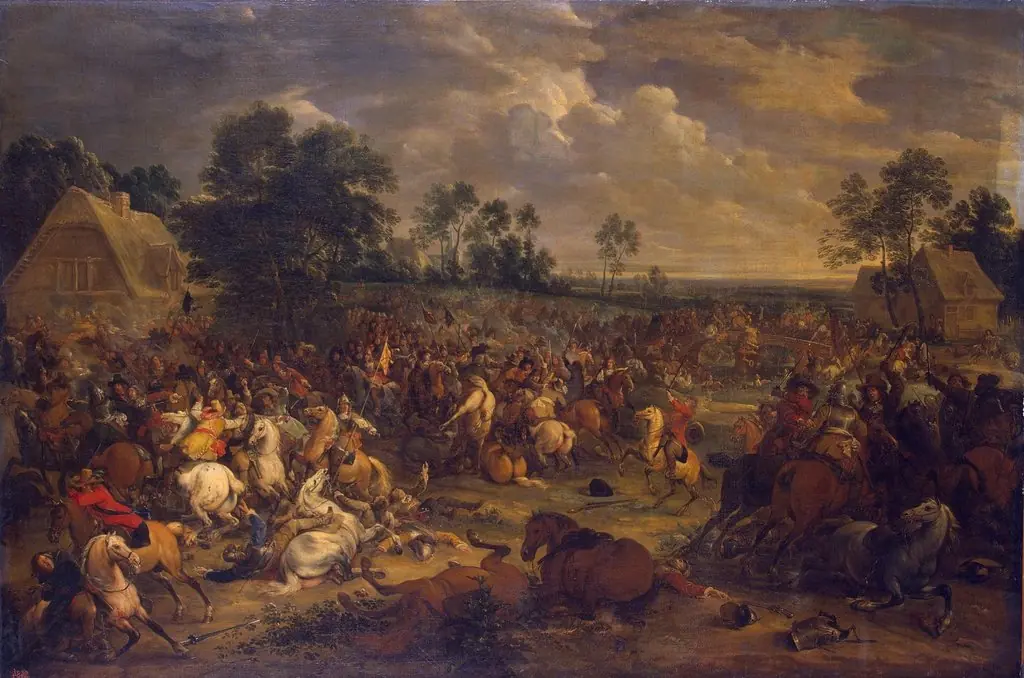
Cavalry battle is an unspecified painting by the Flemish Baroque painting artist Adam Frans van der Meulen. It dates from 1661 and is held in the collection of the Bavarian State Painting Collections.
About this work
Overview
This work is part of a broader series documenting French military campaigns, executed with precision and narrative clarity.
Adam Frans van der Meulen painted *Cavalry Battle* in 1661 during his tenure as a court artist to Louis XIV. A Flemish painter trained in the Baroque tradition, he specialized in military subjects that served royal propaganda. This work is part of a broader series documenting French military campaigns, executed with precision and narrative clarity. It resides today in the Alte Pinakothek in Munich, among other works from his extensive output for the French court.
Subject & Meaning
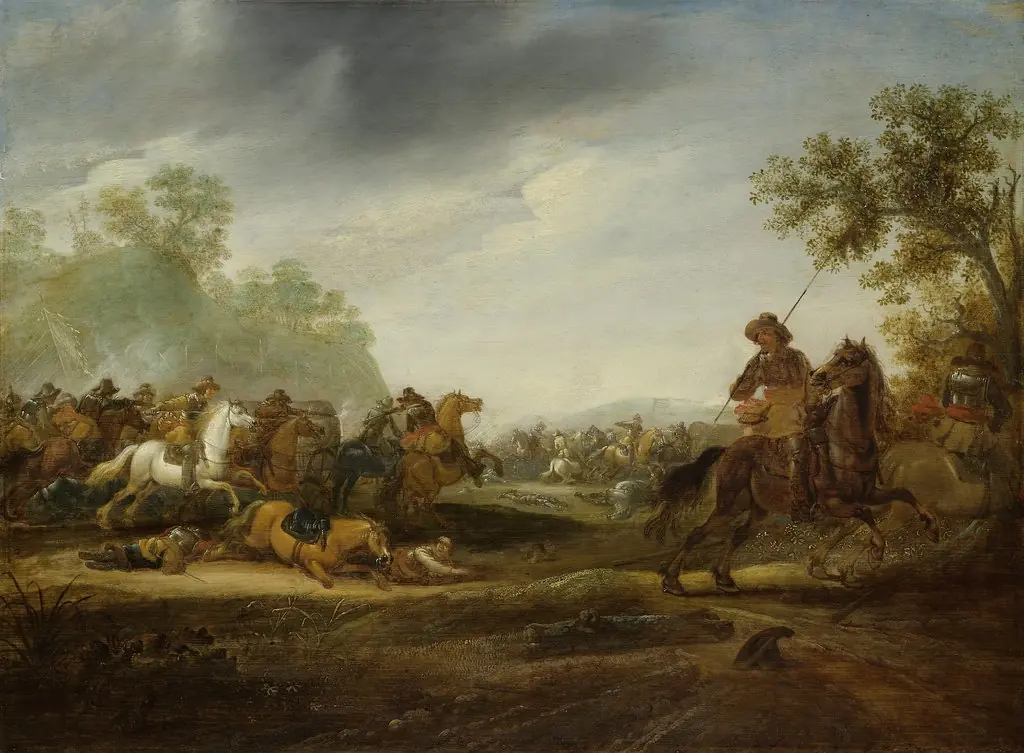
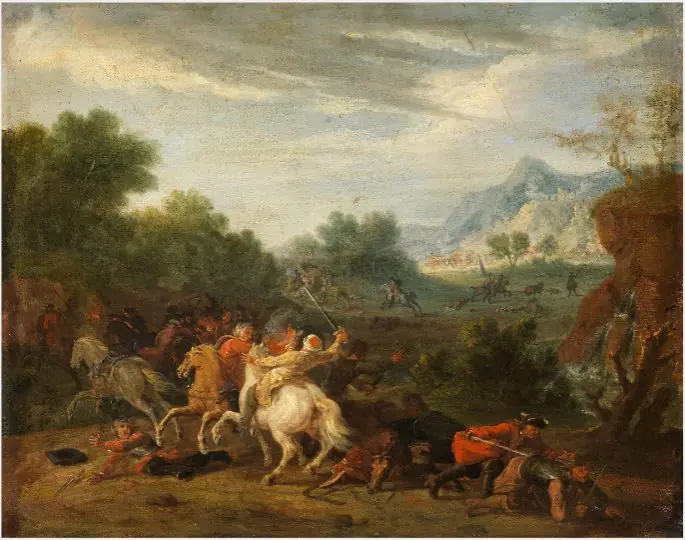
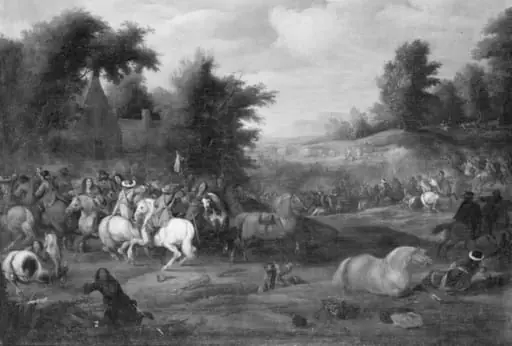
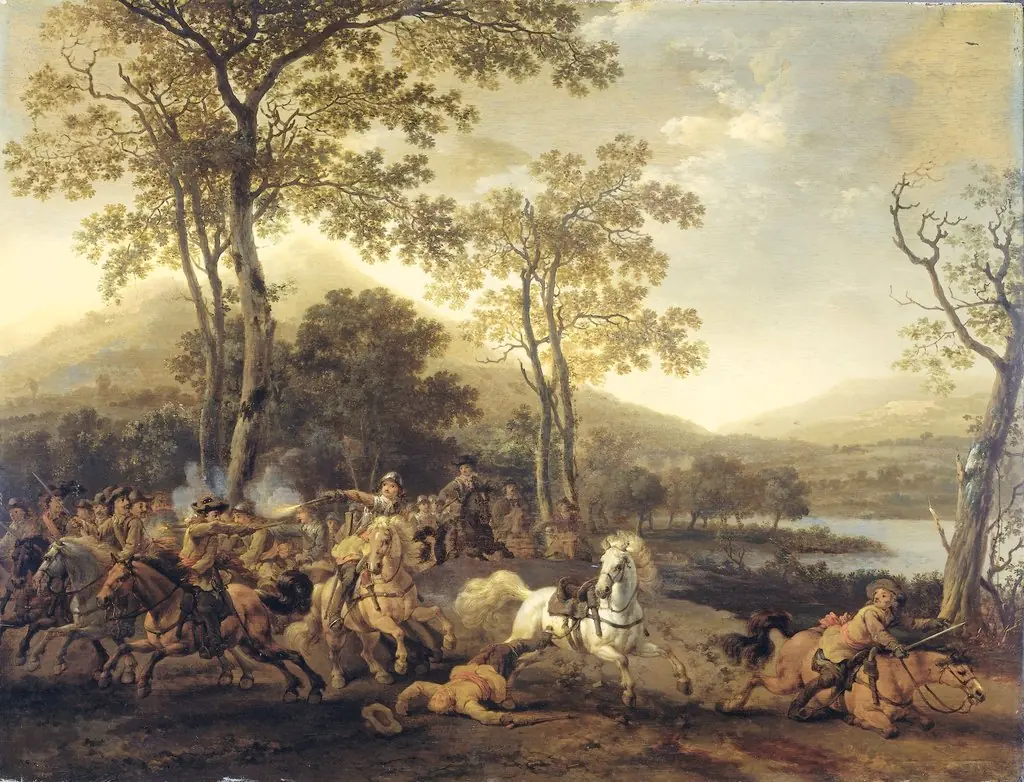
The painting captures a moment of intense cavalry engagement, with riders locked in close combat amid fallen horses and swirling dust. Though no specific battle is named, the scene aligns with Louis XIV’s campaigns in the Low Countries. The chaos is not glorified but presented as a controlled spectacle, reinforcing the monarchy’s association with disciplined power. The absence of clear identification of factions suggests a symbolic rather than documentary intent.
Technique & Style
Van der Meulen employed chiaroscuro to model figures and horses with dramatic lighting, enhancing the sense of movement and depth. Brushwork is detailed yet fluid, particularly in the rendering of armor, fabric, and animal musculature. The composition directs attention to the central clash, while the hazy background of trees and distant structures recedes into atmospheric perspective. His approach blends naturalism with compositional order, typical of Baroque history painting.
History & Provenance
Commissioned as part of a royal project to document French military achievements, the painting was likely intended for display in royal residences. Van der Meulen’s role extended beyond canvas—he designed tapestries for the Gobelins manufactory, translating similar battle scenes into woven form. The work entered the Alte Pinakothek’s collection in the 19th century, following the dispersal of European royal holdings after the Napoleonic Wars.
Context
In mid-17th-century Europe, military imagery became a tool of state identity. Van der Meulen’s work emerged alongside other court artists who visualized absolutist power through controlled chaos. His depictions of battle avoided individual heroism, instead emphasizing collective action under royal command. This aligned with Louis XIV’s broader project of centralizing authority and projecting France as a dominant European force.
Legacy
Van der Meulen’s influence extended through his role in shaping the visual language of French military history. His detailed battle scenes informed later generations of war painters and tapestry designers. While his name faded from popular memory, his systematic documentation of warfare helped establish a genre that persisted in European art well into the 18th century, bridging Baroque drama with emerging historical record-keeping.
Artist & collection
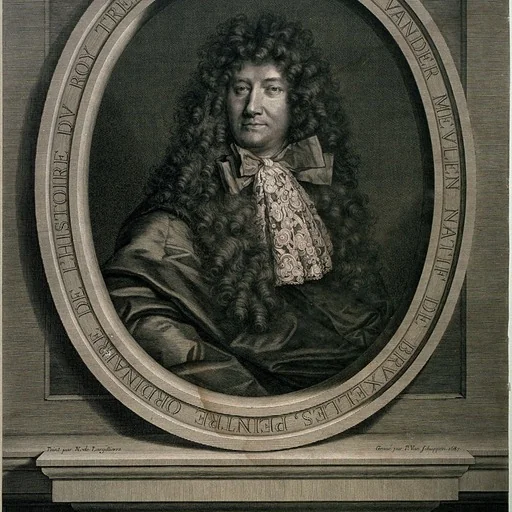
Artist
Adam Frans van der Meulen or Adam-François van der Meulen (11 January 1632 – 15 October 1690) was a Flemish painter and draughtsman who was particularly known for his scenes of military campaigns and conquests.