Artwork
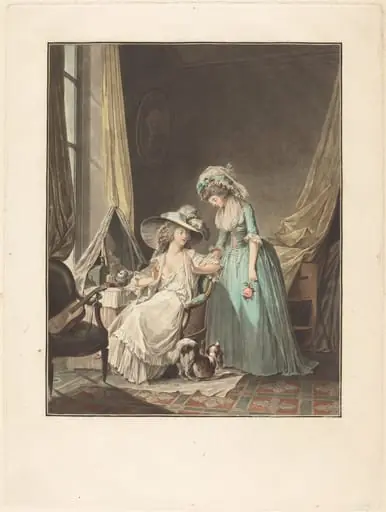
La Comparaison
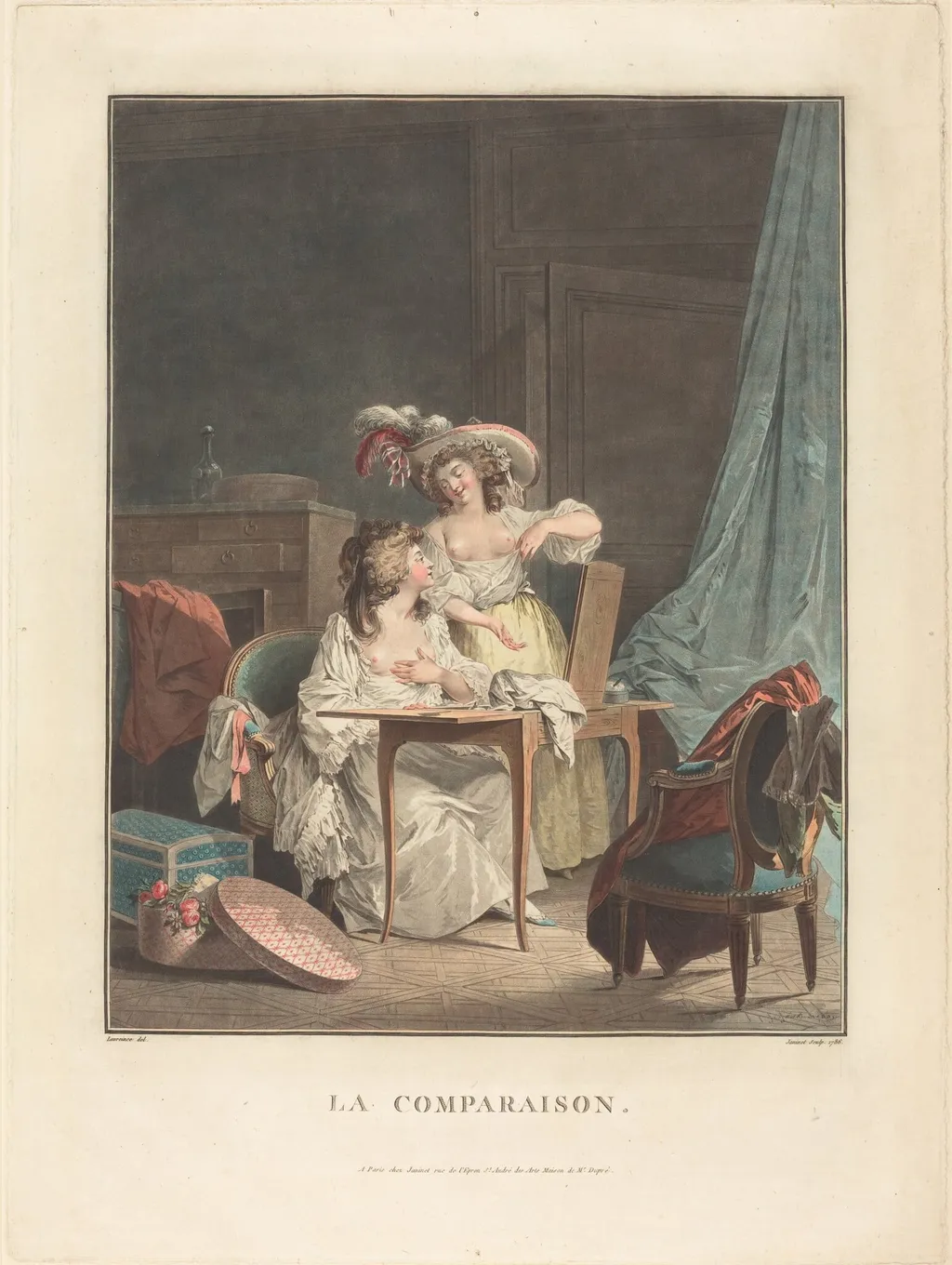
La Comparaison is an ink print by the Romanticist artist Jean-François Janinet. It dates from 1786 and is held in the collection of the National Gallery of Art.
About this work
Overview
The composition invites contemplation rather than narrative clarity, aligning with the subtle psychological tone suggested by its title.
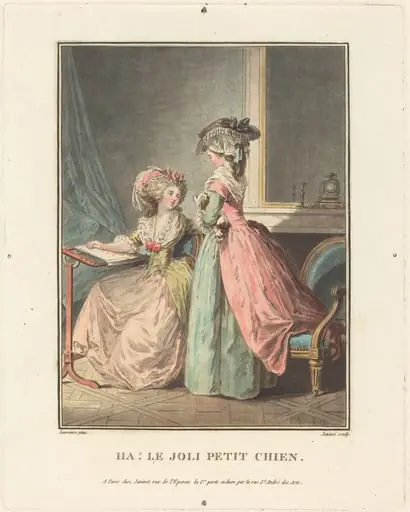
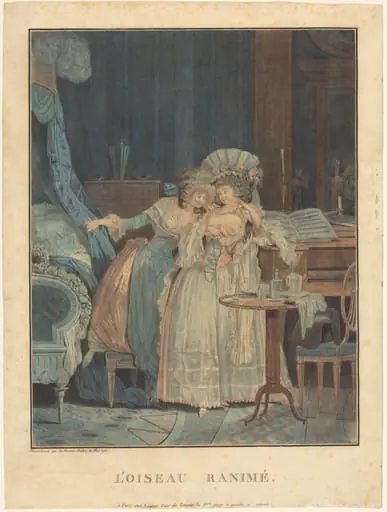
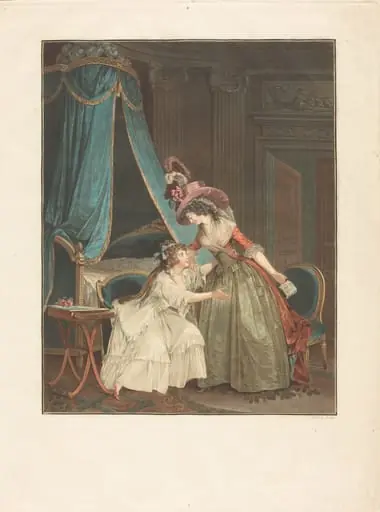
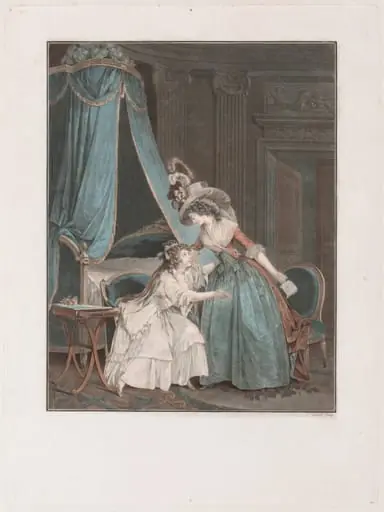
La Comparaison is a color etching with wash, produced by Jean-François Janinet in 1786. The print captures two women in aristocratic attire, engaged in quiet, intimate gestures. Soft tonal gradations and delicate line work define the scene, emphasizing texture and atmosphere over dramatic action. The composition invites contemplation rather than narrative clarity, aligning with the subtle psychological tone suggested by its title.
Subject & Meaning
The two figures—one seated with a fruit-filled box, the other adjusting a feathered hat—suggest a moment of self-reflection or silent evaluation. The presence of a folded dress and a fan implies preparation or adornment, while the dim light through heavy curtains adds a mood of introspection. The title, La Comparaison, points to an unspoken contrast, possibly between youth and maturity, or between outward presentation and inner reality.
Technique & Style
Janinet employed color etching combined with wash to achieve nuanced shading and tactile richness. Fine lines define lace, silk, and jewelry, while layered washes mimic the sheen of fabrics and the softness of skin. The use of aquatint likely contributed to the atmospheric lighting, creating a hazy, intimate interior. The technique prioritizes subtlety over boldness, enhancing the quiet tension between the figures.
History & Provenance
Created in 1786, the print emerged during a period of growing interest in domestic scenes among French printmakers. Janinet, known for his reproductive engravings, here turned to original subject matter, possibly responding to contemporary tastes for refined, psychologically suggestive imagery. Its early circulation likely targeted collectors of fashionable prints, though its specific early ownership remains undocumented.
Context
In late 18th-century Paris, prints like this reflected a cultural fascination with private moments among the elite. While grand history painting dominated official art, smaller works captured the rituals of daily life—dressing, grooming, observing. La Comparaison aligns with this trend, offering a quiet commentary on social performance and the weight of appearance in aristocratic circles.
Legacy
Though not widely reproduced or studied today, La Comparaison exemplifies the sophistication of French printmaking in the decades before the Revolution. Its restrained emotional tone and technical precision influenced later artists interested in intimate genre scenes. The work remains a quiet testament to the power of subtlety in visual storytelling.
Artist & collection