Artwork
Nina, ou La Folle par amour (Nina, or The Woman Maddened by Love)
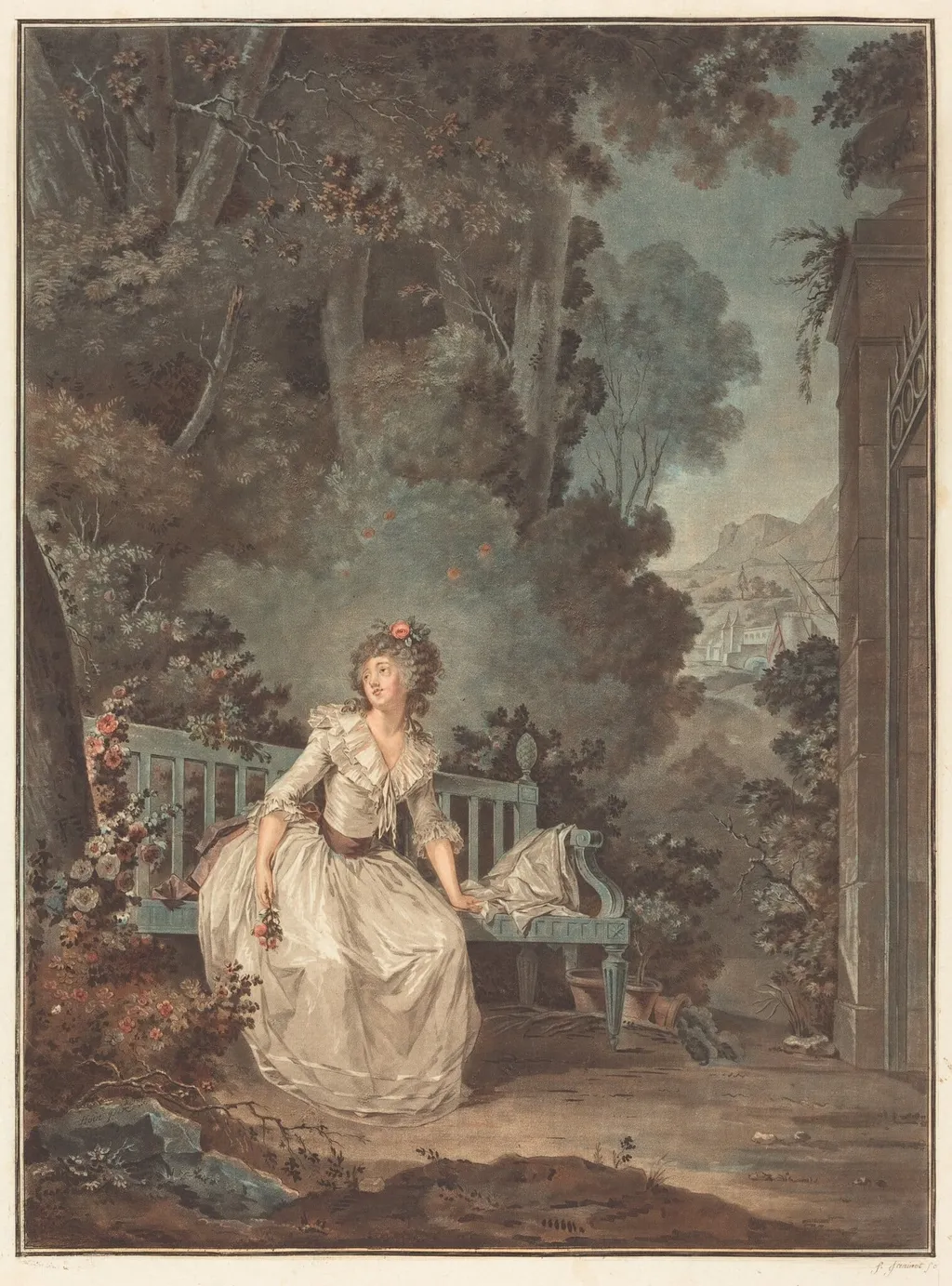
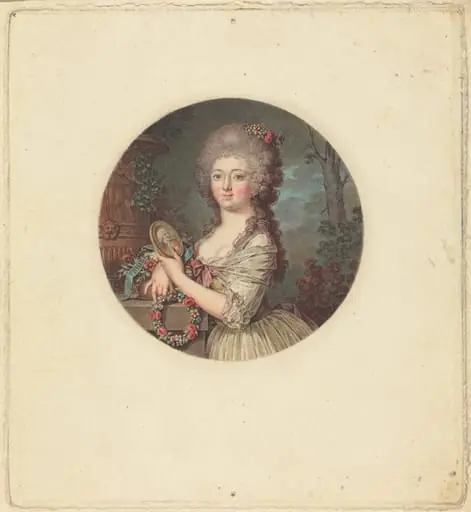
Nina, ou La Folle par amour (Nina, or The Woman Maddened by Love) is an ink print by the Romanticist artist Jean-François Janinet. It dates from 1787 and is held in the collection of the National Gallery of Art.
About this work
Overview
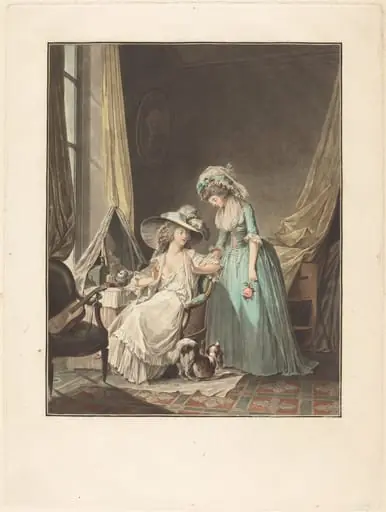
Jean‑François Janinet’s 1787 print, titled *Nina, ou La Folle par amour* (Nina, or The Woman Maddened by Love), is an etching executed with wash techniques and printed in a limited palette of blue, yellow, red and black. The work presents a solitary female figure situated in an outdoor garden setting, rendered with a delicate balance of line and tone.
Subject & Meaning
The composition depicts a young woman in a light, flowing dress with puffed sleeves, her hair lifted high and adorned with a single flower. She holds a fan, suggesting a moment of private contemplation. The title alludes to an emotional frenzy, inviting viewers to interpret the scene as an expression of love‑induced agitation within a tranquil landscape.
Technique & Style
Janinet employed traditional copper‑plate etching combined with ink washes, allowing for subtle gradations of color and atmospheric depth. The use of multiple inks—blue, yellow, red, and black—creates a soft, blended palette that unifies the figure with the surrounding foliage, stone bench and distant architecture, while preserving fine line work in the dress and foliage.
History & Provenance
Created in the late eighteenth century, the print reflects the period’s interest in romanticized domestic scenes. It was produced during Janinet’s mature phase, when he frequently explored multi‑colored etchings. The work has circulated among private collections and museum holdings, exemplifying the era’s print‑making practices.
Artist & collection