Artwork
Ensi opetus
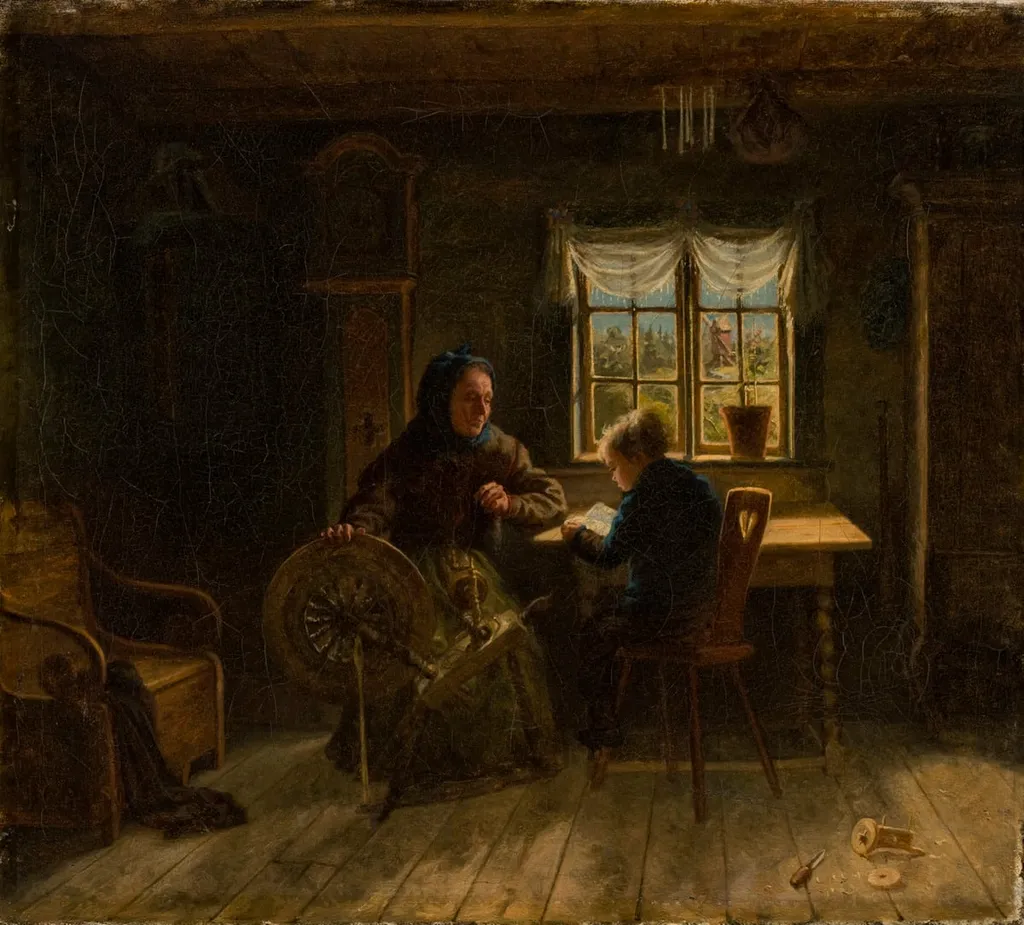
Ensi opetus is an unspecified painting by Karl Jansson. It dates from 1870 and is held in the collection of the Finnish National Gallery. Created around 1870 by Finnish artist Karl Emanuel Jansson, this painting captures an intimate domestic moment in a modest interior.
About this work
Overview
Two figures engage in separate but harmonious activities—spinning and reading—under the soft illumination of natural light filtering through a window.
Created around 1870 by Finnish artist Karl Emanuel Jansson, this painting captures an intimate domestic moment in a modest interior. The scene avoids theatricality, focusing instead on the quiet rhythm of everyday life. Two figures engage in separate but harmonious activities—spinning and reading—under the soft illumination of natural light filtering through a window. The composition emphasizes stillness and solitude, reflecting a broader 19th-century interest in ordinary human experience.
Subject & Meaning
The painting portrays a woman at a spinning wheel and a younger figure bent over a book, suggesting generational continuity and the quiet transmission of knowledge. The absence of narrative drama shifts focus to the dignity of routine labor and literacy. The illuminated landscape on the windowpane acts as a symbolic counterpoint—nature beyond the home, visible yet unreachable—hinting at inner worlds shaped by both work and thought.
Technique & Style
Jansson employs subtle chiaroscuro to model form and deepen spatial depth, with light pooling on the book and fabric while shadows soften the wooden walls. The brushwork is restrained, avoiding flourish in favor of tactile realism—the texture of wool, grain of wood, and translucency of the curtain are rendered with quiet precision. The palette is muted, dominated by earth tones, with the blue headscarf offering a restrained accent that draws the eye without disrupting the scene’s calm.
History & Provenance
The painting emerged during Jansson’s early career in Finland, a period when artists increasingly turned from historical or mythological subjects to scenes of rural and domestic life. While specific ownership records are limited, the work aligns with the cultural shift toward national identity expressed through everyday Finnish interiors. It likely entered public collections in the late 19th or early 20th century as interest in vernacular art grew.
Context
In the late 1800s, Finnish art was moving away from academic traditions toward realism rooted in local experience. Jansson’s focus on interior life reflects broader Nordic trends, where artists like Pekka Halonen and later Akseli Gallen-Kallela sought to define cultural identity through humble, authentic settings. This work contributes to a visual language that valued quietude over spectacle, aligning with rising literary and philosophical currents that honored introspection and labor.
Legacy
Though not widely exhibited internationally, 'Ensi opetus' remains a significant example of Finnish domestic realism. It influenced later generations of artists who prioritized emotional resonance over grandeur, helping to establish a tradition of intimate portraiture in Finnish painting. Its enduring presence in regional collections underscores its role as a quiet testament to the value of ordinary moments in shaping cultural memory.
Artist & collection
Artist
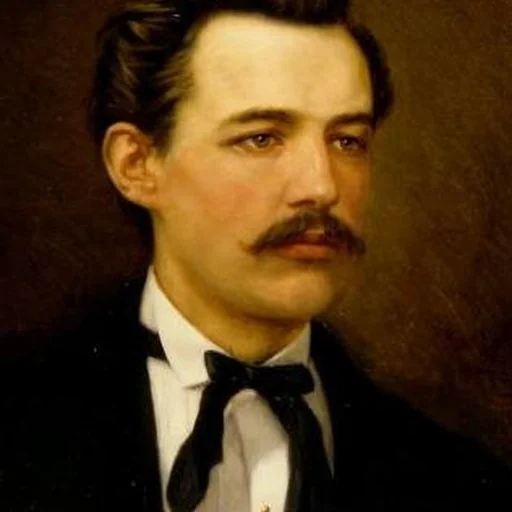
Karl Emanuel Jansson (7 July 1846, in Finström – 1 June 1874, in Jomala) was a Finnish painter, primarily of genre scenes.

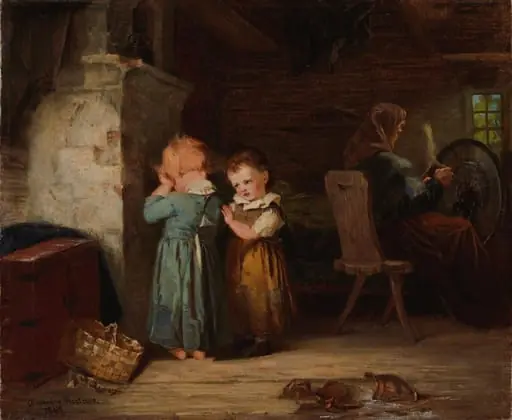 Pikku suruja
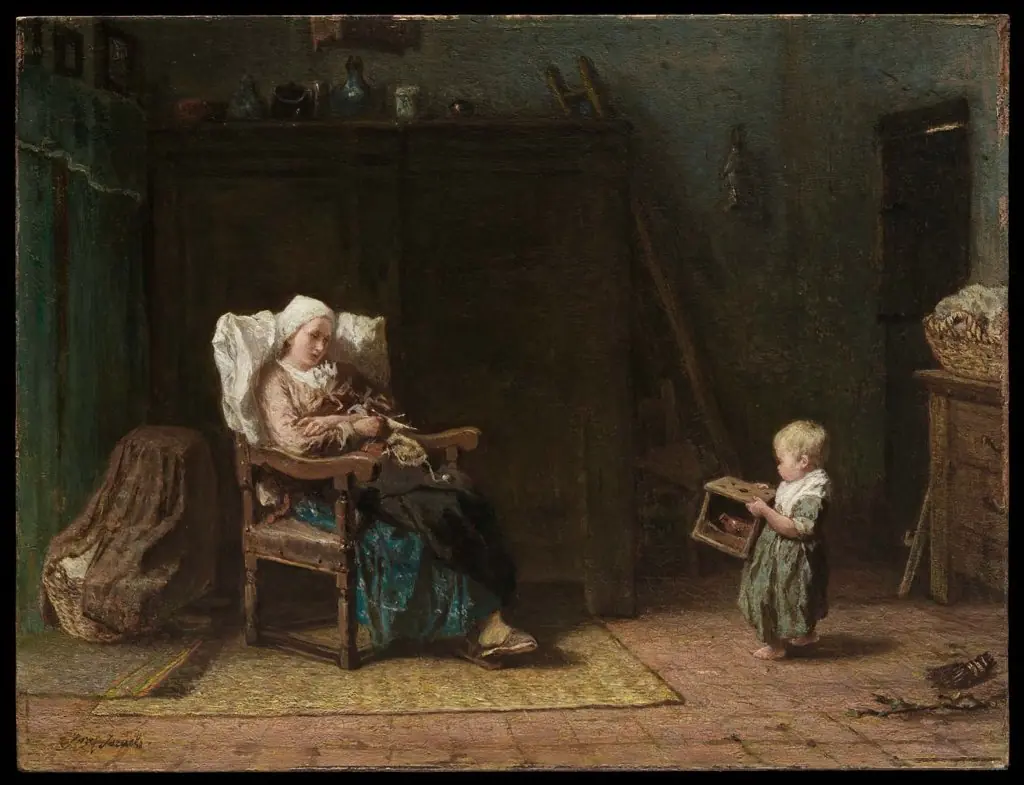 Convalescent Mother and a Child
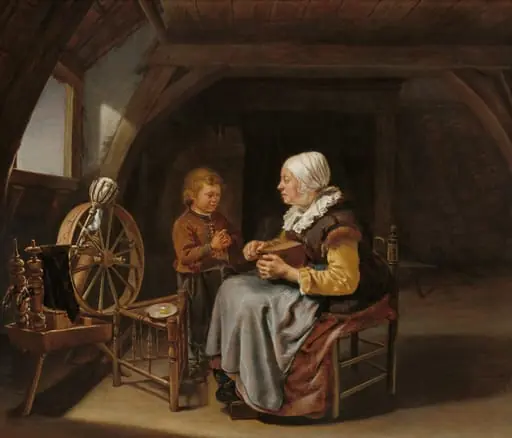 Saying Grace
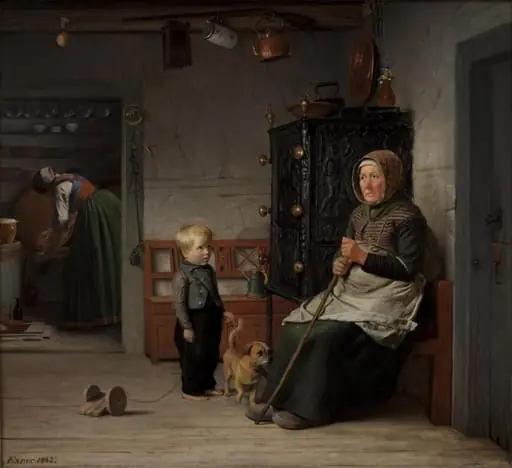 En fattig kone der venter på et krus øl i en bondestue
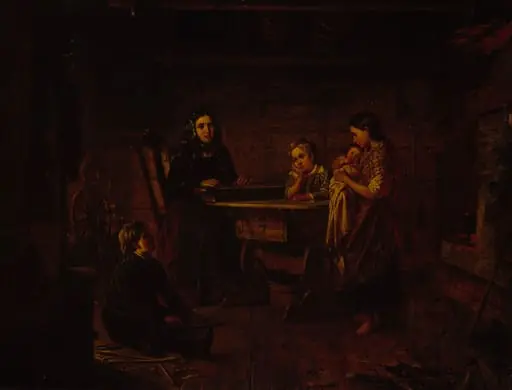 Kreeta Haapasalo soittaa kannelta
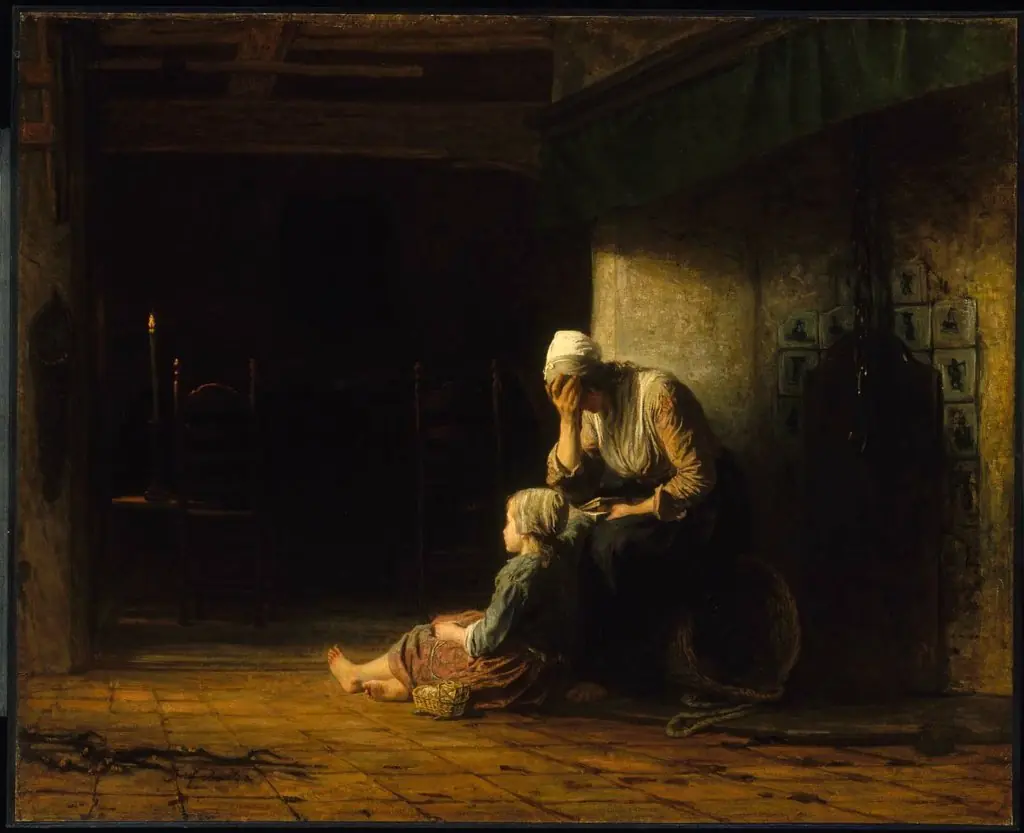 The Day before Parting
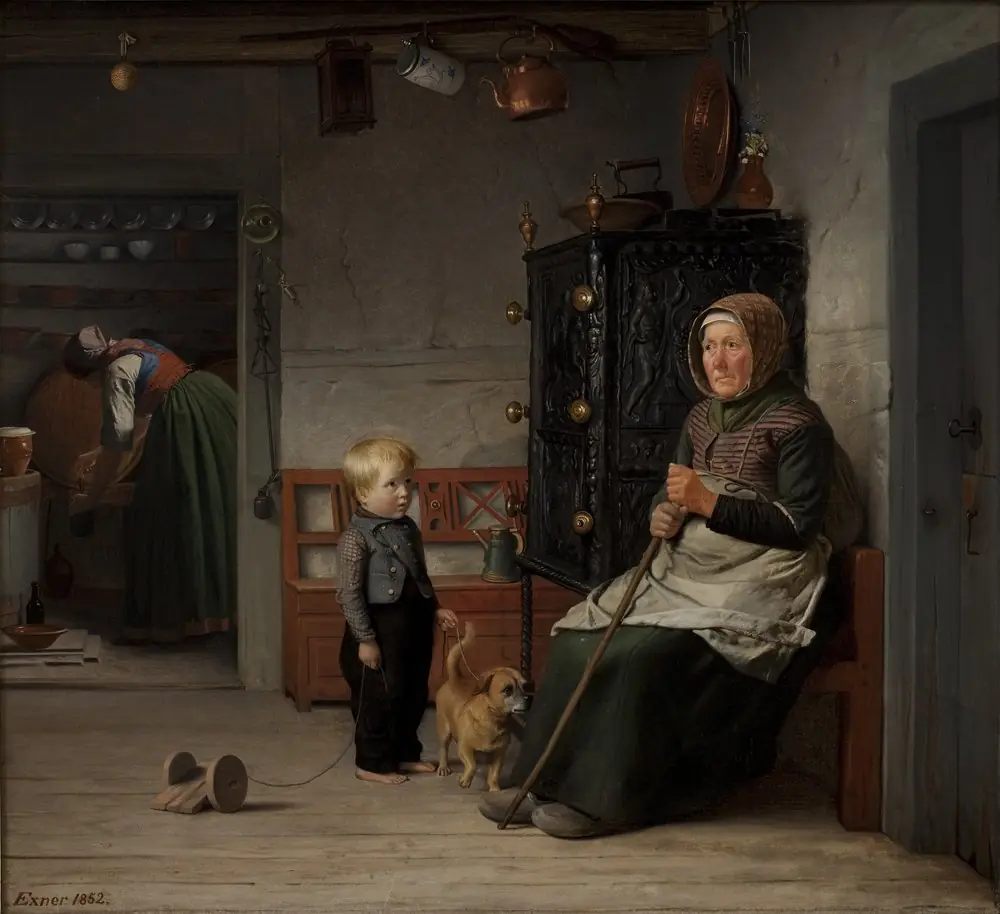 En fattig kone der venter på et krus øl i en bondestue
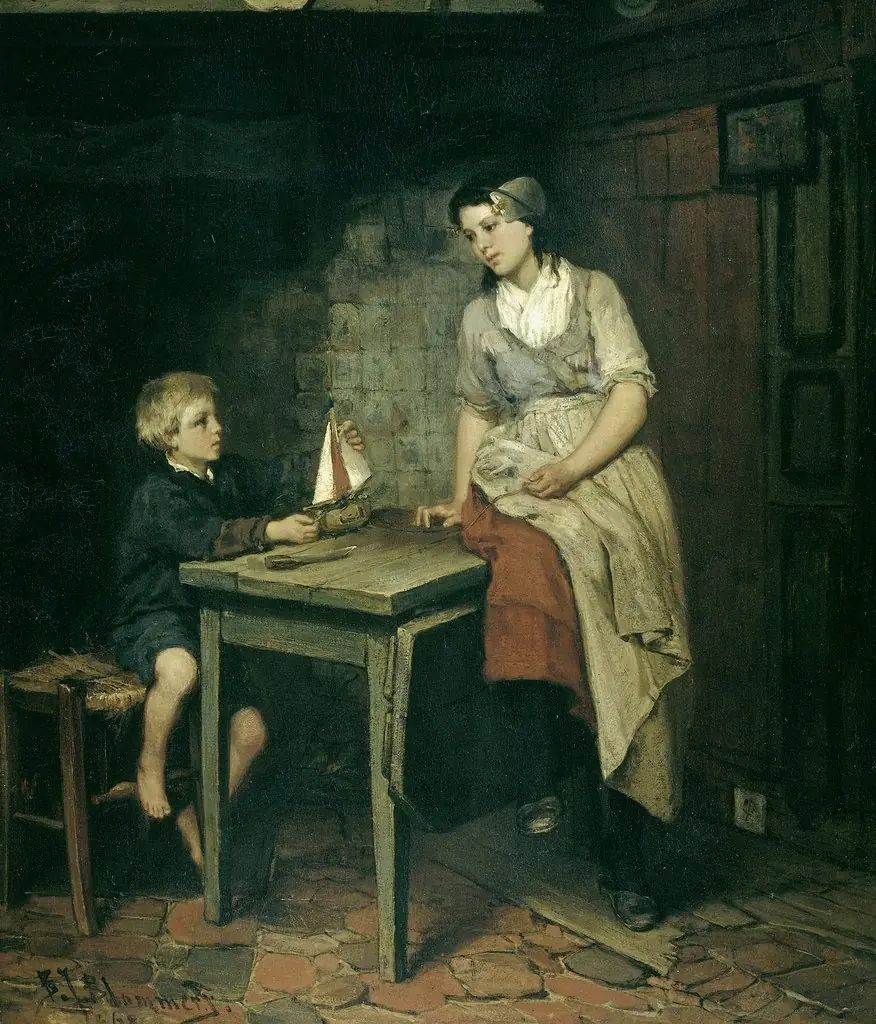 The Fisherman's Children
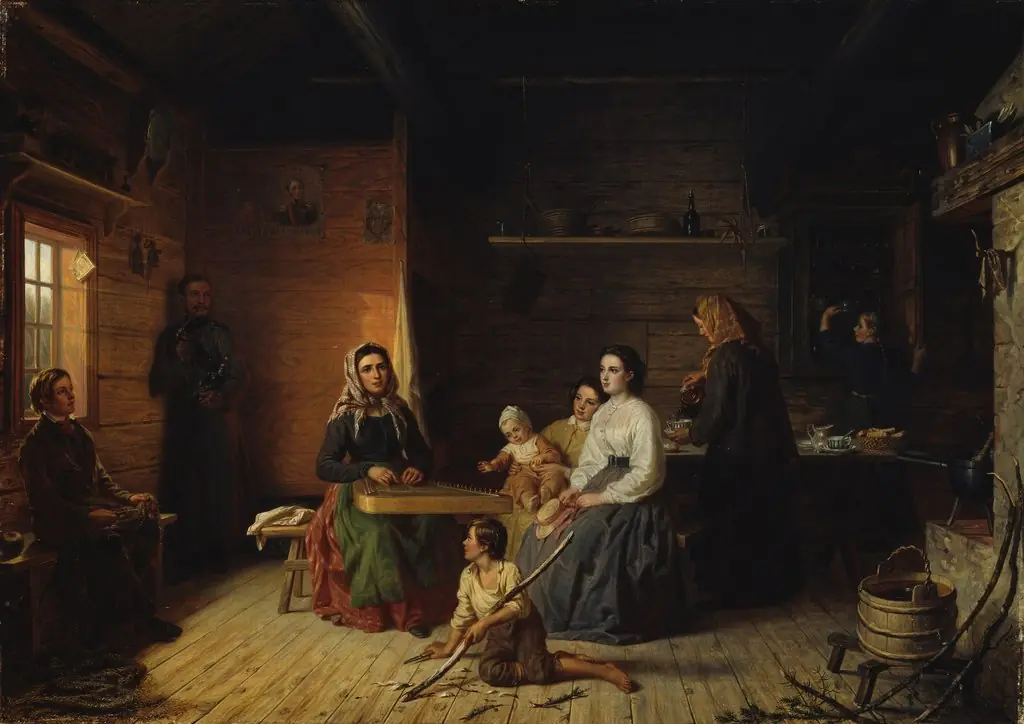 Kreeta Haapasalo Playing the Kantele in a Peasant Cottage
 Kreeta Haapasalo soittaa kannelta talonpoikaistuvassa