Artwork
Kreeta Haapasalo Playing the Kantele in a Peasant Cottage
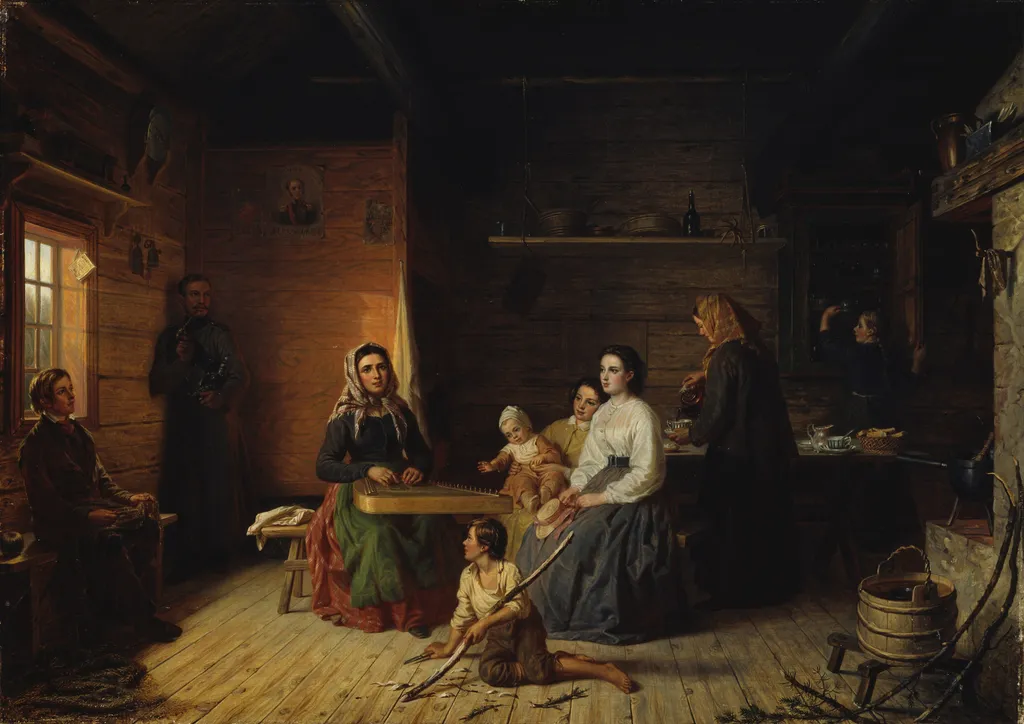
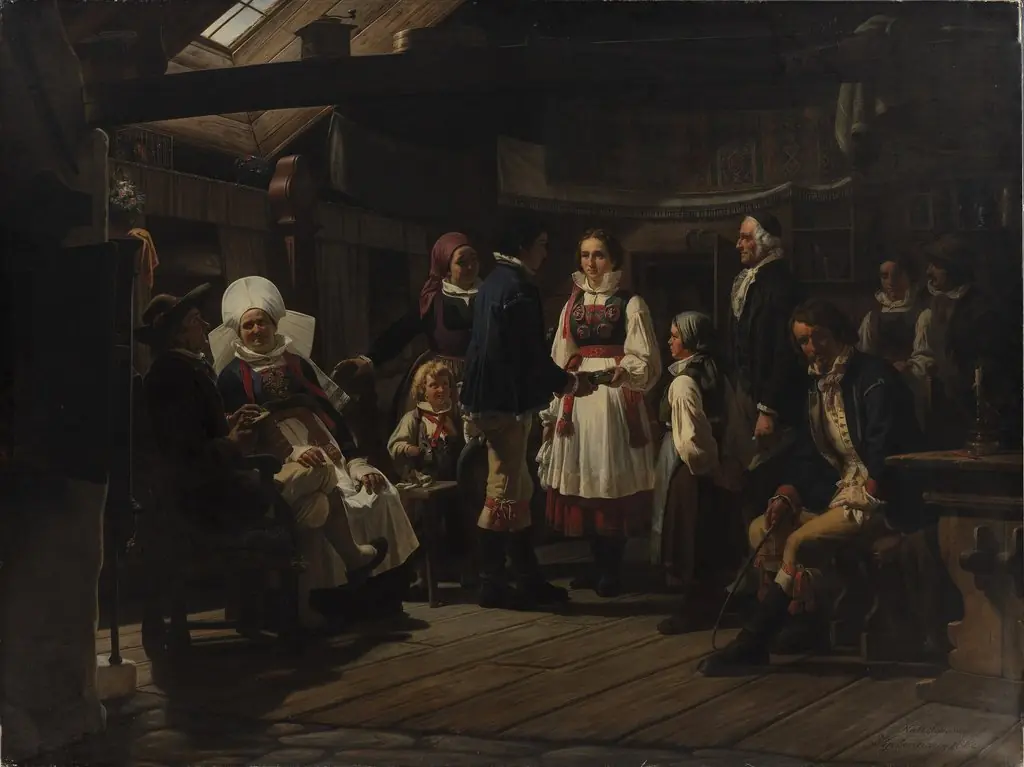
Kreeta Haapasalo Playing the Kantele in a Peasant Cottage is an oil painting by the Romanticist artist Robert Wilhelm Ekman. It dates from 1868 and is held in the collection of the Finnish National Gallery.
About this work
The artist chose oil paint as the medium for this work, which is now held at the Ateneum.
The painting is titled Kreeta Haapasalo Playing the Kantele in a Peasant Cottage.
It was created by Robert Wilhelm Ekman in 1868.
The artist chose oil paint as the medium for this work, which is now held at the Ateneum.
I don't know what the painting looks like, but I can tell you that it exists.
The fact that it's held at a museum suggests it's a notable piece.
You can learn more about this painting and others like it by looking up the Ateneum.
Overview
Robert Wilhelm Ekman completed this oil-on-canvas painting in 1868, depicting a Finnish peasant woman engaged in a quiet domestic moment. The work is part of a 19th-century artistic movement that sought to capture everyday Finnish life with dignity and attention to detail. It is currently held in the collection of the Ateneum Art Museum in Helsinki, where it remains a representative example of national romanticism in Finnish visual culture.
Subject & Meaning
The painting portrays Kreeta Haapasalo, a real historical figure known for her skill with the kantele, a traditional Finnish string instrument. She is shown seated in a modest rural interior, absorbed in playing. The scene emphasizes cultural continuity and personal quietude rather than spectacle, reflecting a broader interest in preserving indigenous traditions during a time of increasing Russian influence and modernization in Finland.
Technique & Style
Ekman employed traditional oil painting methods to render subtle textures—the weave of woolen garments, the grain of wooden furniture, the sheen of the kantele’s surface. His brushwork is precise but unobtrusive, favoring naturalistic lighting and muted tones. The composition is tightly framed, drawing focus to the musician’s hands and the instrument, reinforcing the intimacy of the moment without theatrical embellishment.
History & Provenance
Painted in 1868, the work was acquired by the Finnish Art Society and later transferred to the Ateneum upon its founding in 1888. It has remained in public collection since, with no documented changes in ownership. Its preservation reflects its early recognition as a culturally significant portrayal of Finnish identity, even before the nation achieved independence.
Context
During the late 1860s, Finland was an autonomous Grand Duchy under Russian rule, and cultural figures like Ekman sought to define a distinct national identity through art. Depictions of rural life, folk music, and traditional dress became symbols of resilience and authenticity. This painting aligns with broader efforts to elevate indigenous customs as worthy subjects of high art, countering dominant Swedish and Russian cultural influences.
Legacy
The painting endures as a reference point in Finnish art history for its unembellished portrayal of folk culture. It influenced later generations of artists interested in ethnographic realism and contributed to the kantele’s symbolic status in national consciousness. While not widely reproduced internationally, it holds enduring importance within Finland as a quiet testament to cultural preservation.
Own this work as a print
Artist & collection
Artist
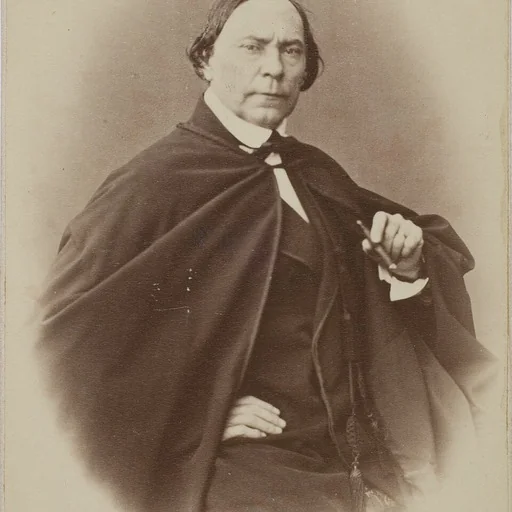
Robert Wilhelm Ekman (August 13, 1808 – February 19, 1873), a.k.a. R. W. Ekman, was a significant teacher and painter of the Finnish romantic portraits and early national romanticism.

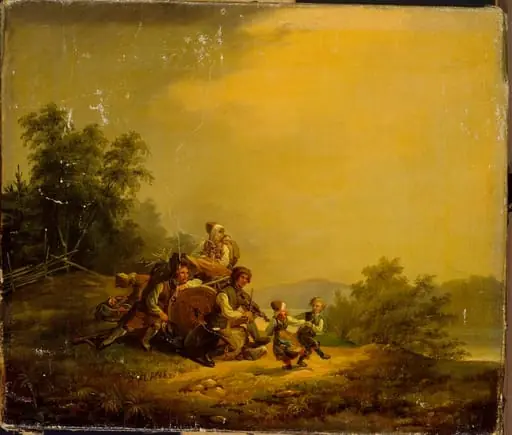 Lepääviä maalaisia ja tanssivia lapsia
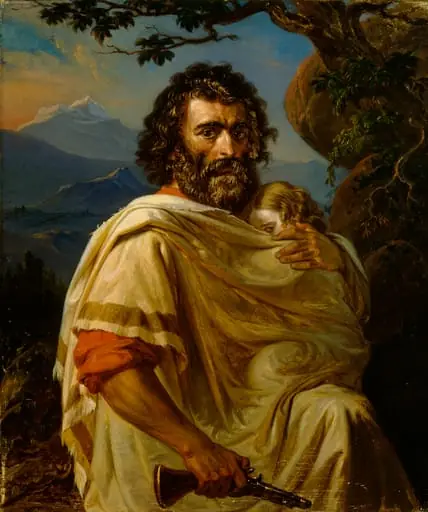 Italialainen mies lapsi käsivarrellaan
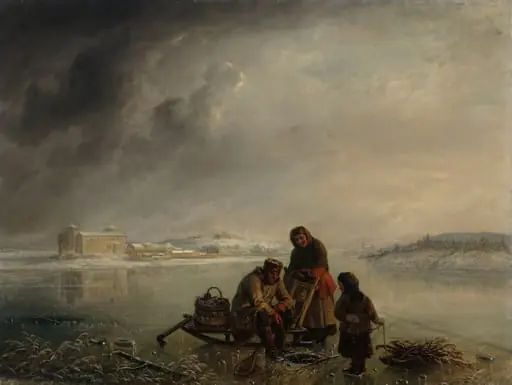 Talvikalastusta Turun linnan ulkopuolella
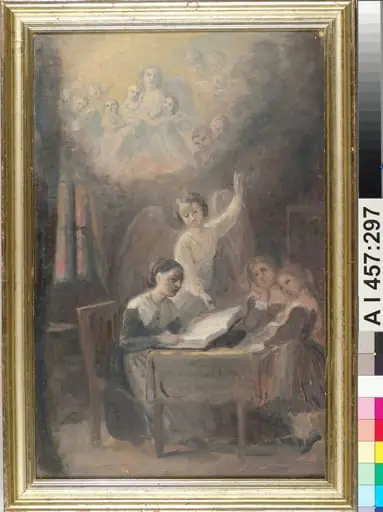 "Satu seitsemästä sisaruksesta", luonnos Haeggströmin sisarusten ryhmämuotokuvaa (1862) varten
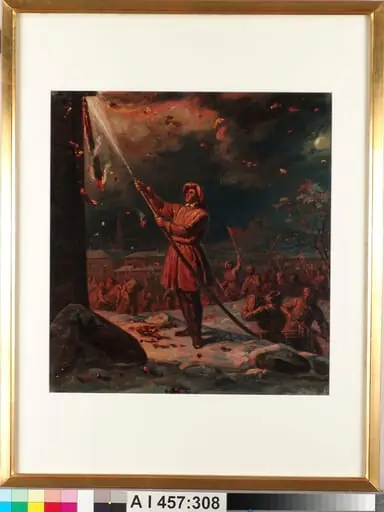 Turun palo
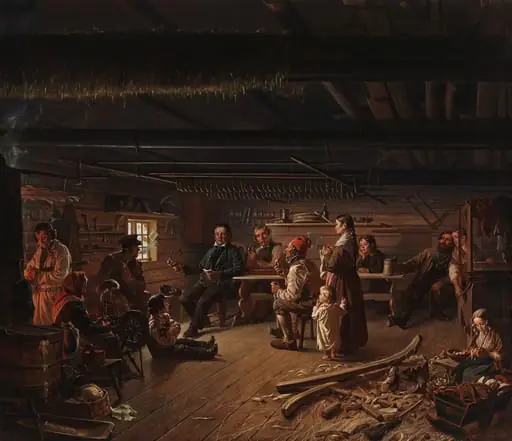 Pentti Lyytinen lukee runojaan savolaisessa pirtissä
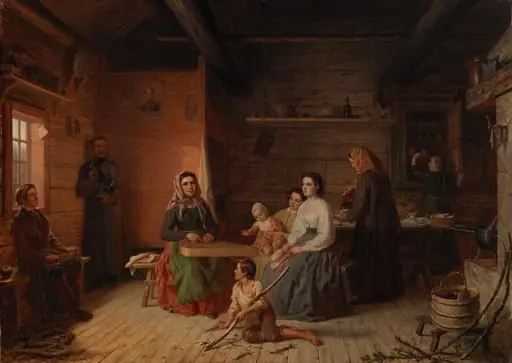 Kreeta Haapasalo soittaa kannelta talonpoikaistuvassa
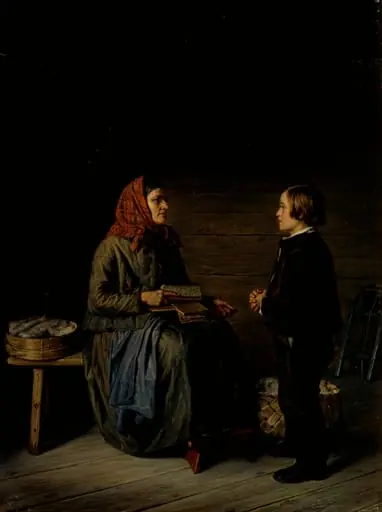 Kinkeripäivän aamuna