Artwork
Henry Clay
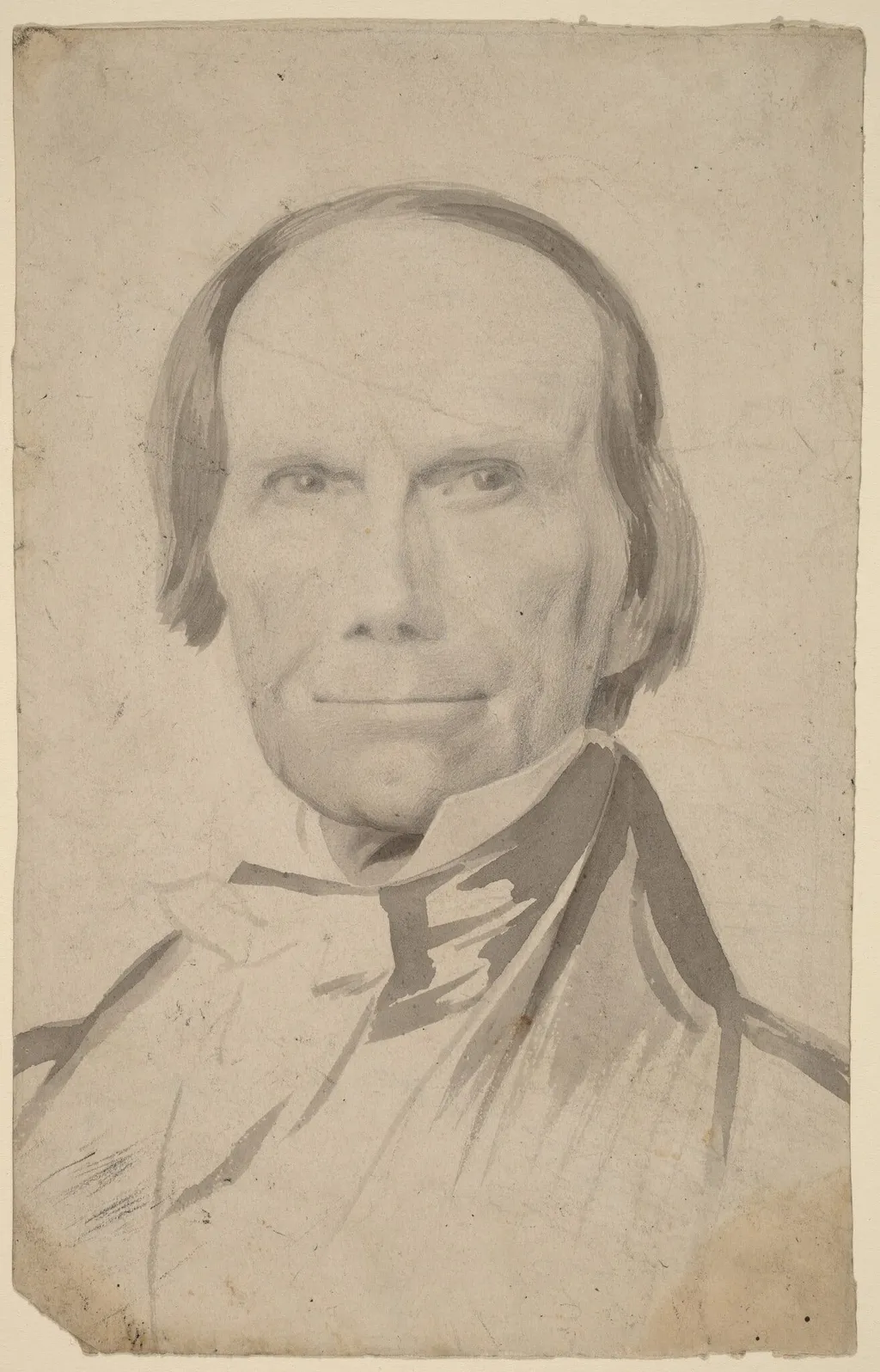
Henry Clay is a graphite drawing by the Romanticist artist Charles Wesley Jarvis. It dates from 1840 and is held in the collection of the National Gallery of Art.
About this work
Overview
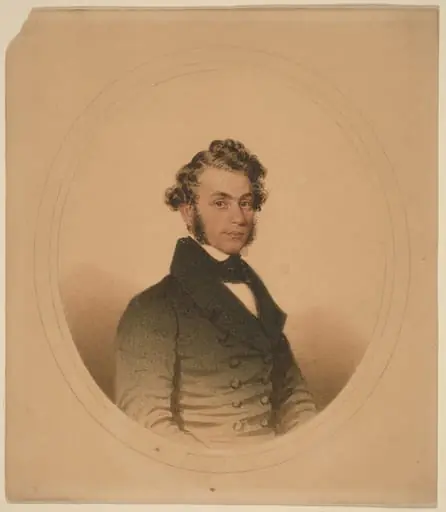
Created around 1840 by Charles Wesley Jarvis, this graphite and gray wash drawing captures the likeness of Henry Clay, a prominent American statesman. Executed on wove paper, the work is a modestly scaled portrait study, notable for its restrained tonal range and unembellished approach. The surface bears signs of age—creases and smudges—that speak to its handling and passage through time.
Subject & Meaning
The portrait depicts Henry Clay, a leading political figure of the early 19th century known for his role in shaping national compromise and legislative policy. Jarvis presents him without adornment, focusing on a composed, frontal gaze and modest attire. The absence of symbolic elements or elaborate setting suggests an intention to convey character through quiet presence rather than status.
Technique & Style
Jarvis employed loose, fluid graphite lines to define form, supplemented by diluted gray washes that softly model the face and collar. Shadows are suggested, not meticulously rendered, creating a sense of volume through tone rather than detail. The paper’s texture interacts with the medium, enhancing the atmospheric quality and contributing to the image’s subdued, transient mood.
History & Provenance
The drawing’s origins lie within Jarvis’s circle of portrait studies, likely made during Clay’s public prominence in the 1830s and 1840s. Its worn condition implies it was not a finished commission but a working sketch, possibly used for reference or personal study. No documented ownership chain is known prior to its inclusion in institutional collections.
Context
In the decades before photography, artists often produced quick portrait studies of public figures for circulation or archival purposes. Jarvis’s approach aligns with this practice—emphasizing immediacy over polish. Clay, as a frequent subject of visual representation, was a natural focus for such informal renderings, reflecting his visibility in national life.
Legacy
This drawing survives as a quiet testament to the informal portraiture of the antebellum era. It offers no grandeur, yet its simplicity preserves a recognizable likeness of a key political figure through the artist’s unadorned hand. Its endurance lies in its authenticity, not its finish, offering a glimpse into how contemporaries perceived Clay beyond official imagery.
Artist & collection